
Chapter 7 Lesson 2 The Water Cycle Pages
- Slides: 18
Chapter 7 Lesson 2 The Water Cycle Pages 322 -331
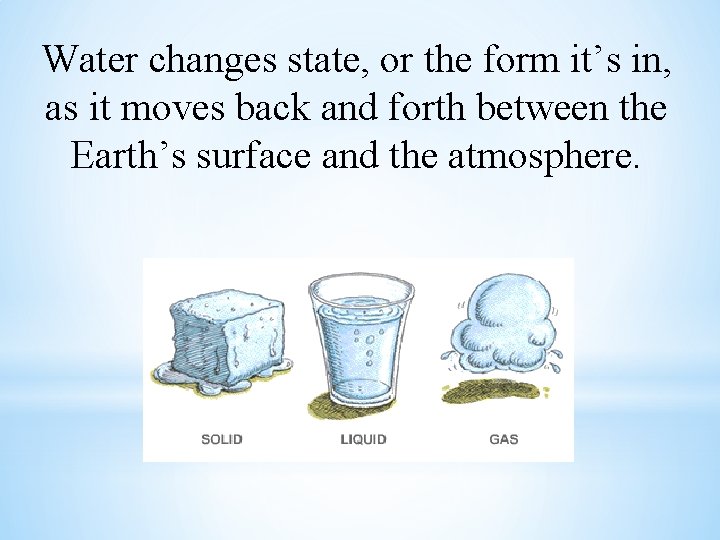
Water changes state, or the form it’s in, as it moves back and forth between the Earth’s surface and the atmosphere.
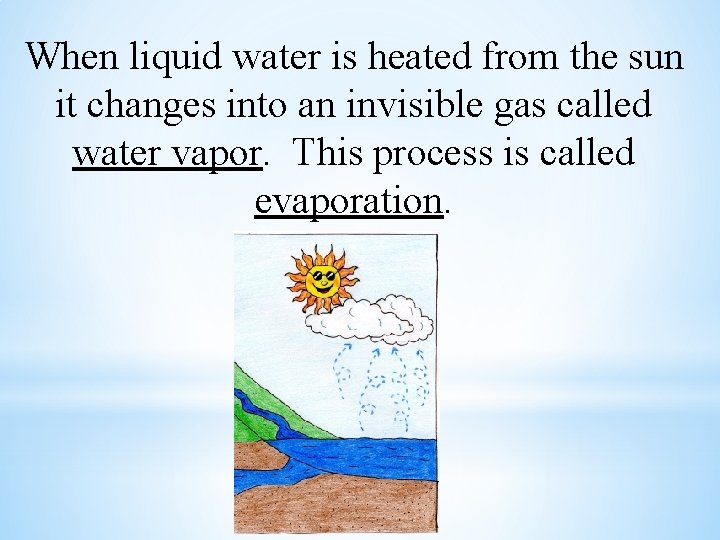
When liquid water is heated from the sun it changes into an invisible gas called water vapor. This process is called evaporation.
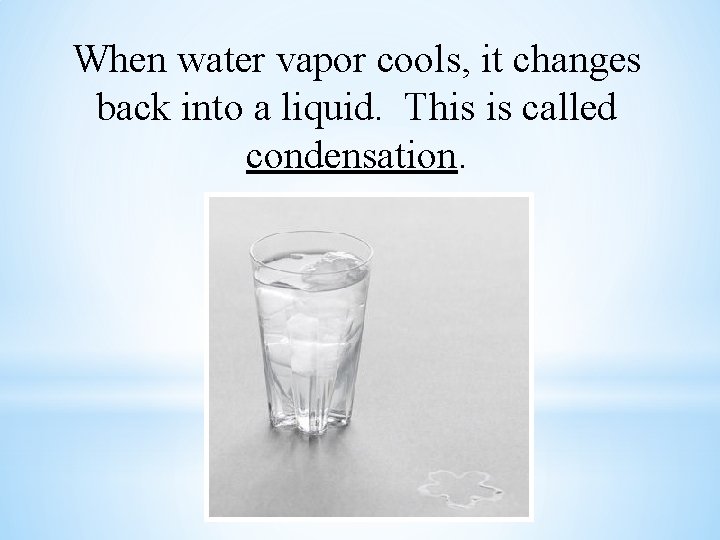
When water vapor cools, it changes back into a liquid. This is called condensation.
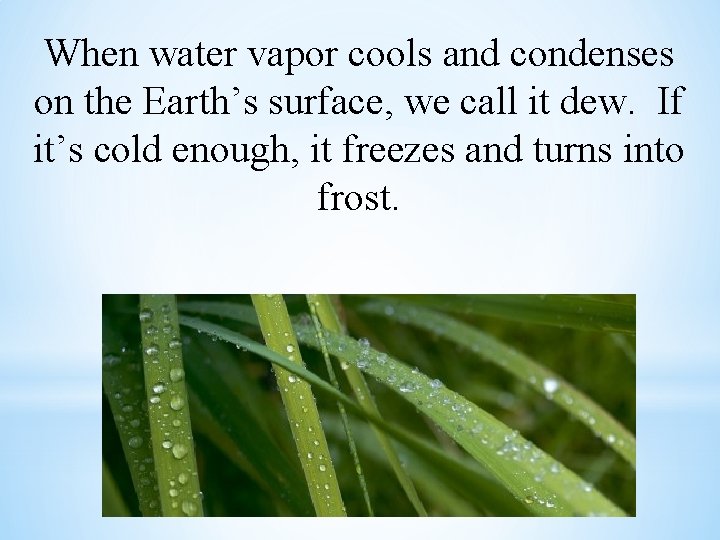
When water vapor cools and condenses on the Earth’s surface, we call it dew. If it’s cold enough, it freezes and turns into frost.
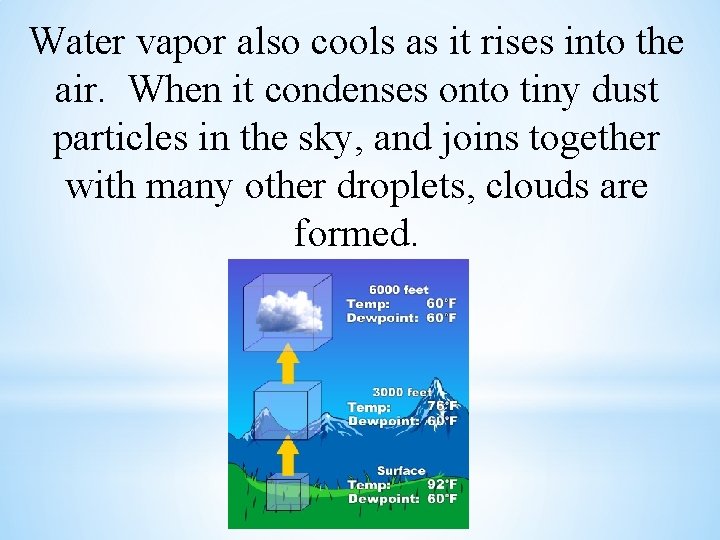
Water vapor also cools as it rises into the air. When it condenses onto tiny dust particles in the sky, and joins together with many other droplets, clouds are formed.
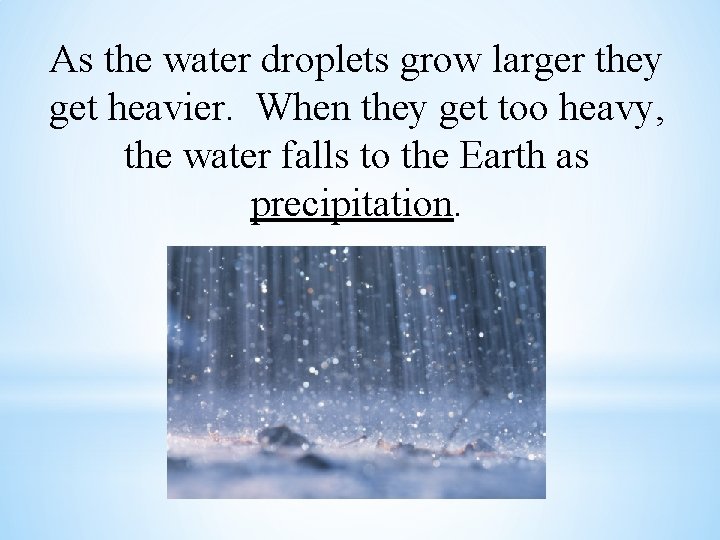
As the water droplets grow larger they get heavier. When they get too heavy, the water falls to the Earth as precipitation.
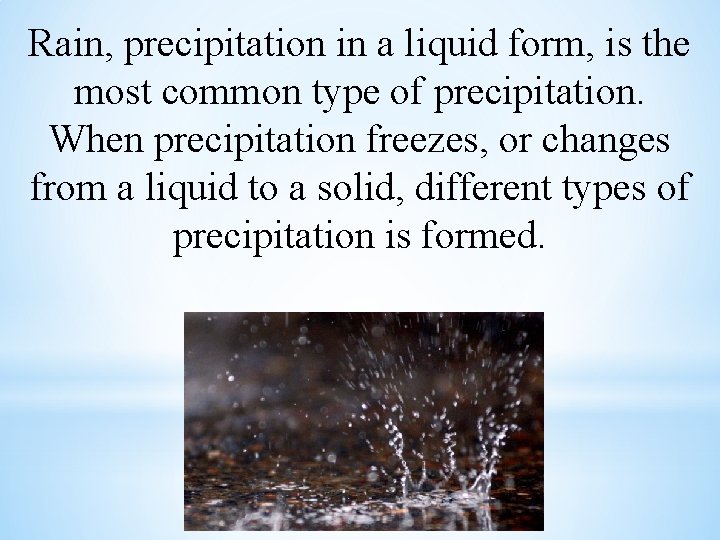
Rain, precipitation in a liquid form, is the most common type of precipitation. When precipitation freezes, or changes from a liquid to a solid, different types of precipitation is formed.
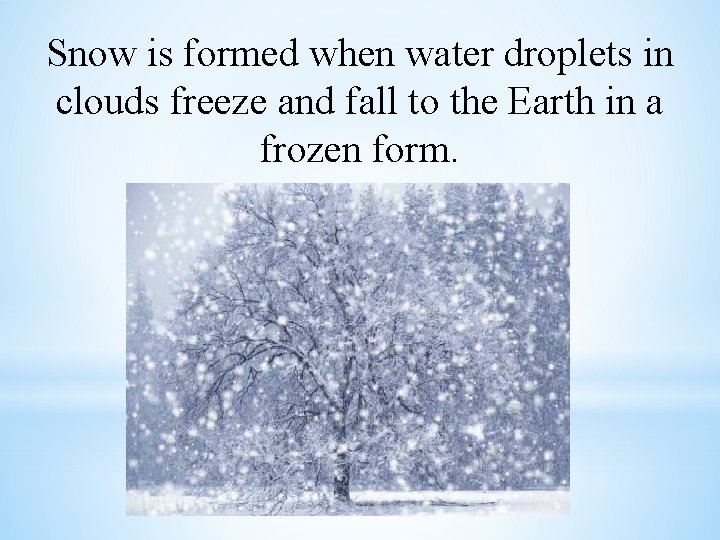
Snow is formed when water droplets in clouds freeze and fall to the Earth in a frozen form.
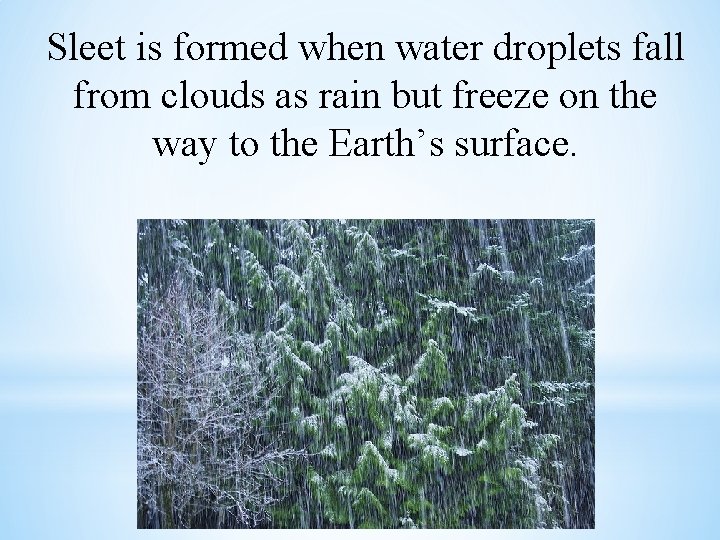
Sleet is formed when water droplets fall from clouds as rain but freeze on the way to the Earth’s surface.
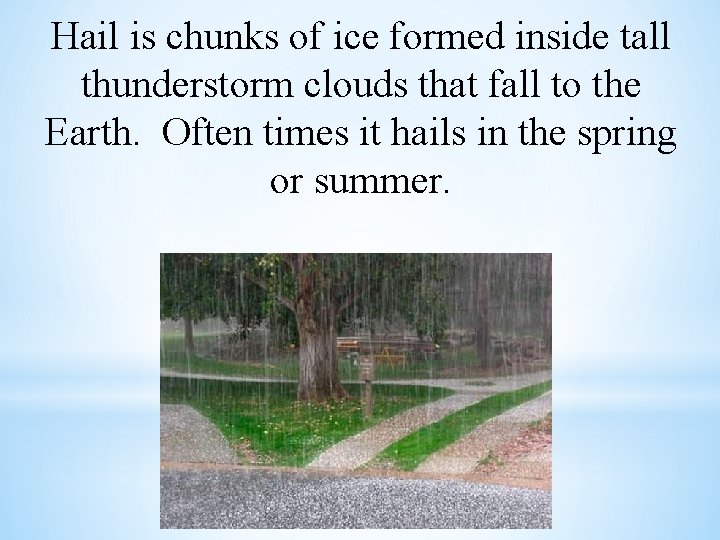
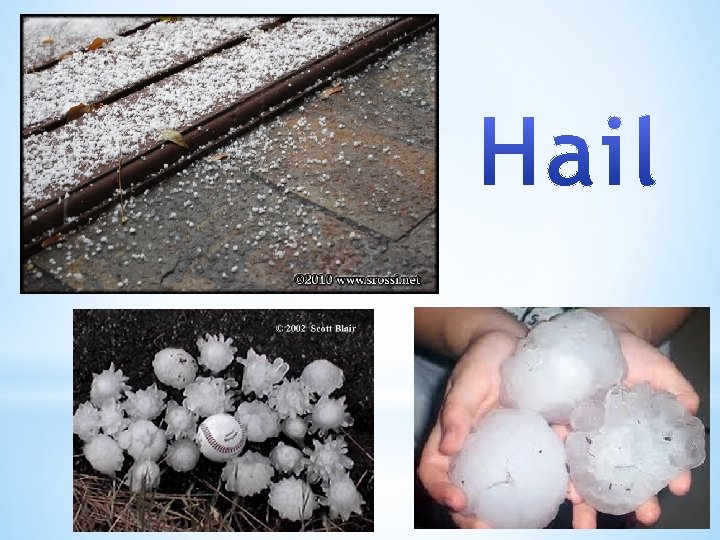
Hail is chunks of ice formed inside tall thunderstorm clouds that fall to the Earth. Often times it hails in the spring or summer.
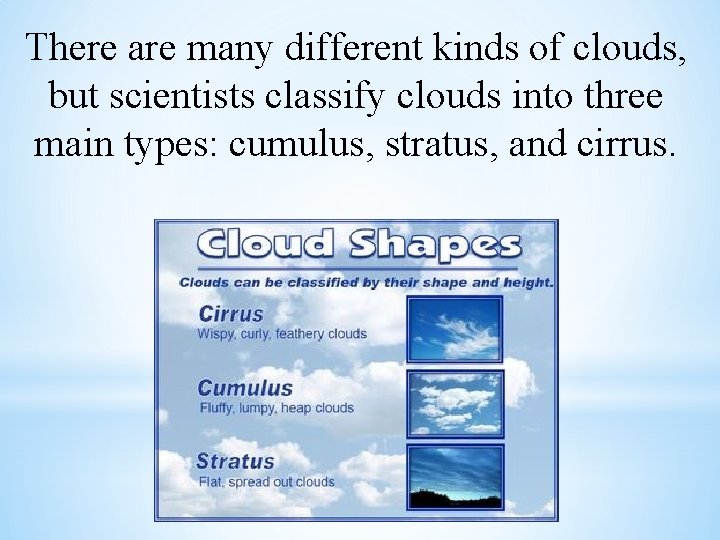
There are many different kinds of clouds, but scientists classify clouds into three main types: cumulus, stratus, and cirrus.
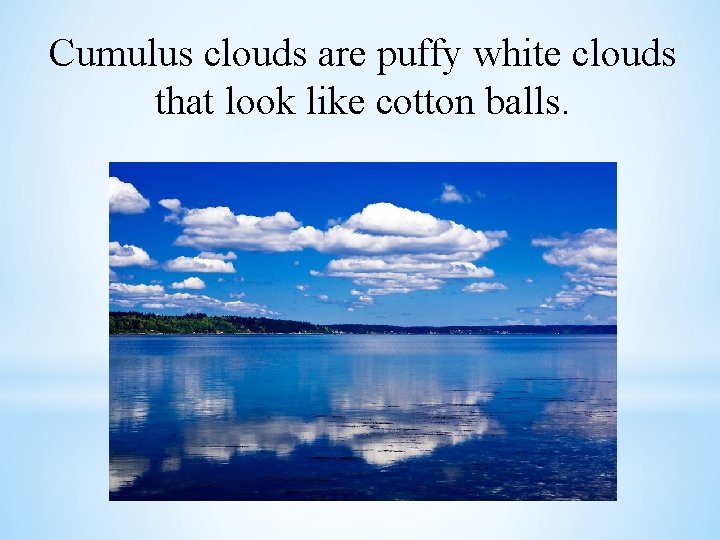
Cumulus clouds are puffy white clouds that look like cotton balls.
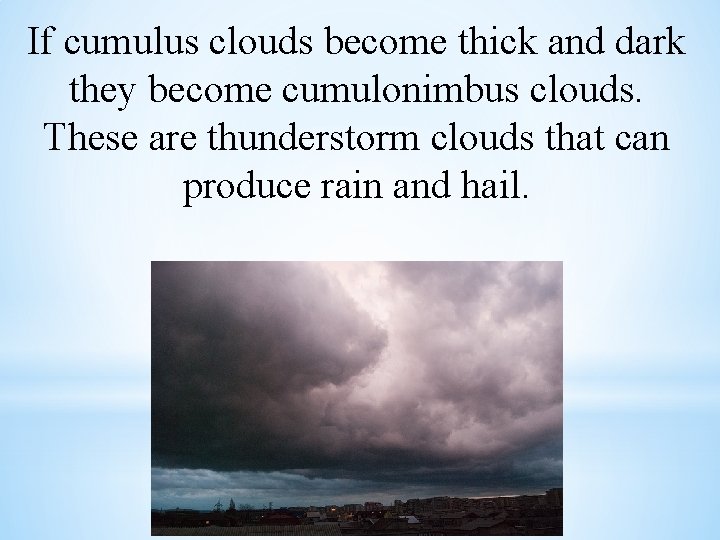
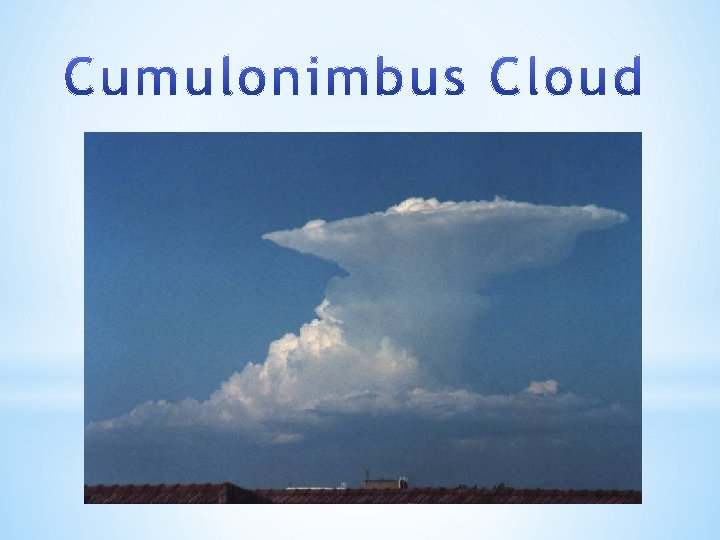
If cumulus clouds become thick and dark they become cumulonimbus clouds. These are thunderstorm clouds that can produce rain and hail.
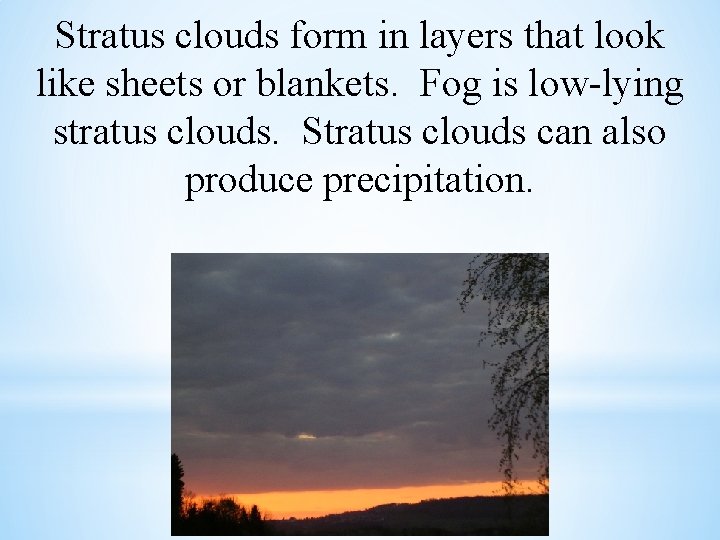
Stratus clouds form in layers that look like sheets or blankets. Fog is low-lying stratus clouds. Stratus clouds can also produce precipitation.
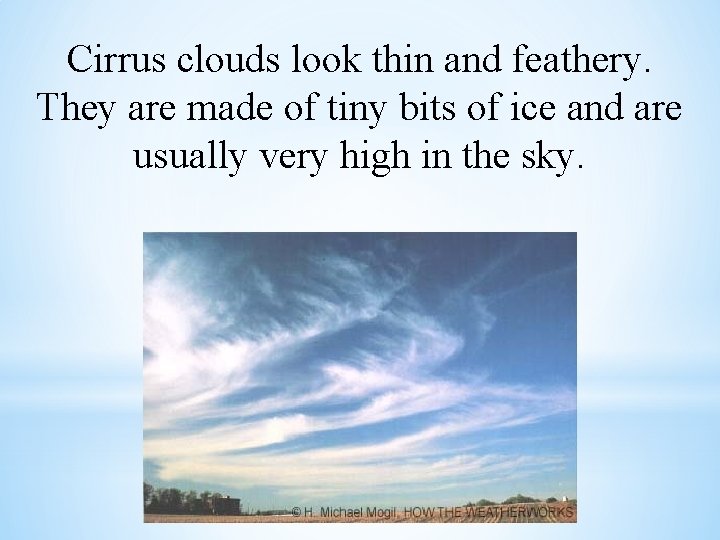
Cirrus clouds look thin and feathery. They are made of tiny bits of ice and are usually very high in the sky.