
Chapter 7 Learning Chapter Objectives Describe the process
Chapter 7 Learning
Chapter Objectives Describe the process of classical conditioning (Pavlov's experiments) Explain the processes of acquisition, extinction, spontaneous recovery, generalization, and discrimination Describe the process of operant conditioning, including the procedure of shaping, as demonstrated by Skinner's experiments Identify the different types of reinforcers and describe the schedules of reinforcement Discuss the importance of cognitive processes and biological predispositions in conditioning Discuss the effects of punishment on behavior
Lesson Essential Question What are the forms of psychological learning and how are they different?
Key Vocabulary generalization extinction conditioning variable ratio fixed ratio cognitive learning stimulus response continuous reinforcement social learning
Learning How Do We Learn? Classical Conditioning § Pavlov’s Experiments § Extending Pavlov’s Understanding § Pavlov’s Legacy
Operant Conditioning § Skinner’s Experiments § Extending Skinner’s Understanding § Skinner’s Legacy § Contrasting Classical & Operant Conditioning
Learning by Observation § Bandura’s Experiments § Applications of Observational Learning
Definition Learning is a relatively permanent change in an organism’s behavior due to experience. Learning is more flexible in comparison to the genetically-programmed behaviors of Chinooks, for example.
How Do We Learn? Conditioning We learn by association. Our minds naturally connect events that occur in sequence. 2000 years ago, Aristotle suggested this law of association. Then 200 years ago Locke and Hume reiterated this law.
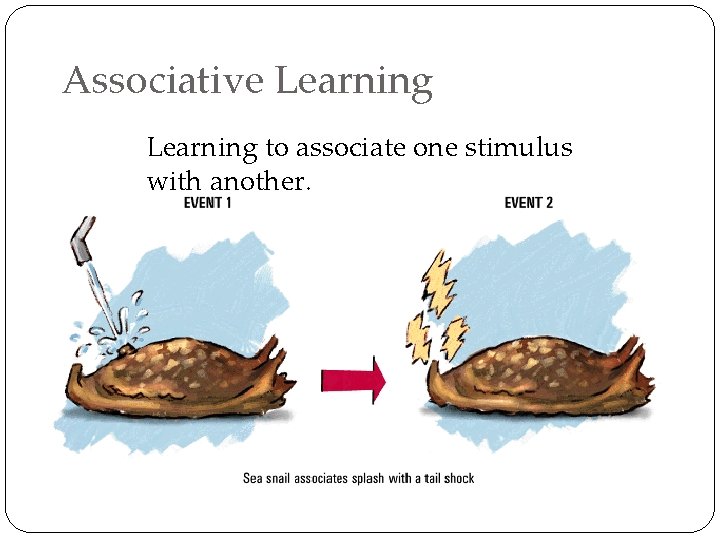
Associative Learning to associate one stimulus with another.
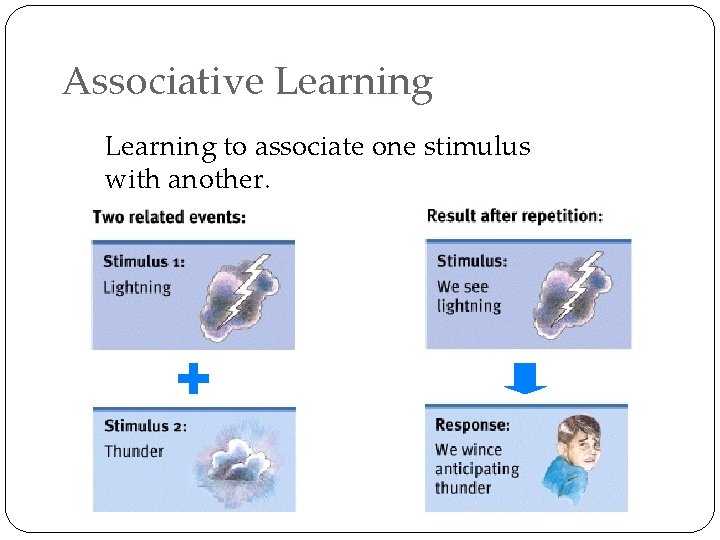
Associative Learning to associate one stimulus with another.
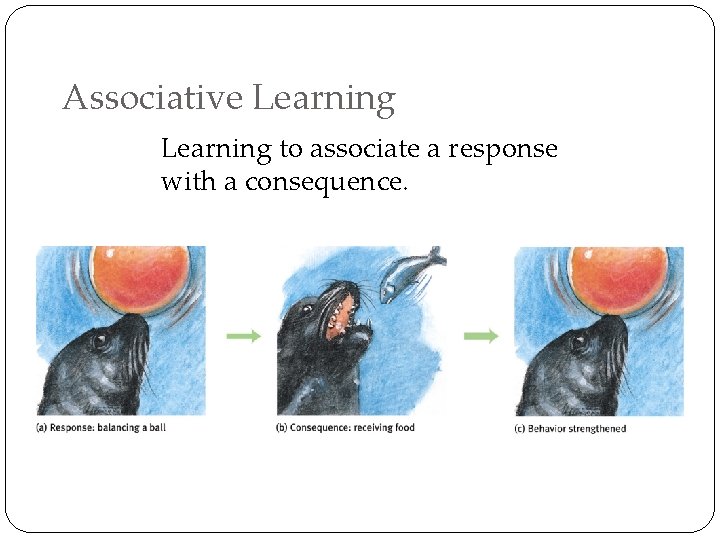
Associative Learning to associate a response with a consequence.
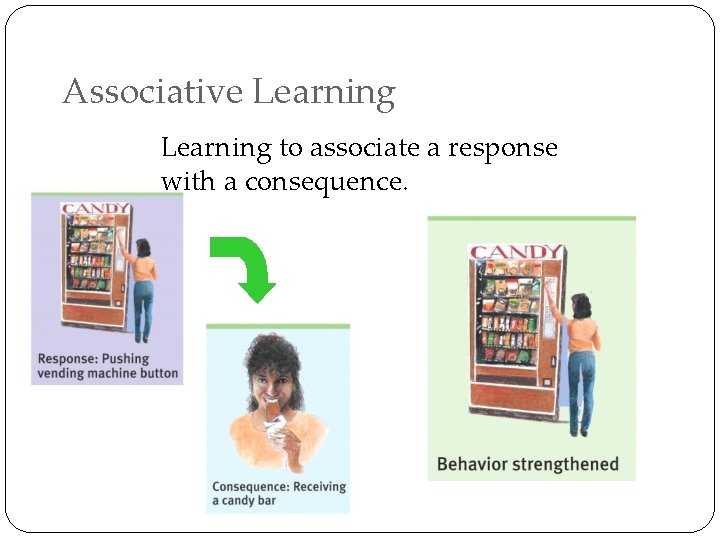
Associative Learning to associate a response with a consequence.
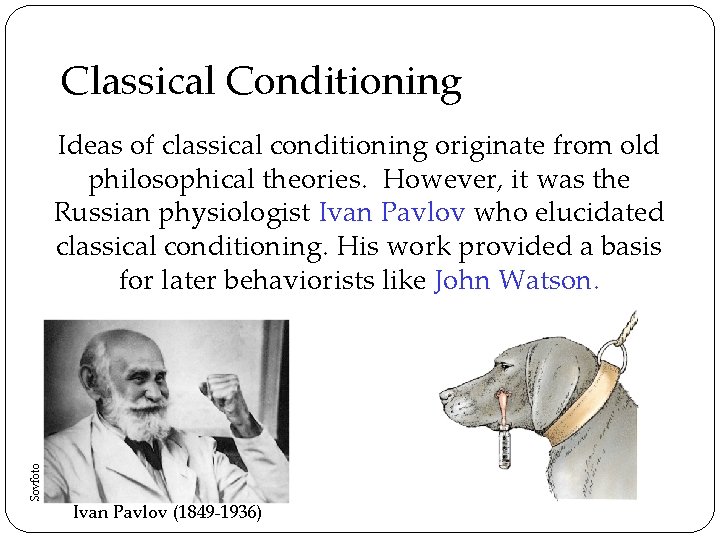
Classical Conditioning Sovfoto Ideas of classical conditioning originate from old philosophical theories. However, it was the Russian physiologist Ivan Pavlov who elucidated classical conditioning. His work provided a basis for later behaviorists like John Watson. Ivan Pavlov (1849 -1936)
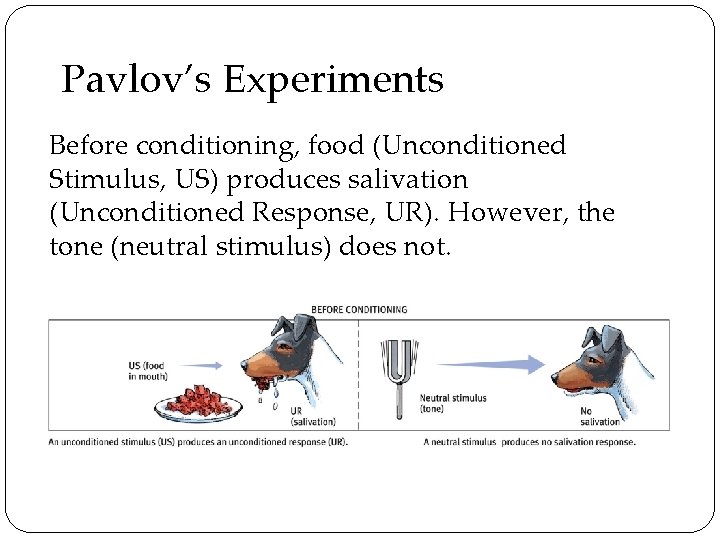
Pavlov’s Experiments Before conditioning, food (Unconditioned Stimulus, US) produces salivation (Unconditioned Response, UR). However, the tone (neutral stimulus) does not.

Pavlov’s Experiments During conditioning, the neutral stimulus (tone) and the US (food) are paired, resulting in salivation (UR). After conditioning, the neutral stimulus (now Conditioned Stimulus, CS) elicits salivation (now Conditioned Response, CR)
Topic: Learning Do Now TURN AND TALK: Give an example of a US and UR. Be realistic. NOT PAVLOV! Give a CS and a CR. You have 2 minutes
Acquisition is the initial learning stage in classical conditioning in which an association between a neutral stimulus and an unconditioned stimulus takes place. 1. In most cases, for conditioning to occur, the neutral stimulus needs to come before the unconditioned stimulus. 2. The time in between the two stimuli should be about half a second.
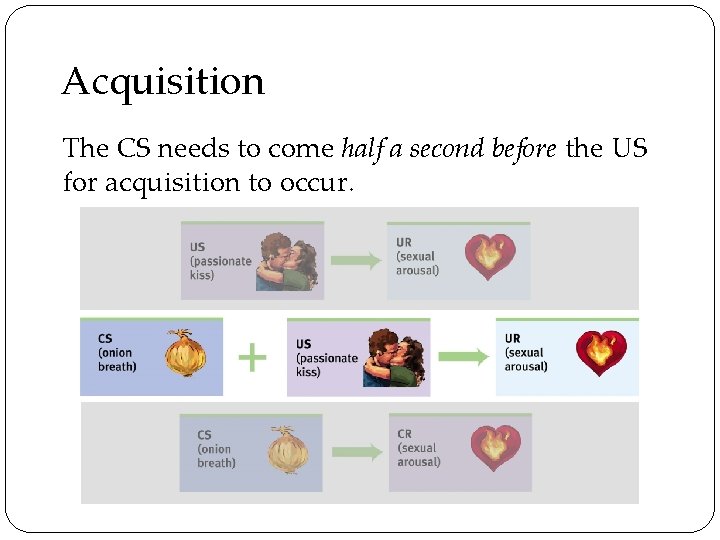
Acquisition The CS needs to come half a second before the US for acquisition to occur.
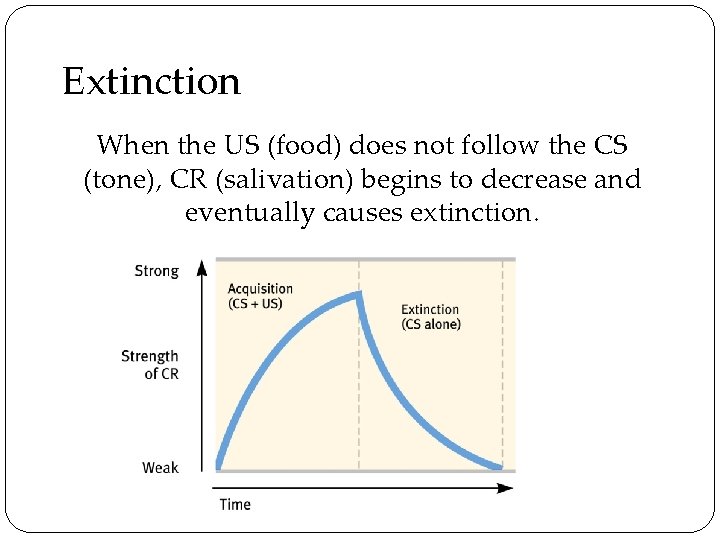
Extinction When the US (food) does not follow the CS (tone), CR (salivation) begins to decrease and eventually causes extinction.
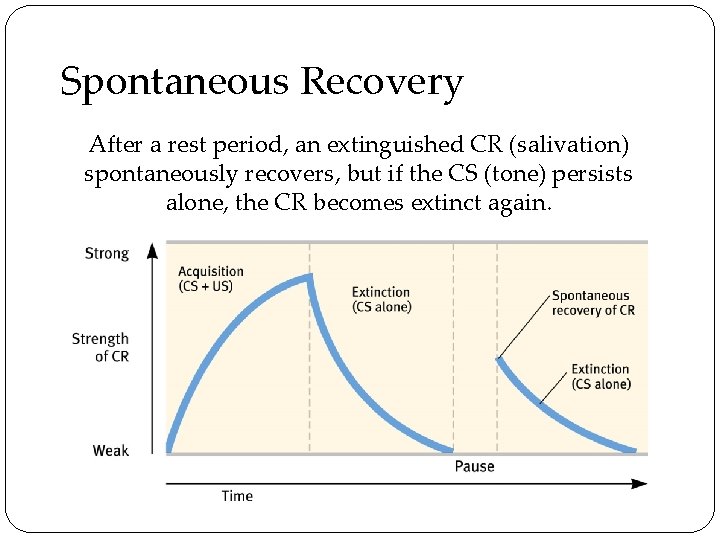
Spontaneous Recovery After a rest period, an extinguished CR (salivation) spontaneously recovers, but if the CS (tone) persists alone, the CR becomes extinct again.
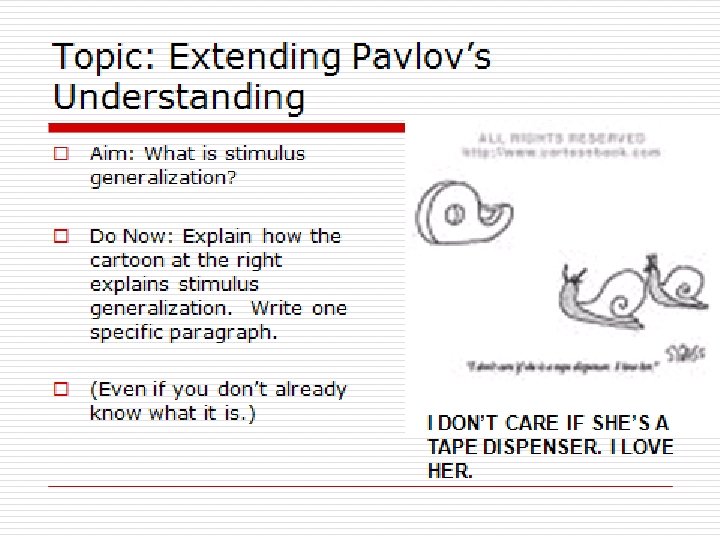
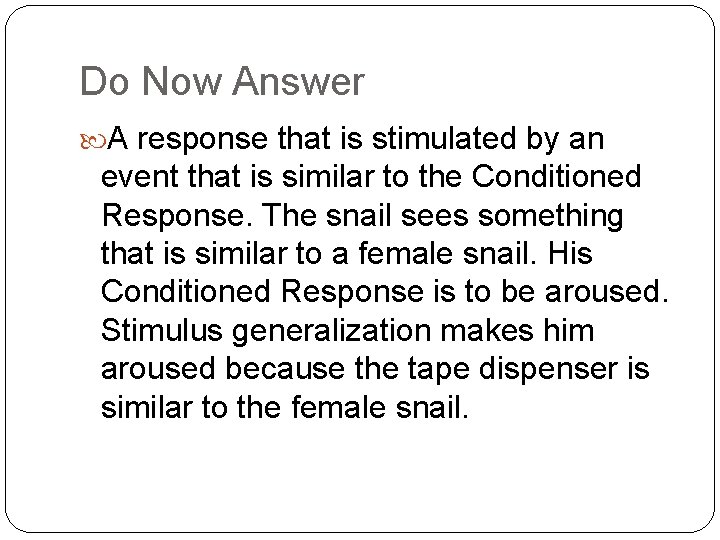
Do Now Answer A response that is stimulated by an event that is similar to the Conditioned Response. The snail sees something that is similar to a female snail. His Conditioned Response is to be aroused. Stimulus generalization makes him aroused because the tape dispenser is similar to the female snail.
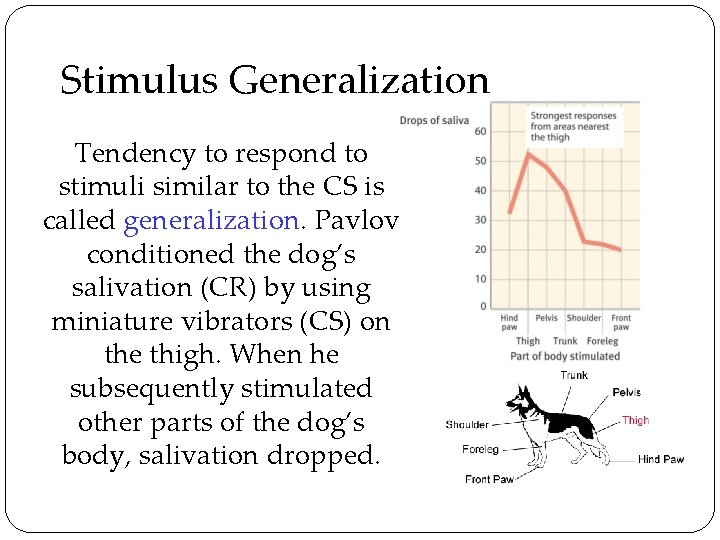
Stimulus Generalization Tendency to respond to stimuli similar to the CS is called generalization. Pavlov conditioned the dog’s salivation (CR) by using miniature vibrators (CS) on the thigh. When he subsequently stimulated other parts of the dog’s body, salivation dropped.
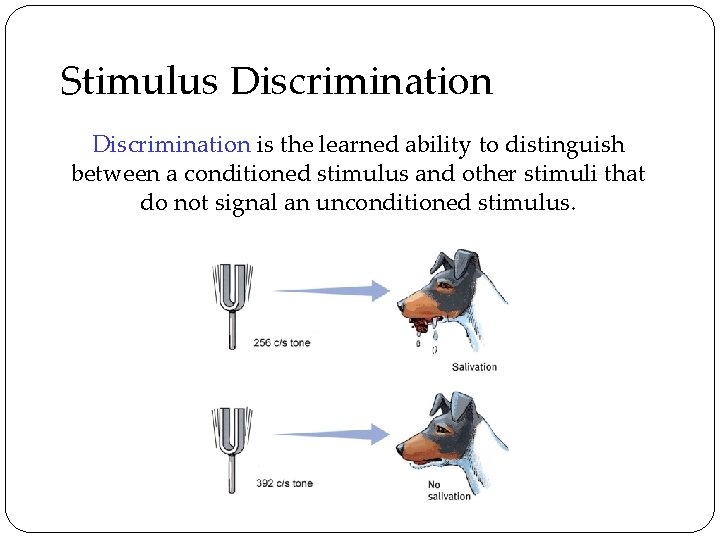
Stimulus Discrimination is the learned ability to distinguish between a conditioned stimulus and other stimuli that do not signal an unconditioned stimulus.
Classical Conditioning James Watson Development of phobias through classical conditioning “Little Albert” was taught to fear a harmless laboratory rat.
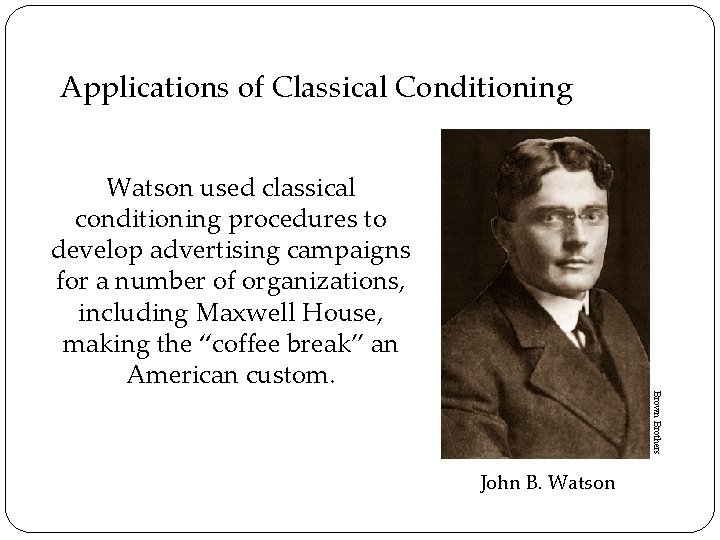
Applications of Classical Conditioning Watson used classical conditioning procedures to develop advertising campaigns for a number of organizations, including Maxwell House, making the “coffee break” an American custom. Brown Brothers John B. Watson
Extending Pavlov’s Understanding Pavlov and Watson considered consciousness, or mind, unfit for the scientific study of psychology. However, they underestimated the importance of cognitive processes and biological constraints.
Cognitive Processes Early behaviorists believed that learned behaviors of various animals could be reduced to mindless mechanisms. However, later behaviorists suggested that animals learn the predictability of a stimulus, meaning they learn expectancy or awareness of a stimulus (Rescorla & Wagner, 1972).
Biological Predispositions Pavlov and Watson believed that laws of learning were similar for all animals. Therefore, a pigeon and a person do not differ in their learning. However, behaviorists later suggested that learning is constrained by an animal’s biology.
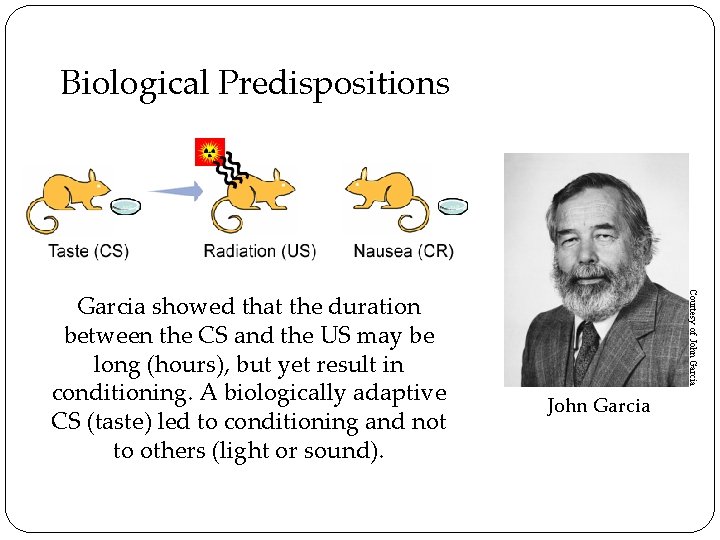
Biological Predispositions Courtesy of John Garcia showed that the duration between the CS and the US may be long (hours), but yet result in conditioning. A biologically adaptive CS (taste) led to conditioning and not to others (light or sound). John Garcia
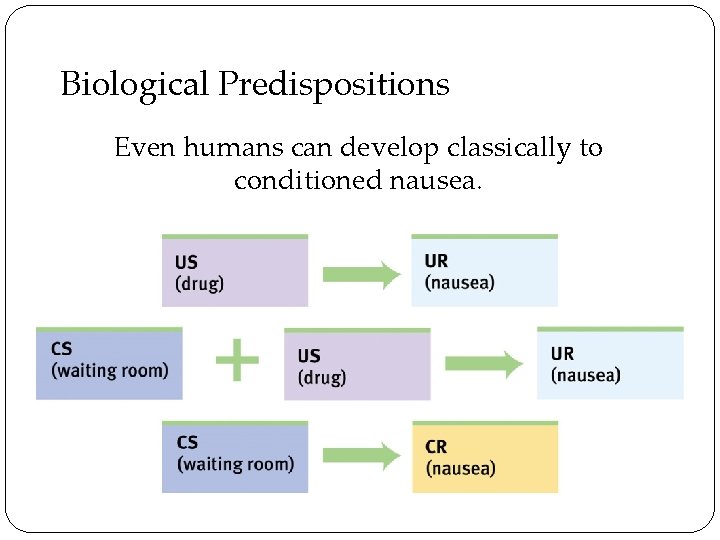
Biological Predispositions Even humans can develop classically to conditioned nausea.
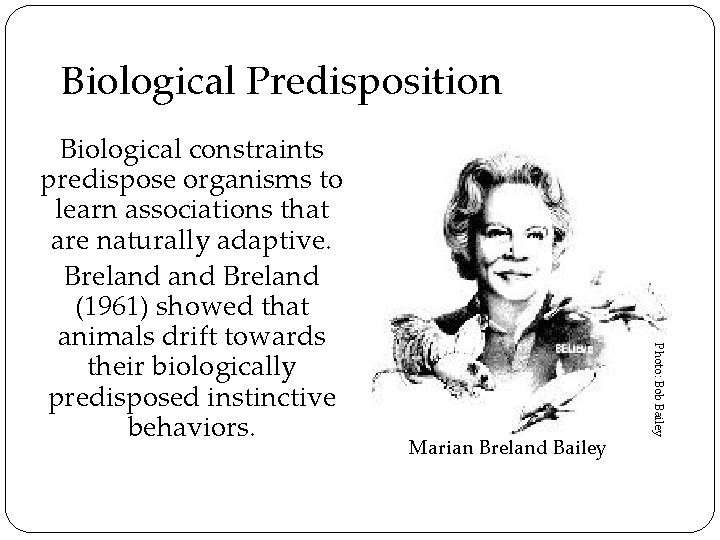
Biological Predisposition Marian Breland Bailey Photo: Bob Bailey Biological constraints predispose organisms to learn associations that are naturally adaptive. Breland (1961) showed that animals drift towards their biologically predisposed instinctive behaviors.
Instinctual Drift When presented with an unexpected situation animals (and people) will drift towards the behavior they are genetically predisposed to. If an animal is reverting to its natural ways, and not doing the task that the people conditioning want, then they're totally ignoring learning for reinforcement.
Applications of Classical Conditioning 1. 2. Former crack cocaine users should avoid cues (people, places) associated with previous drug use. Through classical conditioning, a drug (plus its taste) that affects the immune response may cause the taste of the drug to invoke the immune response.
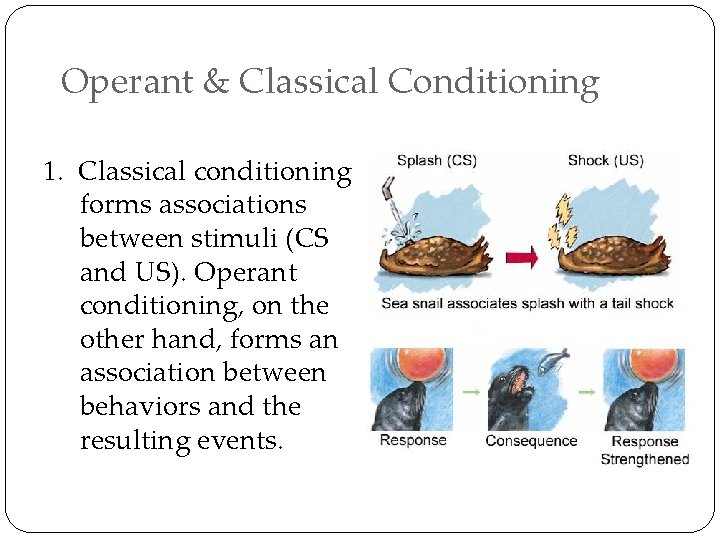
Operant & Classical Conditioning 1. Classical conditioning forms associations between stimuli (CS and US). Operant conditioning, on the other hand, forms an association between behaviors and the resulting events.
Operant & Classical Conditioning 2. Classical conditioning involves respondent behavior that occurs as an automatic response to a certain stimulus. Operant conditioning involves operant behavior, a behavior that operates on the environment, producing rewarding or punishing stimuli.
Thorndike's Puzzle Box, used a cat solving the puzzle of how to escape from the box. However, unlike Skinner's experiment with rats, the cat did not show any systematic strategies in learning. He simply scrambled around in the box until he stepped on the lever.
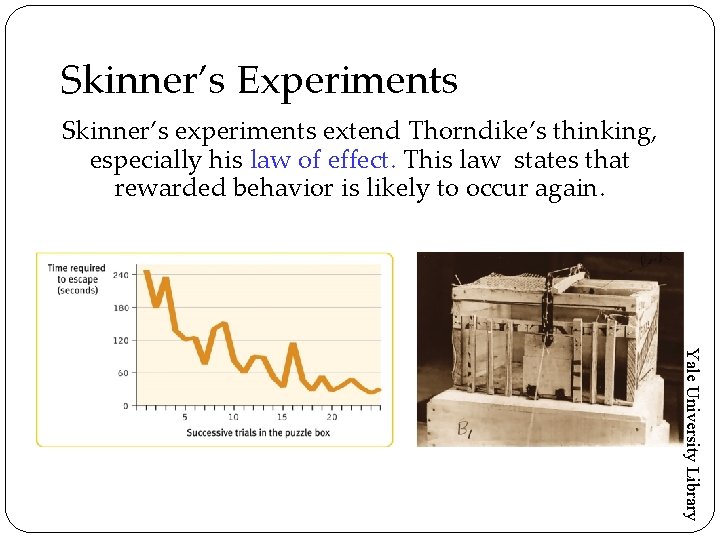
Skinner’s Experiments Skinner’s experiments extend Thorndike’s thinking, especially his law of effect. This law states that rewarded behavior is likely to occur again. Yale University Library
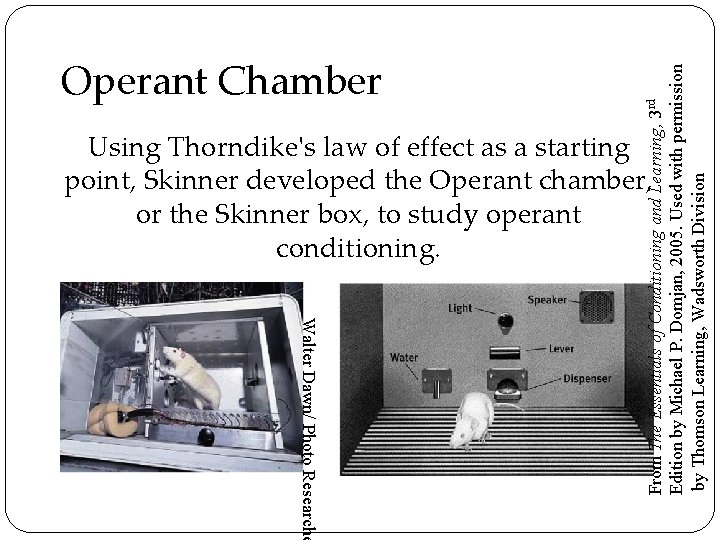
From The Essentials of Conditioning and Learning, 3 rd Edition by Michael P. Domjan, 2005. Used with permission by Thomson Learning, Wadsworth Division Operant Chamber Using Thorndike's law of effect as a starting point, Skinner developed the Operant chamber, or the Skinner box, to study operant conditioning. Walter Dawn/ Photo Researche
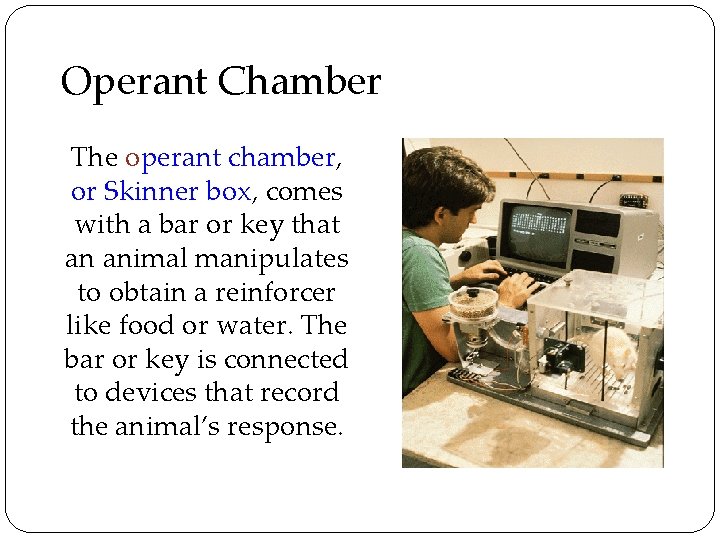
Operant Chamber The operant chamber, or Skinner box, comes with a bar or key that an animal manipulates to obtain a reinforcer like food or water. The bar or key is connected to devices that record the animal’s response.
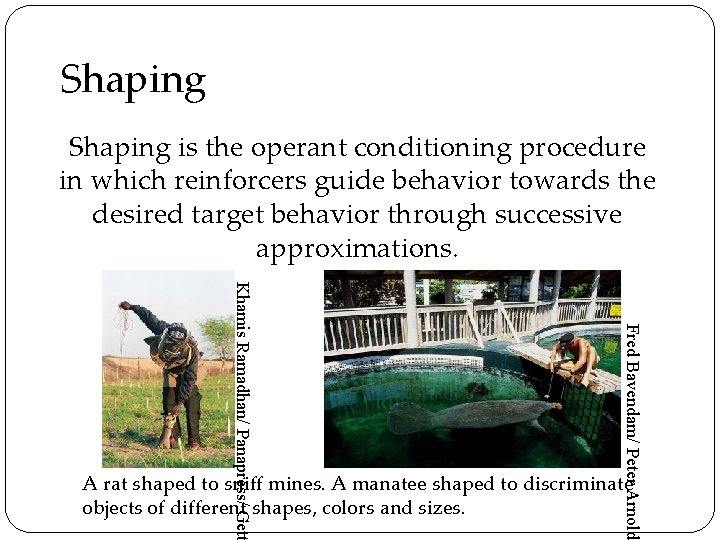
Shaping is the operant conditioning procedure in which reinforcers guide behavior towards the desired target behavior through successive approximations. Fred Bavendam/ Peter Arnold Khamis Ramadhan/ Panapress/ Gett A rat shaped to sniff mines. A manatee shaped to discriminate objects of different shapes, colors and sizes.
- Slides: 42