
Chapter 7 Layer 2 Technologies LAN Technologies Ethernet




- Slides: 29
Chapter 7: Layer 2 Technologies
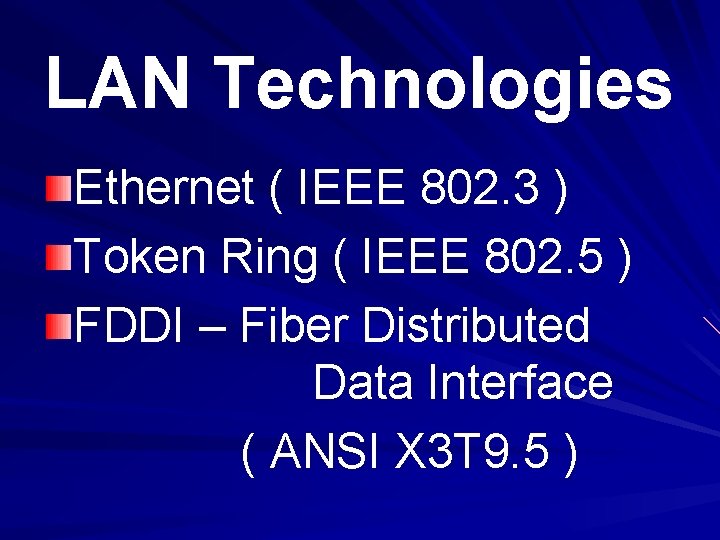
LAN Technologies Ethernet ( IEEE 802. 3 ) Token Ring ( IEEE 802. 5 ) FDDI – Fiber Distributed Data Interface ( ANSI X 3 T 9. 5 )
Token Ring Network (IBM Token Ring / IEEE 802. 5)
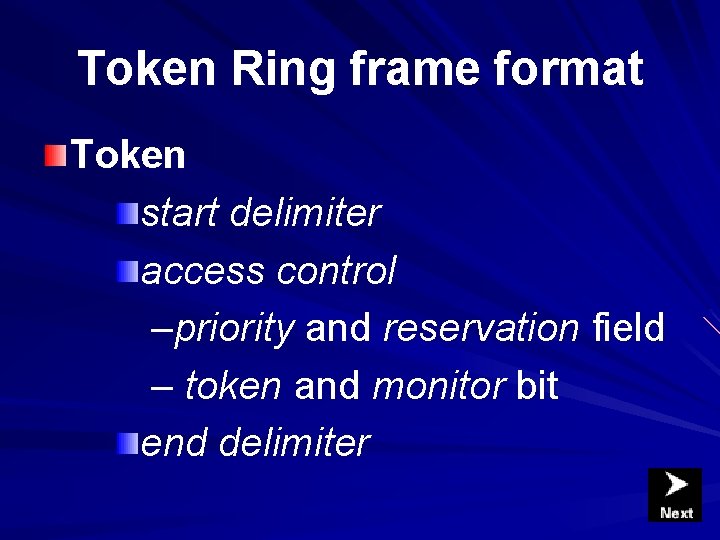
Token Ring frame format Token start delimiter access control –priority and reservation field – token and monitor bit end delimiter
Token Passing Priority System priority field reservation field Management Mechanisms active monitor MSAUs (multi-station access units) Beaconing
Token Ring Media and Physical Topologies
Fiber Distributed Data Interface ( FDDI )
FDDI Frame Format
Token Passing FDDI supports two types of traffic : synchronous asynchronous
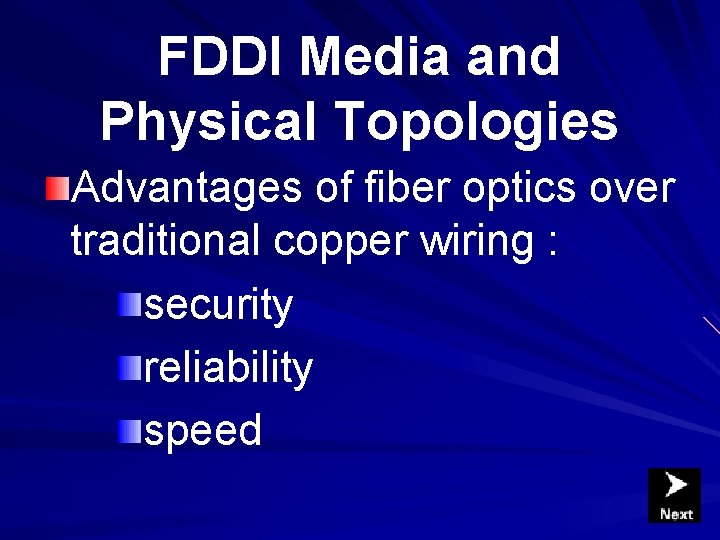
FDDI Media and Physical Topologies Advantages of fiber optics over traditional copper wiring : security reliability speed
Ethernet and IEEE 802. 3
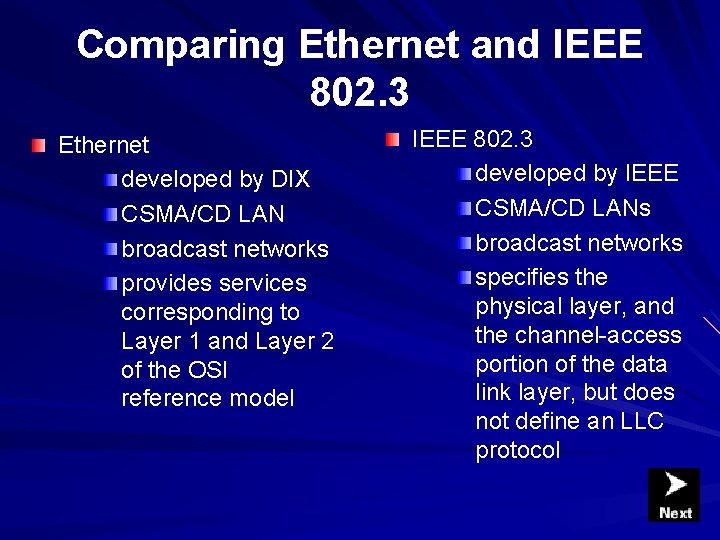
Comparing Ethernet and IEEE 802. 3 Ethernet developed by DIX CSMA/CD LAN broadcast networks provides services corresponding to Layer 1 and Layer 2 of the OSI reference model IEEE 802. 3 developed by IEEE CSMA/CD LANs broadcast networks specifies the physical layer, and the channel-access portion of the data link layer, but does not define an LLC protocol
Ethernet and IEEE 802. 3 Frame Format
Ethernet Operation Broadcast technology Uses CSMA/CD as its media access method listen-before-transmit mode collision detection
Ethernet 10 BASE-T Media and Topologies
Layer 2 Devices
Network Interface Cards (NICs) Factors to consider in selecting NICs: type of network (e. g. Ethernet, Token Ring, FDDI, or other) type of media (e. g. twisted-pair, coaxial, or fiber-optic cable) type of system bus (e. g. PCI and ISA)
Bridges
Bridge Layer 2 operations
Switches
Two basic operations of a switch: switching data frames maintenance of switching operations
Switch Layer 2 operations
Effects of Layer 2 Devices on Data Flow
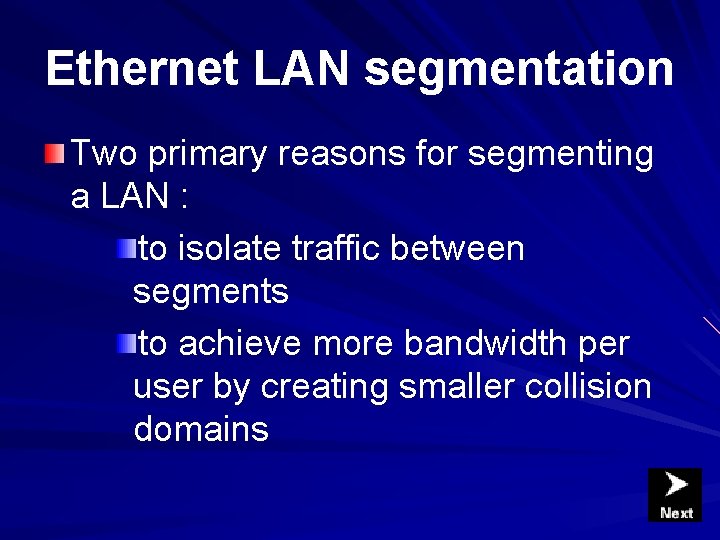
Ethernet LAN segmentation Two primary reasons for segmenting a LAN : to isolate traffic between segments to achieve more bandwidth per user by creating smaller collision domains
Bridge Segmentation of a Collision Domain
Switch Segmentation of a Collision Domain
Router Segmentation of a Collision Domain
Troubleshooting Workstations
That’s All Folks!!!