
Chapter 7 Late Antiquity and the Emergence of
- Slides: 17
Chapter 7 Late Antiquity and the Emergence of the Medieval World
The Reforms of Diocletian and Constantine § Political Reforms § § § Military Reforms § § § The divisions of Diocletian (284 – 305): the tetrarchy The expansion of autocratic policies under Constantine (306 – 337) Army Enlarged to 500, 000 men Economic and Social Trends: Coercion Constantine’s Building Program § Foundation of Constantinople (Byzantium)
The Empire’s New Religion § The Conversion of Constantine § § § The Battle of Milvian Bridge (312) The Edict of Milan (313): tolerance of Christianity Organization and Religious Disputes § § Church government based on Roman administration The problem of heresy § § Arianism The Council of Nicaea (325)
The End of the Western Empire § The Germans § § German Migrations § § The pressure of the Huns The Threat of the Germans § § § Boundaries and Roman contacts The revolt of the Visigoths (sack of Rome, 410) The settlement of other “barbarian” groups Role of Masters of the Soldiers § § The infighting of commanders Odoacer deposes the last Roman Emperor (476)
The Germanic Kingdoms § The Ostrogothic Kingdom of Italy § Theodoric’s Rule (493 – 526) § § § End of the Ostrogothic Kingdom § § Synthesis of Ostrogothic and Roman practices Religious tensions Byzantine (535 – 552) and Lombard invasions (568) The Visigothic Kingdom of Spain § § Conversion to Catholic Christianity Constant conflict over kingship
The Germanic Kingdoms § The Frankish Kingdom § The Rule of Clovis (c. 482 – 511) § § The successors of Clovis § § § Converts to Catholic Christianity c. 500 Frankish divisions Fusion of Gallo-Roman and Frankish peoples Anglo-Saxon England § Invasion of the Angles and Saxons in the early 5 th century
The Society of the Germanic Peoples § Germanic Law § § Blood feud Wergeld Compurgation and the ordeal The Frankish Family and Marriage § Family as the center of social organization § § § Male domination Arranged marriage, sexual standards, and divorce Women and domestic labor
Development of the Christian Church § The Church Fathers § The work of Augustine (354 – 430) § § § The doctrine of Petrine supremacy Church and State § § Jerome (345 – 420) and the Bible The Power of the Pope § § Confessions and The City of God Pope Gelasius: spiritual and temporal power Pope Gregory the Great (590 – 604) § The Papal States
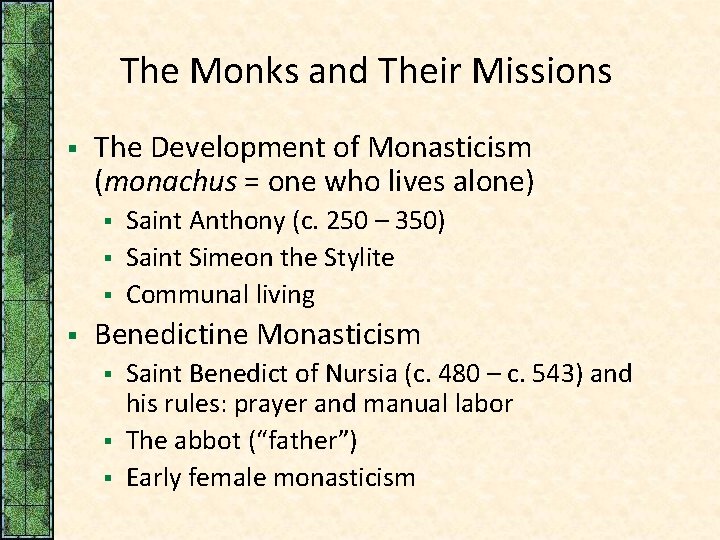
The Monks and Their Missions § The Development of Monasticism (monachus = one who lives alone) § § Saint Anthony (c. 250 – 350) Saint Simeon the Stylite Communal living Benedictine Monasticism § § § Saint Benedict of Nursia (c. 480 – c. 543) and his rules: prayer and manual labor The abbot (“father”) Early female monasticism
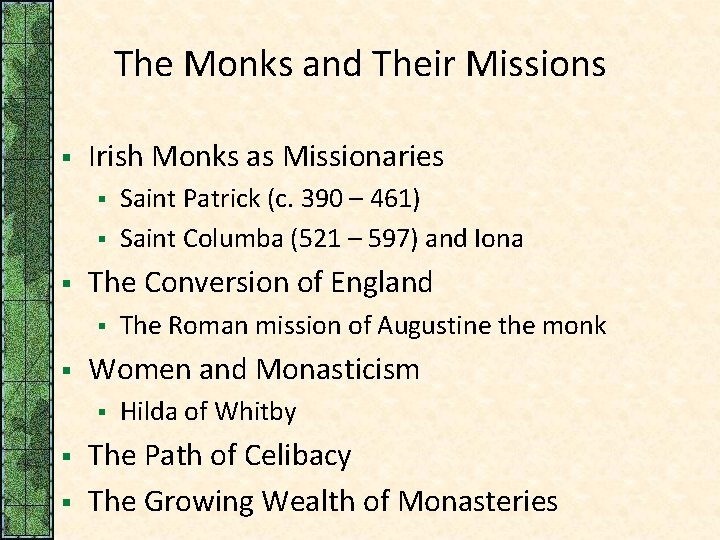
The Monks and Their Missions § Irish Monks as Missionaries § § § The Conversion of England § § § The Roman mission of Augustine the monk Women and Monasticism § § Saint Patrick (c. 390 – 461) Saint Columba (521 – 597) and Iona Hilda of Whitby The Path of Celibacy The Growing Wealth of Monasteries
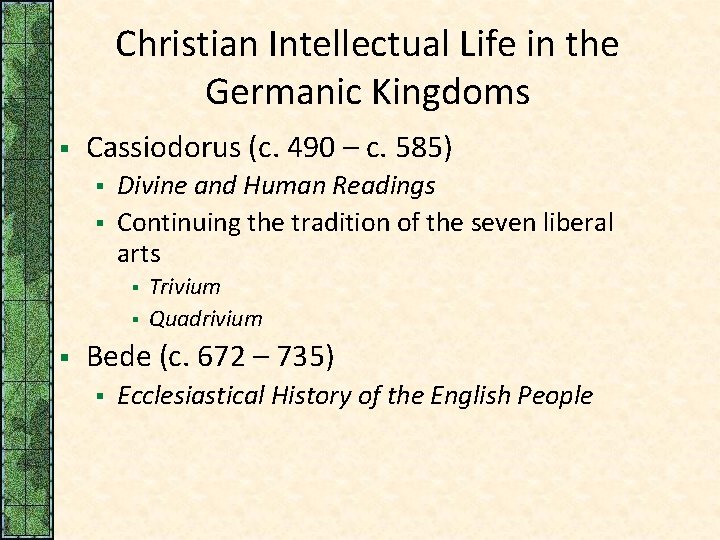
Christian Intellectual Life in the Germanic Kingdoms § Cassiodorus (c. 490 – c. 585) § § Divine and Human Readings Continuing the tradition of the seven liberal arts § § § Trivium Quadrivium Bede (c. 672 – 735) § Ecclesiastical History of the English People
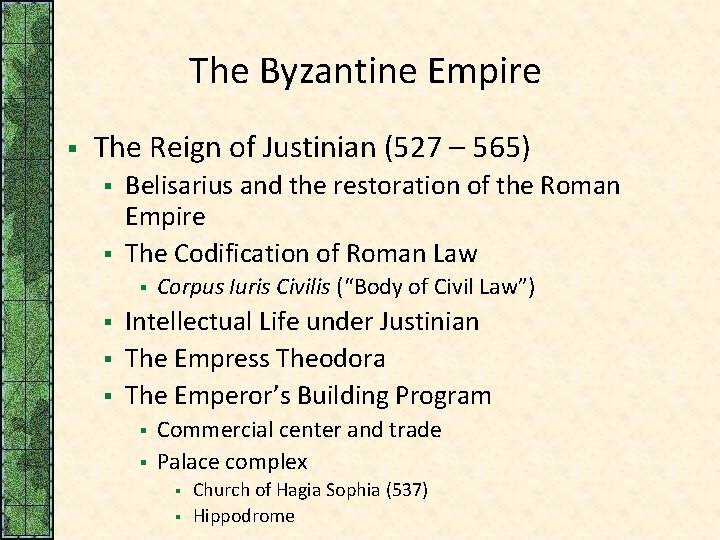
The Byzantine Empire § The Reign of Justinian (527 – 565) § § Belisarius and the restoration of the Roman Empire The Codification of Roman Law § § Corpus Iuris Civilis (“Body of Civil Law”) Intellectual Life under Justinian The Empress Theodora The Emperor’s Building Program § § Commercial center and trade Palace complex § § Church of Hagia Sophia (537) Hippodrome
From Eastern Roman to Byzantine Empire § Internal and External Problems § Threats on the frontiers § § § The Byzantine Empire in the Eighth Century § A Greek and a Christian State § § The issue of iconoclasm The power of the emperor § § Loss of Syria, Palestine, and Persia to Muslims Bulgars The appointment of the patriarch Life in Constantinople: The Importance of Trade
The Rise of Islam § Background § § § Arabs and Bedouins (nomads) Mecca: the Ka’aba and Trade Muhammad (c. 570 – 632) § Revelations: submission to the will of Allah § § § Qur’an (Koran) Hegira (journey to Medina in 622) Return to Mecca (630)
The Teachings of Islam § § The Qur’an as the Code of Ethics and Law Five Pillars of Islam § § § Belief in Allah and Mohammad as his Prophet Prayer five times a day Observance of Ramandan Pilgrimage to Mecca (the hajj) Giving alms to the poor Shari’a (Islamic law)
The Spread of Islam § Dilemmas of Leadership § § Abu Bakr becomes caliph (632) Razzia (raid) and jihad (“striving in the way of the Lord”) Assassination of Caliph Ali (661) Muawiya becomes caliph § § § Conquest of North Africa and much of Spain § § Umayyad Dynasty (capital at Damascus) Shi’ites, followers of Ali, and Sunnites, supporters of the Umayyads The Battle of Tours (732) Failed attack on Constantinople (717 – 718)
Discussion Questions § § § § How did the Germanic tribes differ from the Romans? What role did Constantine play in the expansion of the Christian Church in the Roman Empire? Why was monasticism so important and influential in Europe during the first millennium? How successful was Christianity in converting the non. Christian peoples of Europe? What was Justinian’s impact on the history of the Byzantine Empire? Why was Islam able to expand so quickly and widely? What stopped the spread of Islam throughout Western Europe?