
Chapter 7 Key Terms Valence Electrons Family Group
- Slides: 15
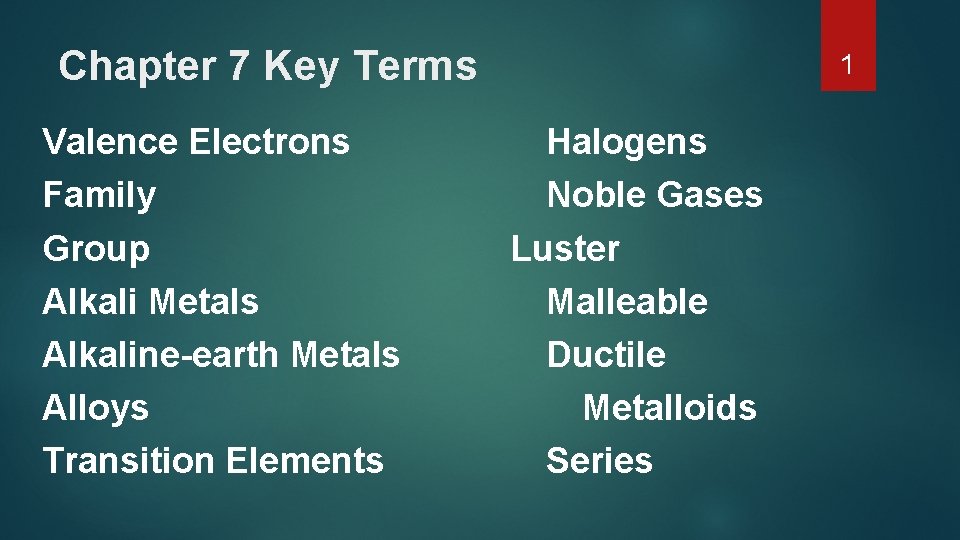
Chapter 7 Key Terms Valence Electrons Family Group Alkali Metals Alkaline-earth Metals Alloys Transition Elements 1 Halogens Noble Gases Luster Malleable Ductile Metalloids Series
2 Chapter 7 THE PERIODIC TABLE OF ELEMENTS
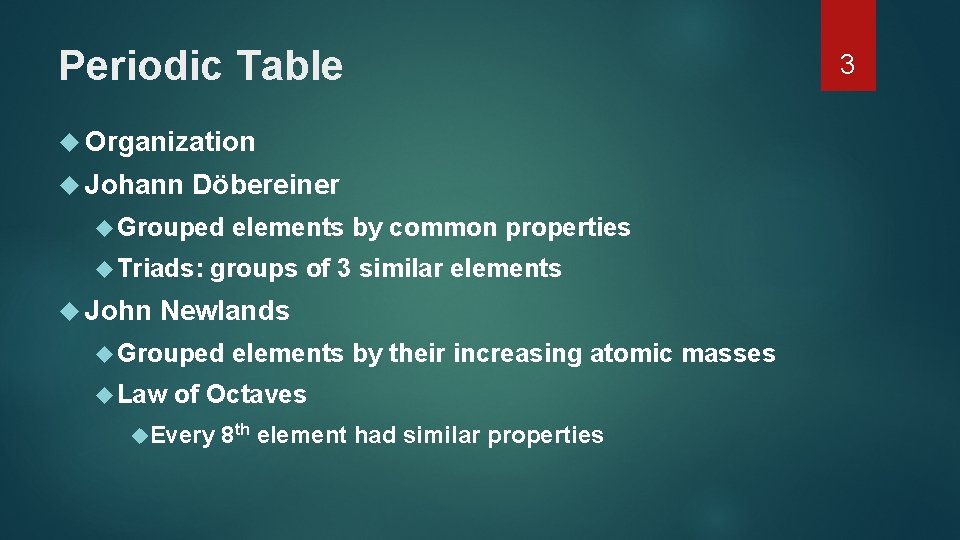
Periodic Table Organization Johann Döbereiner Grouped Triads: John elements by common properties groups of 3 similar elements Newlands Grouped Law elements by their increasing atomic masses of Octaves Every 8 th element had similar properties 3
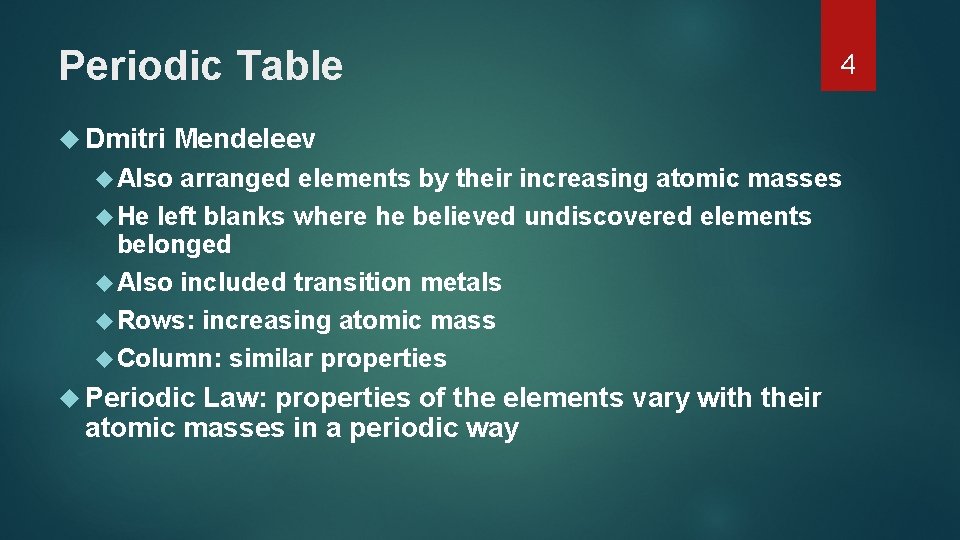
Periodic Table Dmitri 4 Mendeleev Also arranged elements by their increasing atomic masses He left blanks where he believed undiscovered elements belonged Also included transition metals Rows: increasing atomic mass Column: similar properties Periodic Law: properties of the elements vary with their atomic masses in a periodic way
Periodic Table 5 Problem – ordering them by atomic mass did not always put similar elements under each other Henry Moseley Developed way to count protons in nucleus When atoms were placed in order of amount of protons, problems went away Revised Periodic Law: properties of an element vary with their atomic numbers in a systematic way
Review Atomic number = number of protons Atomic mass/mass number = protons + neutrons # of electrons = # of protons in neutral atoms Ions = gain or lost electrons Cl-1 Na+1 6
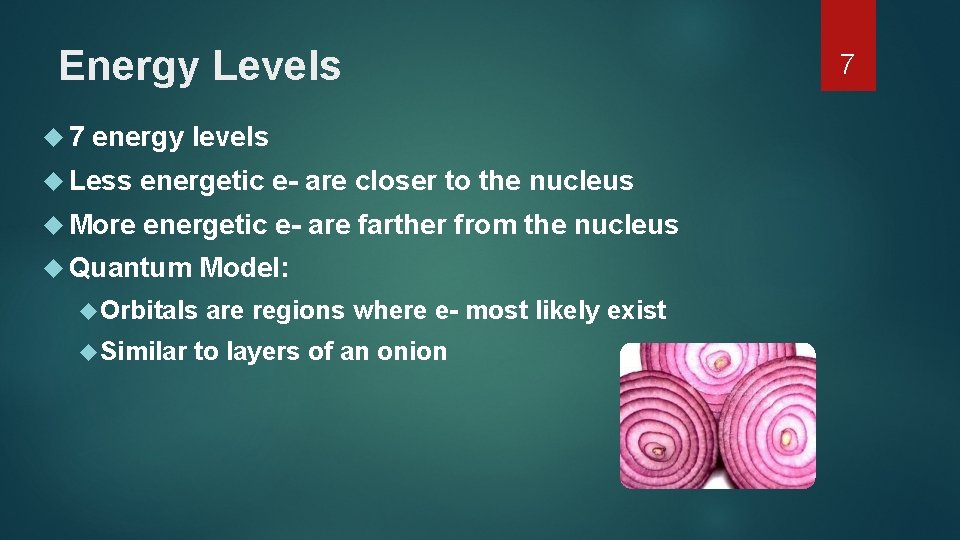
Energy Levels 7 energy levels Less energetic e- are closer to the nucleus More energetic e- are farther from the nucleus Quantum Model: Orbitals Similar are regions where e- most likely exist to layers of an onion 7
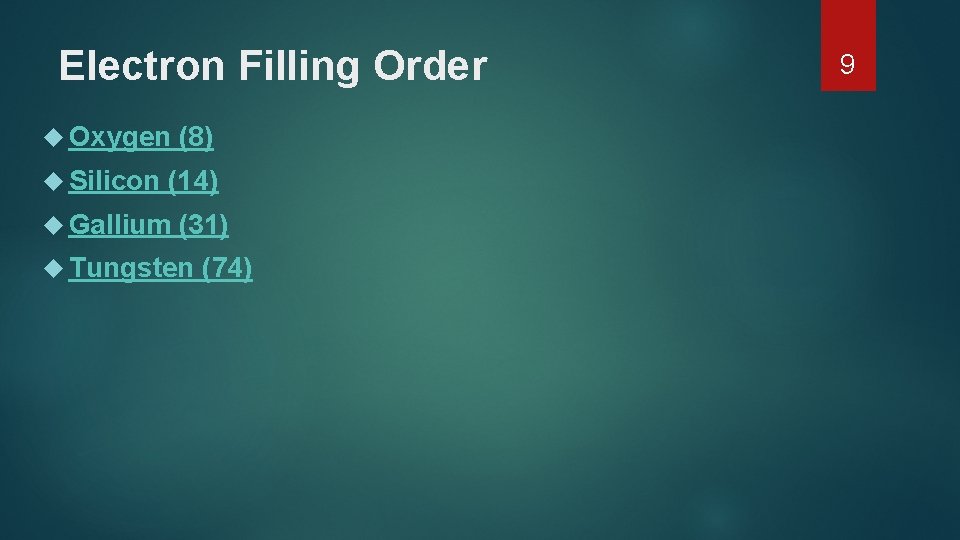
Electron Filling Order Each level has a limit of electrons 1 st: 2 e- 2 nd (7 th): 8 e- 3 rd (6 th): 18 e- 4 th (5 th): 32 e- Octet Rule Once 8 e- enter a level, 2 e- must go to a higher energy level before any more can be added to the lower level 8
Electron Filling Order Oxygen Silicon (8) (14) Gallium (31) Tungsten (74) 9
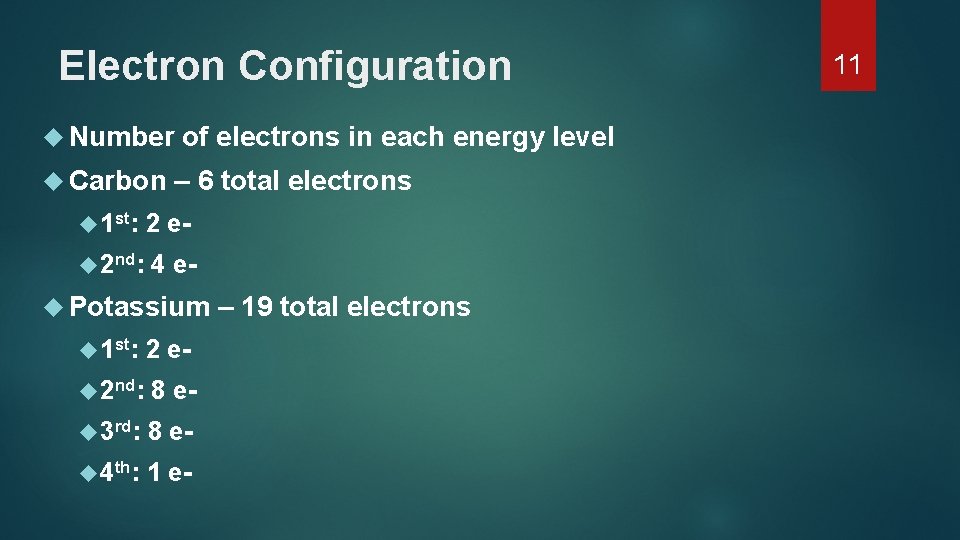
Electron Configuration Number Carbon of electrons in each energy level – 6 total electrons 1 st: 2 e- 2 nd: 4 e- Potassium 1 st: 2 e- 2 nd: 8 e- 3 rd: 8 e- 4 th: 1 e- – 19 total electrons 11
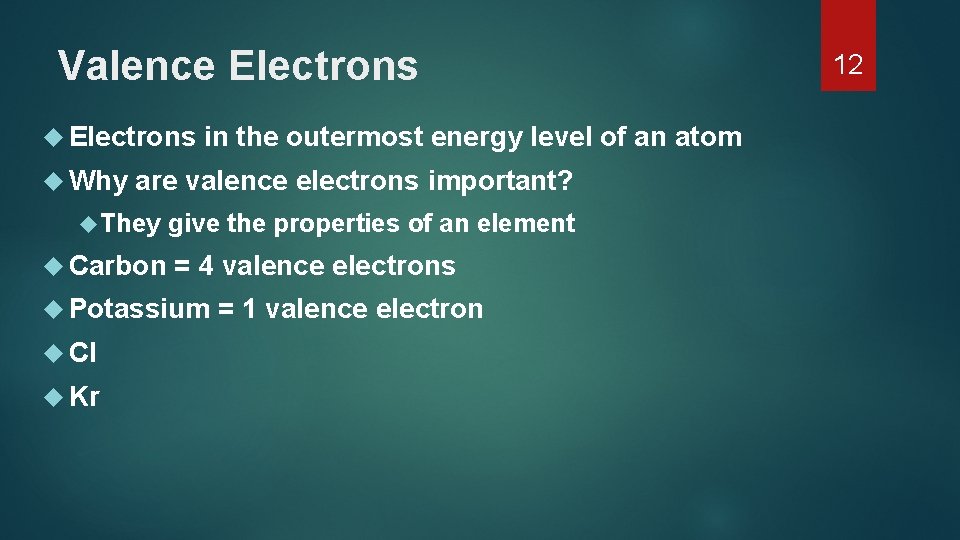
Valence Electrons Why in the outermost energy level of an atom are valence electrons important? They Carbon give the properties of an element = 4 valence electrons Potassium Cl Kr = 1 valence electron 12
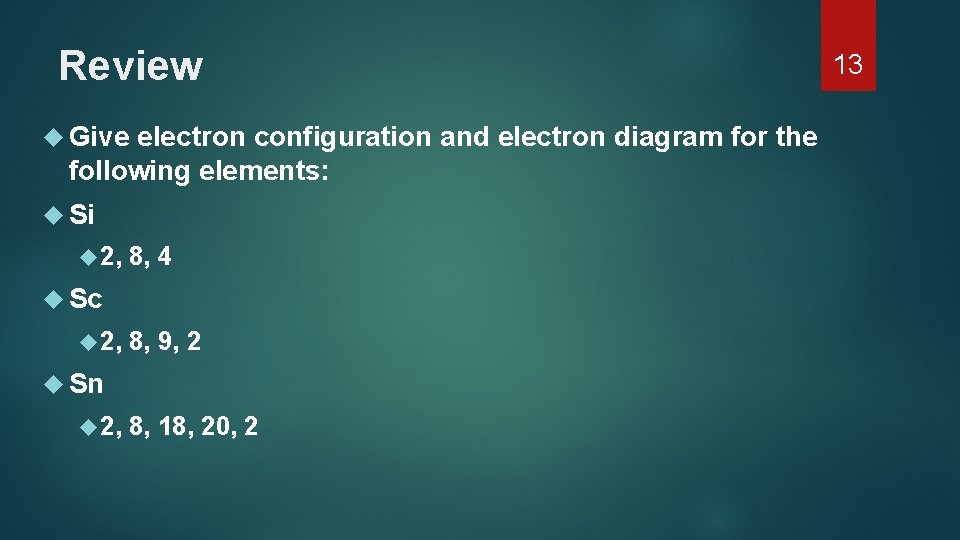
Review Give electron configuration and electron diagram for the following elements: Si 2, 8, 4 Sc 2, 8, 9, 2 Sn 2, 8, 18, 20, 2 13
Relationships Among Elements Vertical columns Families Have or groups same number of valence electrons Horizontal rows Periods or series Ordered by increasing atomic number 14
Families Alkali Metals Alkaline-earth Transition Group Metals IIIA Carbon Family VA Oxygen Family Halogens Noble 15 Gases
Periods & Series Metals 16 on the left side of the chart Nonmetals on the right Metalloids between metals and nonmetals Properties become less metallic as you move from left to right across the chart