
Chapter 7 Ionic Compounds Metals Honors Chemistry Section

- Slides: 37
Chapter 7: Ionic Compounds & Metals Honor’s Chemistry
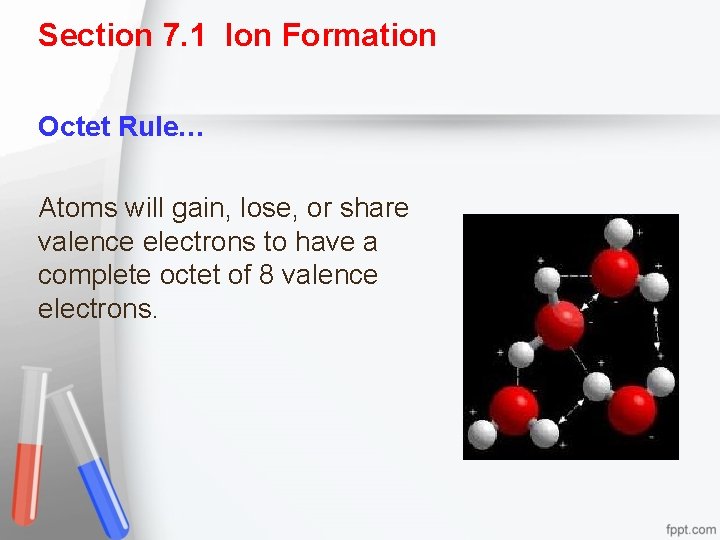
Section 7. 1 Ion Formation Octet Rule… Atoms will gain, lose, or share valence electrons to have a complete octet of 8 valence electrons.
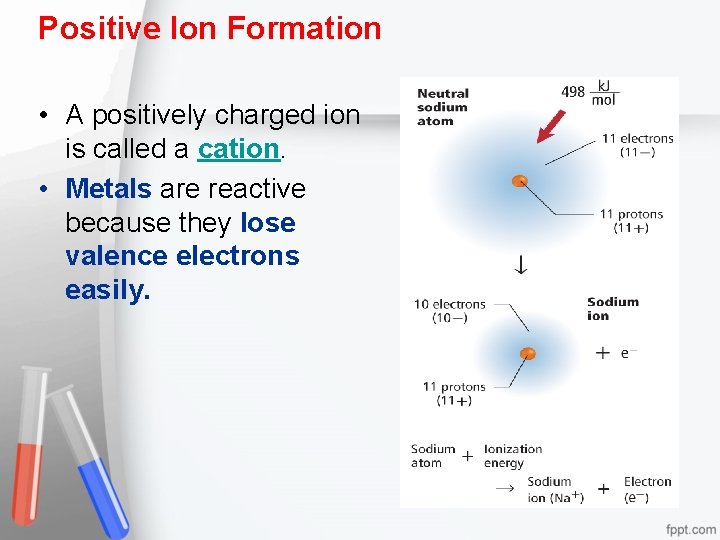
Positive Ion Formation • A positively charged ion is called a cation. • Metals are reactive because they lose valence electrons easily.
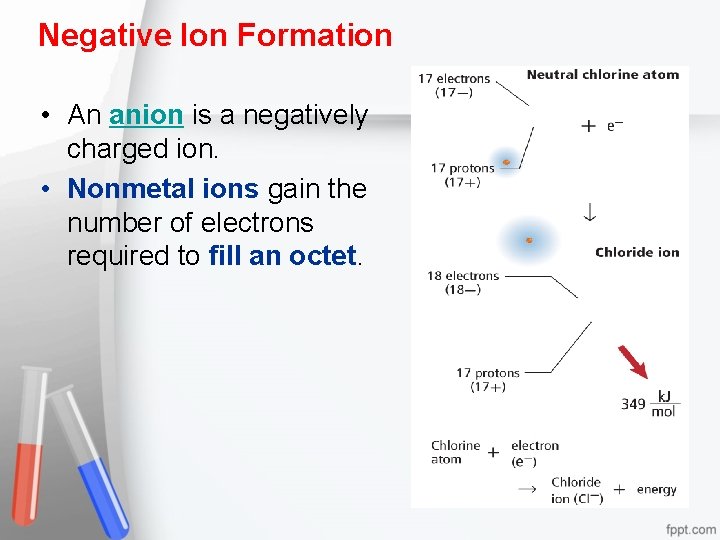
Negative Ion Formation • An anion is a negatively charged ion. • Nonmetal ions gain the number of electrons required to fill an octet.
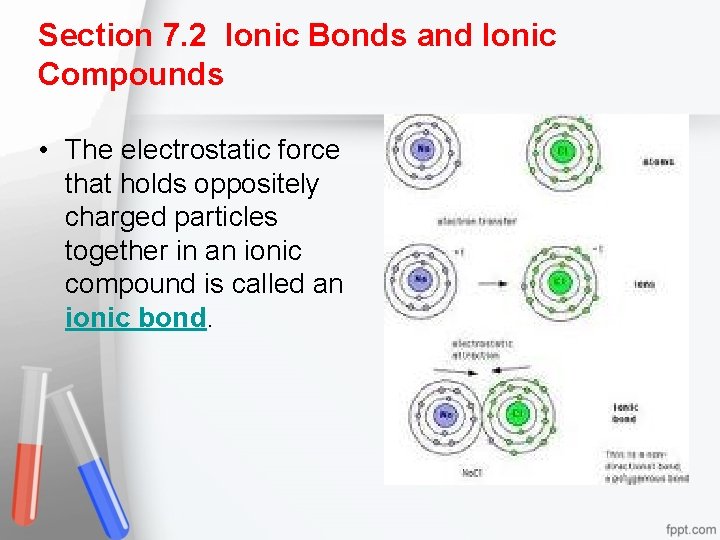
Section 7. 2 Ionic Bonds and Ionic Compounds • The electrostatic force that holds oppositely charged particles together in an ionic compound is called an ionic bond.
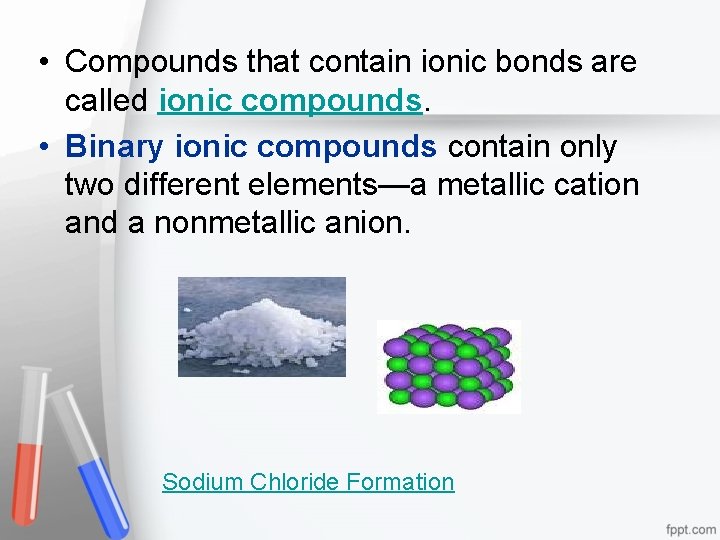
• Compounds that contain ionic bonds are called ionic compounds. • Binary ionic compounds contain only two different elements—a metallic cation and a nonmetallic anion. Sodium Chloride Formation
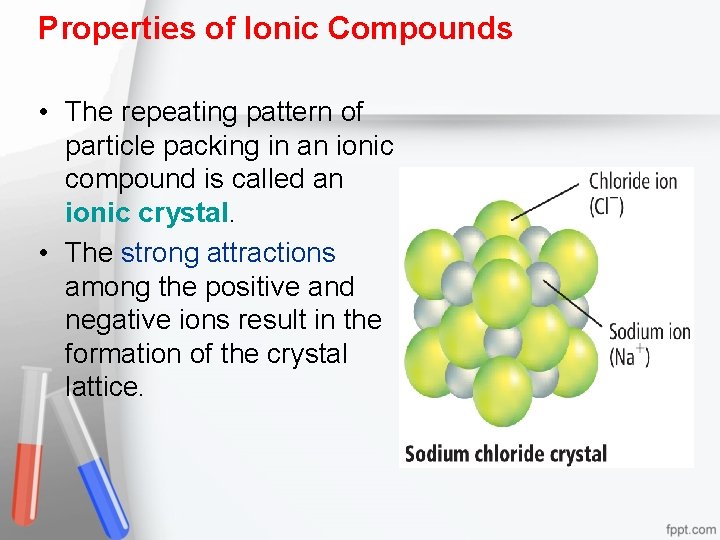
Properties of Ionic Compounds • The repeating pattern of particle packing in an ionic compound is called an ionic crystal. • The strong attractions among the positive and negative ions result in the formation of the crystal lattice.
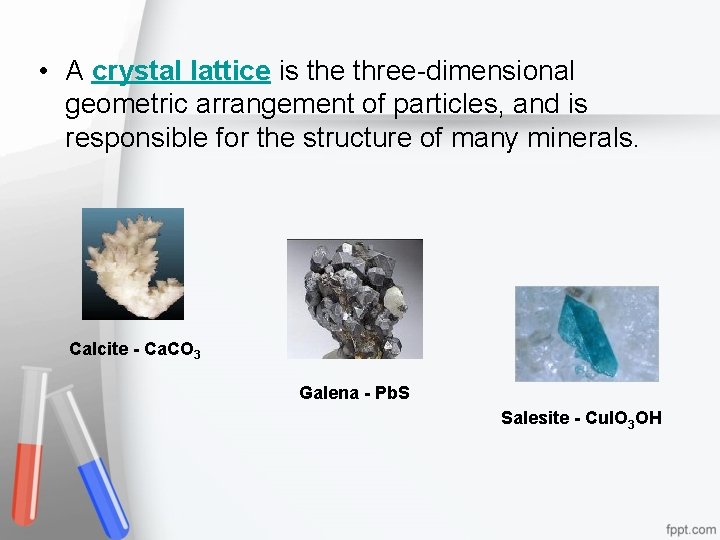
• A crystal lattice is the three-dimensional geometric arrangement of particles, and is responsible for the structure of many minerals. Calcite - Ca. CO 3 Galena - Pb. S Salesite - Cu. IO 3 OH
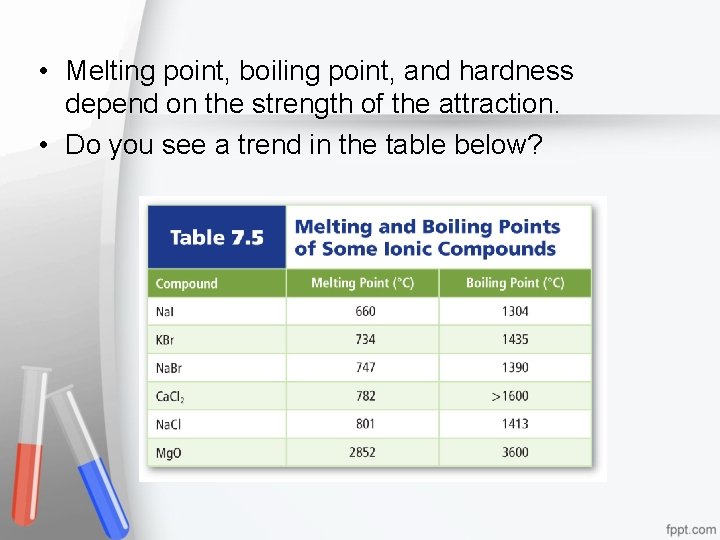
• Melting point, boiling point, and hardness depend on the strength of the attraction. • Do you see a trend in the table below?
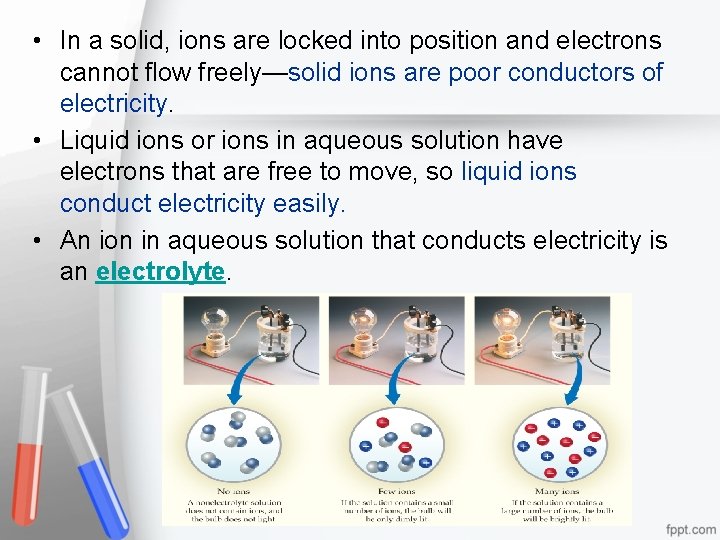
• In a solid, ions are locked into position and electrons cannot flow freely—solid ions are poor conductors of electricity. • Liquid ions or ions in aqueous solution have electrons that are free to move, so liquid ions conduct electricity easily. • An ion in aqueous solution that conducts electricity is an electrolyte.
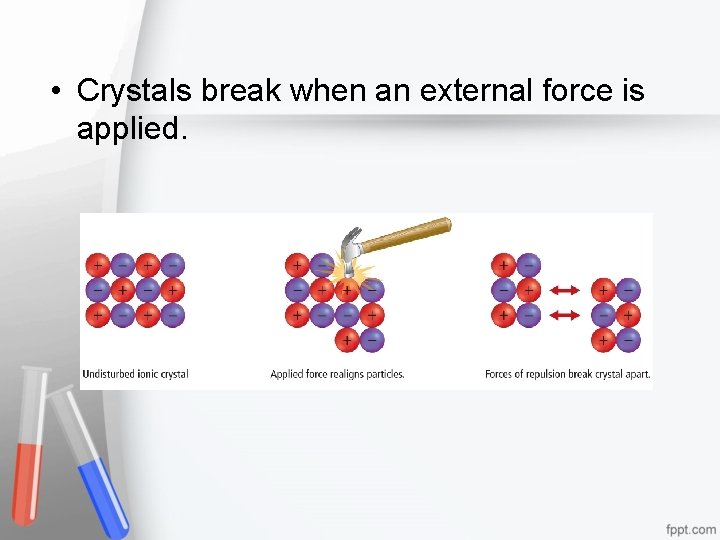
• Crystals break when an external force is applied.
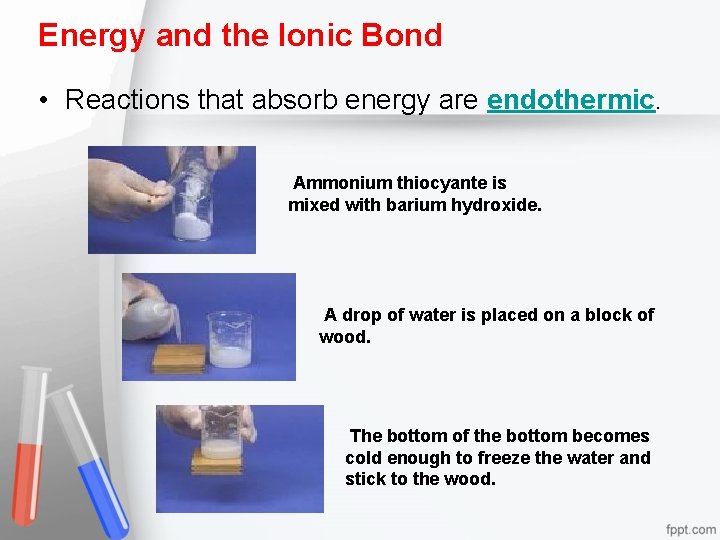
Energy and the Ionic Bond • Reactions that absorb energy are endothermic. Ammonium thiocyante is mixed with barium hydroxide. A drop of water is placed on a block of wood. The bottom of the bottom becomes cold enough to freeze the water and stick to the wood.
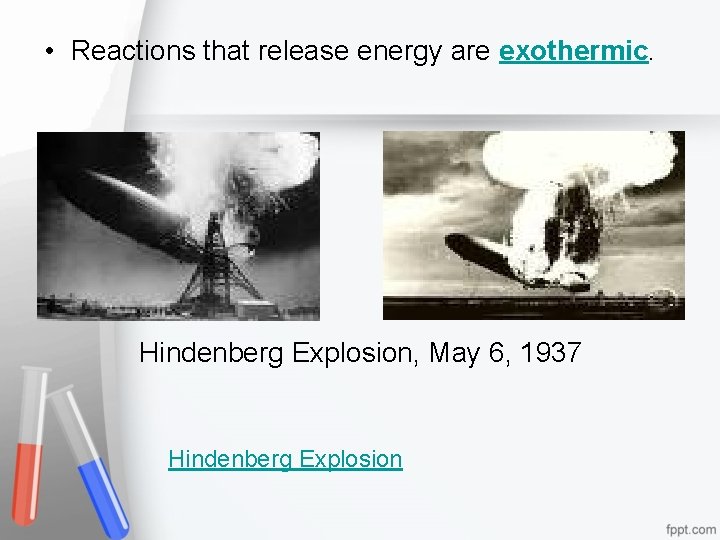
• Reactions that release energy are exothermic. Hindenberg Explosion, May 6, 1937 Hindenberg Explosion
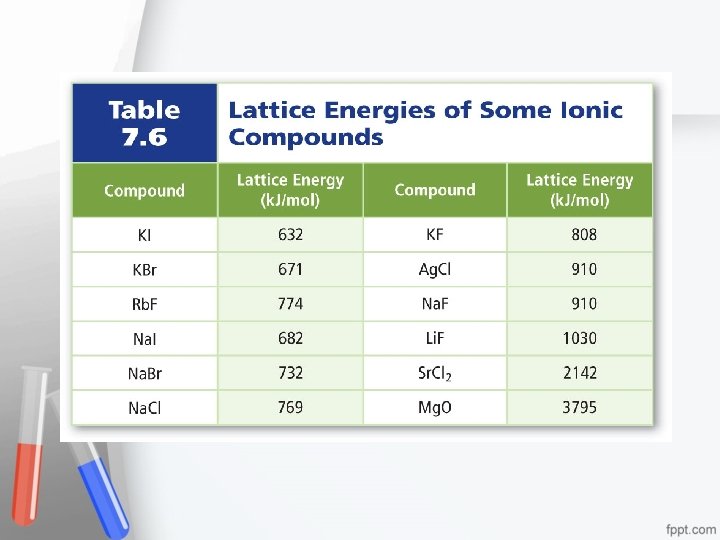
Energy and the Ionic Bond • The energy required to separate 1 mol of ions in an ionic compound is referred to as the lattice energy. • Lattice energy is directly related to the size of the ions that are bonded.
• Smaller ions form compounds with more closely spaced ionic charges, and require more energy to separate. • The smaller the ion, the greater the attraction. • The value of lattice energy is also affected by the charge of the ion – the higher the charge the greater the lattice energy.
Section 7. 3 Names and Formulas for Ionic Compounds Chemists around the world must communicate with one another, so a standardized system of naming compounds was developed.
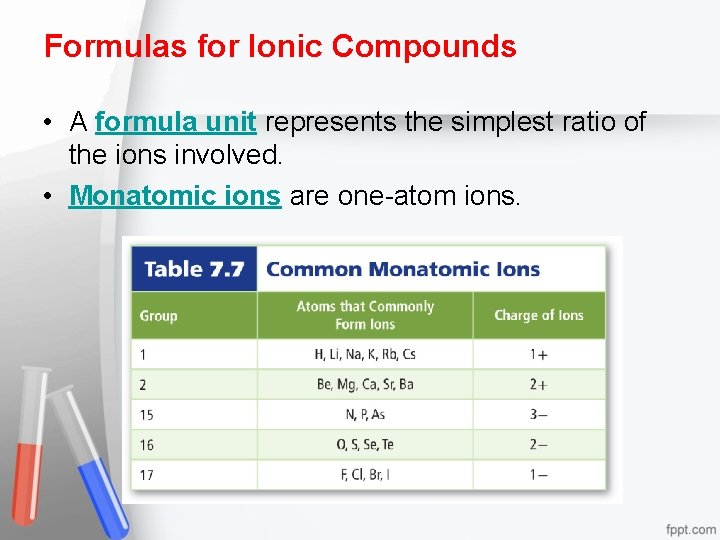
Formulas for Ionic Compounds • A formula unit represents the simplest ratio of the ions involved. • Monatomic ions are one-atom ions.
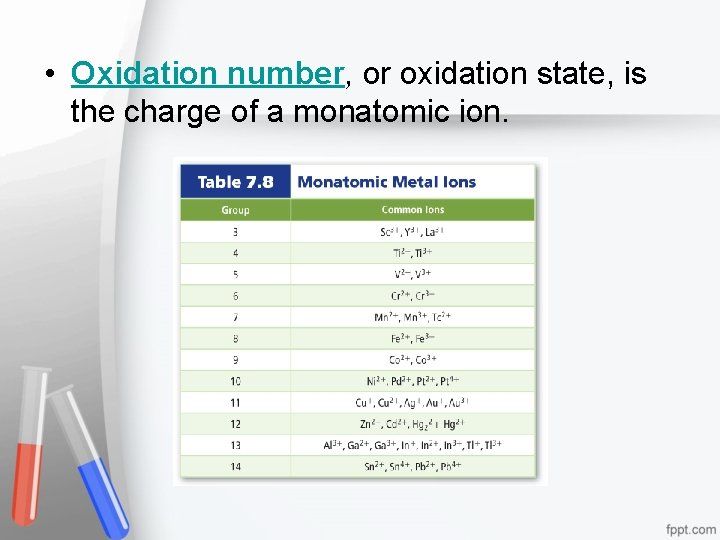
• Oxidation number, or oxidation state, is the charge of a monatomic ion.
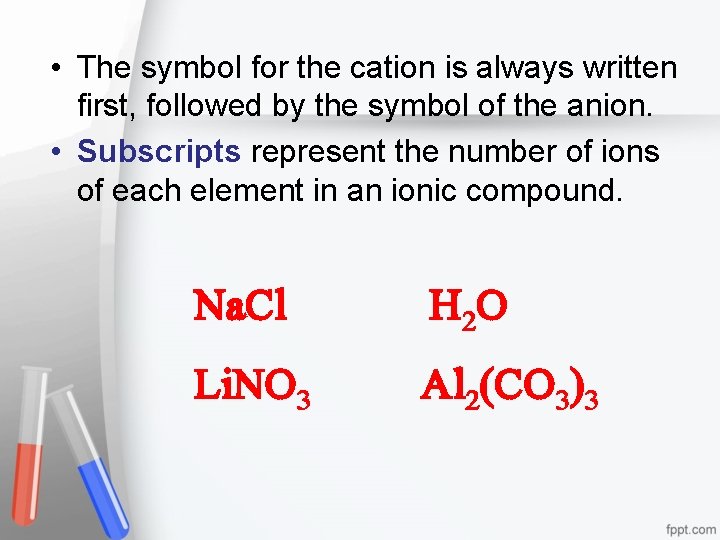
• The symbol for the cation is always written first, followed by the symbol of the anion. • Subscripts represent the number of ions of each element in an ionic compound. Na. Cl H 2 O Li. NO 3 Al 2(CO 3)3
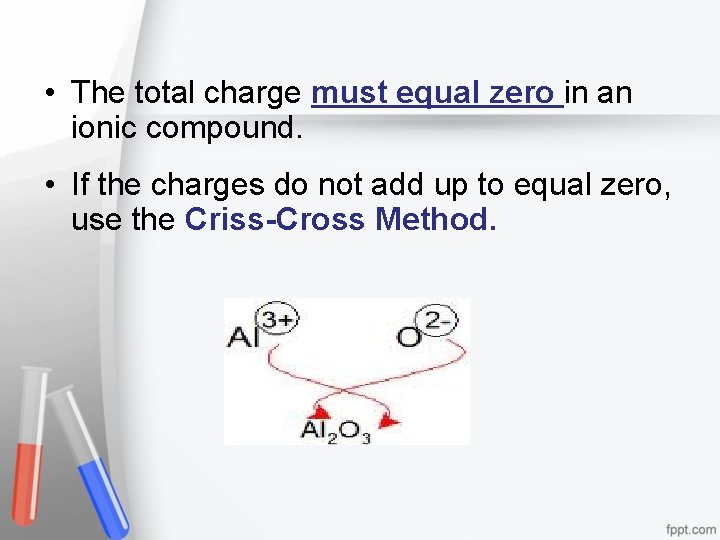
• The total charge must equal zero in an ionic compound. • If the charges do not add up to equal zero, use the Criss-Cross Method.
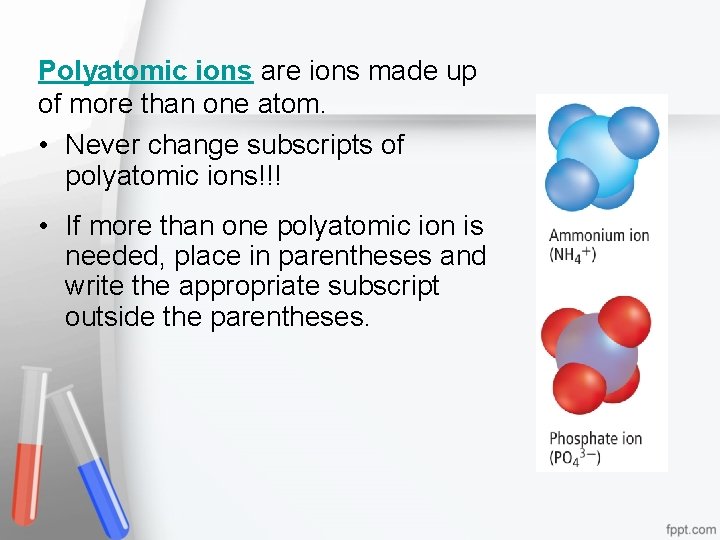
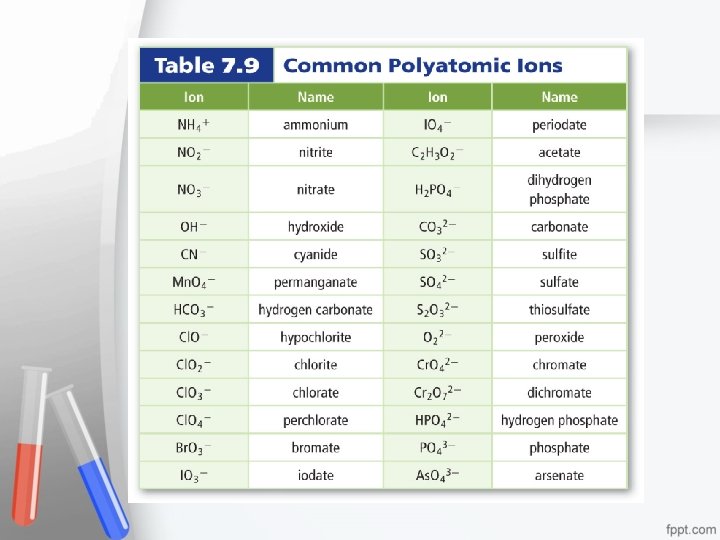
Polyatomic ions are ions made up of more than one atom. • Never change subscripts of polyatomic ions!!! • If more than one polyatomic ion is needed, place in parentheses and write the appropriate subscript outside the parentheses.
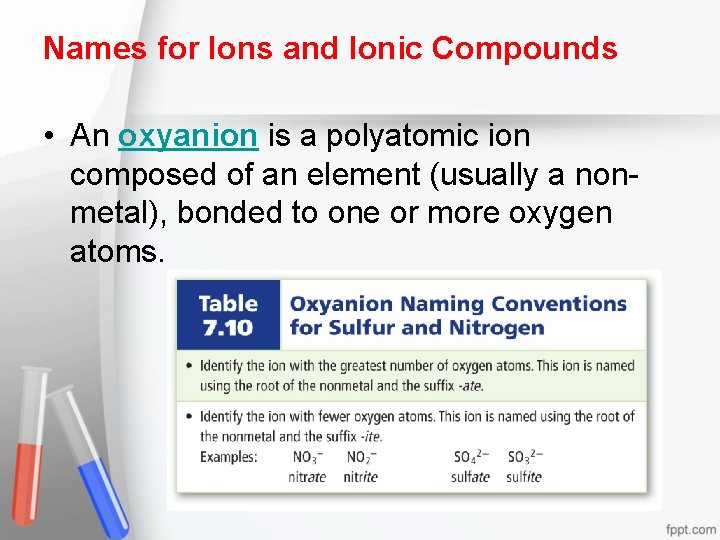
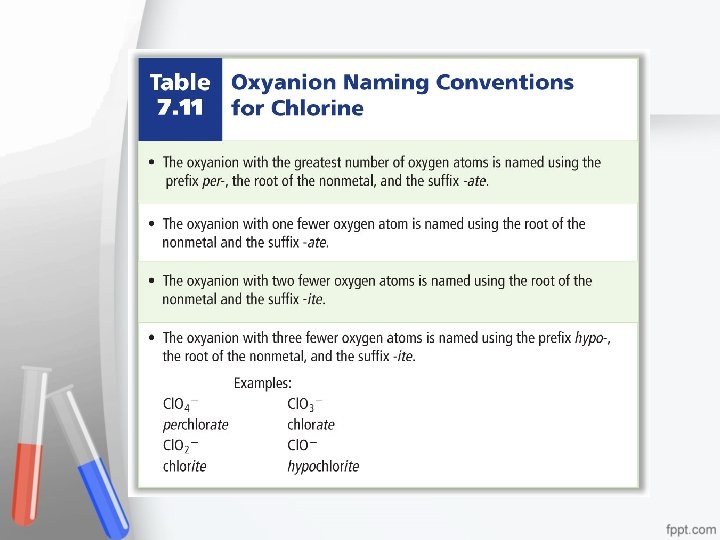
Names for Ions and Ionic Compounds • An oxyanion is a polyatomic ion composed of an element (usually a nonmetal), bonded to one or more oxygen atoms.
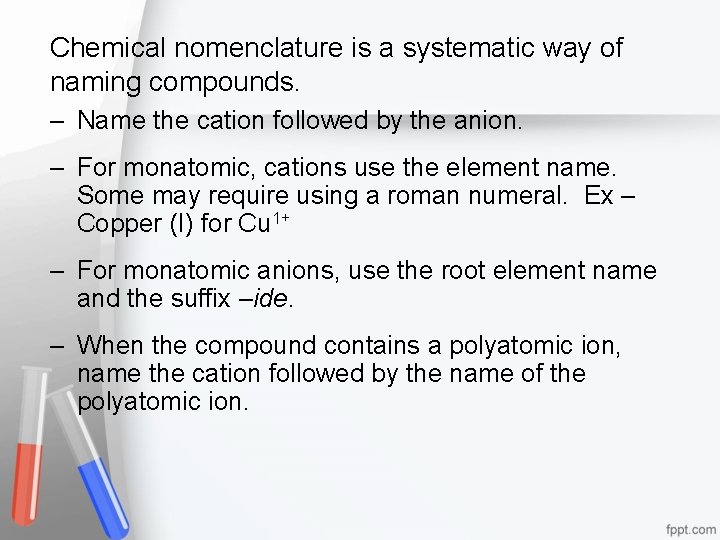
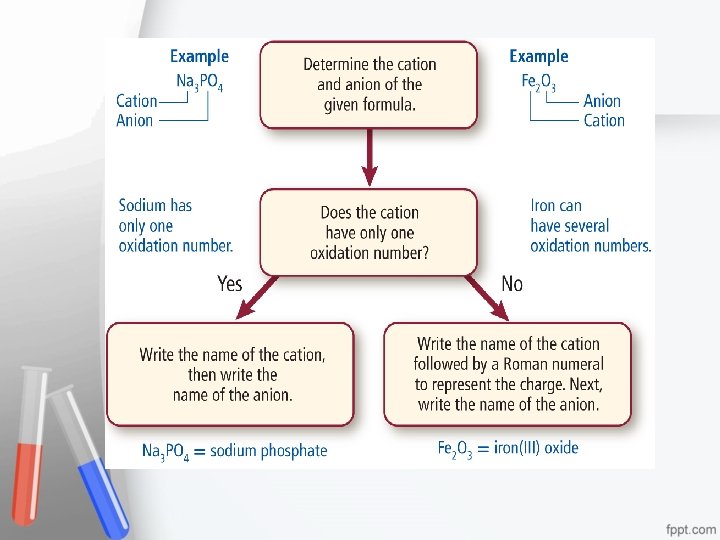
Chemical nomenclature is a systematic way of naming compounds. – Name the cation followed by the anion. – For monatomic, cations use the element name. Some may require using a roman numeral. Ex – Copper (I) for Cu 1+ – For monatomic anions, use the root element name and the suffix –ide. – When the compound contains a polyatomic ion, name the cation followed by the name of the polyatomic ion.
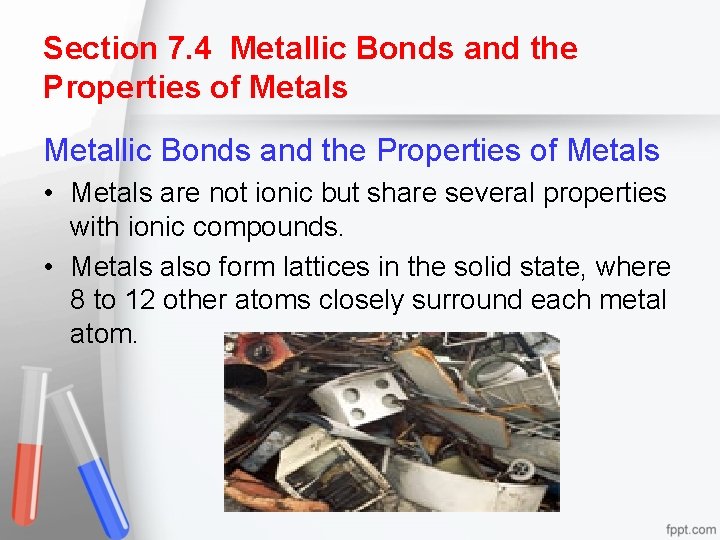
Section 7. 4 Metallic Bonds and the Properties of Metals • Metals are not ionic but share several properties with ionic compounds. • Metals also form lattices in the solid state, where 8 to 12 other atoms closely surround each metal atom.
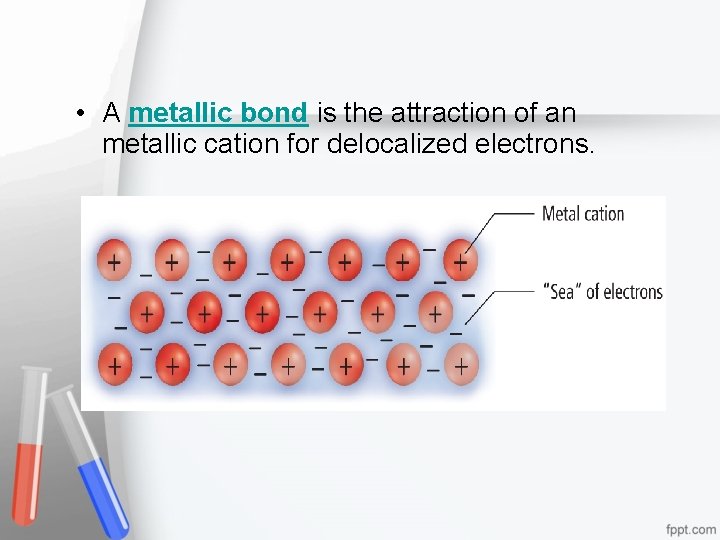
• Within the crowded lattice, the outer energy levels of metal atoms overlap. • The electron sea model proposes that all metal atoms in a metallic solid contribute their valence electrons to form a "sea" of electrons. • The electrons are free to move around are referred to as delocalized electrons, forming a metallic cation.
• A metallic bond is the attraction of an metallic cation for delocalized electrons.
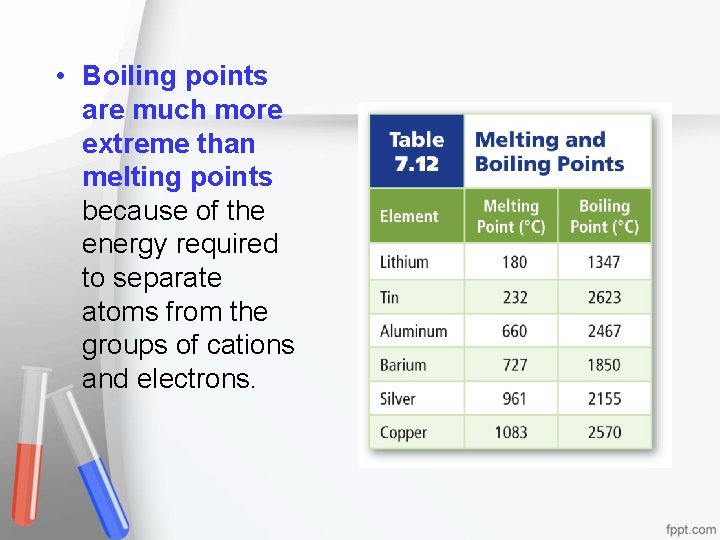
• Boiling points are much more extreme than melting points because of the energy required to separate atoms from the groups of cations and electrons.
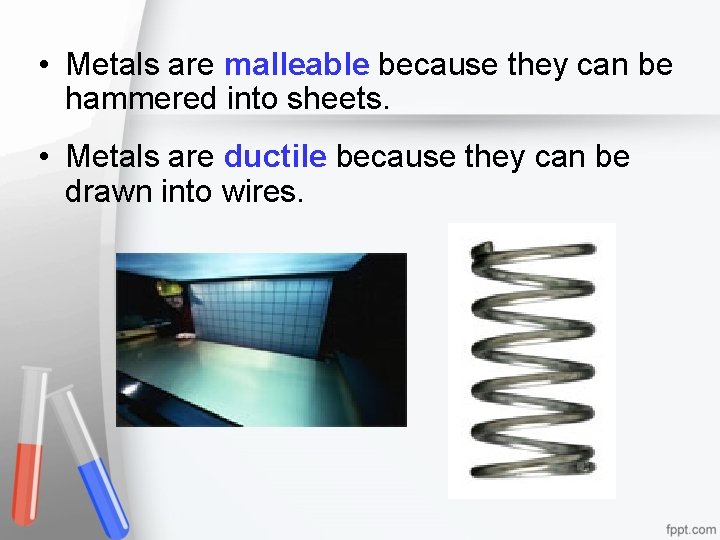
• Metals are malleable because they can be hammered into sheets. • Metals are ductile because they can be drawn into wires.
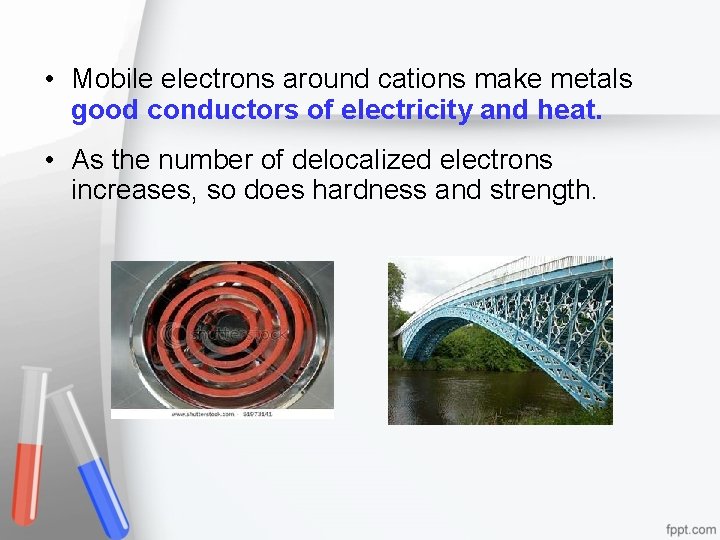
• Mobile electrons around cations make metals good conductors of electricity and heat. • As the number of delocalized electrons increases, so does hardness and strength.
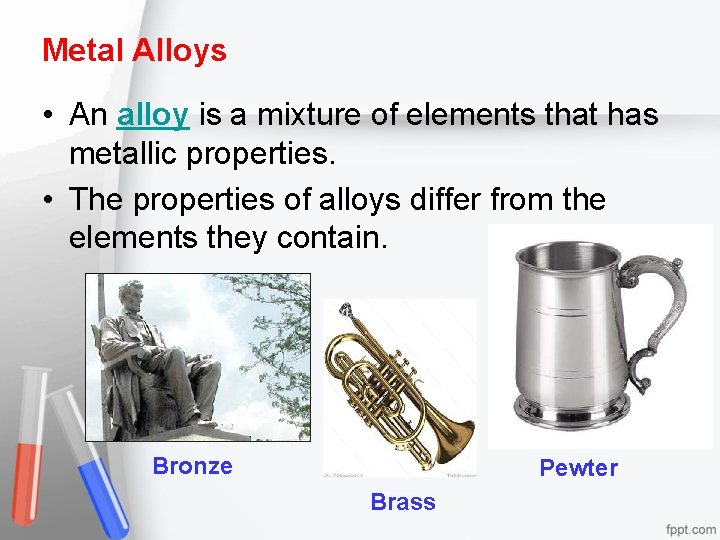
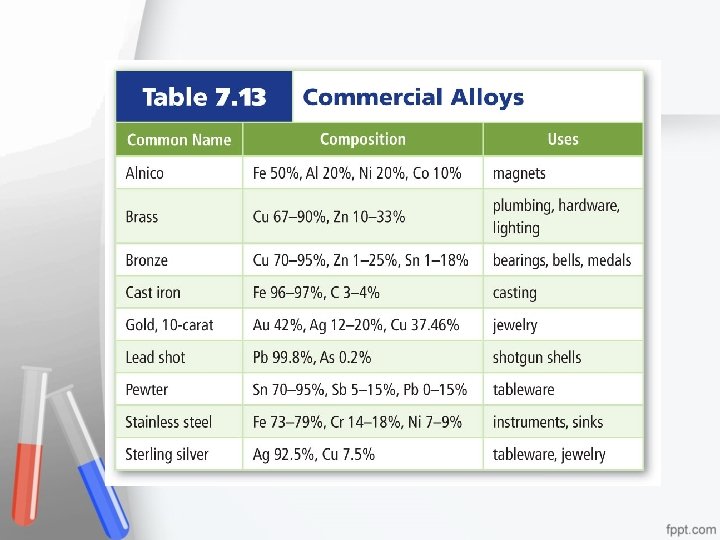
Metal Alloys • An alloy is a mixture of elements that has metallic properties. • The properties of alloys differ from the elements they contain. Bronze Pewter Brass
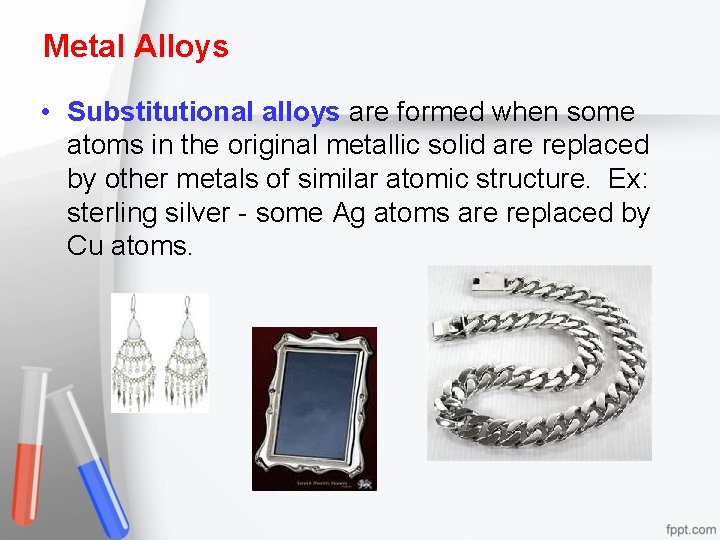
Metal Alloys • Substitutional alloys are formed when some atoms in the original metallic solid are replaced by other metals of similar atomic structure. Ex: sterling silver - some Ag atoms are replaced by Cu atoms.
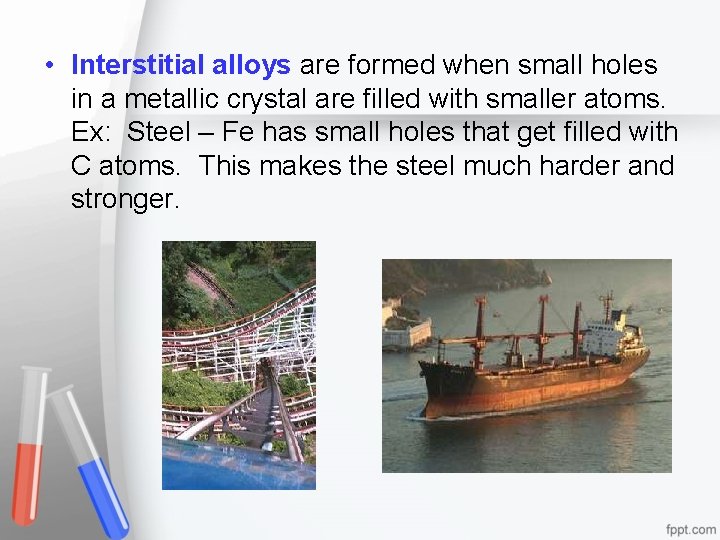
• Interstitial alloys are formed when small holes in a metallic crystal are filled with smaller atoms. Ex: Steel – Fe has small holes that get filled with C atoms. This makes the steel much harder and stronger.