
Chapter 7 Ionic Bonding Keeping Track of Electrons
Chapter 7 Ionic Bonding
Keeping Track of Electrons § The electrons responsible for the chemical properties of atoms are those in the outer energy level. § Valence electrons - The s and p electrons in the outer energy level. § Core electrons -those in the energy levels below. § Basis for shorthand
Keeping Track of Electrons § Atoms in the same column § Have the same properties because § Have the same outer electron configuration. § Have the same valence electrons. § Found by looking up the group number on the periodic table. § Group 2 A - Be, Mg, Ca, etc. § 2 valence electrons
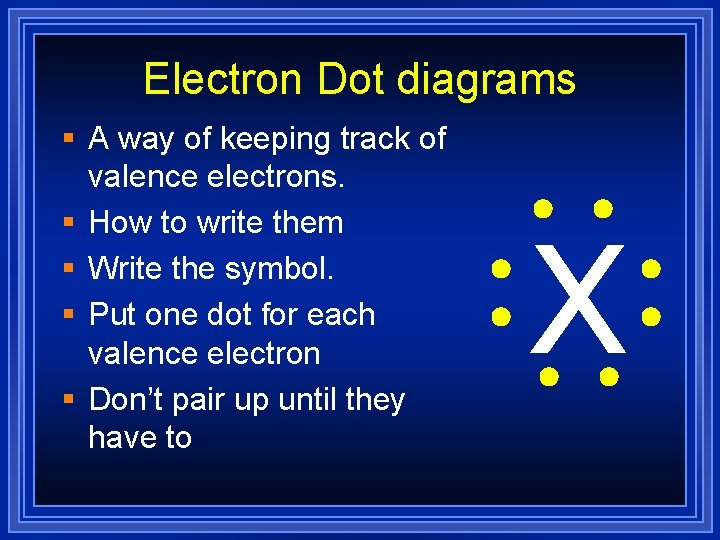
Electron Dot diagrams § A way of keeping track of valence electrons. § How to write them § Write the symbol. § Put one dot for each valence electron § Don’t pair up until they have to X
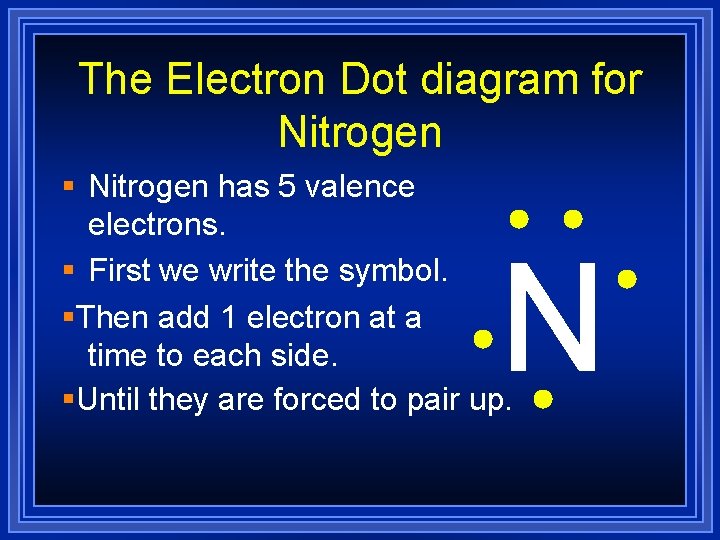
The Electron Dot diagram for Nitrogen § Nitrogen has 5 valence electrons. § First we write the symbol. §Then add 1 electron at a time to each side. §Until they are forced to pair up. N
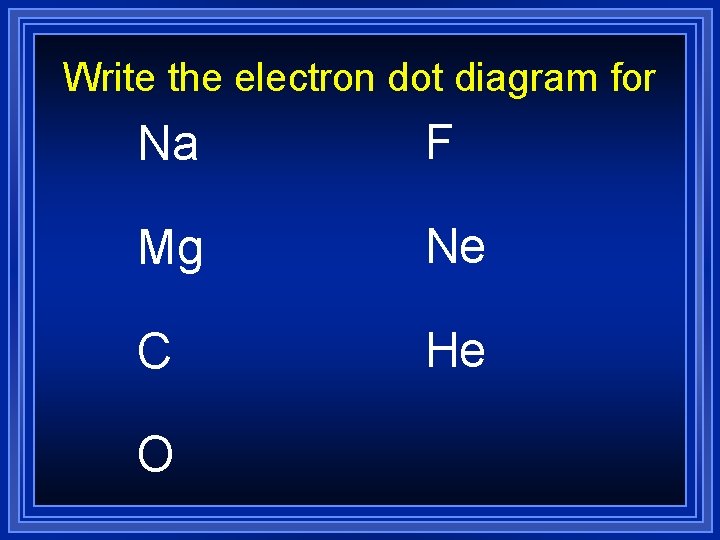
Write the electron dot diagram for Na F Mg Ne C He O
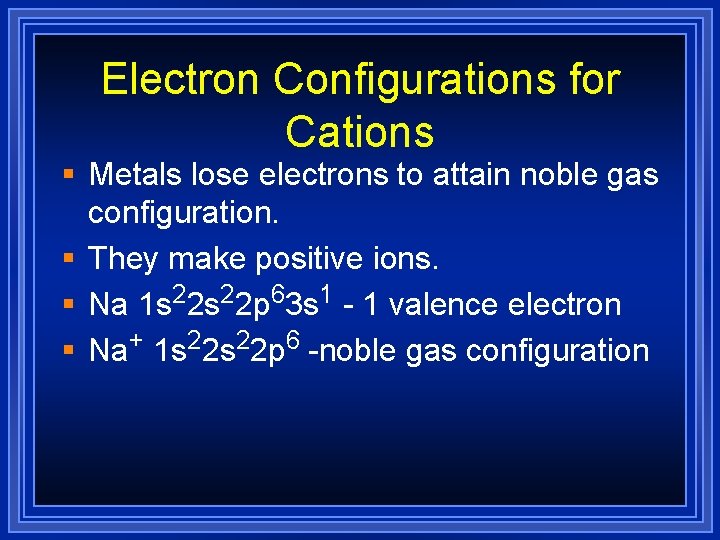
Electron Configurations for Cations § Metals lose electrons to attain noble gas configuration. § They make positive ions. § Na 1 s 22 p 63 s 1 - 1 valence electron § Na+ 1 s 22 p 6 -noble gas configuration
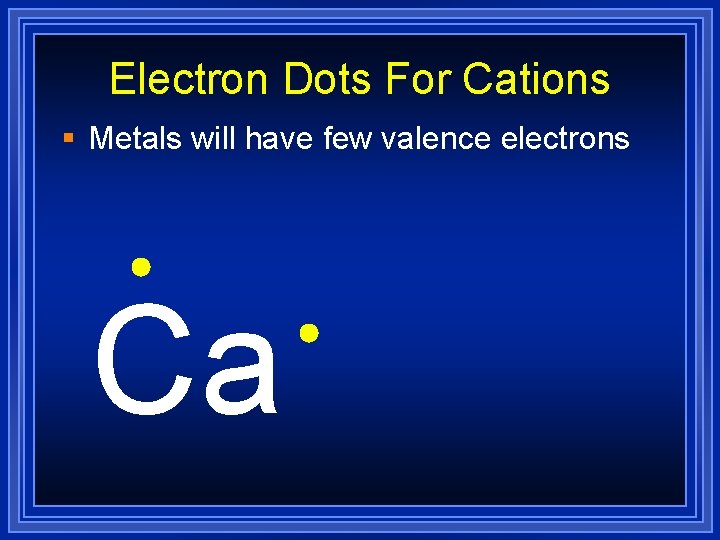
Electron Dots For Cations § Metals will have few valence electrons Ca
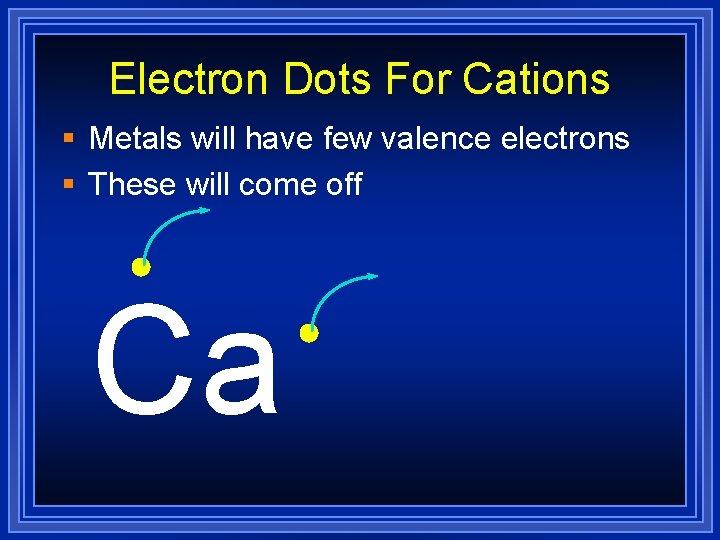
Electron Dots For Cations § Metals will have few valence electrons § These will come off Ca
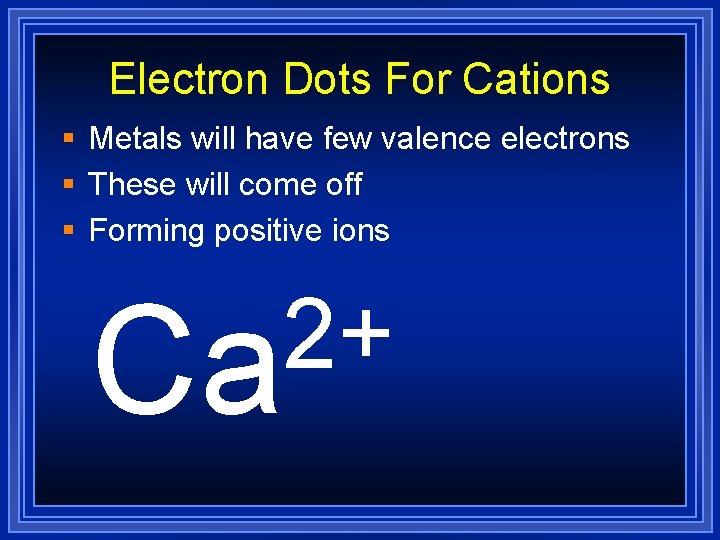
Electron Dots For Cations § Metals will have few valence electrons § These will come off § Forming positive ions 2+ Ca
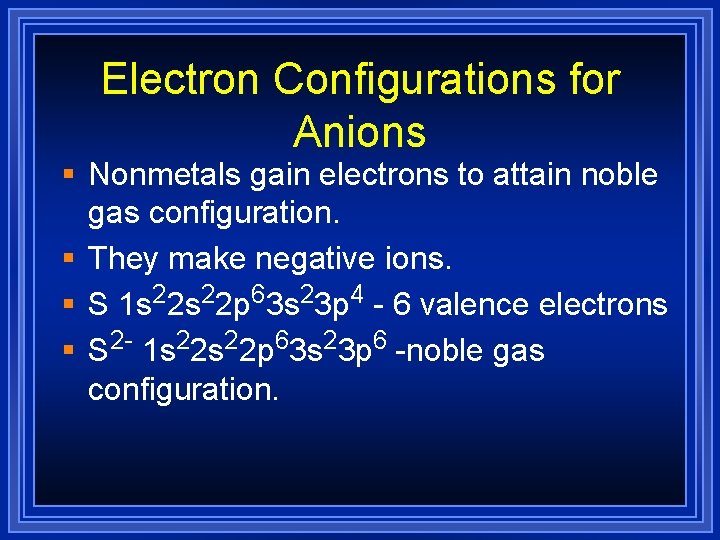
Electron Configurations for Anions § Nonmetals gain electrons to attain noble gas configuration. § They make negative ions. § S 1 s 22 p 63 s 23 p 4 - 6 valence electrons § S 2 - 1 s 22 p 63 s 23 p 6 -noble gas configuration.
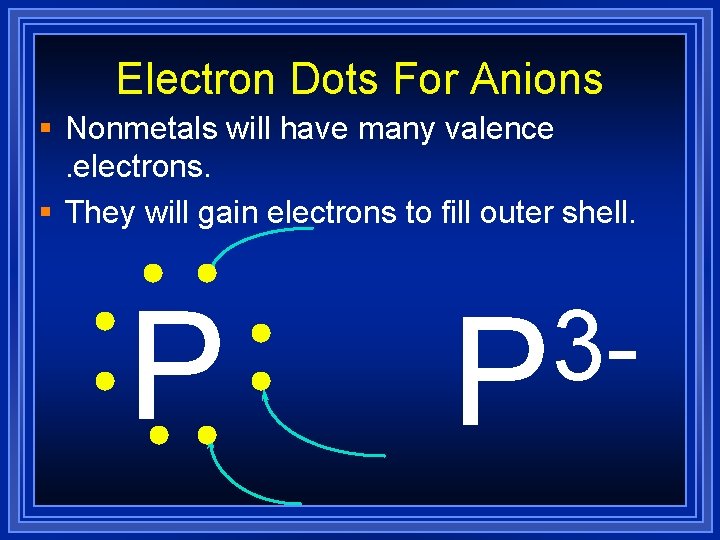
Electron Dots For Anions § Nonmetals will have many valence. electrons. § They will gain electrons to fill outer shell. P 3 P
Practice § Use electron dot diagrams to show the following form ions § Al § Cl §C
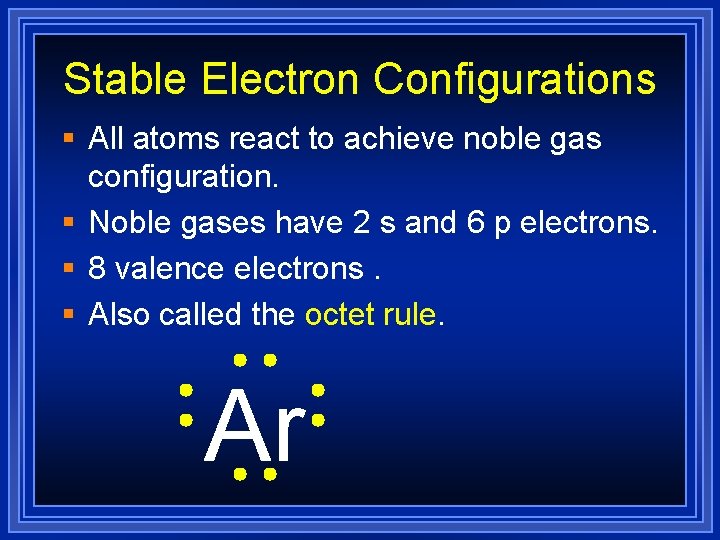
Stable Electron Configurations § All atoms react to achieve noble gas configuration. § Noble gases have 2 s and 6 p electrons. § 8 valence electrons. § Also called the octet rule. Ar
Names of ions § Cations keep the name of the metal – Ca calcium – Ca 2+ calcium ion § Anions change ending to –ide – Cl Chlorine – Cl 1 - chloride ion
Transition metals § § § Form cations Hard to predict the charge Often will form more than 1 charge Can’t form noble gas configuration Still try to fill up orbitals Some can make pseudo noble gas configurations with full orbitals
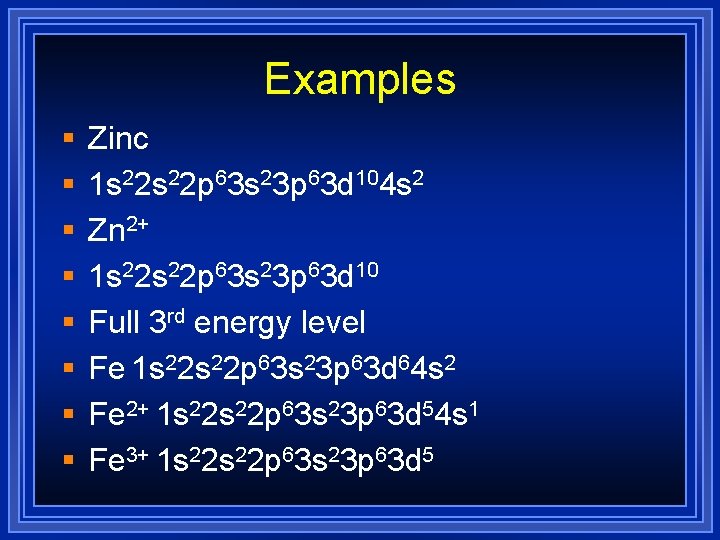
Examples § § § § Zinc 1 s 22 p 63 s 23 p 63 d 104 s 2 Zn 2+ 1 s 22 p 63 s 23 p 63 d 10 Full 3 rd energy level Fe 1 s 22 p 63 s 23 p 63 d 64 s 2 Fe 2+ 1 s 22 p 63 s 23 p 63 d 54 s 1 Fe 3+ 1 s 22 p 63 s 23 p 63 d 5
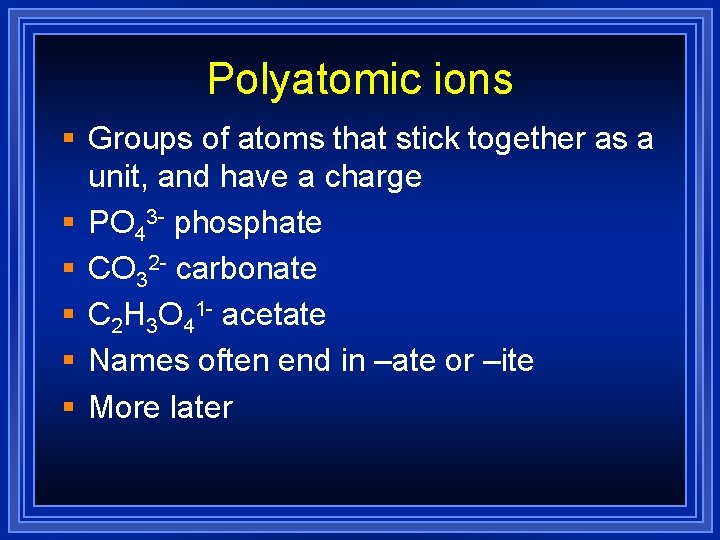
Polyatomic ions § Groups of atoms that stick together as a unit, and have a charge § PO 43 - phosphate § CO 32 - carbonate § C 2 H 3 O 41 - acetate § Names often end in –ate or –ite § More later
Ionic Bonding § Anions and cations are held together by opposite charges. § This is the bond § Ionic compounds are called salts. § Simplest ratio is called the formula unit. § The bond is formed through the transfer of electrons. § Electrons are transferred to achieve noble gas configuration.
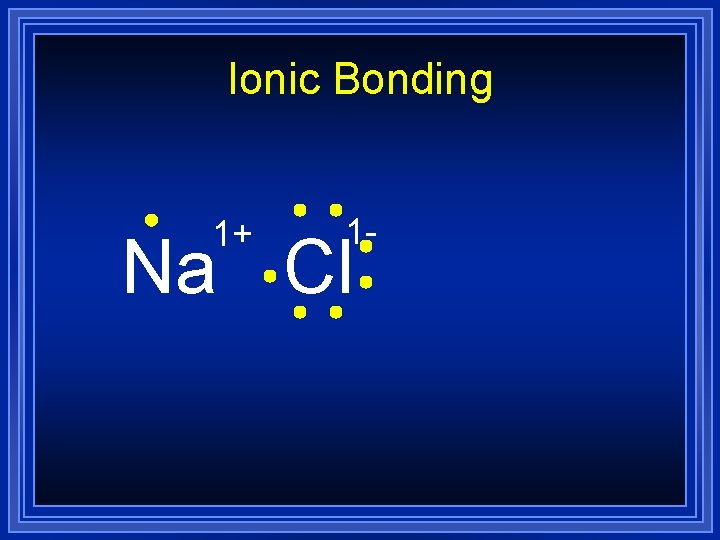
Ionic Bonding 1+ 1 - Na Cl
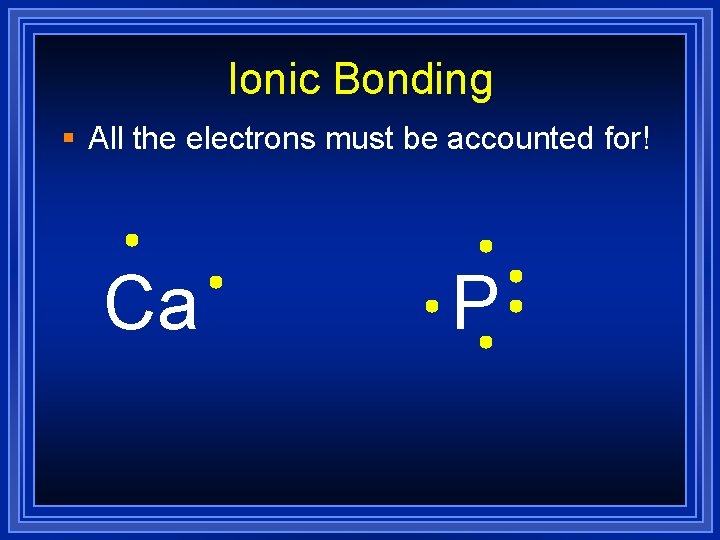
Ionic Bonding § All the electrons must be accounted for! Ca P
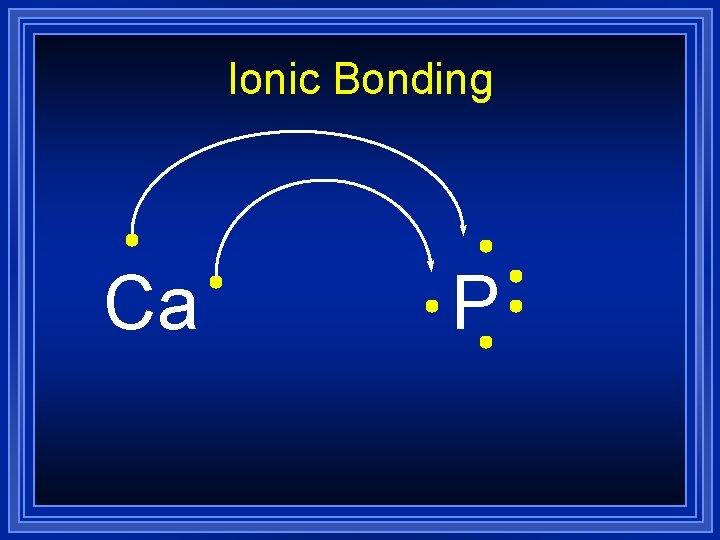
Ionic Bonding Ca P
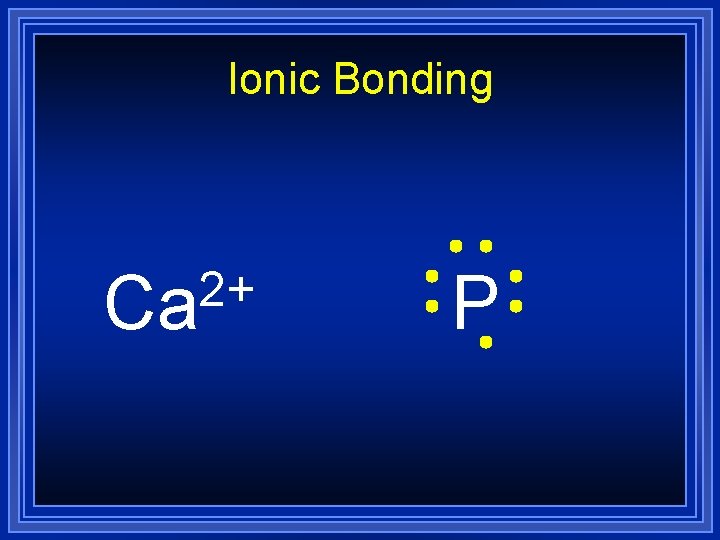
Ionic Bonding 2+ Ca P
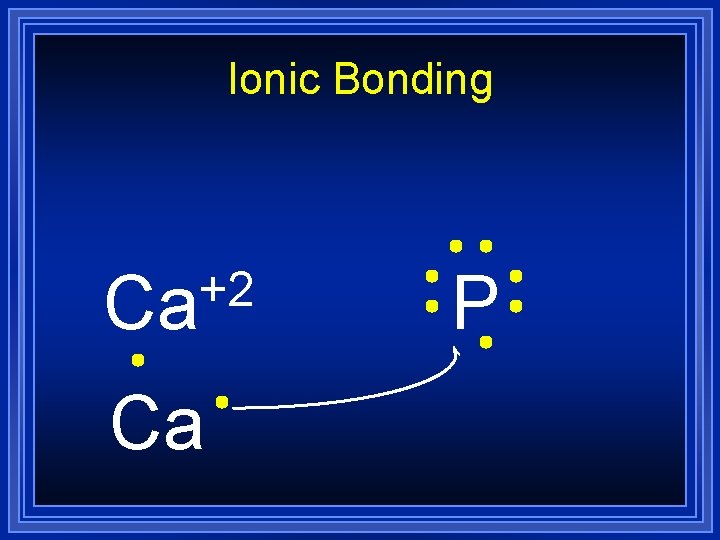
Ionic Bonding +2 Ca Ca P
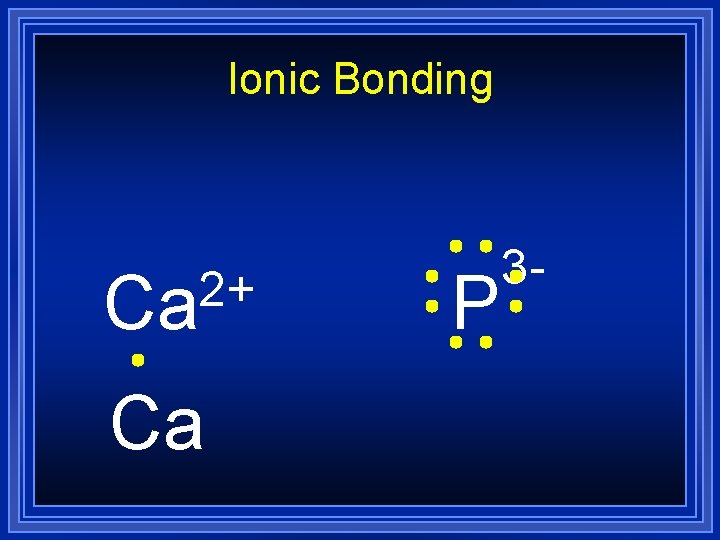
Ionic Bonding 2+ Ca Ca P 3 -
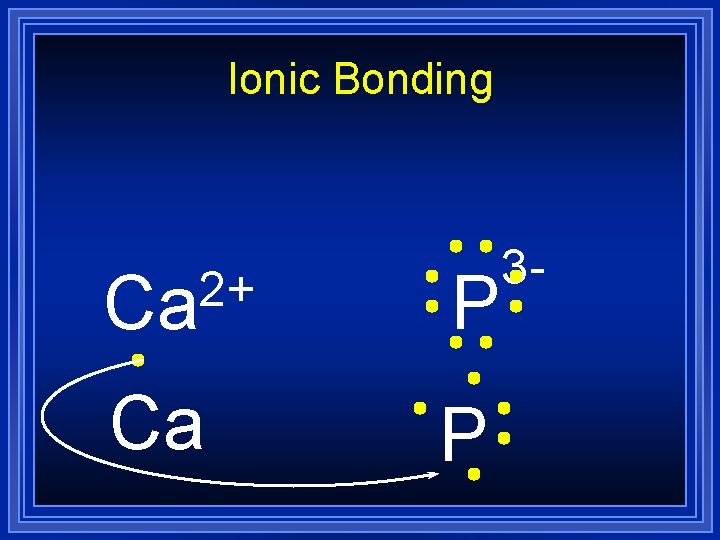
Ionic Bonding 2+ Ca P 3 -
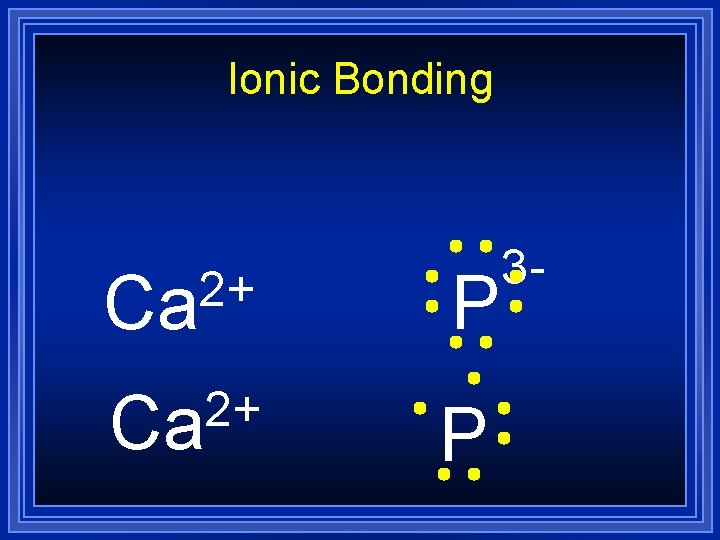
Ionic Bonding 2+ Ca P 3 -
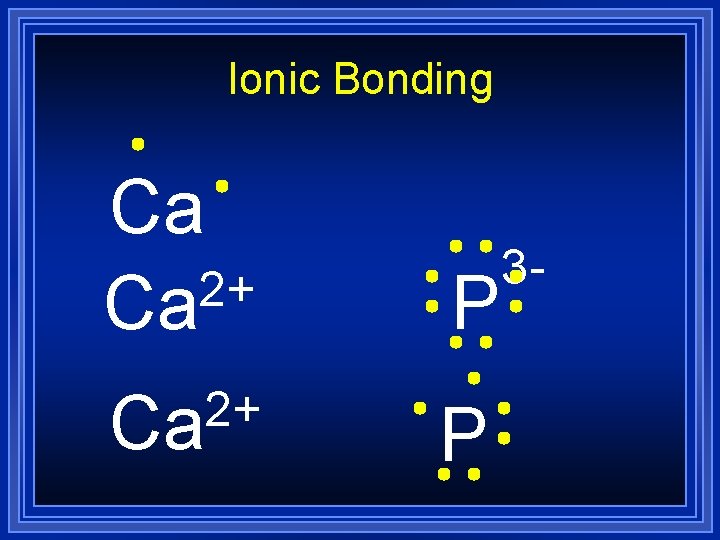
Ionic Bonding Ca 2+ Ca P 3 -
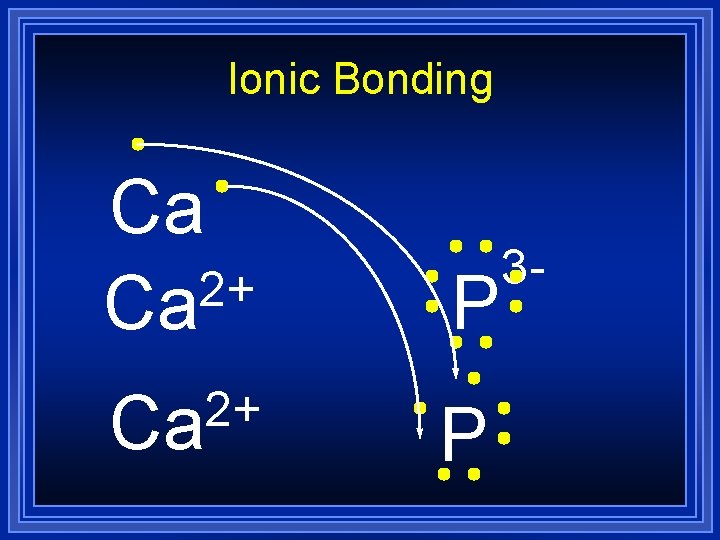
Ionic Bonding Ca 2+ Ca P 3 -
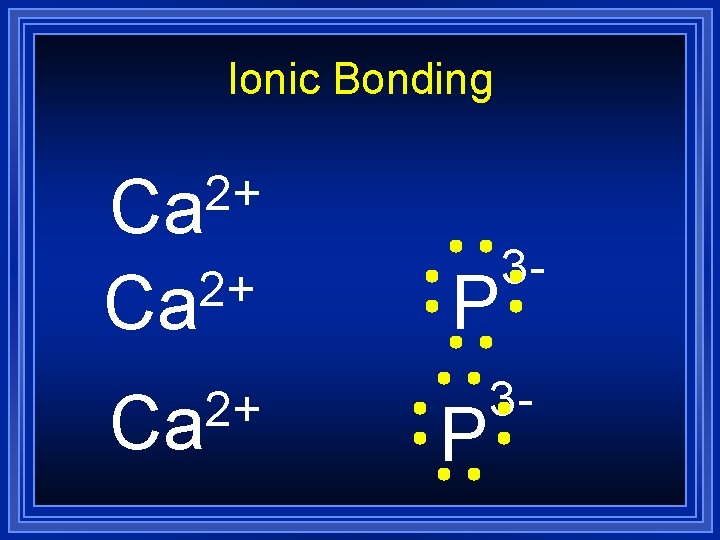
Ionic Bonding 2+ Ca P P 3 - 3 -
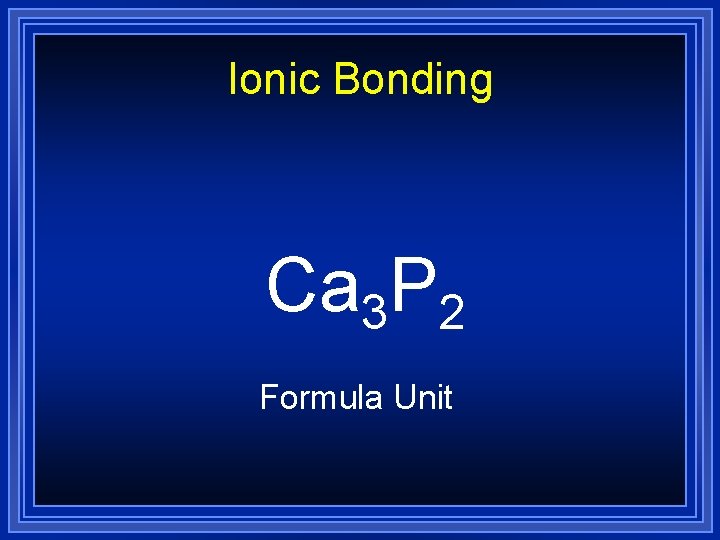
Ionic Bonding Ca 3 P 2 Formula Unit
Practice § Use electron dot diagrams to show the following elements make an ionic compound and write the formula unit § Mg and Cl
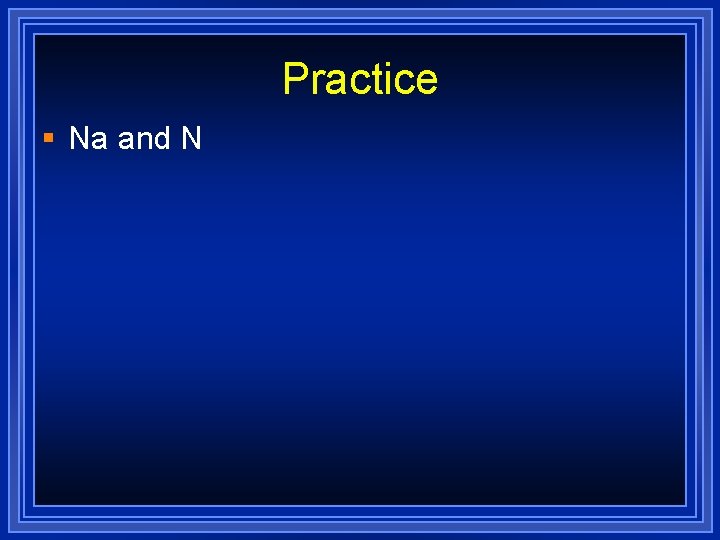
Practice § Na and N
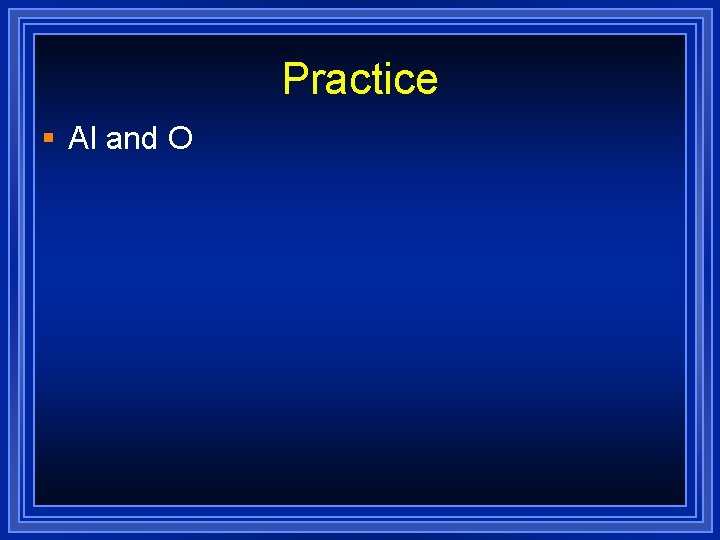
Practice § Al and O
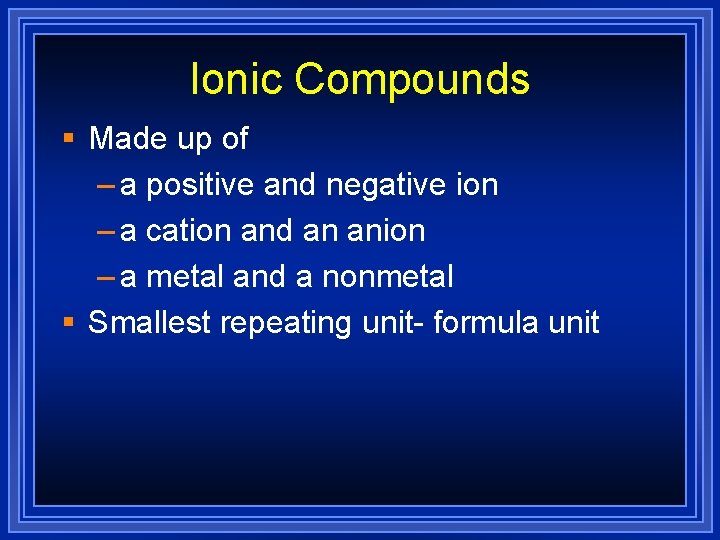
Ionic Compounds § Made up of – a positive and negative ion – a cation and an anion – a metal and a nonmetal § Smallest repeating unit- formula unit
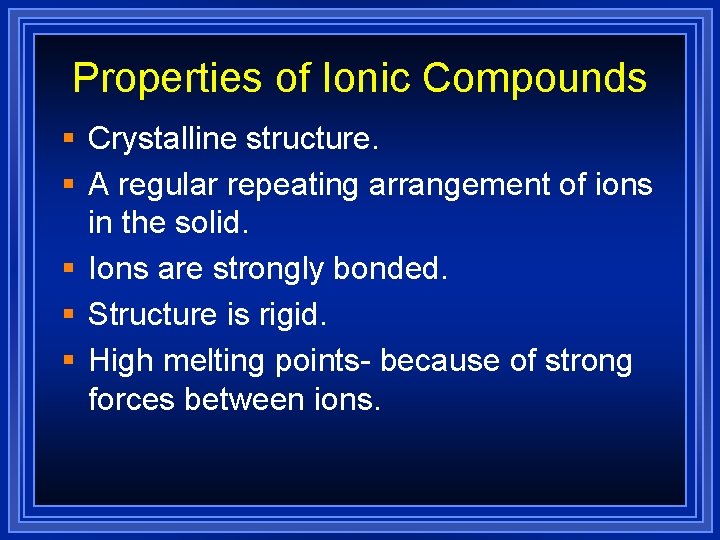
Properties of Ionic Compounds § Crystalline structure. § A regular repeating arrangement of ions in the solid. § Ions are strongly bonded. § Structure is rigid. § High melting points- because of strong forces between ions.
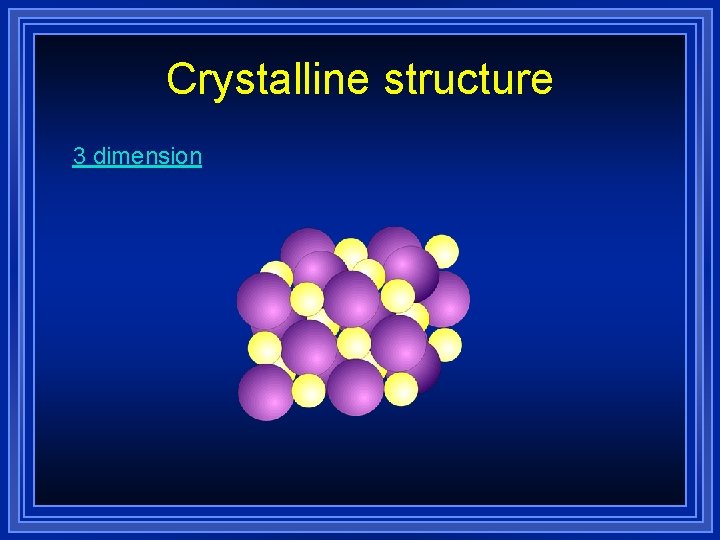
Crystalline structure 3 dimension
Do they Conduct? § Conducting electricity is allowing charges to move. § In a solid, the ions are locked in place. § Ionic solids are insulators. § When melted, the ions can move around. § Melted ionic compounds conduct. § First get them to 800ºC. § Dissolved in water they conduct.
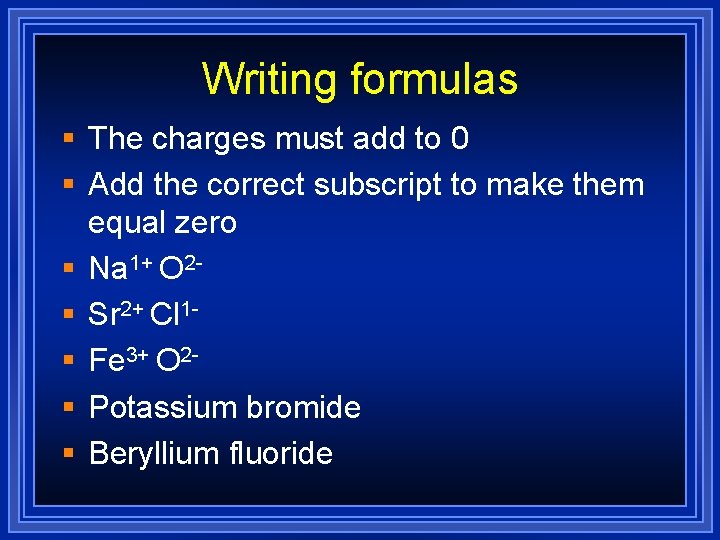
Writing formulas § The charges must add to 0 § Add the correct subscript to make them equal zero § Na 1+ O 2§ Sr 2+ Cl 1§ Fe 3+ O 2§ Potassium bromide § Beryllium fluoride
Metallic Bonds § How atoms are held together in the solid. § Metals hold onto their valence electrons very weakly. § Think of them as positive ions floating in a sea of electrons.
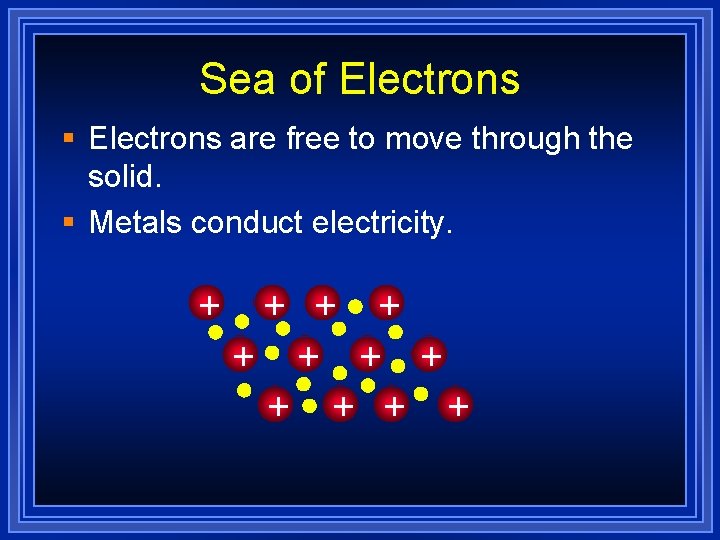
Sea of Electrons § Electrons are free to move through the solid. § Metals conduct electricity. + + +
Metals are Malleable § Hammered into shape (bend). § Ductile - drawn into wires.
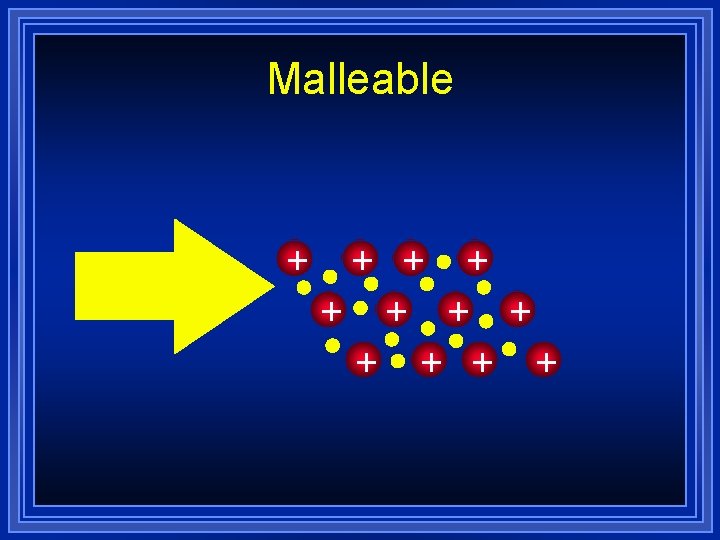
Malleable + + +
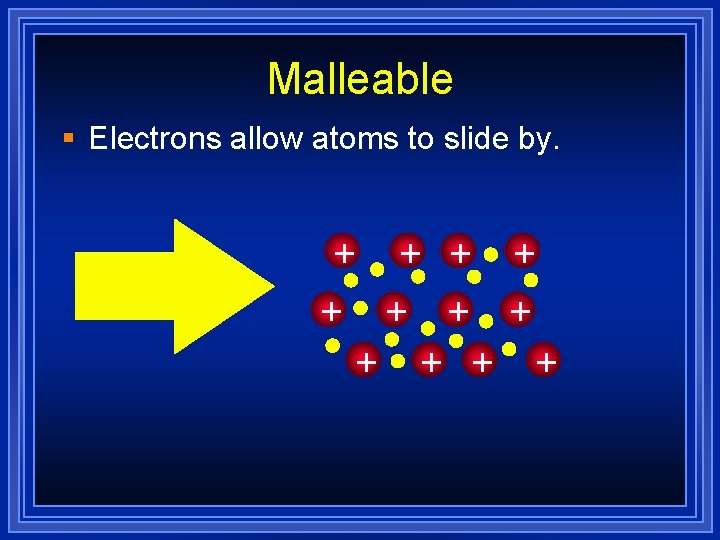
Malleable § Electrons allow atoms to slide by. + + +
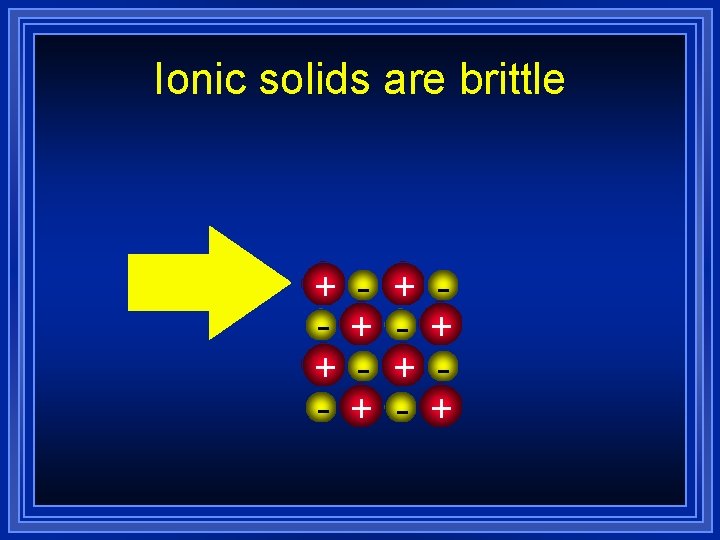
Ionic solids are brittle + + - + +
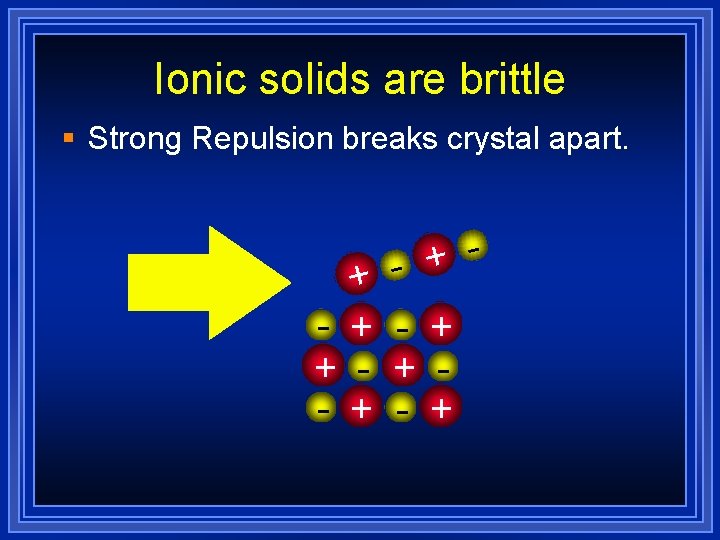
Ionic solids are brittle § Strong Repulsion breaks crystal apart. + + - + - + - +
Alloys § Solutions made by dissolving metal into other elements- usually metals. § Melt them together and cool them. § If the atoms of the metals are about the same size, they substitute for each other § Called a substitutional alloy
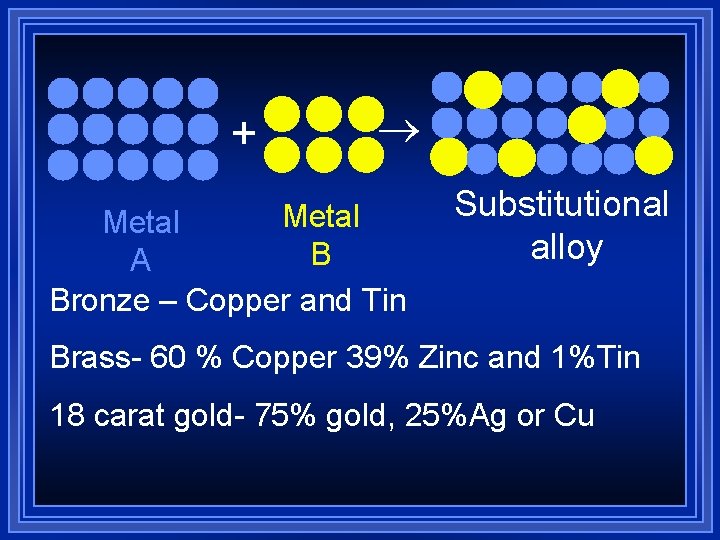
+ Metal B A Bronze – Copper and Tin Substitutional alloy Brass- 60 % Copper 39% Zinc and 1%Tin 18 carat gold- 75% gold, 25%Ag or Cu
Alloys § If they are different sizes the small one will fit into the spaces of the larger one § Called and interstitial alloy
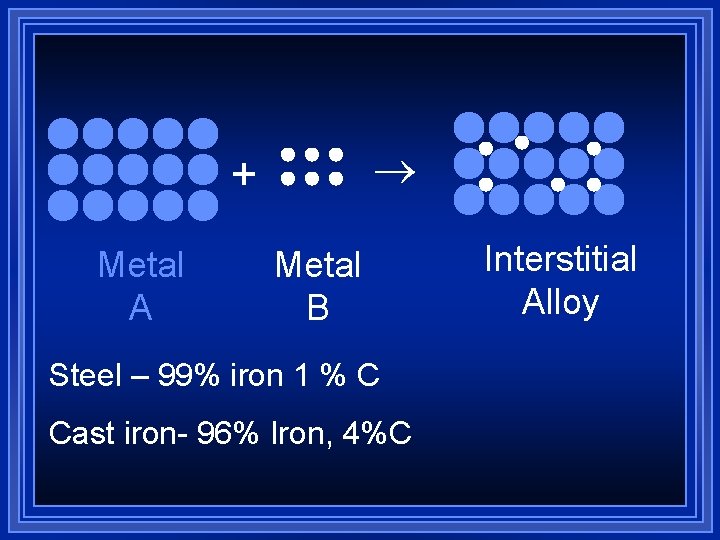
+ Metal A Metal B Steel – 99% iron 1 % C Cast iron- 96% Iron, 4%C Interstitial Alloy
Alloys § § Making an alloy is still just a mixture Blend the properties Still held together with metallic bonding Most of the metals we use daily are alloys. § Designed for a purpose
Crystal Structures § The repeating unit is called the unit cell
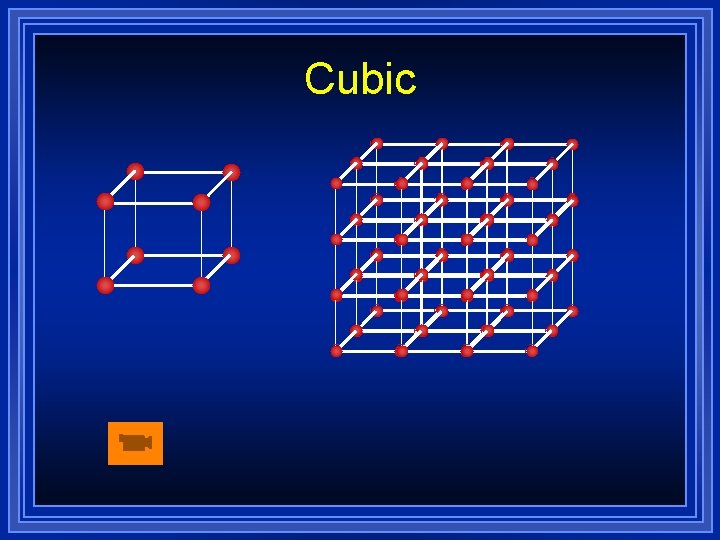
Cubic
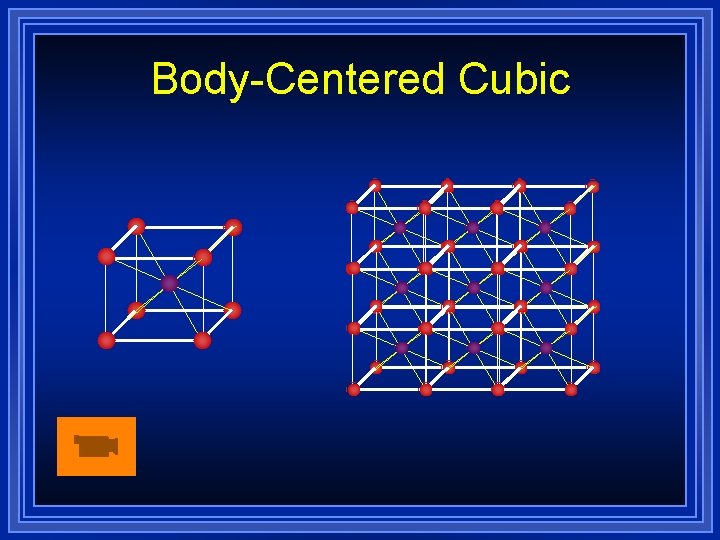
Body-Centered Cubic
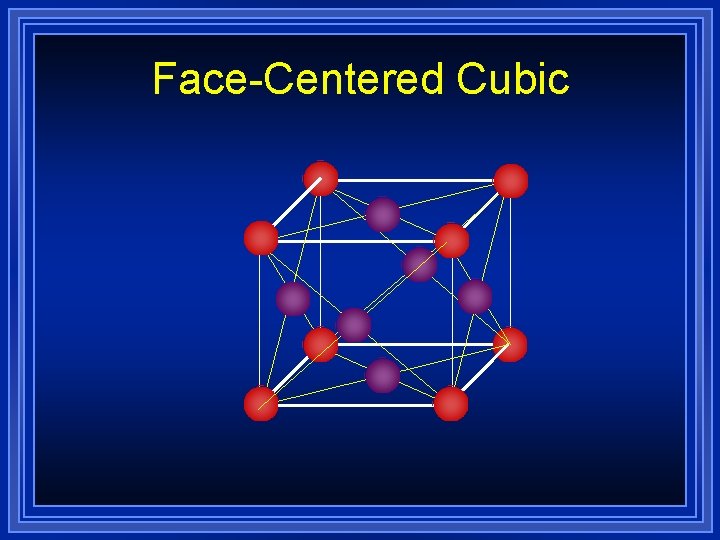
Face-Centered Cubic
- Slides: 55