
CHAPTER 7 INTRODUCTION TO RISK AND RETURN Brealey
CHAPTER 7 INTRODUCTION TO RISK AND RETURN Brealey, Myers, and Allen Principles of Corporate Finance 12 th Edition
Topics Covered Over a Century of Capital Market History in One Easy Lesson Measuring Portfolio Risk Calculating Portfolio Risk How Individual Securities Affect Portfolio Risk Diversification & Value Additivity
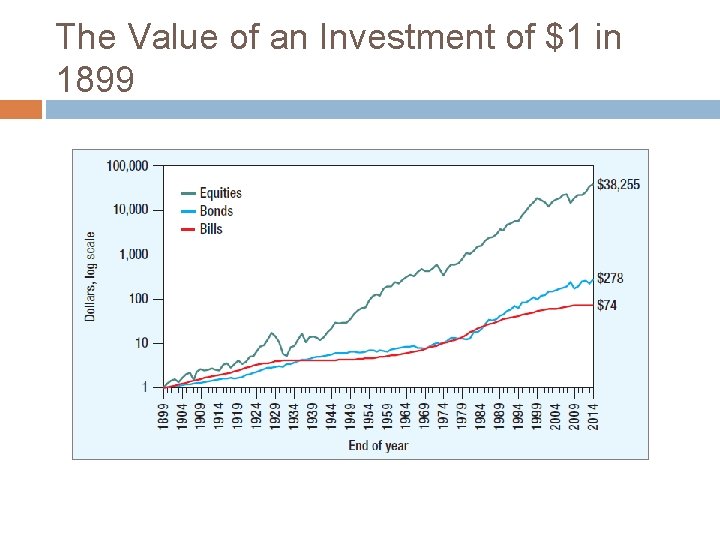
The Value of an Investment of $1 in 1899
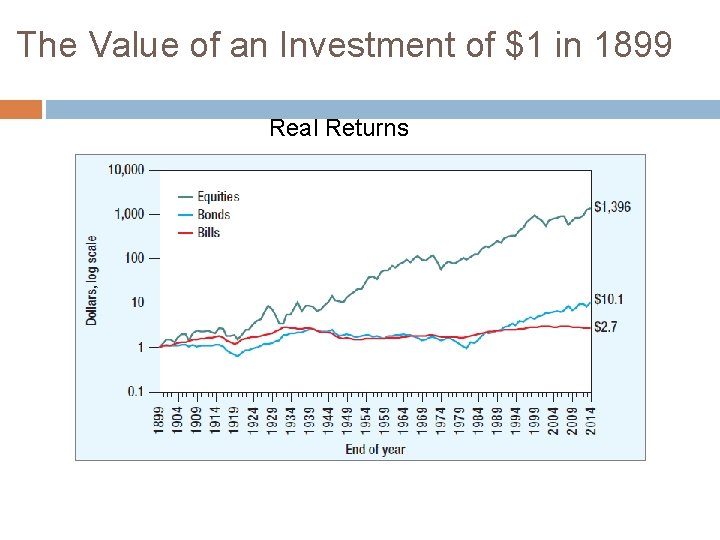
The Value of an Investment of $1 in 1899 Real Returns
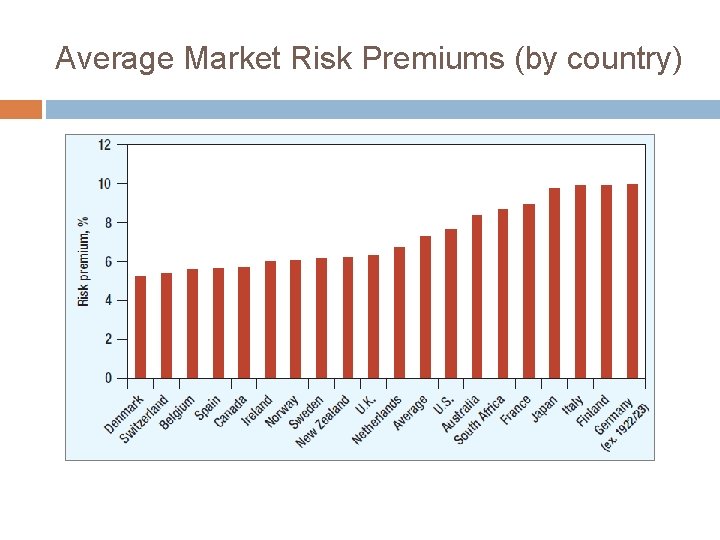
Average Market Risk Premiums (by country)
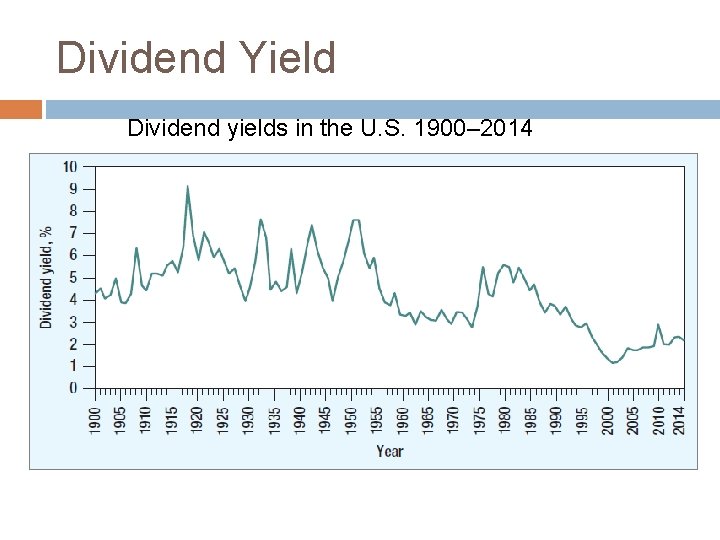
Dividend Yield Dividend yields in the U. S. 1900– 2014

Rates of Return 1900 -2011 Stock Market Index Returns Source: E. Dimson, P. R. Marsh, and M. Staunton, Triumph of the Optimists: 101 Years of Investment Returns (Princeton, NJ: Princeton University Press, 2002), with updates provided by the authors.
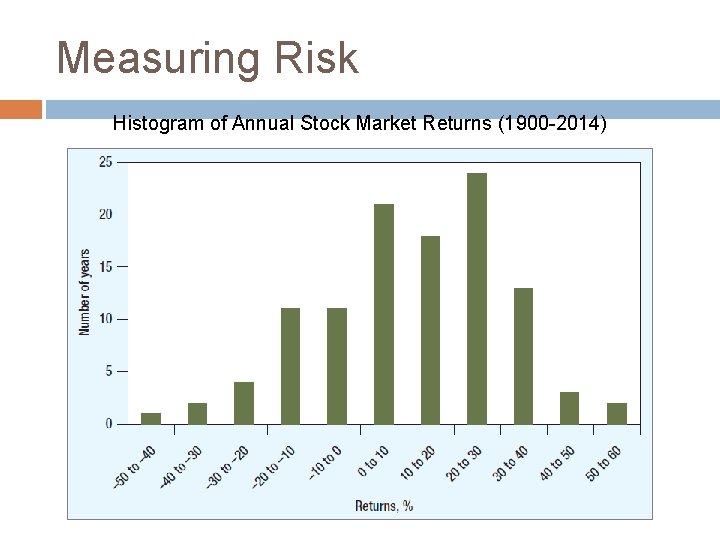
Measuring Risk Histogram of Annual Stock Market Returns (1900 -2014)

Measuring Risk Variance - Average value of squared deviations from mean A measure of volatility Standard Deviation - Average value of squared deviations from mean - A measure of volatility
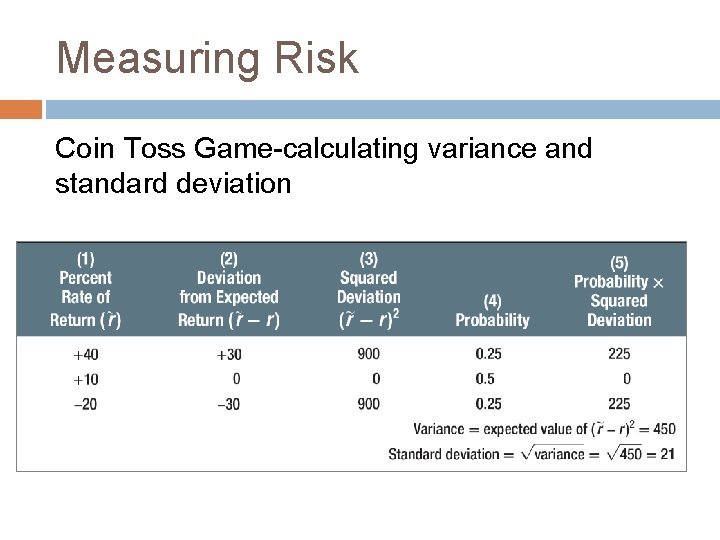
Measuring Risk Coin Toss Game-calculating variance and standard deviation
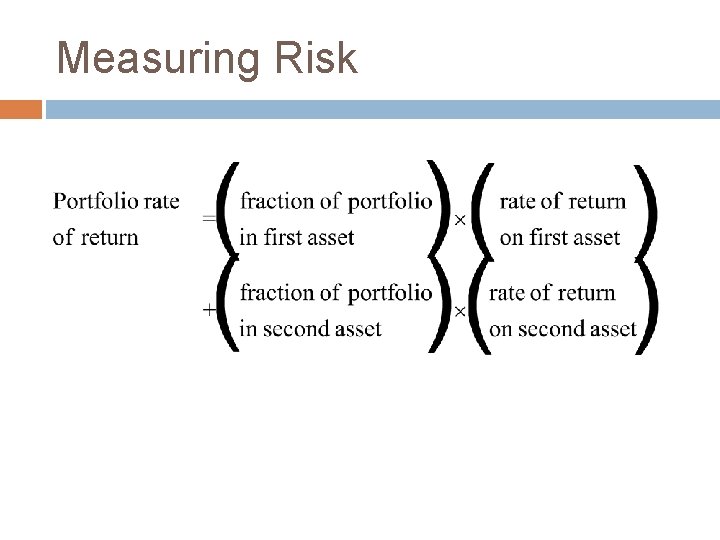
Measuring Risk
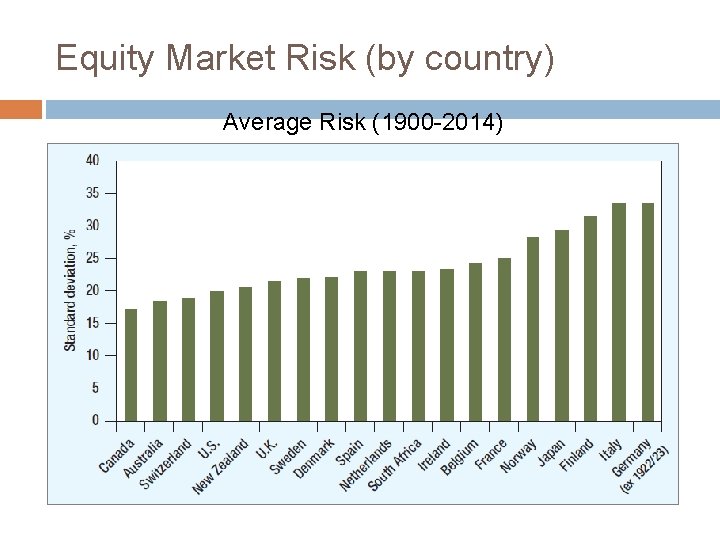
Equity Market Risk (by country) Average Risk (1900 -2014)
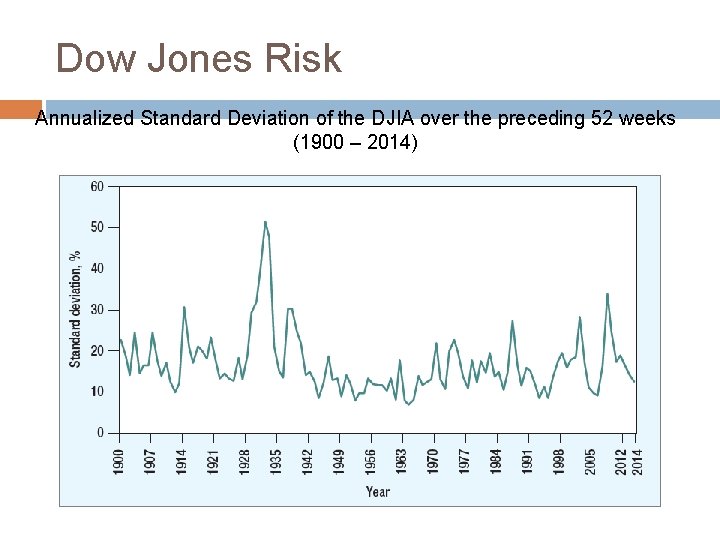
Dow Jones Risk Annualized Standard Deviation of the DJIA over the preceding 52 weeks (1900 – 2014)
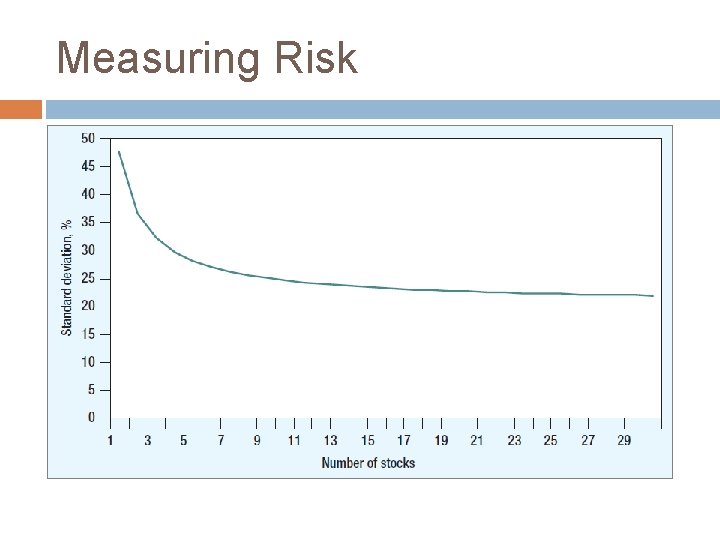
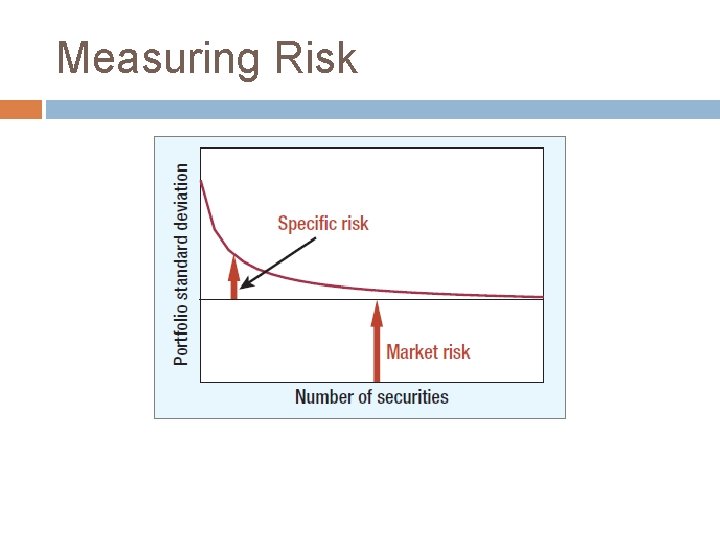
Measuring Risk Diversification - Strategy designed to reduce risk by spreading the portfolio across many investments. Unique Risk - Risk factors affecting only that firm. Also called “diversifiable risk. ” Market Risk - Economy-wide sources of risk that affect the overall stock market. Also called “systematic risk. ”
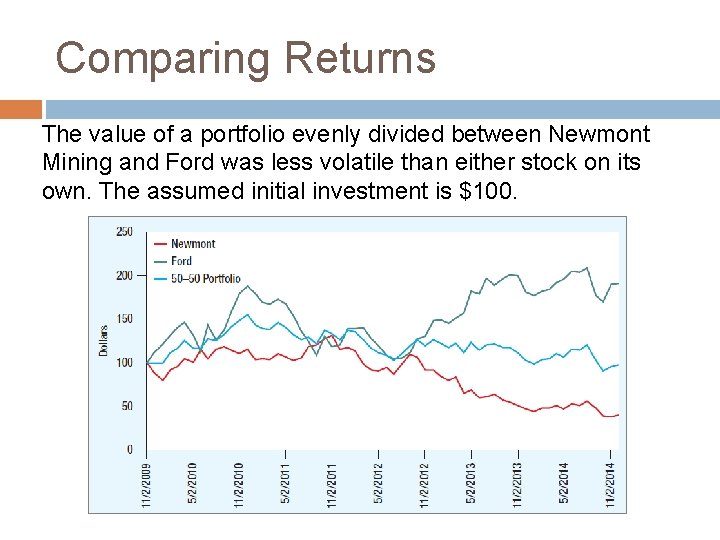
Comparing Returns The value of a portfolio evenly divided between Newmont Mining and Ford was less volatile than either stock on its own. The assumed initial investment is $100.
Measuring Risk
Measuring Risk
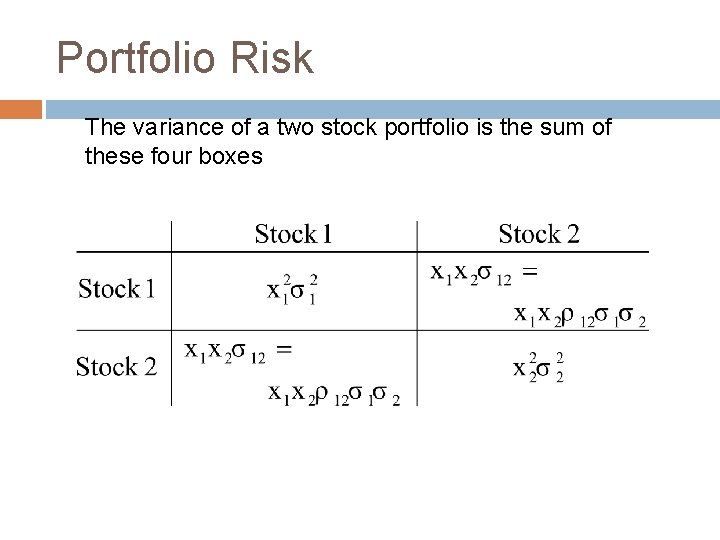
Portfolio Risk The variance of a two stock portfolio is the sum of these four boxes
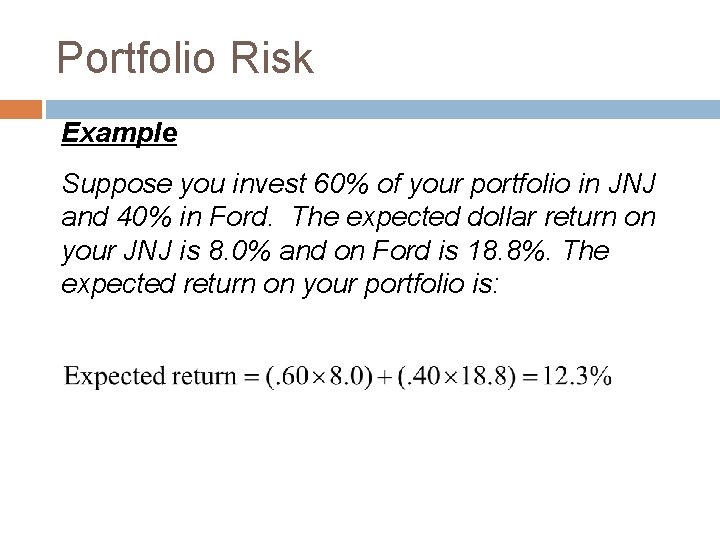
Portfolio Risk Example Suppose you invest 60% of your portfolio in JNJ and 40% in Ford. The expected dollar return on your JNJ is 8. 0% and on Ford is 18. 8%. The expected return on your portfolio is:
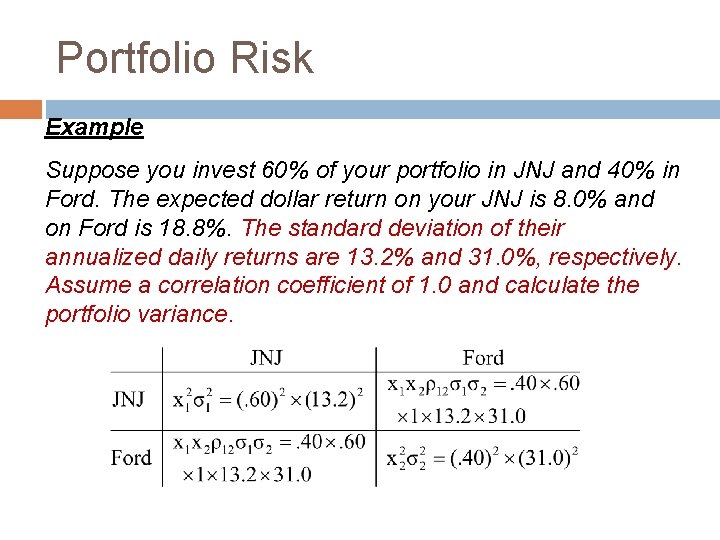
Portfolio Risk Example Suppose you invest 60% of your portfolio in JNJ and 40% in Ford. The expected dollar return on your JNJ is 8. 0% and on Ford is 18. 8%. The standard deviation of their annualized daily returns are 13. 2% and 31. 0%, respectively. Assume a correlation coefficient of 1. 0 and calculate the portfolio variance.
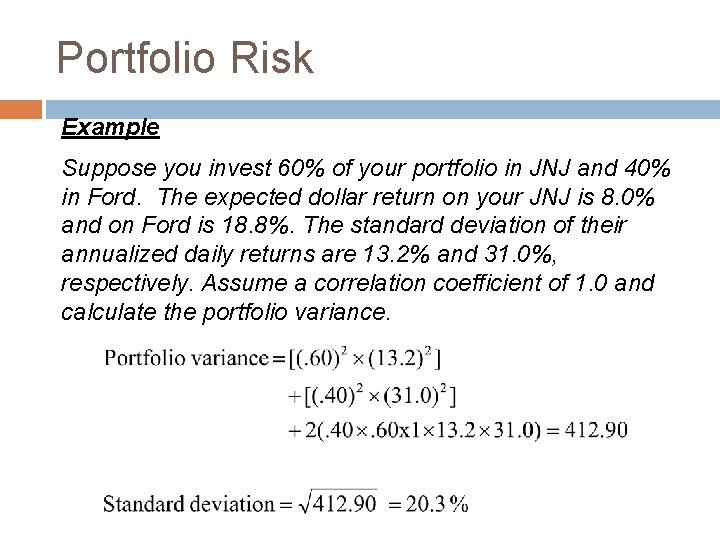
Portfolio Risk Example Suppose you invest 60% of your portfolio in JNJ and 40% in Ford. The expected dollar return on your JNJ is 8. 0% and on Ford is 18. 8%. The standard deviation of their annualized daily returns are 13. 2% and 31. 0%, respectively. Assume a correlation coefficient of 1. 0 and calculate the portfolio variance.
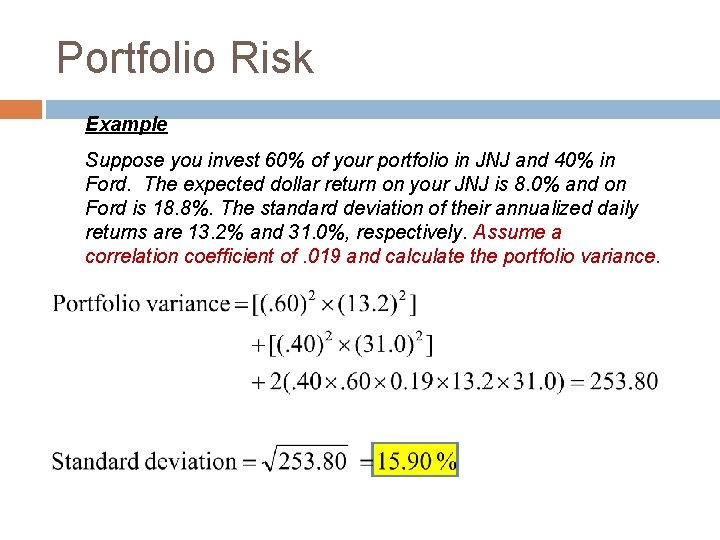
Portfolio Risk Example Suppose you invest 60% of your portfolio in JNJ and 40% in Ford. The expected dollar return on your JNJ is 8. 0% and on Ford is 18. 8%. The standard deviation of their annualized daily returns are 13. 2% and 31. 0%, respectively. Assume a correlation coefficient of. 019 and calculate the portfolio variance.
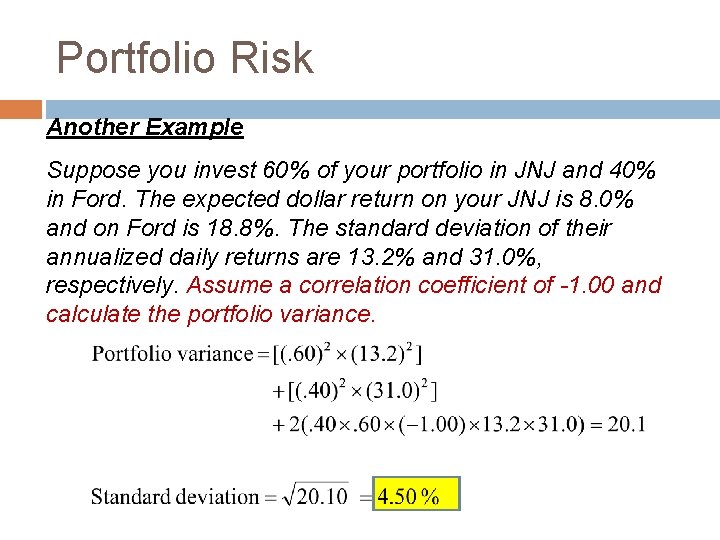
Portfolio Risk Another Example Suppose you invest 60% of your portfolio in JNJ and 40% in Ford. The expected dollar return on your JNJ is 8. 0% and on Ford is 18. 8%. The standard deviation of their annualized daily returns are 13. 2% and 31. 0%, respectively. Assume a correlation coefficient of -1. 00 and calculate the portfolio variance.
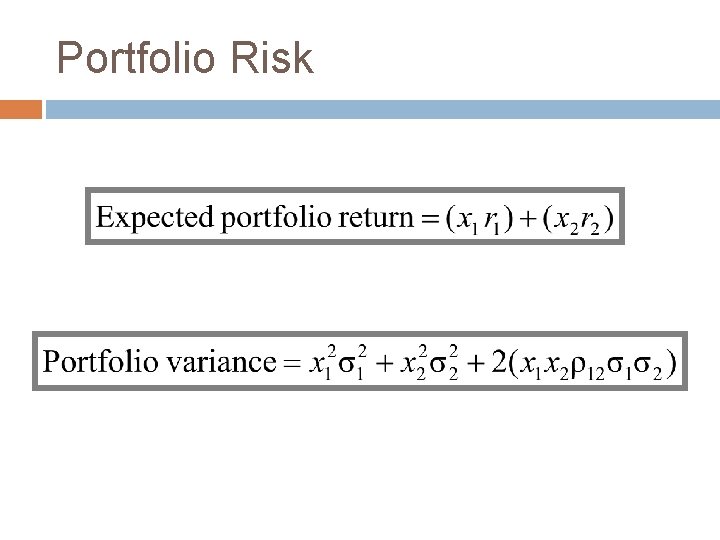
Portfolio Risk
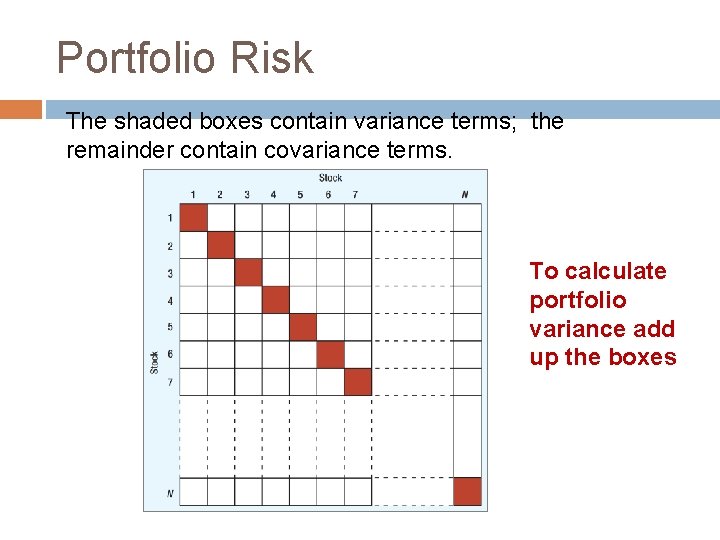
Portfolio Risk The shaded boxes contain variance terms; the remainder contain covariance terms. To calculate portfolio variance add up the boxes
Portfolio Risk, Beta Market Portfolio - Portfolio of all assets in the economy. In practice a broad stock market index, such as the S&P Composite, is used to represent the market. Beta - Sensitivity of a stock’s return to the return on the market portfolio.
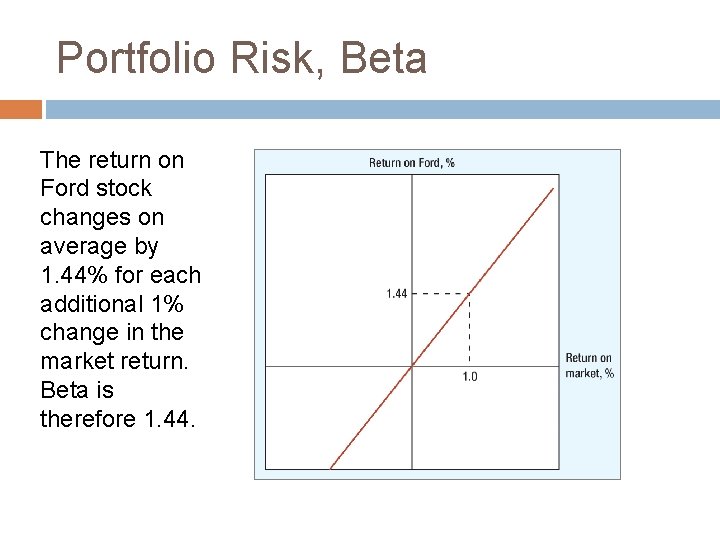
Portfolio Risk, Beta The return on Ford stock changes on average by 1. 44% for each additional 1% change in the market return. Beta is therefore 1. 44.
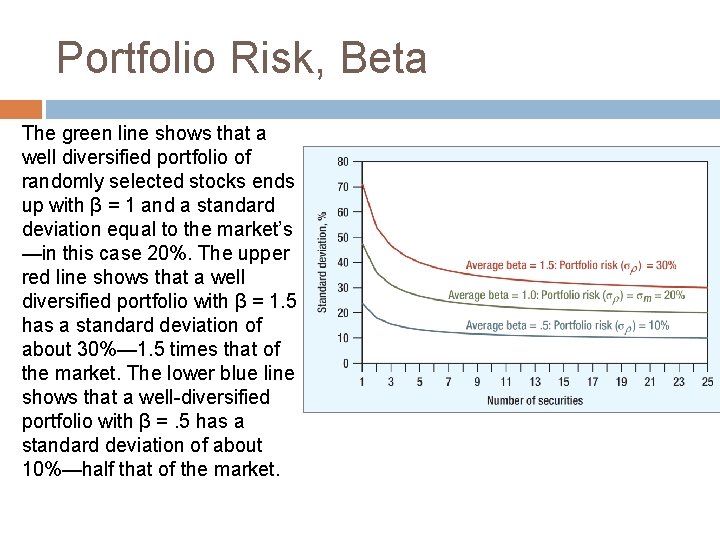
Portfolio Risk, Beta The green line shows that a well diversified portfolio of randomly selected stocks ends up with β = 1 and a standard deviation equal to the market’s —in this case 20%. The upper red line shows that a well diversified portfolio with β = 1. 5 has a standard deviation of about 30%— 1. 5 times that of the market. The lower blue line shows that a well-diversified portfolio with β =. 5 has a standard deviation of about 10%—half that of the market.
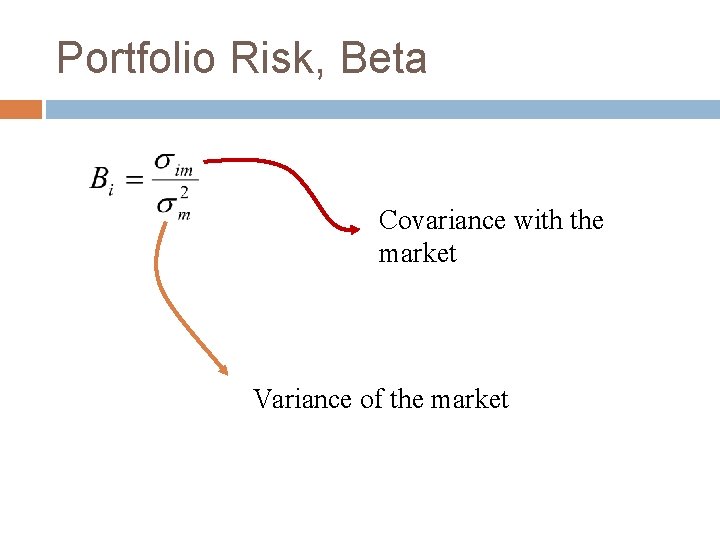
Portfolio Risk, Beta Covariance with the market Variance of the market
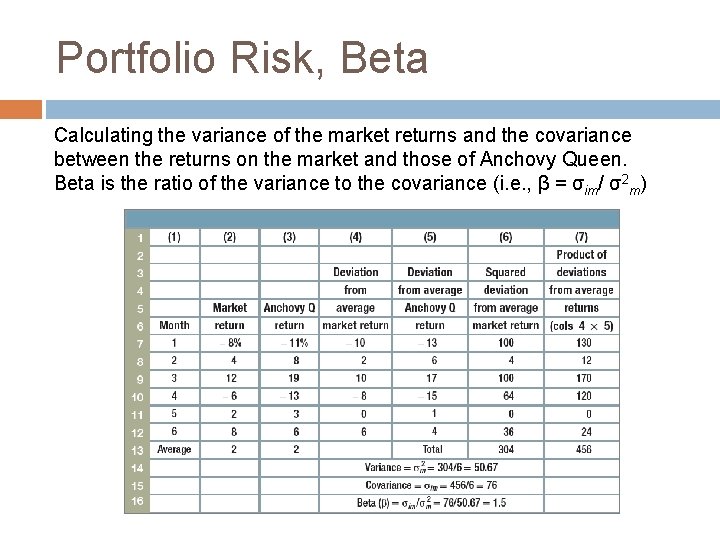
Portfolio Risk, Beta Calculating the variance of the market returns and the covariance between the returns on the market and those of Anchovy Queen. Beta is the ratio of the variance to the covariance (i. e. , β = σim/ σ2 m)
- Slides: 30