
Chapter 7 Internal Control and Cash What Is







- Slides: 64
Chapter 7 Internal Control and Cash
What Is Internal Control? Internal Control is an organizational plan and the related measures designed to accomplish the following: 7 -2 • Safeguard assets • Encourage employees to follow company policies • Promote operational efficiency • Ensure accurate, reliable accounting records
WHAT IS INTERNAL CONTROL, AND HOW CAN IT BE USED TO PROTECT A COMPANY’S ASSETS? Internal control is the plan and measures designed to: 1. Safeguard assets 2. Encourage employees to follow company policies 3. Promote operational efficiency 4. Ensure accurate, reliable accounting records 7 -3
Internal Control and the Sarbanes-Oxley Act • The Committee of Sponsoring Organizations (COSO) provides thought leadership related to enterprise risk management, internal control, and fraud deterrence. – COSO’s mission is to develop frameworks and guidance to help companies improve their internal controls and reduce fraud in organizations. • Public companies - companies that sell stock to the general public - are required by the U. S. Congress to maintain a system of internal controls. 7 -4
Internal Control and the Sarbanes-Oxley Act • Congress passed the Sarbanes-Oxley Act (SOX) to address public concern about various accounting scandals. • The Sarbanes-Oxley Act (SOX) requires companies to review internal control and take responsibility for the accuracy and completeness of their financial reports. 7 -5
Internal Control and the Sarbanes-Oxley Act SOX Provisions 1. Public companies must issue an internal control report, which is a report by management describing its responsibility for and the adequacy of internal controls over financial reporting. – An auditor must evaluate internal controls. 2. The Public Company Accounting Oversight Board (PCAOB), oversees the work of auditors of public companies. 7 -6
Internal Control and the Sarbanes-Oxley Act SOX Provisions (continued) 3. Accounting firms are not allowed to audit a public company and also provide certain consulting services for the same client. 4. Stiff penalties await violators— 25 years in prison for securities fraud and 20 years for an executive making false sworn statements. 7 -7
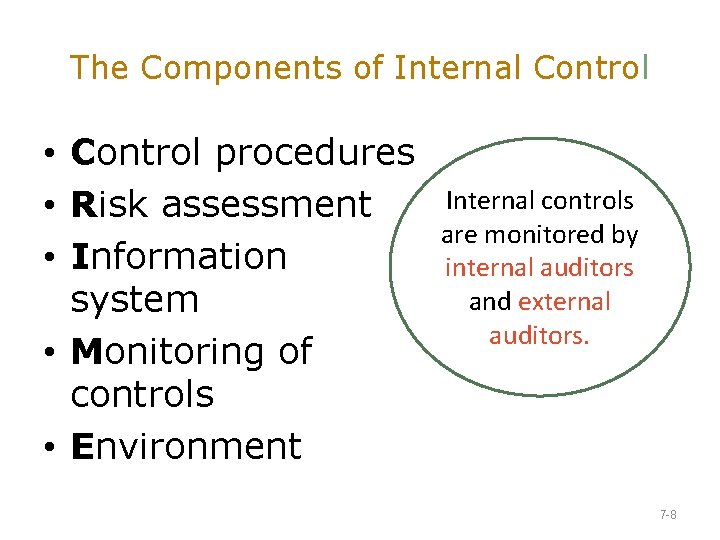
The Components of Internal Control • Control procedures • Risk assessment • Information system • Monitoring of controls • Environment Internal controls are monitored by internal auditors and external auditors. 7 -8
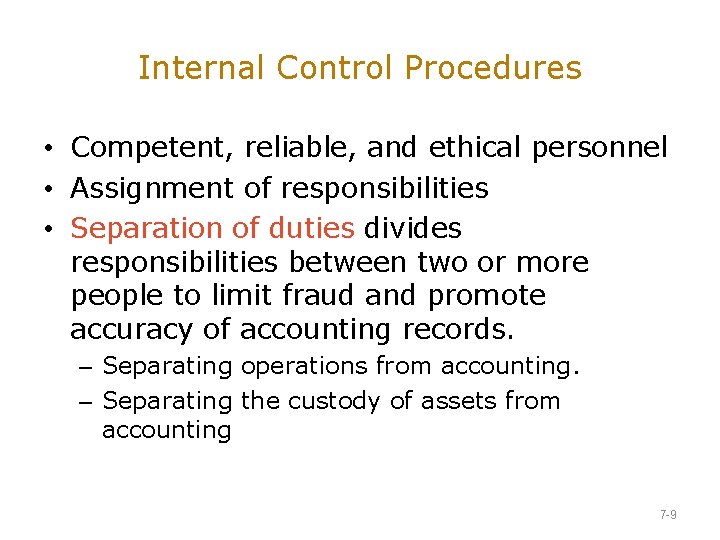
Internal Control Procedures • Competent, reliable, and ethical personnel • Assignment of responsibilities • Separation of duties divides responsibilities between two or more people to limit fraud and promote accuracy of accounting records. – Separating operations from accounting. – Separating the custody of assets from accounting 7 -9
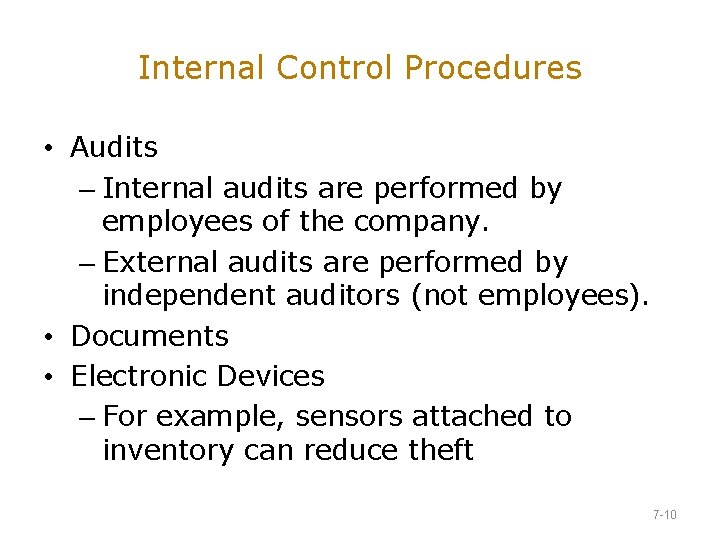
Internal Control Procedures • Audits – Internal audits are performed by employees of the company. – External audits are performed by independent auditors (not employees). • Documents • Electronic Devices – For example, sensors attached to inventory can reduce theft 7 -10
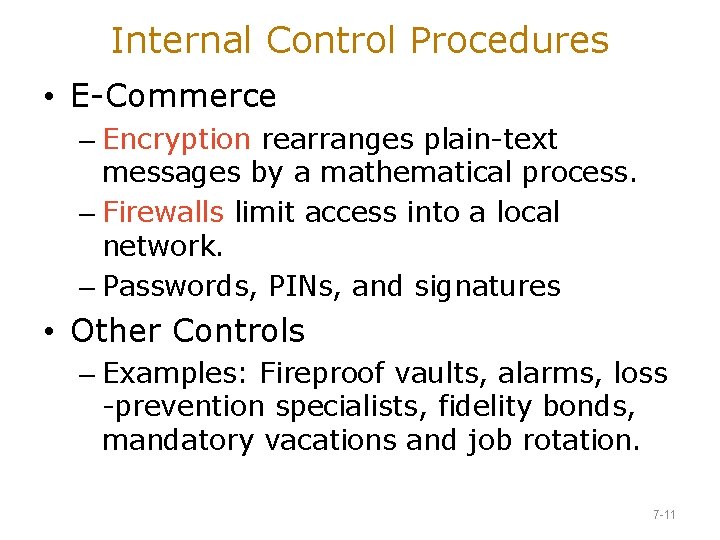
Internal Control Procedures • E-Commerce – Encryption rearranges plain-text messages by a mathematical process. – Firewalls limit access into a local network. – Passwords, PINs, and signatures • Other Controls – Examples: Fireproof vaults, alarms, loss -prevention specialists, fidelity bonds, mandatory vacations and job rotation. 7 -11
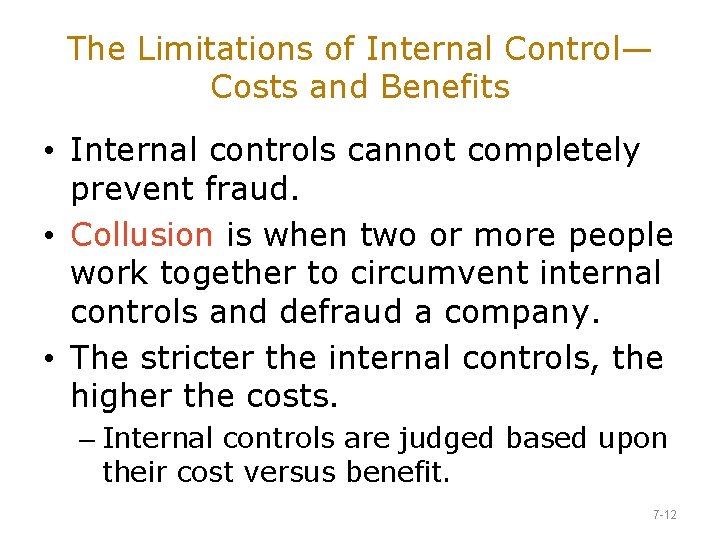
The Limitations of Internal Control— Costs and Benefits • Internal controls cannot completely prevent fraud. • Collusion is when two or more people work together to circumvent internal controls and defraud a company. • The stricter the internal controls, the higher the costs. – Internal controls are judged based upon their cost versus benefit. 7 -12
Learning Objective 2 Apply internal controls to cash receipts 7 -13
WHAT ARE THE INTERNAL CONTROL PROCEDURES WITH RESPECT TO CASH RECEIPTS? • Cash receipts occur primarily when a business sells merchandise or services. • Each source of cash has unique security measures. – A receipt of cash over the counter in a store involves a point-of-sale terminal (cash register). – Many companies receive checks by mail for payments of service or merchandise – several controls are needed for cash receipts by mail. 7 -14
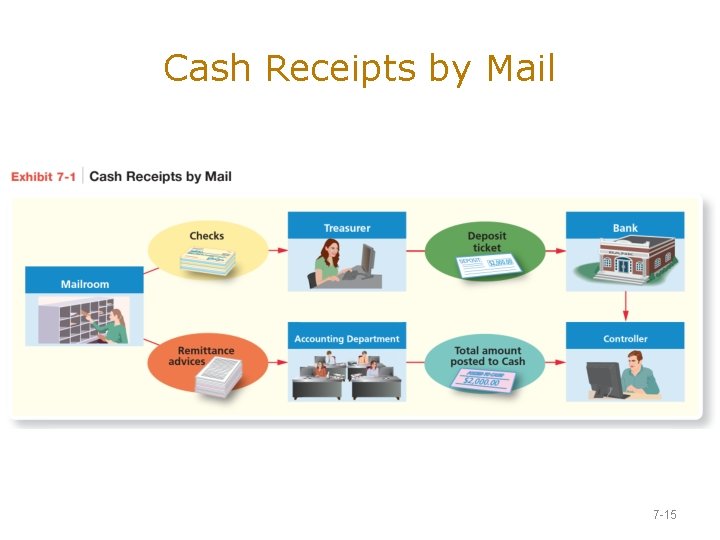
Cash Receipts by Mail 7 -15
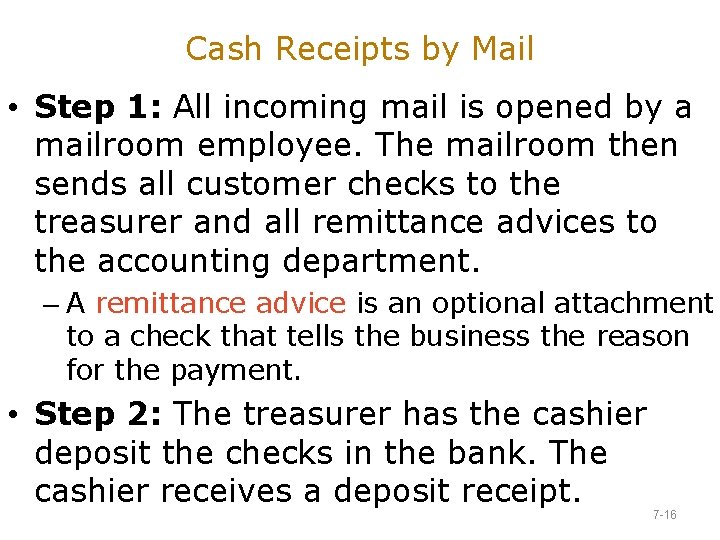
Cash Receipts by Mail • Step 1: All incoming mail is opened by a mailroom employee. The mailroom then sends all customer checks to the treasurer and all remittance advices to the accounting department. – A remittance advice is an optional attachment to a check that tells the business the reason for the payment. • Step 2: The treasurer has the cashier deposit the checks in the bank. The cashier receives a deposit receipt. 7 -16
Cash Receipts by Mail • Step 3: The accounting department uses the remittance advices to record the journal entries to Cash and customer accounts. • Step 4: As a final control, the controller compares the following records for the day: – Bank deposit amount from the treasurer – Debit to Cash from the accounting department 7 -17
Learning Objective 3 Apply internal controls to cash payments 7 -18
WHAT ARE THE INTERNAL CONTROL PROCEDURES WITH RESPECT TO CASH PAYMENTS? • Companies make many payments by check. • Payments by check provide internal controls: – A check provides a record of the payment. – A check requires a signature by an authorized official. – Supporting evidence is reviewed prior to signing the check. 7 -19
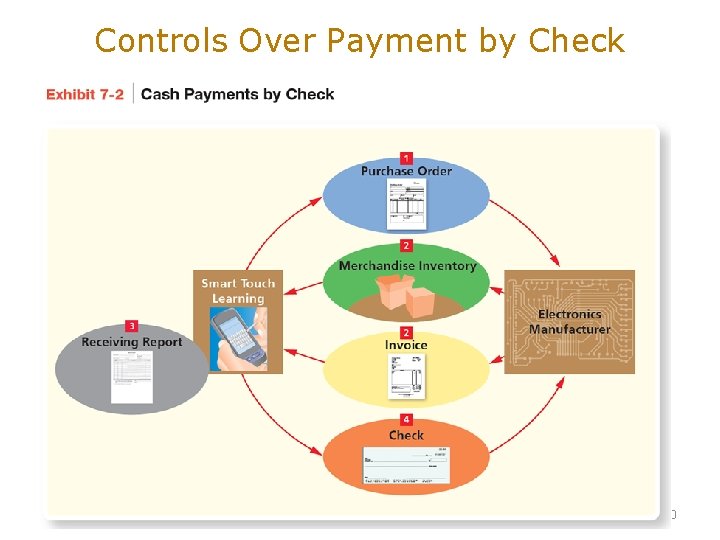
Controls Over Payment by Check 7 -20
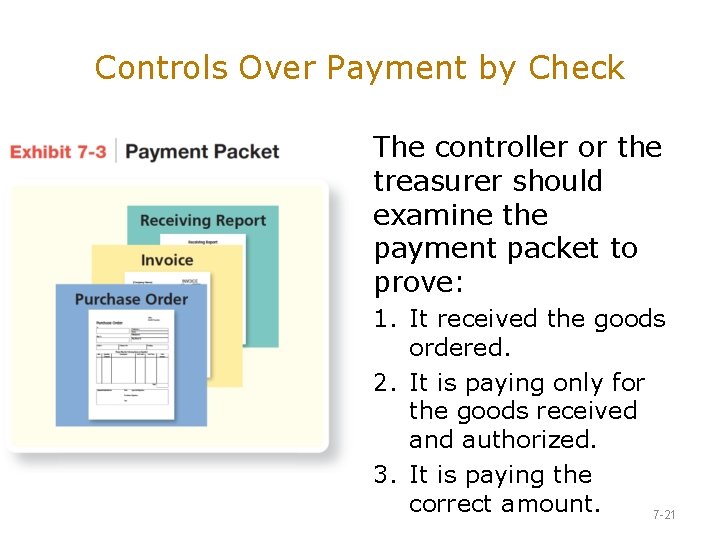
Controls Over Payment by Check The controller or the treasurer should examine the payment packet to prove: 1. It received the goods ordered. 2. It is paying only for the goods received and authorized. 3. It is paying the correct amount. 7 -21
Streamlined Procedures • Evaluated Receipts Settlement (ERS) is a procedure that compresses the payment approval process into a single step by comparing the receiving report to the purchase order. • Electronic Data Interchange (EDI) is a streamlined process that bypasses paper documents altogether. Computers of customers communicate directly with the computers of suppliers to automate routine business transactions. 7 -22
Learning Objective 4 Explain and journalize petty cash transactions 7 -23
HOW CAN A PETTY CASH FUND BE USED FOR INTERNAL CONTROL PURPOSES? • Petty cash is used as an in-office source of cash for small immediate purchases. • It is often the responsibility of a designated employee. • A petty cash ticket serves as authorization for payment. Uses for Petty Cash • • • Office donuts Cleaning supplies Sympathy flowers Entertaining clients Public transportation Tips for service providers 7 -24
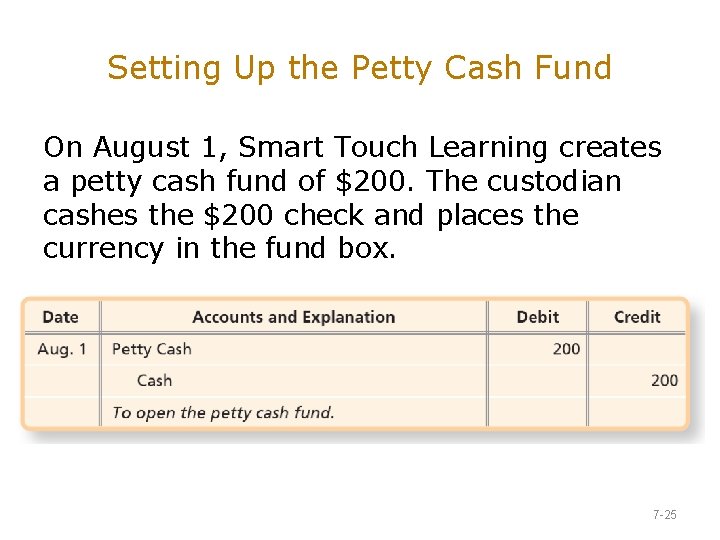
Setting Up the Petty Cash Fund On August 1, Smart Touch Learning creates a petty cash fund of $200. The custodian cashes the $200 check and places the currency in the fund box. 7 -25
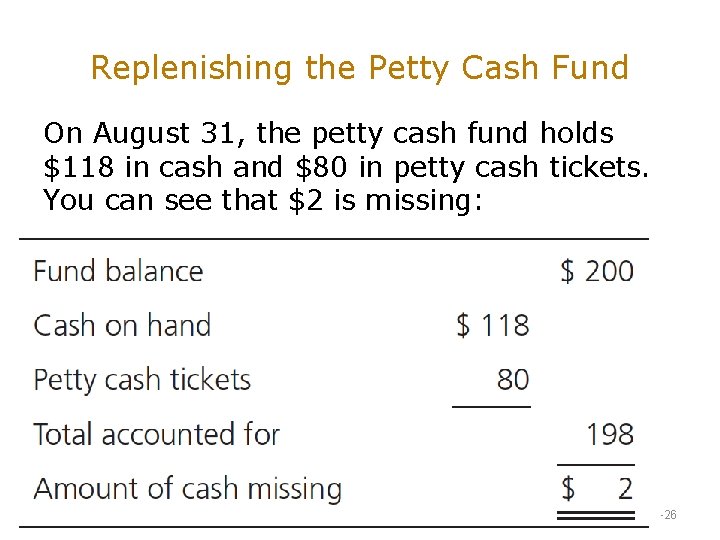
Replenishing the Petty Cash Fund On August 31, the petty cash fund holds $118 in cash and $80 in petty cash tickets. You can see that $2 is missing: 7 -26
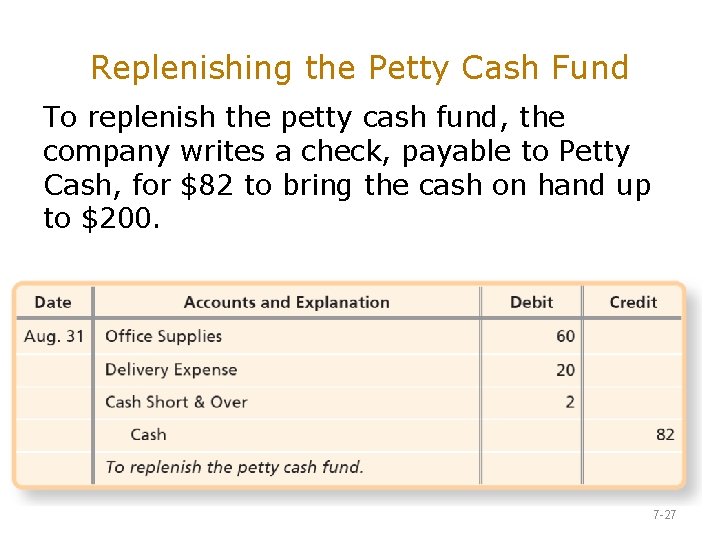
Replenishing the Petty Cash Fund To replenish the petty cash fund, the company writes a check, payable to Petty Cash, for $82 to bring the cash on hand up to $200. 7 -27
Replenishing the Petty Cash Fund • When cash is missing, the Cash Short & Over account is used to record the unaccounted for amount. • The Petty Cash account is used in a journal entry only when the fund is started or when its amount is increased or decreased. • When replenishing the fund, the company debits either the associated expense incurred or the asset purchased with the funds. 7 -28
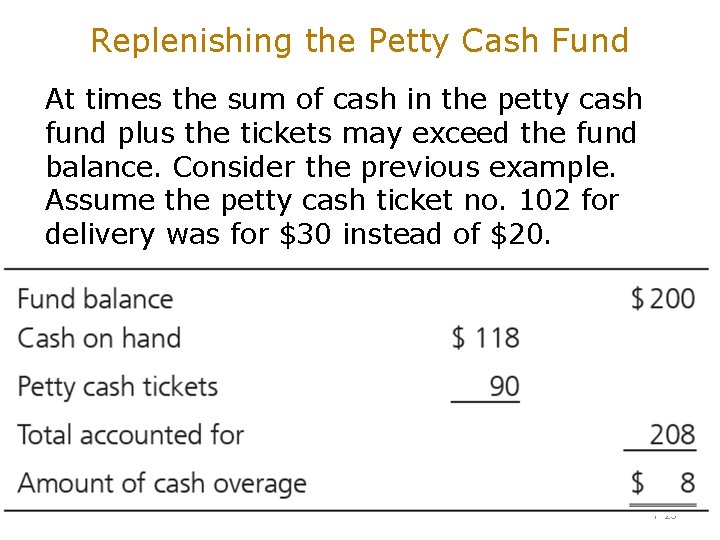
Replenishing the Petty Cash Fund At times the sum of cash in the petty cash fund plus the tickets may exceed the fund balance. Consider the previous example. Assume the petty cash ticket no. 102 for delivery was for $30 instead of $20. 7 -29
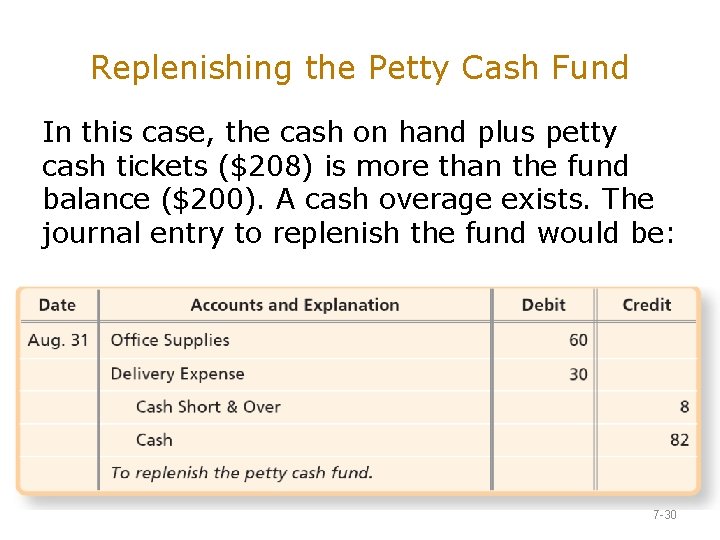
Replenishing the Petty Cash Fund In this case, the cash on hand plus petty cash tickets ($208) is more than the fund balance ($200). A cash overage exists. The journal entry to replenish the fund would be: 7 -30
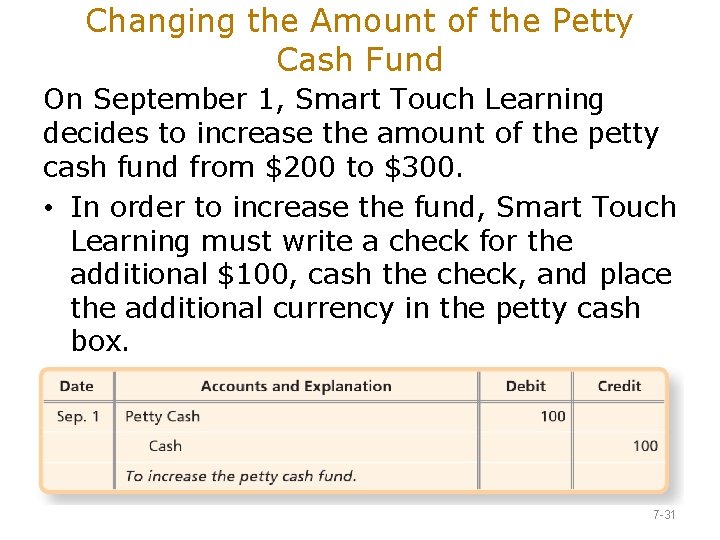
Changing the Amount of the Petty Cash Fund On September 1, Smart Touch Learning decides to increase the amount of the petty cash fund from $200 to $300. • In order to increase the fund, Smart Touch Learning must write a check for the additional $100, cash the check, and place the additional currency in the petty cash box. 7 -31
Learning Objective 5 Explain and journalize credit card sales 7 -32
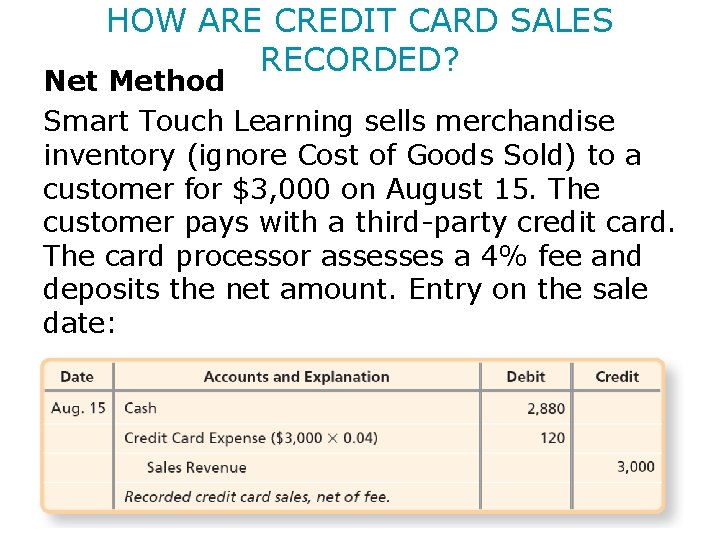
HOW ARE CREDIT CARD SALES RECORDED? Net Method Smart Touch Learning sells merchandise inventory (ignore Cost of Goods Sold) to a customer for $3, 000 on August 15. The customer pays with a third-party credit card. The card processor assesses a 4% fee and deposits the net amount. Entry on the sale date: 7 -33
HOW ARE CREDIT CARD SALES RECORDED? Gross Method Smart Touch Learning sells merchandise inventory (ignore Cost of Goods Sold) to a customer for $3, 000 on August 15. The customer pays with a third-party credit card. The processor uses the gross method. Entry on the sale date: 7 -34
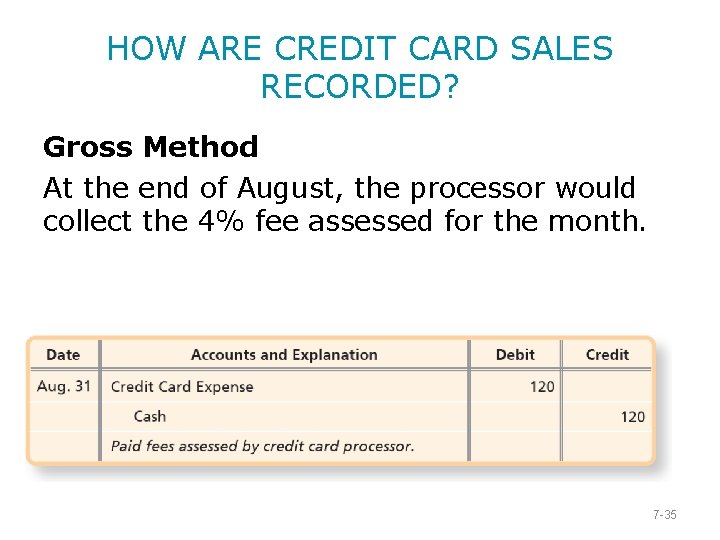
HOW ARE CREDIT CARD SALES RECORDED? Gross Method At the end of August, the processor would collect the 4% fee assessed for the month. 7 -35
Learning Objective 6 Demonstrate the use of a bank account as a control device and prepare a bank reconciliation and related journal entries 7 -36
HOW CAN THE BANK ACCOUNT BE USED AS A CONTROL DEVICE? Common bank account controls: • A signature card is a card that shows each authorized person’s signature for a bank account. • A deposit ticket is a bank form that is completed by the customer and shows the amount of each deposit. 7 -37
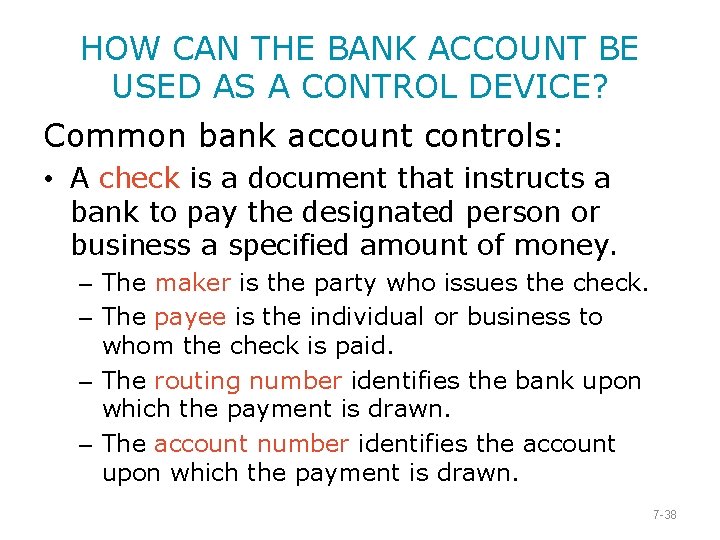
HOW CAN THE BANK ACCOUNT BE USED AS A CONTROL DEVICE? Common bank account controls: • A check is a document that instructs a bank to pay the designated person or business a specified amount of money. – The maker is the party who issues the check. – The payee is the individual or business to whom the check is paid. – The routing number identifies the bank upon which the payment is drawn. – The account number identifies the account upon which the payment is drawn. 7 -38
7 -39
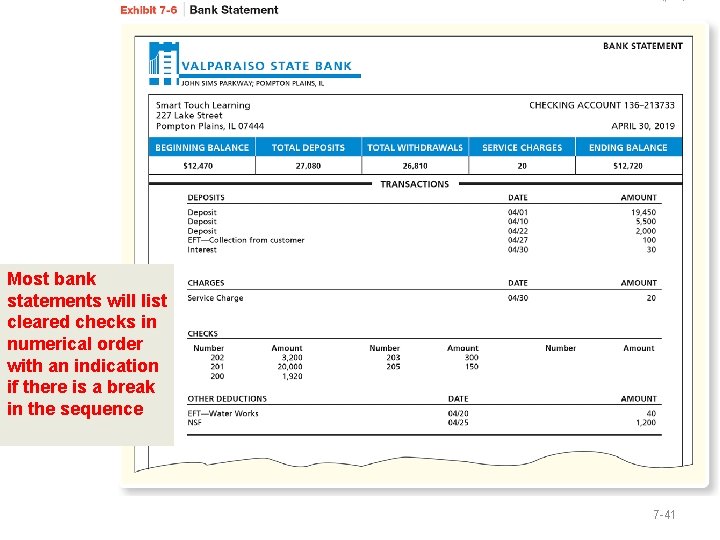
Bank Statement • A bank statement reports the activity in a customer’s account. – It shows the account’s beginning and ending balances. – It lists the month’s cash transactions conducted through the bank account. • Canceled checks are the physical or scanned copies of the maker’s cashed (paid) checks. 7 -40
Most bank statements will list cleared checks in numerical order with an indication if there is a break in the sequence 7 -41
Electronic Funds Transfers • Electronic funds transfer (EFT) is a system that transfers cash by electronic communication rather than by paper documents. – Many bills are paid with EFT – EFT is less expensive than mailing a check – Debit card transactions and direct deposits are EFTs 7 -42
Bank Reconciliation • The bank reconciliation compares and explains the differences between cash on the company’s books and the bank’s records. • Differences arise because of a time lag in recording transactions, called timing differences. 7 -43
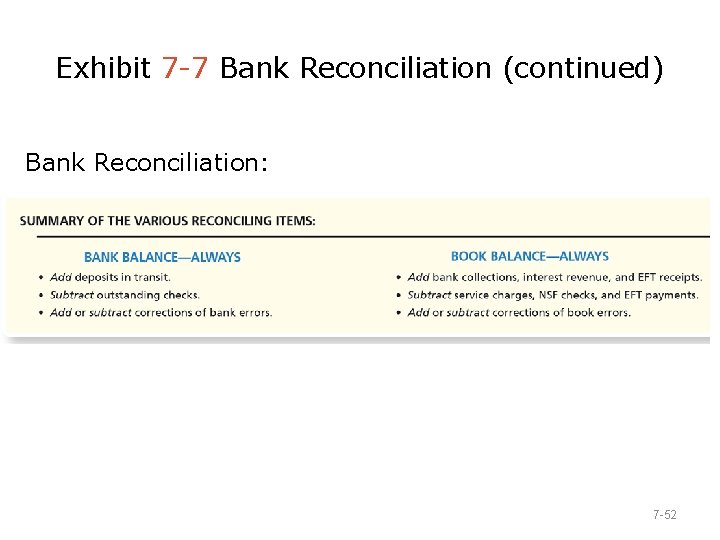
Preparing the Bank Side of the Bank Reconciliation • Start with the Bank Balance at the end of the period • + Deposits in transit that are recorded by the company but not yet by its bank. • - Outstanding checks that are issued by a company and recorded on its books but not yet paid by its bank. • Include ALL uncleared checks, even from previous periods • Adjust for bank errors = Adjusted Bank Balance 7 -44
Preparing the Book Side of the Bank Reconciliation The book side of the reconciliation includes: • Add Credit memorandums (bank collections) are cash receipts the bank has received and recorded but the company has not recorded on its books. • Deduct Electronic Funds Transfers Service charge, often referred to as a debit memorandum Interest Revenue on a Checking Account Nonsufficient funds (NSF) checks are received from customers for payment of services rendered or merchandise sold that have turned out to be worthless. – Book errors that either incorrectly increase or decrease the cash balance in the company’s general ledger. – – 7 -45
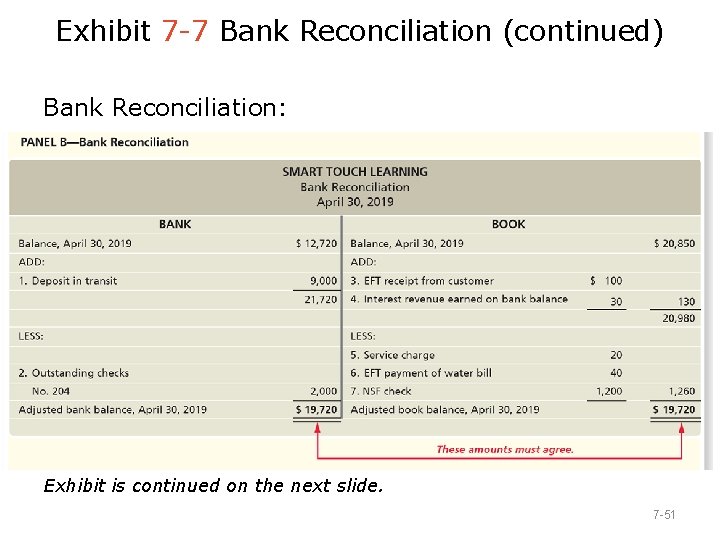
Exhibit 7 -7 Bank Reconciliation Items: 7 -46
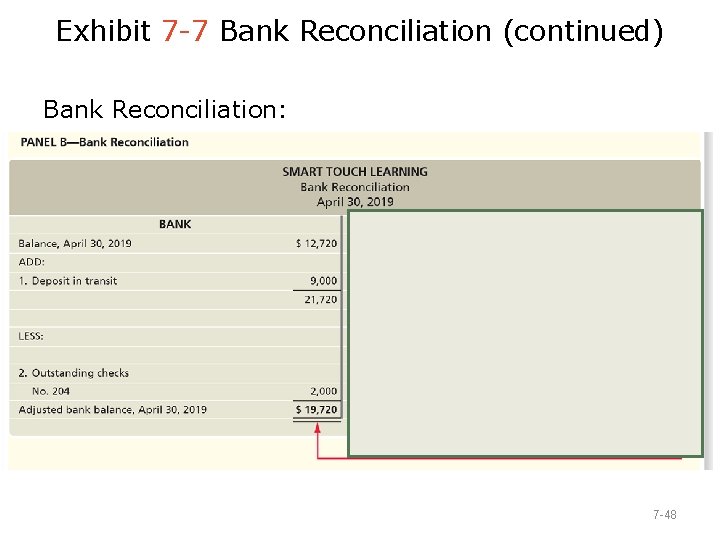
Bank Side of the Reconciliation The beginning balance taken from the bank statement is $12, 720. Additions and subtractions: • Deposit in transit. The deposit made on April 30 for $9, 000 has not yet been recorded by the bank (must add to the bank balance). • Outstanding check. Check number 204 for $2, 000 is outstanding (must subtract from the bank balance). After all items affecting the bank side have been identified, the adjusted bank balance is determined. 7 -47
Exhibit 7 -7 Bank Reconciliation (continued) Bank Reconciliation: 7 -48
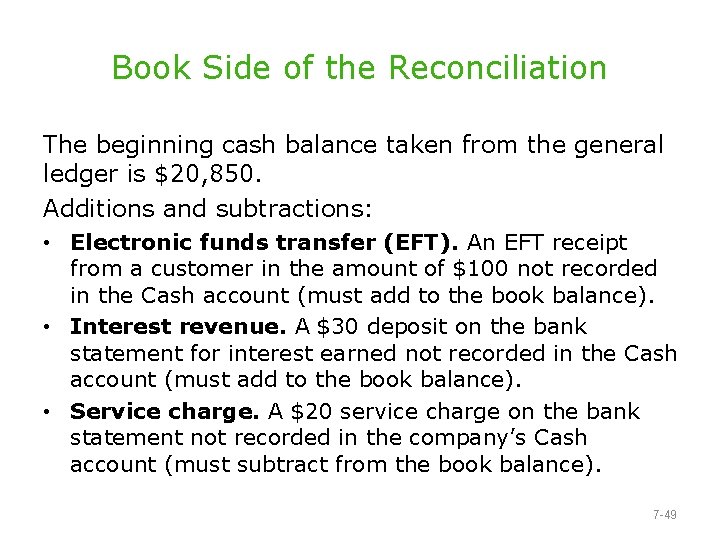
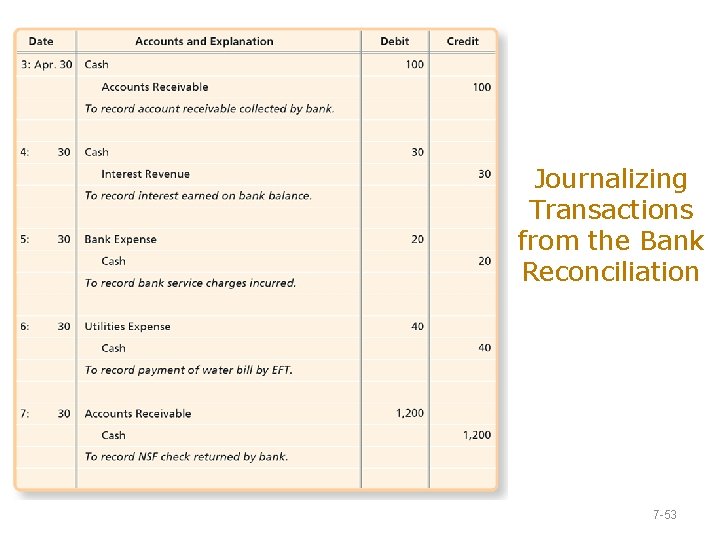
Book Side of the Reconciliation The beginning cash balance taken from the general ledger is $20, 850. Additions and subtractions: • Electronic funds transfer (EFT). An EFT receipt from a customer in the amount of $100 not recorded in the Cash account (must add to the book balance). • Interest revenue. A $30 deposit on the bank statement for interest earned not recorded in the Cash account (must add to the book balance). • Service charge. A $20 service charge on the bank statement not recorded in the company’s Cash account (must subtract from the book balance). 7 -49
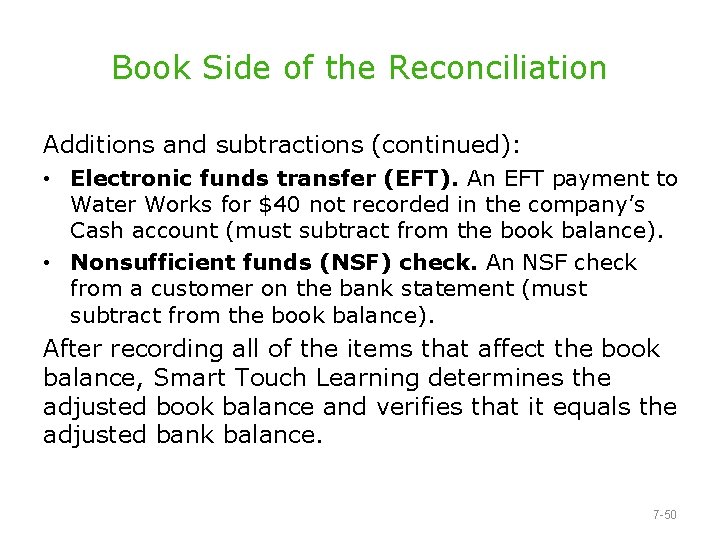
Book Side of the Reconciliation Additions and subtractions (continued): • Electronic funds transfer (EFT). An EFT payment to Water Works for $40 not recorded in the company’s Cash account (must subtract from the book balance). • Nonsufficient funds (NSF) check. An NSF check from a customer on the bank statement (must subtract from the book balance). After recording all of the items that affect the book balance, Smart Touch Learning determines the adjusted book balance and verifies that it equals the adjusted bank balance. 7 -50
Exhibit 7 -7 Bank Reconciliation (continued) Bank Reconciliation: Exhibit is continued on the next slide. 7 -51
Exhibit 7 -7 Bank Reconciliation (continued) Bank Reconciliation: 7 -52
Journalizing Transactions from the Bank Reconciliation 7 -53
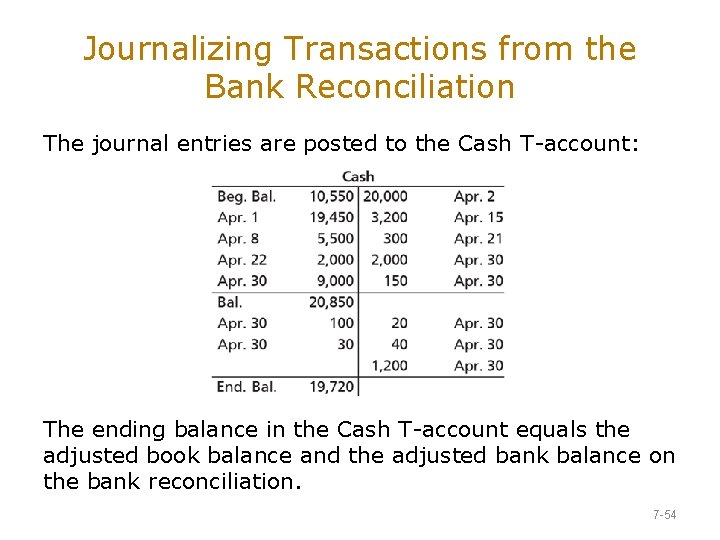
Journalizing Transactions from the Bank Reconciliation The journal entries are posted to the Cash T-account: The ending balance in the Cash T-account equals the adjusted book balance and the adjusted bank balance on the bank reconciliation. 7 -54
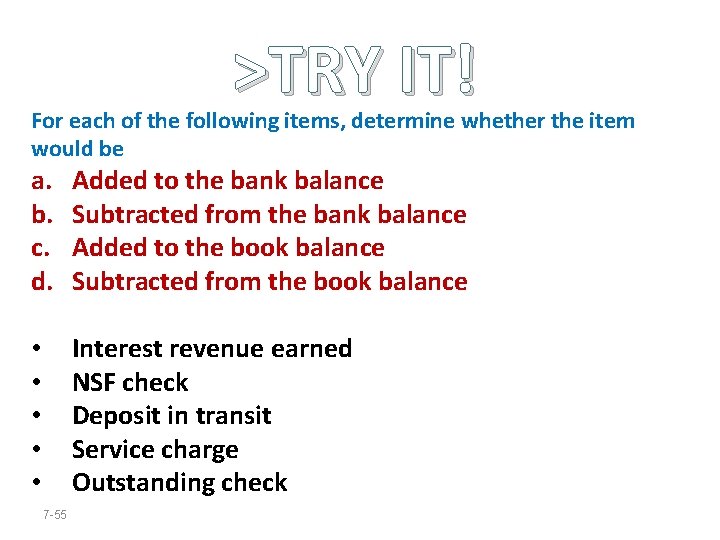
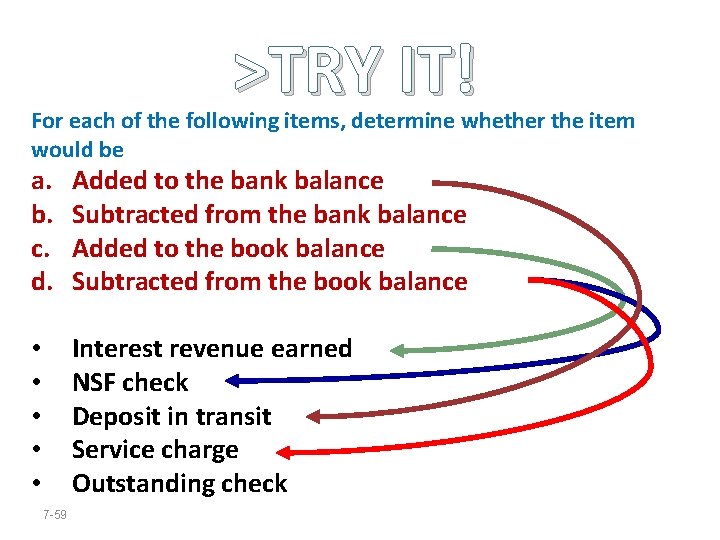
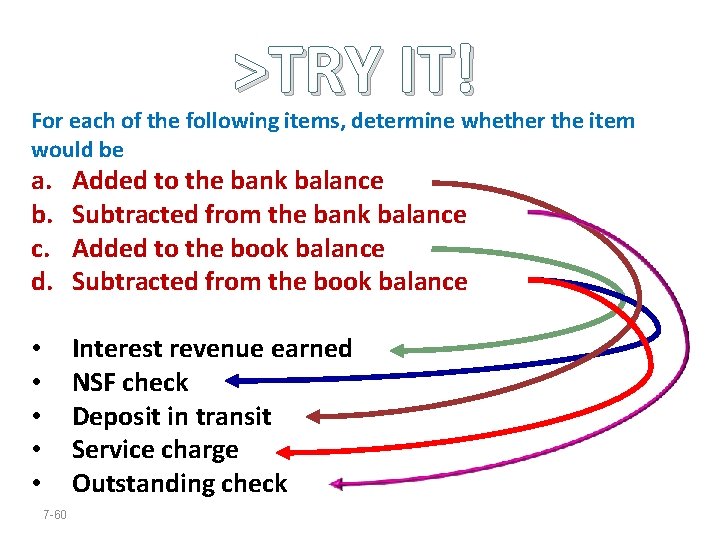
>TRY IT! For each of the following items, determine whether the item would be a. b. c. d. Added to the bank balance Subtracted from the bank balance Added to the book balance Subtracted from the book balance • • • Interest revenue earned NSF check Deposit in transit Service charge Outstanding check 7 -55
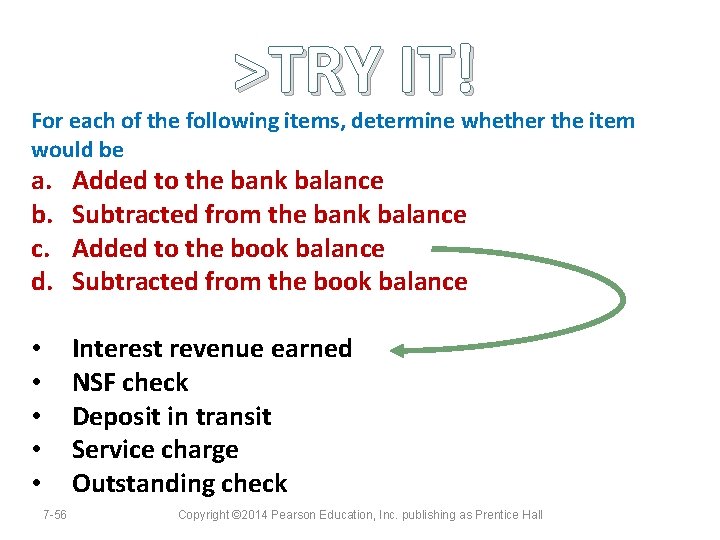
>TRY IT! For each of the following items, determine whether the item would be a. b. c. d. Added to the bank balance Subtracted from the bank balance Added to the book balance Subtracted from the book balance • • • Interest revenue earned NSF check Deposit in transit Service charge Outstanding check 7 -56 Copyright © 2014 Pearson Education, Inc. publishing as Prentice Hall
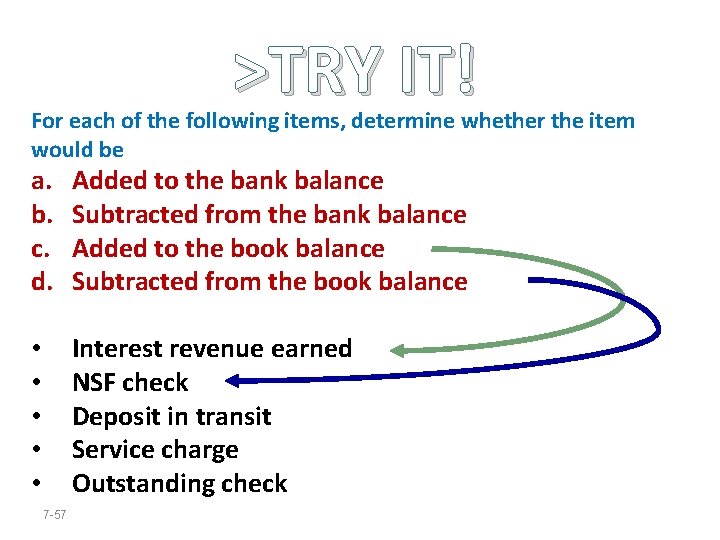
>TRY IT! For each of the following items, determine whether the item would be a. b. c. d. Added to the bank balance Subtracted from the bank balance Added to the book balance Subtracted from the book balance • • • Interest revenue earned NSF check Deposit in transit Service charge Outstanding check 7 -57
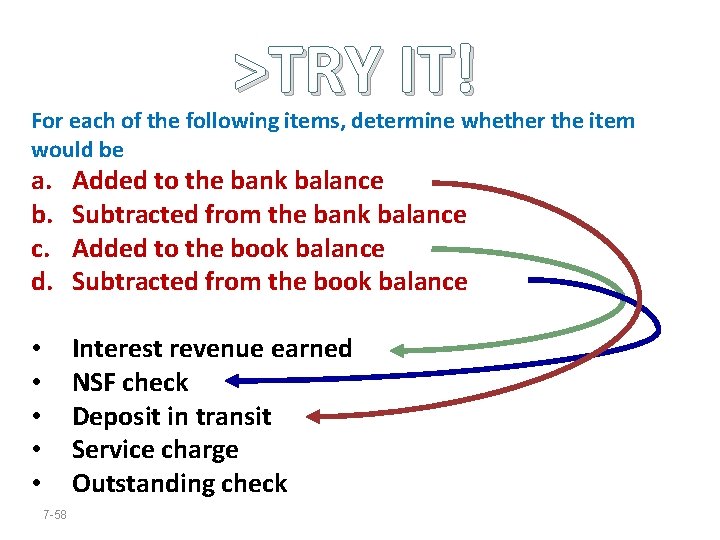
>TRY IT! For each of the following items, determine whether the item would be a. b. c. d. Added to the bank balance Subtracted from the bank balance Added to the book balance Subtracted from the book balance • • • Interest revenue earned NSF check Deposit in transit Service charge Outstanding check 7 -58
>TRY IT! For each of the following items, determine whether the item would be a. b. c. d. Added to the bank balance Subtracted from the bank balance Added to the book balance Subtracted from the book balance • • • Interest revenue earned NSF check Deposit in transit Service charge Outstanding check 7 -59
>TRY IT! For each of the following items, determine whether the item would be a. b. c. d. Added to the bank balance Subtracted from the bank balance Added to the book balance Subtracted from the book balance • • • Interest revenue earned NSF check Deposit in transit Service charge Outstanding check 7 -60
Learning Objective 7 Use the cash ratio to evaluate business performance 7 -61
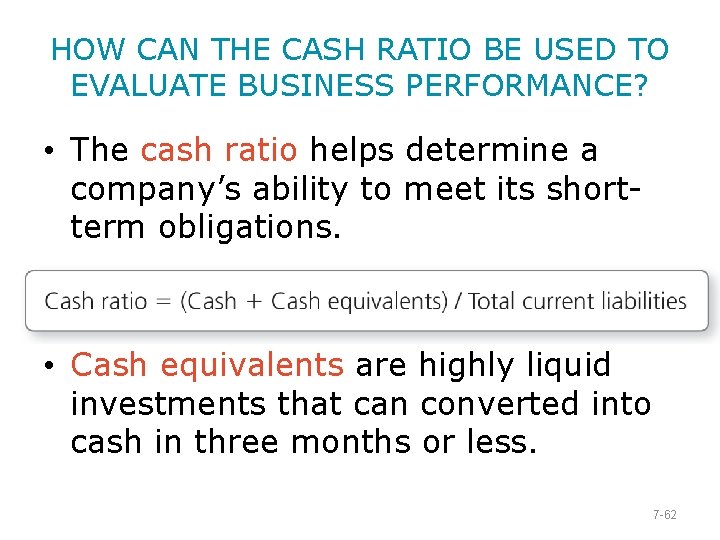
HOW CAN THE CASH RATIO BE USED TO EVALUATE BUSINESS PERFORMANCE? • The cash ratio helps determine a company’s ability to meet its shortterm obligations. • Cash equivalents are highly liquid investments that can converted into cash in three months or less. 7 -62
7 -63
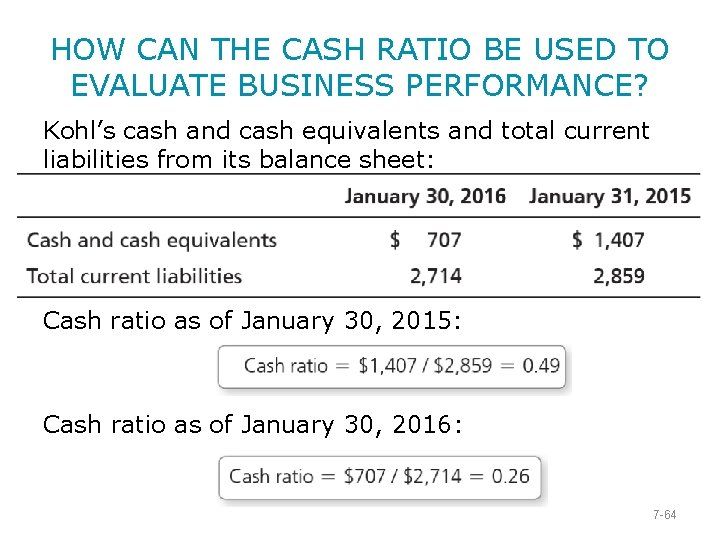
HOW CAN THE CASH RATIO BE USED TO EVALUATE BUSINESS PERFORMANCE? Kohl’s cash and cash equivalents and total current liabilities from its balance sheet: Cash ratio as of January 30, 2015: Cash ratio as of January 30, 2016: 7 -64