
CHAPTER 7 INFECTION AND DISEASE WHAT IS DISEASE
- Slides: 35
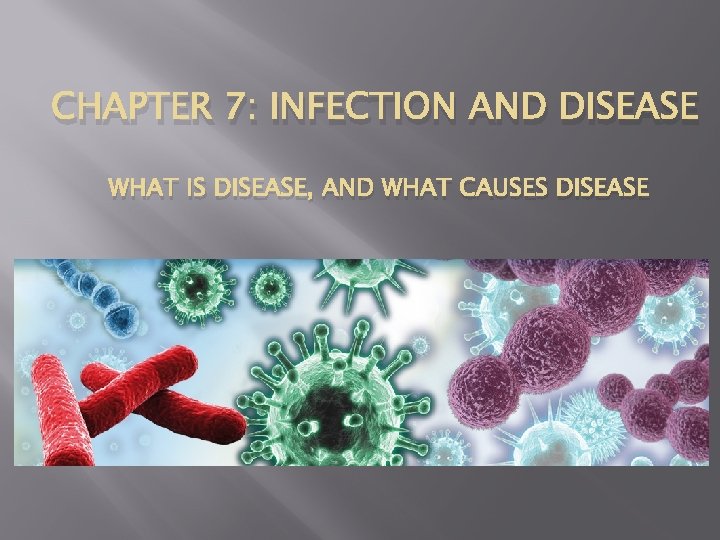
CHAPTER 7: INFECTION AND DISEASE WHAT IS DISEASE, AND WHAT CAUSES DISEASE
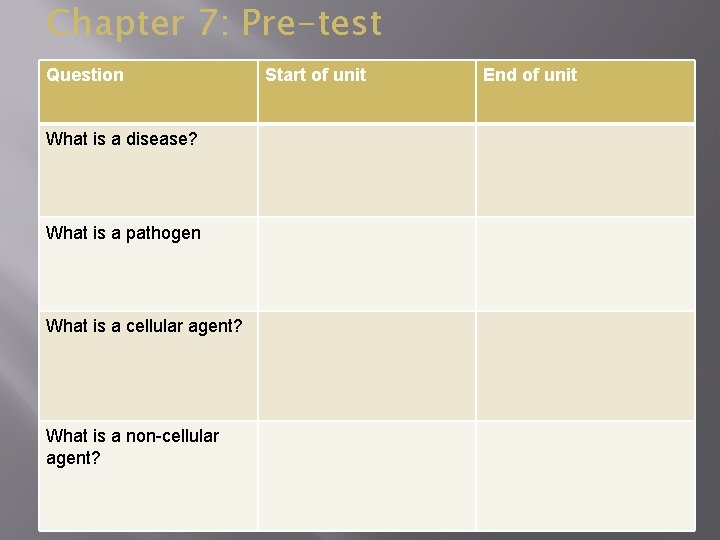
Chapter 7: Pre-test Question What is a disease? What is a pathogen What is a cellular agent? What is a non-cellular agent? Start of unit End of unit
Disease � � Any condition that interferes with the functioning of an organism or its cells Can be acquired through: � Genetic causes – inherited from parents � Environment – e. g. UV, chemicals � Pathogens
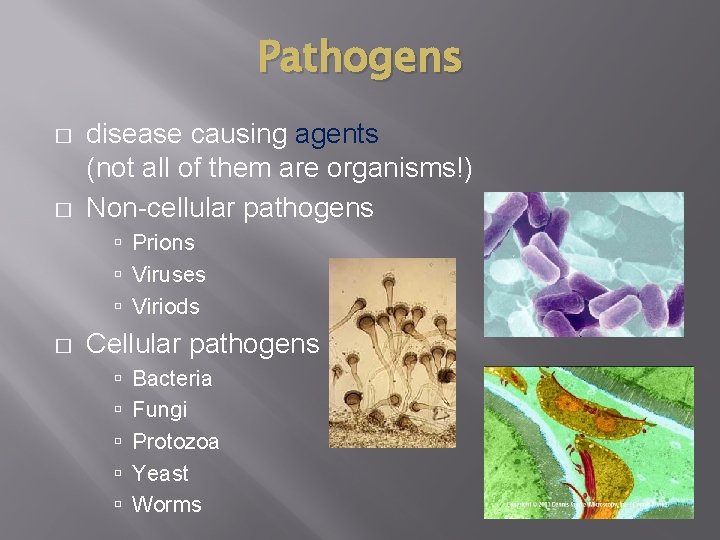
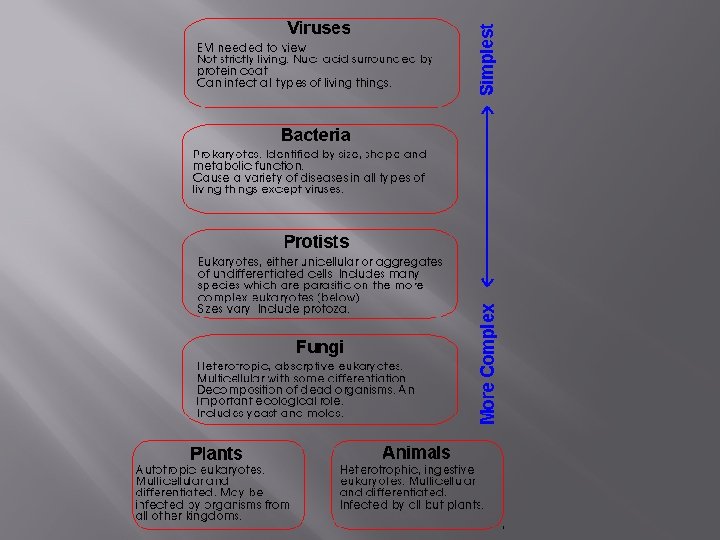
Pathogens � � disease causing agents (not all of them are organisms!) Non-cellular pathogens Prions Viruses Viriods � Cellular pathogens Bacteria Fungi Protozoa Yeast Worms
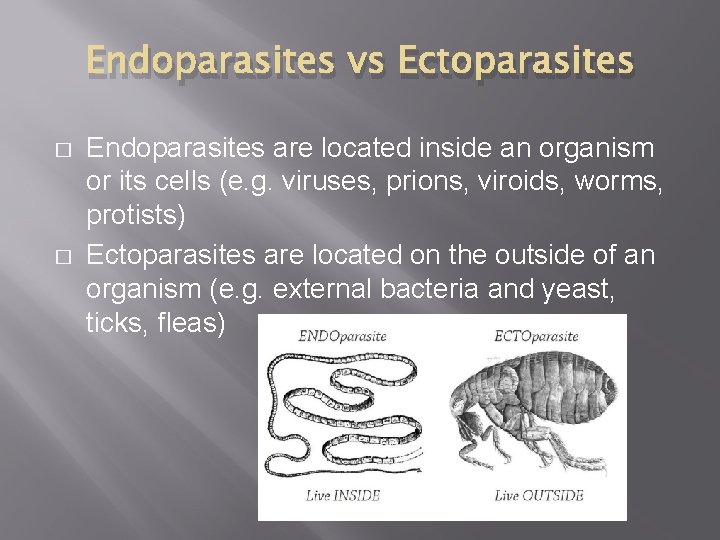
Endoparasites vs Ectoparasites � � Endoparasites are located inside an organism or its cells (e. g. viruses, prions, viroids, worms, protists) Ectoparasites are located on the outside of an organism (e. g. external bacteria and yeast, ticks, fleas)
Infection vs Disease (pathogenic) � � � Infection refers to a pathogen being present in a host But not all infections lead to disease A person may be infected with a microorganism, but if it is not causing damage to host cells then the micro-organism is not being pathogenic (i. e. disease causing)
Some more terms to learn � Virulence – the degree to which a pathogen cause disease � Resistance - Individuals level of susceptibility to pathogen � Varies with age, state of health, immunity � Epidemic – rapid spread of infectious disease to a large number of people within a particular area of the world � Pandemic – the same as an epidemic, but larger – spreads to many countries � Acute infection – a rapidly occuring and relatively short lasting infection � Chronic infection – a slowly developing infection which lasts for a longer time (at least more than 6 months) � Carrier – an organism that is infected by a pathogen and is able to transmit it to others, but does not show symptoms of infection
Nature of Disease: Transmission � Infective agents can be transmitted from one host to another by: � Direct contact � Droplets in air breathed or sneezed by host � Sexual contact (e. g. STIs) � Contaminated food or water � A carrying vector (e. g. rats carrying fleas) � An injecting vector (e. g. mosquitoes carrying malaria parasites) � Injection with infected needles and syringes
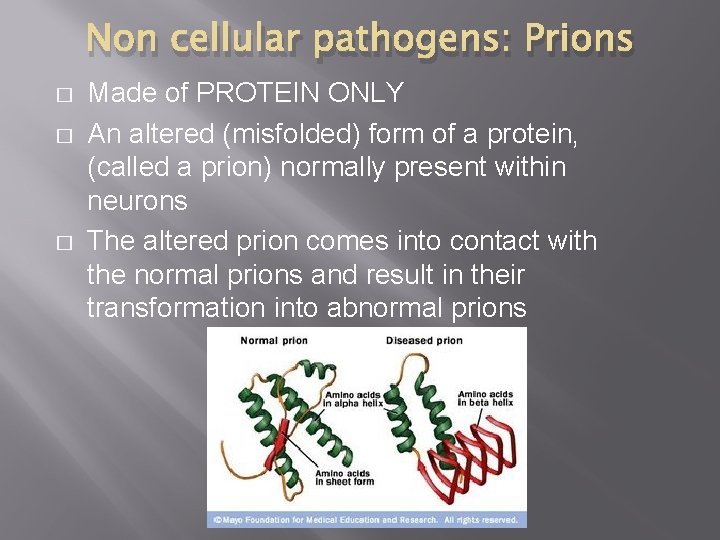
Non cellular pathogens: Prions � � � Made of PROTEIN ONLY An altered (misfolded) form of a protein, (called a prion) normally present within neurons The altered prion comes into contact with the normal prions and result in their transformation into abnormal prions
Prions (continued) These transformed prions then travel to other neurons altering their prions, which in turn alter other prions � This cycle continues throughout the brain’s neurons http: //highered. mcgrawhill. com/olcweb/cgi/pluginpop. cgi? it=swf: : 535: : /sit es/dl/free/0072437316/120088/bio 43. swf: : How%20 Pri ons%20 Arise � https: //www. youtube. com/watch? v=w 5 a. APEYIL 9 A&N R=1
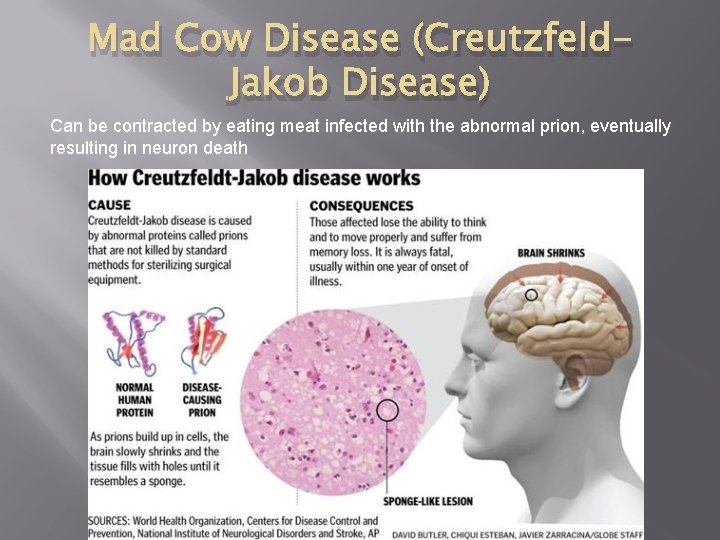
Mad Cow Disease (Creutzfeld. Jakob Disease) Can be contracted by eating meat infected with the abnormal prion, eventually resulting in neuron death
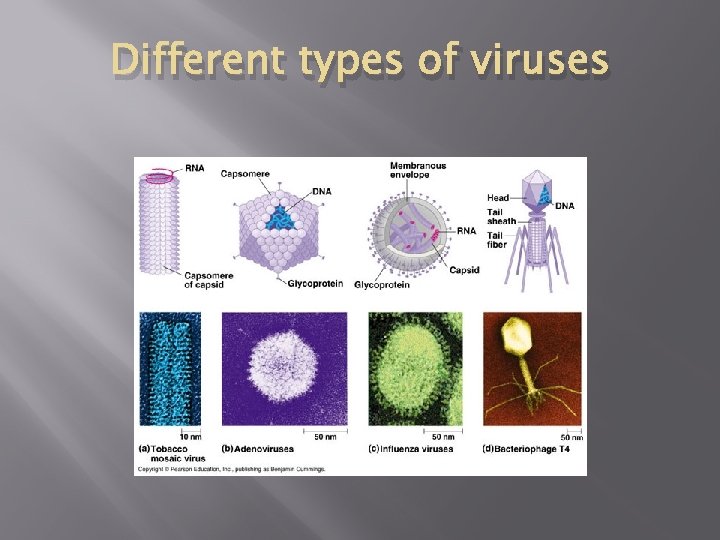
Non cellular pathogens: Viruses � � A virus is a non-cellular agent composed of a protein coat (capsid) and nucleic acid (DNA or RNA - retrovirus) Rely on living host cells to function and replicate Highly specific to host cell or organism it infects (e. g. adenovirus specific to lung cells - common cold) Bind to specific proteins on host cell surface via specific viral proteins (viral receptors) located on virus capsid.
Different types of viruses
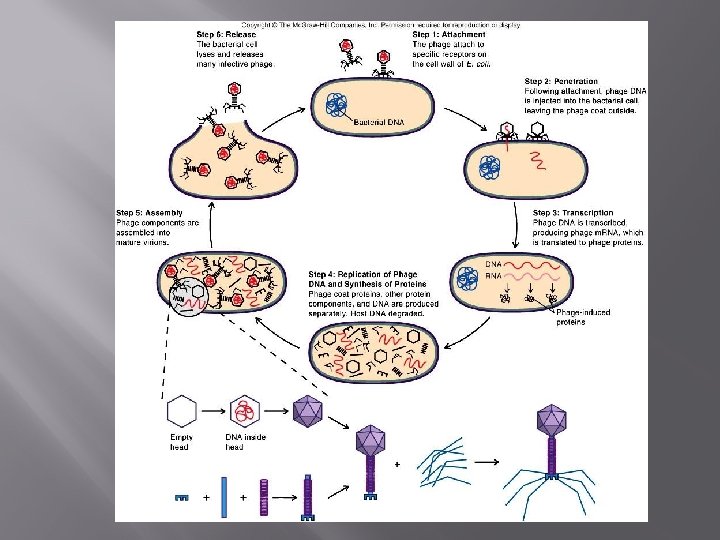
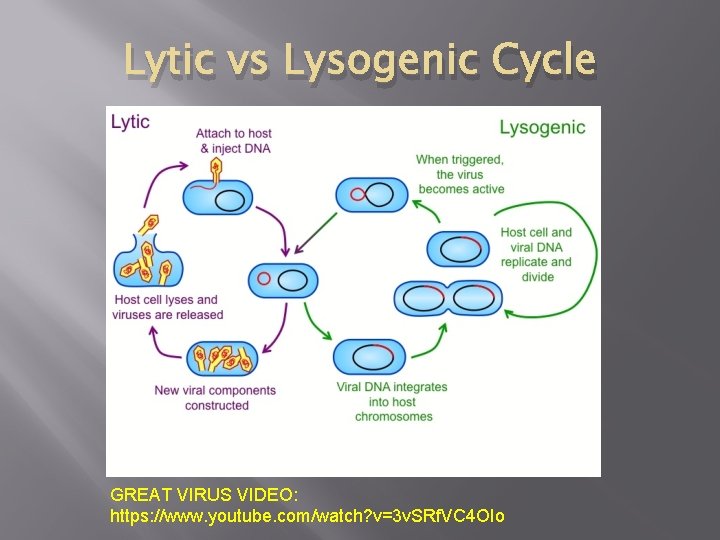
Viral life cycle � � Ø Ø https: //www. youtube. com/watch? v=u. Iut 0 o. VWC Eg Bacteriophages - viruses that infect bacteria Used to study viral life cycles 2 main viral life cycles Lysogenic cycle (viral DNA incorporated into host cell DNA. No viral particles made) Lytic cycle (new viruses being made. Released from host cell)
Lytic vs Lysogenic Cycle GREAT VIRUS VIDEO: https: //www. youtube. com/watch? v=3 v. SRf. VC 4 OIo
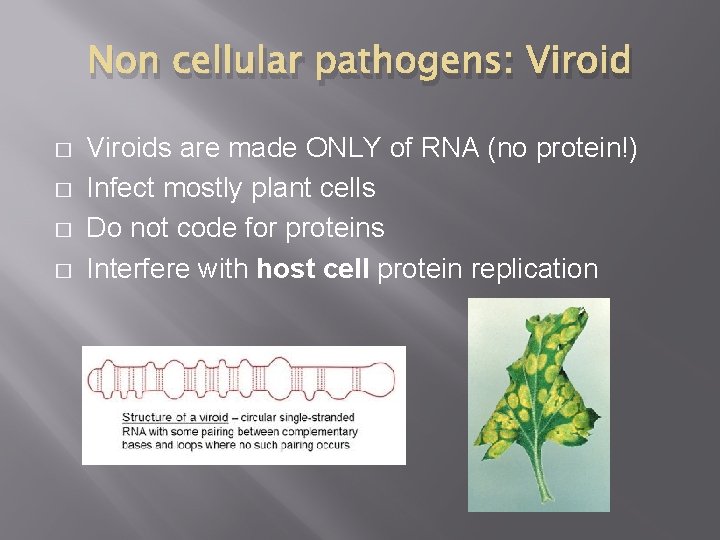
Non cellular pathogens: Viroid � � Viroids are made ONLY of RNA (no protein!) Infect mostly plant cells Do not code for proteins Interfere with host cell protein replication
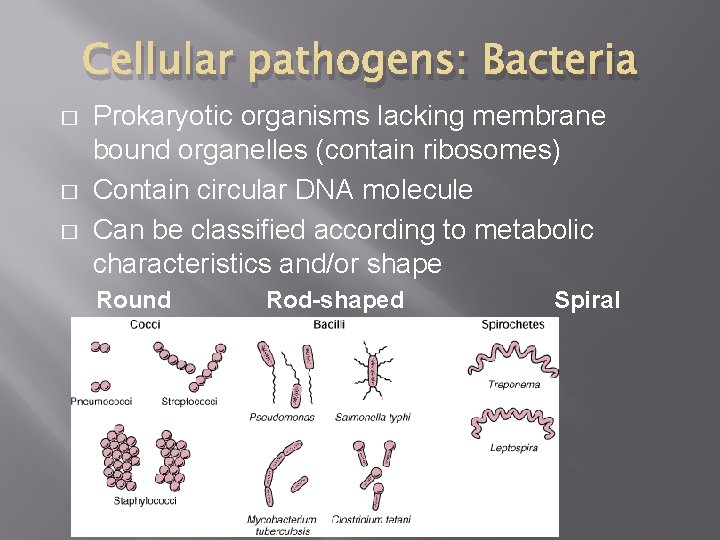
Cellular pathogens: Bacteria � � � Prokaryotic organisms lacking membrane bound organelles (contain ribosomes) Contain circular DNA molecule Can be classified according to metabolic characteristics and/or shape Round Rod-shaped Spiral
Bacteria: Metabolic classifications � � � Aerobic – reproduce and grow in presence of oxygen Facultative anaerobe – can reproduce and grow whether or not oxygen is present Obligate anaerobe – cannot survive or reproduce in presence of oxygen
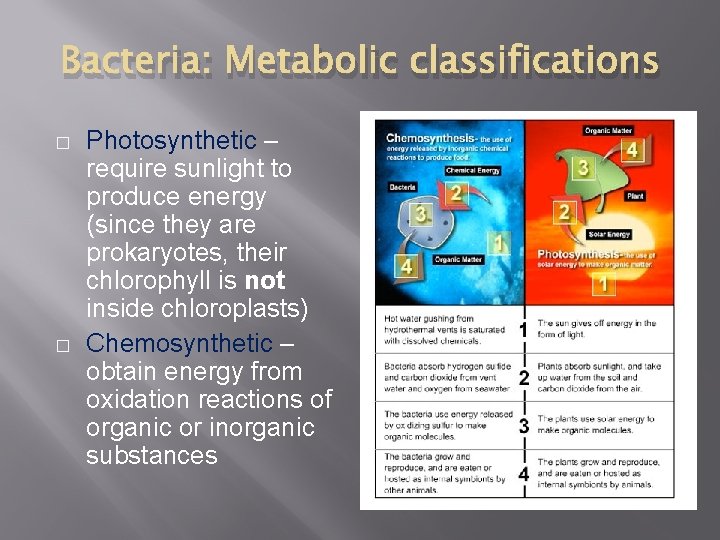
Bacteria: Metabolic classifications � � Photosynthetic – require sunlight to produce energy (since they are prokaryotes, their chlorophyll is not inside chloroplasts) Chemosynthetic – obtain energy from oxidation reactions of organic or inorganic substances
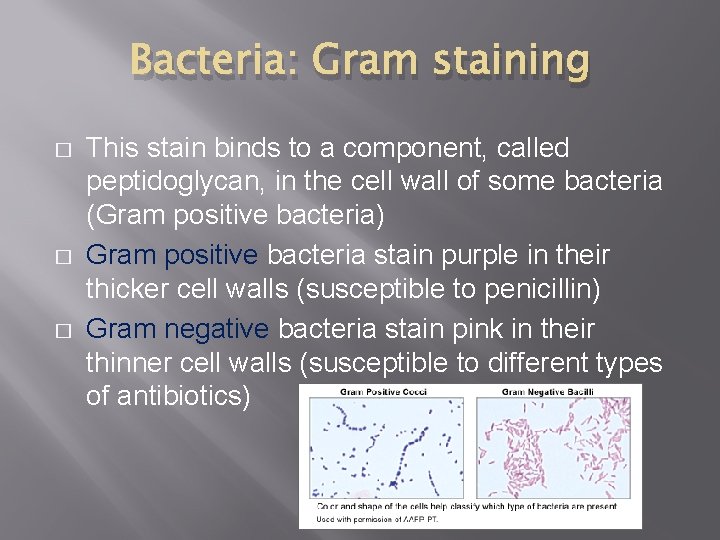
Bacteria: Gram staining � � � This stain binds to a component, called peptidoglycan, in the cell wall of some bacteria (Gram positive bacteria) Gram positive bacteria stain purple in their thicker cell walls (susceptible to penicillin) Gram negative bacteria stain pink in their thinner cell walls (susceptible to different types of antibiotics)
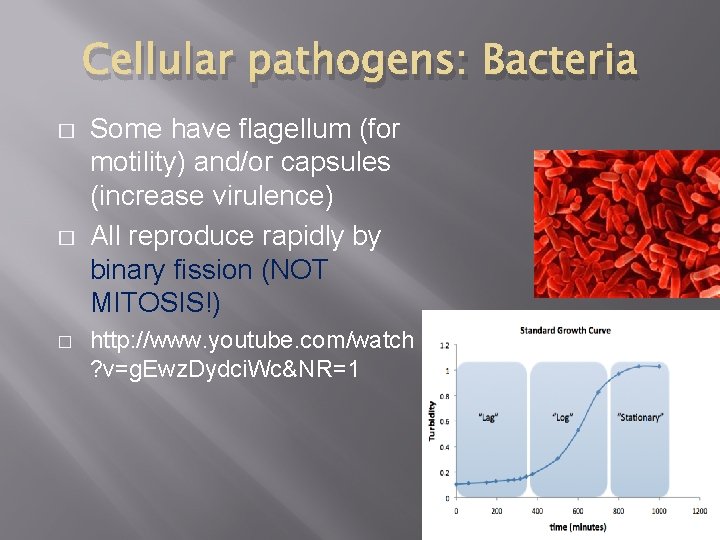
Cellular pathogens: Bacteria � � � Some have flagellum (for motility) and/or capsules (increase virulence) All reproduce rapidly by binary fission (NOT MITOSIS!) http: //www. youtube. com/watch ? v=g. Ewz. Dydci. Wc&NR=1
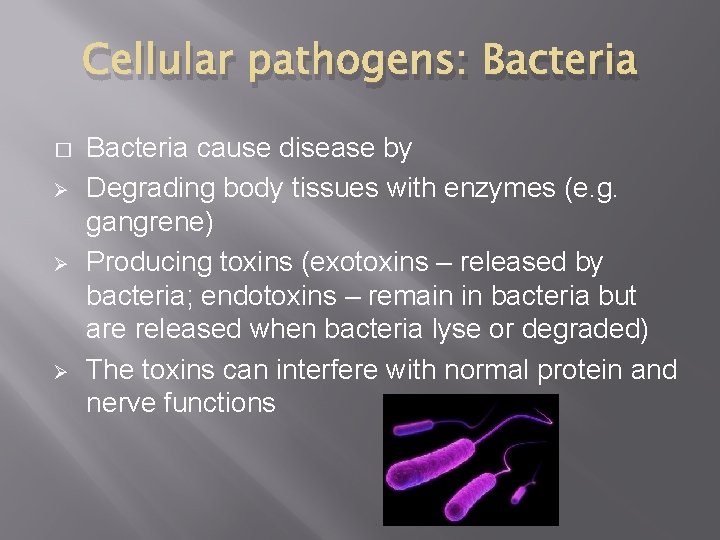
Cellular pathogens: Bacteria � Ø Ø Ø Bacteria cause disease by Degrading body tissues with enzymes (e. g. gangrene) Producing toxins (exotoxins – released by bacteria; endotoxins – remain in bacteria but are released when bacteria lyse or degraded) The toxins can interfere with normal protein and nerve functions
Treating Bacterial Infections � Ø Ø Antibiotics (produced by some fungi and bacteria) Broad spectrum – act against various types of bacteria Narrow spectrum – act against a limited amount of bacteria Different modes of action (e. g. inhibit protein synthesis, inhibit cell wall synthesis) Bacterial ribosomes are good drug targets as they are structurally different to eurkaryotic ribosomes
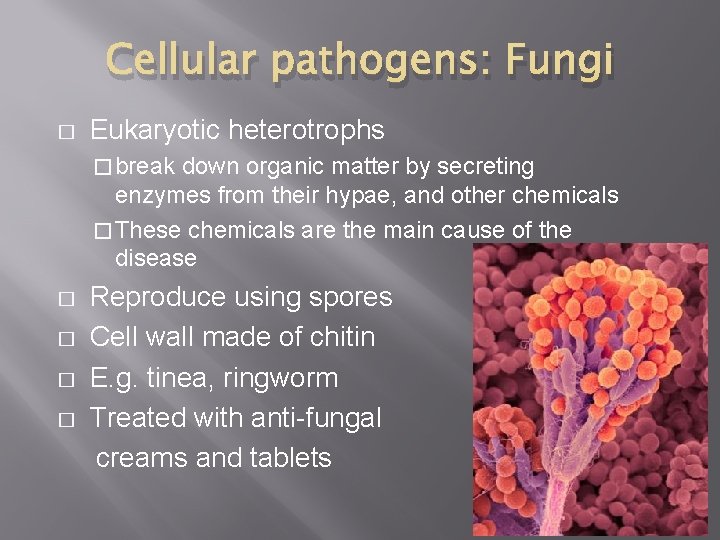
Cellular pathogens: Fungi � Eukaryotic heterotrophs � break down organic matter by secreting enzymes from their hypae, and other chemicals � These chemicals are the main cause of the disease � � Reproduce using spores Cell wall made of chitin E. g. tinea, ringworm Treated with anti-fungal creams and tablets
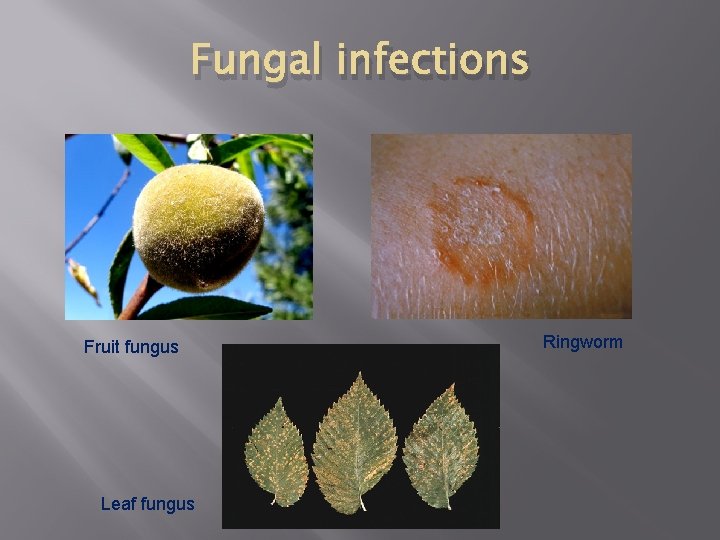
Fungal infections Fruit fungus Leaf fungus Ringworm
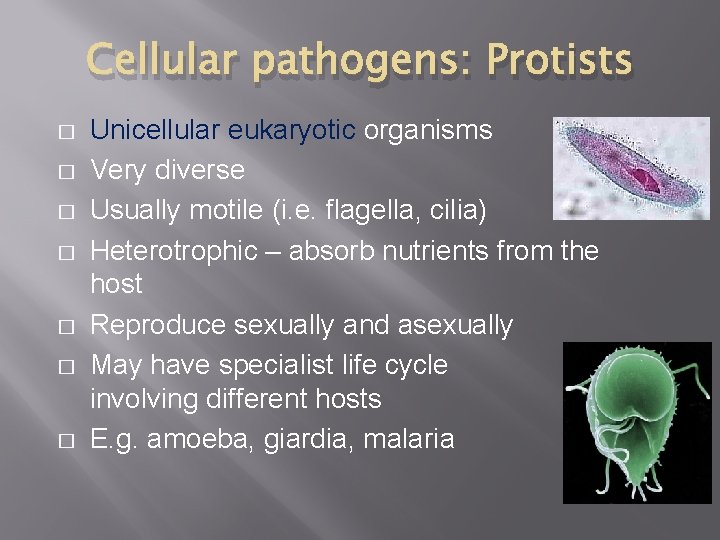
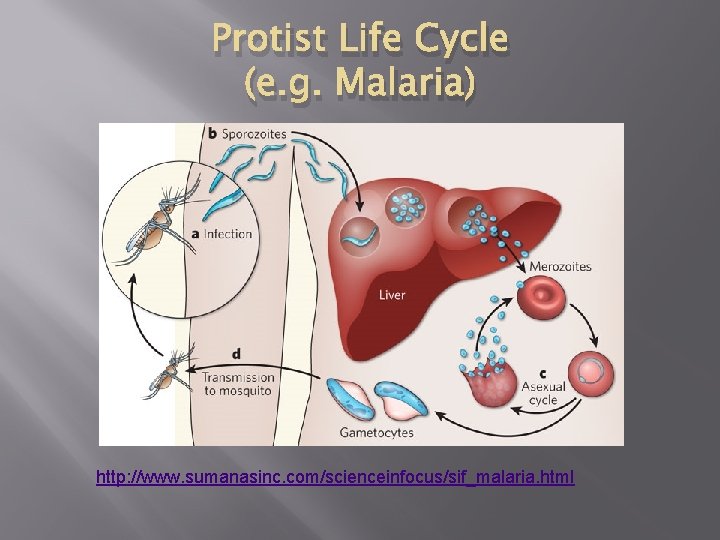
Cellular pathogens: Protists � � � � Unicellular eukaryotic organisms Very diverse Usually motile (i. e. flagella, cilia) Heterotrophic – absorb nutrients from the host Reproduce sexually and asexually May have specialist life cycle involving different hosts E. g. amoeba, giardia, malaria
Protist Life Cycle (e. g. Malaria) http: //www. sumanasinc. com/scienceinfocus/sif_malaria. html
More terms � Primary host – the host in which the pathogen obtains sexual maturity (e. g. mosquito) � Intermediate/Secondary host – a host that harbours the parasite for a short period of time, usually as it completes a developmental stage in its life cycle (e. g. human) Vector – the organism that transmits the pathogen to another organism (e. g. mosquito) �
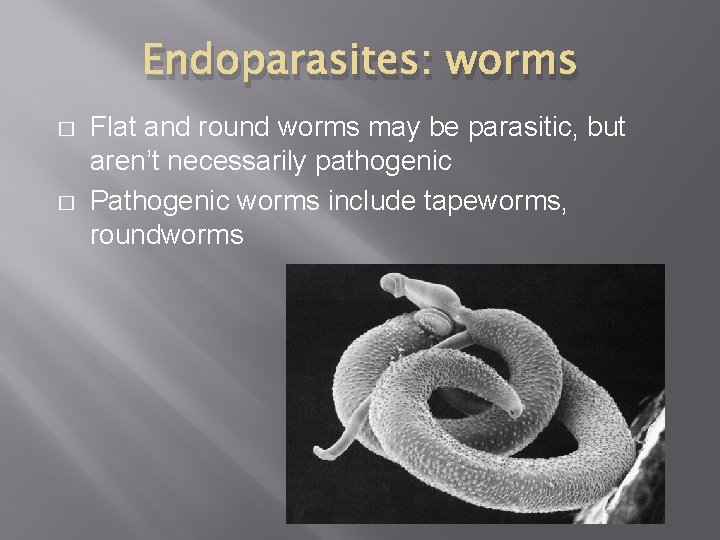
Endoparasites: worms � � Flat and round worms may be parasitic, but aren’t necessarily pathogenic Pathogenic worms include tapeworms, roundworms
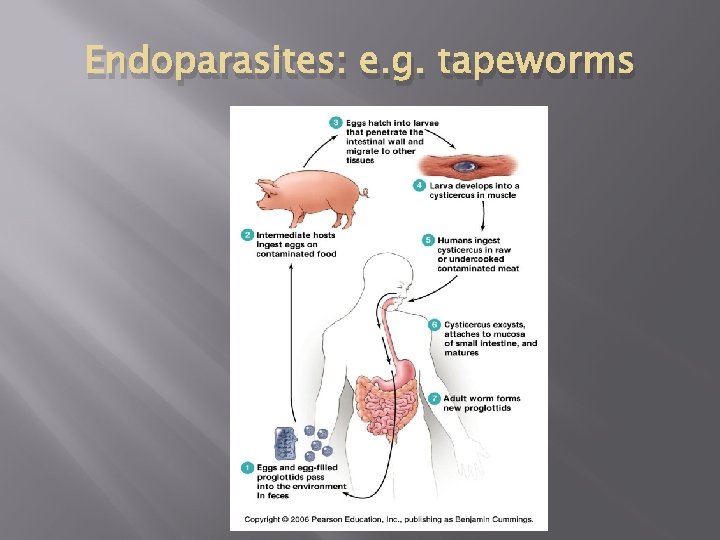
Endoparasites: e. g. tapeworms
Endoparasites: e. g tapeworms � http: //www. youtube. com/watch? v=bb 32 g 02 IIs 8 &feature=related Primary host – ? Intermediate/Secondary host - ?
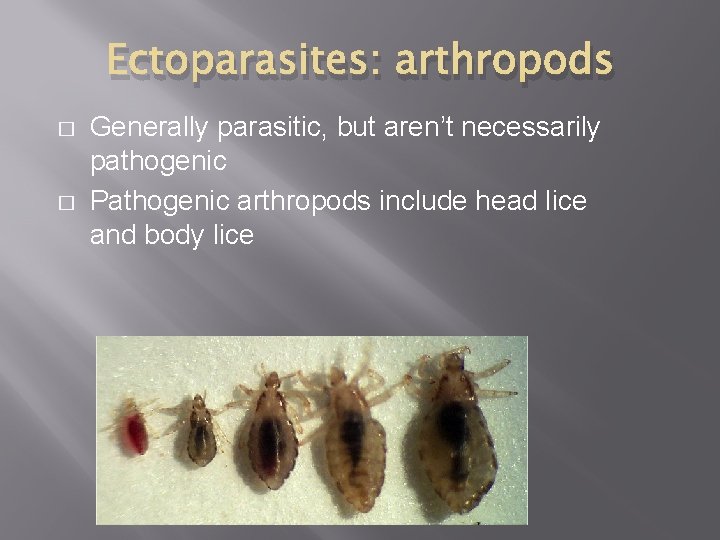
Ectoparasites: arthropods � � Generally parasitic, but aren’t necessarily pathogenic Pathogenic arthropods include head lice and body lice
Preventing spread of pathogens � � � � Quarantine – stops spread of pathogens from one region to another (e. g. rabies) Vaccinations Washing hands Cook food properly Using condoms Clean surfaces with disinfectants Kill the vectors (organisms that spread the disease – e. g. spray mosquitos)