
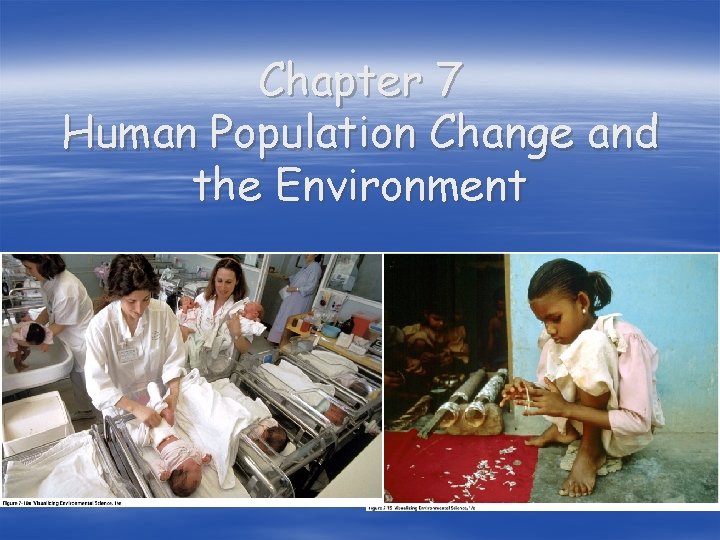
Chapter 7 Human Population Change and the Environment
- Slides: 52
Chapter 7 Human Population Change and the Environment
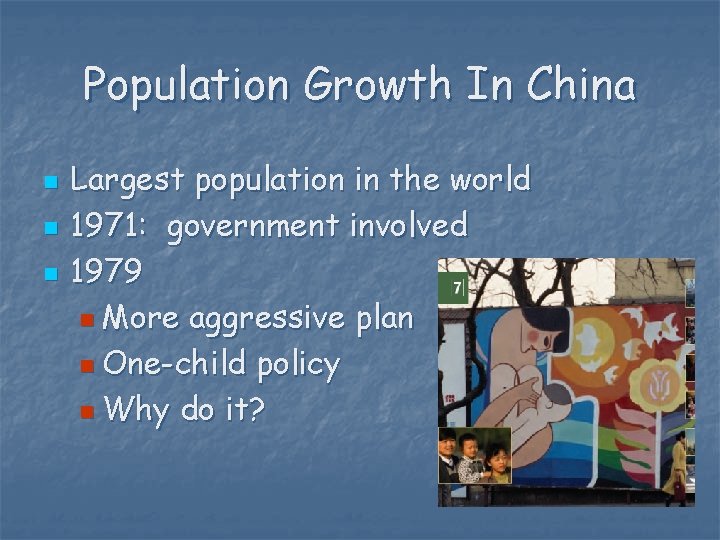
Population Growth In China n n n Largest population in the world 1971: government involved 1979 n More aggressive plan n One-child policy n Why do it?
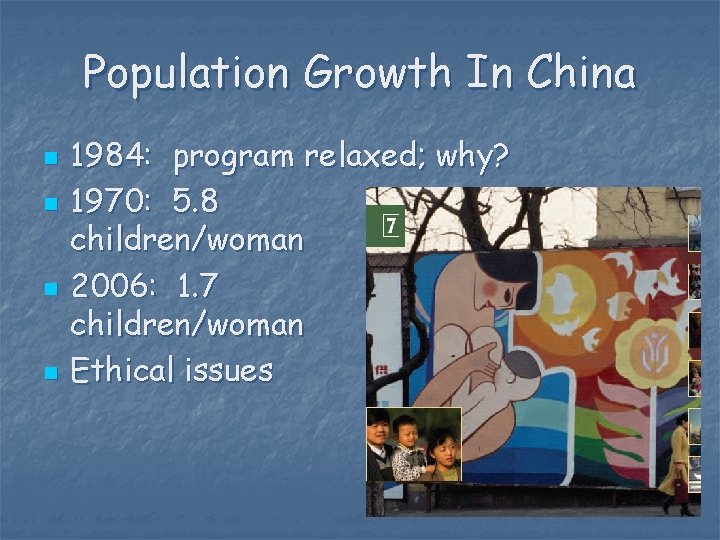
Population Growth In China n n 1984: program relaxed; why? 1970: 5. 8 children/woman 2006: 1. 7 children/woman Ethical issues
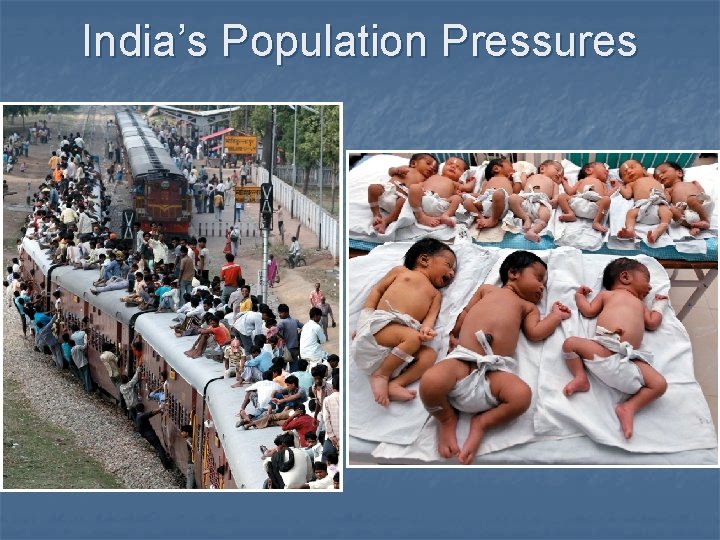
India’s Population Pressures World’s second most populous nation n 1. 2 billion n 1950 s - government sponsored family planning n Number of children per woman declined from 5. 3 (1980) to 2. 7 (2009) n Despite success n Population pressure has cause environmental degradation n 76% live under poverty level (less than $2 /day) n
India’s Population Pressures
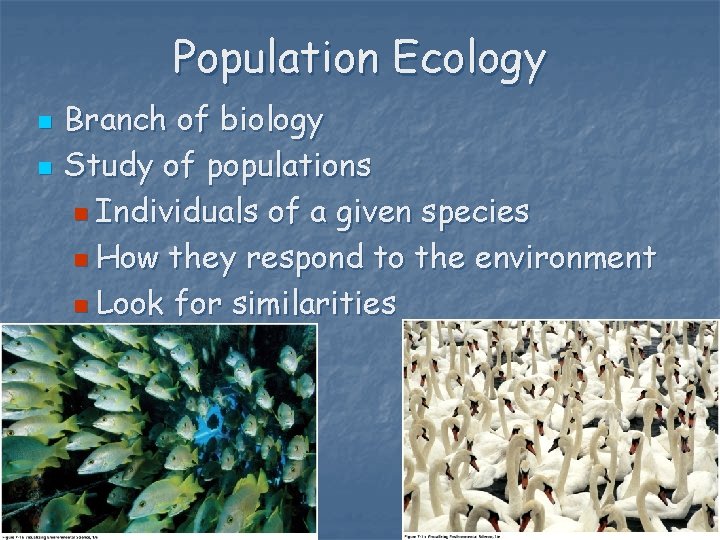
Population Ecology n n Branch of biology Study of populations n Individuals of a given species n How they respond to the environment n Look for similarities
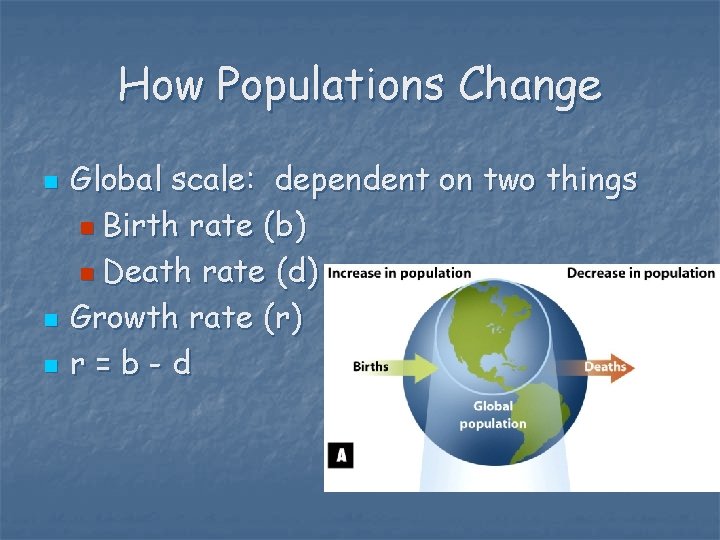
How Populations Change n n n Global scale: dependent on two things n Birth rate (b) n Death rate (d) Growth rate (r) r=b-d
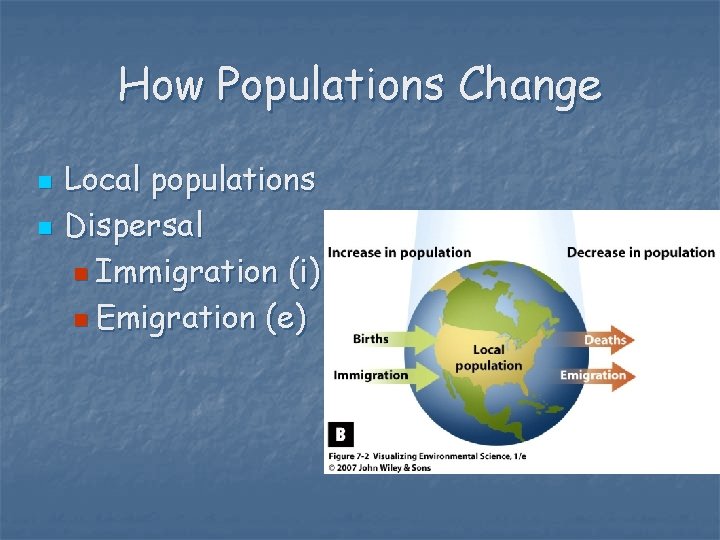
How Populations Change n n Local populations Dispersal n Immigration (i) n Emigration (e)
Population Ecology n Maximum Population Growth n Biotic Potential (maximum rate of increase under optimal conditions) n Life history characteristics: n Age at first reproduction n Reproductive fraction of life span n Number of reproductive periods/events n Number of offspring per reproductive event
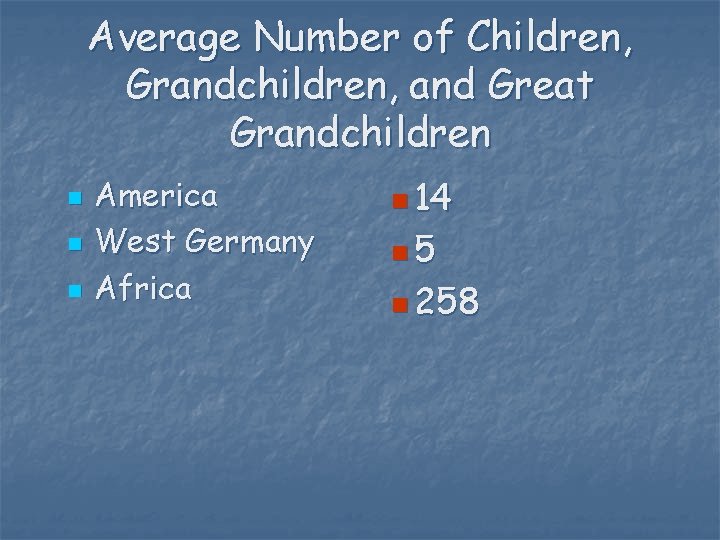
Average Number of Children, Grandchildren, and Great Grandchildren n America West Germany Africa n 14 n 5 n 258
Maximum Population Growth n n n Biotic potential n Maximum rate at which population can increase n Determined by life history characteristics Large organisms ---> smallest biotic potentials Microorganisms ---> largest biotic potentials
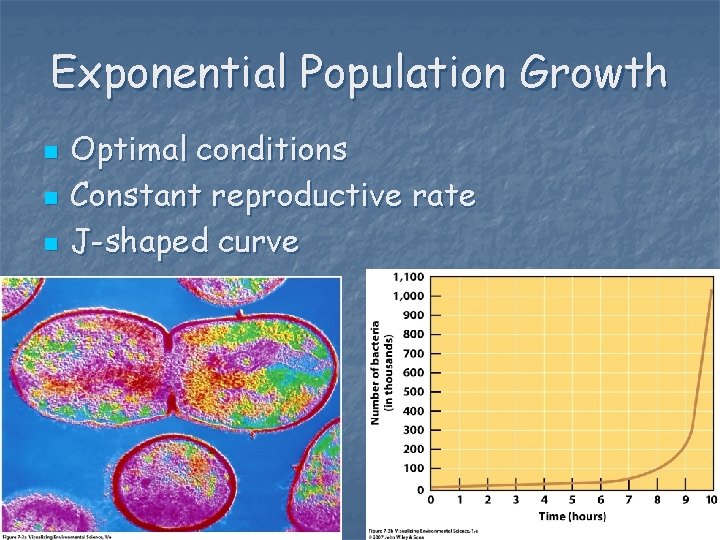
Exponential Population Growth n n n Optimal conditions Constant reproductive rate J-shaped curve
Environmental Resistance n n Unfavorable environmental conditions Prevent reproduction at biotic potential Examples? Environment controls population size: how?
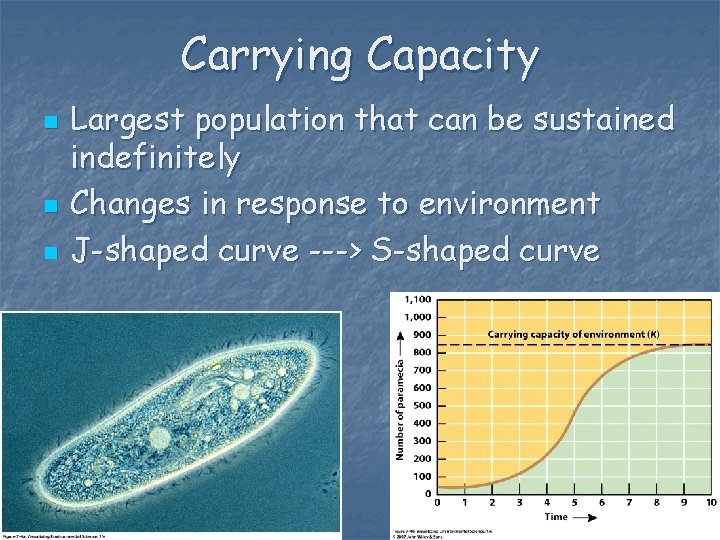
Carrying Capacity n n n Largest population that can be sustained indefinitely Changes in response to environment J-shaped curve ---> S-shaped curve
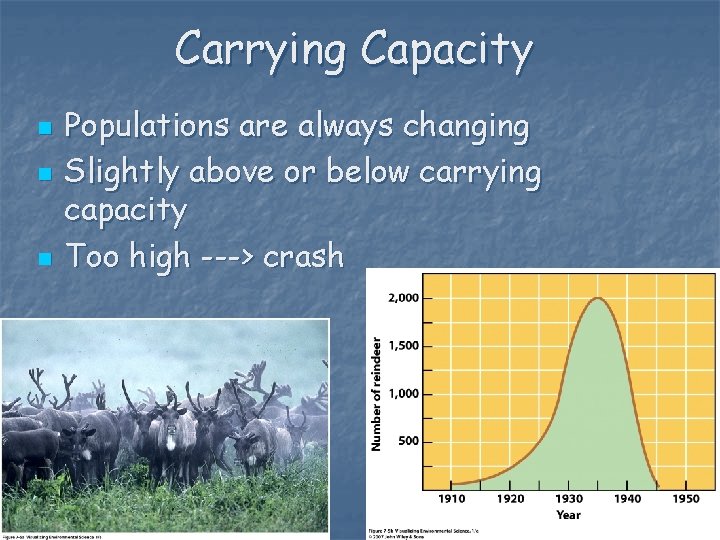
Carrying Capacity n n n Populations are always changing Slightly above or below carrying capacity Too high ---> crash
Population Ecology n Environmental Resistance: n Environmental factors that limit the exponential growth of populations n Food, water, shelter, disease, predation, waste accumulation n As the environment deteriorates n population growth declines n death rate increases n The environment controls population size n As the population grows, so does environmental resistance, which limits population growth n Exponential growth is no longer possible
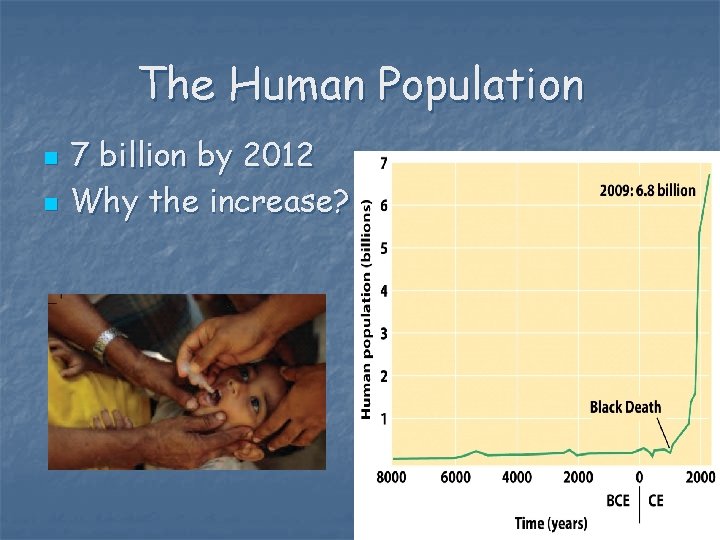
The Human Population n n 7 billion by 2012 Why the increase?
Thomas Malthus 1766 -1834 n n British economist Hypothesized that human population would be kept in check: how? Thinking shaped by rapid urbanization & industrialization Was he correct?
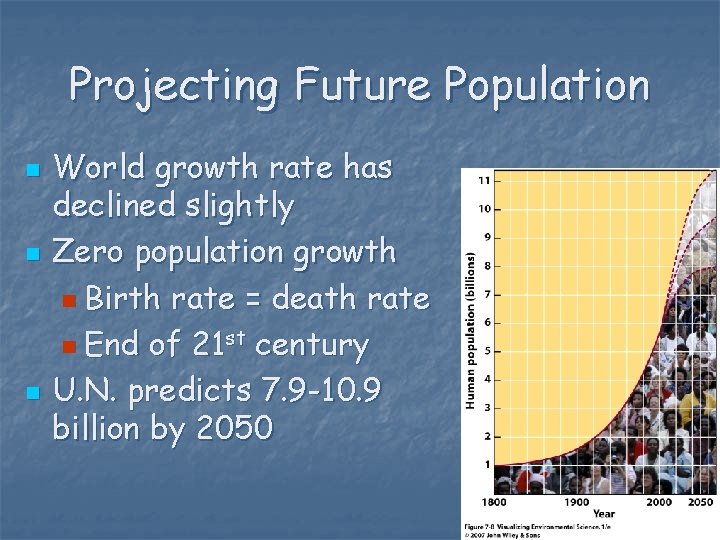
Projecting Future Population n World growth rate has declined slightly Zero population growth n Birth rate = death rate n End of 21 st century U. N. predicts 7. 9 -10. 9 billion by 2050
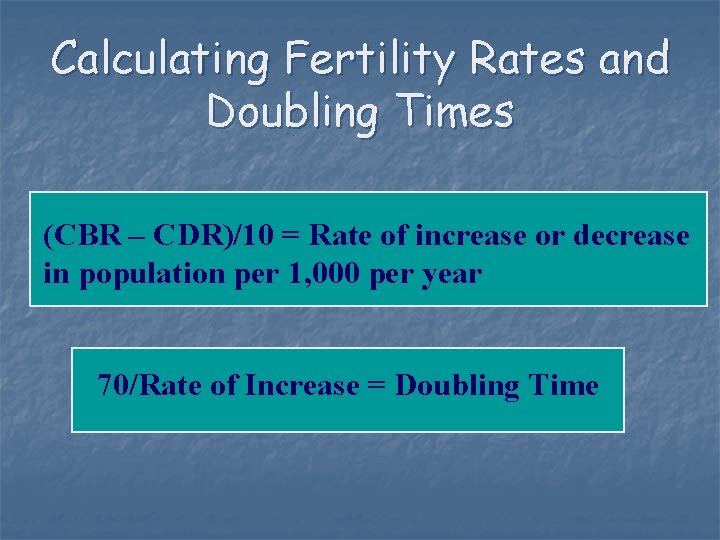
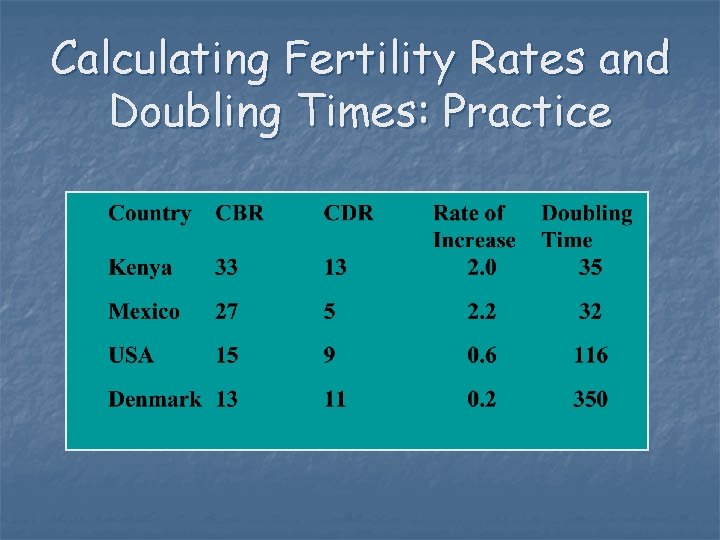
Calculating Fertility Rates and Doubling Times (CBR – CDR)/10 = Rate of increase or decrease in population per 1, 000 per year 70/Rate of Increase = Doubling Time
Calculating Fertility Rates and Doubling Times: Practice
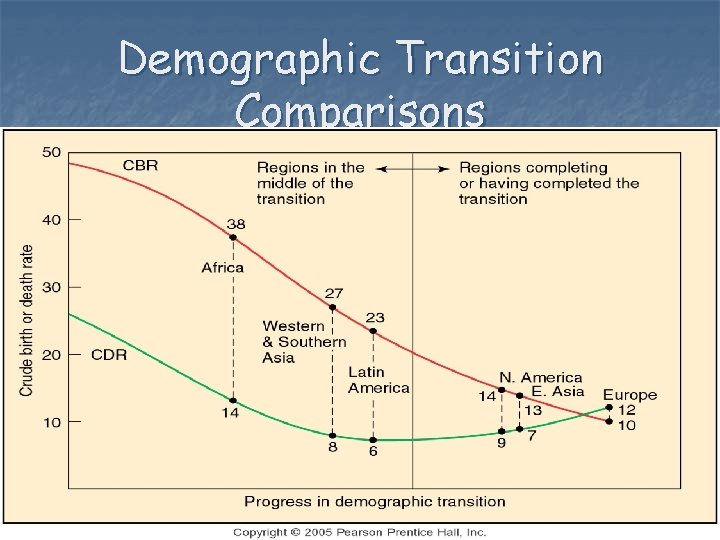
Demographic Transition Comparisons
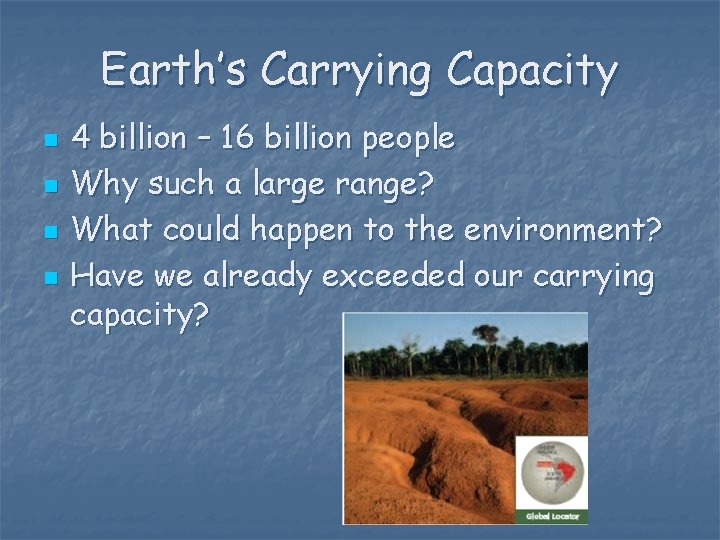
Earth’s Carrying Capacity n n 4 billion – 16 billion people Why such a large range? What could happen to the environment? Have we already exceeded our carrying capacity?
Demographics of Countries n Demographics: n n Applied branch of sociology that deals with population statistics Countries are grouped by n n n Population growth rates Degree of industrialization Relative prosperity GNI PPP = gross national income in purchasing power parity n Per person GNI PPP = GNI PPP/number of people n n The amount of goods and services an average citizen of a particular country could buy in the US
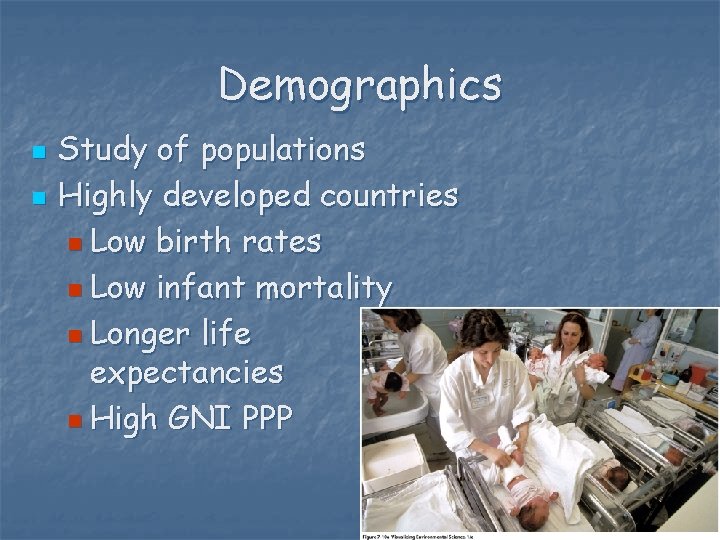
Demographics n n Study of populations Highly developed countries n Low birth rates n Low infant mortality n Longer life expectancies n High GNI PPP
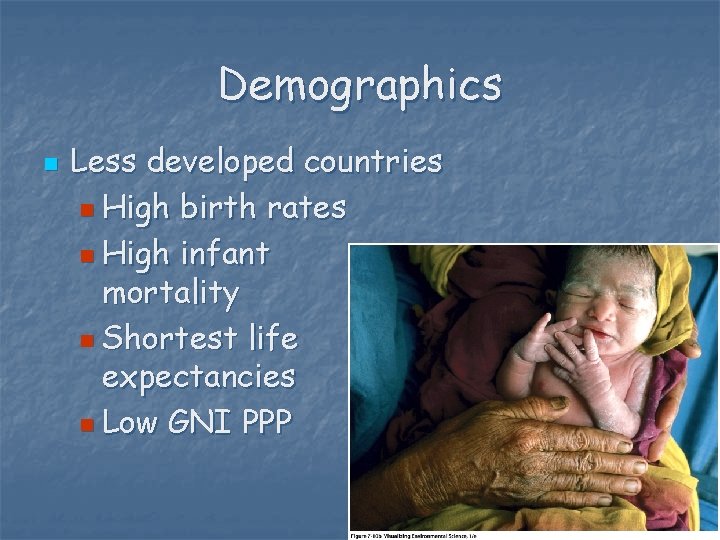
Demographics n Less developed countries n High birth rates n High infant mortality n Shortest life expectancies n Low GNI PPP
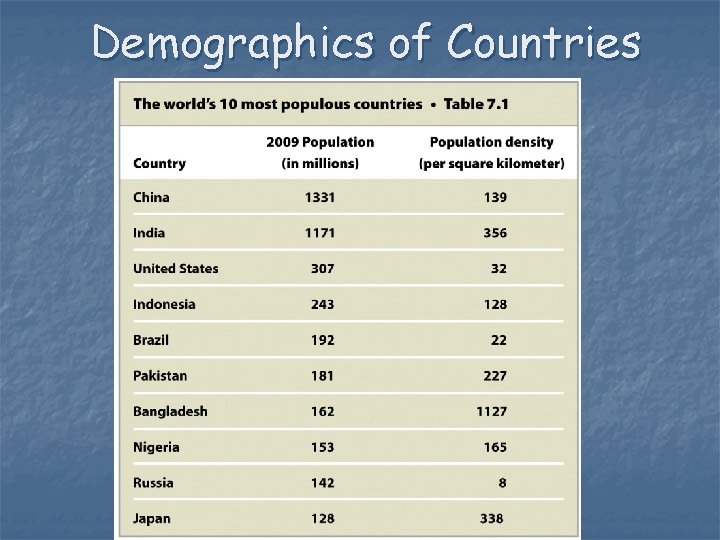
Demographics of Countries
Demographics of Countries n n n Highly Developed Countries n Lowest birth rates (some have shrinking pops) n Low infant mortality rates n Longer life expectancies n Highest per capita GNI PPP Moderately Developed Countries n Higher birth and infant mortality rates n Medium industrialization n Lower GNI PPP Less Developed Countries n Shortest life expectancies n Highest birth and infant mortality rates
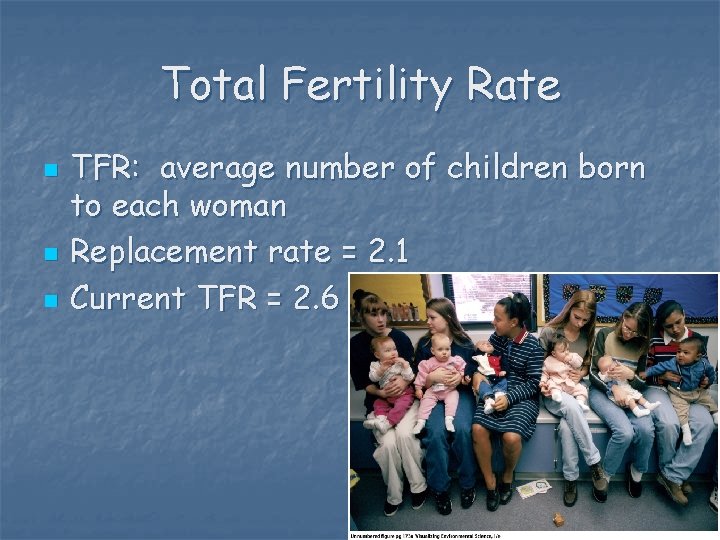
Total Fertility Rate n n n TFR: average number of children born to each woman Replacement rate = 2. 1 Current TFR = 2. 6
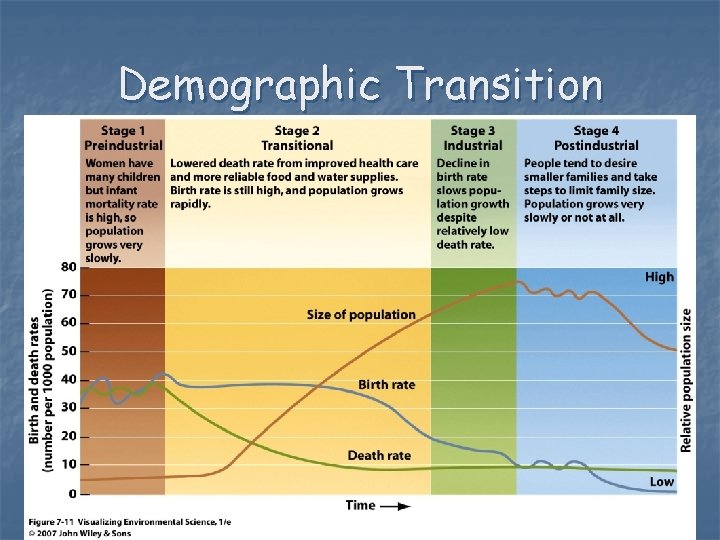
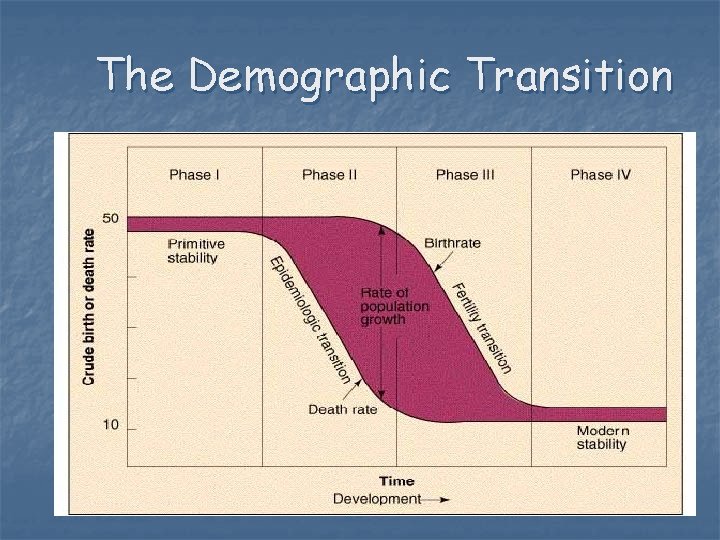
Demographic Transition n n Country moves from high birth and death rates to low birth and death rates Four stages n Preindustrial n Transitional n Industrial n Postindustrial
Demographic Transition
The Demographic Transition
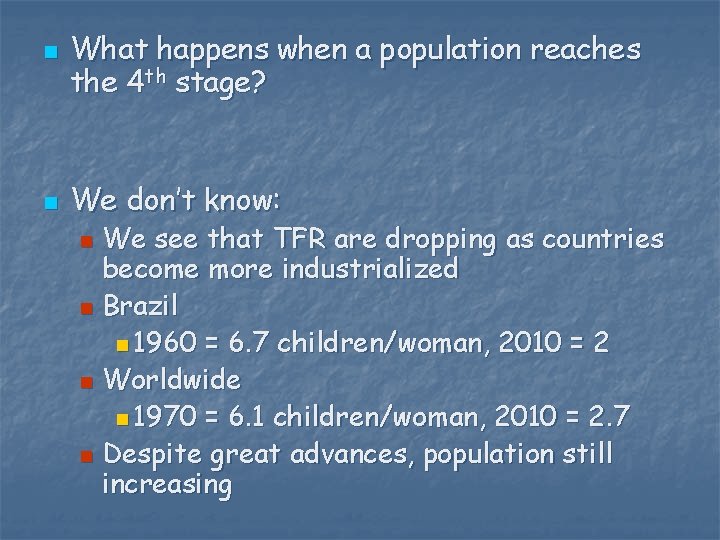
n n What happens when a population reaches the 4 th stage? We don’t know: We see that TFR are dropping as countries become more industrialized n Brazil n 1960 = 6. 7 children/woman, 2010 = 2 n Worldwide n 1970 = 6. 1 children/woman, 2010 = 2. 7 n Despite great advances, population still increasing n
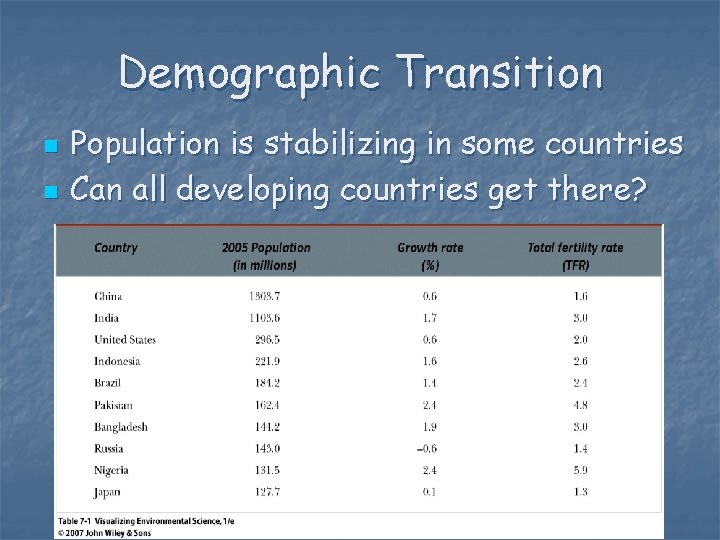
Demographic Transition n n Population is stabilizing in some countries Can all developing countries get there?
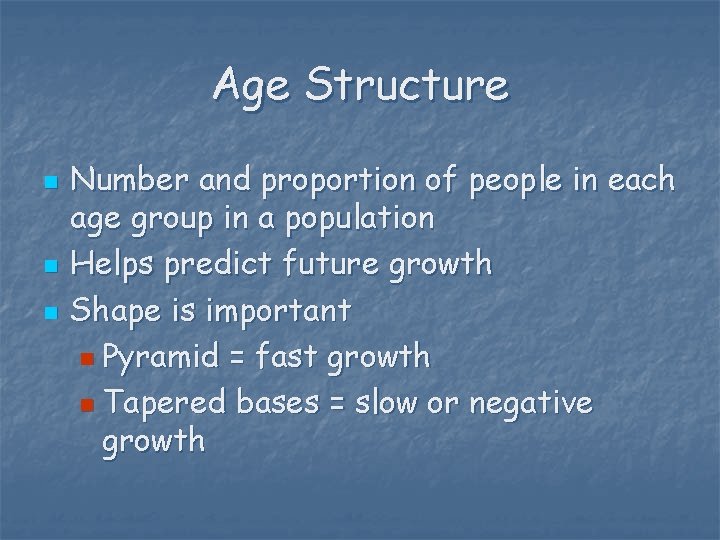
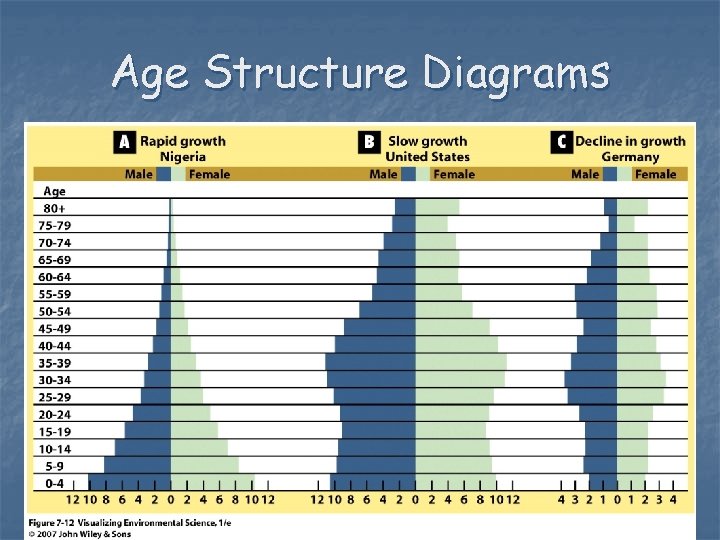
Age Structure n n n Number and proportion of people in each age group in a population Helps predict future growth Shape is important n Pyramid = fast growth n Tapered bases = slow or negative growth
Age Structure Diagrams
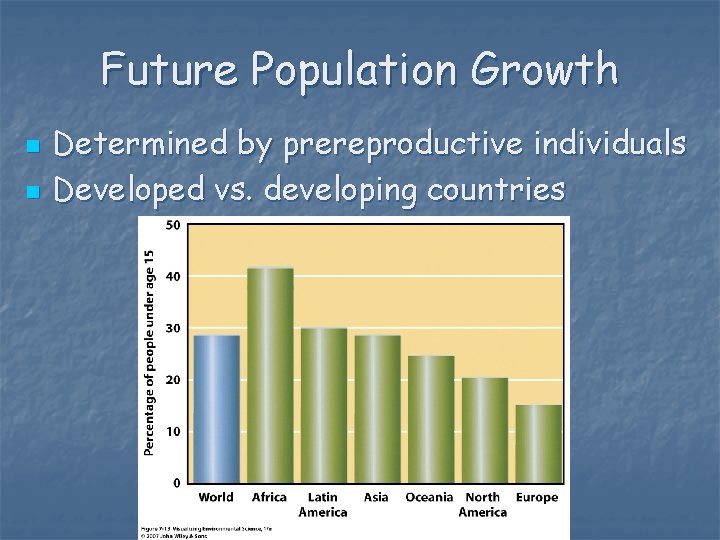
Future Population Growth n n Determined by prereproductive individuals Developed vs. developing countries
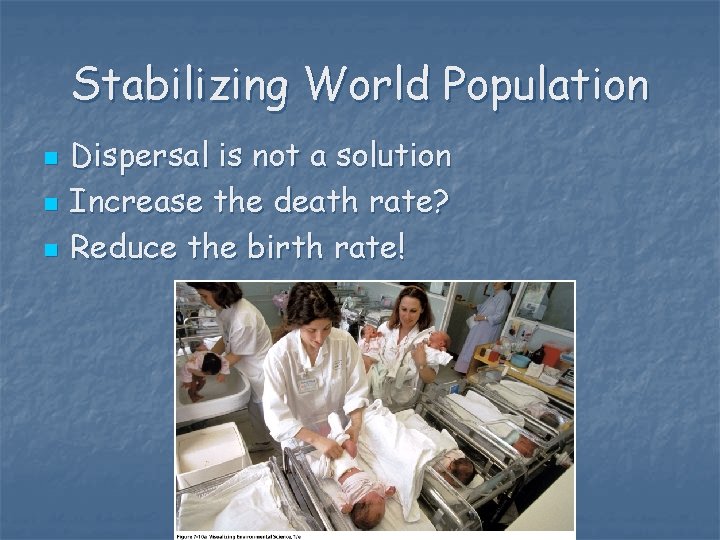
Stabilizing World Population n Dispersal is not a solution Increase the death rate? Reduce the birth rate!
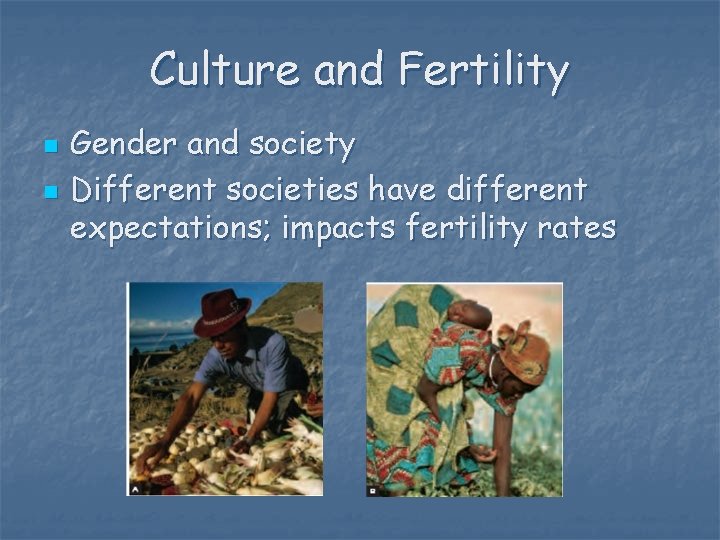
Culture and Fertility n n Gender and society Different societies have different expectations; impacts fertility rates
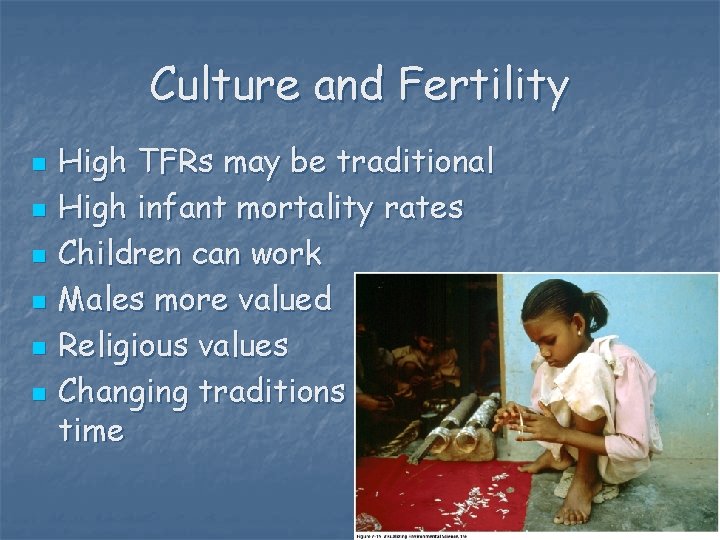
Culture and Fertility n n n High TFRs may be traditional High infant mortality rates Children can work Males more valued Religious values Changing traditions time takes
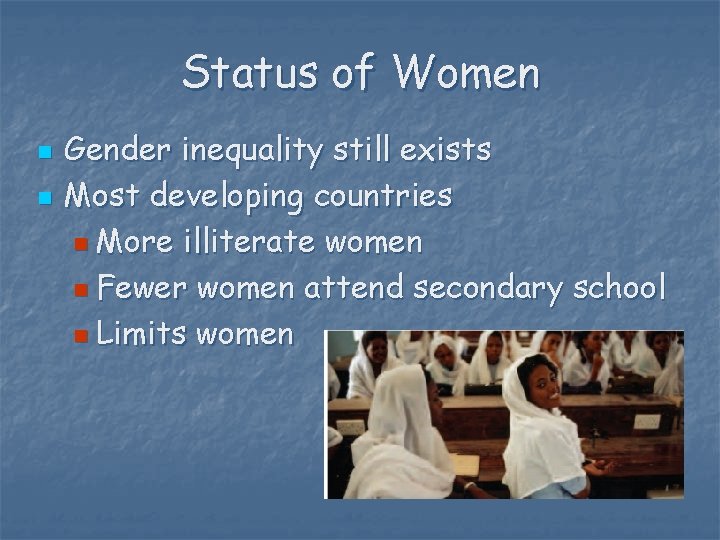
Status of Women n n Gender inequality still exists Most developing countries n More illiterate women n Fewer women attend secondary school n Limits women
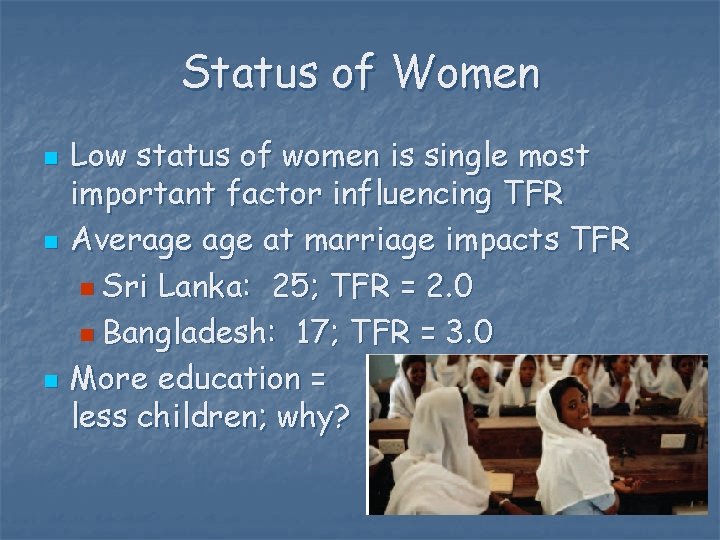
Status of Women n Low status of women is single most important factor influencing TFR Average at marriage impacts TFR n Sri Lanka: 25; TFR = 2. 0 n Bangladesh: 17; TFR = 3. 0 More education = less children; why?
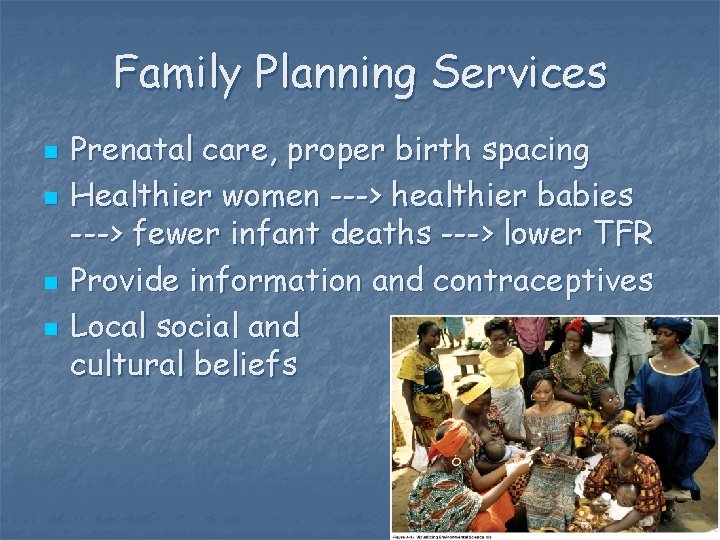
Family Planning Services n n Prenatal care, proper birth spacing Healthier women ---> healthier babies ---> fewer infant deaths ---> lower TFR Provide information and contraceptives Local social and cultural beliefs
Government Policies & Fertility n n Laws determining minimum marriage Budget for family planning, education, health care, old-age security Economic rewards and penalties Many countries recognize the problem
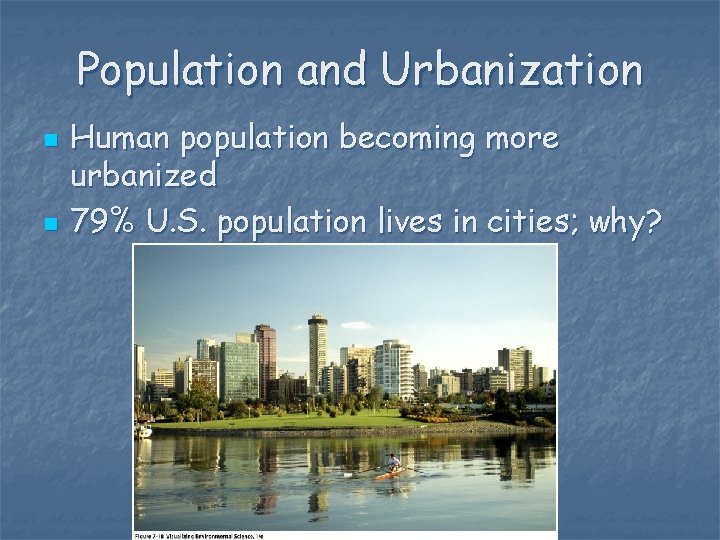
Population and Urbanization n n Human population becoming more urbanized 79% U. S. population lives in cities; why?
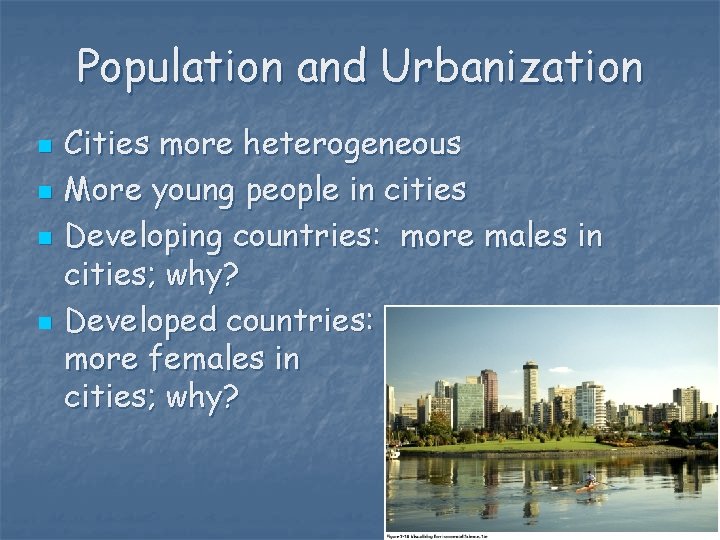
Population and Urbanization n n Cities more heterogeneous More young people in cities Developing countries: more males in cities; why? Developed countries: more females in cities; why?
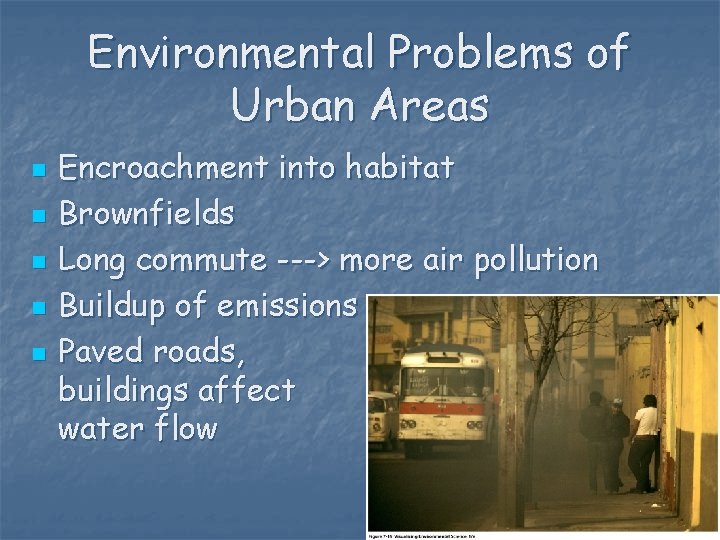
Environmental Problems of Urban Areas n n n Encroachment into habitat Brownfields Long commute ---> more air pollution Buildup of emissions Paved roads, buildings affect water flow
Environmental Benefits of Urbanization n n Compact development n Tall, multiple-unit residential buildings are close to shops and jobs n Connected by public transportation n Reduces pollution n Preserves rural areas Requires smart planning!
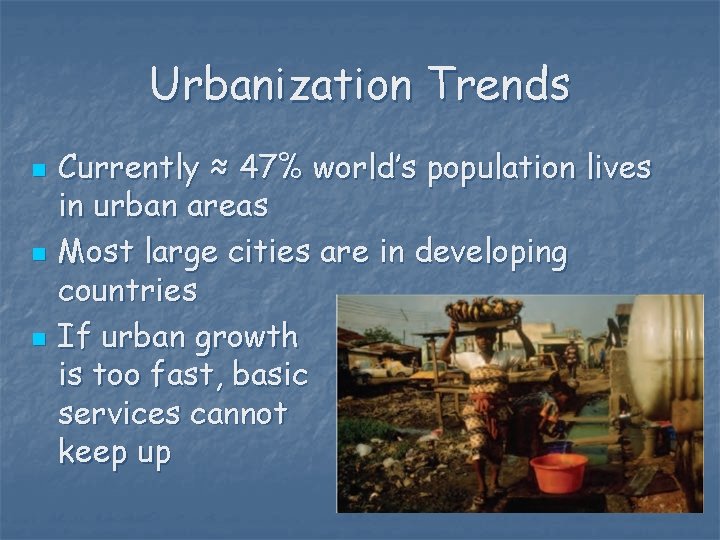
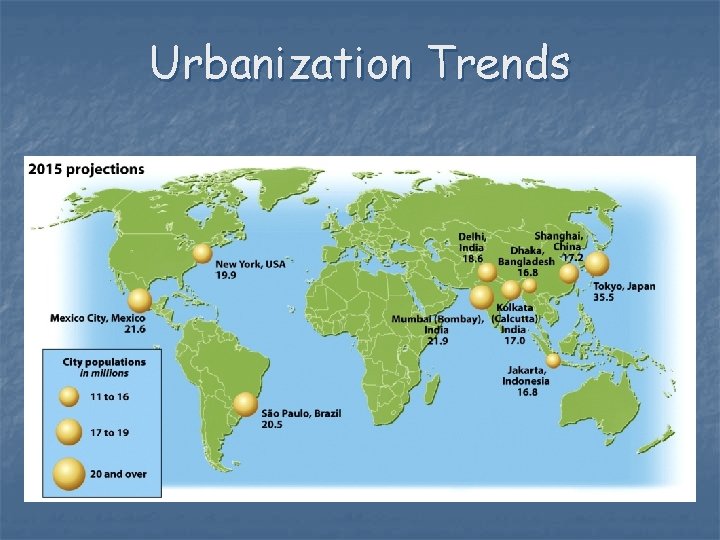
Urbanization Trends n n n Currently ≈ 47% world’s population lives in urban areas Most large cities are in developing countries If urban growth is too fast, basic services cannot keep up
Urbanization Trends
Population and Urbanization n Urbanization Trends Highly Developed Countries ( e. g. , US) n Most migration to cities in last 150 yrs n Need for industrial labor n Slow growth, services could keep up n Water purification, sewage treatment, education, adequate housing Developing Countries n Rapid growth - cities can’t provide basic services n Low job possibilities (still greater than in rural areas) n Substandard housing (slums) n Poverty n Unemployment n Pollution, water, and sewage issues
Case Study n n Urban Planning in Curitiba, Brazil n 2. 9 million people n Efficient mass transit system n High density development restricted to buss lines (72% of commuters use the bus) n Since 1970 s, population has doubled, but traffic has declined 30% n Less traffic congestion n Cleaner air n “Big Sidewalk” of 49 blocks of pedestrian walkways connected to bus stops, parks, and bicycle paths Excellent example of compact urban planning