
CHAPTER 7 Getting to Know Plants PREPARED BY
CHAPTER – 7 Getting to Know Plants PREPARED BY – MRS. PREETI SHARMA PGT (BIOLOGY)
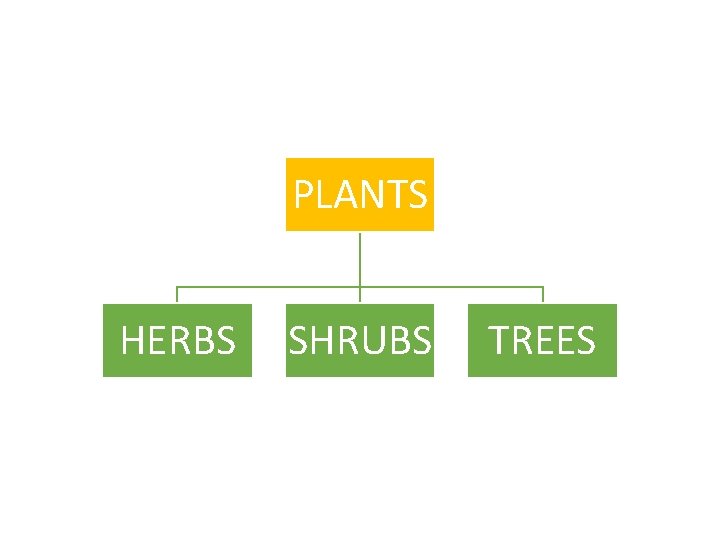
PLANTS HERBS SHRUBS TREES
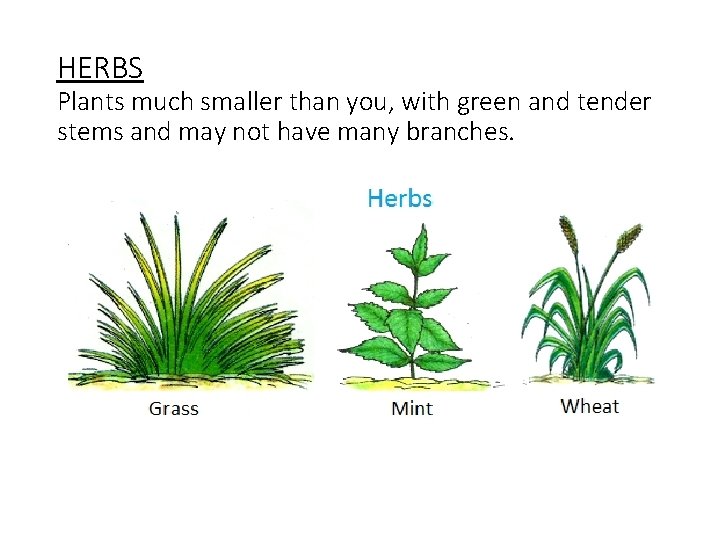
HERBS Plants much smaller than you, with green and tender stems and may not have many branches.
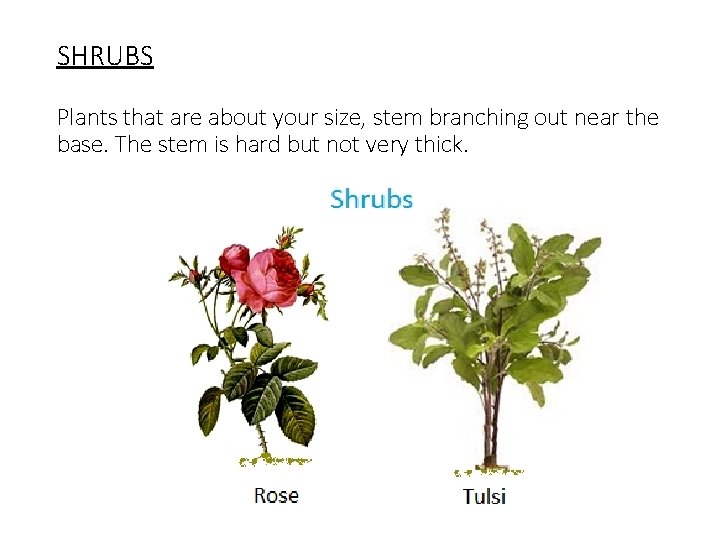
SHRUBS Plants that are about your size, stem branching out near the base. The stem is hard but not very thick.
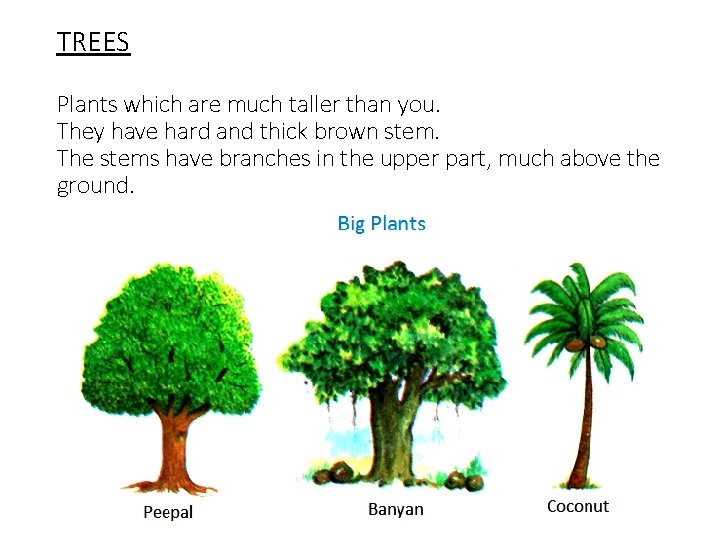
TREES Plants which are much taller than you. They have hard and thick brown stem. The stems have branches in the upper part, much above the ground.
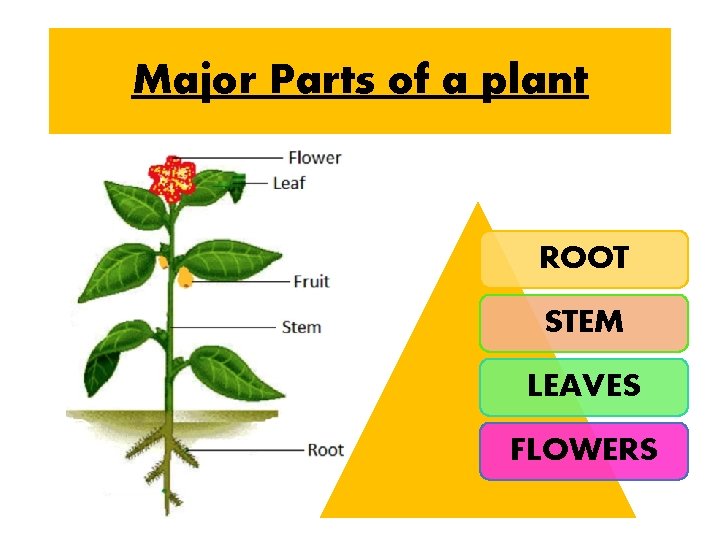
Major Parts of a plant ROOT STEM LEAVES FLOWERS
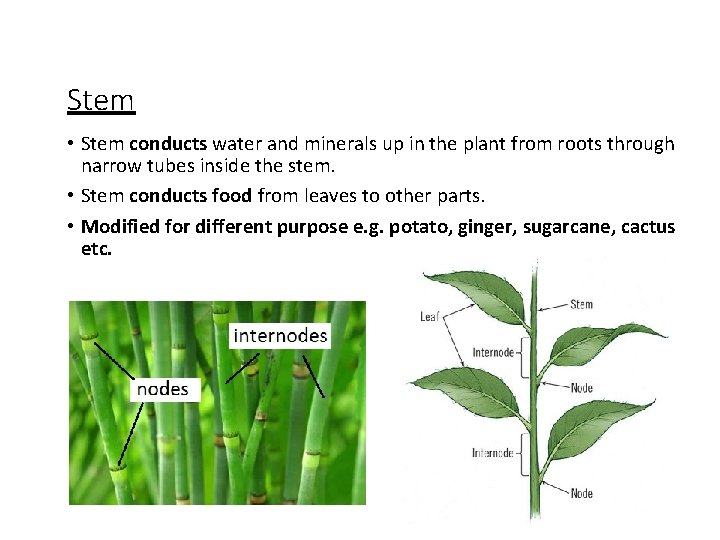
Stem • Stem conducts water and minerals up in the plant from roots through narrow tubes inside the stem. • Stem conducts food from leaves to other parts. • Modified for different purpose e. g. potato, ginger, sugarcane, cactus etc.
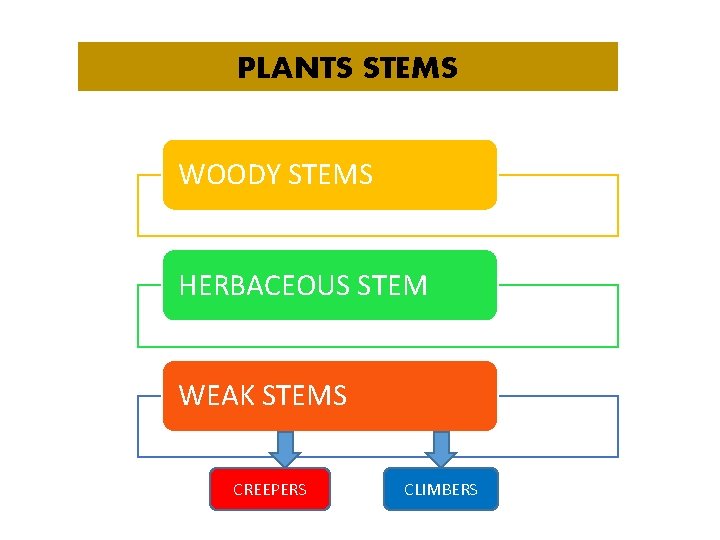
PLANTS STEMS WOODY STEMS HERBACEOUS STEM WEAK STEMS CREEPERS CLIMBERS
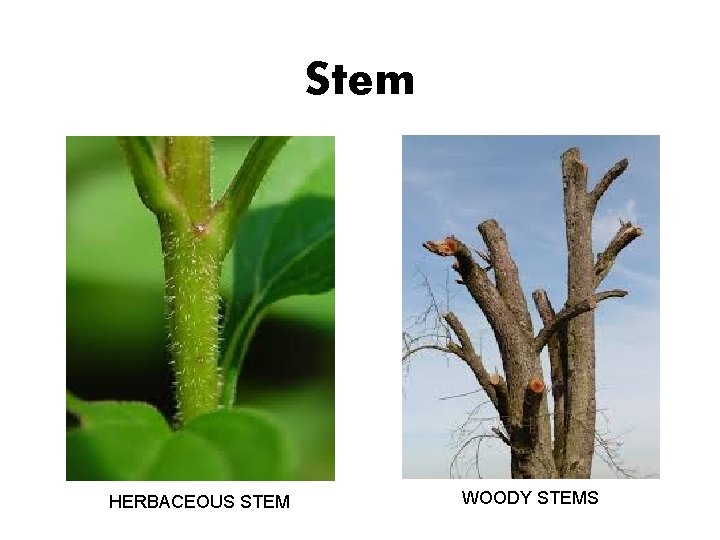
Stem HERBACEOUS STEM WOODY STEMS
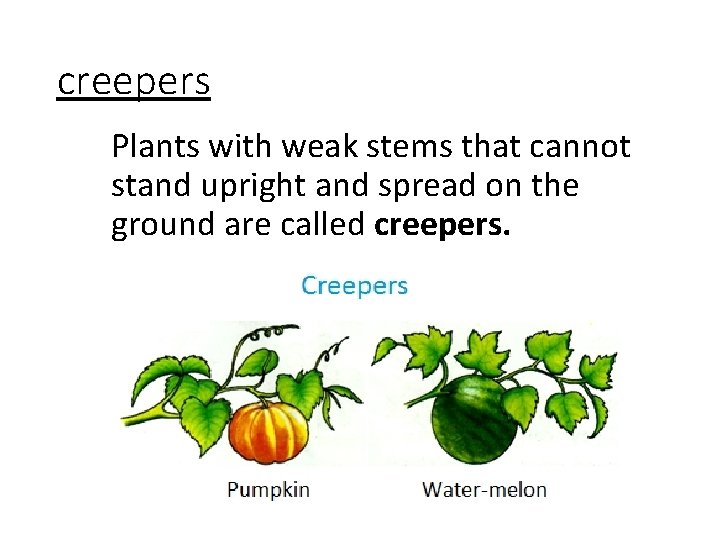
creepers Plants with weak stems that cannot stand upright and spread on the ground are called creepers.
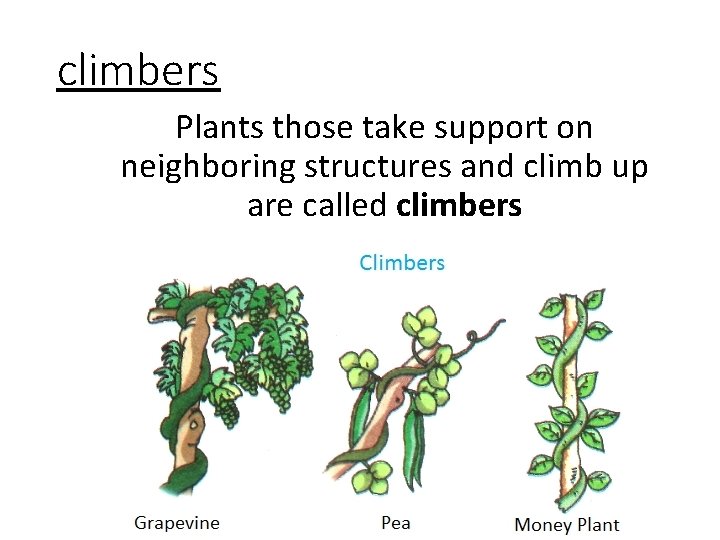
climbers Plants those take support on neighboring structures and climb up are called climbers
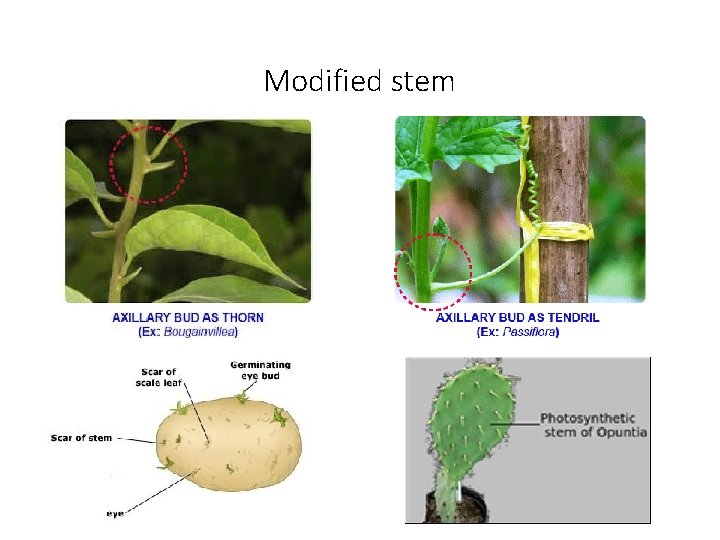
Modified stem
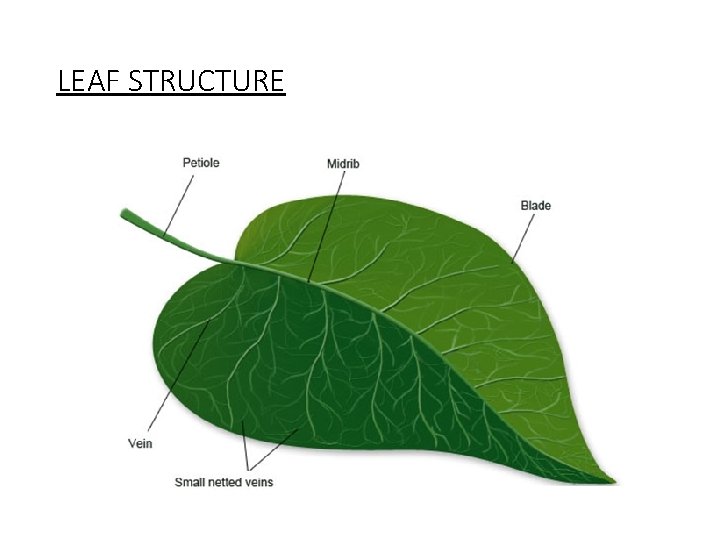
LEAF STRUCTURE
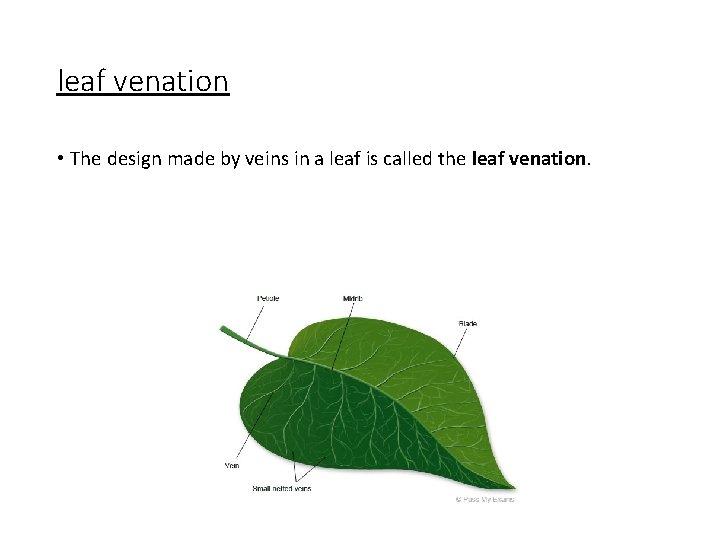
leaf venation • The design made by veins in a leaf is called the leaf venation.
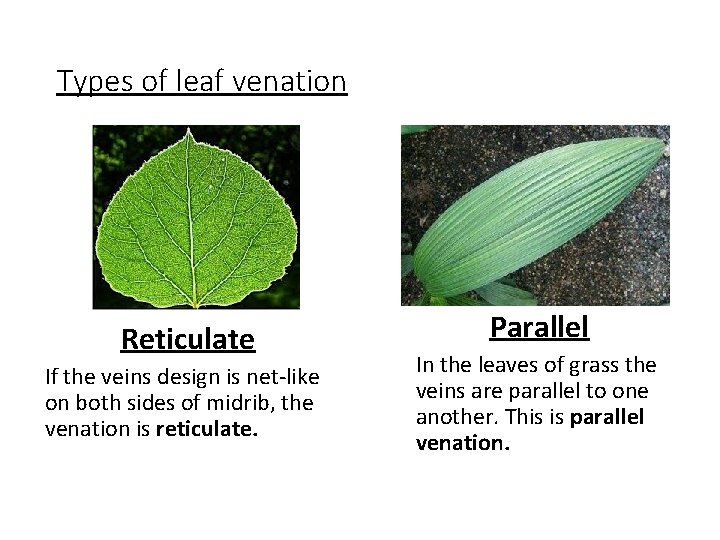
Types of leaf venation Reticulate If the veins design is net-like on both sides of midrib, the venation is reticulate. Parallel In the leaves of grass the veins are parallel to one another. This is parallel venation.
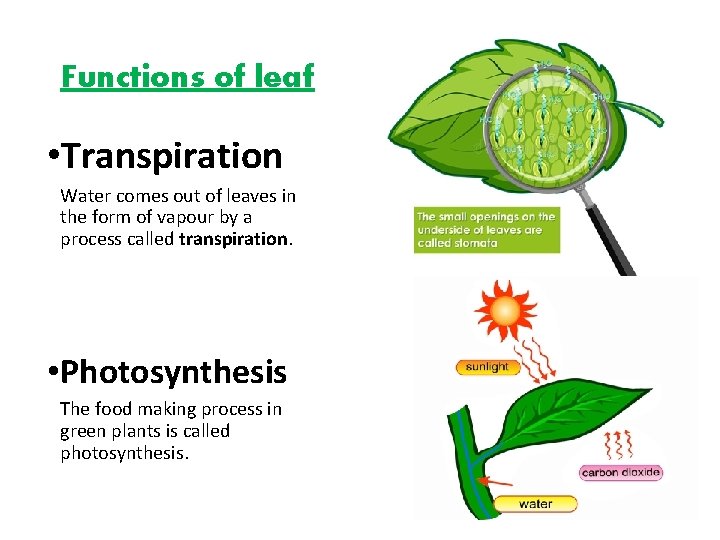
Functions of leaf • Transpiration Water comes out of leaves in the form of vapour by a process called transpiration. • Photosynthesis The food making process in green plants is called photosynthesis.
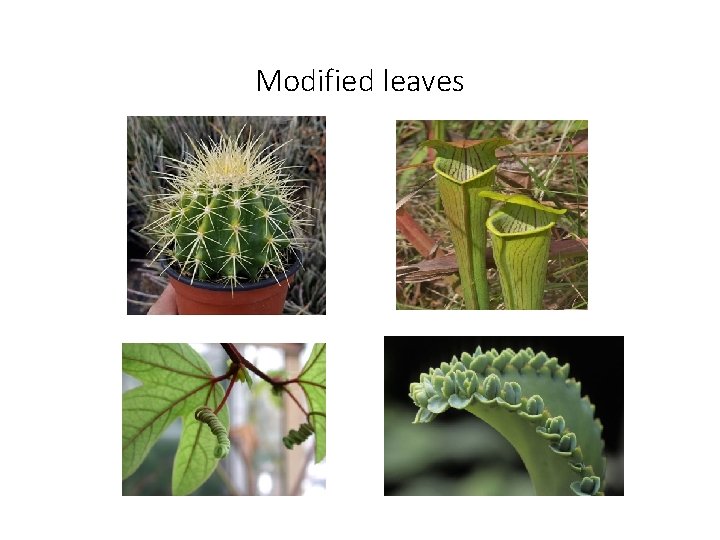
Modified leaves
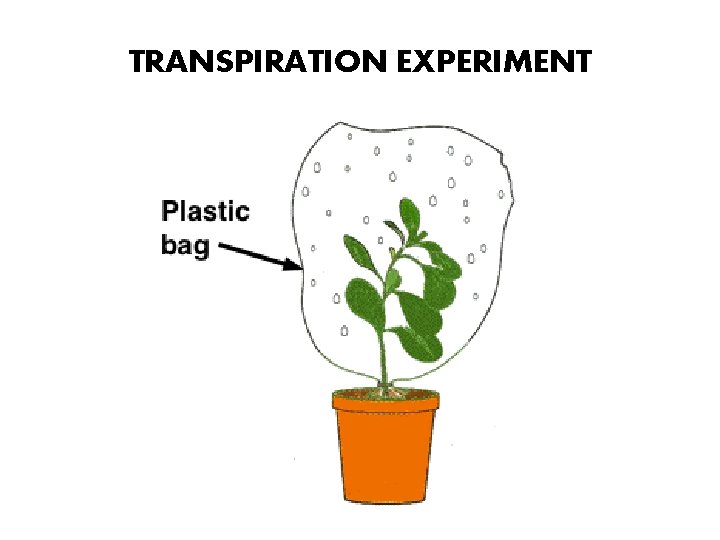
TRANSPIRATION EXPERIMENT
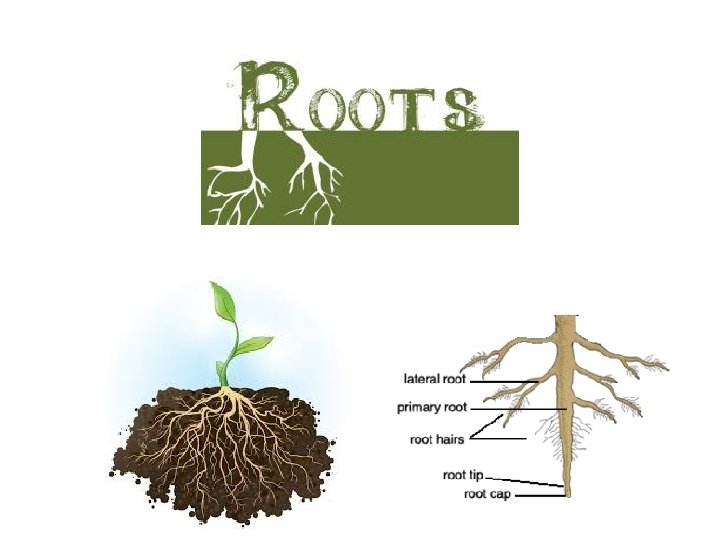
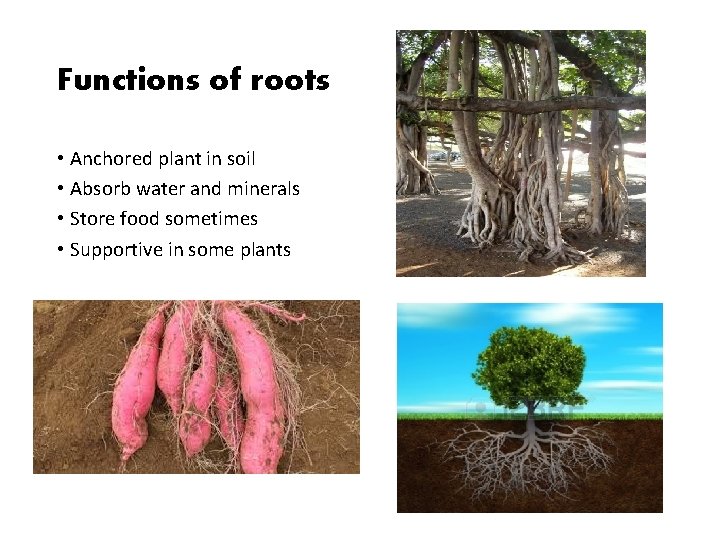
Functions of roots • Anchored plant in soil • Absorb water and minerals • Store food sometimes • Supportive in some plants
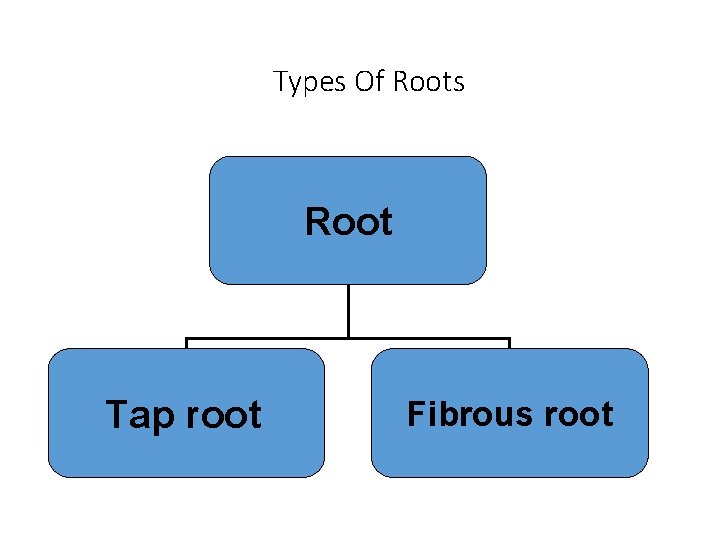
Types Of Roots Root Tap root Fibrous root
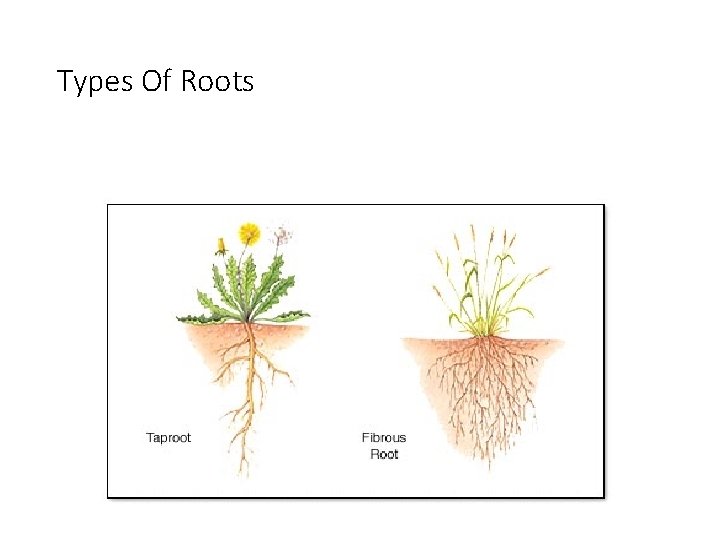
Types Of Roots
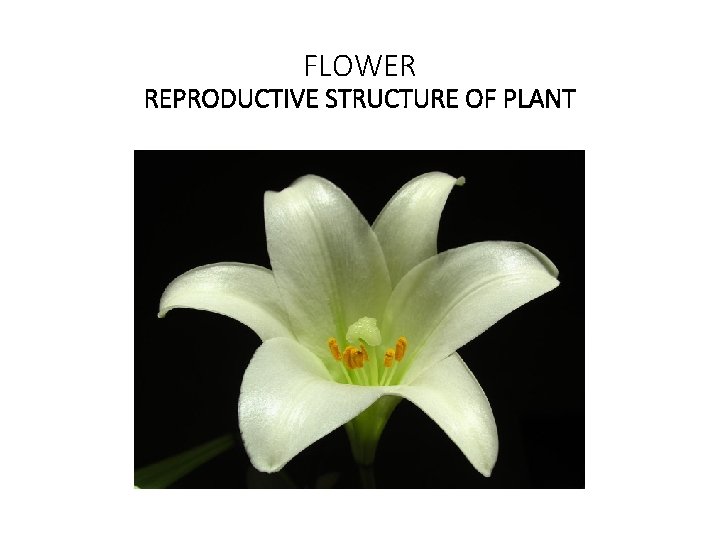
FLOWER REPRODUCTIVE STRUCTURE OF PLANT
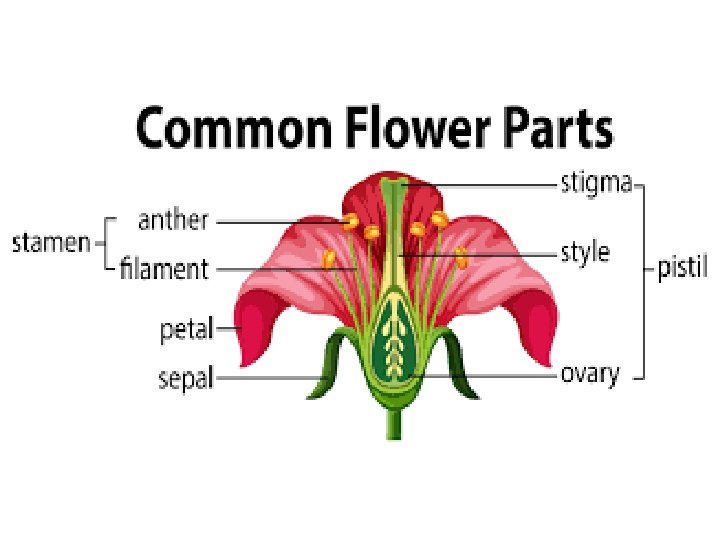
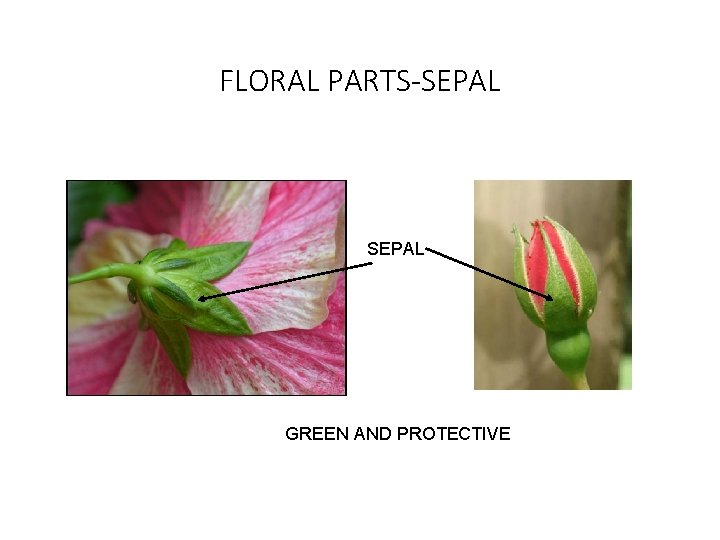
FLORAL PARTS-SEPAL GREEN AND PROTECTIVE
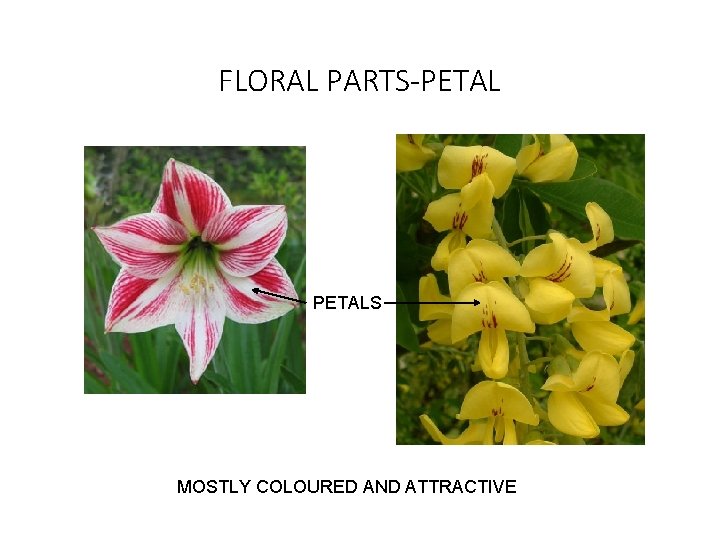
FLORAL PARTS-PETALS MOSTLY COLOURED AND ATTRACTIVE
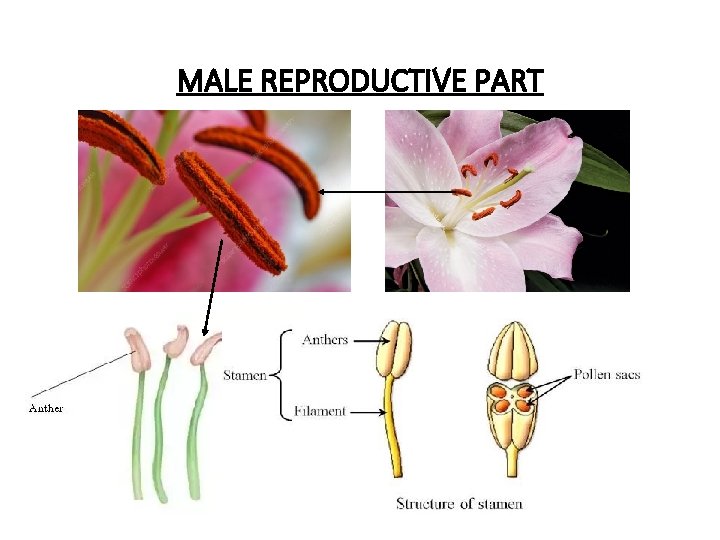
MALE REPRODUCTIVE PART
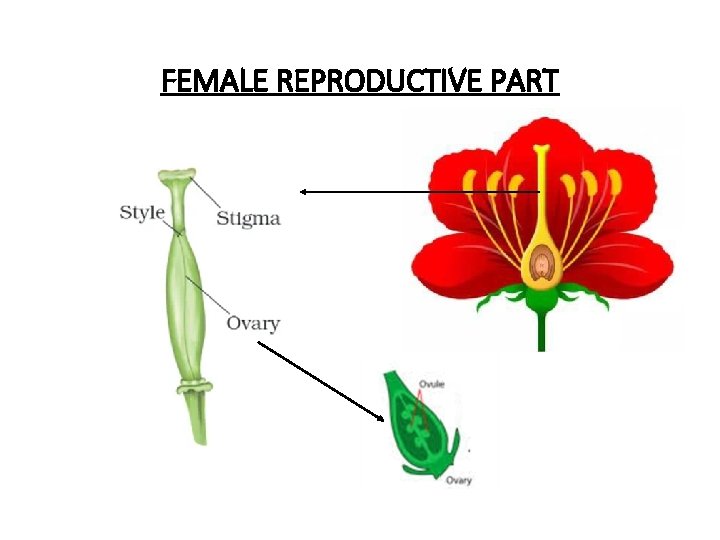
FEMALE REPRODUCTIVE PART

THANK YOU
- Slides: 29