
Chapter 7 FUNCTIONALISM DEVELOPMENT AND FOUNDING Lecture Prepared
- Slides: 20
Chapter 7 FUNCTIONALISM: DEVELOPMENT AND FOUNDING Lecture Prepared by: Dr. M. Sawhney
Topics 1. Evolution Comes to America: Herbert Spencer (1820 -1903) 2. William James (1842 -1910): Anticipator of Functional Psychology 3. The Functional Inequality of Women 6. Granville Stanley Hall (1844 -1924) 7. The Founding of Functionalism 8. John Dewey (1859 -1952) 9. James Rowland Angell (1869 -1949) 12. Criticism of Functionalism 13. Contributions of Functionalism
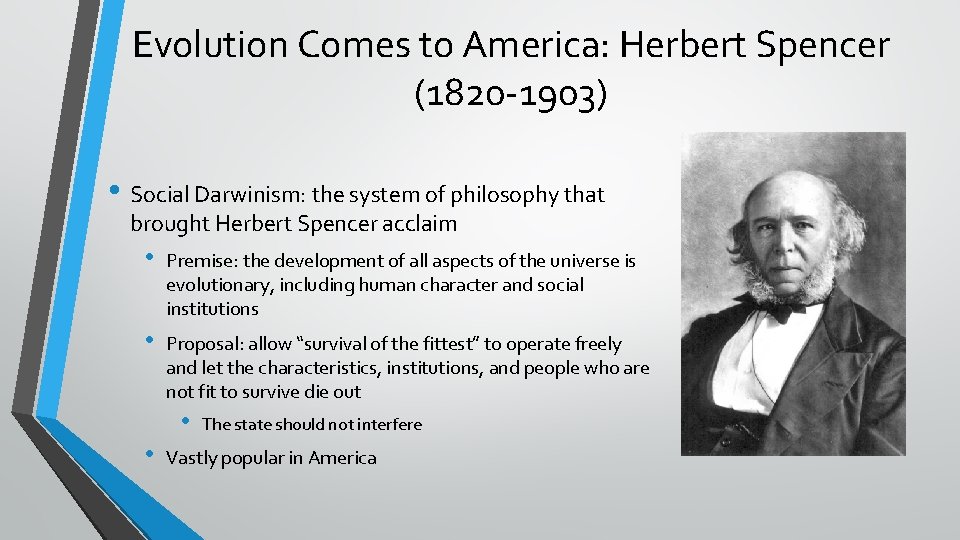
Evolution Comes to America: Herbert Spencer (1820 -1903) • Social Darwinism: the system of philosophy that brought Herbert Spencer acclaim • Premise: the development of all aspects of the universe is evolutionary, including human character and social institutions • Proposal: allow “survival of the fittest” to operate freely and let the characteristics, institutions, and people who are not fit to survive die out • • The state should not interfere Vastly popular in America
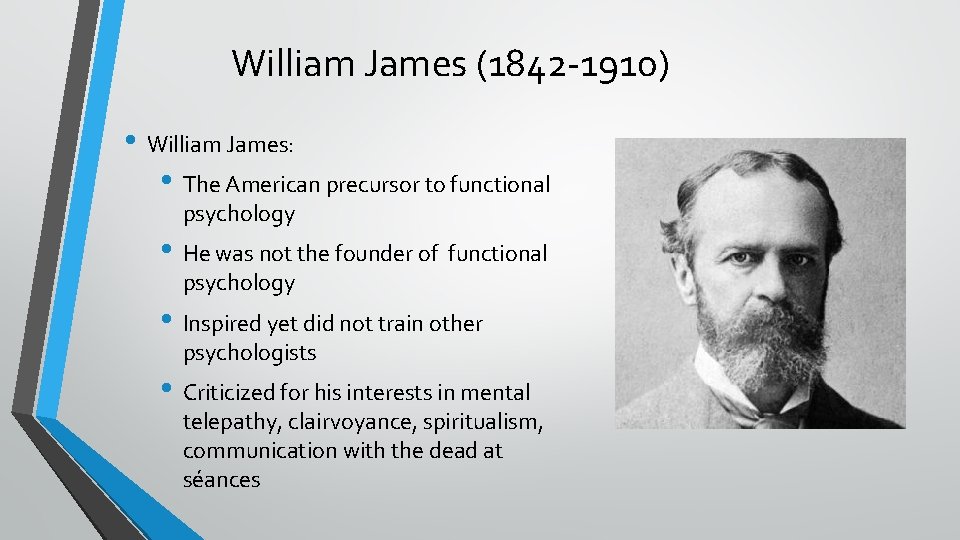
William James (1842 -1910) • William James: • The American precursor to functional psychology • He was not the founder of functional psychology • Inspired yet did not train other psychologists • Criticized for his interests in mental telepathy, clairvoyance, spiritualism, communication with the dead at séances
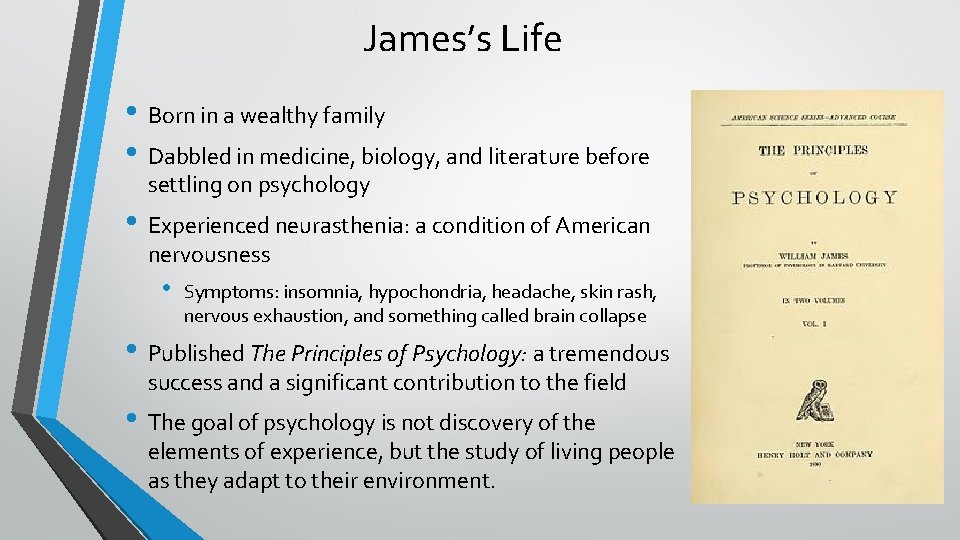
James’s Life • Born in a wealthy family • Dabbled in medicine, biology, and literature before settling on psychology • Experienced neurasthenia: a condition of American nervousness • Symptoms: insomnia, hypochondria, headache, skin rash, nervous exhaustion, and something called brain collapse • Published The Principles of Psychology: a tremendous success and a significant contribution to the field • The goal of psychology is not discovery of the elements of experience, but the study of living people as they adapt to their environment.
The Subject Matter of Psychology: A New Look at Consciousness • James: “Psychology is the science of mental life, both of its phenomena and their conditions • Rebelled against Wundt’s approach • Stream of consciousness : idea that consciousness is a continually flowing process and any attempt to reduce it to elements will distort it • • • Personal to the individual Continuous; cannot be divided up for analysis Always changing Selective; some events are selected for further consideration while others are not Functional; purpose is to aid the individual in adapting to the environment.
The Methods of Psychology • Introspection must be a basic method • Results could be verified by appropriate checks and by comparing the findings obtained from several observers • Importance of the experimental method • Did not use it himself • Noted the major difference between structural and functional psychologies • The functionalist movement would not be restricted to a single method
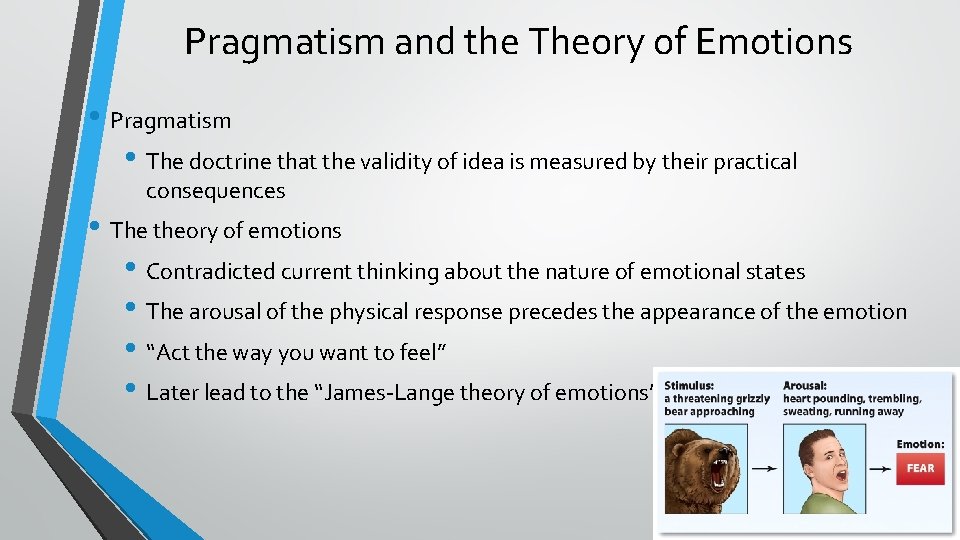
Pragmatism and the Theory of Emotions • Pragmatism • The doctrine that the validity of idea is measured by their practical consequences • The theory of emotions • Contradicted current thinking about the nature of emotional states • The arousal of the physical response precedes the appearance of the emotion • “Act the way you want to feel” • Later lead to the “James-Lange theory of emotions”
The Three-Part Self and Habit • The three-part self: James believed there are three parts to the self • Material: everything unique our own (i. e. , clothes) • Social: recognition we get from others • Spiritual: our inner and subjective being • Habit: influence of physiological influences • Repetitive or habitual actions involve the nervous system and serve to increase the plasticity of neural matter
The Functional Inequality of Women • Mary Whiton Calkins (1863 -1930): • Student of James • Developed the paired-associate technique used in the study of memory • Became the first woman president of the APA • Contested the variability hypothesis • Men show a wider range and variation of physical and mental development than women; abilities of women are seen as more average
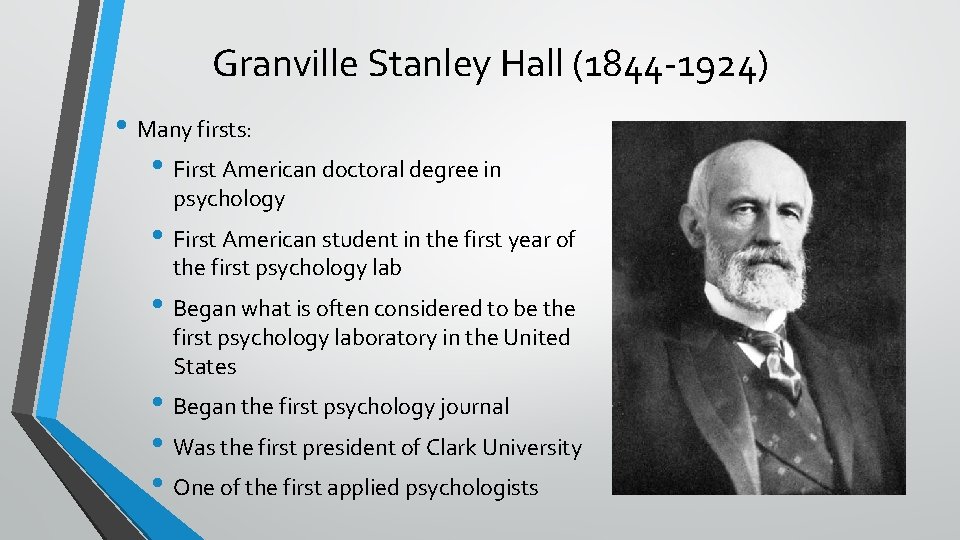
Granville Stanley Hall (1844 -1924) • Many firsts: • First American doctoral degree in psychology • First American student in the first year of the first psychology lab • Began what is often considered to be the first psychology laboratory in the United States • Began the first psychology journal • Was the first president of Clark University • One of the first applied psychologists
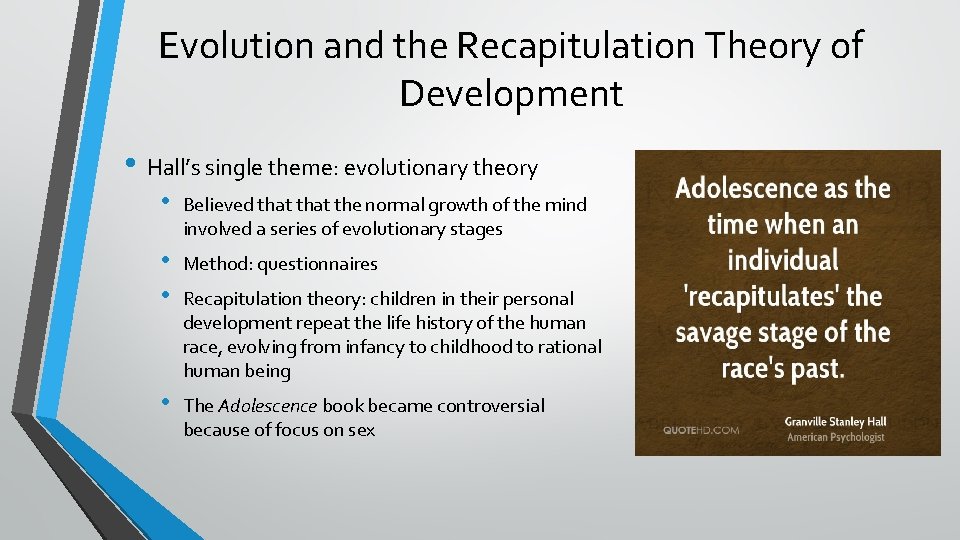
Evolution and the Recapitulation Theory of Development • Hall’s single theme: evolutionary theory • Believed that the normal growth of the mind involved a series of evolutionary stages • • Method: questionnaires • The Adolescence book became controversial because of focus on sex Recapitulation theory: children in their personal development repeat the life history of the human race, evolving from infancy to childhood to rational human being
The Founding of Functionalism • Functionalism was not started intentionally • Began as a protest against the restrictions and limitations of Wundt’s version of psychology and of Titchener’s structuralism • No single form to functionalism • Emphasis on: • • Mental functions: look at real-world problems How people function in, and adapt to, different environments • Titchener (1898), The Postulates of a Structural Psychology.
The Chicago School • In addition to James, there were two other psychologists that contributed to the “founding” of functionalism • • John Dewey James Rowland Angell • James later designated them the “Chicago School”
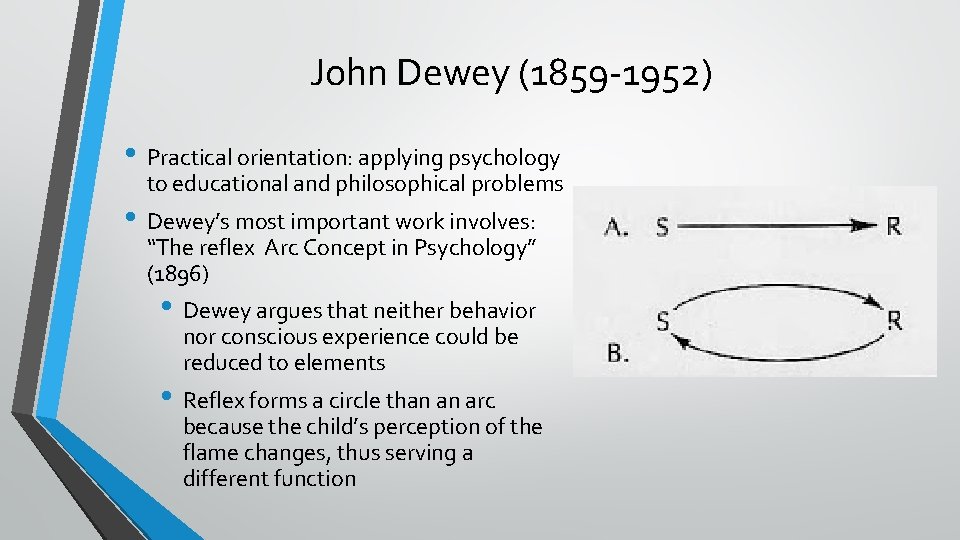
John Dewey (1859 -1952) • Practical orientation: applying psychology to educational and philosophical problems • Dewey’s most important work involves: “The reflex Arc Concept in Psychology” (1896) • Dewey argues that neither behavior nor conscious experience could be reduced to elements • Reflex forms a circle than an arc because the child’s perception of the flame changes, thus serving a different function
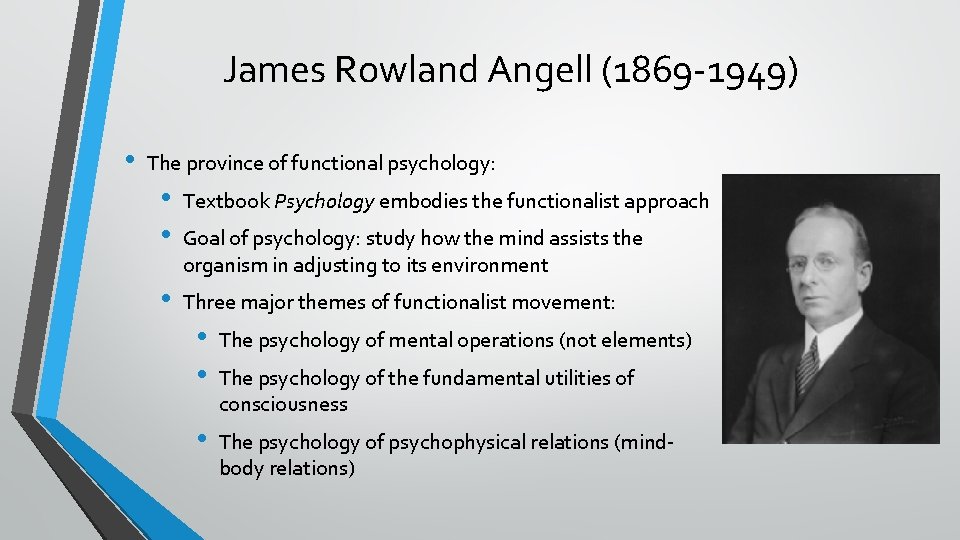
James Rowland Angell (1869 -1949) • The province of functional psychology: • • Textbook Psychology embodies the functionalist approach • Three major themes of functionalist movement: Goal of psychology: study how the mind assists the organism in adjusting to its environment • • The psychology of mental operations (not elements) • The psychology of psychophysical relations (mindbody relations) The psychology of the fundamental utilities of consciousness
Functionalism: The Final Form • Defined the subject matter of psychology as mental activity (i. e. , memory, perception, feeling, imagination, judgment, and will) • The function of mental activity: to acquire, fixate, retain, organize, and evaluate experiences and to use these experiences to determine one’s actions
Functionalism at Columbia University • Another form of functionalism developed at Columbia University • Other contributors: • James Mc. Keen Cattell: work on mental tests embodied the American functionalist spirit • E. L. Thorndike: research on problems of animal learning reinforced the functionalist trend toward greater objectivity
Criticisms of Functionalism • Came mostly from structuralism • Included: • Any approach to psychology that deviated from the introspective analysis of the mind into elements could not truly be called psychology • Criticisms of the functional psychologists’ interest in practical concerns • Ongoing dispute between seeing psychology as a pure or as an applied science
Contributions of Functionalism • Consequences of the shift in emphasis from structure to function: • • • Research on animal behavior Incorporated studies of infants, children, and people with mental disabilities Supplemented the introspective method with data obtained from other methods (i. e. , mental tests, questionnaires, and objective descriptions of behavior) • By 1930, the functional victory was complete