
CHAPTER 7 FAMILY PLANNING NATIONAL DEPARTMENT OF HEALTH
- Slides: 43
CHAPTER 7: FAMILY PLANNING NATIONAL DEPARTMENT OF HEALTH AFFORDABLE MEDICINES ESSENTIAL MEDICINES PROGRAMME PRIMARY HEALTHCARE 2014 Updates to the 2008 PHC STG & EML
CHAPTER LAYOUT • The chapter layout was amended to describe the principle aim(s) of the STG: – Diverse contraceptive options for women, with a preference for non-hormonal methods. – The importance of dual contraception with condoms to prevent STI and HIV transmission. • The various methods of contraception discussed in this chapter include (Intrauterine contraceptive devices) IUDs, hormonal contraceptives (injectables, oral preparations) and barrier methods. • IUDs listed as the first option, in the STG. (Please refer to section 7. 1: Intrauterine contraception (IUD) for the rationale). PRIMARY HEALTHCARE IMPLEMENTATION SLIDES 2014: FAMILY PLANNING 2
INTRODUCTION TO CONTRACEPTION • Different options of therapies tabulated, describing: – Advantages and disadvantages of the different therapies. – Positioning of the various contraceptive methods in therapy. – The success rate/failure rate of the various contraceptive methods. CAUTION BOX updated: CAUTION Hormonal contraception and IUDs do not prevent sexually transmitted infections (STIs), including HIV. Dual contraception use i. e. the use of a condom in combination with another contraceptive method is recommended to reduce the risk of STIs, including HIV. IUDs are the preferred primary contraceptive method. Level of evidence: III Guidelines, Expert opinion PRIMARY HEALTHCARE IMPLEMENTATION SLIDES 2014: FAMILY PLANNING 3
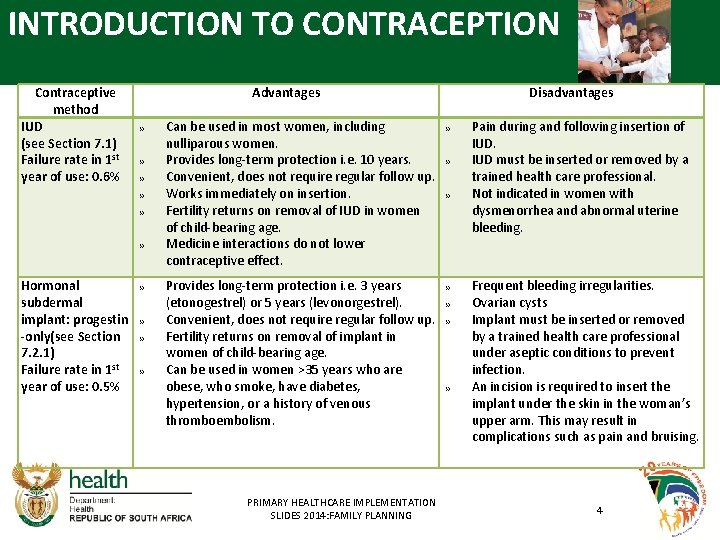
INTRODUCTION TO CONTRACEPTION Contraceptive method IUD (see Section 7. 1) Failure rate in 1 st year of use: 0. 6% Advantages » » Hormonal subdermal implant: progestin -only(see Section 7. 2. 1) Failure rate in 1 st year of use: 0. 5% » » Can be used in most women, including nulliparous women. Provides long-term protection i. e. 10 years. Convenient, does not require regular follow up. Works immediately on insertion. Fertility returns on removal of IUD in women of child-bearing age. Medicine interactions do not lower contraceptive effect. Provides long-term protection i. e. 3 years (etonogestrel) or 5 years (levonorgestrel). Convenient, does not require regular follow up. Fertility returns on removal of implant in women of child-bearing age. Can be used in women >35 years who are obese, who smoke, have diabetes, hypertension, or a history of venous thromboembolism. PRIMARY HEALTHCARE IMPLEMENTATION SLIDES 2014: FAMILY PLANNING Disadvantages » » » » » Pain during and following insertion of IUD must be inserted or removed by a trained health care professional. Not indicated in women with dysmenorrhea and abnormal uterine bleeding. Frequent bleeding irregularities. Ovarian cysts Implant must be inserted or removed by a trained health care professional under aseptic conditions to prevent infection. An incision is required to insert the implant under the skin in the woman’s upper arm. This may result in complications such as pain and bruising. 4
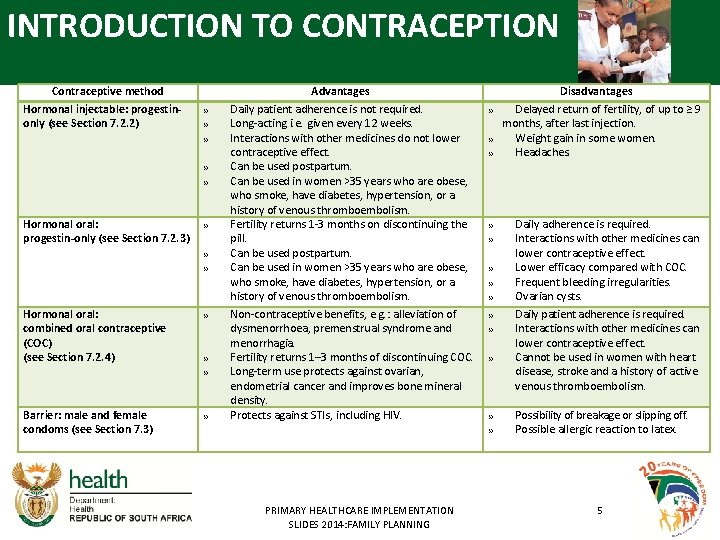
INTRODUCTION TO CONTRACEPTION Contraceptive method Hormonal injectable: progestinonly (see Section 7. 2. 2) » » » Hormonal oral: progestin-only (see Section 7. 2. 3) » » » Hormonal oral: combined oral contraceptive (COC) (see Section 7. 2. 4) » » » Barrier: male and female condoms (see Section 7. 3) » Advantages Daily patient adherence is not required. Long-acting i. e. given every 12 weeks. Interactions with other medicines do not lower contraceptive effect. Can be used postpartum. Can be used in women >35 years who are obese, who smoke, have diabetes, hypertension, or a history of venous thromboembolism. Fertility returns 1 -3 months on discontinuing the pill. Can be used postpartum. Can be used in women >35 years who are obese, who smoke, have diabetes, hypertension, or a history of venous thromboembolism. Non-contraceptive benefits, e. g. : alleviation of dysmenorrhoea, premenstrual syndrome and menorrhagia. Fertility returns 1– 3 months of discontinuing COC. Long-term use protects against ovarian, endometrial cancer and improves bone mineral density. Protects against STIs, including HIV. » » » » » PRIMARY HEALTHCARE IMPLEMENTATION SLIDES 2014: FAMILY PLANNING Disadvantages Delayed return of fertility, of up to ≥ 9 months, after last injection. Weight gain in some women. Headaches. Daily adherence is required. Interactions with other medicines can lower contraceptive effect. Lower efficacy compared with COC. Frequent bleeding irregularities. Ovarian cysts. Daily patient adherence is required. Interactions with other medicines can lower contraceptive effect. Cannot be used in women with heart disease, stroke and a history of active venous thromboembolism. Possibility of breakage or slipping off. Possible allergic reaction to latex. 5
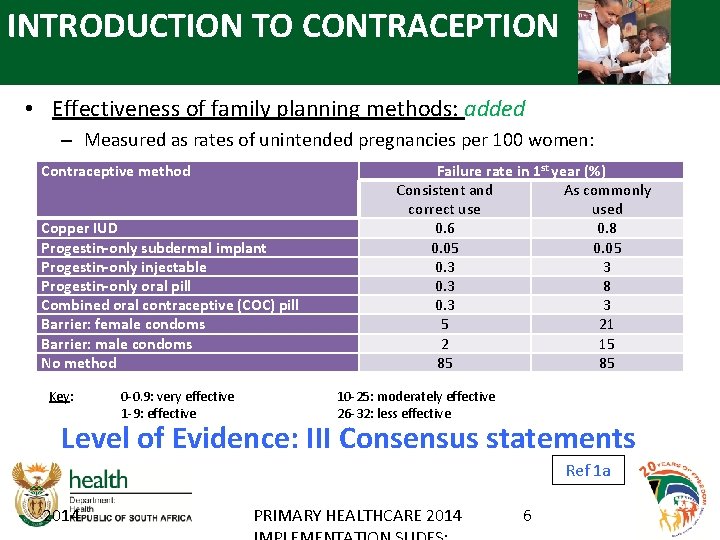
INTRODUCTION TO CONTRACEPTION • Effectiveness of family planning methods: added – Measured as rates of unintended pregnancies per 100 women: Contraceptive method Copper IUD Progestin-only subdermal implant Progestin-only injectable Progestin-only oral pill Combined oral contraceptive (COC) pill Barrier: female condoms Barrier: male condoms No method Key: 0 -0. 9: very effective 1 -9: effective Failure rate in 1 st year (%) Consistent and As commonly correct used 0. 6 0. 8 0. 05 0. 3 3 0. 3 8 0. 3 3 5 21 2 15 85 85 10 -25: moderately effective 26 -32: less effective Level of Evidence: III Consensus statements Ref 1 a 2014 PRIMARY HEALTHCARE 2014 6
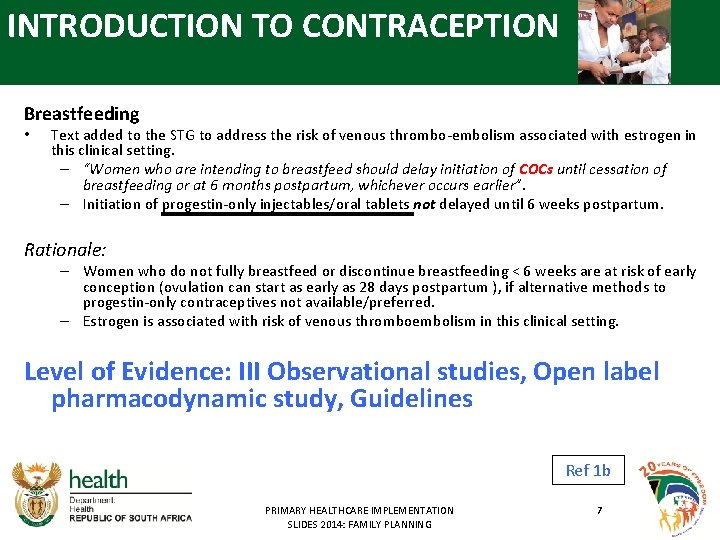
INTRODUCTION TO CONTRACEPTION Breastfeeding • Text added to the STG to address the risk of venous thrombo-embolism associated with estrogen in this clinical setting. – “Women who are intending to breastfeed should delay initiation of COCs until cessation of breastfeeding or at 6 months postpartum, whichever occurs earlier”. – Initiation of progestin-only injectables/oral tablets not delayed until 6 weeks postpartum. Rationale: – Women who do not fully breastfeed or discontinue breastfeeding < 6 weeks are at risk of early conception (ovulation can start as early as 28 days postpartum ), if alternative methods to progestin-only contraceptives not available/preferred. – Estrogen is associated with risk of venous thromboembolism in this clinical setting. Level of Evidence: III Observational studies, Open label pharmacodynamic study, Guidelines Ref 1 b PRIMARY HEALTHCARE IMPLEMENTATION SLIDES 2014: FAMILY PLANNING 7
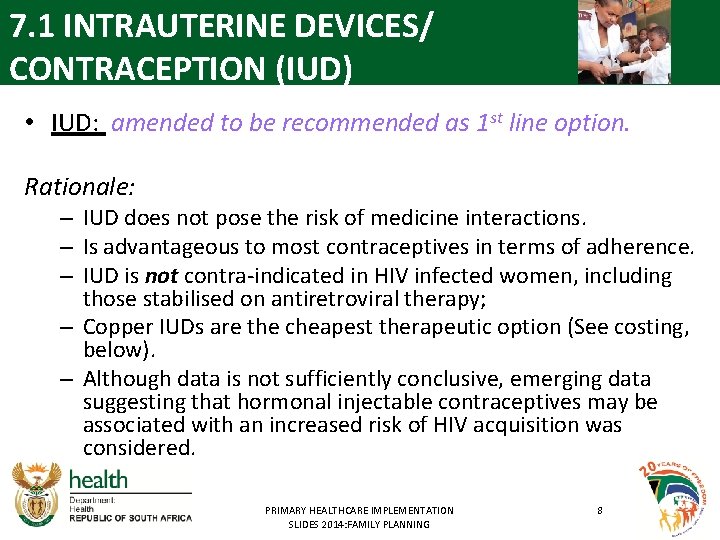
7. 1 INTRAUTERINE DEVICES/ CONTRACEPTION (IUD) • IUD: amended to be recommended as 1 st line option. Rationale: – IUD does not pose the risk of medicine interactions. – Is advantageous to most contraceptives in terms of adherence. – IUD is not contra-indicated in HIV infected women, including those stabilised on antiretroviral therapy; – Copper IUDs are the cheapest therapeutic option (See costing, below). – Although data is not sufficiently conclusive, emerging data suggesting that hormonal injectable contraceptives may be associated with an increased risk of HIV acquisition was considered. PRIMARY HEALTHCARE IMPLEMENTATION SLIDES 2014: FAMILY PLANNING 8
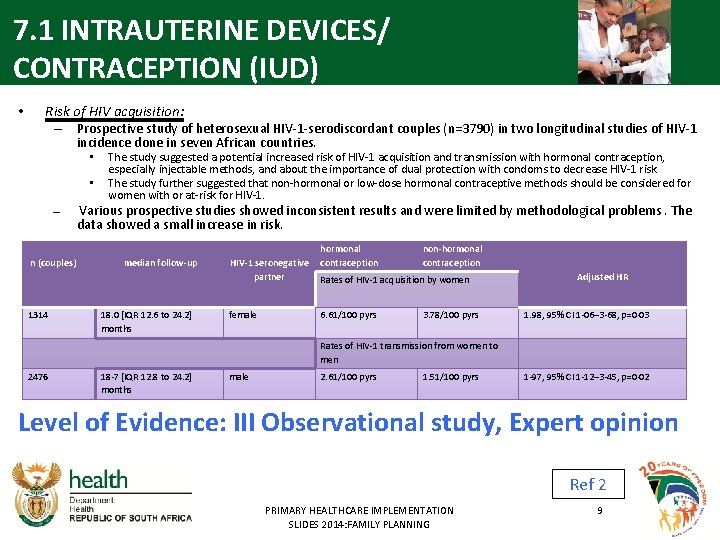
7. 1 INTRAUTERINE DEVICES/ CONTRACEPTION (IUD) • Risk of HIV acquisition: – Prospective study of heterosexual HIV-1 -serodiscordant couples (n=3790) in two longitudinal studies of HIV-1 incidence done in seven African countries. • • – n (couples) 1314 The study suggested a potential increased risk of HIV-1 acquisition and transmission with hormonal contraception, especially injectable methods, and about the importance of dual protection with condoms to decrease HIV-1 risk. The study further suggested that non-hormonal or low-dose hormonal contraceptive methods should be considered for women with or at-risk for HIV-1. Various prospective studies showed inconsistent results and were limited by methodological problems. The data showed a small increase in risk. median follow-up 18. 0 [IQR 12. 6 to 24. 2] months HIV-1 seronegative partner female hormonal contraception non-hormonal contraception Rates of HIV-1 acquisition by women 6. 61/100 pyrs 3. 78/100 pyrs Adjusted HR 1. 98, 95% CI 1· 06– 3· 68, p=0· 03 Rates of HIV-1 transmission from women to men 2476 18· 7 [IQR 12. 8 to 24. 2] months male 2. 61/100 pyrs 1. 51/100 pyrs 1· 97, 95% CI 1· 12– 3· 45, p=0· 02 Level of Evidence: III Observational study, Expert opinion Ref 2 PRIMARY HEALTHCARE IMPLEMENTATION SLIDES 2014: FAMILY PLANNING 9
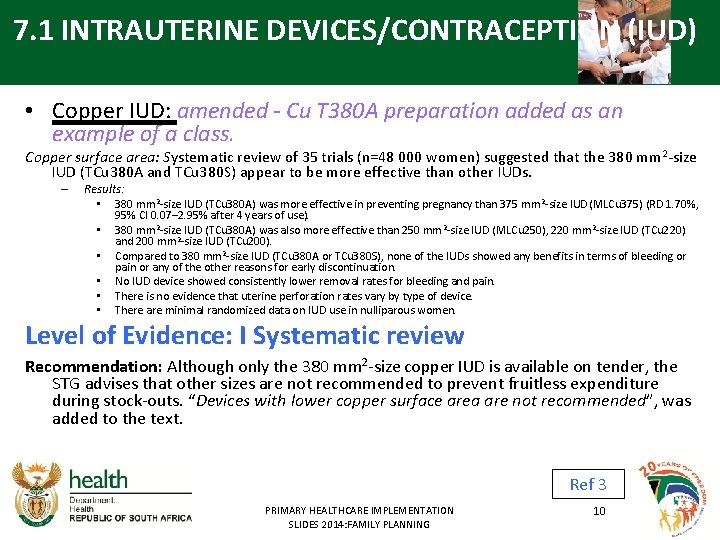
7. 1 INTRAUTERINE DEVICES/CONTRACEPTION (IUD) • Copper IUD: amended - Cu T 380 A preparation added as an example of a class. Copper surface area: Systematic review of 35 trials (n=48 000 women) suggested that the 380 mm 2 -size IUD (TCu 380 A and TCu 380 S) appear to be more effective than other IUDs. – Results: • 380 mm 2 -size IUD (TCu 380 A) was more effective in preventing pregnancy than 375 mm 2 -size IUD (MLCu 375) (RD 1. 70%, • • • 95% CI 0. 07– 2. 95% after 4 years of use). 380 mm 2 -size IUD (TCu 380 A) was also more effective than 250 mm 2 -size IUD (MLCu 250), 220 mm 2 -size IUD (TCu 220) and 200 mm 2 -size IUD (TCu 200). Compared to 380 mm 2 -size IUD (TCu 380 A or TCu 380 S), none of the IUDs showed any benefits in terms of bleeding or pain or any of the other reasons for early discontinuation. No IUD device showed consistently lower removal rates for bleeding and pain. There is no evidence that uterine perforation rates vary by type of device. There are minimal randomized data on IUD use in nulliparous women. Level of Evidence: I Systematic review Recommendation: Although only the 380 mm 2 -size copper IUD is available on tender, the STG advises that other sizes are not recommended to prevent fruitless expenditure during stock-outs. “Devices with lower copper surface area are not recommended”, was added to the text. Ref 3 PRIMARY HEALTHCARE IMPLEMENTATION SLIDES 2014: FAMILY PLANNING 10
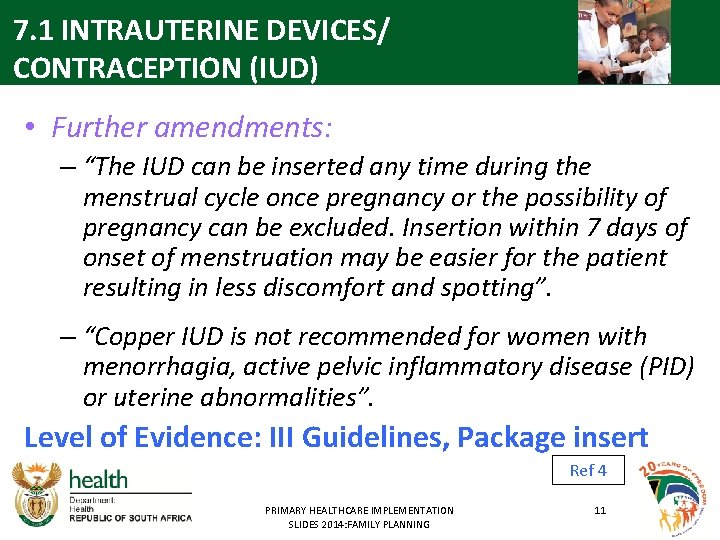
7. 1 INTRAUTERINE DEVICES/ CONTRACEPTION (IUD) • Further amendments: – “The IUD can be inserted any time during the menstrual cycle once pregnancy or the possibility of pregnancy can be excluded. Insertion within 7 days of onset of menstruation may be easier for the patient resulting in less discomfort and spotting”. – “Copper IUD is not recommended for women with menorrhagia, active pelvic inflammatory disease (PID) or uterine abnormalities”. Level of Evidence: III Guidelines, Package insert Ref 4 PRIMARY HEALTHCARE IMPLEMENTATION SLIDES 2014: FAMILY PLANNING 11
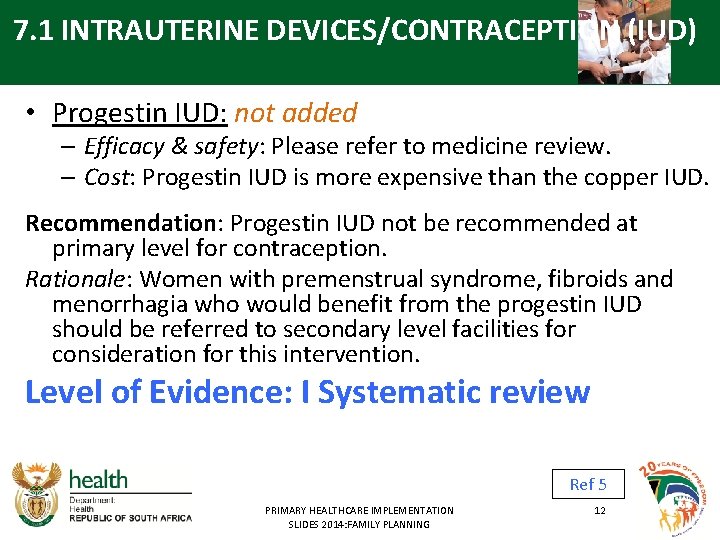
7. 1 INTRAUTERINE DEVICES/CONTRACEPTION (IUD) • Progestin IUD: not added – Efficacy & safety: Please refer to medicine review. – Cost: Progestin IUD is more expensive than the copper IUD. Recommendation: Progestin IUD not be recommended at primary level for contraception. Rationale: Women with premenstrual syndrome, fibroids and menorrhagia who would benefit from the progestin IUD should be referred to secondary level facilities for consideration for this intervention. Level of Evidence: I Systematic review Ref 5 PRIMARY HEALTHCARE IMPLEMENTATION SLIDES 2014: FAMILY PLANNING 12
7. 1 INTRAUTERINE DEVICES/CONTRACEPTION (IUD) • Ibuprofen tablets: added – Ibuprofen added to the STG for pain after insertion. Level of Evidence: III Expert opinion • Antibiotic prophylaxis: not added – Cochrane review indicated that antibiotic prophylaxis before IUD insertion confers little benefit. Level of Evidence: I Systematic review Ref 6 PRIMARY HEALTHCARE IMPLEMENTATION SLIDES 2014: FAMILY PLANNING 13
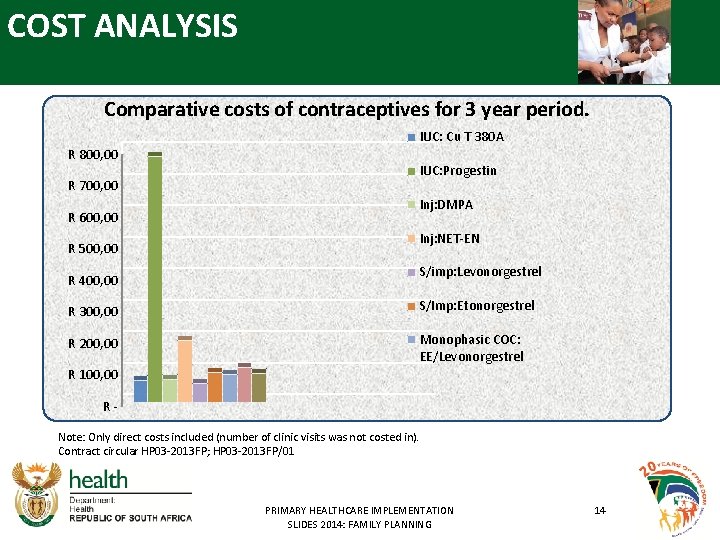
COST ANALYSIS Comparative costs of contraceptives for 3 year period. IUC: Cu T 380 A R 800, 00 R 700, 00 R 600, 00 R 500, 00 R 400, 00 IUC: Progestin Inj: DMPA Inj: NET-EN S/imp: Levonorgestrel R 300, 00 S/Imp: Etonorgestrel R 200, 00 Monophasic COC: EE/Levonorgestrel R 100, 00 RNote: Only direct costs included (number of clinic visits was not costed in). Contract circular HP 03 -2013 FP; HP 03 -2013 FP/01 PRIMARY HEALTHCARE IMPLEMENTATION SLIDES 2014: FAMILY PLANNING 14
7. 2. 1 SUBDERMAL IMPLANT • Etonorgestrel implant: added • Levonorgestrel implant: added – Efficacy & Safety: Please refer to medicine review. – Cost: • Refer to cost analysis on slide # 14. – The levonorgestrel rod was reported to be effective over five years, the etonogestrel rod over three years. – Evidence suggests that the levonorgesterol rod’s pearl index increases from year 3 (year 1 = 0. 1± 0. 1; year 3 = 0. 3± 0. 2; year 5 = 1. 1± 0. 4). – Etonogestrol formulation is a preloaded rod that is injected subdermally; levonorgestrel rods requires manual insertion. PRIMARY HEALTHCARE IMPLEMENTATION SLIDES 2014: FAMILY PLANNING 15
7. 2. 1 SUBDERMAL IMPLANT Recommendation: Subdermal implants be included in the PHC EML. Rationale: – Cochrane review suggested no significant difference found in contraceptive effectiveness of implants compared to other contraceptive methods. – Subdermal implants are cost neutral to the progestin-injectable contraceptives (taking clinic visits into consideration). – Subdermal implants are additional long-acting reversible contraceptive options available to women requiring contraception. Level of Evidence: I Systematic review Ref 7 PRIMARY HEALTHCARE IMPLEMENTATION SLIDES 2014: FAMILY PLANNING 16
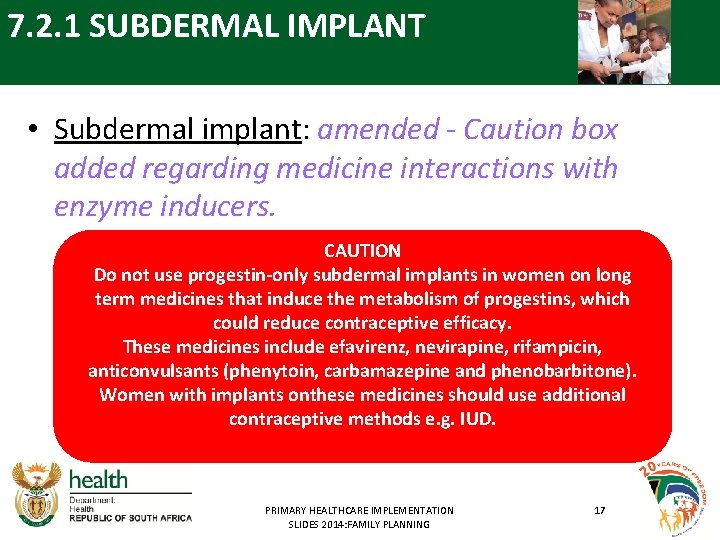
7. 2. 1 SUBDERMAL IMPLANT • Subdermal implant: amended - Caution box added regarding medicine interactions with enzyme inducers. CAUTION Do not use progestin-only subdermal implants in women on long term medicines that induce the metabolism of progestins, which could reduce contraceptive efficacy. These medicines include efavirenz, nevirapine, rifampicin, anticonvulsants (phenytoin, carbamazepine and phenobarbitone). Women with implants onthese medicines should use additional contraceptive methods e. g. IUD. PRIMARY HEALTHCARE IMPLEMENTATION SLIDES 2014: FAMILY PLANNING 17
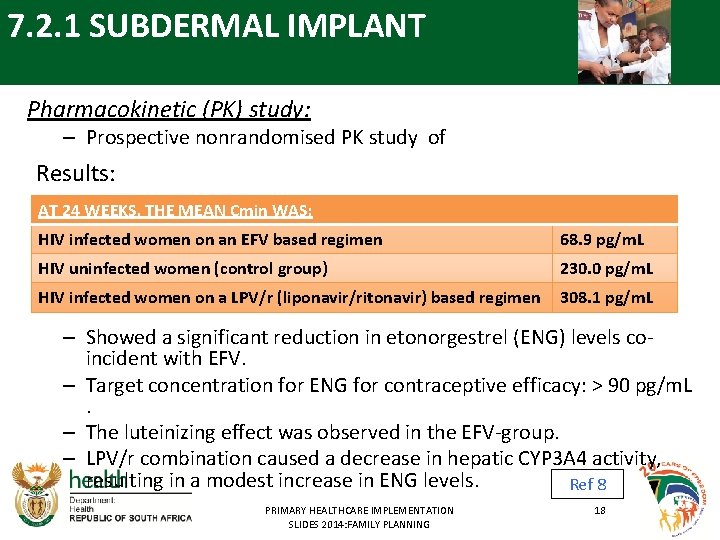
7. 2. 1 SUBDERMAL IMPLANT Pharmacokinetic (PK) study: – Prospective nonrandomised PK study of Results: AT 24 WEEKS, THE MEAN Cmin WAS: HIV infected women on an EFV based regimen 68. 9 pg/m. L HIV uninfected women (control group) 230. 0 pg/m. L HIV infected women on a LPV/r (liponavir/ritonavir) based regimen 308. 1 pg/m. L – Showed a significant reduction in etonorgestrel (ENG) levels coincident with EFV. – Target concentration for ENG for contraceptive efficacy: > 90 pg/m. L. – The luteinizing effect was observed in the EFV-group. – LPV/r combination caused a decrease in hepatic CYP 3 A 4 activity, resulting in a modest increase in ENG levels. Ref 8 PRIMARY HEALTHCARE IMPLEMENTATION SLIDES 2014: FAMILY PLANNING 18
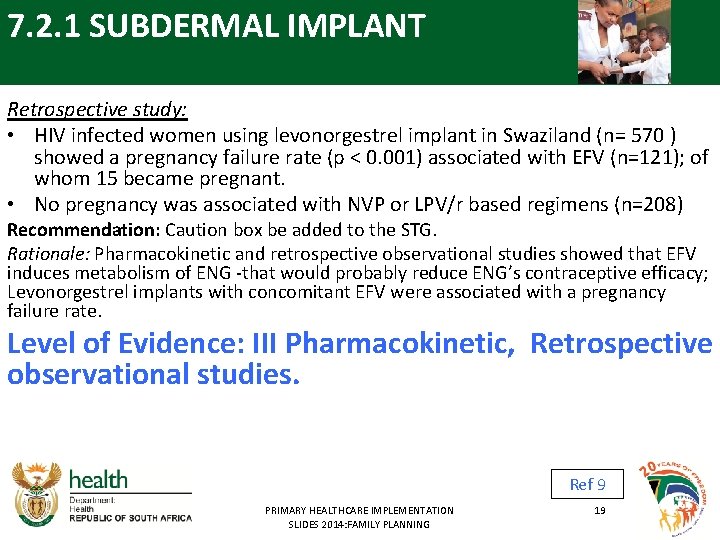
7. 2. 1 SUBDERMAL IMPLANT Retrospective study: • HIV infected women using levonorgestrel implant in Swaziland (n= 570 ) showed a pregnancy failure rate (p < 0. 001) associated with EFV (n=121); of whom 15 became pregnant. • No pregnancy was associated with NVP or LPV/r based regimens (n=208) Recommendation: Caution box be added to the STG. Rationale: Pharmacokinetic and retrospective observational studies showed that EFV induces metabolism of ENG -that would probably reduce ENG’s contraceptive efficacy; Levonorgestrel implants with concomitant EFV were associated with a pregnancy failure rate. Level of Evidence: III Pharmacokinetic, Retrospective observational studies. Ref 9 PRIMARY HEALTHCARE IMPLEMENTATION SLIDES 2014: FAMILY PLANNING 19
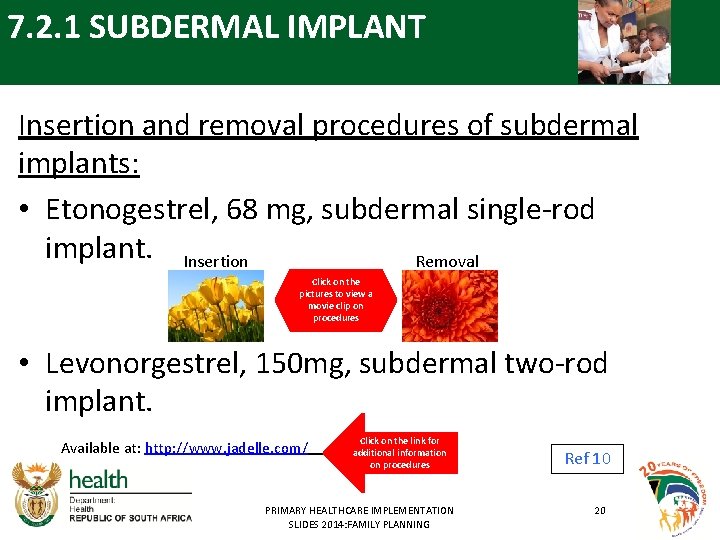
7. 2. 1 SUBDERMAL IMPLANT Insertion and removal procedures of subdermal implants: • Etonogestrel, 68 mg, subdermal single-rod implant. Insertion Removal Click on the pictures to view a movie clip on procedures • Levonorgestrel, 150 mg, subdermal two-rod implant. Available at: http: //www. jadelle. com/ Click on the link for additional information on procedures PRIMARY HEALTHCARE IMPLEMENTATION SLIDES 2014: FAMILY PLANNING Ref 10 20
7. 2. 2 INJECTABLE • Medroxyprogesterone acetate, IM, 150 mg (DMPA): retained • Norethisterone enanthate, IM, 200 mg (NET-EN): deleted Progestin-only injectable contraceptives • Efficacy: Cochrane review (2 trials) suggested little difference between the effects of DMPA and NET-EN. No significant difference between the two treatment groups for: – Frequency of discontinuation for either contraceptive – Discontinuation because of accidental pregnancy; duration of bleeding & spotting events was the same in each group; women on DPMA were 21% more likely to develop amenorrhoea. – Mean changes in body weight at 12 and 24 months. – Mean changes in systolic and diastolic blood pressure at 12 months. • • Safety: Paucity of good quality data comparing the safety of DMPA & NET-EN. Cost: Refer to slide #12 [DMPA cheaper than NET-EN] PRIMARY HEALTHCARE IMPLEMENTATION SLIDES 2014: FAMILY PLANNING 21
7. 2. 2 INJECTABLE • Drug utilisation review: Smit et al. (2001) reviewed the utilisation patterns & self-reported side effects of injectable contraceptives issued from 4 South African provincial pharmaceutical depots over 3 financial years (Pareto (ABC) analysis) & of a rural Kwa. Zulu-Natal case study (n=187). – Results: • More DMPA than NET-EN was issued from the depots. • NET-EN distribution from 2 depots increased over the 3 -year period. • As DMPA was cheaper, if all NET-EN clients in the 1999/2000 financial year (annualised) had used DMPA, the 4 depots could have saved R 4. 95 million. • KZN case study: more NET-EN (54%) than DMPA (46%) was used with no significant differences in self-reported side effects; & younger women were more likely to use NET-EN than DMPA (p = 0. 0001). PRIMARY HEALTHCARE IMPLEMENTATION SLIDES 2014: FAMILY PLANNING 22
7. 2. 2 INJECTABLE • Estimated consumption: Over 2 years, estimated consumption was 13975100 DMPA units & 13094400 N-EN units. – An incremental cost of over R 5 million for N-EN. Recommendation: NET-EN be removed from the EML. Rationale: • Available evidence suggest comparative efficacy (DMPA vs. NET-EN). • NET-EN more expensive than DMPA. Level of Evidence: I Systematic review Ref 11 PRIMARY HEALTHCARE IMPLEMENTATION SLIDES 2014: FAMILY PLANNING 23
7. 2. 2 INJECTABLE Risk of HIV acquisition: • WHO Medical Eligibility Criteria fourth edition 2009: – “Intermediate” level of evidence. DMPA studies conducted among higher risk populations have repeated inconsistent findings. Morrison et al (2010) found a greater risk of HIV acquisition amongst younger women. Beaten et al (2007) showed similar findings amongst sex workers, coincident with injectable progestin contraceptives. • Prospective cohort study by Heffron et al (2011) (n=3790 HIV-1 discordant couples): – Significant risk of HIV acquisition from men to women associated with hormonal contraceptives, HR 1. 98 (95% CI 1. 06 to 3. 68, p =0. 03) and progestin injectables, HR 2. 05 (95% CI 1. 04 to 4. 04, p=0. 04). HIV acquisition from women to men was reported to be HR 1. 97 (95% CI 1. 12 to 3. 45) for hormonal contraceptives and OR 1. 95 (95% CI 1. 06 to 3. 55, p=0. 03) for progestin injectables. • WHO statement February 2012: – Data was not sufficiently conclusive to change current guidance. Recommended that women using progestin-only injectable contraception should be strongly advised to also always use condoms. Ref 12 PRIMARY HEALTHCARE IMPLEMENTATION SLIDES 2014: FAMILY PLANNING 24
7. 2. 2 INJECTABLE Recommendation: DMPA retained as the example of progestin-only injectable, in the STG. Rationale: Available evidence (mostly observational data) showed a modest risk of HIV acquisition with a marginal difference between DMPA and NET-EN. Level of Evidence: III Expert opinion Ref 13 PRIMARY HEALTHCARE IMPLEMENTATION SLIDES 2014: FAMILY PLANNING 25
7. 2. 2 INJECTABLE For heavy or prolonged bleeding • Ibuprofen 400 mg tablets: added • Combined oral contraceptives: added • Tranexamic acid, oral: not added – Aligned with Adult Hospital level STGs and EML, 2012; Canadian contraception consensus (2004) and with section 6. 9. 1 Abnormal vaginal bleeding during fertile years (Obstetrics and gynaecology chapter) – Tranexamic acid not included in the PHC STG EML, as it is more appropriate for secondary level. Level of Evidence: III Guidelines Ref 14 PRIMARY HEALTHCARE IMPLEMENTATION SLIDES 2014: FAMILY PLANNING 26
7. 2. 3 ORAL The STG was separated into 2 sections: 1. 2. Monophasic: progestin only tablets Combination of progestin and oestrogen in each tablet Monophasic: progestogen only tablets • Levonorgestrel, oral, 0. 03 mg daily: retained Combination of progestogen and oestrogen in each tablet Monophasic preparations: combination of progestin and oestrogen in each tablet • Levonorgestrel/ethinyloestradiol 0. 15/0. 03 mg, oral: retained • Norgestrel/ethinyloestradiol 0. 5/0. 05 mg, oral: deleted – Norgestrel/ethinyloestradiol 0. 5/0. 05 mg, oral deleted from the PHC EML, as doses of 50 mcg of estrogen have been associated with vomiting. Triphasic preparations: combination of progestin and oestrogen • Levonorgestrel and ethinyloestradiol, oral: retained Biphasic preparation: not added • To align with standard of care and current practice. PRIMARY HEALTHCARE IMPLEMENTATION SLIDES 2014: FAMILY PLANNING 27
7. 2. 3 ORAL • Contraindications and directions pertaining to starting therapy were tabulated in the STG (Refer to Section 7. 2. 3 Oral). Level of Evidence: III Guidelines Ref 15 PRIMARY HEALTHCARE IMPLEMENTATION SLIDES 2014: FAMILY PLANNING 28
7. 2. 3 ORAL Medicine interactions STG only includes medicines, where there is available evidence to support medicine interactions with oral contraceptives. Liver enzyme-inducing medicines: COC interaction with rifampicin, phenobarbitone, phenytoin, carbamazepine, nevirapine, lopinavir/ritonavir added Faculty of Family Planning and Reproductive Health Care Clinical Effectiveness Unit. FFPRHC Guidance (April 2005). Drug interactions with hormonal contraception. J Fam Plann Reprod Health Care. 2005 Apr; 31(2): 139 -51. SAMF 10 th edition, 2012. WHO Medical Eligibility Criteria fourth edition 2009. Ref 16 PRIMARY HEALTHCARE IMPLEMENTATION SLIDES 2014: FAMILY PLANNING 29
7. 2. 3 ORAL Non-liver enzyme inducing medicines • Lamotrigine: COC-lamotrigine interaction added – No reduction in progestins reported in available published literature. – PK studies show levels of lamotrigine decrease significantly (by 50%) during COC use and increase significantly during the pill-free interval. Level of Evidence: III Guidelines, Case Report Ref 17 PRIMARY HEALTHCARE IMPLEMENTATION SLIDES 2014: FAMILY PLANNING 30
7. 2. 3 ORAL • Short-term antibiotic therapy: Possible COC-short term antibiotic therapy interaction added – Canadian consensus guidelines (2004): • Antibiotic use does not appear to affect combined OC efficacy (except for griseofulvin & rifampicin). • The association between antibiotic use & contraceptive failure is based on isolated case reports only. • Pharmacologic and cohort studies do not support an effect of antibiotics on combined OC-induced ovulation suppression or contraceptive failure. – WHO medical eligibility criteria for contraceptive use (2009): • Does not recommend use of barrier method in addition to COC. – SAMF 10 th edition (2012): • Common practice to recommend use of barrier methods during antibiotic therapy & until 7 active pills have been taken on completion of the antibiotic. PRIMARY HEALTHCARE IMPLEMENTATION SLIDES 2014: FAMILY PLANNING 31
7. 2. 3 ORAL – FFPRHC guidance: • Lack of evidence supporting reduced efficacy of COC. • Recommends additional protection during treatment & for 7 days after antibiotic is stopped for antibiotic courses ≤ 3 weeks and no additional protection for long antibiotic courses, ≥ 3 weeks. – Pharmacokinetic study by Neeley et al. , (1991): • Serum concentrations of ethinyl estradiol, norethindrone & endogenous progestin during the control phase (steady dose of OC Orth-Novum 1/35) & treatment phase (additional doxycline 100 mg twice daily was administered) was studied (n=24). • A course of doxycycline 100 mg for 7 days did not increase the endogenous progestin to suggest ovulation (overall mean concentrations of 0. 5 ± 0. 2 ng/m. L during the treatment phase compared with serum concentrations, 0. 6 ± 0. 2 ng/m. L, during the control phase). Note that the effects of longer or earlier administration of doxycycline was not investigated. Rationale: The available evidence does not generally support the reduced efficacy of COC associated with short-term antibiotic therapy. Level of Evidence: III Guidelines, Pharmacokinetic study Ref 18 PRIMARY HEALTHCARE IMPLEMENTATION SLIDES 2014: FAMILY PLANNING 32
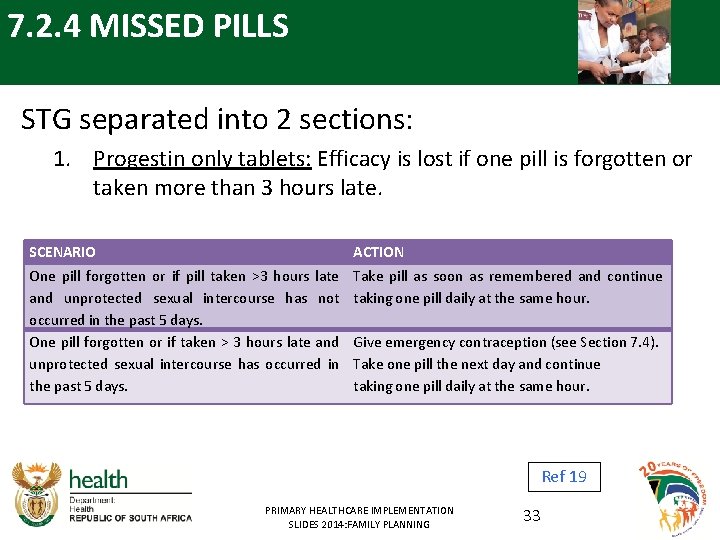
7. 2. 4 MISSED PILLS STG separated into 2 sections: 1. Progestin only tablets: Efficacy is lost if one pill is forgotten or taken more than 3 hours late. SCENARIO One pill forgotten or if pill taken >3 hours late and unprotected sexual intercourse has not occurred in the past 5 days. One pill forgotten or if taken > 3 hours late and unprotected sexual intercourse has occurred in the past 5 days. ACTION Take pill as soon as remembered and continue taking one pill daily at the same hour. Give emergency contraception (see Section 7. 4). Take one pill the next day and continue taking one pill daily at the same hour. Ref 19 PRIMARY HEALTHCARE IMPLEMENTATION SLIDES 2014: FAMILY PLANNING 33
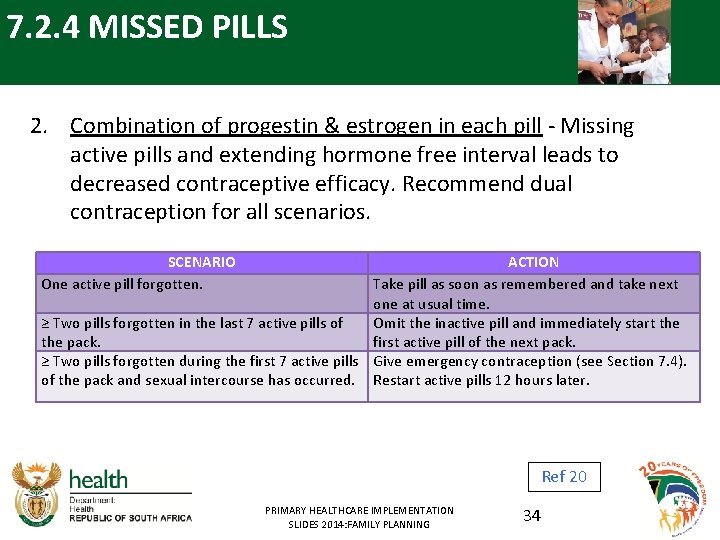
7. 2. 4 MISSED PILLS 2. Combination of progestin & estrogen in each pill - Missing active pills and extending hormone free interval leads to decreased contraceptive efficacy. Recommend dual contraception for all scenarios. SCENARIO One active pill forgotten. ACTION Take pill as soon as remembered and take next one at usual time. ≥ Two pills forgotten in the last 7 active pills of Omit the inactive pill and immediately start the pack. first active pill of the next pack. ≥ Two pills forgotten during the first 7 active pills Give emergency contraception (see Section 7. 4). of the pack and sexual intercourse has occurred. Restart active pills 12 hours later. Ref 20 PRIMARY HEALTHCARE IMPLEMENTATION SLIDES 2014: FAMILY PLANNING 34
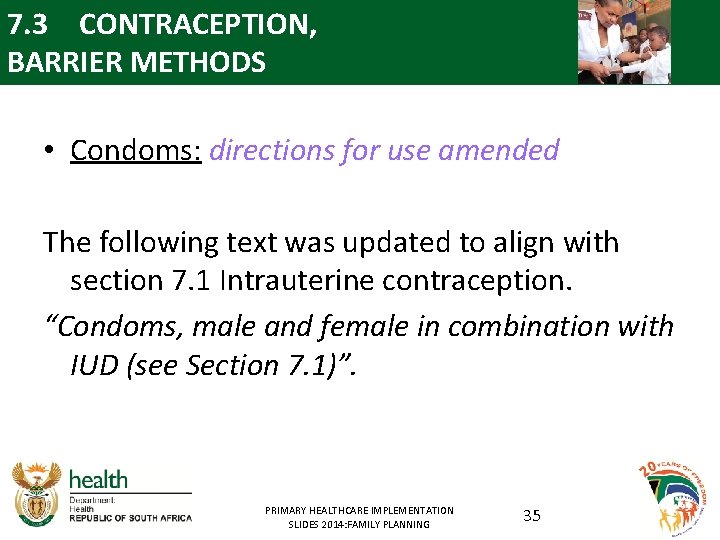
7. 3 CONTRACEPTION, BARRIER METHODS • Condoms: directions for use amended The following text was updated to align with section 7. 1 Intrauterine contraception. “Condoms, male and female in combination with IUD (see Section 7. 1)”. PRIMARY HEALTHCARE IMPLEMENTATION SLIDES 2014: FAMILY PLANNING 35
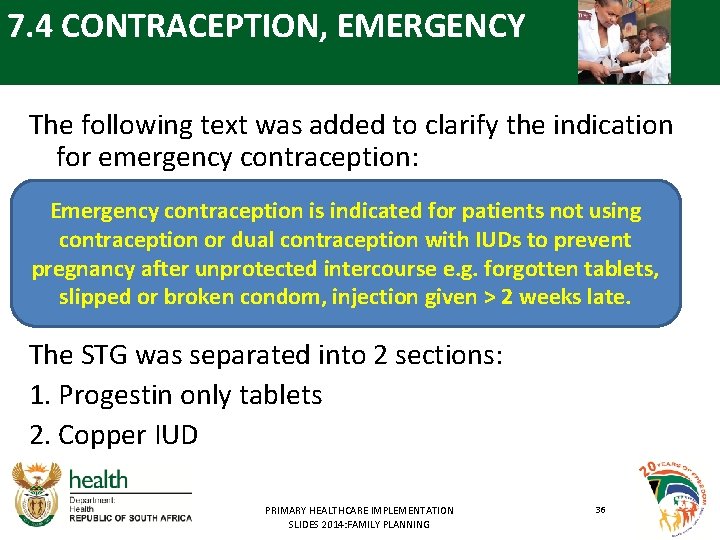
7. 4 CONTRACEPTION, EMERGENCY The following text was added to clarify the indication for emergency contraception: Emergency contraception is indicated for patients not using contraception or dual contraception with IUDs to prevent pregnancy after unprotected intercourse e. g. forgotten tablets, slipped or broken condom, injection given > 2 weeks late. The STG was separated into 2 sections: 1. Progestin only tablets 2. Copper IUD PRIMARY HEALTHCARE IMPLEMENTATION SLIDES 2014: FAMILY PLANNING 36
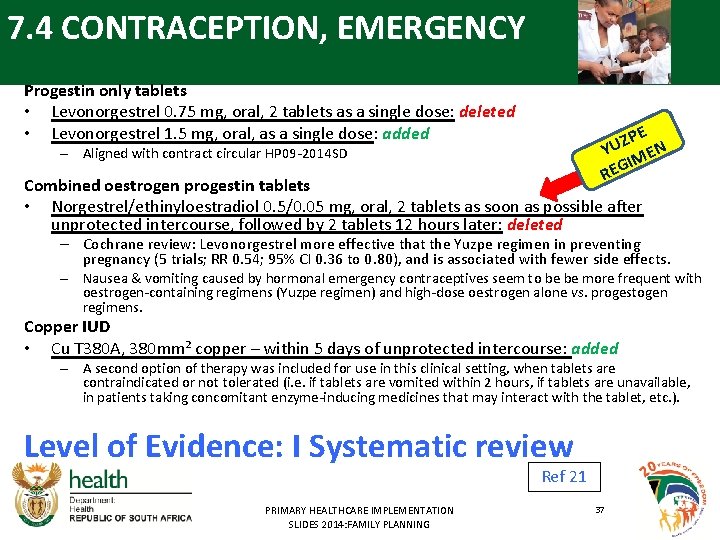
7. 4 CONTRACEPTION, EMERGENCY Progestin only tablets • Levonorgestrel 0. 75 mg, oral, 2 tablets as a single dose: deleted • Levonorgestrel 1. 5 mg, oral, as a single dose: added PE Z U Y EN M I REG – Aligned with contract circular HP 09 -2014 SD Combined oestrogen progestin tablets • Norgestrel/ethinyloestradiol 0. 5/0. 05 mg, oral, 2 tablets as soon as possible after unprotected intercourse, followed by 2 tablets 12 hours later: deleted – Cochrane review: Levonorgestrel more effective that the Yuzpe regimen in preventing pregnancy (5 trials; RR 0. 54; 95% CI 0. 36 to 0. 80), and is associated with fewer side effects. – Nausea & vomiting caused by hormonal emergency contraceptives seem to be be more frequent with oestrogen-containing regimens (Yuzpe regimen) and high-dose oestrogen alone vs. progestogen regimens. Copper IUD • Cu T 380 A, 380 mm² copper – within 5 days of unprotected intercourse: added – A second option of therapy was included for use in this clinical setting, when tablets are contraindicated or not tolerated (i. e. if tablets are vomited within 2 hours, if tablets are unavailable, in patients taking concomitant enzyme-inducing medicines that may interact with the tablet, etc. ). Level of Evidence: I Systematic review Ref 21 PRIMARY HEALTHCARE IMPLEMENTATION SLIDES 2014: FAMILY PLANNING 37
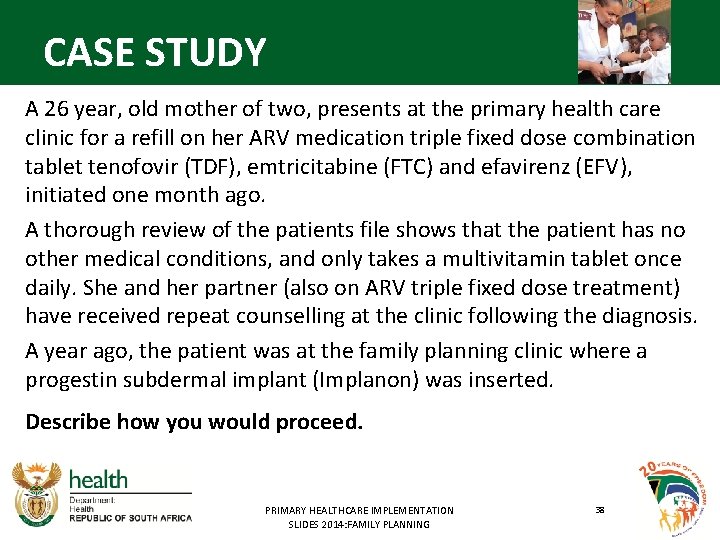
CASE STUDY A 26 year, old mother of two, presents at the primary health care clinic for a refill on her ARV medication triple fixed dose combination tablet tenofovir (TDF), emtricitabine (FTC) and efavirenz (EFV), initiated one month ago. A thorough review of the patients file shows that the patient has no other medical conditions, and only takes a multivitamin tablet once daily. She and her partner (also on ARV triple fixed dose treatment) have received repeat counselling at the clinic following the diagnosis. A year ago, the patient was at the family planning clinic where a progestin subdermal implant (Implanon) was inserted. Describe how you would proceed. PRIMARY HEALTHCARE IMPLEMENTATION SLIDES 2014: FAMILY PLANNING 38
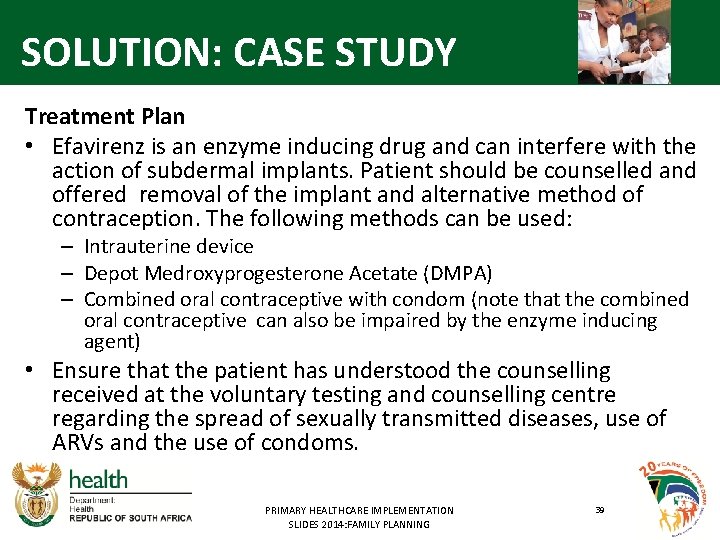
SOLUTION: CASE STUDY Treatment Plan • Efavirenz is an enzyme inducing drug and can interfere with the action of subdermal implants. Patient should be counselled and offered removal of the implant and alternative method of contraception. The following methods can be used: – Intrauterine device – Depot Medroxyprogesterone Acetate (DMPA) – Combined oral contraceptive with condom (note that the combined oral contraceptive can also be impaired by the enzyme inducing agent) • Ensure that the patient has understood the counselling received at the voluntary testing and counselling centre regarding the spread of sexually transmitted diseases, use of ARVs and the use of condoms. PRIMARY HEALTHCARE IMPLEMENTATION SLIDES 2014: FAMILY PLANNING 39
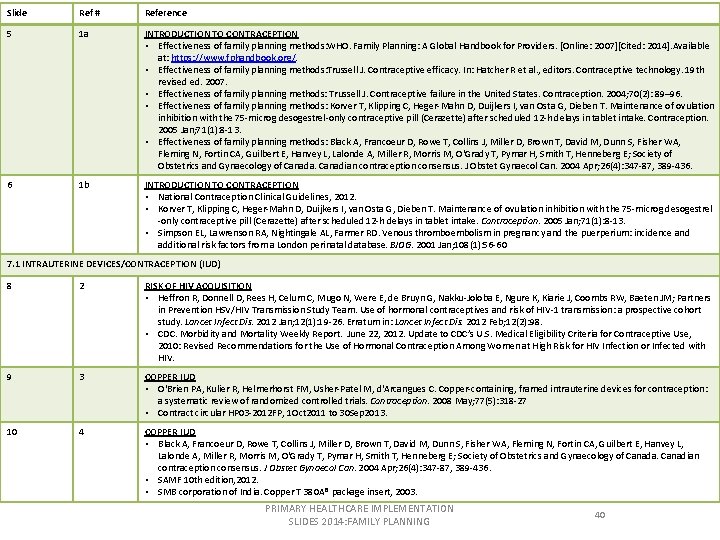
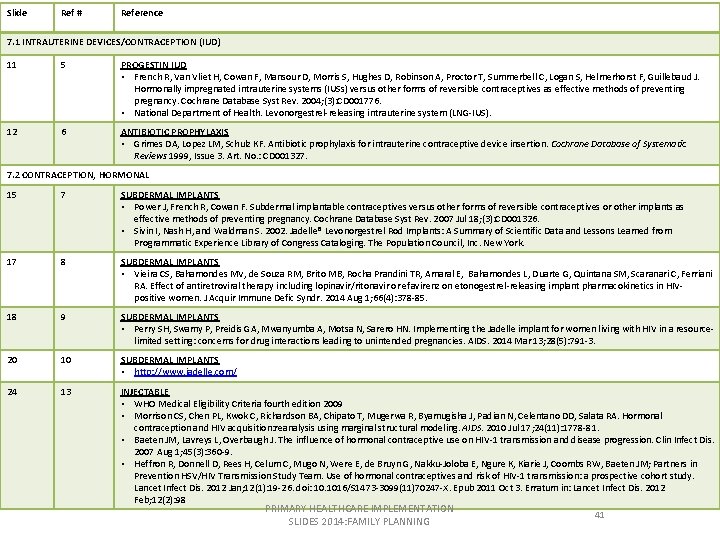
Slide Ref # Reference 5 1 a INTRODUCTION TO CONTRACEPTION • Effectiveness of family planning methods: WHO. Family Planning: A Global Handbook for Providers. [Online: 2007][Cited: 2014]. Available at: https: //www. fphandbook. org/. • Effectiveness of family planning methods: Trussell J. Contraceptive efficacy. In: Hatcher R et al. , editors. Contraceptive technology. 19 th revised ed. 2007. • Effectiveness of family planning methods: Trussell J. Contraceptive failure in the United States. Contraception. 2004; 70(2): 89– 96. • Effectiveness of family planning methods: Korver T, Klipping C, Heger-Mahn D, Duijkers I, van Osta G, Dieben T. Maintenance of ovulation inhibition with the 75 -microg desogestrel-only contraceptive pill (Cerazette) after scheduled 12 -h delays in tablet intake. Contraception. 2005 Jan; 71(1): 8 -13. • Effectiveness of family planning methods: Black A, Francoeur D, Rowe T, Collins J, Miller D, Brown T, David M, Dunn S, Fisher WA, Fleming N, Fortin CA, Guilbert E, Hanvey L, Lalonde A, Miller R, Morris M, O'Grady T, Pymar H, Smith T, Henneberg E; Society of Obstetrics and Gynaecology of Canada. Canadian contraception consensus. J Obstet Gynaecol Can. 2004 Apr; 26(4): 347 -87, 389 -436. 6 1 b INTRODUCTION TO CONTRACEPTION • National Contraception Clinical Guidelines, 2012. • Korver T, Klipping C, Heger-Mahn D, Duijkers I, van Osta G, Dieben T. Maintenance of ovulation inhibition with the 75 -microg desogestrel -only contraceptive pill (Cerazette) after scheduled 12 -h delays in tablet intake. Contraception. 2005 Jan; 71(1): 8 -13. • Simpson EL, Lawrenson RA, Nightingale AL, Farmer RD. Venous thromboembolism in pregnancy and the puerperium: incidence and additional risk factors from a London perinatal database. BJOG. 2001 Jan; 108(1): 56 -60 7. 1 INTRAUTERINE DEVICES/CONTRACEPTION (IUD) 8 2 RISK OF HIV ACQUISITION • Heffron R, Donnell D, Rees H, Celum C, Mugo N, Were E, de Bruyn G, Nakku-Joloba E, Ngure K, Kiarie J, Coombs RW, Baeten JM; Partners in Prevention HSV/HIV Transmission Study Team. Use of hormonal contraceptives and risk of HIV-1 transmission: a prospective cohort study. Lancet Infect Dis. 2012 Jan; 12(1): 19 -26. Erratum in: Lancet Infect Dis. 2012 Feb; 12(2): 98. • CDC. Morbidity and Mortality Weekly Report. June 22, 2012. Update to CDC’s U. S. Medical Eligibility Criteria for Contraceptive Use, 2010: Revised Recommendations for the Use of Hormonal Contraception Among Women at High Risk for HIV Infection or Infected with HIV. 9 3 COPPER IUD • O'Brien PA, Kulier R, Helmerhorst FM, Usher-Patel M, d'Arcangues C. Copper-containing, framed intrauterine devices for contraception: a systematic review of randomized controlled trials. Contraception. 2008 May; 77(5): 318 -27 • Contract circular HP 03 -2012 FP, 1 Oct 2011 to 30 Sep 2013. 10 4 COPPER IUD • Black A, Francoeur D, Rowe T, Collins J, Miller D, Brown T, David M, Dunn S, Fisher WA, Fleming N, Fortin CA, Guilbert E, Hanvey L, Lalonde A, Miller R, Morris M, O'Grady T, Pymar H, Smith T, Henneberg E; Society of Obstetrics and Gynaecology of Canada. Canadian contraception consensus. J Obstet Gynaecol Can. 2004 Apr; 26(4): 347 -87, 389 -436. • SAMF 10 th edition, 2012. • SMB corporation of India. Copper T 380 A® package insert, 2003. PRIMARY HEALTHCARE IMPLEMENTATION SLIDES 2014: FAMILY PLANNING 40
Slide Ref # Reference 7. 1 INTRAUTERINE DEVICES/CONTRACEPTION (IUD) 11 5 PROGESTIN IUD • French R, Van Vliet H, Cowan F, Mansour D, Morris S, Hughes D, Robinson A, Proctor T, Summerbell C, Logan S, Helmerhorst F, Guillebaud J. Hormonally impregnated intrauterine systems (IUSs) versus other forms of reversible contraceptives as effective methods of preventing pregnancy. Cochrane Database Syst Rev. 2004; (3): CD 001776. • National Department of Health. Levonorgestrel-releasing intrauterine system (LNG-IUS). 12 6 ANTIBIOTIC PROPHYLAXIS • Grimes DA, Lopez LM, Schulz KF. Antibiotic prophylaxis for intrauterine contraceptive device insertion. Cochrane Database of Systematic Reviews 1999, Issue 3. Art. No. : CD 001327. 7. 2 CONTRACEPTION, HORMONAL 15 7 SUBDERMAL IMPLANTS • Power J, French R, Cowan F. Subdermal implantable contraceptives versus other forms of reversible contraceptives or other implants as effective methods of preventing pregnancy. Cochrane Database Syst Rev. 2007 Jul 18; (3): CD 001326. • Sivin I, Nash H, and Waldman S. 2002. Jadelle® Levonorgestrel Rod Implants: A Summary of Scientific Data and Lessons Learned from Programmatic Experience Library of Congress Cataloging. The Population Council, Inc. New York. 17 8 SUBDERMAL IMPLANTS • Vieira CS, Bahamondes MV, de Souza RM, Brito MB, Rocha Prandini TR, Amaral E, Bahamondes L, Duarte G, Quintana SM, Scaranari C, Ferriani RA. Effect of antiretroviral therapy including lopinavir/ritonavir or efavirenz on etonogestrel-releasing implant pharmacokinetics in HIVpositive women. J Acquir Immune Defic Syndr. 2014 Aug 1; 66(4): 378 -85. 18 9 SUBDERMAL IMPLANTS • Perry SH, Swamy P, Preidis GA, Mwanyumba A, Motsa N, Sarero HN. Implementing the Jadelle implant for women living with HIV in a resourcelimited setting: concerns for drug interactions leading to unintended pregnancies. AIDS. 2014 Mar 13; 28(5): 791 -3. 20 10 SUBDERMAL IMPLANTS • http: //www. jadelle. com/ 24 13 INJECTABLE • WHO Medical Eligibility Criteria fourth edition 2009 • Morrison CS, Chen PL, Kwok C, Richardson BA, Chipato T, Mugerwa R, Byamugisha J, Padian N, Celentano DD, Salata RA. Hormonal contraception and HIV acquisition: reanalysis using marginal structural modeling. AIDS. 2010 Jul 17; 24(11): 1778 -81. • Baeten JM, Lavreys L, Overbaugh J. The influence of hormonal contraceptive use on HIV-1 transmission and disease progression. Clin Infect Dis. 2007 Aug 1; 45(3): 360 -9. • Heffron R, Donnell D, Rees H, Celum C, Mugo N, Were E, de Bruyn G, Nakku-Joloba E, Ngure K, Kiarie J, Coombs RW, Baeten JM; Partners in Prevention HSV/HIV Transmission Study Team. Use of hormonal contraceptives and risk of HIV-1 transmission: a prospective cohort study. Lancet Infect Dis. 2012 Jan; 12(1): 19 -26. doi: 10. 1016/S 1473 -3099(11)70247 -X. Epub 2011 Oct 3. Erratum in: Lancet Infect Dis. 2012 Feb; 12(2): 98 PRIMARY HEALTHCARE IMPLEMENTATION SLIDES 2014: FAMILY PLANNING 41
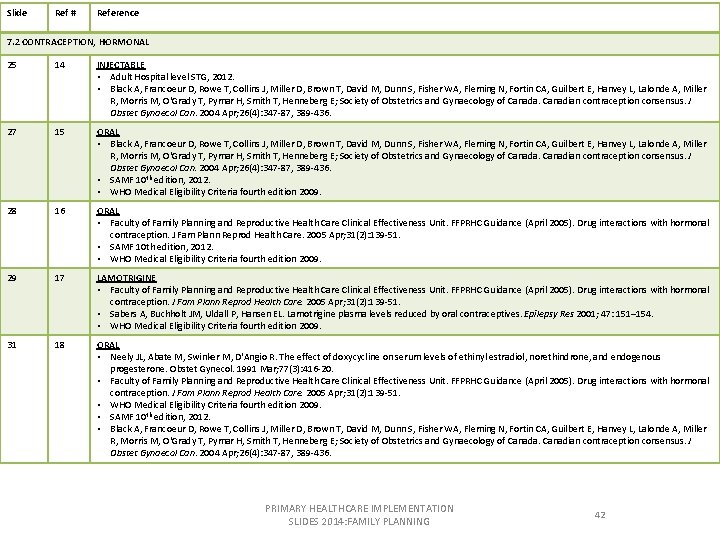
Slide Ref # Reference 7. 2 CONTRACEPTION, HORMONAL 25 14 INJECTABLE • Adult Hospital level STG, 2012. • Black A, Francoeur D, Rowe T, Collins J, Miller D, Brown T, David M, Dunn S, Fisher WA, Fleming N, Fortin CA, Guilbert E, Hanvey L, Lalonde A, Miller R, Morris M, O'Grady T, Pymar H, Smith T, Henneberg E; Society of Obstetrics and Gynaecology of Canada. Canadian contraception consensus. J Obstet Gynaecol Can. 2004 Apr; 26(4): 347 -87, 389 -436. 27 15 ORAL • Black A, Francoeur D, Rowe T, Collins J, Miller D, Brown T, David M, Dunn S, Fisher WA, Fleming N, Fortin CA, Guilbert E, Hanvey L, Lalonde A, Miller R, Morris M, O'Grady T, Pymar H, Smith T, Henneberg E; Society of Obstetrics and Gynaecology of Canada. Canadian contraception consensus. J Obstet Gynaecol Can. 2004 Apr; 26(4): 347 -87, 389 -436. • SAMF 10 th edition, 2012. • WHO Medical Eligibility Criteria fourth edition 2009. 28 16 ORAL • Faculty of Family Planning and Reproductive Health Care Clinical Effectiveness Unit. FFPRHC Guidance (April 2005). Drug interactions with hormonal contraception. J Fam Plann Reprod Health Care. 2005 Apr; 31(2): 139 -51. • SAMF 10 th edition, 2012. • WHO Medical Eligibility Criteria fourth edition 2009. 29 17 LAMOTRIGINE • Faculty of Family Planning and Reproductive Health Care Clinical Effectiveness Unit. FFPRHC Guidance (April 2005). Drug interactions with hormonal contraception. J Fam Plann Reprod Health Care. 2005 Apr; 31(2): 139 -51. • Sabers A, Buchholt JM, Uldall P, Hansen EL. Lamotrigine plasma levels reduced by oral contraceptives. Epilepsy Res 2001; 47: 151– 154. • WHO Medical Eligibility Criteria fourth edition 2009. 31 18 ORAL • Neely JL, Abate M, Swinker M, D'Angio R. The effect of doxycycline on serum levels of ethinyl estradiol, norethindrone, and endogenous progesterone. Obstet Gynecol. 1991 Mar; 77(3): 416 -20. • Faculty of Family Planning and Reproductive Health Care Clinical Effectiveness Unit. FFPRHC Guidance (April 2005). Drug interactions with hormonal contraception. J Fam Plann Reprod Health Care. 2005 Apr; 31(2): 139 -51. • WHO Medical Eligibility Criteria fourth edition 2009. • SAMF 10 th edition, 2012. • Black A, Francoeur D, Rowe T, Collins J, Miller D, Brown T, David M, Dunn S, Fisher WA, Fleming N, Fortin CA, Guilbert E, Hanvey L, Lalonde A, Miller R, Morris M, O'Grady T, Pymar H, Smith T, Henneberg E; Society of Obstetrics and Gynaecology of Canada. Canadian contraception consensus. J Obstet Gynaecol Can. 2004 Apr; 26(4): 347 -87, 389 -436. PRIMARY HEALTHCARE IMPLEMENTATION SLIDES 2014: FAMILY PLANNING 42
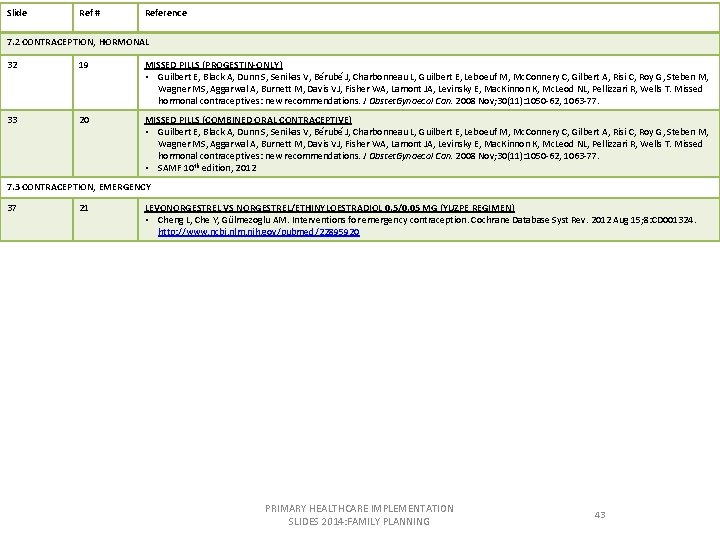
Slide Ref # Reference 7. 2 CONTRACEPTION, HORMONAL 32 19 MISSED PILLS (PROGESTIN-ONLY) • Guilbert E, Black A, Dunn S, Senikas V, Bérubé J, Charbonneau L, Guilbert E, Leboeuf M, Mc. Connery C, Gilbert A, Risi C, Roy G, Steben M, Wagner MS, Aggarwal A, Burnett M, Davis VJ, Fisher WA, Lamont JA, Levinsky E, Mac. Kinnon K, Mc. Leod NL, Pellizzari R, Wells T. Missed hormonal contraceptives: new recommendations. J Obstet. Gynaecol Can. 2008 Nov; 30(11): 1050 -62, 1063 -77. 33 20 MISSED PILLS (COMBINED ORAL CONTRACEPTIVE) • Guilbert E, Black A, Dunn S, Senikas V, Bérubé J, Charbonneau L, Guilbert E, Leboeuf M, Mc. Connery C, Gilbert A, Risi C, Roy G, Steben M, Wagner MS, Aggarwal A, Burnett M, Davis VJ, Fisher WA, Lamont JA, Levinsky E, Mac. Kinnon K, Mc. Leod NL, Pellizzari R, Wells T. Missed hormonal contraceptives: new recommendations. J Obstet. Gynaecol Can. 2008 Nov; 30(11): 1050 -62, 1063 -77. • SAMF 10 th edition, 2012 7. 3 CONTRACEPTION, EMERGENCY 37 21 LEVONORGESTREL VS NORGESTREL/ETHINYLOESTRADIOL 0. 5/0. 05 MG (YUZPE REGIMEN) • Cheng L, Che Y, Gülmezoglu AM. Interventions for emergency contraception. Cochrane Database Syst Rev. 2012 Aug 15; 8: CD 001324. http: //www. ncbi. nlm. nih. gov/pubmed/22895920 PRIMARY HEALTHCARE IMPLEMENTATION SLIDES 2014: FAMILY PLANNING 43