
Chapter 7 Ethnicity Cultural Identity Race and Ethnicity
- Slides: 8
Chapter 7 Ethnicity
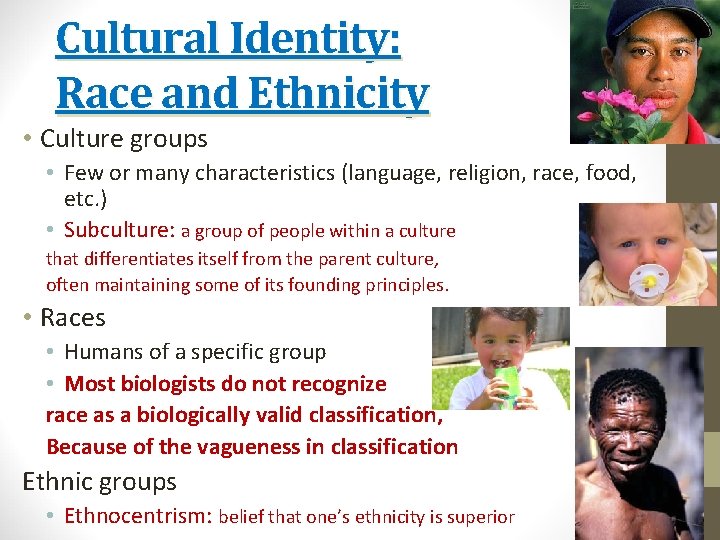
Cultural Identity: Race and Ethnicity • Culture groups • Few or many characteristics (language, religion, race, food, etc. ) • Subculture: a group of people within a culture that differentiates itself from the parent culture, often maintaining some of its founding principles. • Races • Humans of a specific group • Most biologists do not recognize race as a biologically valid classification, Because of the vagueness in classification Ethnic groups • Ethnocentrism: belief that one’s ethnicity is superior
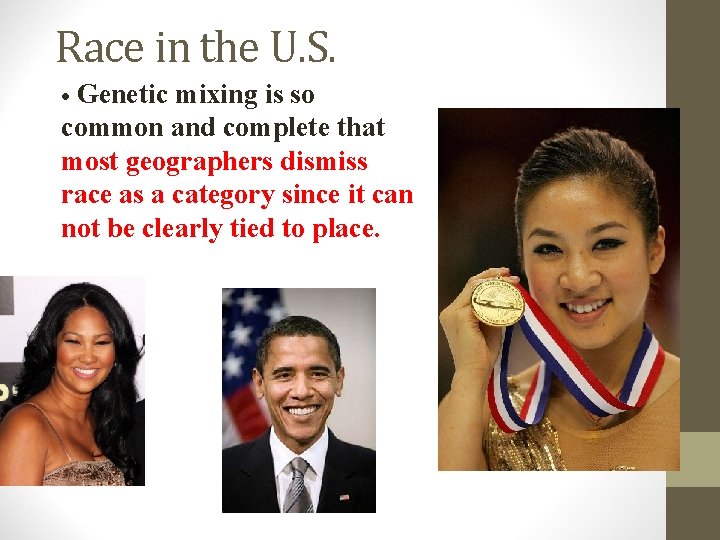
Race in the U. S. Genetic mixing is so common and complete that most geographers dismiss race as a category since it can not be clearly tied to place. •
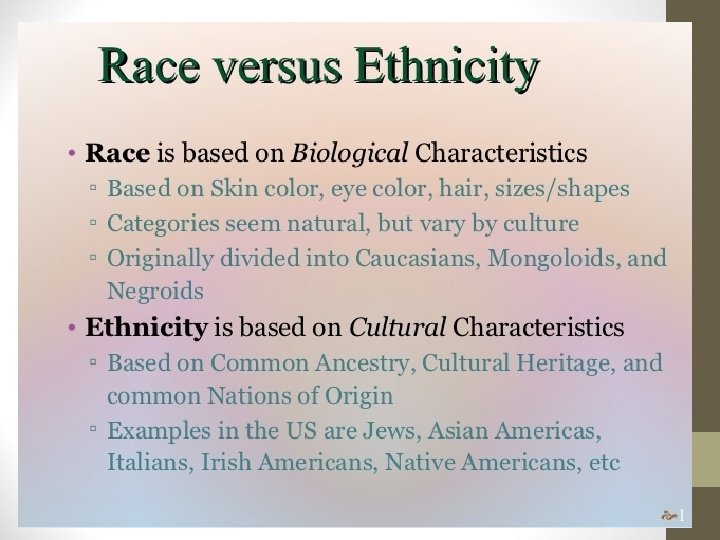
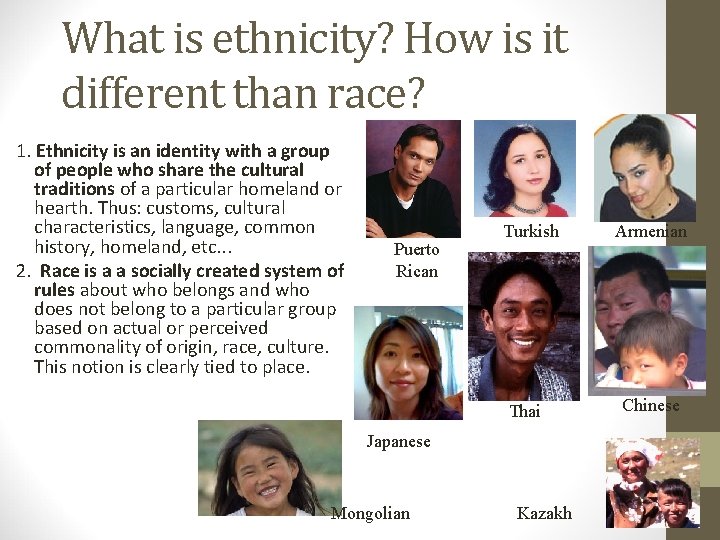
What is ethnicity? How is it different than race? 1. Ethnicity is an identity with a group of people who share the cultural traditions of a particular homeland or hearth. Thus: customs, cultural characteristics, language, common history, homeland, etc. . . 2. Race is a a socially created system of rules about who belongs and who does not belong to a particular group based on actual or perceived commonality of origin, race, culture. This notion is clearly tied to place. Puerto Rican Turkish Thai Japanese Mongolian Kazakh Armenian Chinese
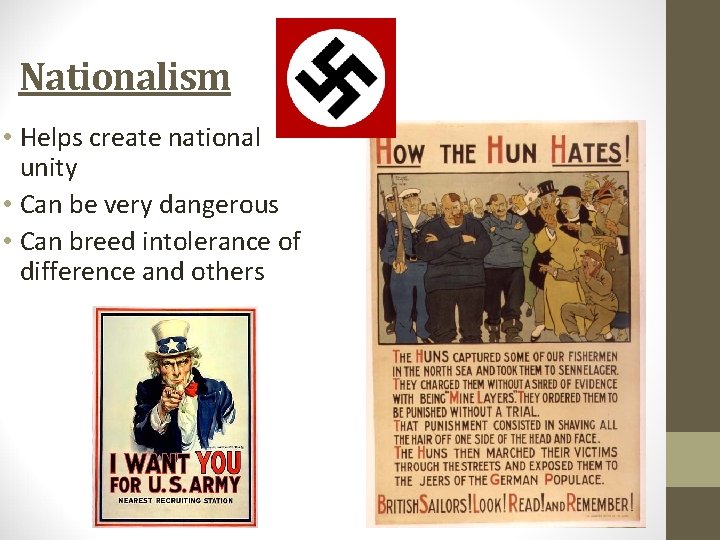
Nationalism • Helps create national unity • Can be very dangerous • Can breed intolerance of difference and others
United Nations Universal Declaration of Human Rights • Let’s read over the United Nations Universal Declaration. As we read think about the following: 1. Does it remind you of any other documents? 2. Do you see any problems with enforcing it? http: //www. un. org/en/documents/udhr/
Discussion Questions • How is the process of globalization, both economic and culture, changing perceptions of race? • Are we headed towards one world culture and one world ethnicity? Can you give examples to make your argument? • Is ethnic identity decreasing in the U. S. in the face of globalization of the media and cultures? Is the situation different in other parts of the world? • Next: Apartheid Reading and “Human Rights Video”