
Chapter 7 Developing the Service Communication Strategy Chapter

- Slides: 22
Chapter 7 Developing the Service Communication Strategy
Chapter Objectives • Discuss the steps necessary to manage the firm’s service communication strategy effectively. • Understand the special challenges associated with developing service communications. • Describe specific guidelines for developing service communications. • Appreciate the special considerations faced by professional service providers and recommend solutions to overcome these challenges. © 2017 Cengage Learning®. May not be scanned, copied or duplicated, or posted to a publicly accessible website, in whole or in part.
Opening Vignette: Trip. Advisor • Trip. Advisor became a very early adopter of usergenerated content as consumer reviews far outpaced professional reviews within a short time of its founding • Now touted as the largest travel site in the world, Trip. Advisor claims 60 million members and over 170 million reviews and suggestions about hotels, restaurants, and other travel-related attractions and businesses • Positive reviews and personal recommendations can have a very profound effect on the life of a single service provider at a destination © 2017 Cengage Learning®. May not be scanned, copied or duplicated, or posted to a publicly accessible website, in whole or in part.
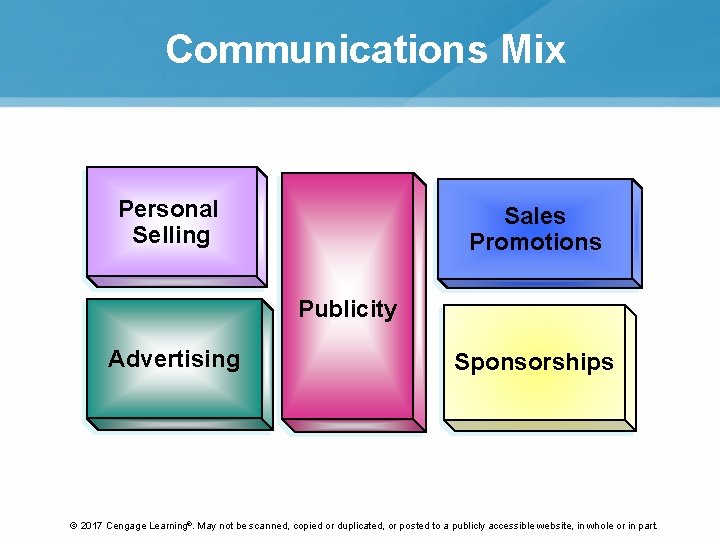
Communications Mix Personal Selling Sales Promotions Publicity Advertising Sponsorships © 2017 Cengage Learning®. May not be scanned, copied or duplicated, or posted to a publicly accessible website, in whole or in part.
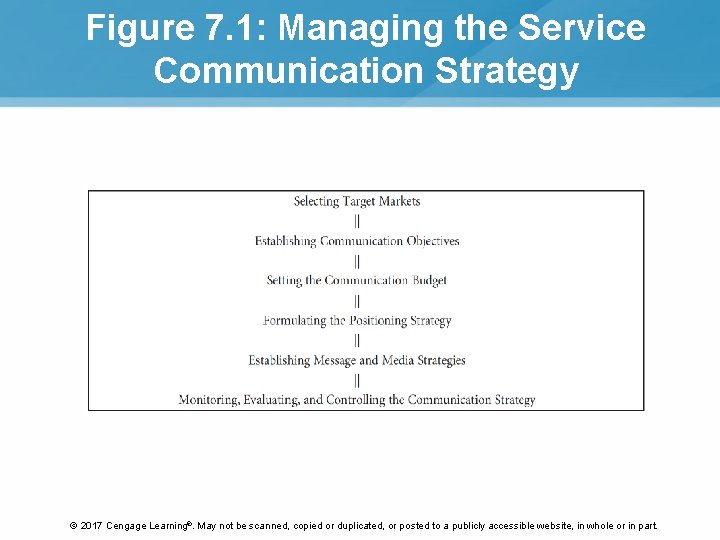
Figure 7. 1: Managing the Service Communication Strategy © 2017 Cengage Learning®. May not be scanned, copied or duplicated, or posted to a publicly accessible website, in whole or in part.
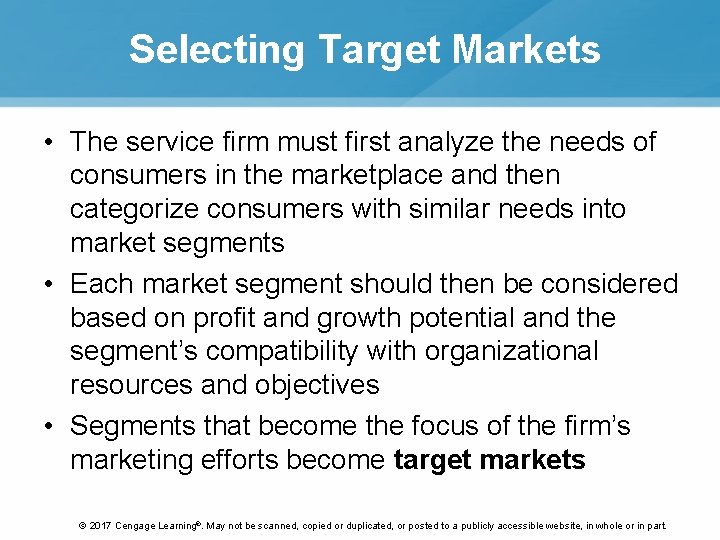
Selecting Target Markets • The service firm must first analyze the needs of consumers in the marketplace and then categorize consumers with similar needs into market segments • Each market segment should then be considered based on profit and growth potential and the segment’s compatibility with organizational resources and objectives • Segments that become the focus of the firm’s marketing efforts become target markets © 2017 Cengage Learning®. May not be scanned, copied or duplicated, or posted to a publicly accessible website, in whole or in part.
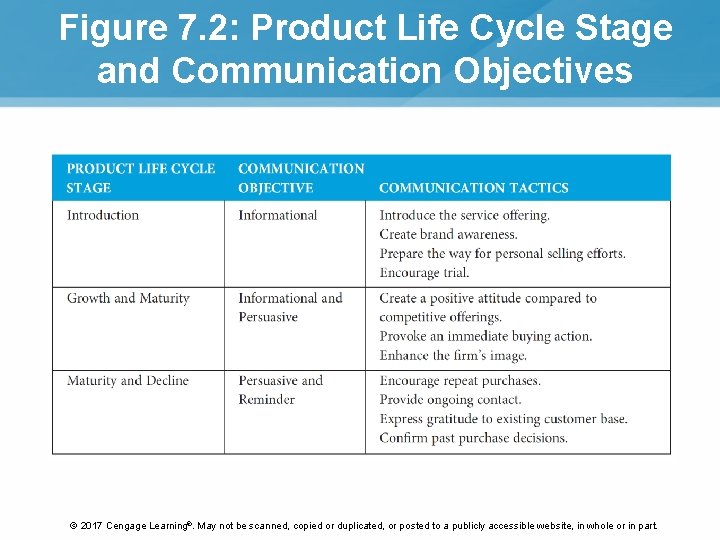
Establishing Communications Objectives • At the broadest level, the service firm’s communication objectives seek to inform, persuade, and remind current and potential customers about the firm’s service offerings • The objectives of a firm’s communication mix often relate directly to the service offering’s stage within the product life cycle © 2017 Cengage Learning®. May not be scanned, copied or duplicated, or posted to a publicly accessible website, in whole or in part.
Figure 7. 2: Product Life Cycle Stage and Communication Objectives © 2017 Cengage Learning®. May not be scanned, copied or duplicated, or posted to a publicly accessible website, in whole or in part.
Establishing Communications Objectives (cont’d) • When developing communication objectives, each objective should be stated in SMART terms: – Specific – Measurable – Achievable – Relevant – Time-bound © 2017 Cengage Learning®. May not be scanned, copied or duplicated, or posted to a publicly accessible website, in whole or in part.
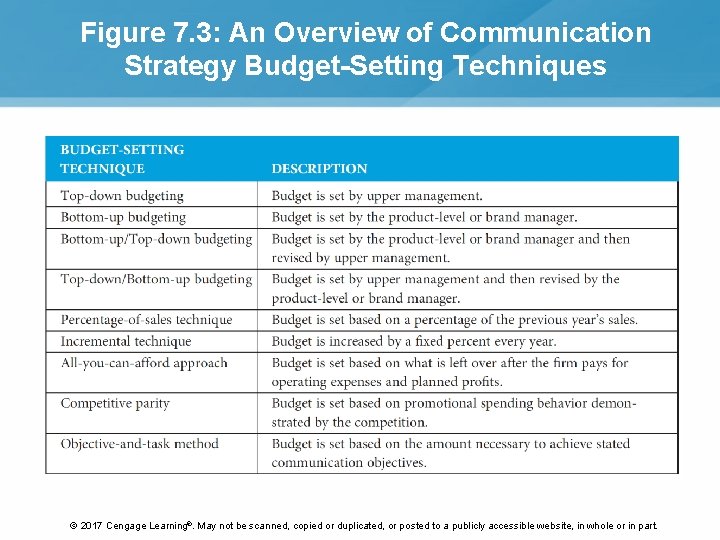
Figure 7. 3: An Overview of Communication Strategy Budget-Setting Techniques © 2017 Cengage Learning®. May not be scanned, copied or duplicated, or posted to a publicly accessible website, in whole or in part.
Setting the Communications Budget • Ideally, the communications budget should provide the resources needed for the service firm to meet its established communication objectives – In other words, the firm’s communication objectives should drive the budget © 2017 Cengage Learning®. May not be scanned, copied or duplicated, or posted to a publicly accessible website, in whole or in part.
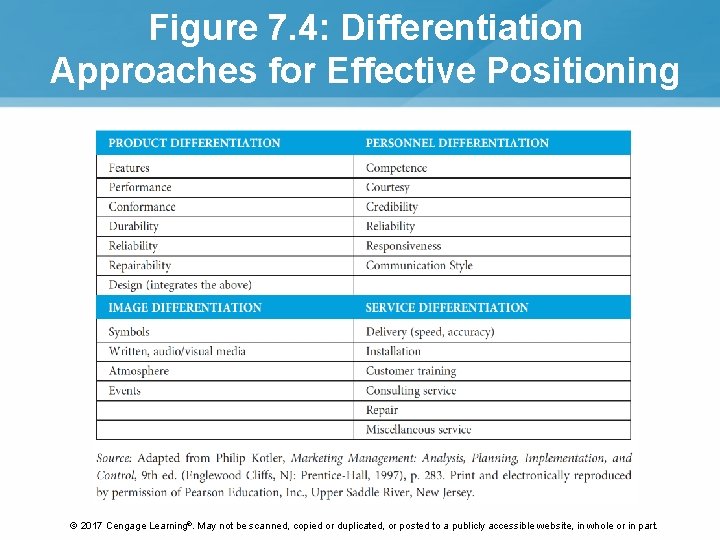
Figure 7. 4: Differentiation Approaches for Effective Positioning © 2017 Cengage Learning®. May not be scanned, copied or duplicated, or posted to a publicly accessible website, in whole or in part.
Media Strategies for Targeting Nonusers • If the objective is to reach nonusers of the service, then the choice of communications channel is to reduced to either: – Media advertising – Selling performed by a sales force rather than a service provider – Public relationships – Sponsorships © 2017 Cengage Learning®. May not be scanned, copied or duplicated, or posted to a publicly accessible website, in whole or in part.
Media Strategies for Targeting Users • Type 1 service staff – Deal with customers quickly and effectively in “once only” transaction-based encounters where large numbers of customers are present – Exchanges consist of simple information and limited responses to customer requests – Examples: front-line personnel at fast-food restaurants © 2017 Cengage Learning®. May not be scanned, copied or duplicated, or posted to a publicly accessible website, in whole or in part.
Media Strategies for Targeting Users (cont’d) • Type 2 service staff – Requires some independent decision making on the part of the staff member – Communications are generally more intense than Type 1 situations – Example: an effective wait staff person at a fine dining establishment © 2017 Cengage Learning®. May not be scanned, copied or duplicated, or posted to a publicly accessible website, in whole or in part.
Media Strategies for Targeting Users (cont’d) • Type 3 service staff – Interactions are more extended and complex and often nonrepeatable – Example: staff members who are likely to be qualified as professionals © 2017 Cengage Learning®. May not be scanned, copied or duplicated, or posted to a publicly accessible website, in whole or in part.
Special Challenges Associated with the Service Communication Strategy • Mistargeted communications • Managing expectations and perceptions – Technical service quality • Advertising to employees • Selling/operations conflicts © 2017 Cengage Learning®. May not be scanned, copied or duplicated, or posted to a publicly accessible website, in whole or in part.
Specific Guidelines for Developing Service Communications • Develop a word-of-mouth communications network • Promise what is possible • Tangibilize the intangible • Feature working relationship between customer and provider © 2017 Cengage Learning®. May not be scanned, copied or duplicated, or posted to a publicly accessible website, in whole or in part.
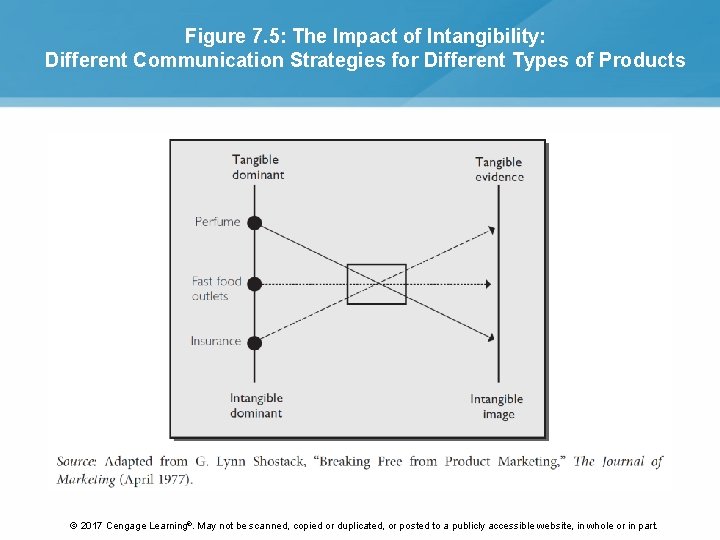
Figure 7. 5: The Impact of Intangibility: Different Communication Strategies for Different Types of Products © 2017 Cengage Learning®. May not be scanned, copied or duplicated, or posted to a publicly accessible website, in whole or in part.
Specific Guidelines for Developing Service Communications (cont’d) • Reduce consumer fears about variations in performance • Determine and focus on relevant service quality dimensions • Differentiate the service product via the service delivery process • Make the service more easily understood © 2017 Cengage Learning®. May not be scanned, copied or duplicated, or posted to a publicly accessible website, in whole or in part.
Developing Communication Strategies for Professional Service Providers • The 10 most frequent problems encountered include: 1. Third-party accountability 2. Client uncertainty 3. Experience is essential 4. Limited differentiability 5. Maintaining quality control 6. Turning doers into sellers 7. The challenge of dividing the professional’s time between marketing and providing services 8. Tendencies to be reactive rather than proactive 9. The effects of advertising are unknown 10. Professional providers have a limited marketing knowledge base © 2017 Cengage Learning®. May not be scanned, copied or duplicated, or posted to a publicly accessible website, in whole or in part.
Special Considerations for Professional Service Providers • First impressions are everything – Halo effect • Create visual pathways that reflect the firm’s quality © 2017 Cengage Learning®. May not be scanned, copied or duplicated, or posted to a publicly accessible website, in whole or in part.