
Chapter 7 Developing Product and Brand Strategy Introduction
Chapter 7 Developing Product and Brand Strategy
Introduction • Product strategy: is critical to the success of the overall marketing strategy. • Value is obtained in two key areas: – Product Strategy: • Existing and proposed products. – Branding: • Value enhancement through awareness and image.
Product Strategy • Product value is taken from: – Features, and – Benefits received • Products can be tangible goods, services, , ideas, ,
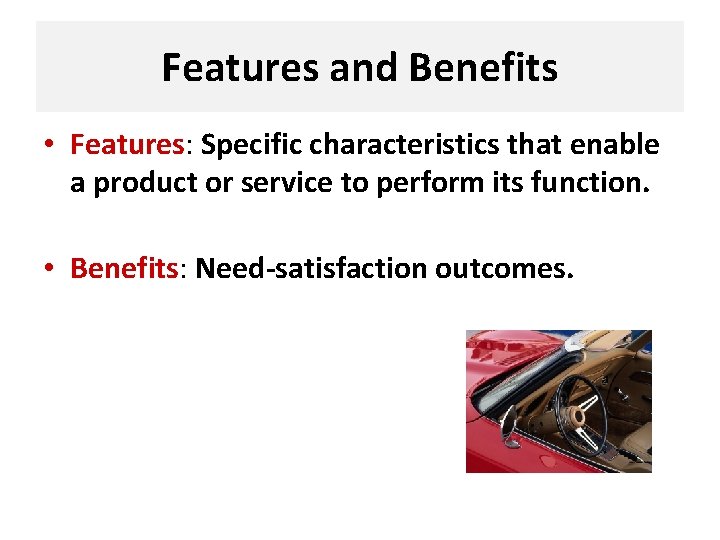
Features and Benefits • Features: Specific characteristics that enable a product or service to perform its function. • Benefits: Need-satisfaction outcomes.
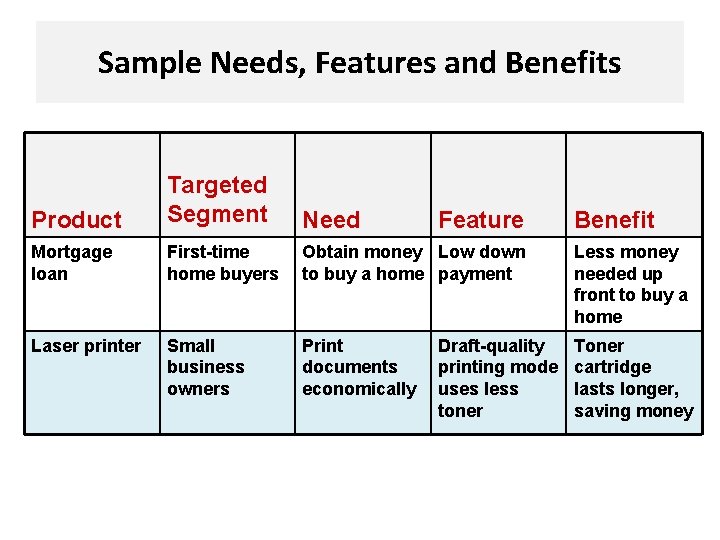
Sample Needs, Features and Benefits Product Targeted Segment Need Mortgage loan First-time home buyers Obtain money Low down to buy a home payment Less money needed up front to buy a home Laser printer Small business owners Print documents economically Toner cartridge lasts longer, saving money Feature Draft-quality printing mode uses less toner Benefit
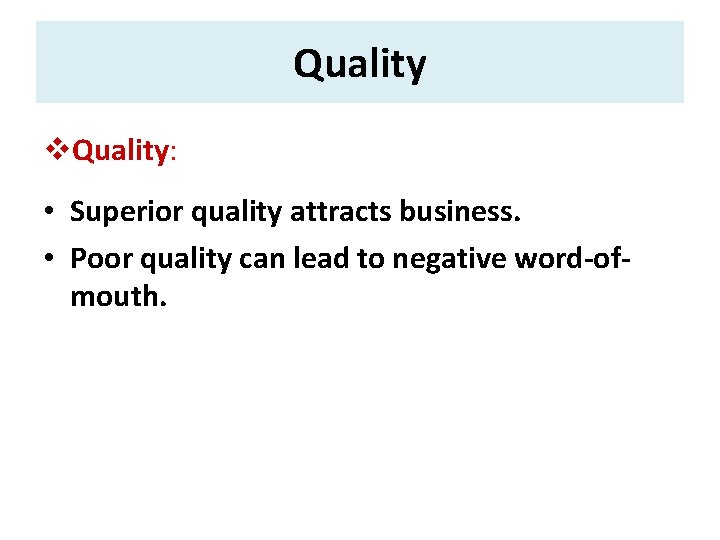
Quality v. Quality: • Superior quality attracts business. • Poor quality can lead to negative word-ofmouth.
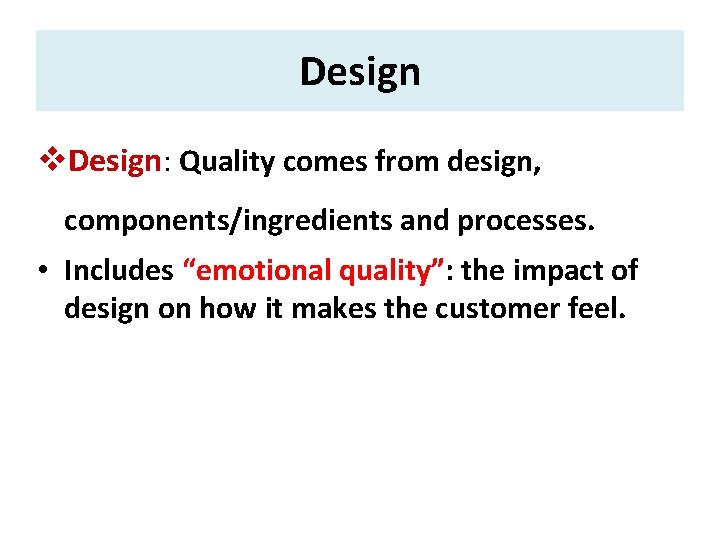
Design v. Design: Quality comes from design, components/ingredients and processes. • Includes “emotional quality”: the impact of design on how it makes the customer feel.
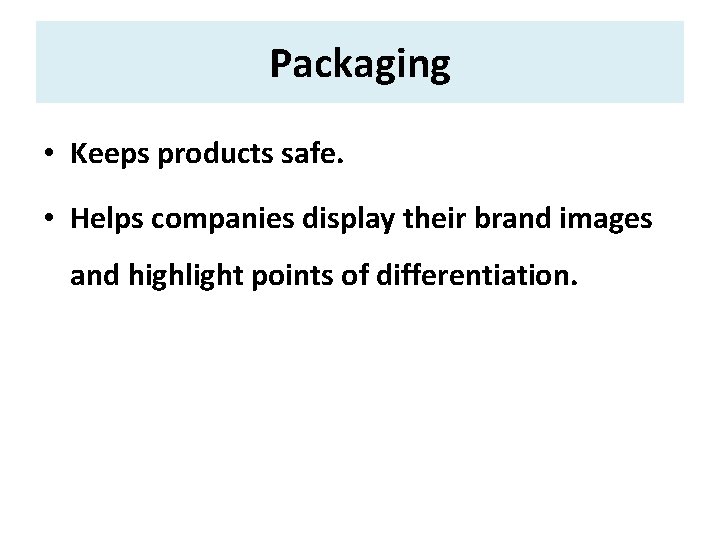
Packaging • Keeps products safe. • Helps companies display their brand images and highlight points of differentiation.
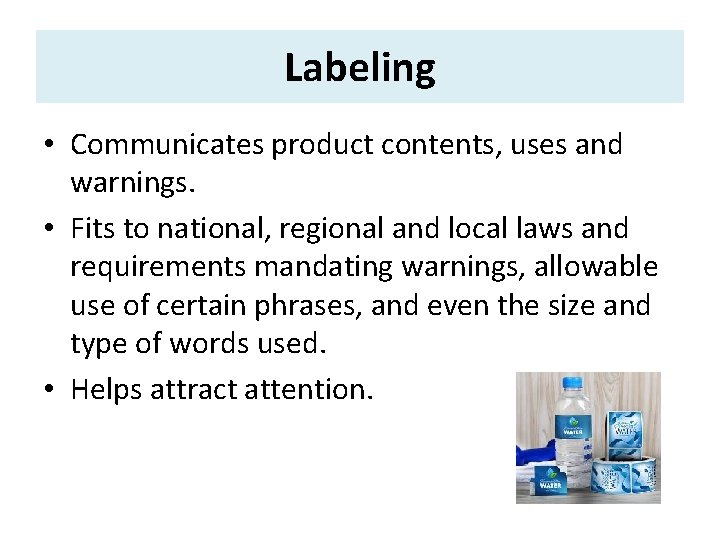
Labeling • Communicates product contents, uses and warnings. • Fits to national, regional and local laws and requirements mandating warnings, allowable use of certain phrases, and even the size and type of words used. • Helps attract attention.
Product Development Steps in the Product Development Process: • Idea generation. • Screening of new ideas. • Initial concept testing. • Business analysis. • Sample design. • Market testing. • Commercialization. • Monitoring customer reaction. Let’s look at product strategy from the perspective of this development process…
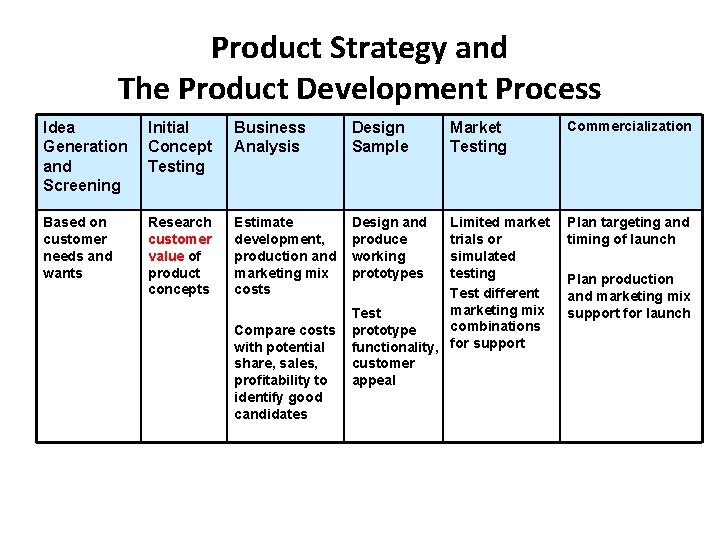
Product Strategy and The Product Development Process Idea Generation and Screening Initial Concept Testing Business Analysis Design Sample Based on customer needs and wants Research customer value of product concepts Estimate development, production and marketing mix costs Design and produce working prototypes Compare costs with potential share, sales, profitability to identify good candidates Market Testing Limited market trials or simulated testing Test different marketing mix Test combinations prototype functionality, for support customer appeal Commercialization Plan targeting and timing of launch Plan production and marketing mix support for launch
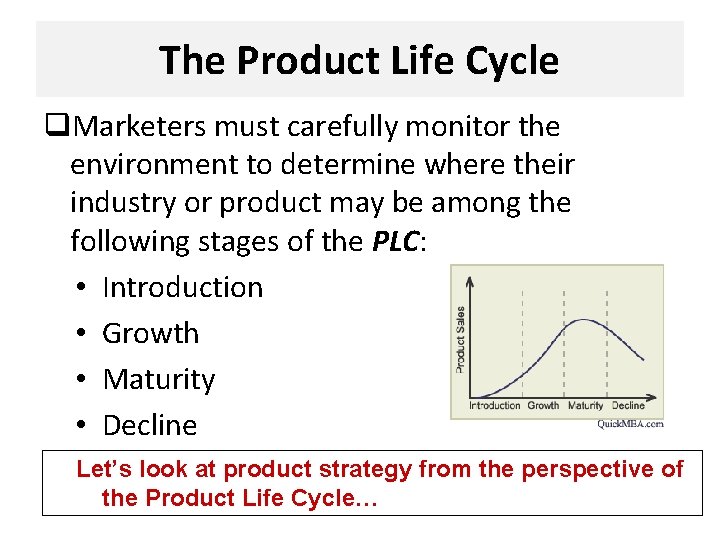
The Product Life Cycle q. Marketers must carefully monitor the environment to determine where their industry or product may be among the following stages of the PLC: • Introduction • Growth • Maturity • Decline Let’s look at product strategy from the perspective of the Product Life Cycle…
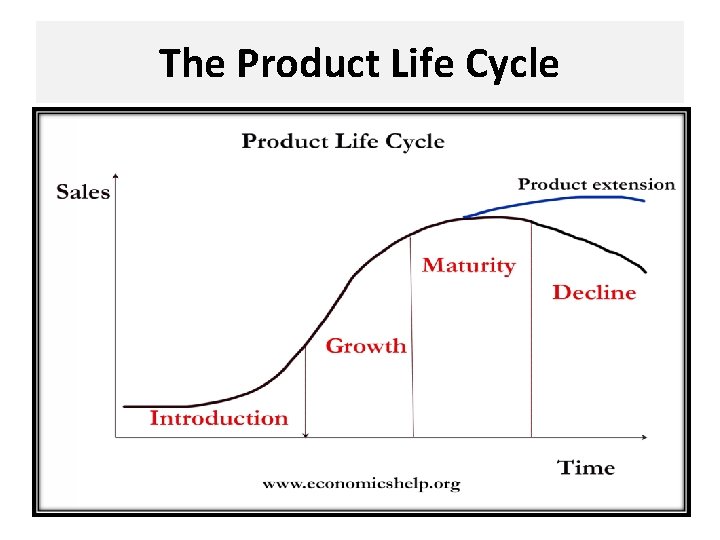
The Product Life Cycle
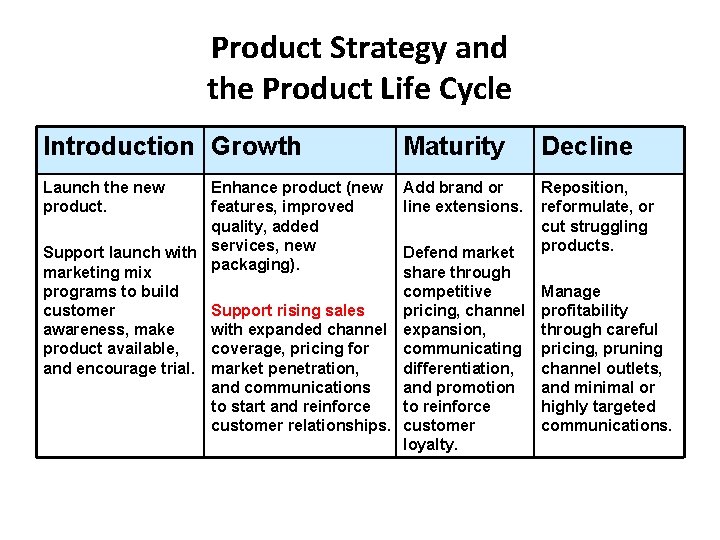
Product Strategy and the Product Life Cycle Introduction Growth Maturity Decline Launch the new product. Add brand or line extensions. Reposition, reformulate, or cut struggling products. Enhance product (new features, improved quality, added Support launch with services, new packaging). marketing mix programs to build customer Support rising sales awareness, make with expanded channel product available, coverage, pricing for and encourage trial. market penetration, and communications to start and reinforce customer relationships. Defend market share through competitive pricing, channel expansion, communicating differentiation, and promotion to reinforce customer loyalty. Manage profitability through careful pricing, pruning channel outlets, and minimal or highly targeted communications.
Product Mix and Product Lines • Product Mix: The overall collection of all products or services offered. • Product Lines: A group of products that are all similar in some way. • Product Mix Width: Number of lines offered. • Product line Depth: Number of products in a line.
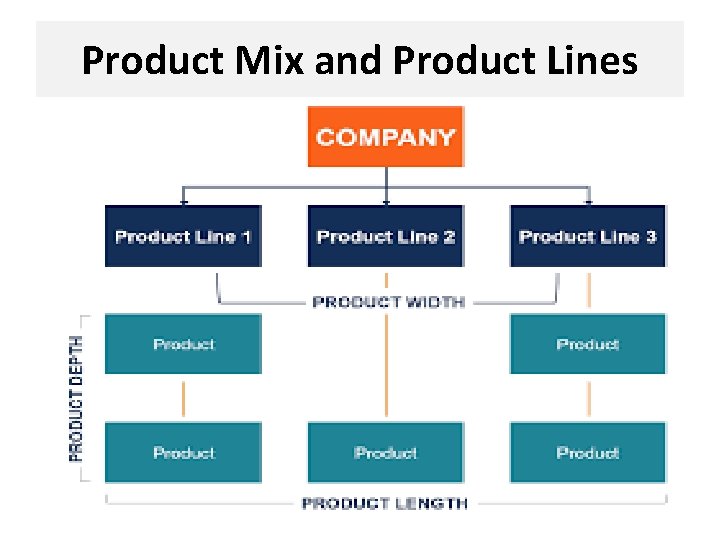
Product Mix and Product Lines
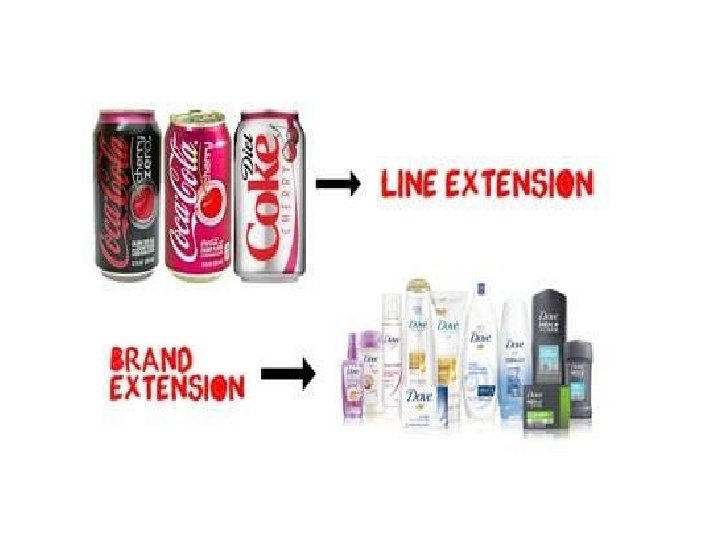
Line Extensions & Brand Extensions • Line extensions: occur when a company introduces additional items in the same product category under the same brand name such as new flavors, forms, colors, added ingredients, package sizes. – E. g. , A low fat version of Lay’s potato chips.
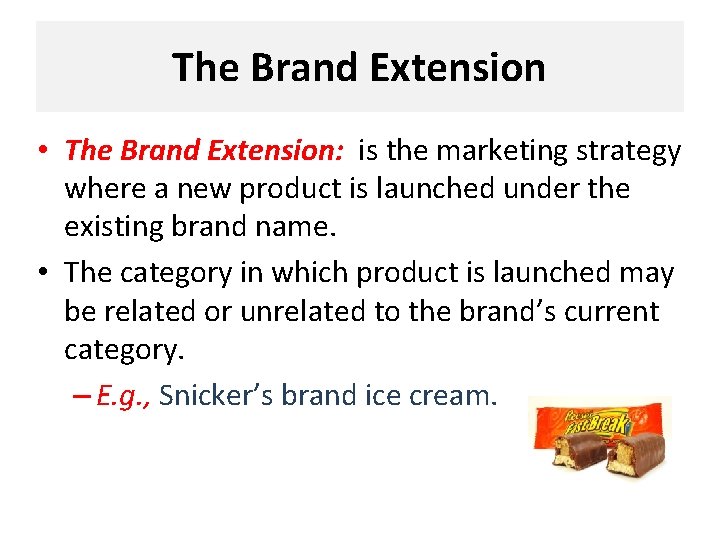
The Brand Extension • The Brand Extension: is the marketing strategy where a new product is launched under the existing brand name. • The category in which product is launched may be related or unrelated to the brand’s current category. – E. g. , Snicker’s brand ice cream.
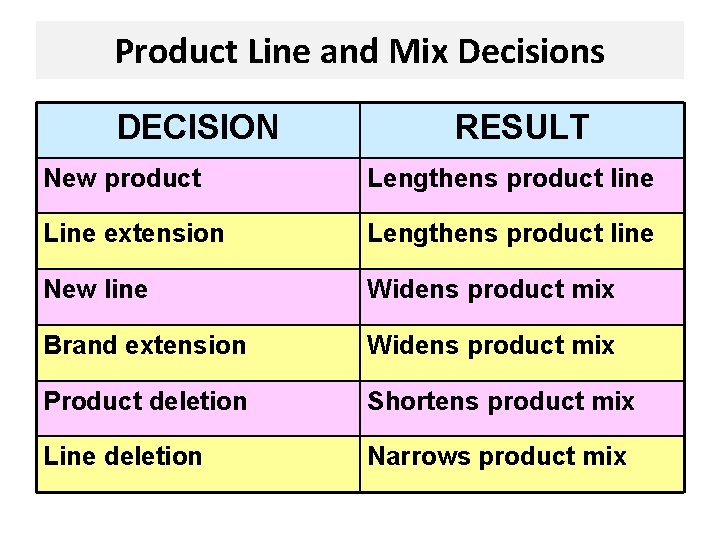
Product Line and Mix Decisions DECISION RESULT New product Lengthens product line Line extension Lengthens product line New line Widens product mix Brand extension Widens product mix Product deletion Shortens product mix Line deletion Narrows product mix

Brand • A name becomes a brand when consumers associate it with a set of tangible and intangible benefits that they obtain from the product or service • It is the seller’s promise to deliver the same package of benefits/services consistently to buyers.
Brand Equity • When a product becomes a brand, it is said to have equity. • The difference between the perceived value and the essential value.
Planning Branding • Branding gives a product a different identity and differentiates it from competitive products using: words, designs, and symbols. • In terms of branding, a product may carry: – Company name and individual brand. • Courtyard by Marriott – Individual name. • Gap, Old Navy – Private-label brand. • Wal-Mart – Multiple Brands (co-branding, ingredient branding). • Dell PC with Intel computer chips

Brands Should Be…. • • Meaningful. Recognizable and memorable. Capable of being legally protected. Suitable for international markets.
Branding and Positioning • Branding not only identifies a particular product, but it sets it apart from the competition (both direct and indirect). • Positioning: What the target group perceives about your brand relative to how they perceive the competition.
The Power of Brand Equity • Brand Equity: the extra value customers perceive that enhances their long-term loyalty to a brand. – Can protect a company against competitive threats. – Can help new products achieve acceptance. • The Value of Strong Brands: – Encourages brand loyalty. – Increases customer lifetime value. • The total amount that a customer spends on a brand or with a company during the life of their relationship.
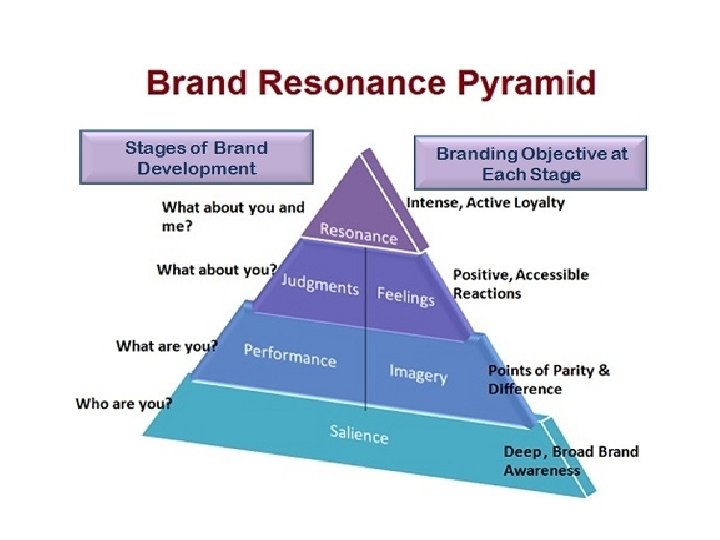
Pyramid of Brand Equity q Keller's Brand Equity model is also known as the Customer-Based Brand Equity (CBBE) Model. q Kevin Lane Keller developed the model and published it in his widely used textbook, "Strategic Brand Management. " Within a pyramid, q the model highlights four key levels that you can work through to create a successful brand.
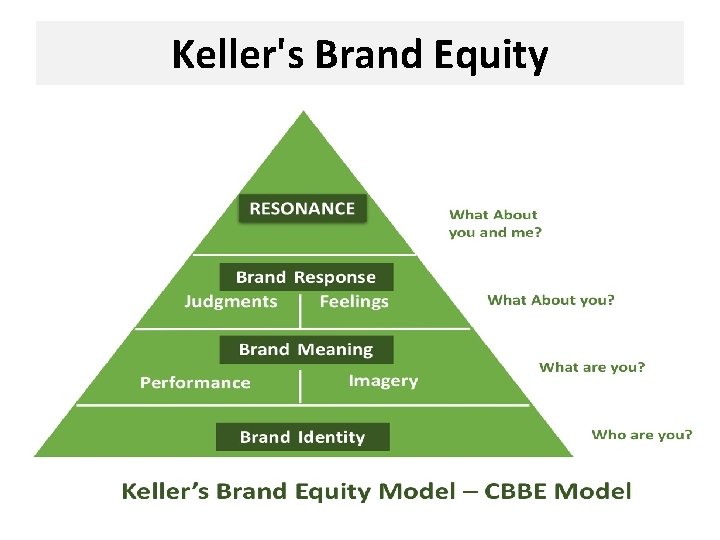
Keller's Brand Equity
- Slides: 29