
Chapter 7 creating energyrich organic PHOTOSYNTHESIS molecules from
- Slides: 11
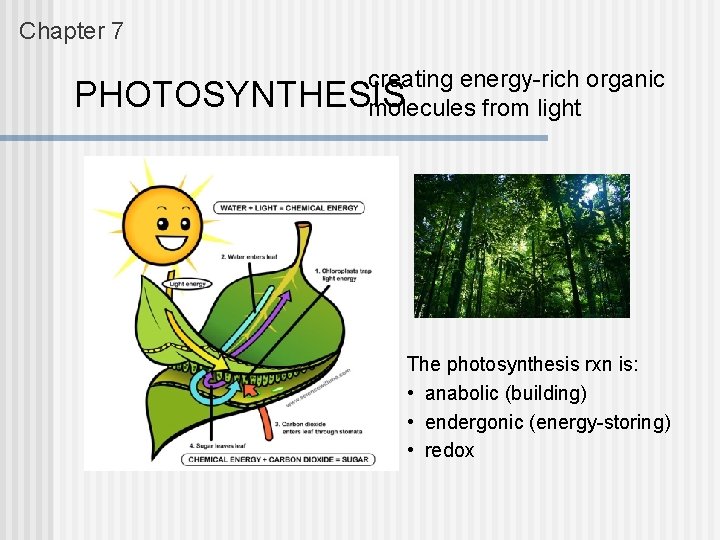
Chapter 7 creating energy-rich organic PHOTOSYNTHESIS molecules from light The photosynthesis rxn is: • anabolic (building) • endergonic (energy-storing) • redox
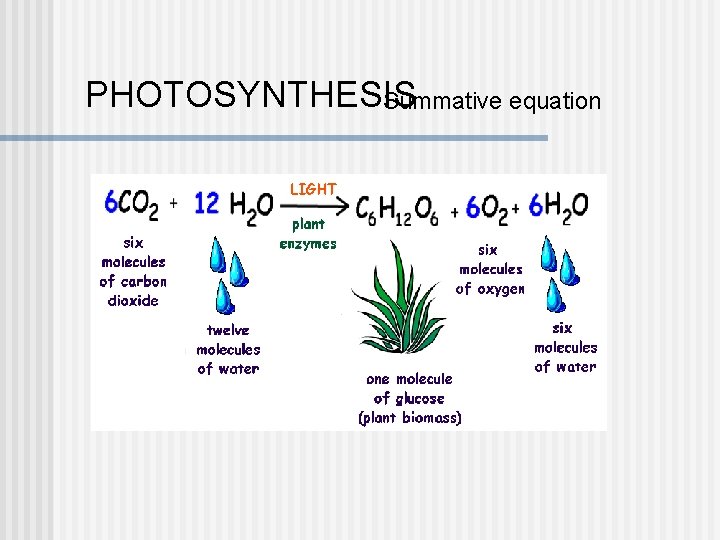
PHOTOSYNTHESIS Summative equation
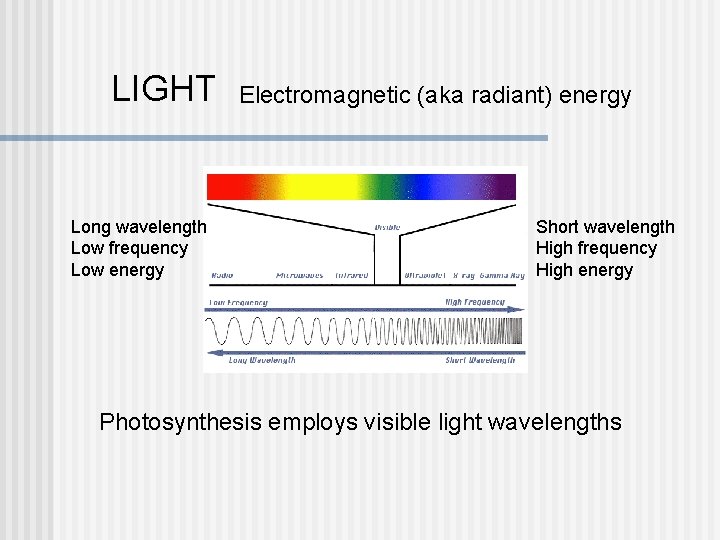
LIGHT Long wavelength Low frequency Low energy Electromagnetic (aka radiant) energy Short wavelength High frequency High energy Photosynthesis employs visible light wavelengths
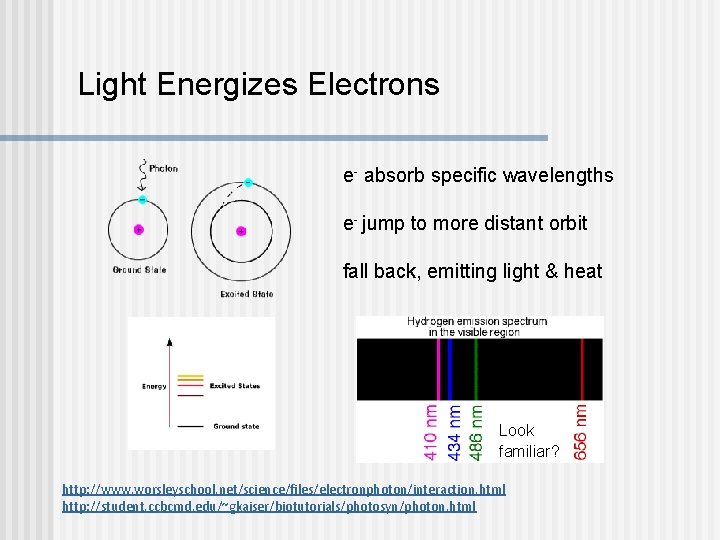
Light Energizes Electrons e- absorb specific wavelengths e- jump to more distant orbit fall back, emitting light & heat Look familiar? http: //www. worsleyschool. net/science/files/electronphoton/interaction. html http: //student. ccbcmd. edu/~gkaiser/biotutorials/photosyn/photon. html
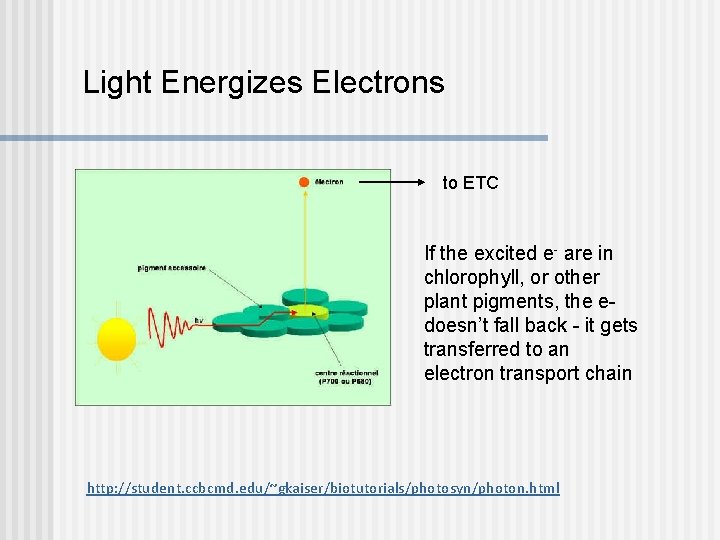
Light Energizes Electrons to ETC If the excited e- are in chlorophyll, or other plant pigments, the edoesn’t fall back - it gets transferred to an electron transport chain http: //student. ccbcmd. edu/~gkaiser/biotutorials/photosyn/photon. html
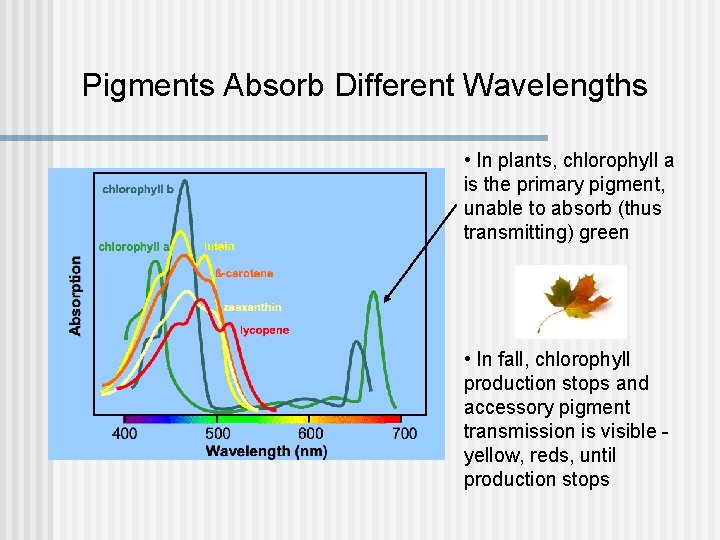
Pigments Absorb Different Wavelengths • In plants, chlorophyll a is the primary pigment, unable to absorb (thus transmitting) green • In fall, chlorophyll production stops and accessory pigment transmission is visible yellow, reds, until production stops
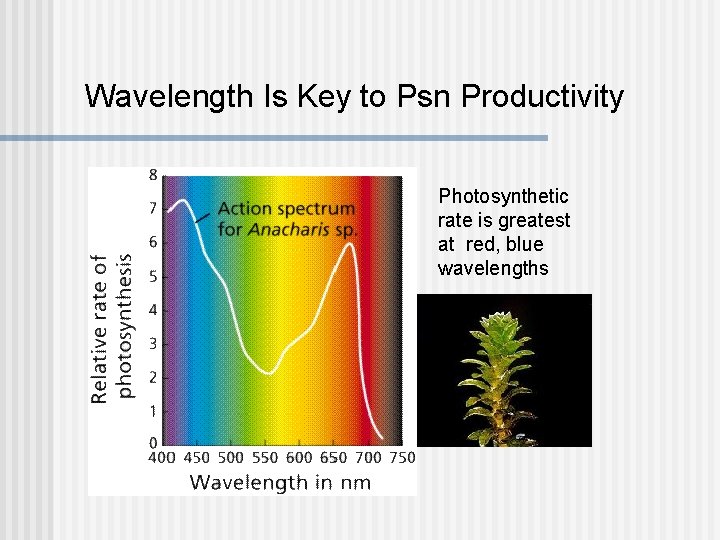
Wavelength Is Key to Psn Productivity Photosynthetic rate is greatest at red, blue wavelengths
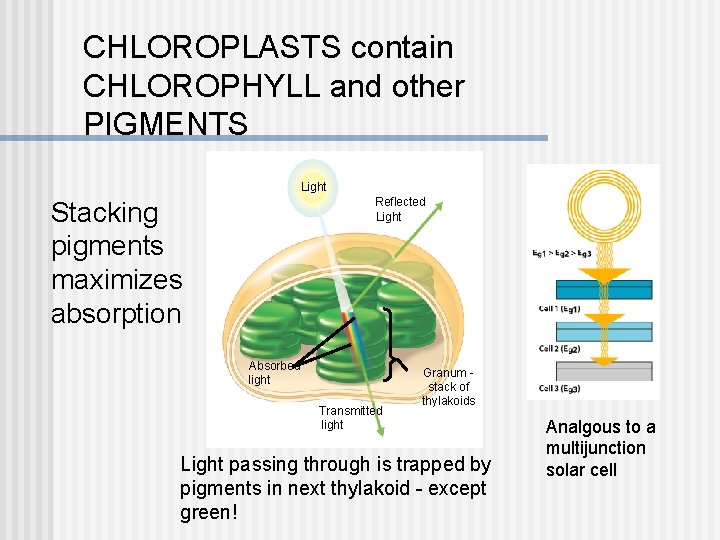
CHLOROPLASTS contain CHLOROPHYLL and other PIGMENTS Light Reflected Light Stacking pigments maximizes absorption Absorbed light Transmitted light Granum stack of thylakoids Light passing through is trapped by pigments in next thylakoid - except green! Analgous to a multijunction solar cell
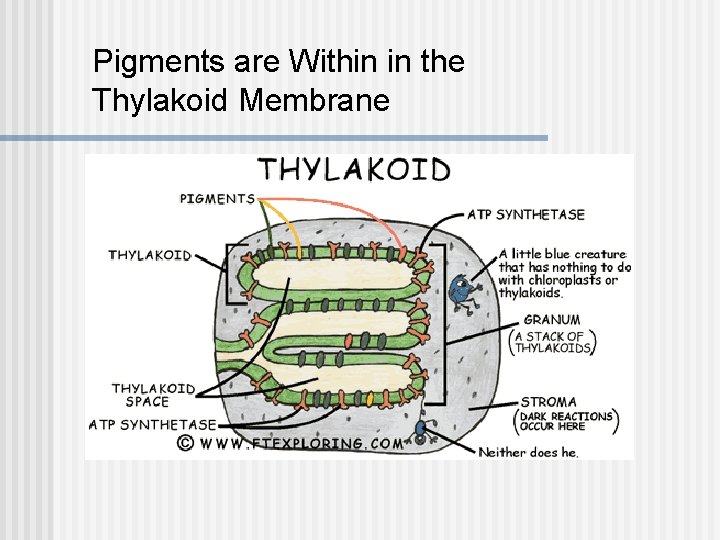
Pigments are Within in the Thylakoid Membrane
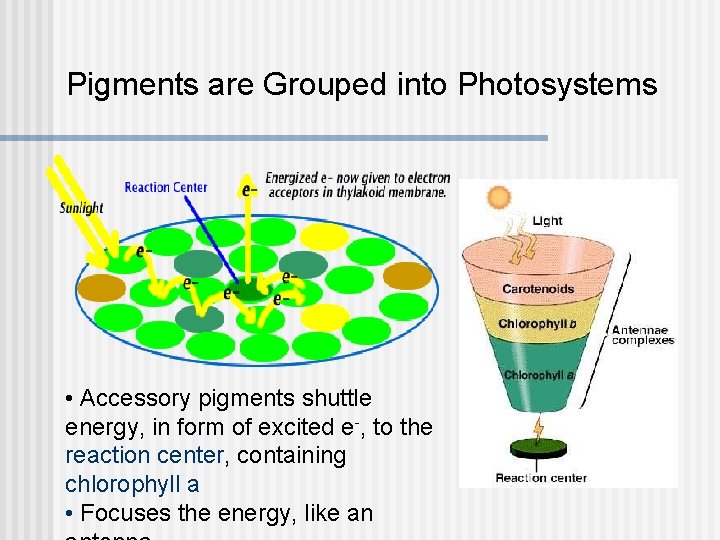
Pigments are Grouped into Photosystems • Accessory pigments shuttle energy, in form of excited e-, to the reaction center, containing chlorophyll a • Focuses the energy, like an
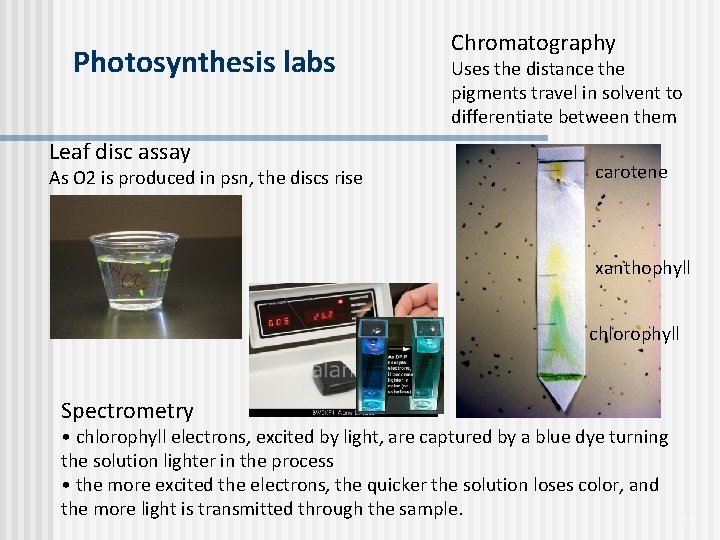
Photosynthesis labs Leaf disc assay As O 2 is produced in psn, the discs rise Chromatography Uses the distance the pigments travel in solvent to differentiate between them carotene xanthophyll chlorophyll Spectrometry • chlorophyll electrons, excited by light, are captured by a blue dye turning the solution lighter in the process • the more excited the electrons, the quicker the solution loses color, and the more light is transmitted through the sample. 11