
Chapter 7 Consumer Learning Importance of Learning Marketers





- Slides: 46
Chapter 7 Consumer Learning
Importance of Learning Marketers must teach consumers: where to buy how to use how to maintain how to dispose of products
Learning Theory Behavioral Theory: Theories based on the premise that learning takes place as the result of observable responses to external stimuli. Also known as stimulus response theory. Cognitive Theory: A theory of learning based on mental information processing, often in response to problem solving.
Consumer Learning A process by which individuals acquire the purchase and consumption knowledge and experience that they apply to future related behavior.
Learning Processes Intentional: learning acquired as a result of a careful search for information Incidental: learning acquired by accident or without much effort
Elements of Learning Theories Motivation Cues Response Reinforcement
Reinforcement A positive or negative outcome that influences the likelihood that a specific behavior will be repeated in the future in response to a particular cue or stimulus.
Product Usage Leads to Reinforcement
Behavioral Learning Theories Classical Conditioning Instrumental Conditioning Modeling or Observational Learning
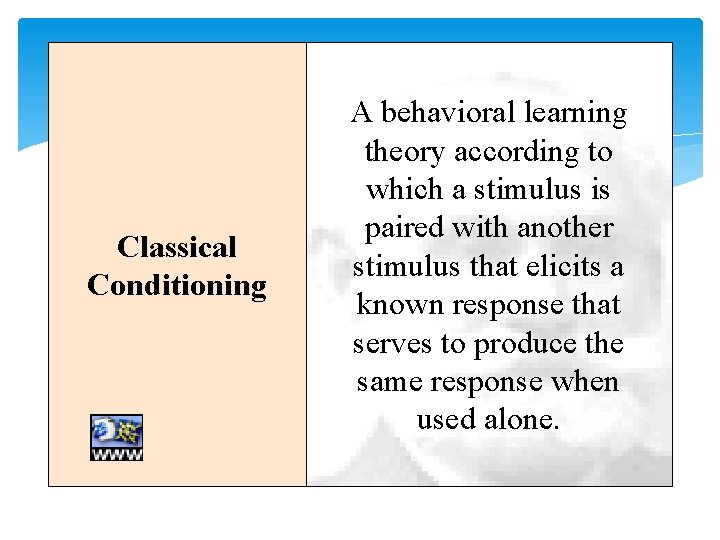
Classical Conditioning A behavioral learning theory according to which a stimulus is paired with another stimulus that elicits a known response that serves to produce the same response when used alone.
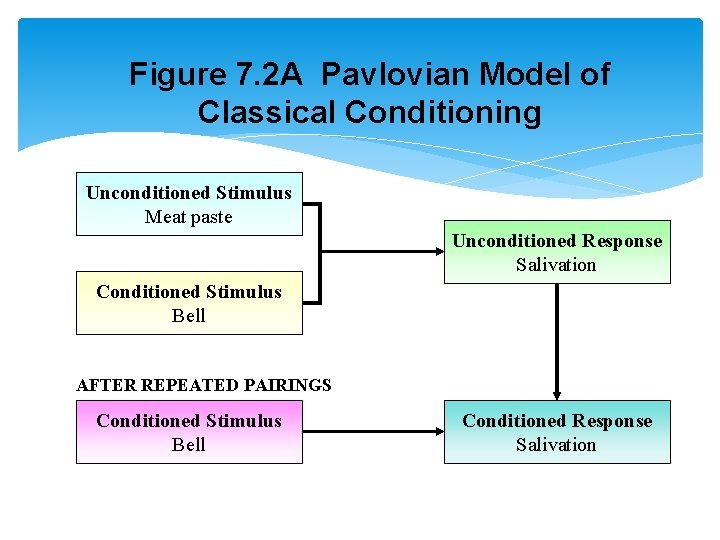
Figure 7. 2 A Pavlovian Model of Classical Conditioning Unconditioned Stimulus Meat paste Unconditioned Response Salivation Conditioned Stimulus Bell AFTER REPEATED PAIRINGS Conditioned Stimulus Bell Conditioned Response Salivation
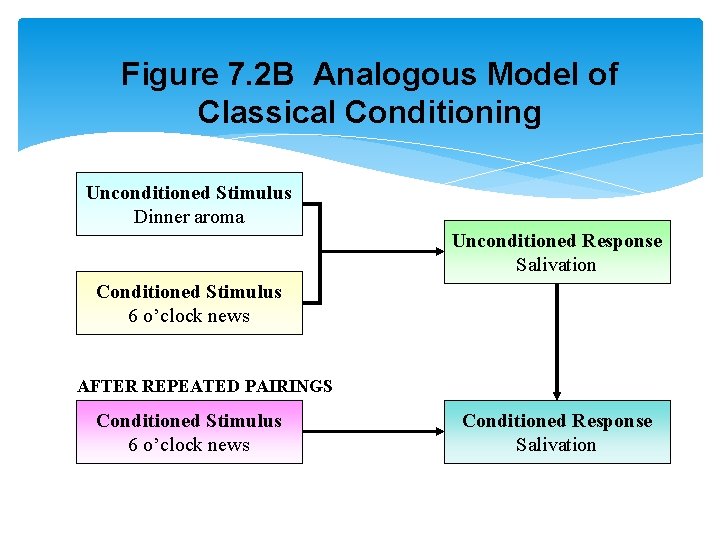
Figure 7. 2 B Analogous Model of Classical Conditioning Unconditioned Stimulus Dinner aroma Unconditioned Response Salivation Conditioned Stimulus 6 o’clock news AFTER REPEATED PAIRINGS Conditioned Stimulus 6 o’clock news Conditioned Response Salivation
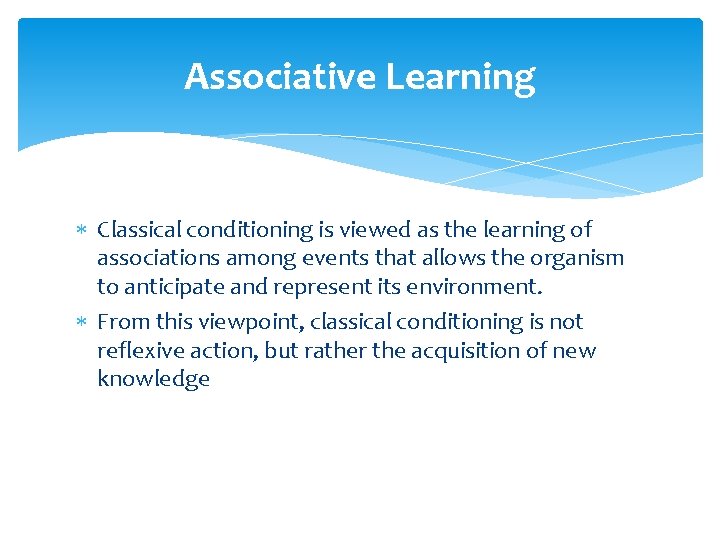
Associative Learning Classical conditioning is viewed as the learning of associations among events that allows the organism to anticipate and represent its environment. From this viewpoint, classical conditioning is not reflexive action, but rather the acquisition of new knowledge
Strategic Applications of Classical Conditioning Repetition Stimulus Generalization Stimulus Discrimination
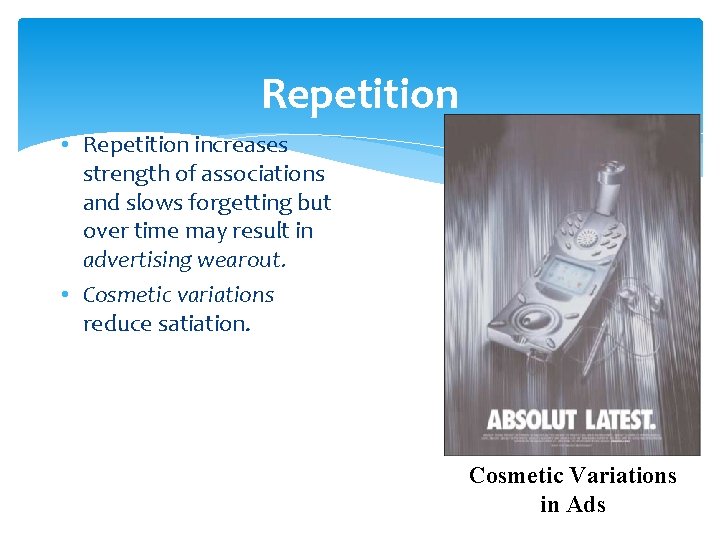
Repetition • Repetition increases strength of associations and slows forgetting but over time may result in advertising wearout. • Cosmetic variations reduce satiation. Cosmetic Variations in Ads
Three-Hit Theory Repetition is the basis for the idea that three exposures to an ad are necessary for the ad to be effective The number of actual repetitions to equal three exposures is in question.
Stimulus Generalization The inability to perceive differences between slightly dissimilar stimuli.
Stimulus Generalization and Marketing Product Line, Form and Category Extensions Family Branding Licensing Generalizing Usage Situations
Product Form Extensions
Product Category Extensions
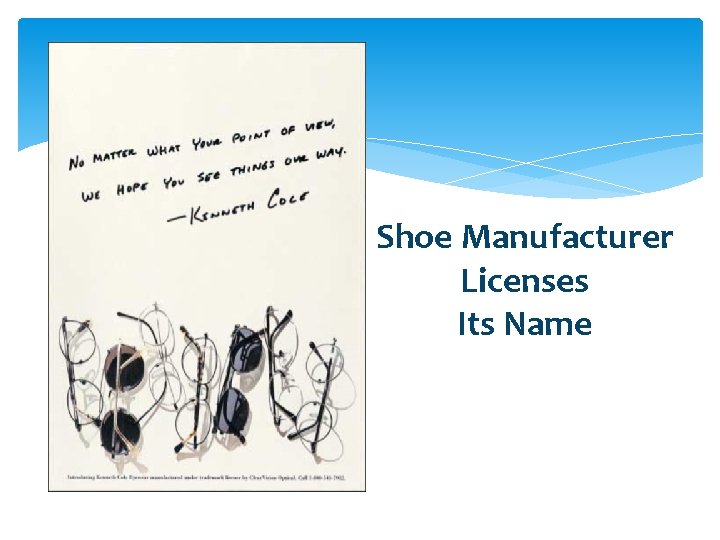
Shoe Manufacturer Licenses Its Name
Stimulus Discrimination The ability to select a specific stimulus from among similar stimuli because of perceived differences. Positioning Differentiation
Stimulus Discrimination
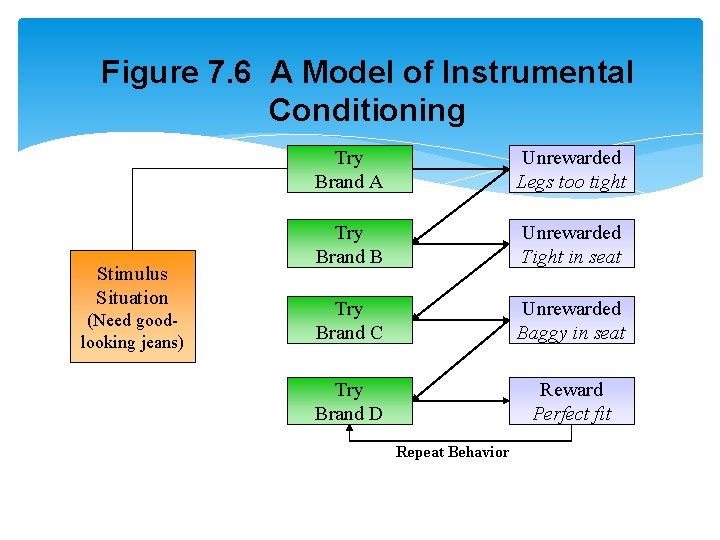
Instrumental (Operant) Conditioning A behavioral theory of learning based on a trial-and-error process, with habits forced as the result of positive experiences (reinforcement) resulting from certain responses or behaviors.
Figure 7. 6 A Model of Instrumental Conditioning Stimulus Situation (Need goodlooking jeans) Try Brand A Unrewarded Legs too tight Try Brand B Unrewarded Tight in seat Try Brand C Unrewarded Baggy in seat Try Brand D Reward Perfect fit Repeat Behavior
Instrumental Conditioning Consumers learn by means of trial and error process in which some purchase behaviors result in more favorable outcomes (rewards) than other purchase behaviors. A favorable experience is instrumental in teaching the individual to repeat a specific behavior.
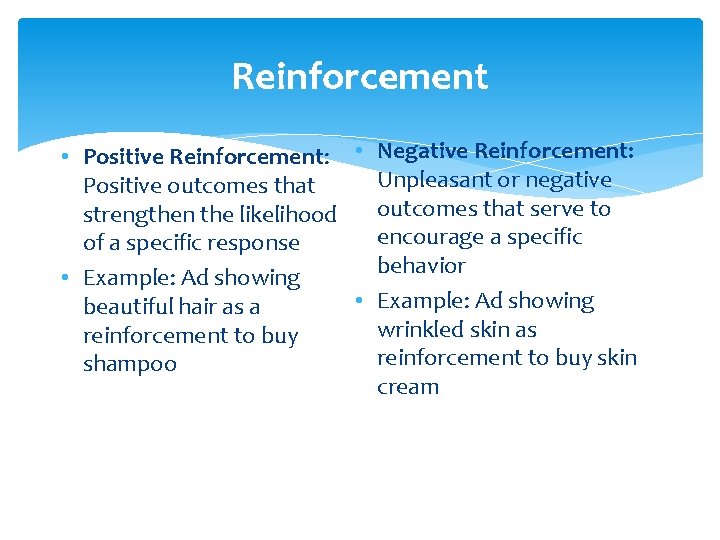
Reinforcement • Positive Reinforcement: • Negative Reinforcement: Unpleasant or negative Positive outcomes that serve to strengthen the likelihood encourage a specific of a specific response behavior • Example: Ad showing beautiful hair as a wrinkled skin as reinforcement to buy skin shampoo cream
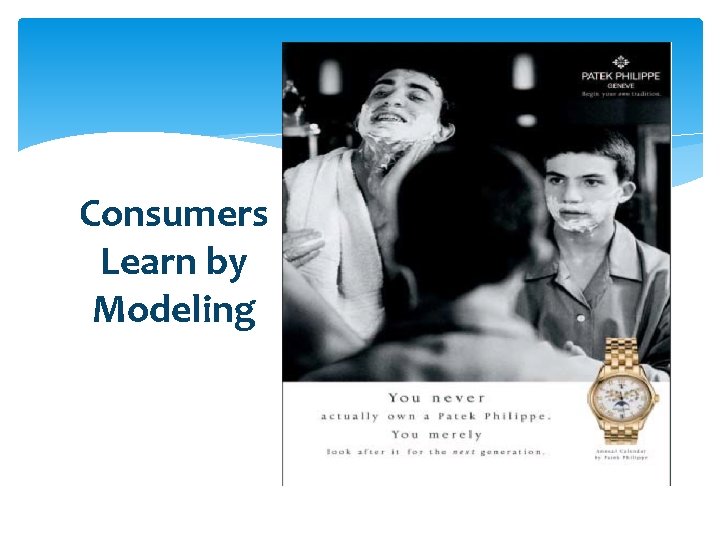
Observational Learning A process by which individuals observe the behavior of others, and consequences of such behavior. Also known as modeling or vicarious learning.
Consumers Learn by Modeling
Cognitive Learning Theory Holds that the kind of learning most characteristic of human beings is problem solving, which enables individuals to gain some control over their environment.
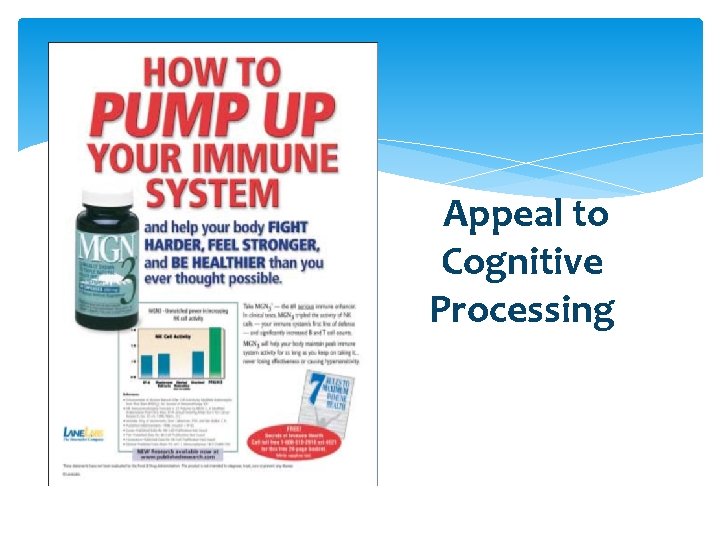
Appeal to Cognitive Processing
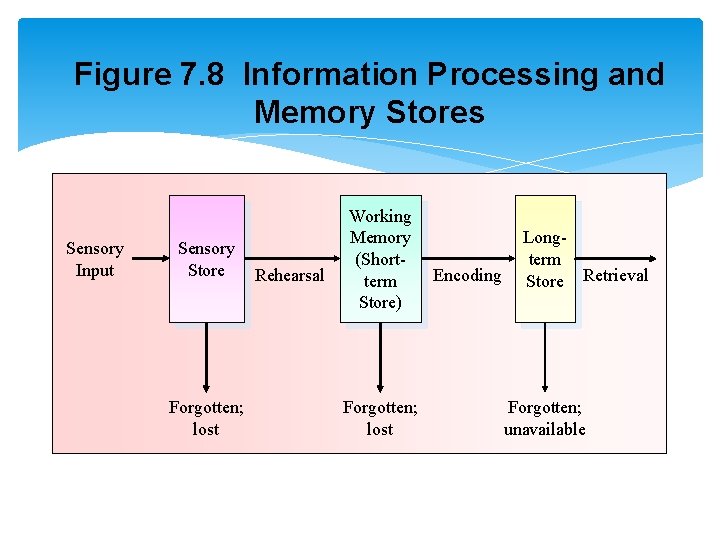
Information Processing A cognitive theory of human learning patterned after computer information processing that focuses on how information is stored in human memory and how it is retrieved.
Figure 7. 8 Information Processing and Memory Stores Sensory Input Sensory Store Forgotten; lost Rehearsal Working Memory (Shortterm Store) Forgotten; lost Encoding Longterm Store Retrieval Forgotten; unavailable
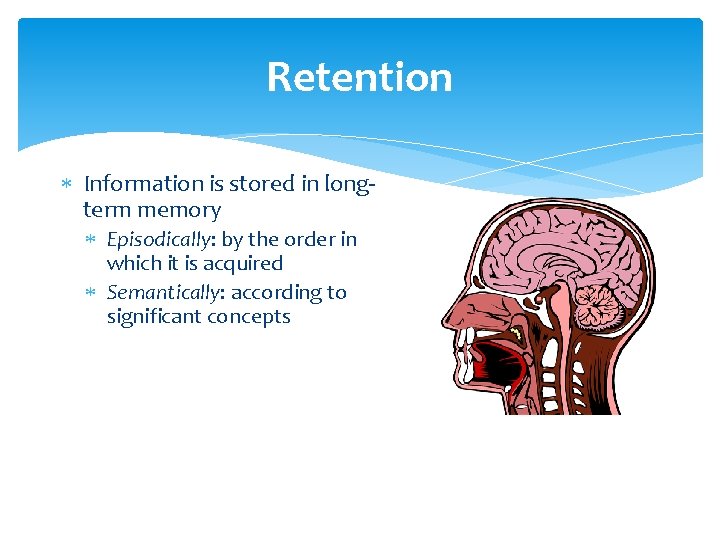
Retention Information is stored in longterm memory Episodically: by the order in which it is acquired Semantically: according to significant concepts
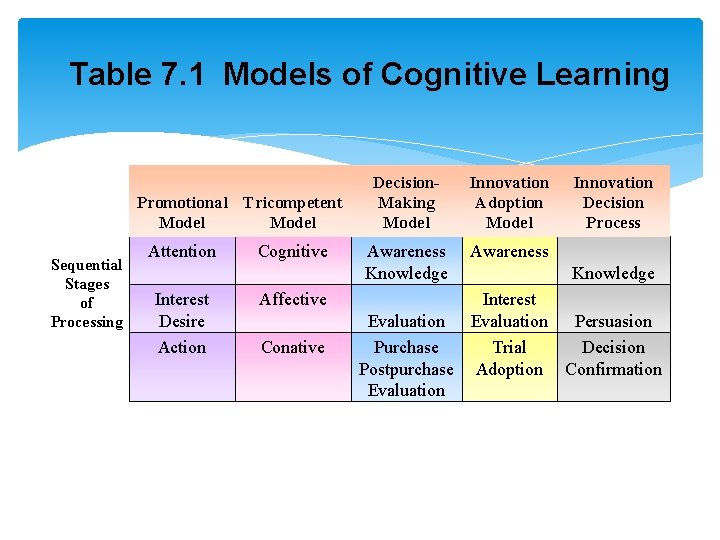
Table 7. 1 Models of Cognitive Learning Promotional Tricompetent Model Sequential Stages of Processing Attention Interest Desire Action Cognitive Affective Conative Decision. Making Model Innovation Adoption Model Awareness Knowledge Awareness Innovation Decision Process Knowledge Interest Evaluation Persuasion Purchase Trial Decision Postpurchase Adoption Confirmation Evaluation
Involvement Theory A theory of consumer learning which postulates that consumers engage in a range of information processing activity from extensive to limited problem solving, depending on the relevance of the purchase.
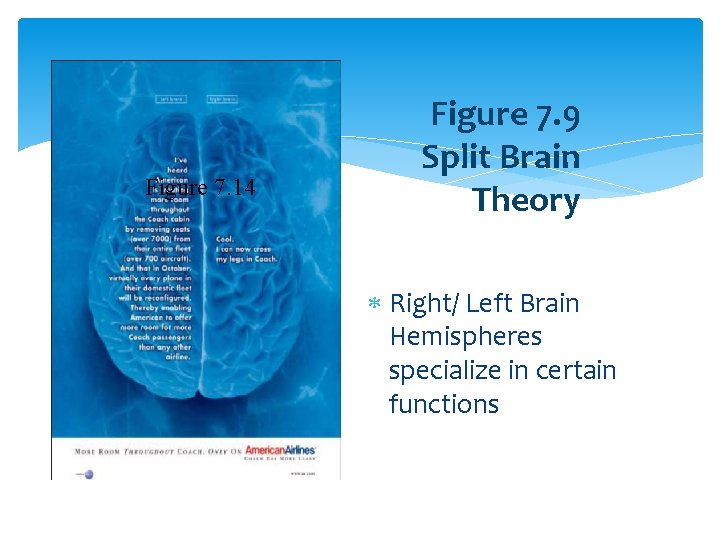
Figure 7. 14 Figure 7. 9 Split Brain Theory Right/ Left Brain Hemispheres specialize in certain functions
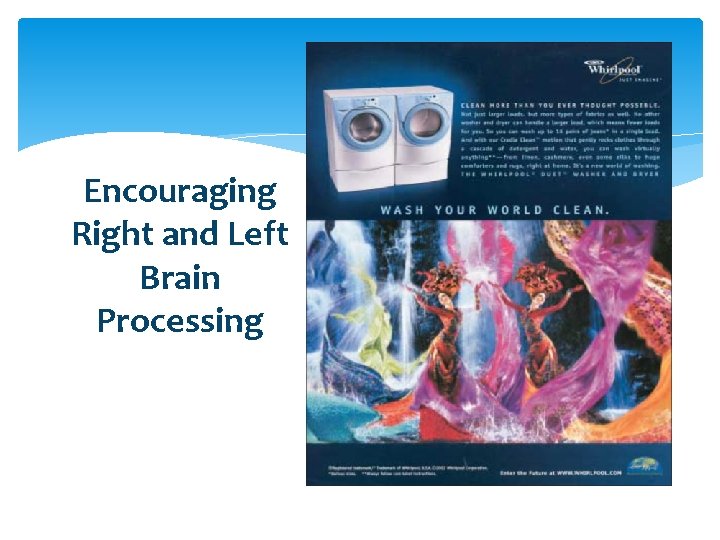
Encouraging Right and Left Brain Processing
Reinforcement Positive Reinforcement: Negative Reinforcement: Unpleasant or negative Positive outcomes that serve to strengthen the likelihood encourage a specific of a specific response behavior Example: Ad showing beautiful hair as a wrinkled skin as reinforcement to buy skin shampoo cream
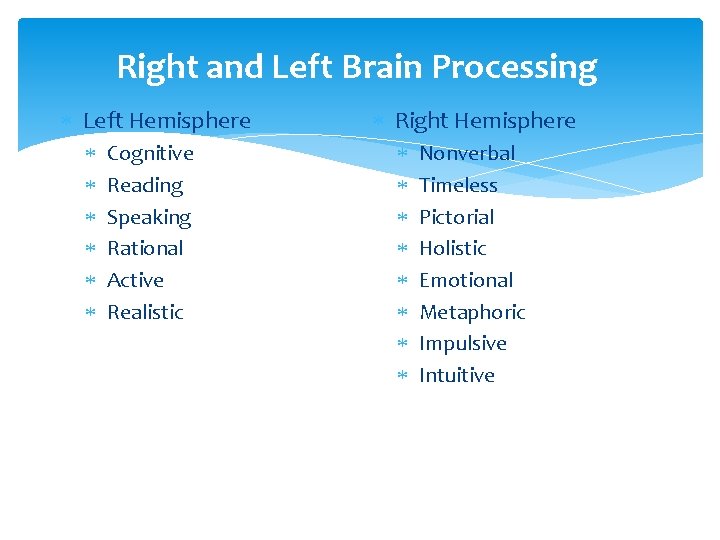
Right and Left Brain Processing Left Hemisphere Cognitive Reading Speaking Rational Active Realistic Right Hemisphere Nonverbal Timeless Pictorial Holistic Emotional Metaphoric Impulsive Intuitive
Issues in Involvement Theory and Media Strategy Involvement Theory and Consumer Relevance Central and Peripheral Routes to Persuasion Measures of Involvement
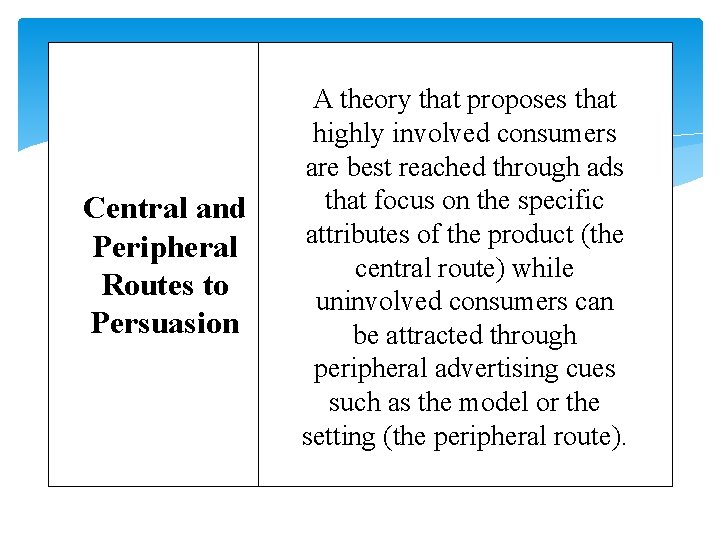
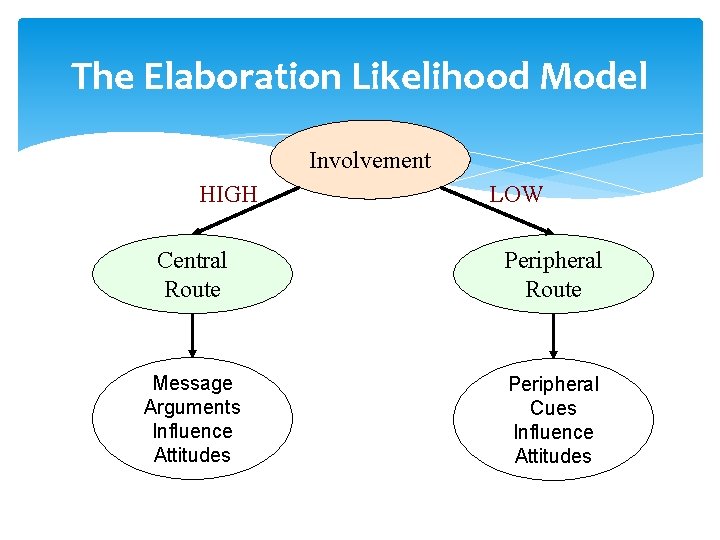
Central and Peripheral Routes to Persuasion A theory that proposes that highly involved consumers are best reached through ads that focus on the specific attributes of the product (the central route) while uninvolved consumers can be attracted through peripheral advertising cues such as the model or the setting (the peripheral route).
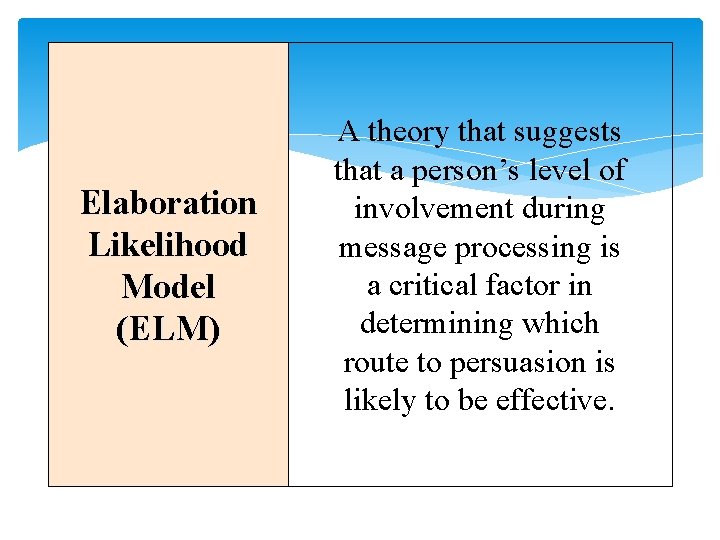
Elaboration Likelihood Model (ELM) A theory that suggests that a person’s level of involvement during message processing is a critical factor in determining which route to persuasion is likely to be effective.
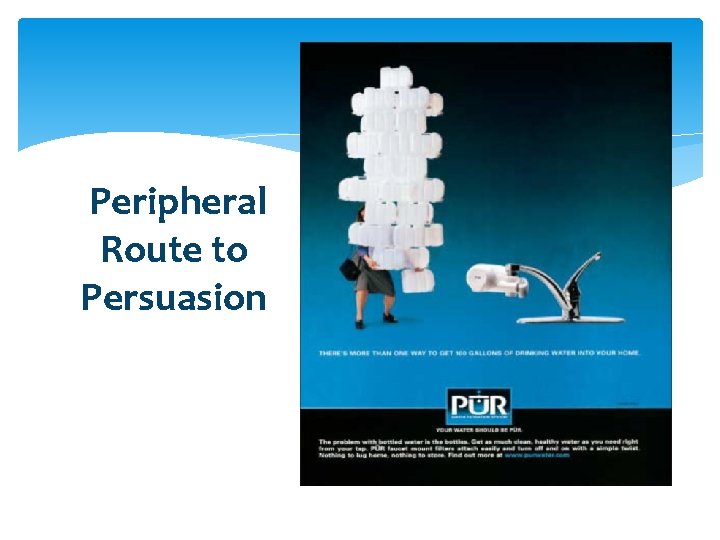
Peripheral Route to Persuasion
The Elaboration Likelihood Model Involvement HIGH LOW Central Route Peripheral Route Message Arguments Influence Attitudes Peripheral Cues Influence Attitudes