
Chapter 7 Conception and Development of the Embryo
Chapter 7 Conception and Development of the Embryo and Fetus http: //www. youtube. com/watch_popup ? v=f. Kyljuk. BE 70
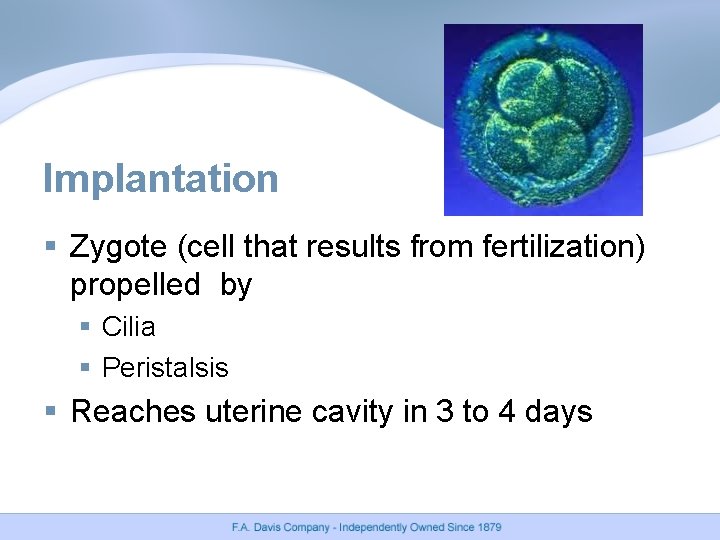
Implantation § Zygote (cell that results from fertilization) propelled by § Cilia § Peristalsis § Reaches uterine cavity in 3 to 4 days

Nidation § Occurs by 10 th day after fertilization § Implantation bleeding § Blastocyst (5 days after fertilization) is buried beneath the endometrial surface

Placenta § Develops from trophoblast cells § Provides oxygenation, nutrition, waste elimination, and hormones § Protects fetus
Placental Hormones § § Human chorionic gonadotrophin (h. CG) Human placental lactogen (h. PL) Progesterone Estrogen
Progesterone § A female hormone (ovaries) during the release of the mature egg from an ovary § Helps prepare the lining of the uterus to receive the fertilized egg § Produced by the placenta during pregnancy § What happens if fertilization does not occur?
Estrogen § For growth and development of female sexual characteristics and reproduction § Produced by the ovaries and the placenta § Prompts hyperplasia and hypertrophy (growth in the number of cells and size during pregnancy) § Breast tissue enlarges, uterus to expand, uterine contractility to prepare for labor

placenta
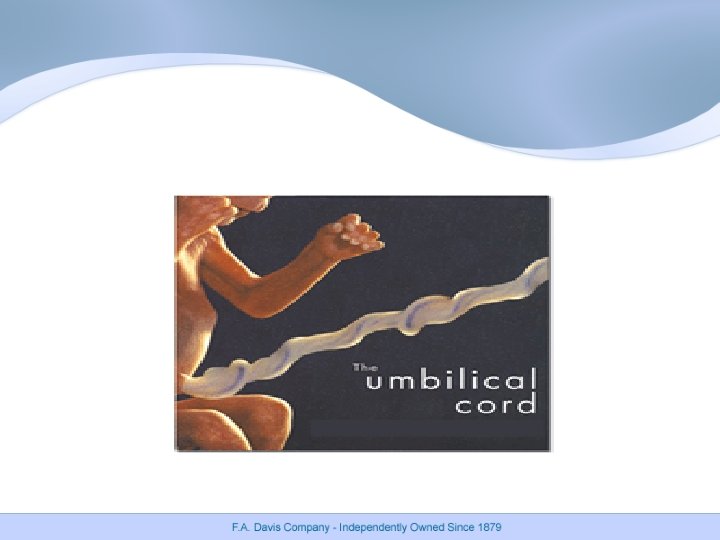
Umbilical Cord § § Usual location—center of placenta 55 cm long (21 in); 1 to 2 cm diameter Vessels: one vein, two arteries Wharton’s Jelly: protects umbilical cord from compression
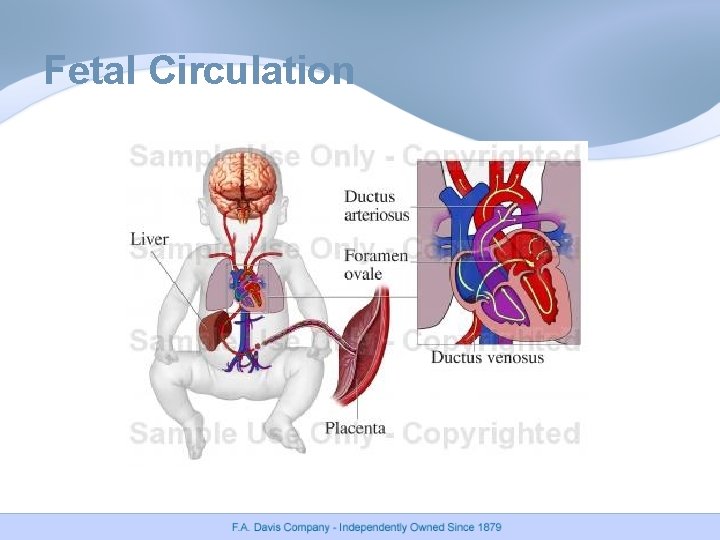
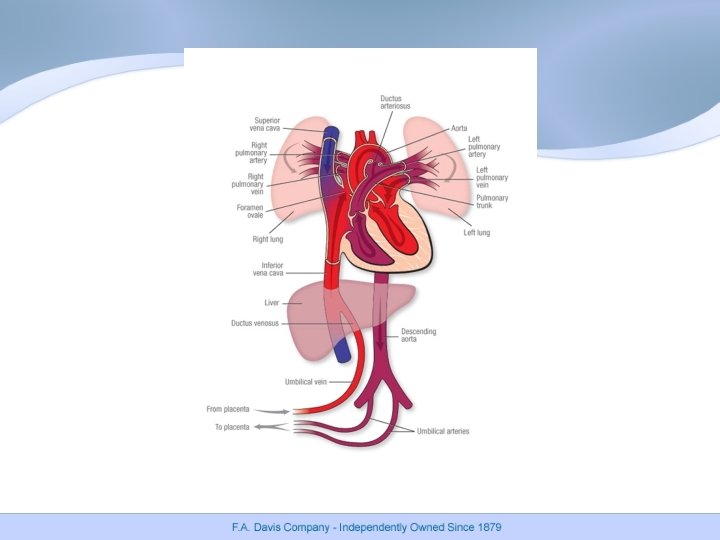
Fetal Circulation § Heart begins to beat and circulate blood by end of third week § Umbilical vein: blood from placenta to fetus § http: //tube. medchrome. com/2011/04/fetalcirculation-explained-with-video. html
Fetal Circulation § Three unique shunts § Ductus venosus: bypasses liver and enters inferior vena cava § Foramen ovale: right and left atria to supply blood to head, and upper and lower extremities § Ductus arteriosus: returning blood bypasses lungs
Fetal Circulation
Fetal Membranes and Amniotic Fluid
Embryonic Membranes § Early protective structures § Two separate membranes § Amnion—inner membrane, contains amniotic fluid § Chorion—outer membrane, forms fetal portion of placenta § Slightly adherent, form amniotic sac
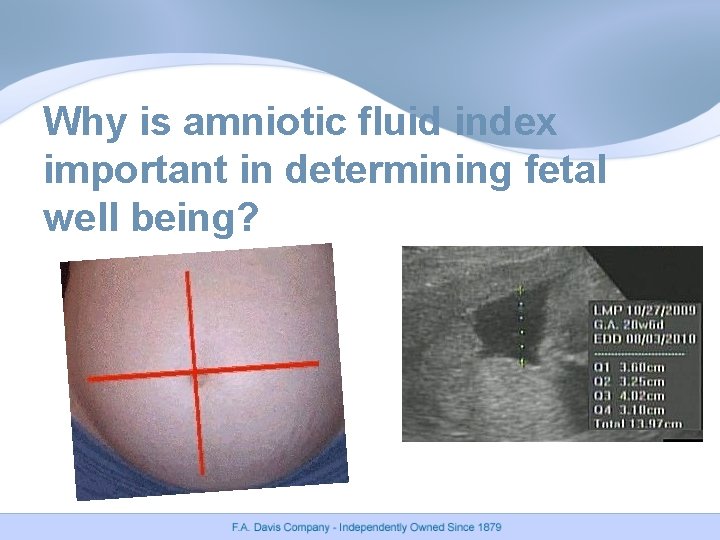
Why is amniotic fluid index important in determining fetal well being?
Purposes of Amniotic Fluid § § § Protects and cushions fetus Maintains normal body temperature Symmetrical fetal growth Freedom of movement Essential for normal fetal lung development
Amniotic Fluid § Fetal urine and lung secretions primary contributors § Slightly alkaline § Contains antibacterial, other protective substances
Threats to Embryonic and Fetal Development § Chromosomes and teratogens § Medications and other substances § Vitamins, alcohol, tobacco, caffeine, drugs, radiation, and lead § TORCH infections
Nurse’s Role in Prenatal Evaluation § Initial prenatal visit § Assessment: § cultural, emotional, physical, and physiological factors § Education § Teratogen exposures § Genetic disorders § Prenatal tests
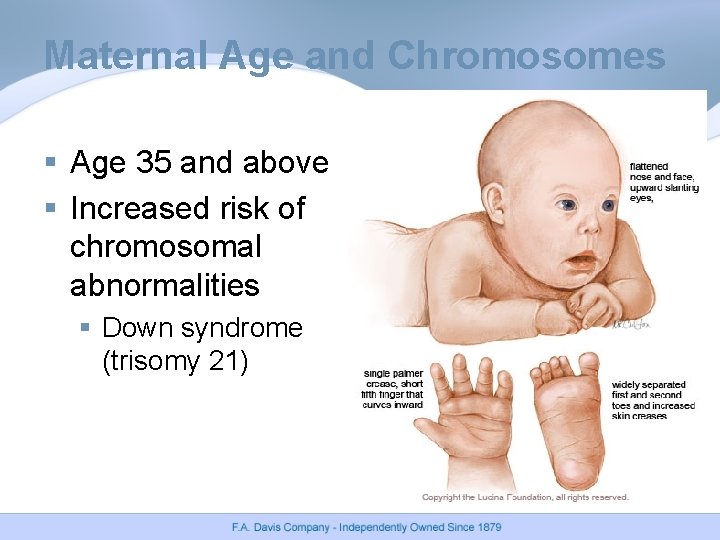
Maternal Age and Chromosomes § Age 35 and above § Increased risk of chromosomal abnormalities § Down syndrome (trisomy 21)
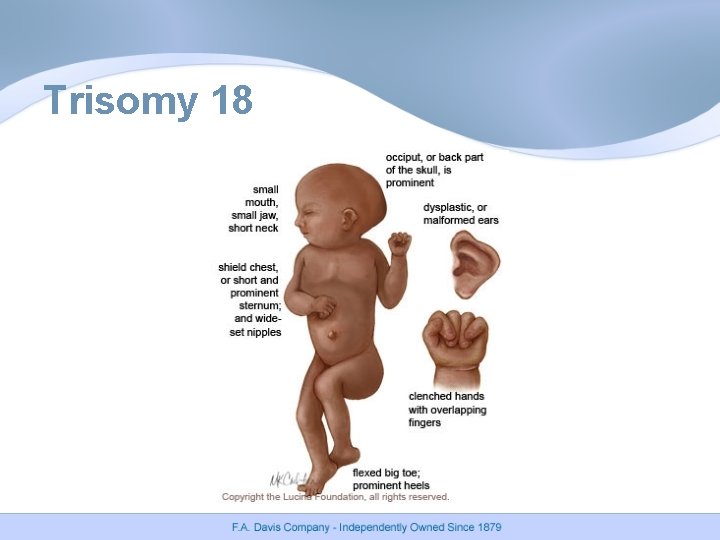
Trisomy 18
Minimizing Threats to Embryo/Fetus § Nurse’s role § Assessment § Environmental and lifestyle risks § Knowledge § Physical and psychosocial well-being § Preconception counseling
- Slides: 25