
Chapter 7 Community Ecology COMMUNITY STRUCTURE AND SPECIES
- Slides: 25
Chapter 7 Community Ecology
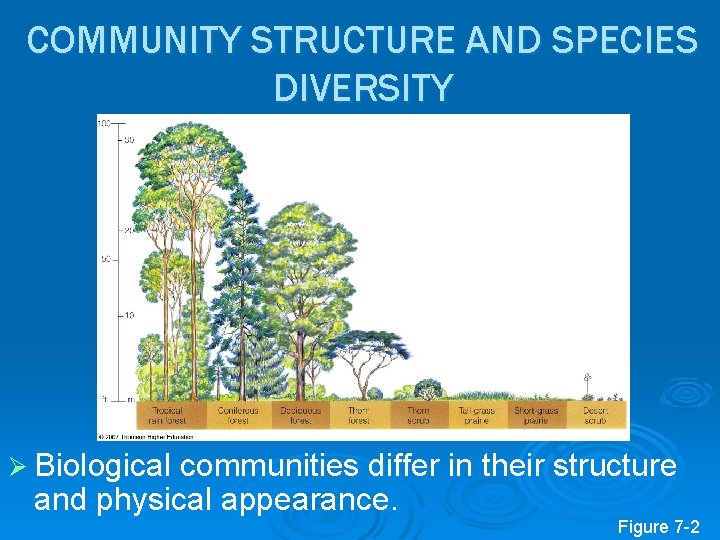
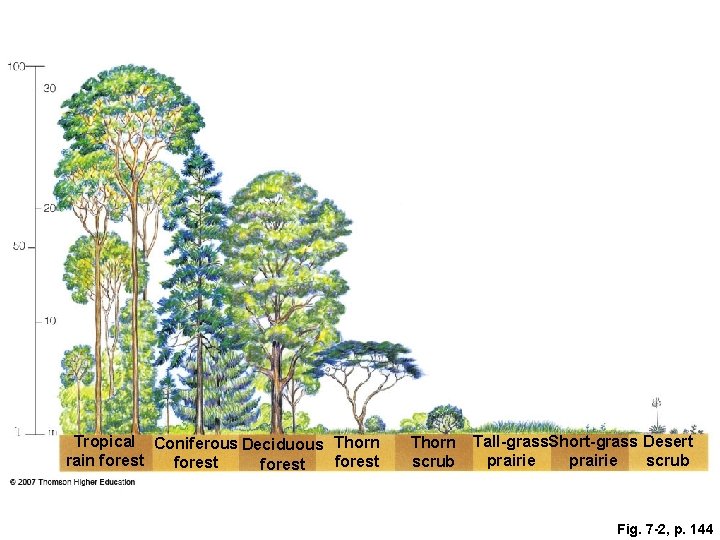
COMMUNITY STRUCTURE AND SPECIES DIVERSITY Ø Biological communities differ in their structure and physical appearance. Figure 7 -2
Tropical Coniferous Deciduous Thorn rain forest Thorn scrub Tall-grass. Short-grass Desert scrub prairie Fig. 7 -2, p. 144
Species Diversity and Niche Structure: Different Species Playing Different Roles Ø Biological communities differ in the types and numbers of species they contain and the ecological roles those species play. l Species diversity: the number of different species it contains (species richness) combined with the abundance of individuals within each of those species (species evenness).
Species Diversity and Niche Structure Ø Niche structure: how many potential ecological niches occur, how they resemble or differ, and how the species occupying different niches interact. Ø Geographic location: species diversity is highest in the tropics and declines as we move from the equator toward the poles.
TYPES OF SPECIES Ø Native, nonnative, indicator, keystone, and foundation species play different ecological roles in communities.
Native v. Non-Native Ø Native species: those that normally live and thrive in a particular community. Ø Nonnative species: those that migrate, deliberately or accidentally introduced into a community.
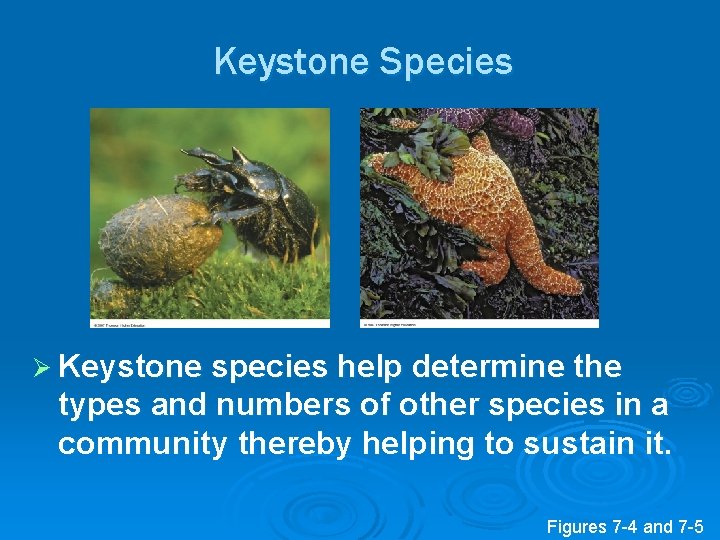
Keystone Species Ø Keystone species help determine the types and numbers of other species in a community thereby helping to sustain it. Figures 7 -4 and 7 -5
Foundation Species Ø Foundation species can create and enhance habitats that can benefit other species in a community. l Elephants push over, break, or uproot trees, creating forest openings promoting grass growth for other species to utilize.
Indicator Species Ø Species that serve as early warnings of damage to a community or an ecosystem. l For example, presence or absence of trout species because they are sensitive to temperature and oxygen levels. Ø Like a biological smoke alarm!
SPECIES INTERACTIONS Ø Species can interact through: l l l Competition Predation Parasitism Mutualism Commensalism
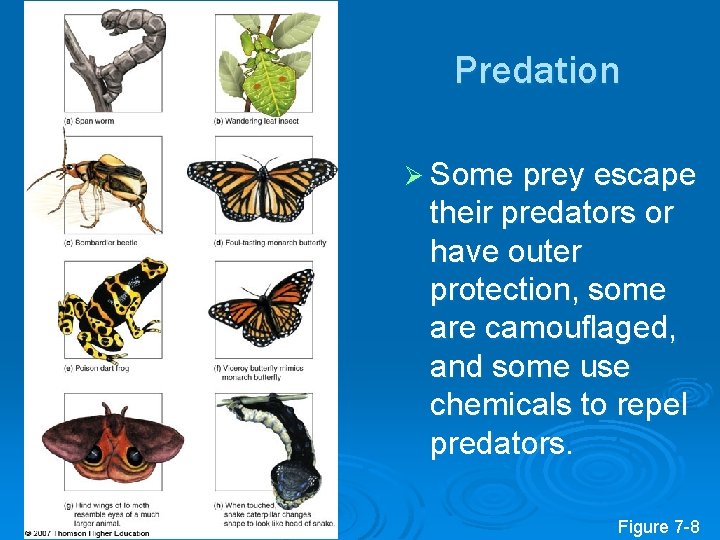
Competition & Predation Ø Species called predators feed on other species called prey. Ø Organisms use their senses to locate objects and prey and to attract pollinators and mates. Ø Some predators are fast enough to catch their prey, some hide and lie in wait, and some inject chemicals to paralyze their prey.
Predation Ø Some prey escape their predators or have outer protection, some are camouflaged, and some use chemicals to repel predators. Figure 7 -8
Parasitism Ø Parasitism occurs when one species feeds on part of another organism. Ø Although parasites can harm their hosts, they can promote community biodiversity. l l l Some parasites live in host (micororganisms, tapeworms). Some parasites live outside host (fleas, ticks, mistletoe plants, sea lampreys). Some have little contact with host (dump-nesting birds like cowbirds, some duck species)
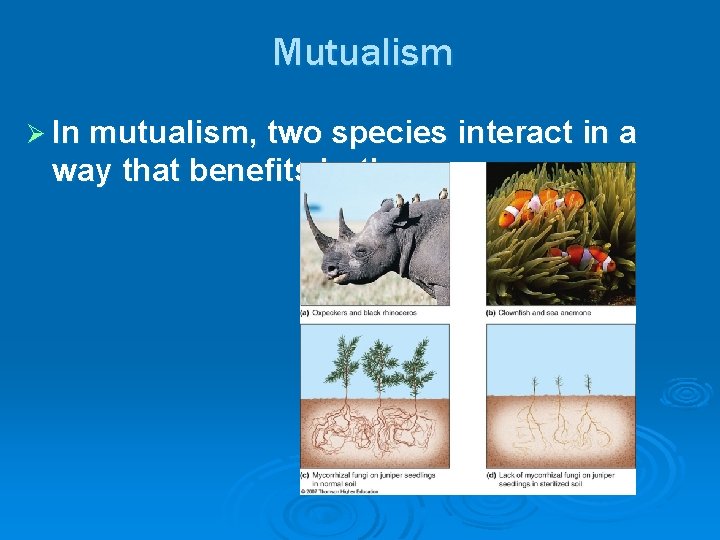
Mutualism Ø In mutualism, two species interact in a way that benefits both.
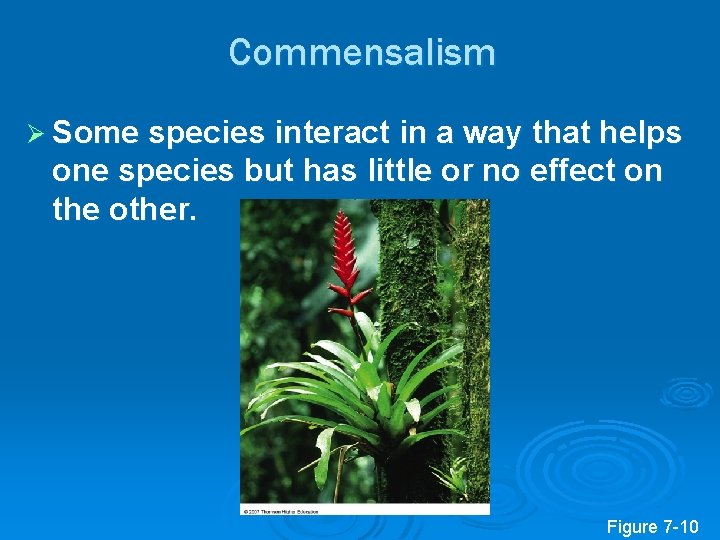
Commensalism Ø Some species interact in a way that helps one species but has little or no effect on the other. Figure 7 -10
Succession Ø New environmental conditions allow one group of species in a community to replace other groups. Ø Ecological succession: the gradual change in species composition of a given area
Succession Ø Primary (early) succession: the gradual establishment of biotic communities in lifeless areas where there is no soil or sediment. Ø Secondary (late) succession: series of communities develop in places containing soil or sediment.
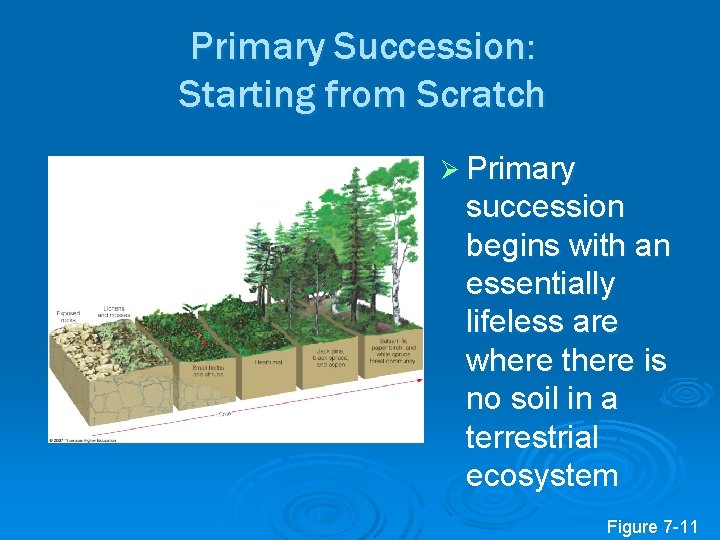
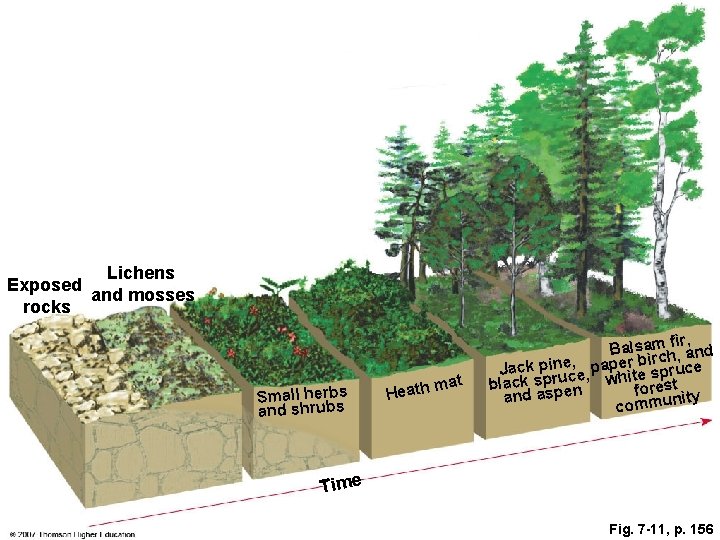
Primary Succession: Starting from Scratch Ø Primary succession begins with an essentially lifeless are where there is no soil in a terrestrial ecosystem Figure 7 -11
Lichens Exposed and mosses rocks Small herbs and shrubs at m Heath fir, Balsamch, and bir Jack pinec, e, paperite spruce black sprpuen wh forest and as ity commun Time Fig. 7 -11, p. 156
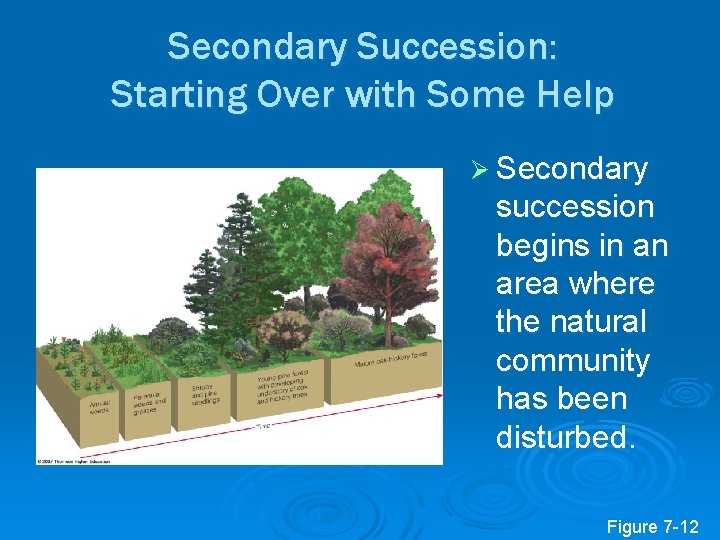
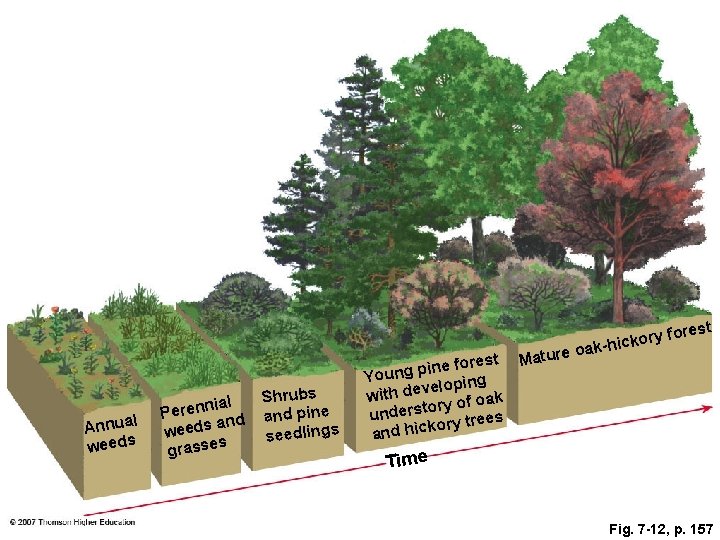
Secondary Succession: Starting Over with Some Help Ø Secondary succession begins in an area where the natural community has been disturbed. Figure 7 -12
l Annua weeds ial Perenn d an weeds s grasse Shrubs and pine seedlings t Mature s e r o f e in Young p loping e v e d h t wi of oak y r o t s r unde y trees r o k c i h and oa rest ory fo k c i h k Time Fig. 7 -12, p. 157
Can We Predict the Path of Succession, and is Nature in Balance? Ø The course of succession cannot be precisely predicted. Ø Previously thought that a stable climax community will always be achieved. Ø Succession involves species competing for enough light, nutrients and space which will influence it’s trajectory.
ECOLOGICAL STABILITY AND SUSTAINABILITY Ø Living systems maintain some degree of stability through constant change in response to environmental conditions through: l l l Inertia (persistence): the ability of a living system to resist being disturbed or altered. Constancy: the ability of a living system to keep its numbers within the limits imposed by available resources. Resilience: the ability of a living system to bounce back and repair damage after (a not too drastic) disturbance.
ECOLOGICAL STABILITY AND SUSTAINABILITY Ø Having many different species appears to increase the sustainability of many communities. Ø Human activities are disrupting ecosystem services that support and sustain all life and all economies.