
Chapter 7 Chapter 6 Functions of random variables
Chapter 7 Chapter 6 – Functions of random variables Chapter 7 – Limiting distributions Chapter 8 – Statistics Chapter 9 – Point estimation Chapter 10 – Sufficiency and completeness
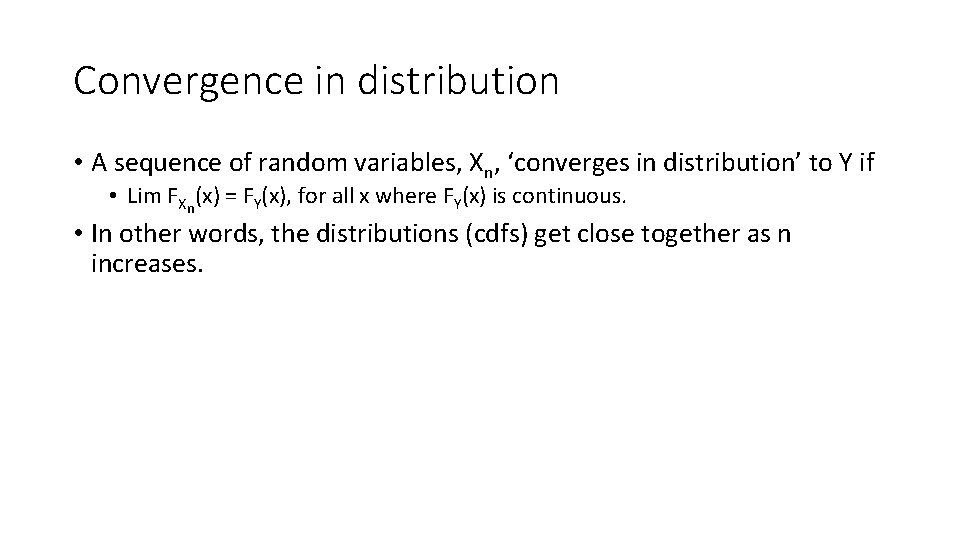
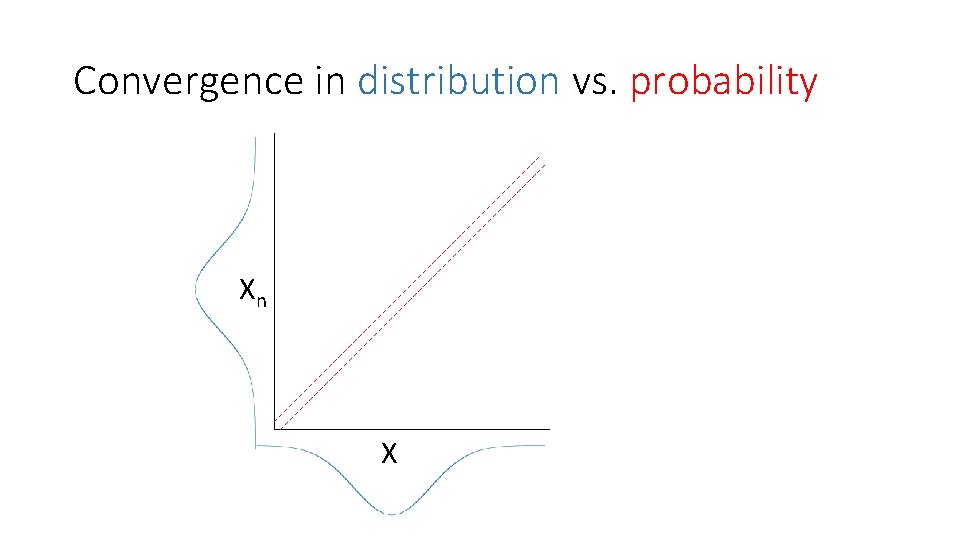
Convergence in distribution • A sequence of random variables, Xn, ‘converges in distribution’ to Y if • Lim FXn(x) = FY(x), for all x where FY(x) is continuous. • In other words, the distributions (cdfs) get close together as n increases.
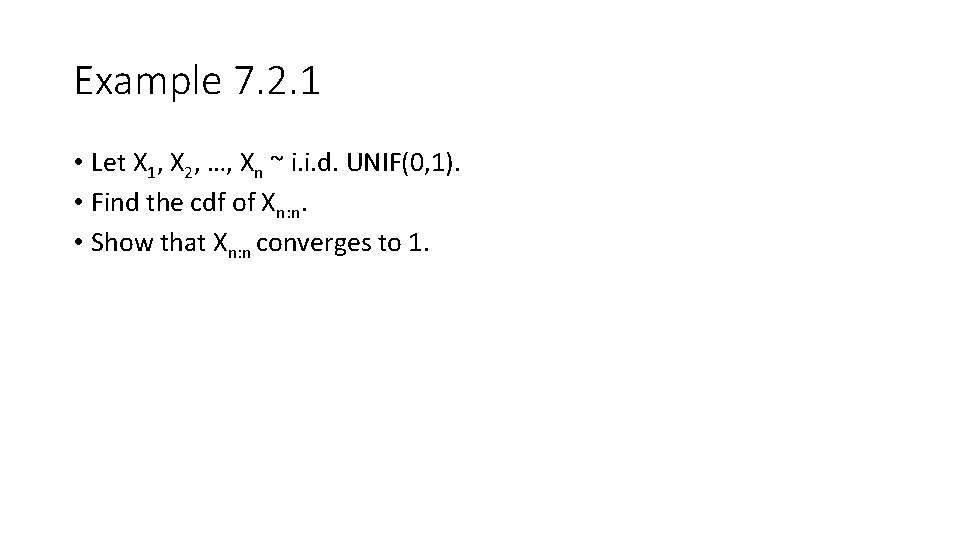
Example 7. 2. 1 • Let X 1, X 2, …, Xn ~ i. i. d. UNIF(0, 1). • Find the cdf of Xn: n. • Show that Xn: n converges to 1.
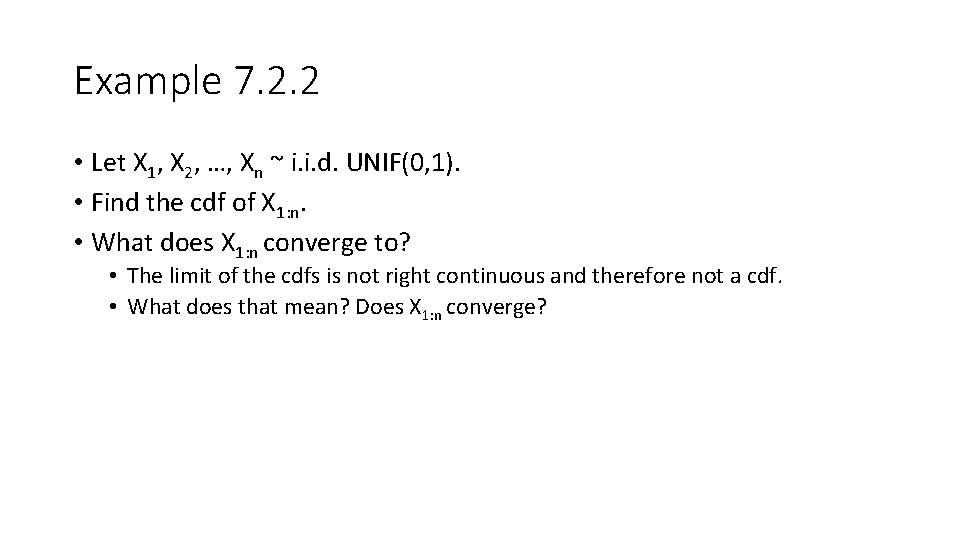
Example 7. 2. 2 • Let X 1, X 2, …, Xn ~ i. i. d. UNIF(0, 1). • Find the cdf of X 1: n. • What does X 1: n converge to? • The limit of the cdfs is not right continuous and therefore not a cdf. • What does that mean? Does X 1: n converge?
A student’s question (previous semester) • Why are cdfs right continuous?
Example 7. 2. 3 • Let X 1, X 2, …, Xn ~ PAR(1, 1) • F(x) = [1 – 1/(1+x)] 1{x>0} • Find the limiting distribution of n. X 1: n.
End of Day 6 • Homework: • 6. 29 • 6. 31
Example 7. 2. 4 • Let X 1, X 2, …, Xn ~ PAR(1, 1) • F(x) = [1 – 1/(1+x)] 1{x>0} • Find the limiting distribution of Xn: n. • Again the limit of cdfs is not a cdf. • What does it mean?

Example 7. 2. 5 • Let X 1, X 2, …, Xn ~ PAR(1, 1) • F(x) = [1 – 1/(1+x)] 1{x>0} • Find the limiting distribution of Xn: n/n.
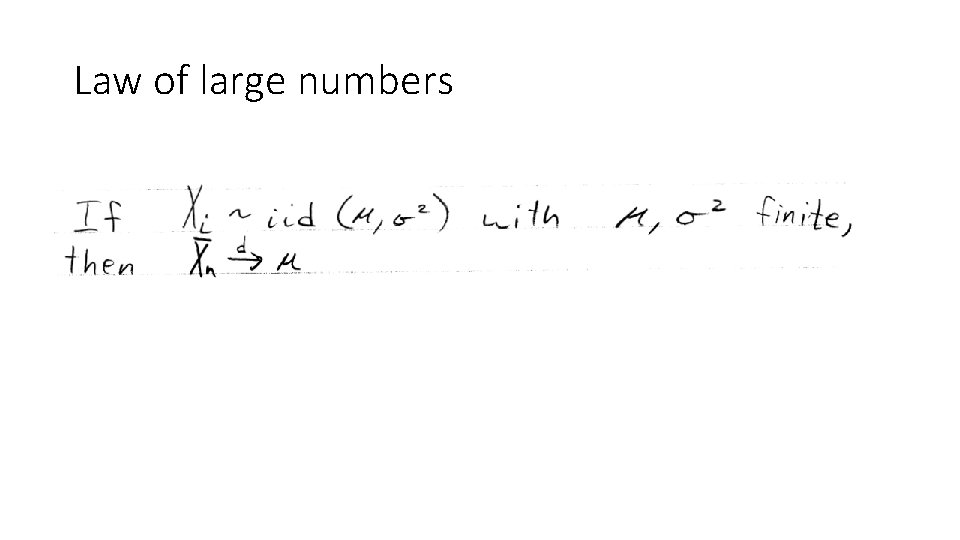
Example 7. 2. 7 (Law of Large Numbers) • Let X 1, X 2, …, Xn ~ N(μ, σ2). • Find the limiting distribution of the sample mean. • Limit of cdfs is not a cdf. What does it mean?
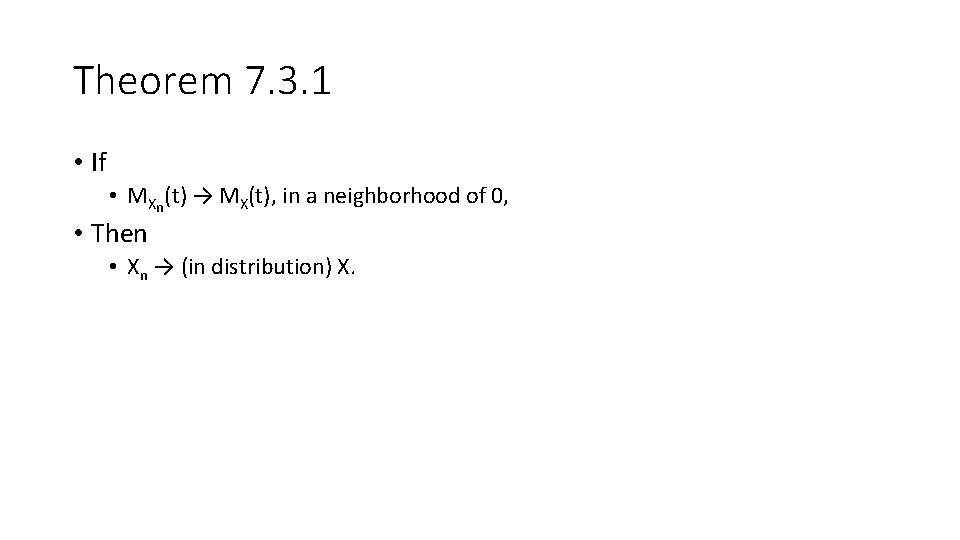
Theorem 7. 3. 1 • If • MXn(t) → MX(t), in a neighborhood of 0, • Then • Xn → (in distribution) X.
Example 7. 3. 1 • Let Yn ~ BIN(n, μ/n). • Find the limiting distribution. • Do you recognize the distribution? • Applications.
Example 7. 3. 2 (Bernoulli LLN) • Find the limiting distribution of the sample mean from a BER(p) population.
End of Day 7 • Homework: • • 7. 1 7. 2 7. 3 7. 5
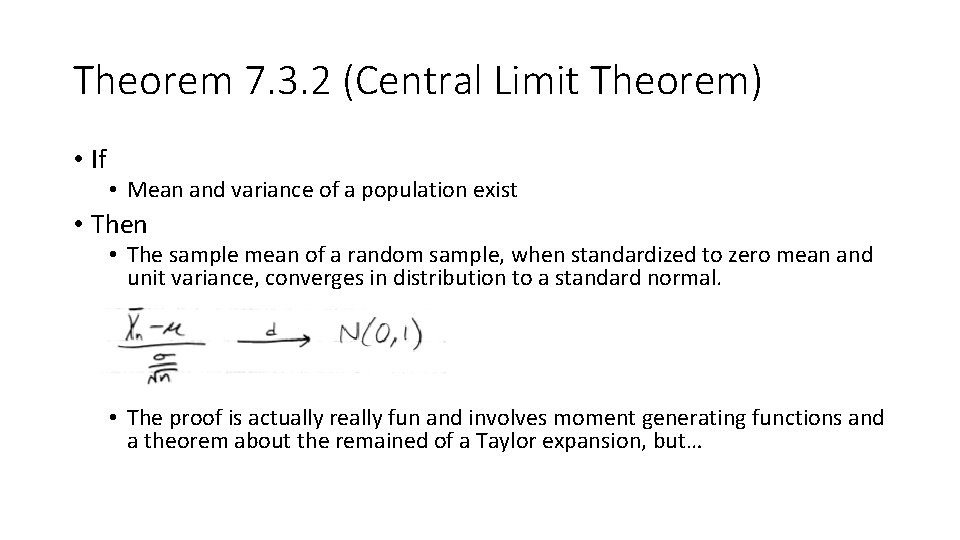
Theorem 7. 3. 2 (Central Limit Theorem) • If • Mean and variance of a population exist • Then • The sample mean of a random sample, when standardized to zero mean and unit variance, converges in distribution to a standard normal. • The proof is actually really fun and involves moment generating functions and a theorem about the remained of a Taylor expansion, but…
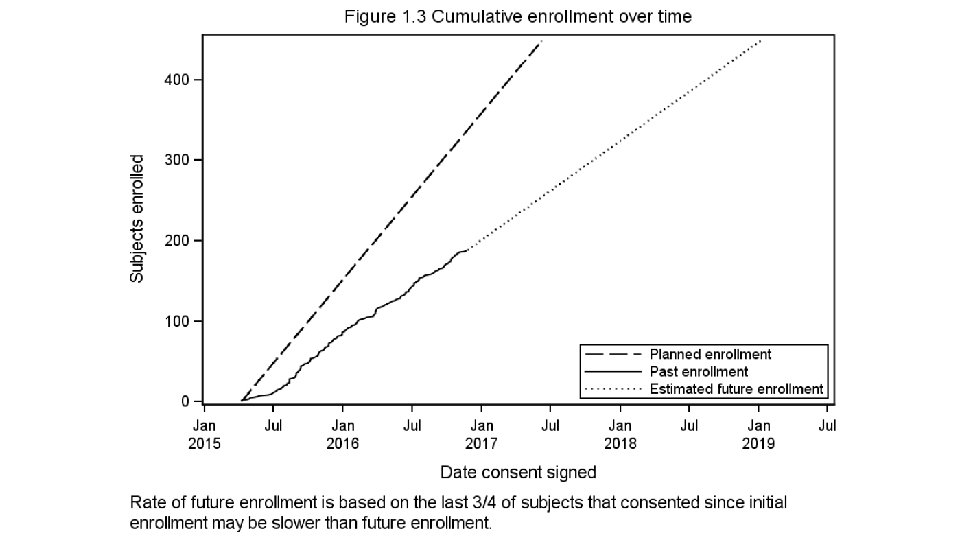
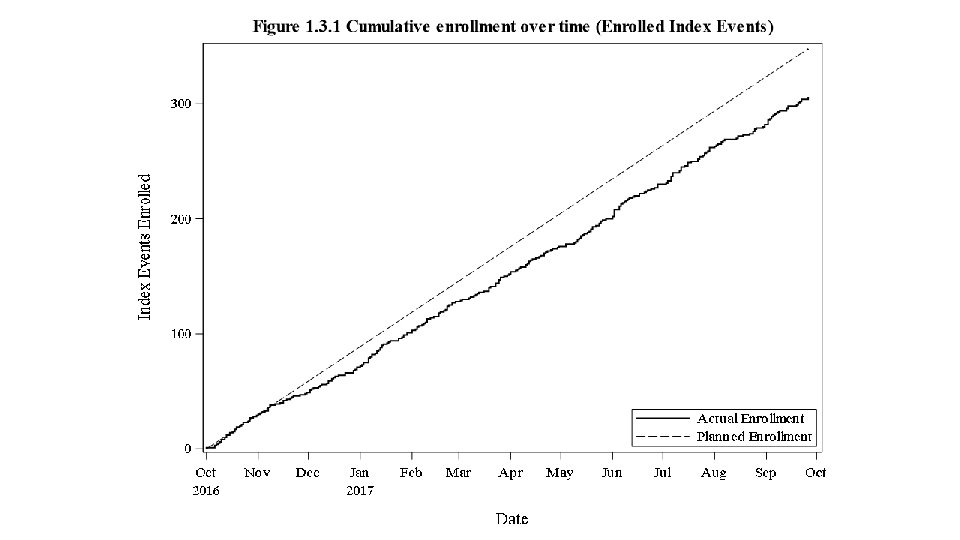
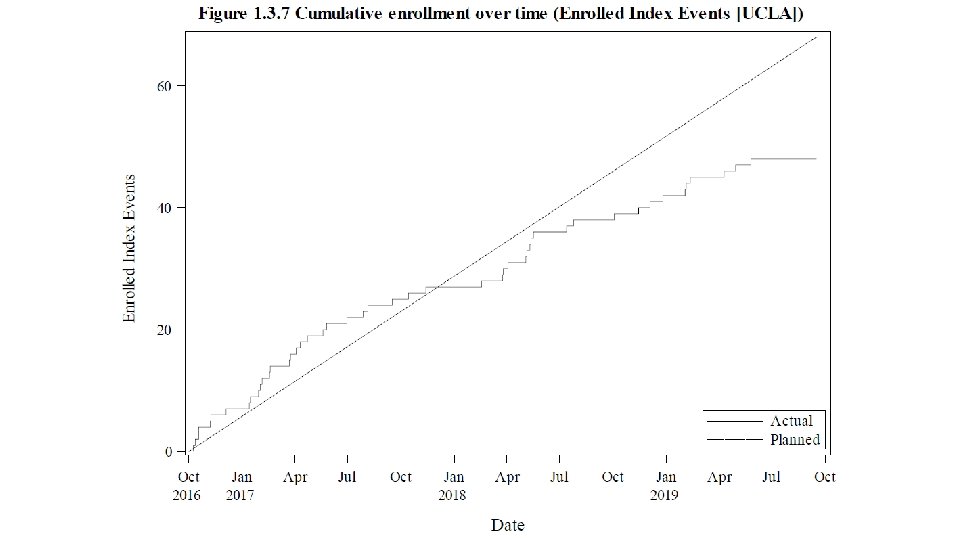
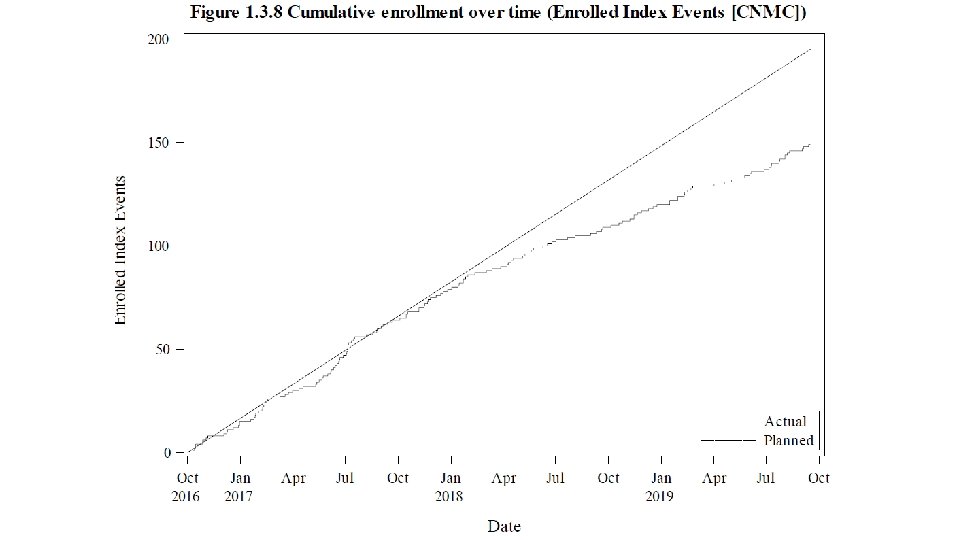
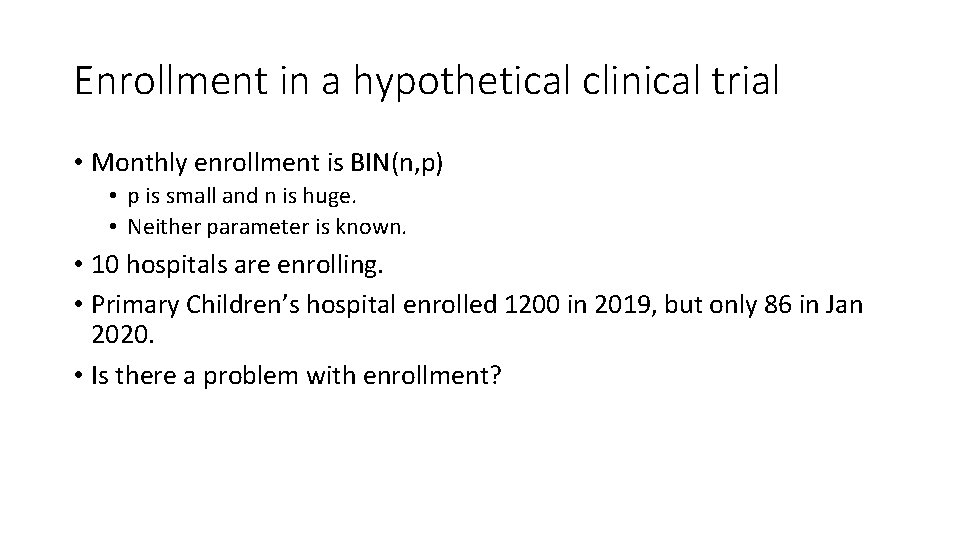
Enrollment in a hypothetical clinical trial • Monthly enrollment is BIN(n, p) • p is small and n is huge. • Neither parameter is known. • 10 hospitals are enrolling. • Primary Children’s hospital enrolled 1200 in 2019, but only 86 in Jan 2020. • Is there a problem with enrollment?


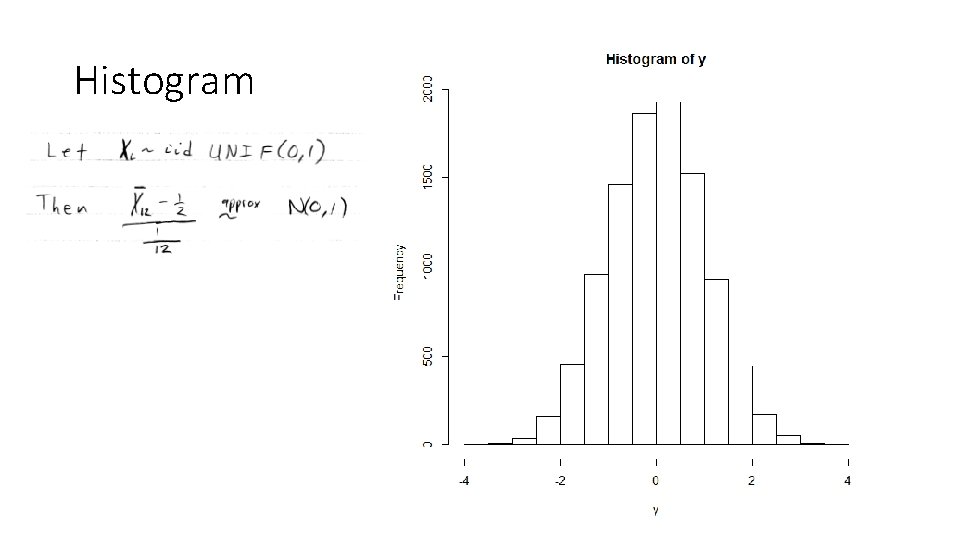
Histogram
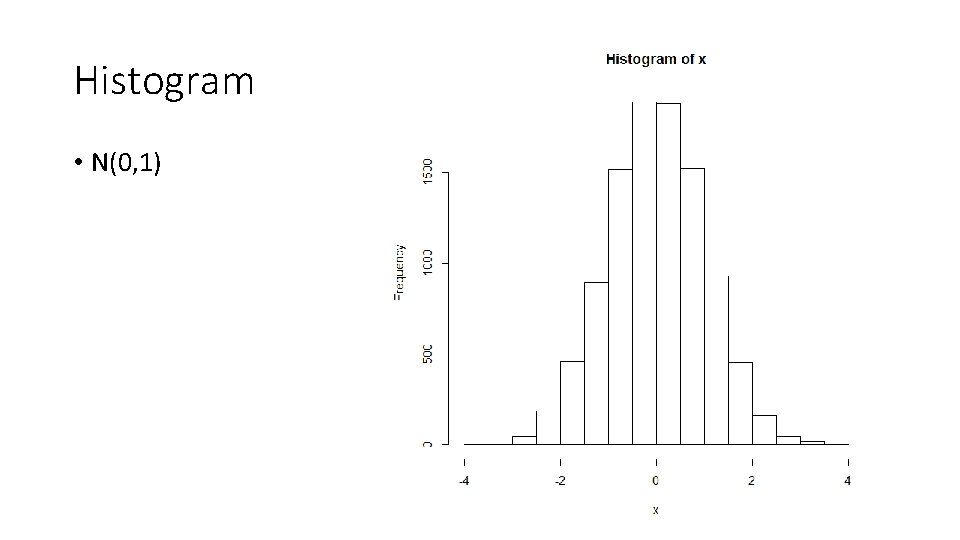
Histogram • N(0, 1)
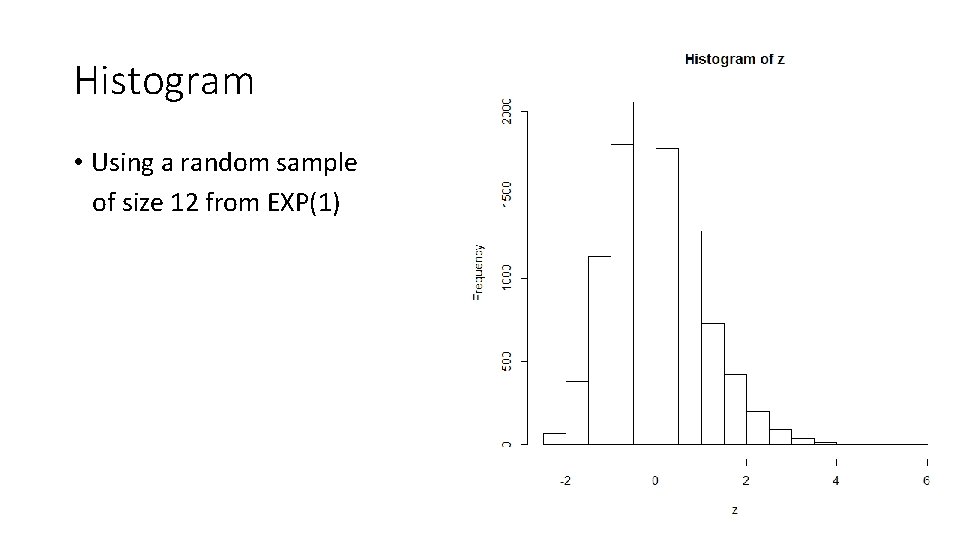
Histogram • Using a random sample of size 12 from EXP(1)
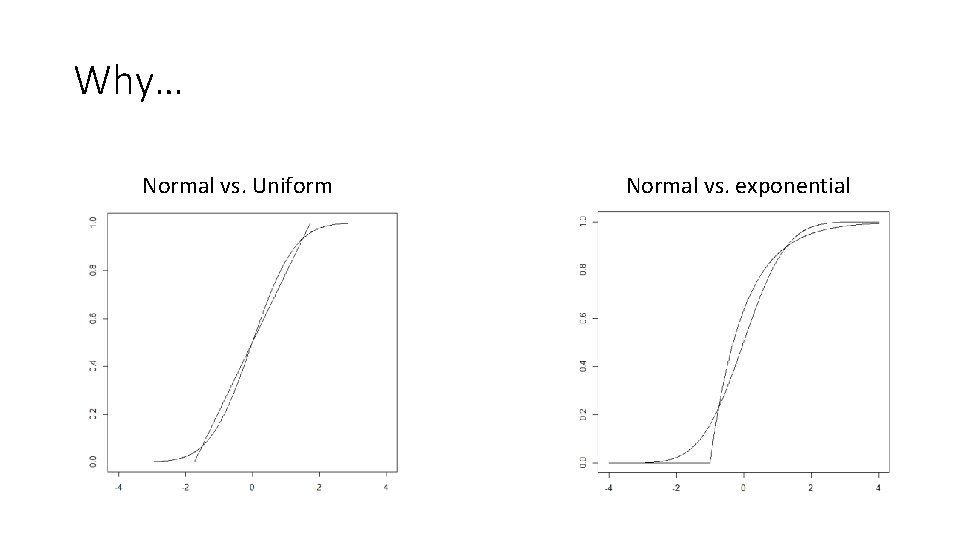
Why… Normal vs. Uniform Normal vs. exponential

Does it matter on what interval the uniform distribution is?
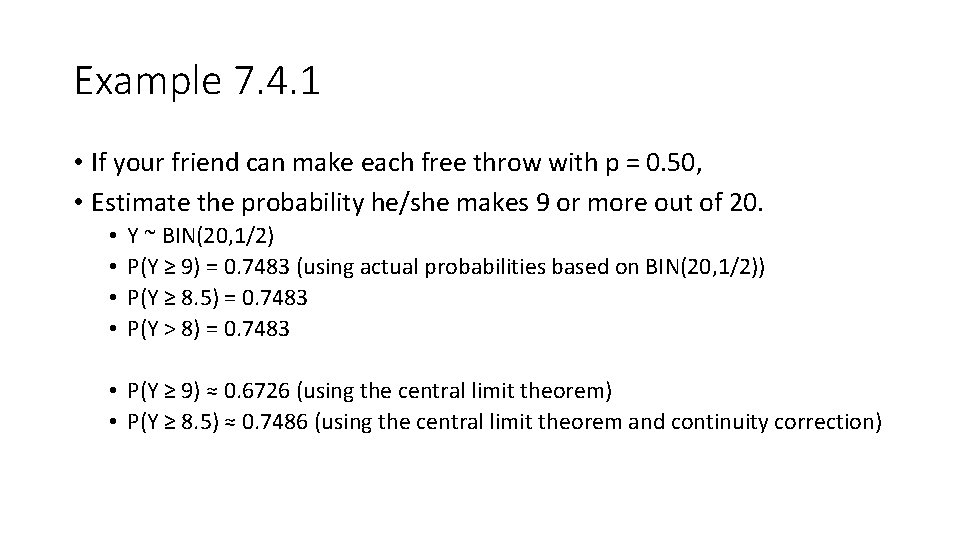
Example 7. 4. 1 • If your friend can make each free throw with p = 0. 50, • Estimate the probability he/she makes 9 or more out of 20. • • Y ~ BIN(20, 1/2) P(Y ≥ 9) = 0. 7483 (using actual probabilities based on BIN(20, 1/2)) P(Y ≥ 8. 5) = 0. 7483 P(Y > 8) = 0. 7483 • P(Y ≥ 9) ≈ 0. 6726 (using the central limit theorem) • P(Y ≥ 8. 5) ≈ 0. 7486 (using the central limit theorem and continuity correction)
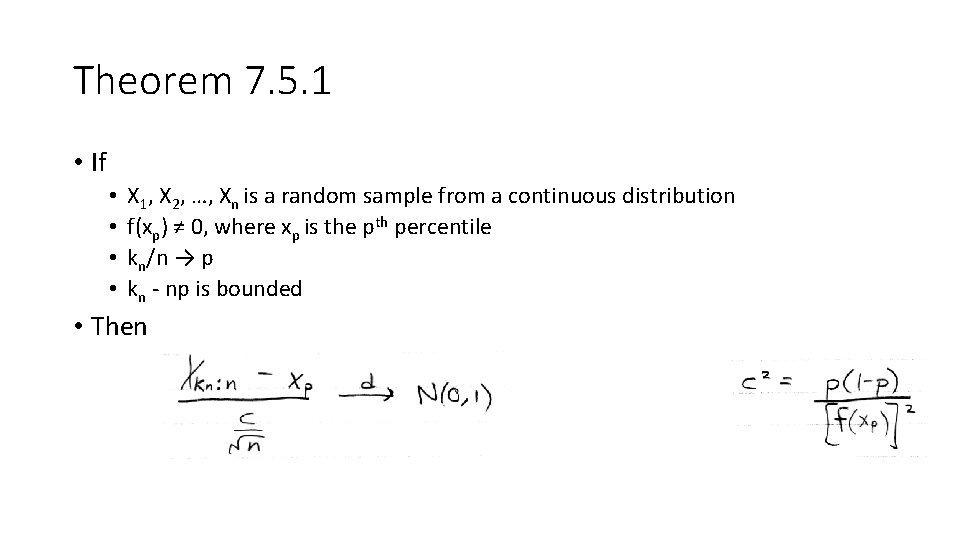
Theorem 7. 5. 1 • If • • X 1, X 2, …, Xn is a random sample from a continuous distribution f(xp) ≠ 0, where xp is the pth percentile kn/n → p kn - np is bounded • Then
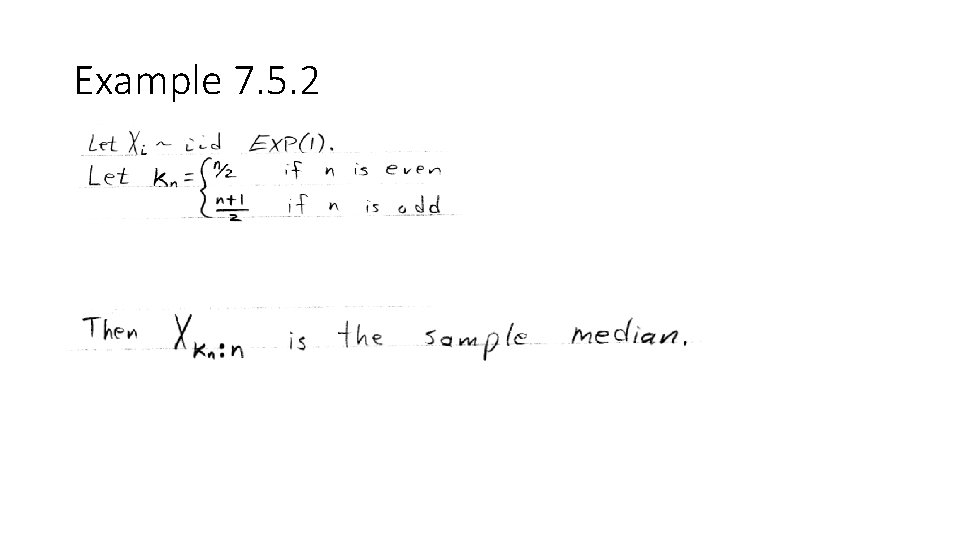
Example 7. 5. 2
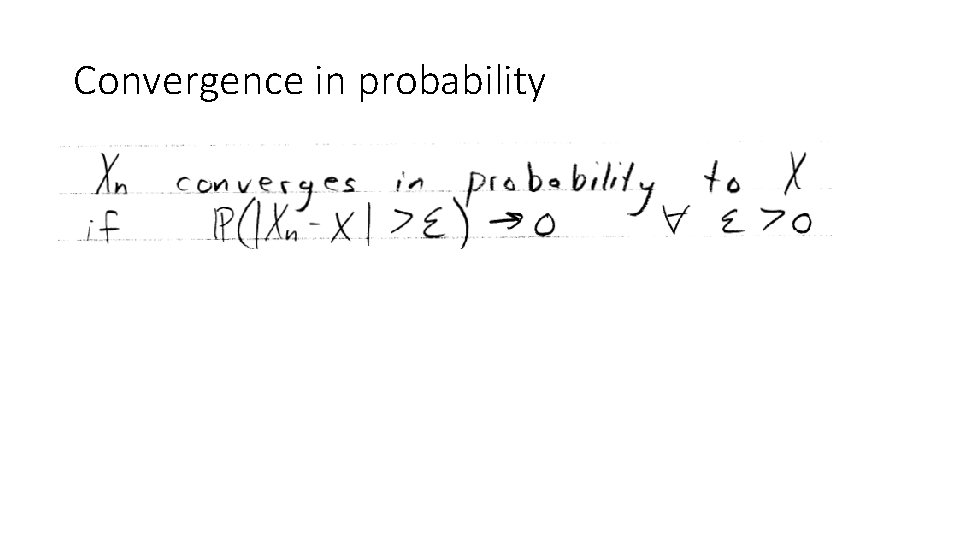
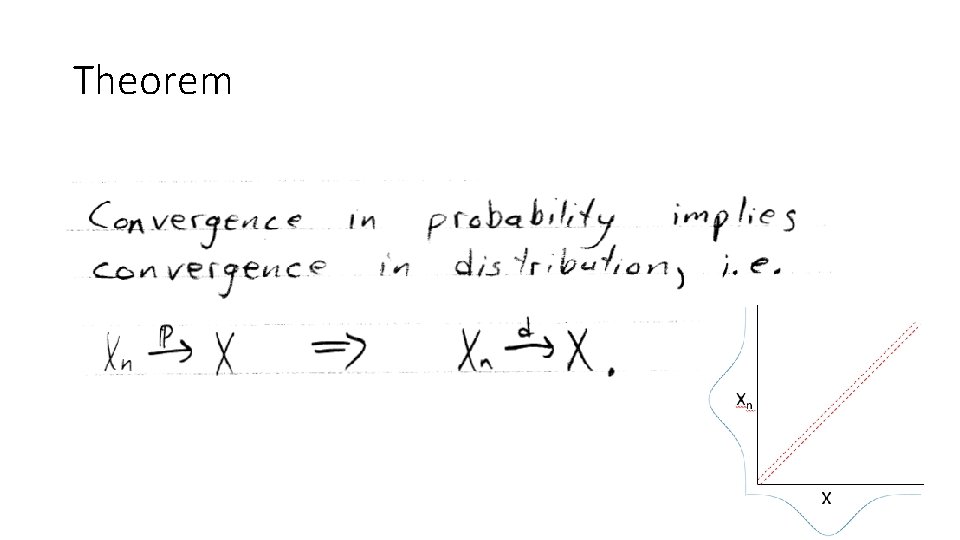
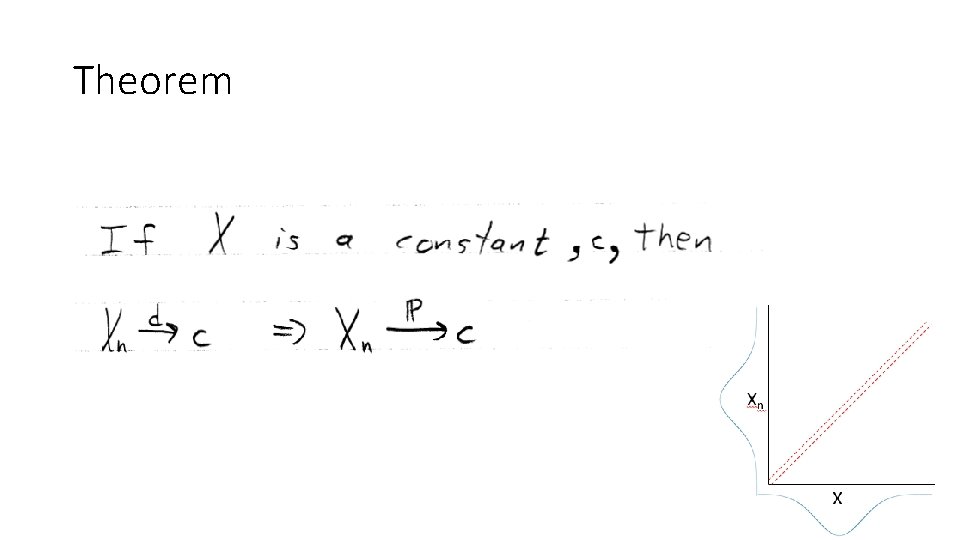
Convergence in probability
Convergence in distribution vs. probability Xn X
Theorem
Theorem
End of Day 8 • Homework: • • • 7. 7 7. 9 7. 10 7. 11 7. 12 7. 13
Law of large numbers
Chebyshev inequality • Use this to prove the law of large numbers.
Theorem 7. 6. 3 Previous theorem (assumptions apply)
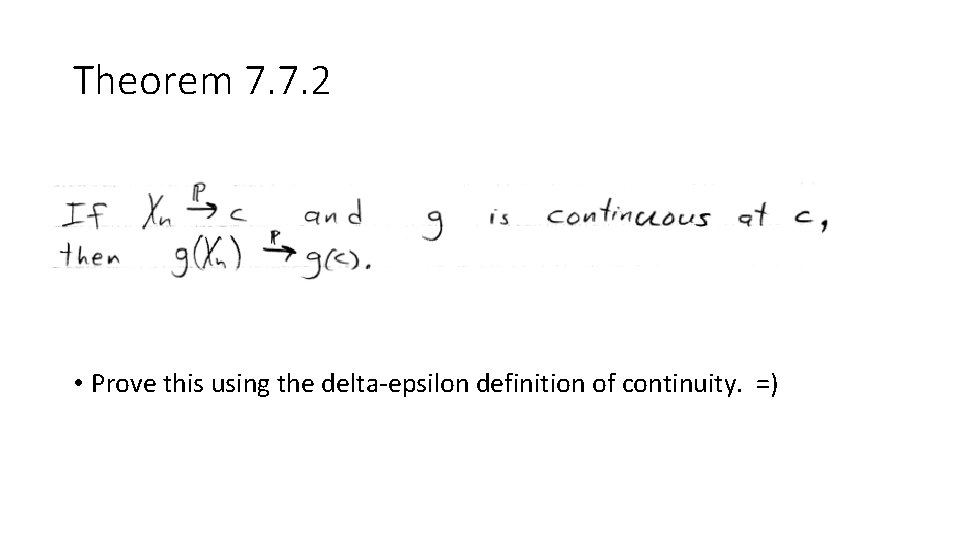
Theorem 7. 7. 2 • Prove this using the delta-epsilon definition of continuity. =)
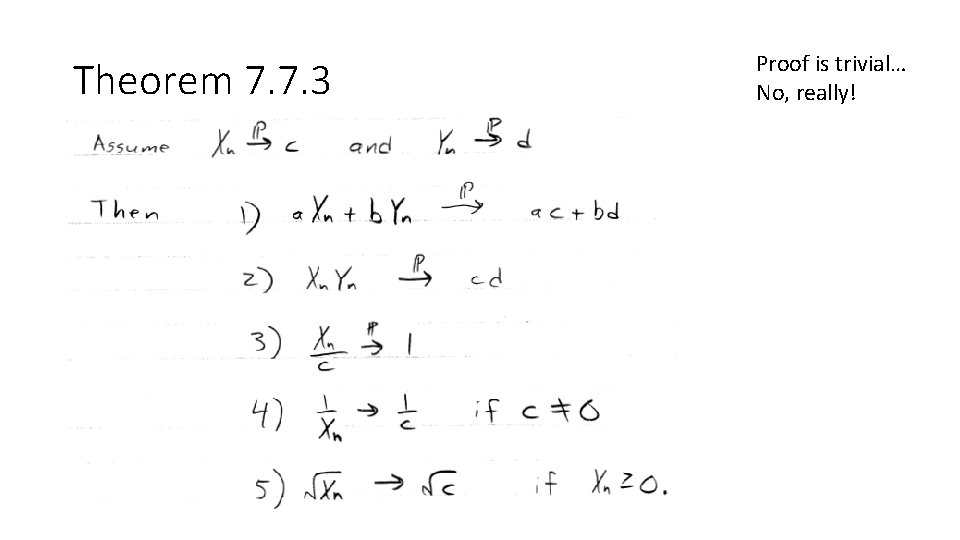
Theorem 7. 7. 3 Proof is trivial… No, really!
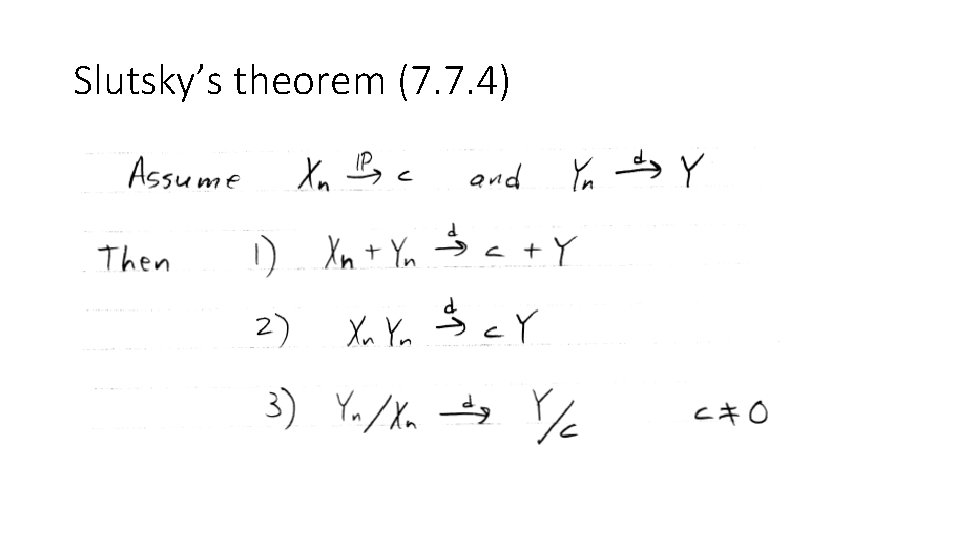
Slutsky’s theorem (7. 7. 4)
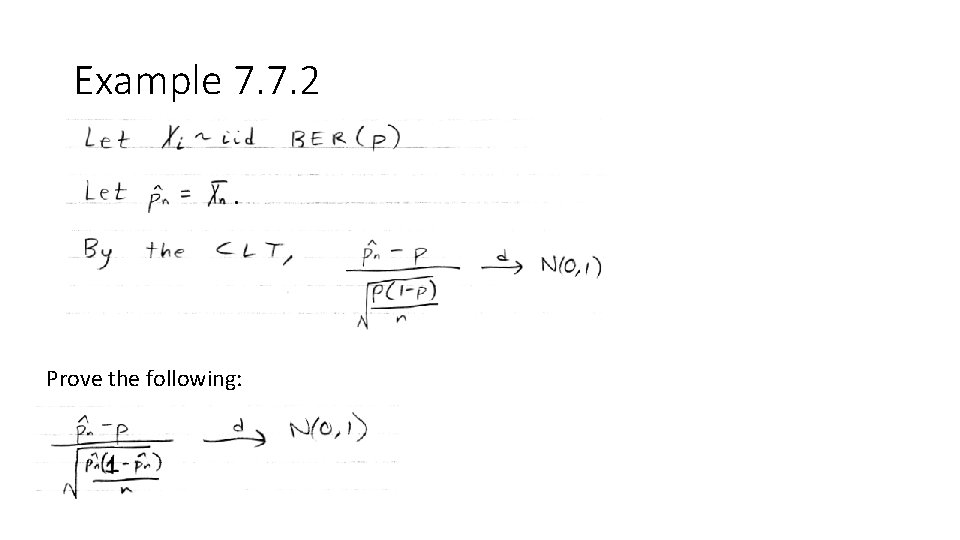
Example 7. 7. 2 Prove the following:
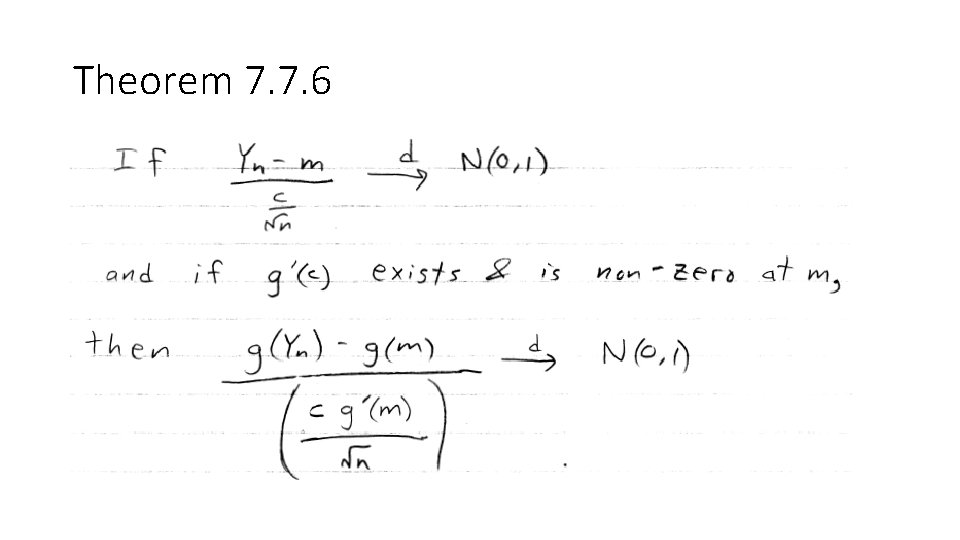
Theorem 7. 7. 6
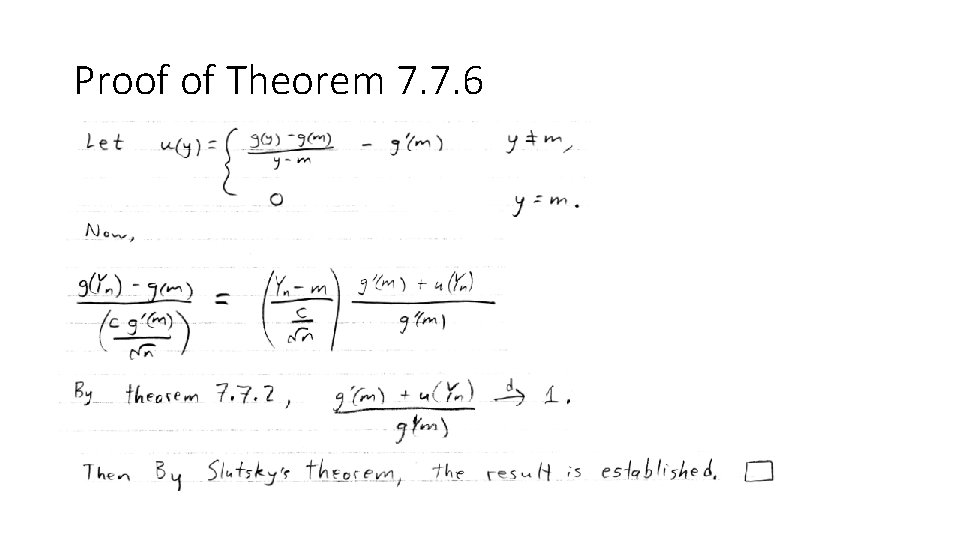
Proof of Theorem 7. 7. 6
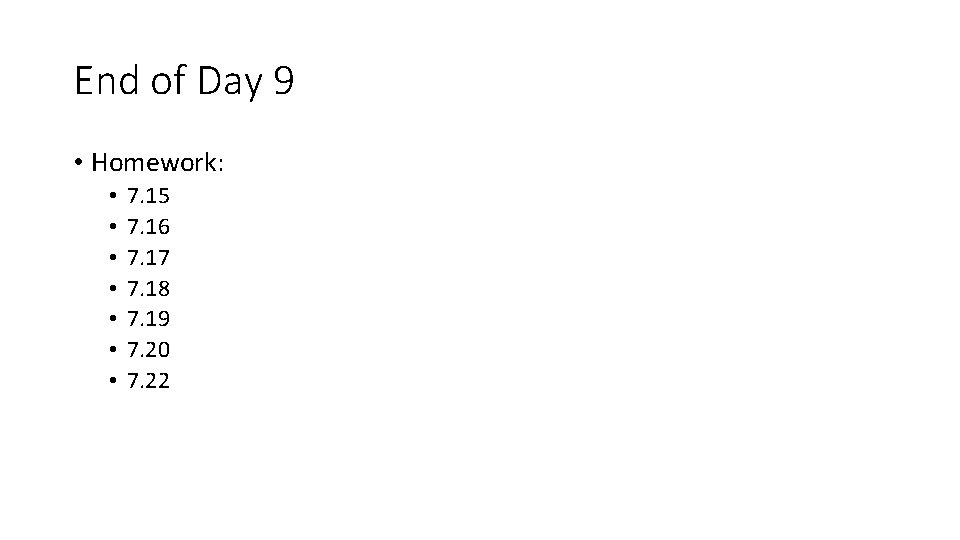
End of Day 9 • Homework: • • 7. 15 7. 16 7. 17 7. 18 7. 19 7. 20 7. 22
- Slides: 47