
Chapter 7 Cellular Structure and Function Section 1
- Slides: 17
Chapter 7 Cellular Structure and Function Section 1: Cell Discovery and Theory Section 2: The Plasma Membrane Section 3: Structures and Organelles Section 4: Cellular Transport Click on a lesson name to select.
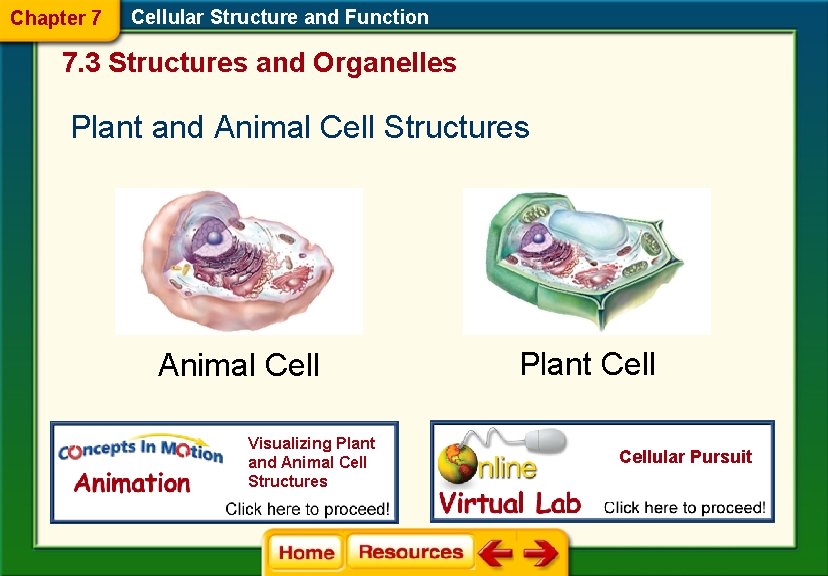
Chapter 7 Cellular Structure and Function 7. 3 Structures and Organelles Plant and Animal Cell Structures Animal Cell Visualizing Plant and Animal Cell Structures Plant Cellular Pursuit
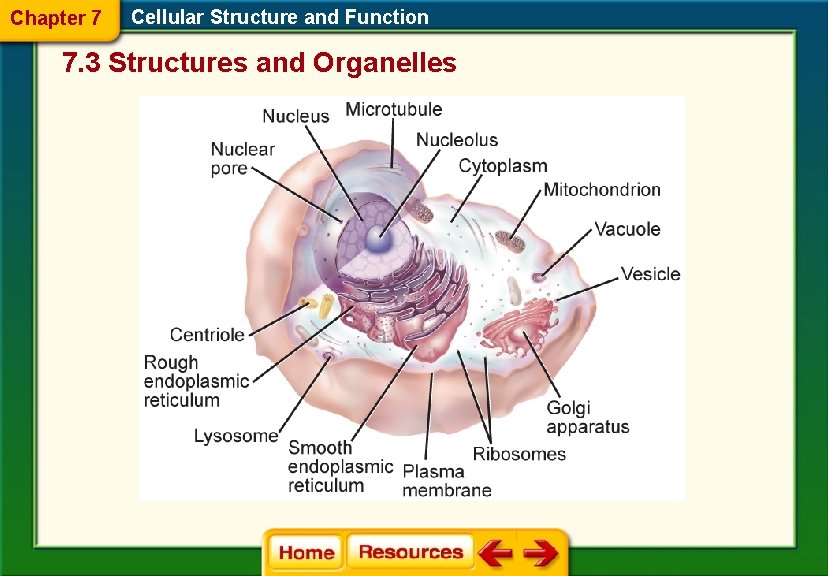
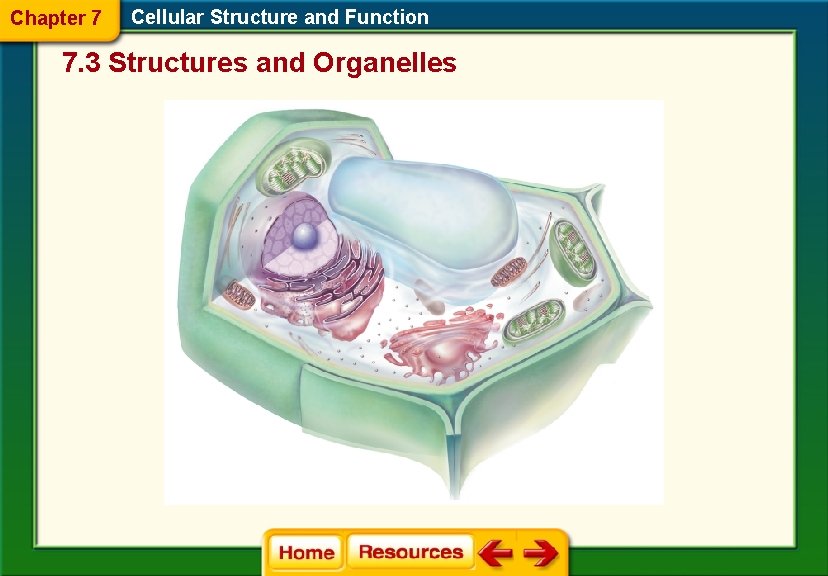
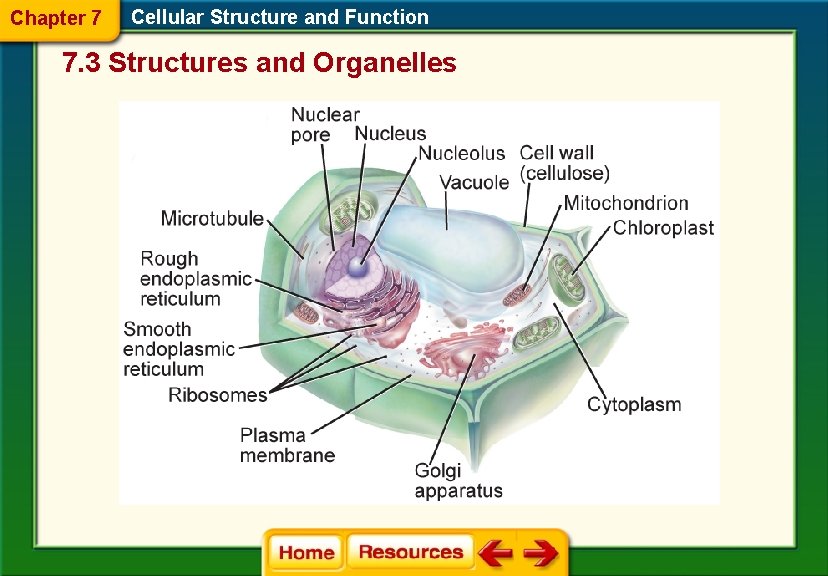
Chapter 7 Cellular Structure and Function 7. 3 Structures and Organelles
Chapter 7 Cellular Structure and Function 7. 3 Structures and Organelles
Chapter 7 Cellular Structure and Function 7. 3 Structures and Organelles
Chapter 7 Cellular Structure and Function 7. 3 Structures and Organelles
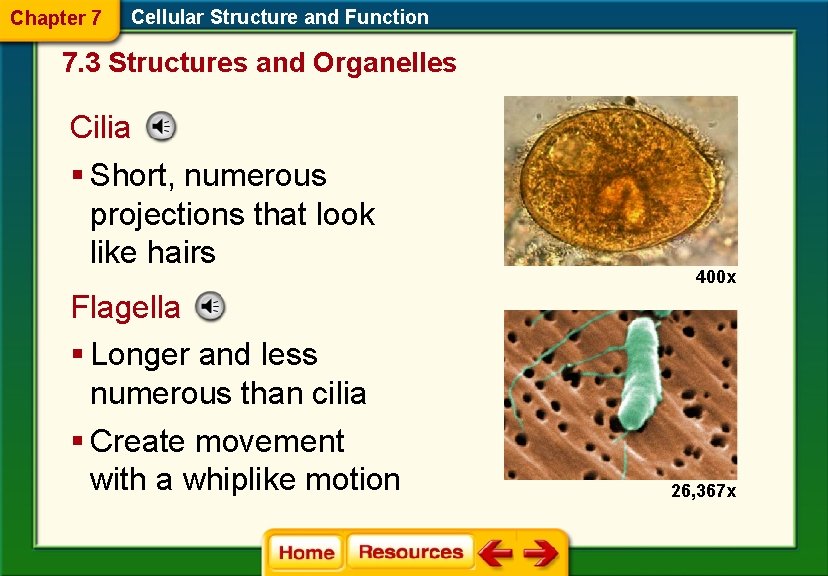
Chapter 7 Cellular Structure and Function 7. 3 Structures and Organelles Cilia § Short, numerous projections that look like hairs Flagella § Longer and less numerous than cilia § Create movement with a whiplike motion 400 x 26, 367 x
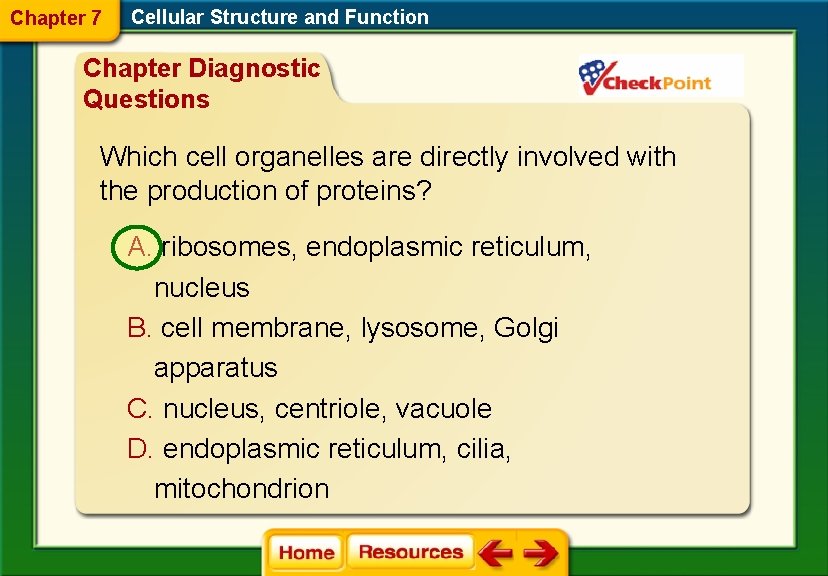
Chapter 7 Cellular Structure and Function Chapter Diagnostic Questions Which cell organelles are directly involved with the production of proteins? A. ribosomes, endoplasmic reticulum, nucleus B. cell membrane, lysosome, Golgi apparatus C. nucleus, centriole, vacuole D. endoplasmic reticulum, cilia, mitochondrion
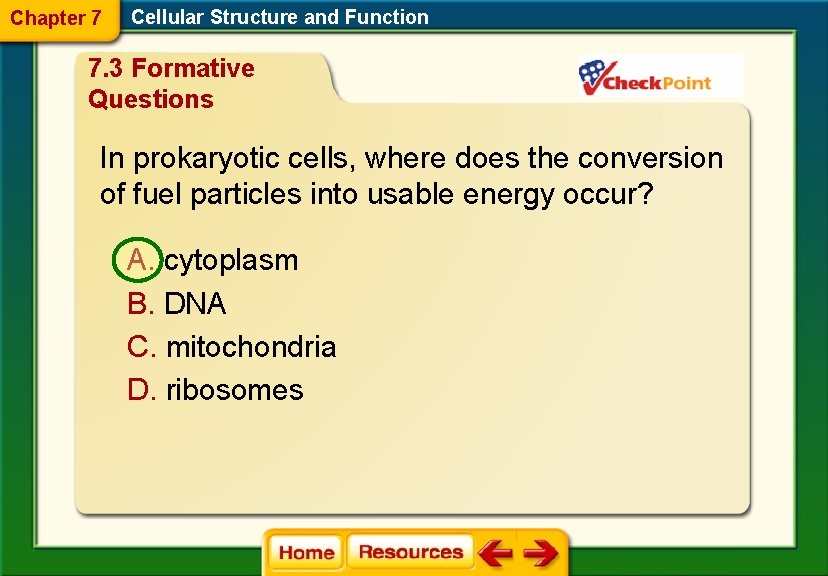
Chapter 7 Cellular Structure and Function 7. 3 Formative Questions In prokaryotic cells, where does the conversion of fuel particles into usable energy occur? A. cytoplasm B. DNA C. mitochondria D. ribosomes
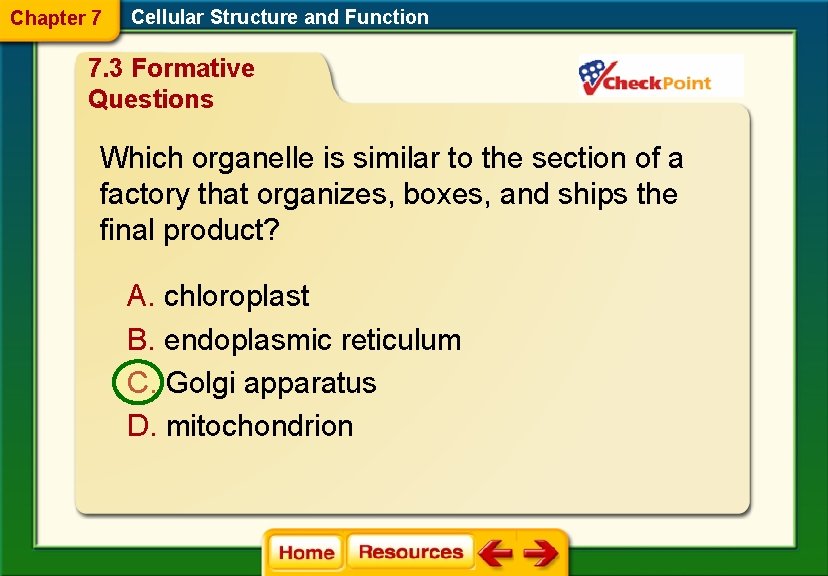
Chapter 7 Cellular Structure and Function 7. 3 Formative Questions Which organelle is similar to the section of a factory that organizes, boxes, and ships the final product? A. chloroplast B. endoplasmic reticulum C. Golgi apparatus D. mitochondrion
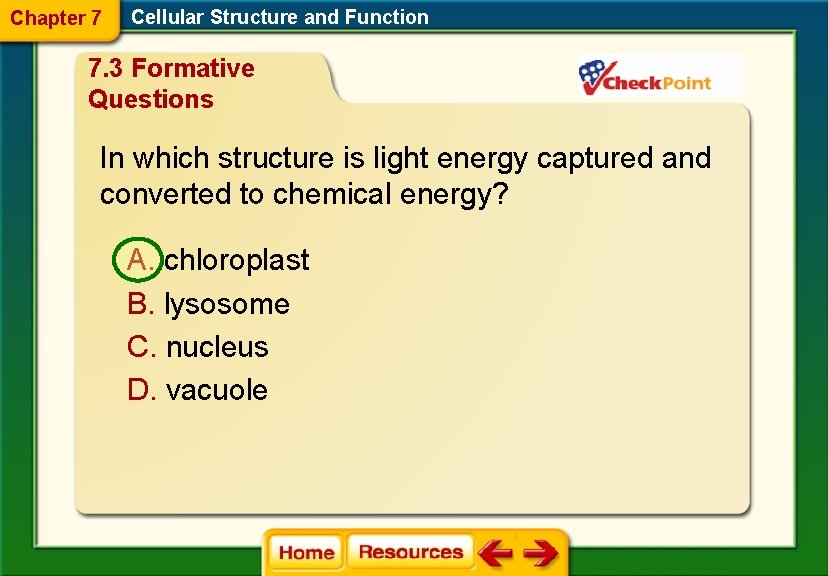
Chapter 7 Cellular Structure and Function 7. 3 Formative Questions In which structure is light energy captured and converted to chemical energy? A. chloroplast B. lysosome C. nucleus D. vacuole
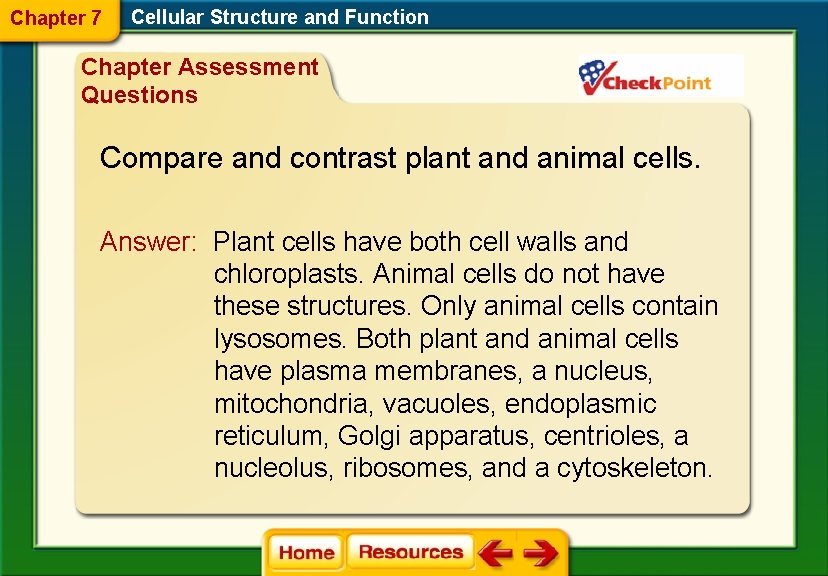
Chapter 7 Cellular Structure and Function Chapter Assessment Questions Compare and contrast plant and animal cells. Answer: Plant cells have both cell walls and chloroplasts. Animal cells do not have these structures. Only animal cells contain lysosomes. Both plant and animal cells have plasma membranes, a nucleus, mitochondria, vacuoles, endoplasmic reticulum, Golgi apparatus, centrioles, a nucleolus, ribosomes, and a cytoskeleton.
Chapter 7 Cellular Structure and Function Standardized Test Practice Muscle cells require a great amount of energy. Which would you expect to find in large numbers in muscle cells? A. centrioles B. endoplasmic reticulum C. mitochondria D. ribosomes
Chapter 7 Cellular Structure and Function Standardized Test Practice In what type of cell would you most likely expect to find numerous lysosomes? A. a plant cell that has food, enzymes, worn out cell parts and other materials. B. a plant cell that uses light energy for photosynthesis
Chapter 7 Cellular Structure and Function Standardized Test Practice In what type of cell would you most likely expect to find numerous lysosomes? C. a single-celled organism that moves around its environment D. a white blood cell that digests bacteria and viruses
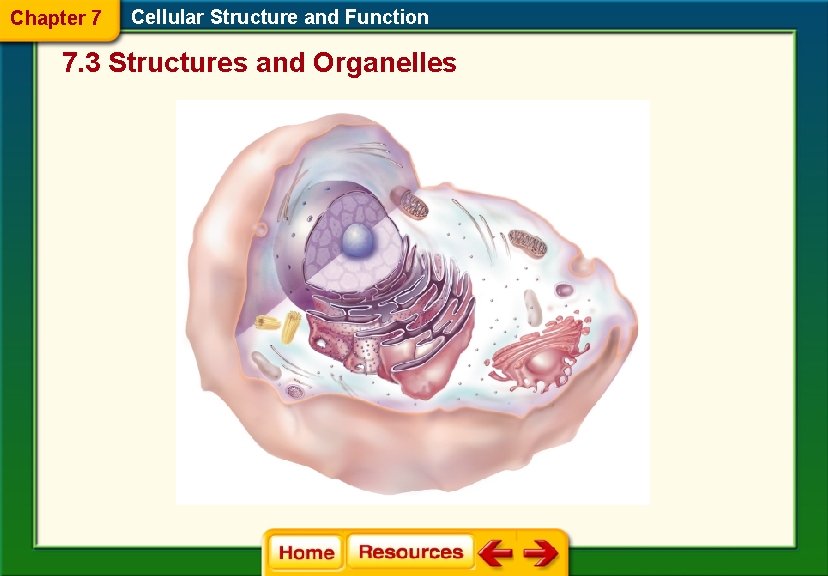
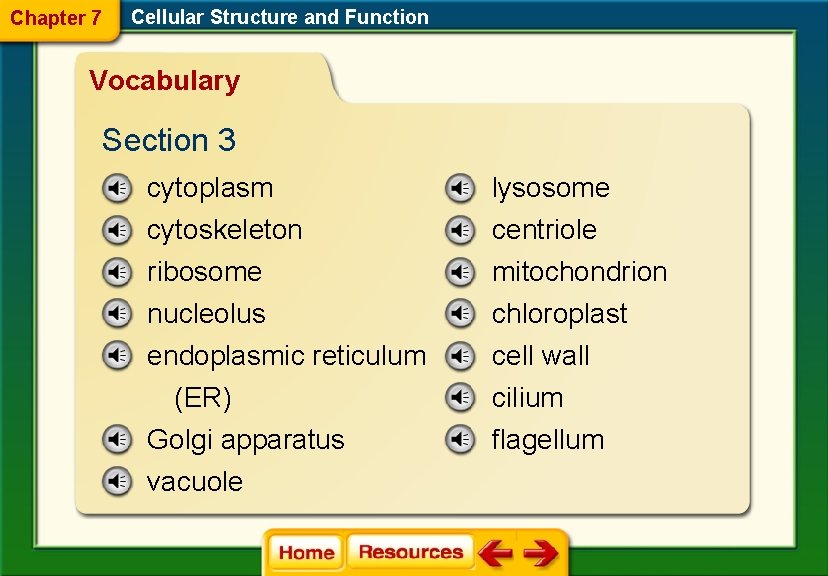
Chapter 7 Cellular Structure and Function Vocabulary Section 3 cytoplasm lysosome cytoskeleton ribosome nucleolus endoplasmic reticulum (ER) Golgi apparatus centriole mitochondrion chloroplast cell wall cilium flagellum vacuole