
CHAPTER 7 CELLULAR STRUCTURE AND FUNCTION Robert Hooke
CHAPTER 7 CELLULAR STRUCTURE AND FUNCTION Robert Hooke was the first scientists to look at something under a simple microscope that he made �He observed cork -which comes from a cork oak tree. �He observed small box like structures that he called cellulae (Latin meaning: small rooms). �We now call these small units of life CELLS
MICORSCOPES LEAD TO CREATE DISCOVERIES Before microscopes we could not see tiny organisms Anton van Leeuwenhoek created the first Light Microscope. � He looked at pond water and found tiny organisms. Many scientists began looking at objects using the microscope. Schleiden looked at plant tissues and determined that they are made of cell. 200 years after Hooke, Schwann looked at animal tissues and determined they are made of cells
CELL THEORY Virchow proposed the cell theory based on his and other scientists’ worked. Cell Theory States: �All living things contain one or more cells �Cells are the basic unit of structure and organization of all living organisms �Cells arise (are created) from other existing cells.
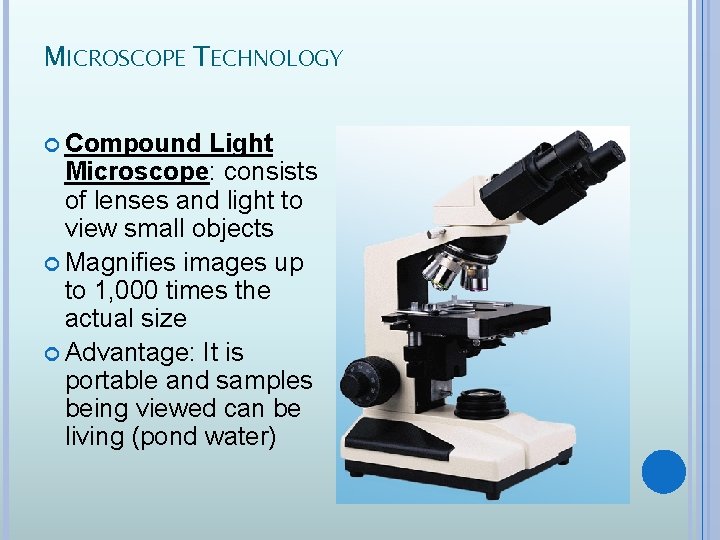
MICROSCOPE TECHNOLOGY Compound Light Microscope: consists of lenses and light to view small objects Magnifies images up to 1, 000 times the actual size Advantage: It is portable and samples being viewed can be living (pond water)
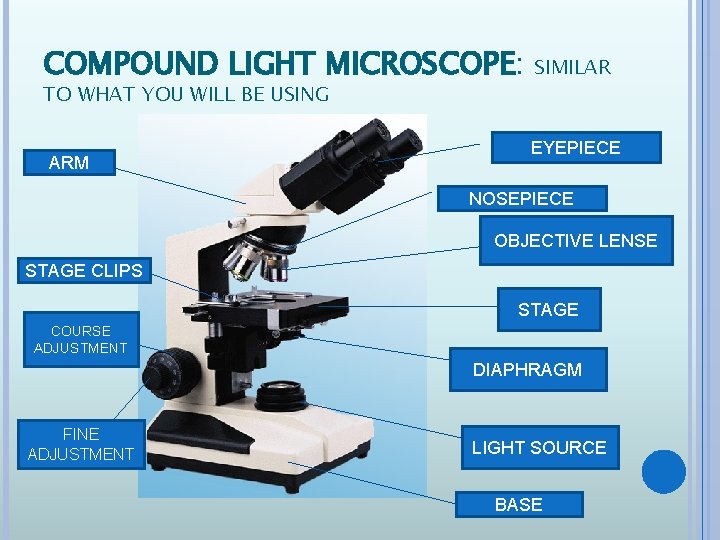
COMPOUND LIGHT MICROSCOPE: TO WHAT YOU WILL BE USING ARM SIMILAR EYEPIECE NOSEPIECE OBJECTIVE LENSE STAGE CLIPS STAGE COURSE ADJUSTMENT DIAPHRAGM FINE ADJUSTMENT LIGHT SOURCE BASE
ELECTRON MICROSCOPE Scanning Tunnel Electron Microscope ( STM): Uses a pen like structure to aim electrons at the specimen. Creates computer images that are 3 – dimensional. An atom has been viewed using this microscope
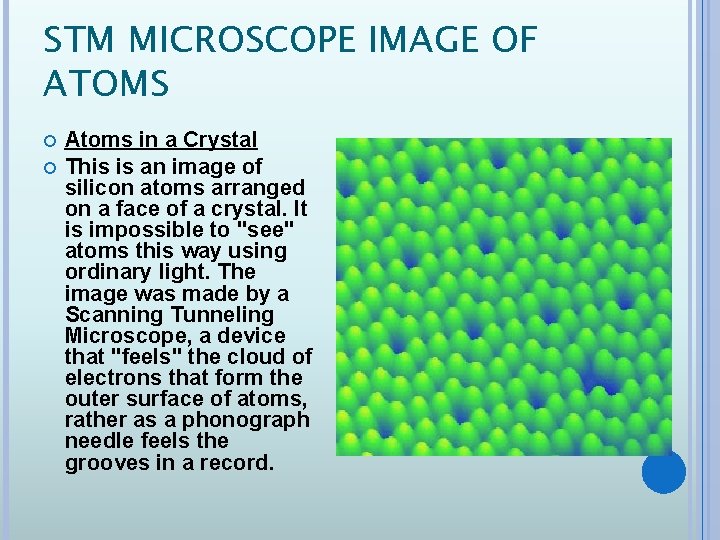
STM MICROSCOPE IMAGE OF ATOMS Atoms in a Crystal This is an image of silicon atoms arranged on a face of a crystal. It is impossible to "see" atoms this way using ordinary light. The image was made by a Scanning Tunneling Microscope, a device that "feels" the cloud of electrons that form the outer surface of atoms, rather as a phonograph needle feels the grooves in a record.
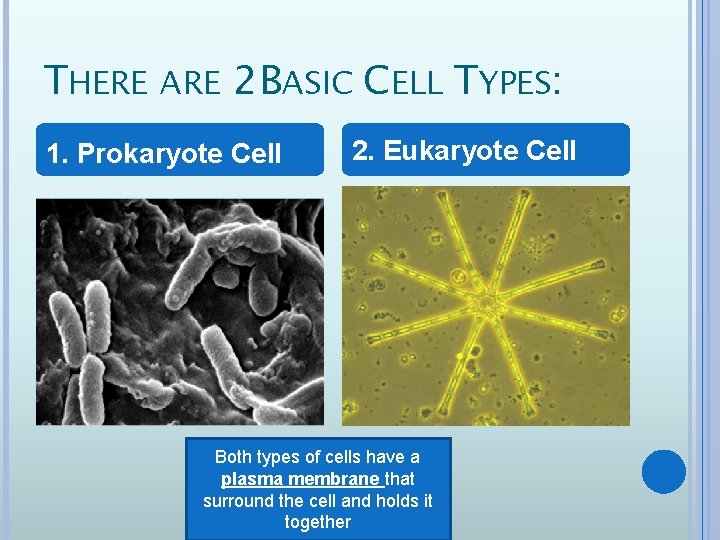
THERE ARE 2 BASIC CELL TYPES: 1. Prokaryote Cell 2. Eukaryote Cell Both types of cells have a plasma membrane that surround the cell and holds it together
PROKARYOTIC CELLS: Prokaryotic Cells do not contain a nucleus Most are small single celled organisms, such as bacteria Pro- means “before” Karyotic- means “nucleus” Prokaryotic cells are less advanced on an evolutionary scale (they are older) The DNA molecules are free floating in the cell. They do not contain membrane bound organelles -(are specialized structures that carry out specific cell functions) {Nucleus: is where the DNA is stored in eukaryotes}
EUKARYOTIC CELLS Eu- means “true” Karyote- means “nucleus” Eukaryotic cells contain a nucleus that store the DNA Are much larger than prokaryotic cells More complex- Contains membrane-bound organelles
ORIGIN OF CELL DIVERSITY Endosymbiont Theory – is based on the idea theory states that eukaryotic cells evolved Dr. Lynn Margulis proved that the 2 organelles, chloroplasts and mitochondria, were once free-living organisms. They then moved into another cells and a symbiotic relationship started.
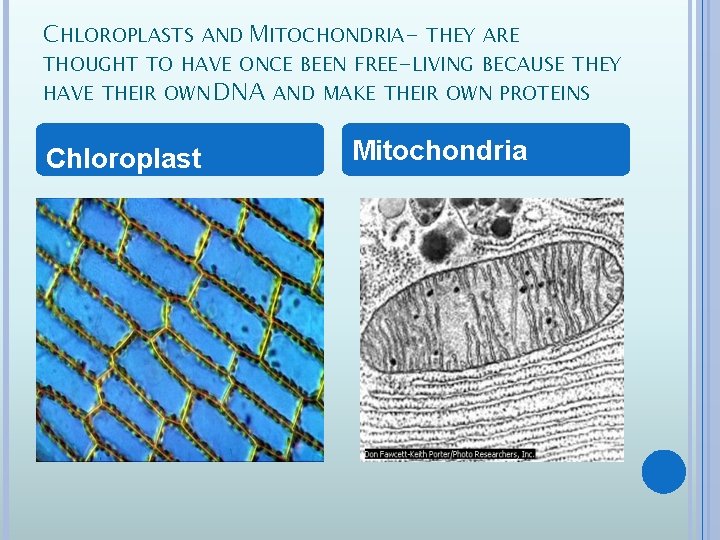
CHLOROPLASTS AND MITOCHONDRIA- THEY ARE THOUGHT TO HAVE ONCE BEEN FREE-LIVING BECAUSE THEY HAVE THEIR OWN DNA AND MAKE THEIR OWN PROTEINS Chloroplast Mitochondria
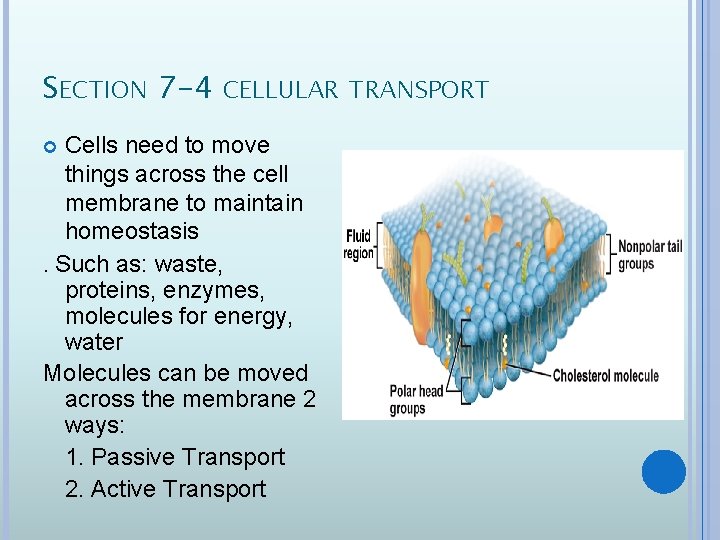
SECTION 7 -2 THE PLASMA MEMBRANE 1. Surrounds the cell, protecting it from environment (like our skin). Cells are always surrounded by fluids. 2. Controls what enters or leaves the cell 3. Is “selectively permeable” meaning it allows some molecules to move in, others do not 4. Is made of lipids that create the fluid mosaic lipid bilayer (fat does not dissolve in water) 5. The Plasma Membrane helps a cell maintain homeostasis .
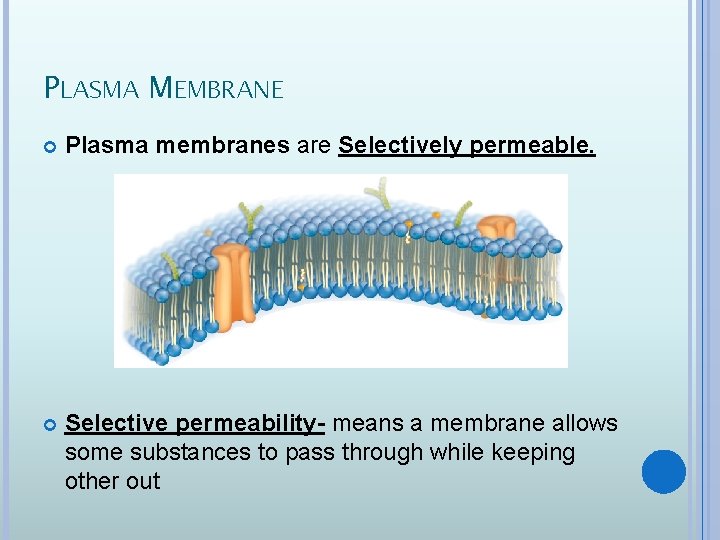
PLASMA MEMBRANE Plasma membranes are Selectively permeable. Selective permeability- means a membrane allows some substances to pass through while keeping other out
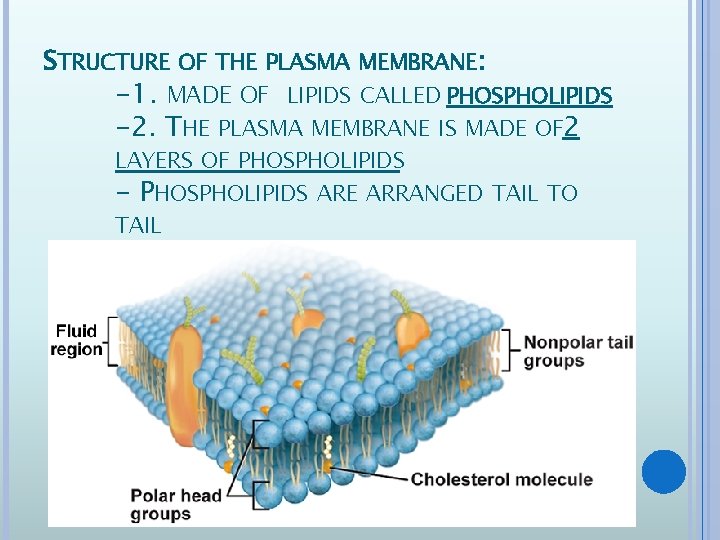
STRUCTURE OF THE PLASMA MEMBRANE: -1. MADE OF LIPIDS CALLED PHOSPHOLIPIDS -2. THE PLASMA MEMBRANE IS MADE OF 2 LAYERS OF PHOSPHOLIPIDS - PHOSPHOLIPIDS ARE ARRANGED TAIL TO TAIL
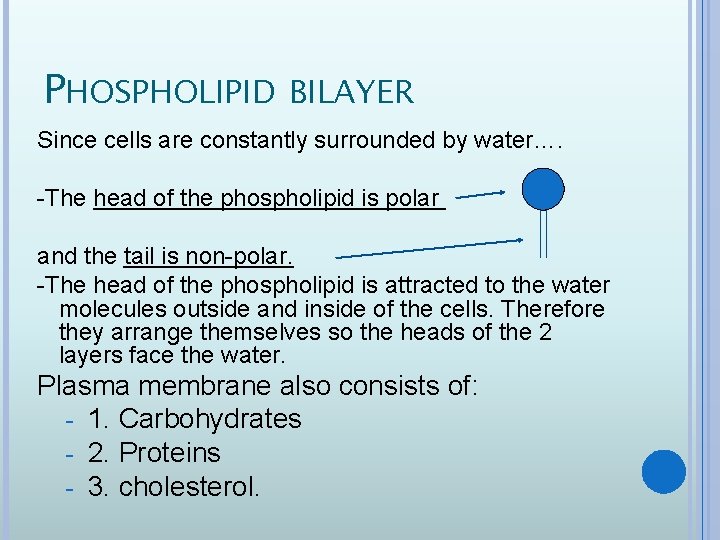
PHOSPHOLIPID BILAYER Since cells are constantly surrounded by water…. -The head of the phospholipid is polar and the tail is non-polar. -The head of the phospholipid is attracted to the water molecules outside and inside of the cells. Therefore they arrange themselves so the heads of the 2 layers face the water. Plasma membrane also consists of: - 1. Carbohydrates - 2. Proteins - 3. cholesterol.
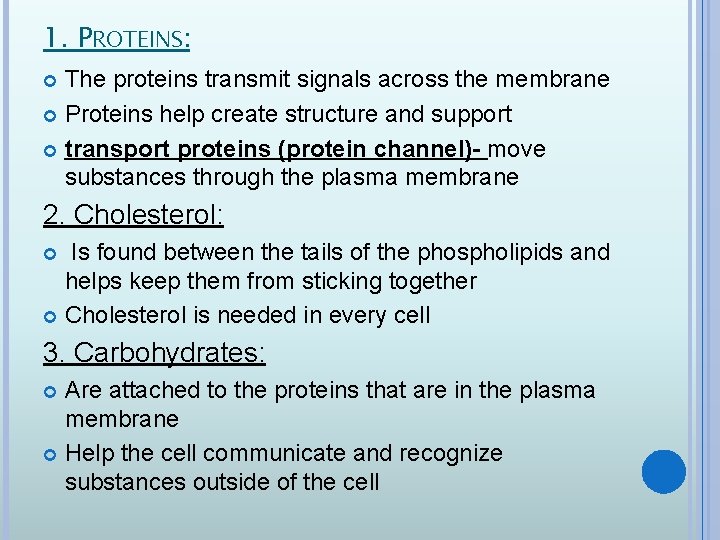
1. PROTEINS: The proteins transmit signals across the membrane Proteins help create structure and support transport proteins (protein channel)- move substances through the plasma membrane 2. Cholesterol: Is found between the tails of the phospholipids and helps keep them from sticking together Cholesterol is needed in every cell 3. Carbohydrates: Are attached to the proteins that are in the plasma membrane Help the cell communicate and recognize substances outside of the cell
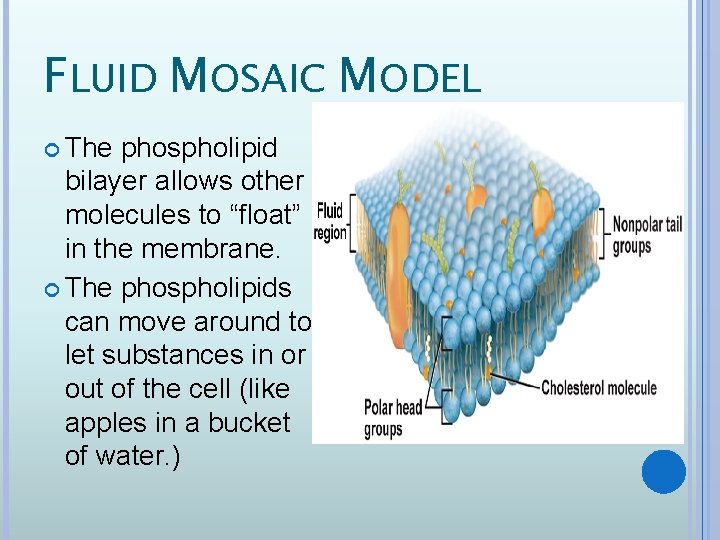
FLUID MOSAIC MODEL The phospholipid bilayer allows other molecules to “float” in the membrane. The phospholipids can move around to let substances in or out of the cell (like apples in a bucket of water. )
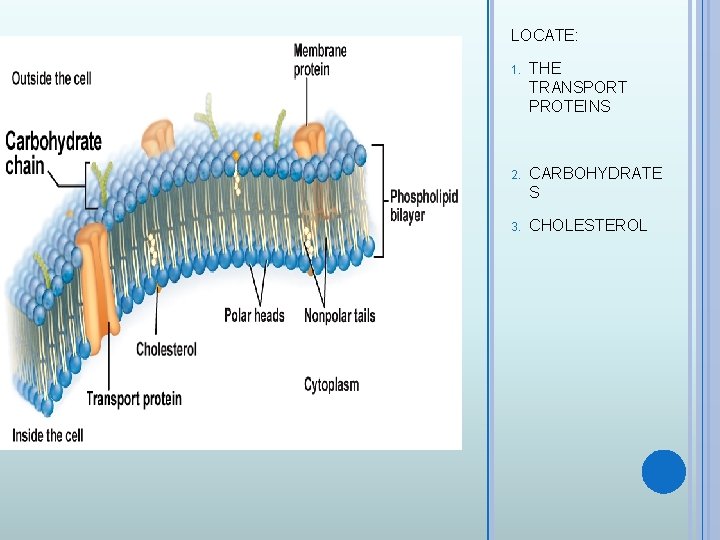
LOCATE: 1. THE TRANSPORT PROTEINS 2. CARBOHYDRATE S 3. CHOLESTEROL
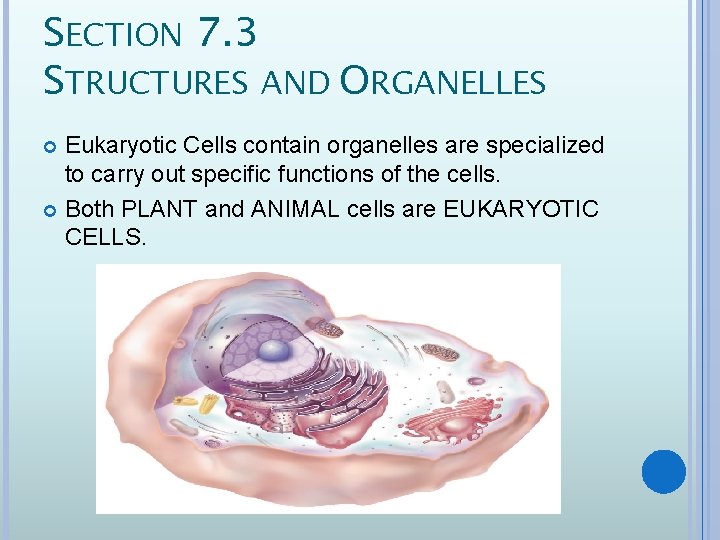
SECTION 7. 3 STRUCTURES AND ORGANELLES Eukaryotic Cells contain organelles are specialized to carry out specific functions of the cells. Both PLANT and ANIMAL cells are EUKARYOTIC CELLS.
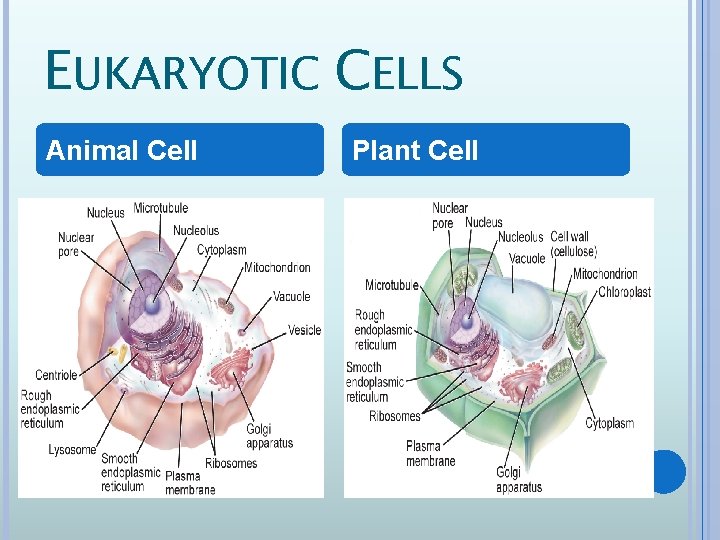
EUKARYOTIC CELLS Animal Cell Plant Cell
CELL STRUCTURES 1. Cytoplasm – The fluid portion found inside the cell. Made mostly of water. �In Prokaryotic Cells: most chemical processes happen right in the cytoplasm. �In Eukaryotic Cells: most chemical processes happen in the organelles
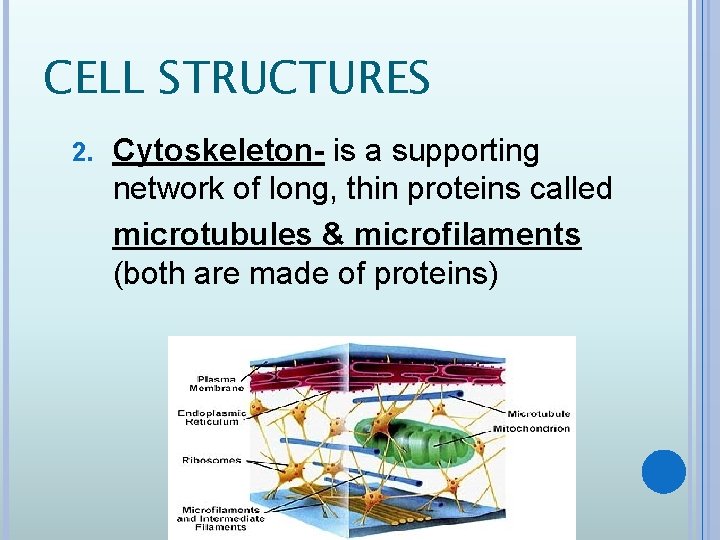
CELL STRUCTURES 2. Cytoskeleton- is a supporting network of long, thin proteins called microtubules & microfilaments (both are made of proteins)
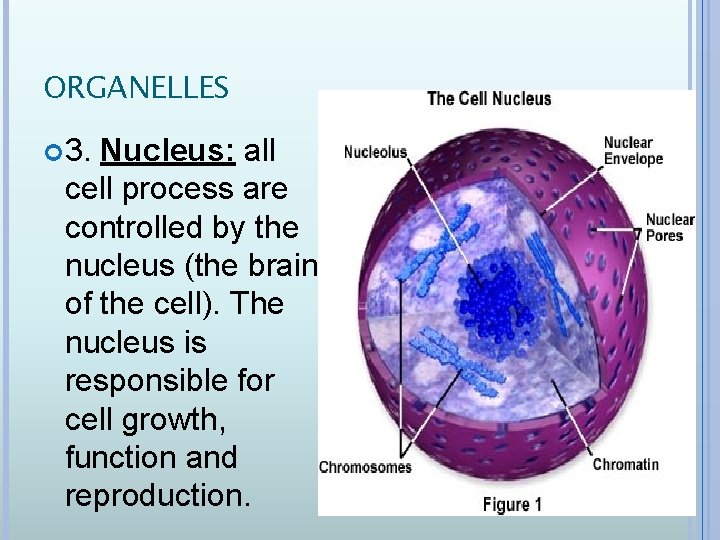
ORGANELLES 3. Nucleus: all cell process are controlled by the nucleus (the brain of the cell). The nucleus is responsible for cell growth, function and reproduction.
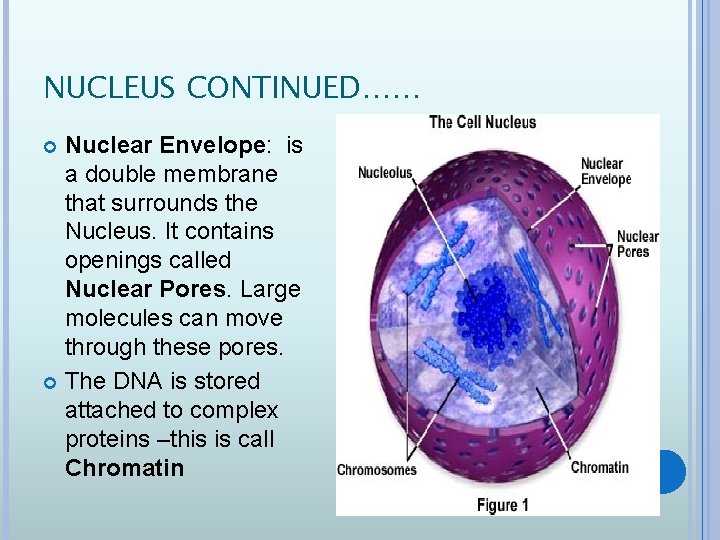
NUCLEUS CONTINUED…… Nuclear Envelope: is a double membrane that surrounds the Nucleus. It contains openings called Nuclear Pores. Large molecules can move through these pores. The DNA is stored attached to complex proteins –this is call Chromatin
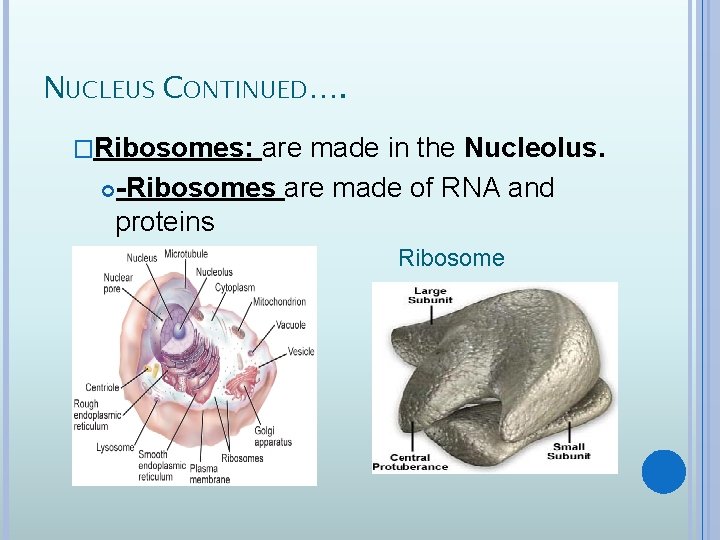
NUCLEUS CONTINUED…. �Ribosomes: are made in the Nucleolus. -Ribosomes are made of RNA and proteins • Ribosome
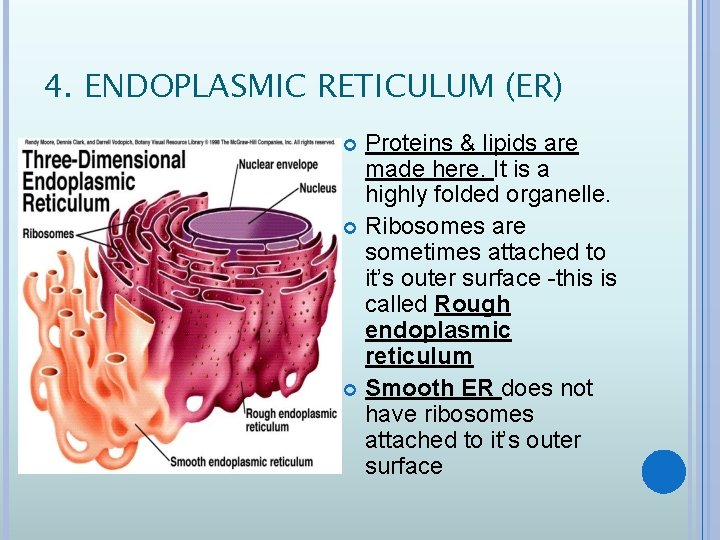
4. ENDOPLASMIC RETICULUM (ER) Proteins & lipids are made here. It is a highly folded organelle. Ribosomes are sometimes attached to it’s outer surface -this is called Rough endoplasmic reticulum Smooth ER does not have ribosomes attached to it’s outer surface
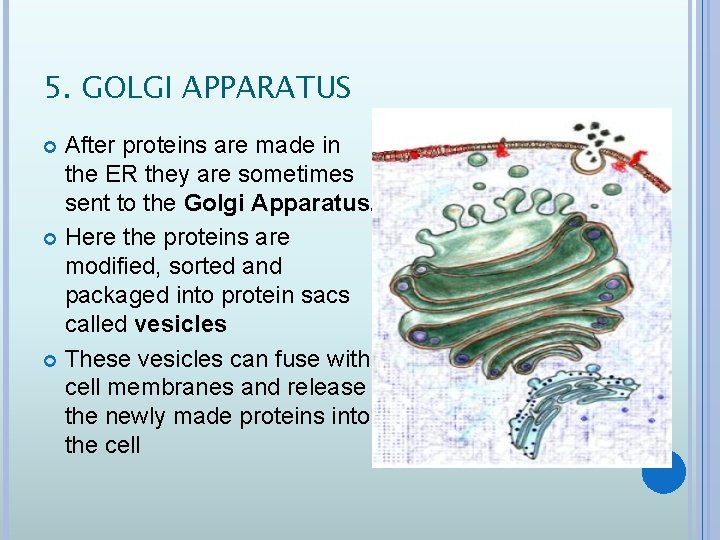
5. GOLGI APPARATUS After proteins are made in the ER they are sometimes sent to the Golgi Apparatus. Here the proteins are modified, sorted and packaged into protein sacs called vesicles These vesicles can fuse with cell membranes and release the newly made proteins into the cell
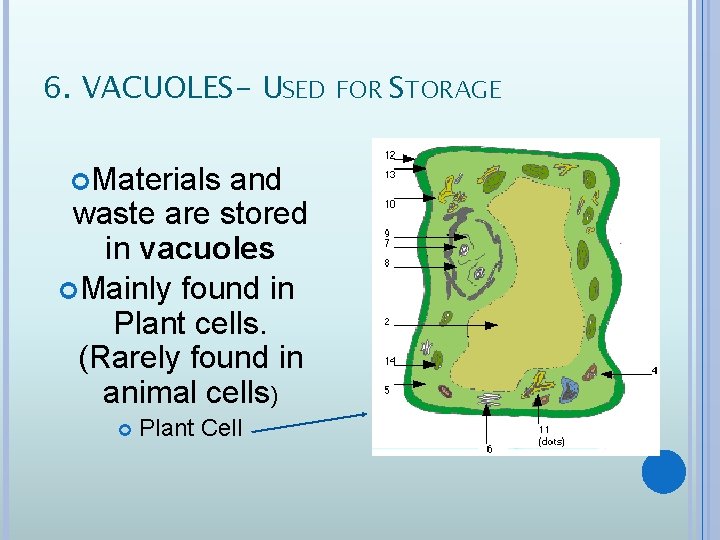
6. VACUOLES- USED FOR STORAGE Materials and waste are stored in vacuoles Mainly found in Plant cells. (Rarely found in animal cells) Plant Cell
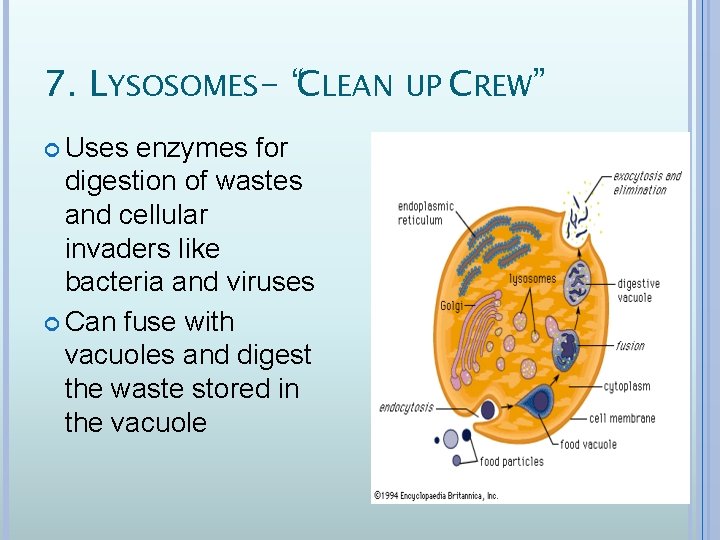
7. LYSOSOMES- “CLEAN UP CREW” Uses enzymes for digestion of wastes and cellular invaders like bacteria and viruses Can fuse with vacuoles and digest the waste stored in the vacuole
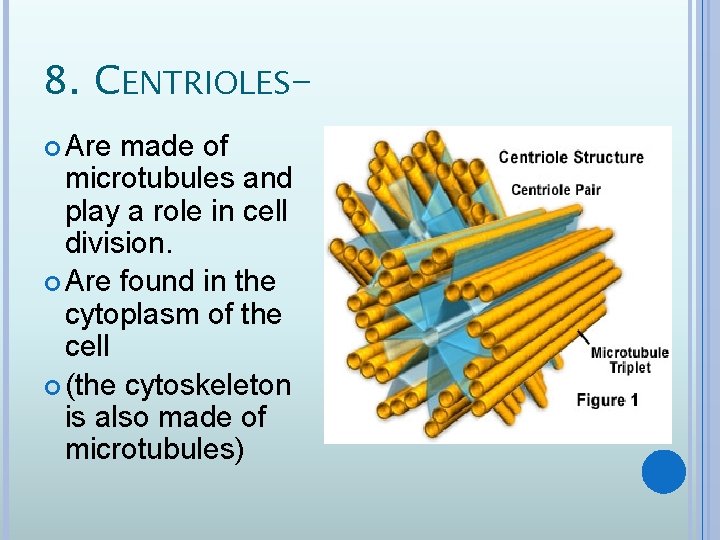
8. CENTRIOLES Are made of microtubules and play a role in cell division. Are found in the cytoplasm of the cell (the cytoskeleton is also made of microtubules)
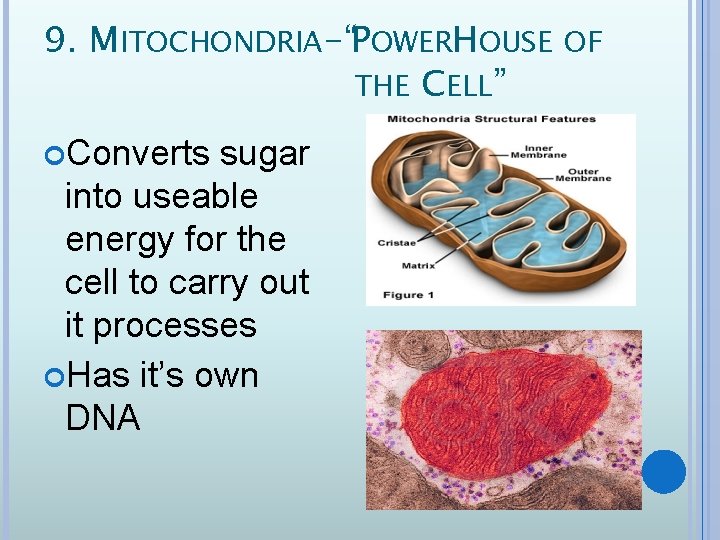
9. MITOCHONDRIA-“POWERHOUSE OF THE CELL” Converts sugar into useable energy for the cell to carry out it processes Has it’s own DNA
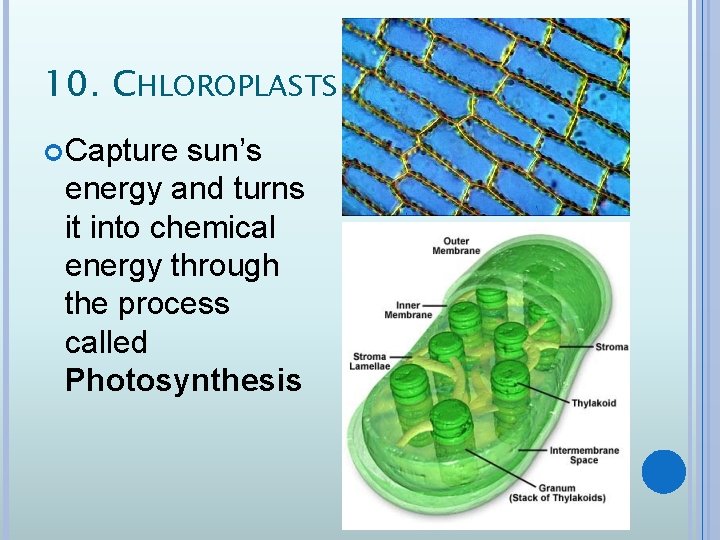
10. CHLOROPLASTS Capture sun’s energy and turns it into chemical energy through the process called Photosynthesis
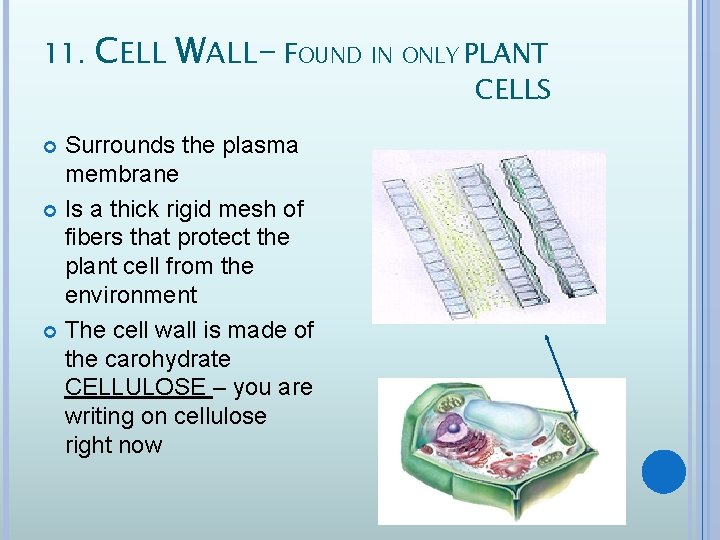
11. CELL WALL- FOUND IN ONLY PLANT Surrounds the plasma membrane Is a thick rigid mesh of fibers that protect the plant cell from the environment The cell wall is made of the carohydrate CELLULOSE – you are writing on cellulose right now CELLS
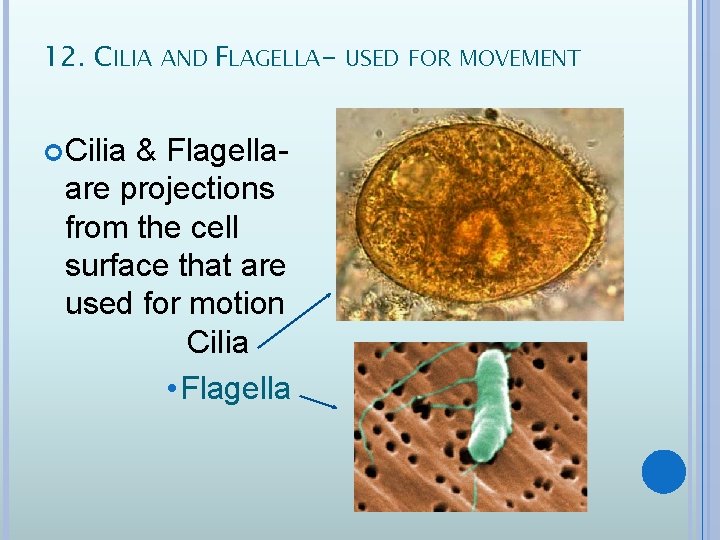
12. CILIA AND FLAGELLA- USED FOR MOVEMENT Cilia & Flagellaare projections from the cell surface that are used for motion Cilia • Flagella
PLANT CELLS VS. ANIMAL CELLS Contain: Plasma Only membranes and Cell walls Chloroplasts Large vacuoles have plasma membrane Mitochondria Small vacuoles (usually do not have vacuoles)
SECTION 7 -4 CELLULAR TRANSPORT Cells need to move things across the cell membrane to maintain homeostasis. Such as: waste, proteins, enzymes, molecules for energy, water Molecules can be moved across the membrane 2 ways: 1. Passive Transport 2. Active Transport
PASSIVE TRANSPORT: MOVES MOLECULES ACROSS THE MEMBRANE WITHOUT USING ENERGY. Three types of Passive transport: 1. Diffusion 2. Osmosis 3. Facilitated diffusion
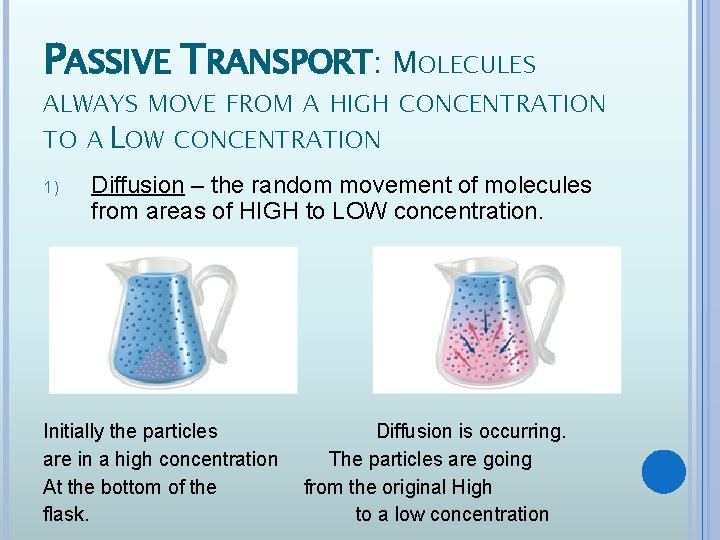
PASSIVE TRANSPORT: MOLECULES ALWAYS MOVE FROM A HIGH CONCENTRATION TO A LOW CONCENTRATION 1) Diffusion – the random movement of molecules from areas of HIGH to LOW concentration. Initially the particles are in a high concentration At the bottom of the flask. Diffusion is occurring. The particles are going from the original High to a low concentration
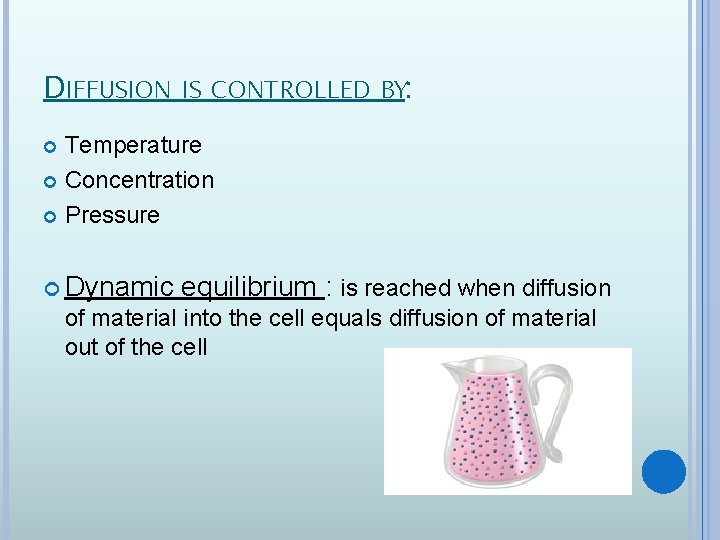
DIFFUSION IS CONTROLLED BY: Temperature Concentration Pressure Dynamic equilibrium : is reached when diffusion of material into the cell equals diffusion of material out of the cell
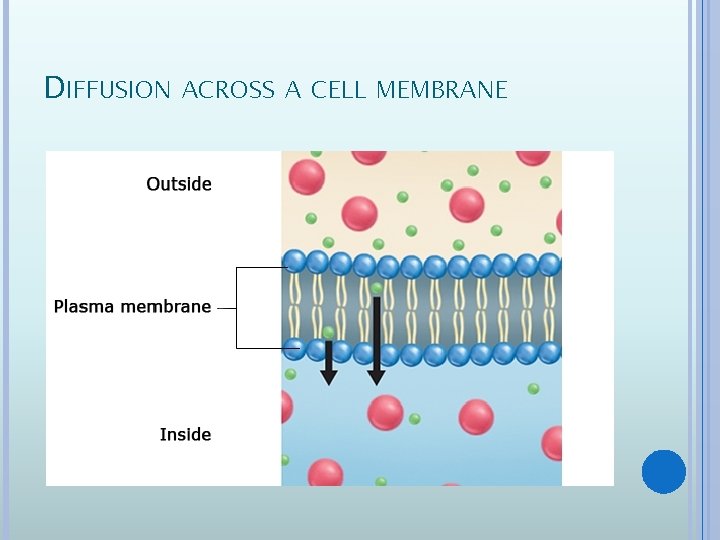
DIFFUSION ACROSS A CELL MEMBRANE
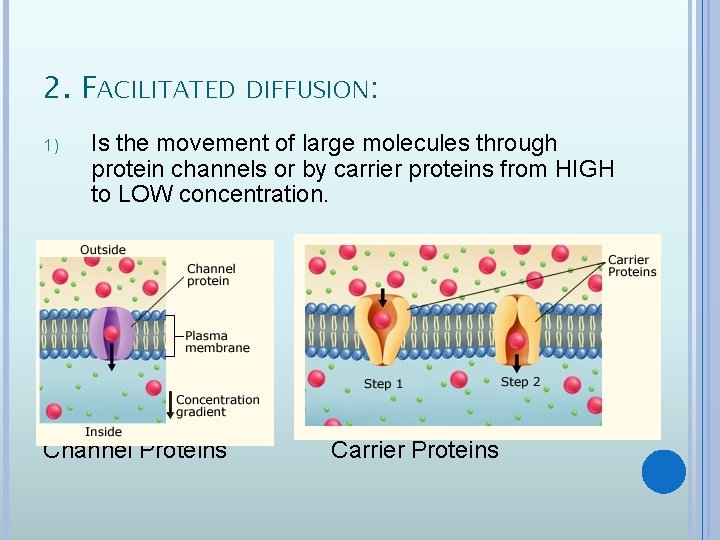
2. FACILITATED DIFFUSION: 1) Is the movement of large molecules through protein channels or by carrier proteins from HIGH to LOW concentration. Channel Proteins Carrier Proteins
3. OSMOSIS: IS THE MOVEMENT OF WATER ACROSS A SELECTIVELY PERMEABLE MEMBRANE FROM HIGH TO LOW CONCENTRATION Regulating the movement of water across the cell membrane is an important factor in maintaining homeostasis with in a cell. The concentration of the water surrounding the cell determines what the cell must do to maintain homeostasis. 3 types of solutions: 1. Isotonic 2. Hypertonic 3. Hypotonic
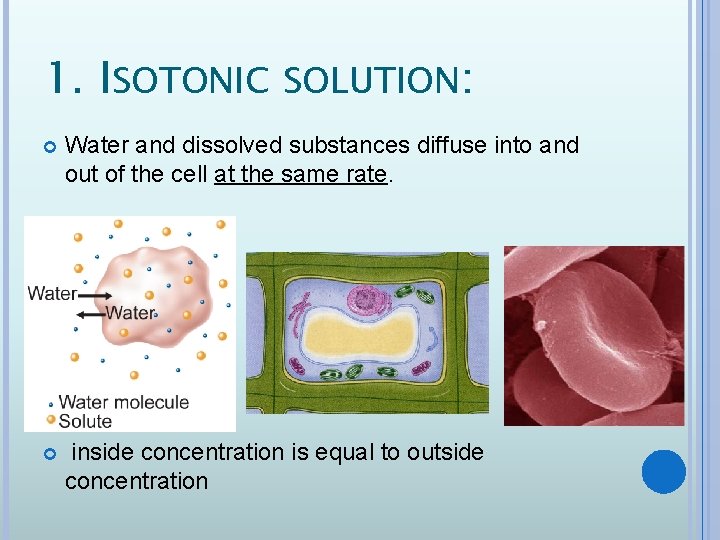
1. ISOTONIC SOLUTION: Water and dissolved substances diffuse into and out of the cell at the same rate. inside concentration is equal to outside concentration
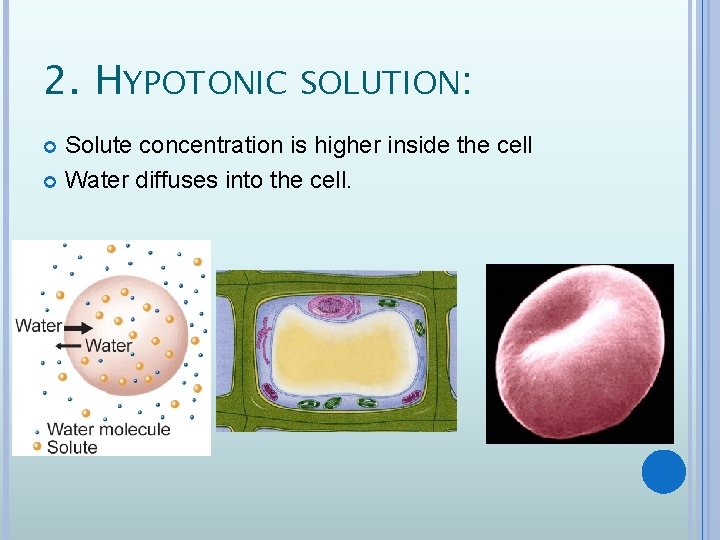
2. HYPOTONIC SOLUTION: Solute concentration is higher inside the cell Water diffuses into the cell.
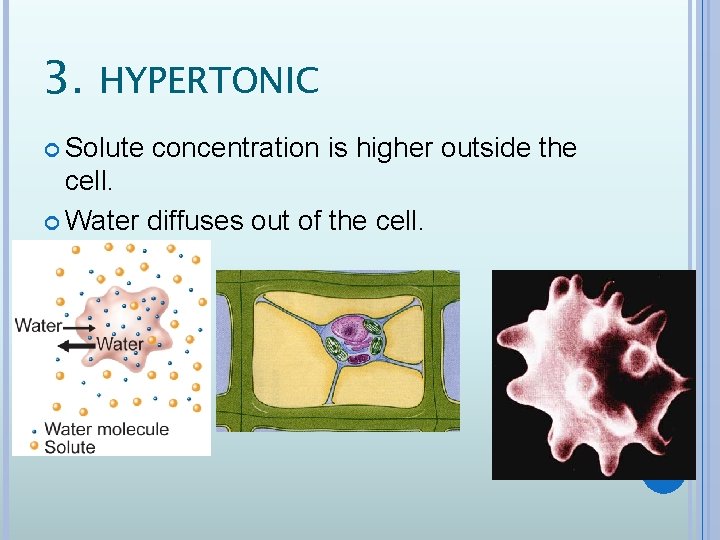
3. HYPERTONIC Solute concentration is higher outside the cell. Water diffuses out of the cell.
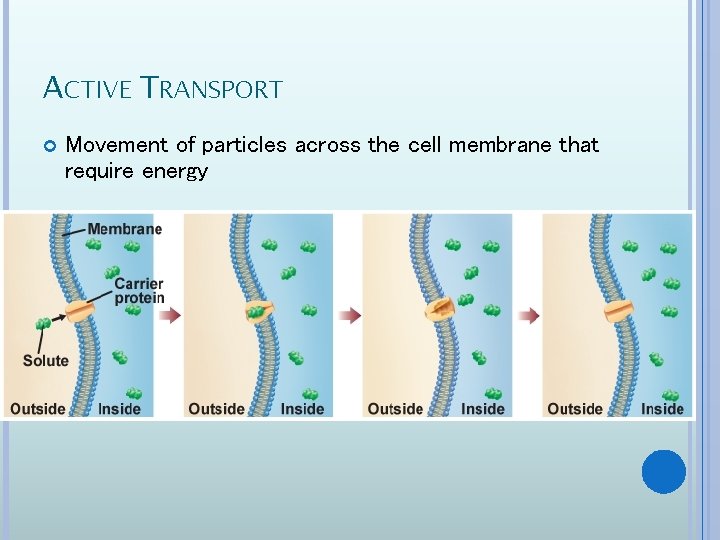
ACTIVE TRANSPORT Movement of particles across the cell membrane that require energy
TYPES OF ACTIVE TRANSPORT: -Movement of molecules which requires energy -Movement of any molecule from an area of low concentration to high concentration Examples: 1. Facilitated diffusion: the movement of large molecules like starch or fat in/out of a cell from LOW to HIGH concentration. 2. Endocytosis & Exocytosis
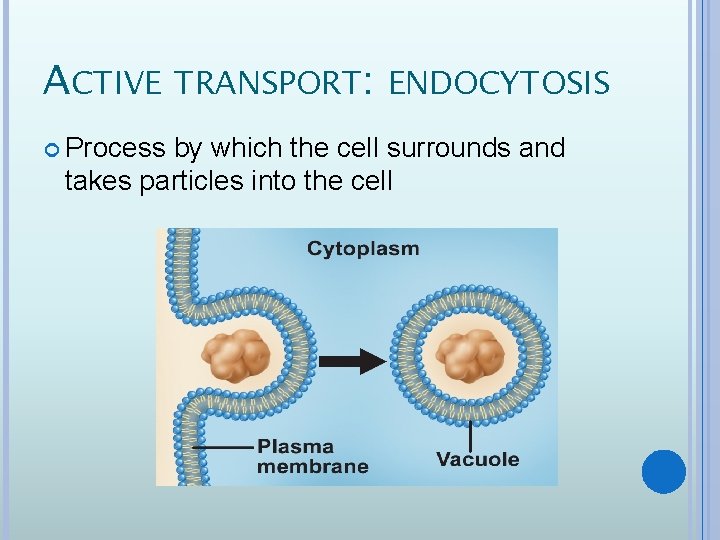
ACTIVE TRANSPORT: ENDOCYTOSIS Process by which the cell surrounds and takes particles into the cell
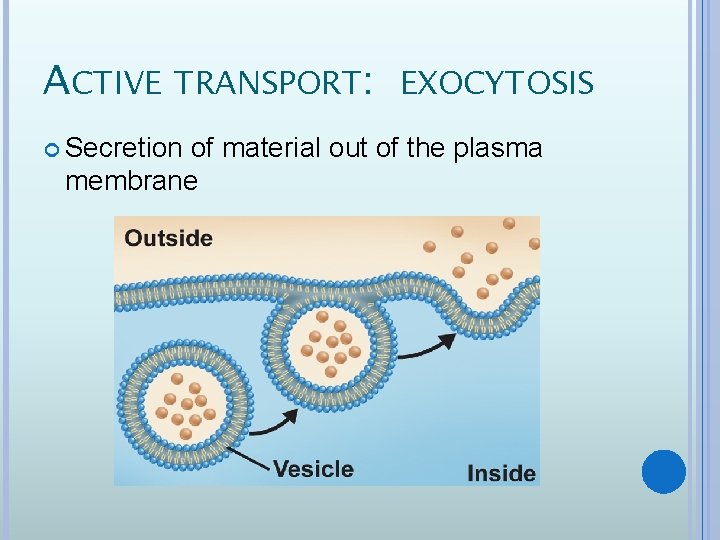
ACTIVE TRANSPORT: EXOCYTOSIS Secretion of material out of the plasma membrane
ACTIVE AND PASSIVE TRANSPORT http: //www. youtube. com/watch? v=kfy 92 hda. AH 0&fe ature=BFa&list=PLF 34 A 8 BA 3412 E 7 D 64
Active and Passive Transport http: //www. youtube. com/watch? v=kfy 92 hda. AH 0&fe ature=BFa&list=PLF 34 A 8 BA 3412 E 7 D 64
- Slides: 52