
Chapter 7 Cellular Respiration Notes Metabolism Crash Course
Chapter 7 Cellular Respiration Notes
Metabolism Crash Course The idea of metabolism is broken down into two parts: • Anabolism – using monomers to construct polymers using energy • Catabolism – breaking down polymers into monomers and releasing energy 2
Cells Use Redox Reactions to Extract Energy • Redox reactions are catalyzed by enzymes • Electrons carry energy from one molecule to another • Cofactors serve as electron carriers • Example: Nicotinamide adenosine dinucleotide (NAD+) • NAD+ accepts 2 electrons and 1 proton to become NADH • Reaction is reversible 3

NAD+ Accepts Electrons to Form NADH 4
Types of Respiration • Aerobic respiration • Final electron acceptor is oxygen (O 2) • Anaerobic respiration • Final electron acceptor is an inorganic molecule (not O 2) • Fermentation • Final electron acceptor is an organic molecule 5
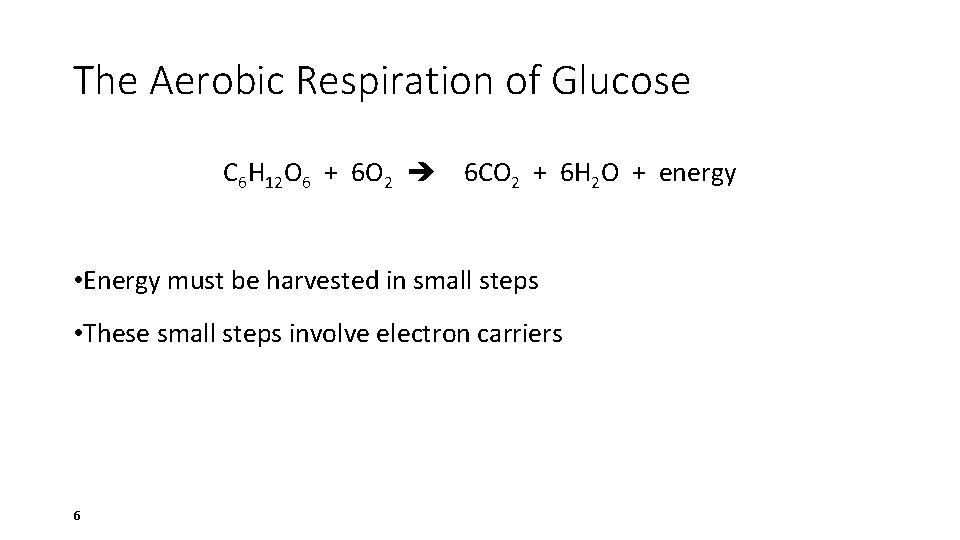
The Aerobic Respiration of Glucose C 6 H 12 O 6 + 6 O 2 6 CO 2 + 6 H 2 O + energy • Energy must be harvested in small steps • These small steps involve electron carriers 6
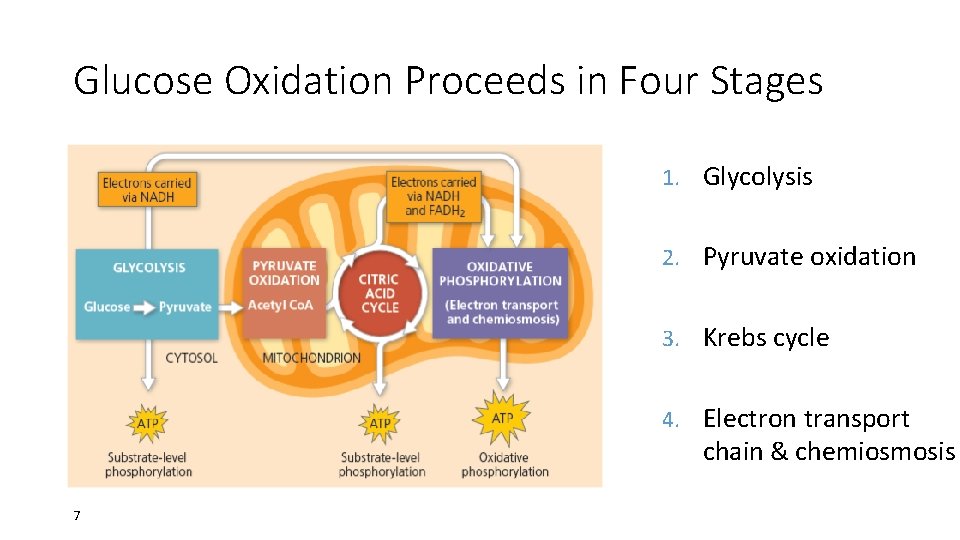
Glucose Oxidation Proceeds in Four Stages 1. Glycolysis 2. Pyruvate oxidation 3. Krebs cycle 4. Electron transport chain & chemiosmosis 7
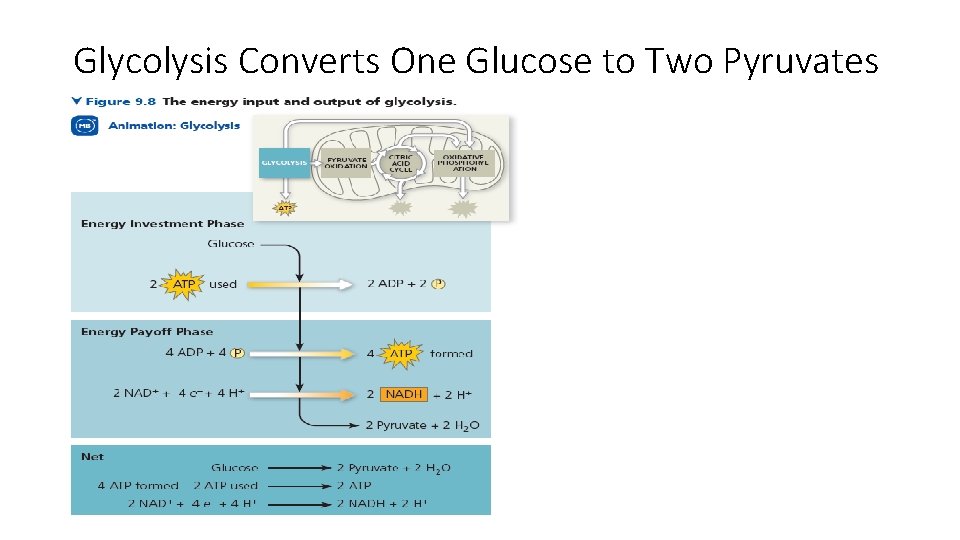
Glycolysis Converts One Glucose to Two Pyruvates 8
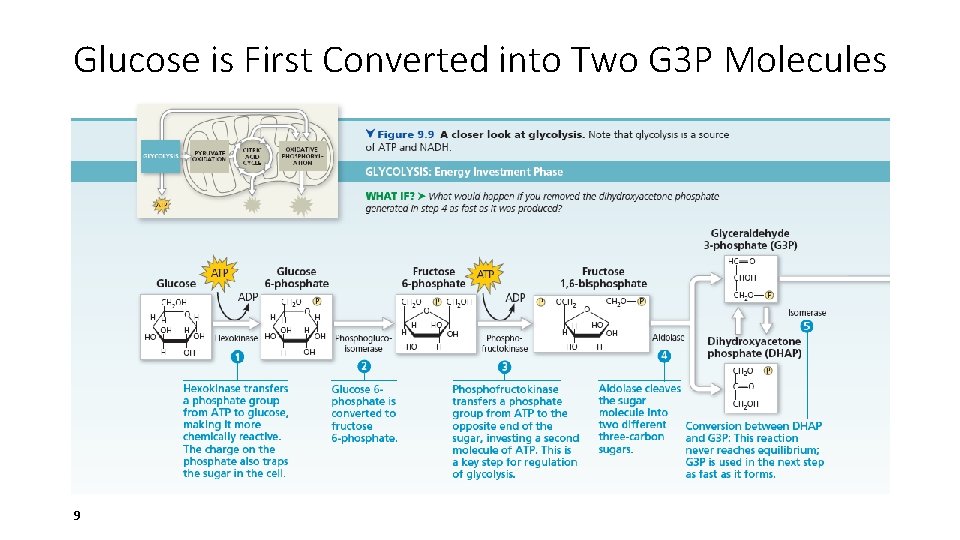
Glucose is First Converted into Two G 3 P Molecules 9
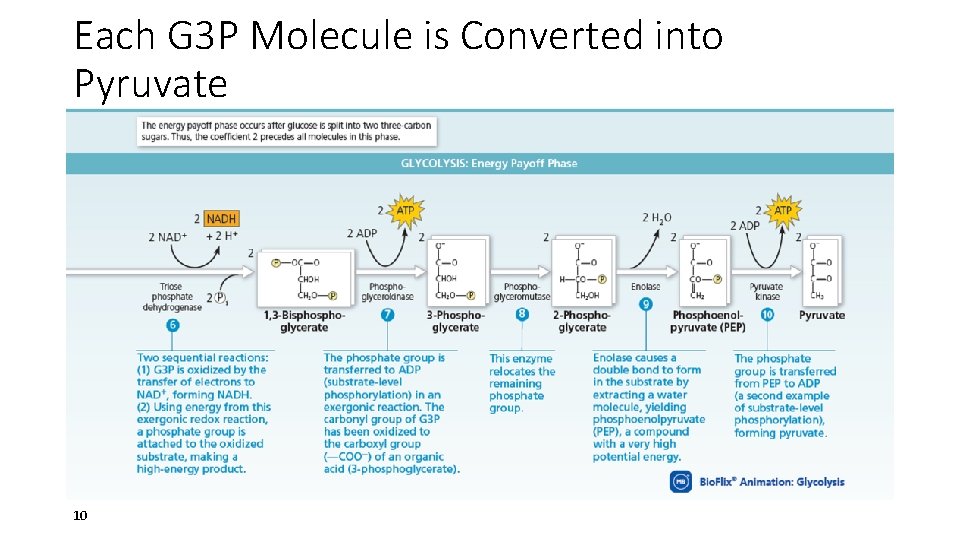
Each G 3 P Molecule is Converted into Pyruvate 10
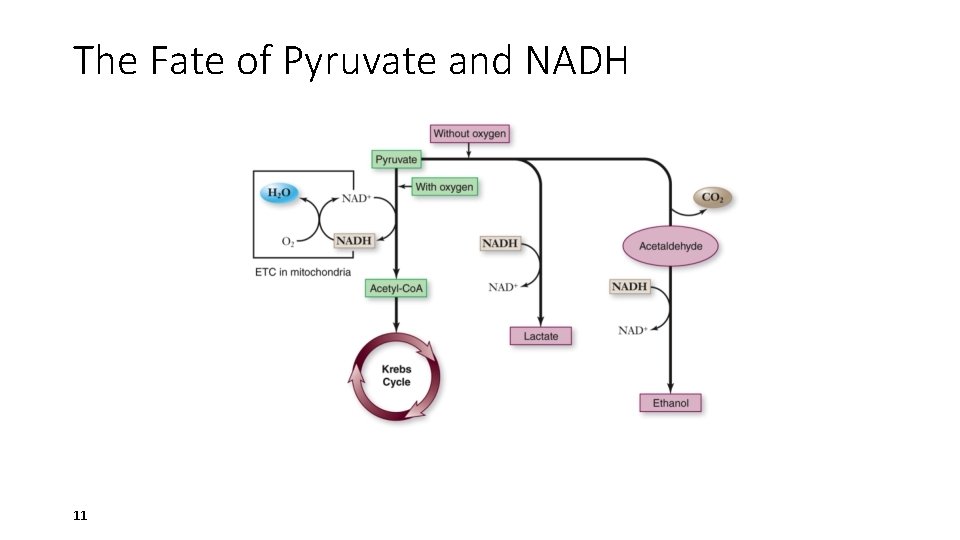
The Fate of Pyruvate and NADH 11
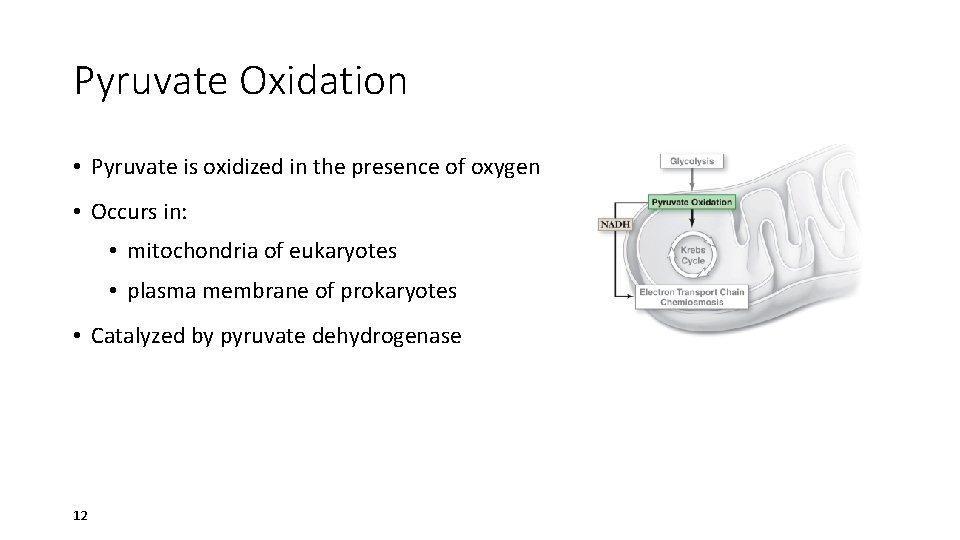
Pyruvate Oxidation • Pyruvate is oxidized in the presence of oxygen • Occurs in: • mitochondria of eukaryotes • plasma membrane of prokaryotes • Catalyzed by pyruvate dehydrogenase 12
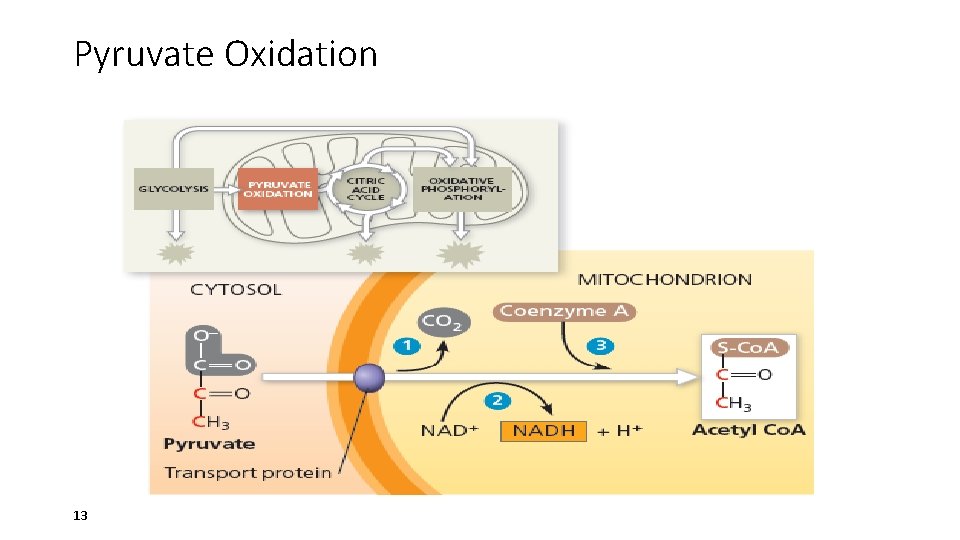
Pyruvate Oxidation 13
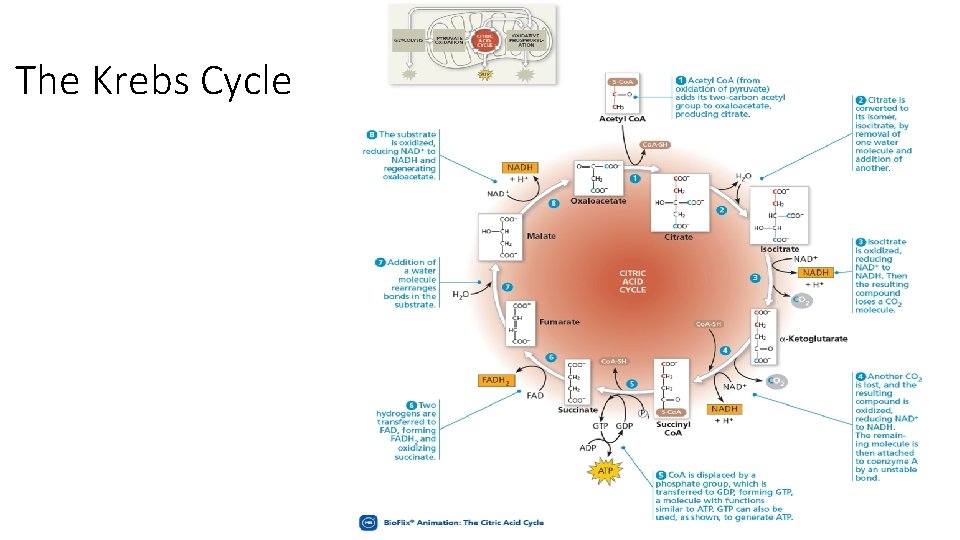
The Krebs Cycle
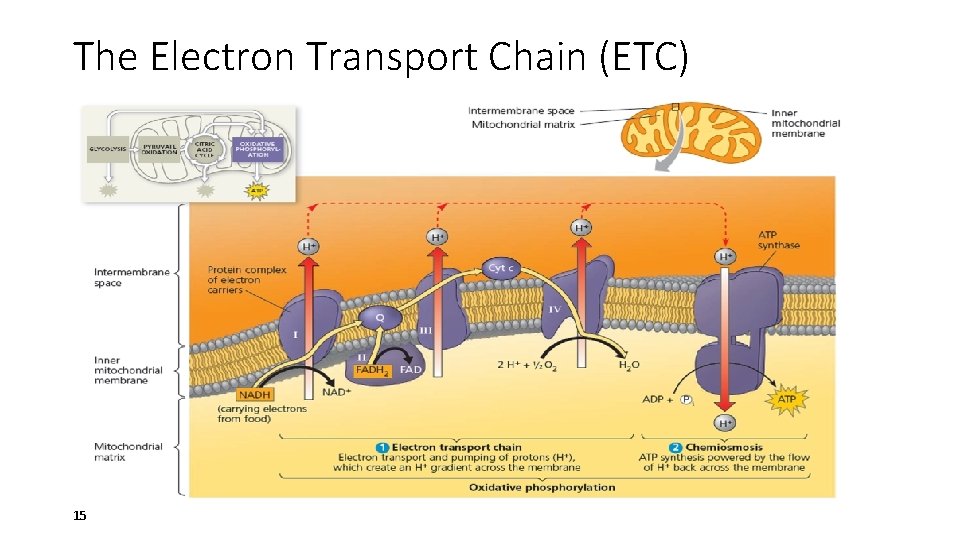
The Electron Transport Chain (ETC) 15
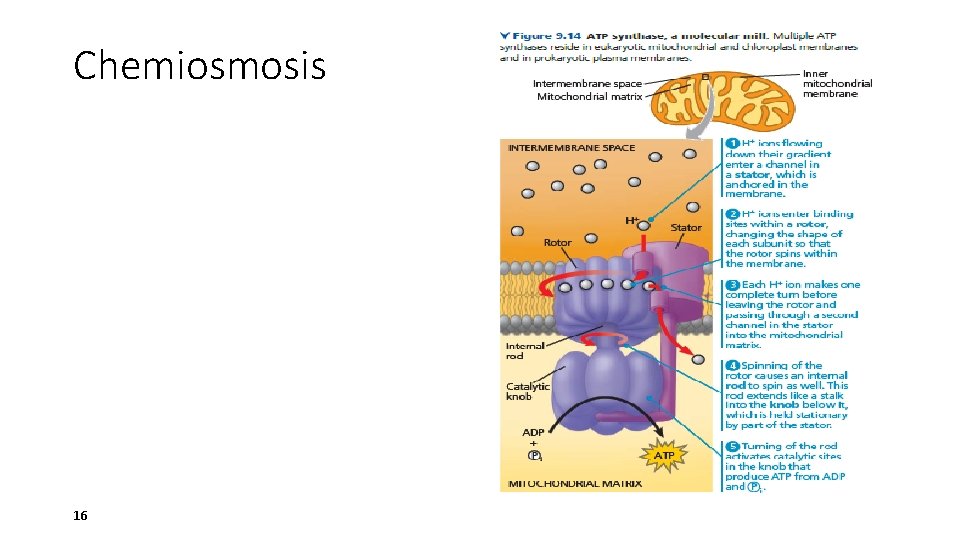
Chemiosmosis 16
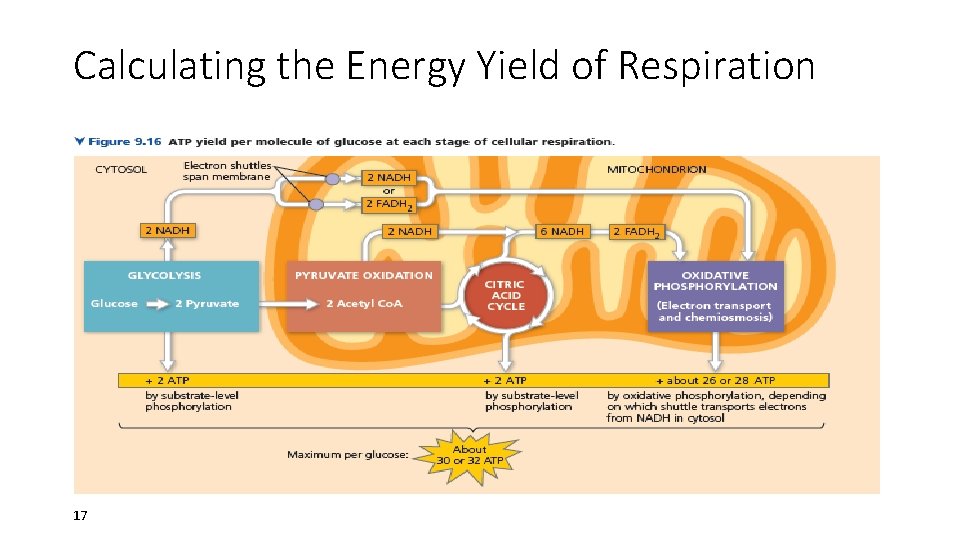
Calculating the Energy Yield of Respiration 17
Oxidation without O 2: Anaerobic Respiration • Inorganic molecules (not O 2) used as final electron acceptor 18
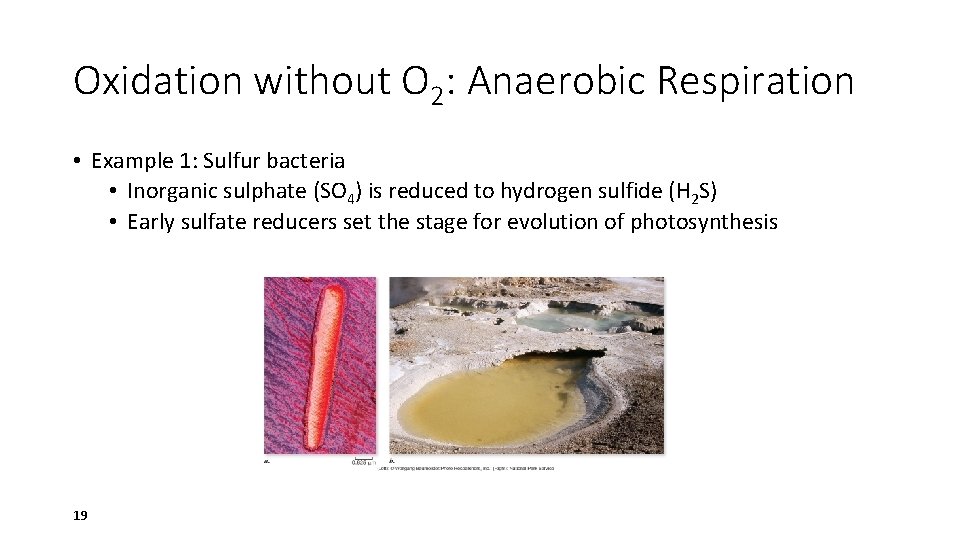
Oxidation without O 2: Anaerobic Respiration • Example 1: Sulfur bacteria • Inorganic sulphate (SO 4) is reduced to hydrogen sulfide (H 2 S) • Early sulfate reducers set the stage for evolution of photosynthesis 19
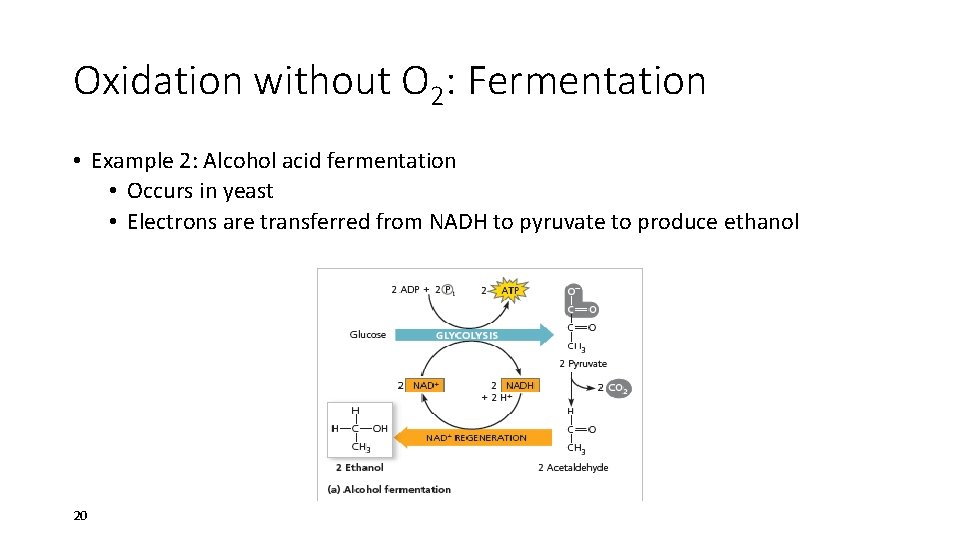
Oxidation without O 2: Fermentation • Example 2: Alcohol acid fermentation • Occurs in yeast • Electrons are transferred from NADH to pyruvate to produce ethanol 20
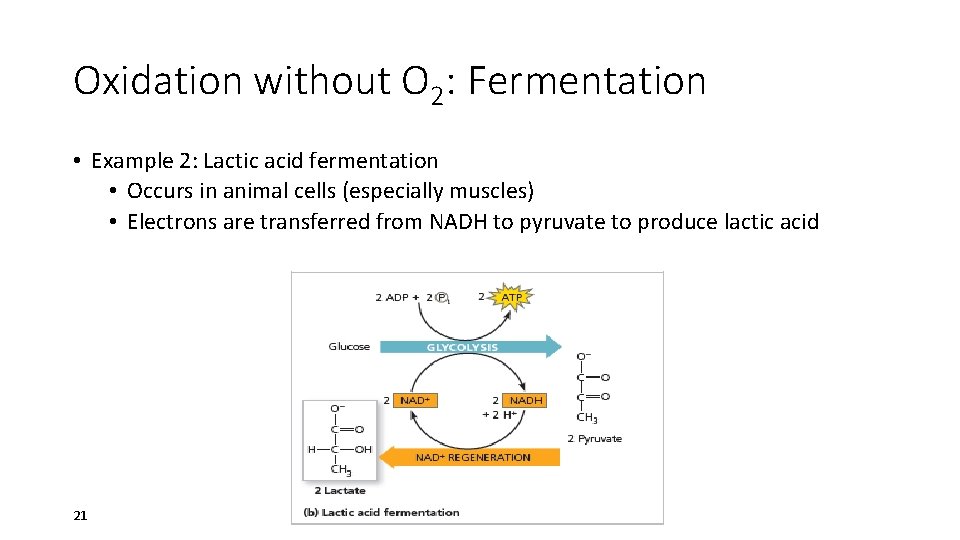
Oxidation without O 2: Fermentation • Example 2: Lactic acid fermentation • Occurs in animal cells (especially muscles) • Electrons are transferred from NADH to pyruvate to produce lactic acid 21
Catabolism of Protein 22
Catabolism of Fats 23
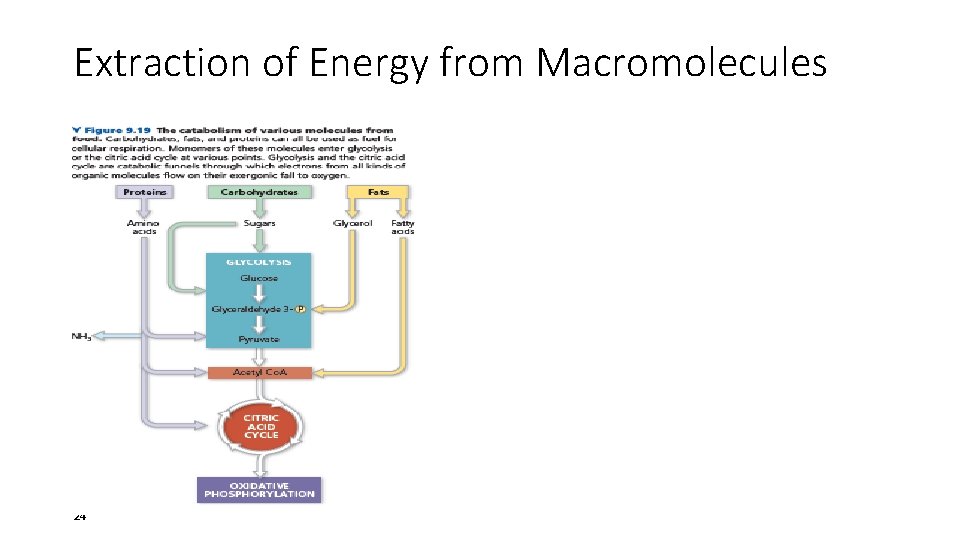
Extraction of Energy from Macromolecules 24
- Slides: 24