
CHAPTER 7 CELLULAR RESPIRATION CELLULAR RESPIRATION Process where
- Slides: 23
CHAPTER 7: CELLULAR RESPIRATION
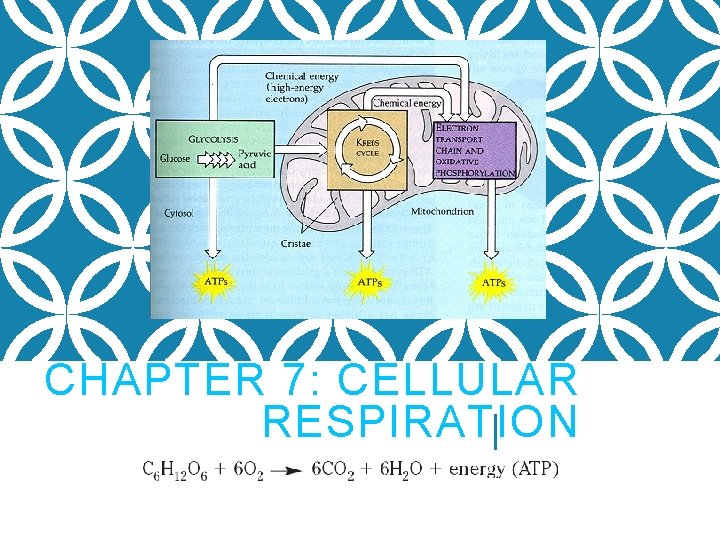
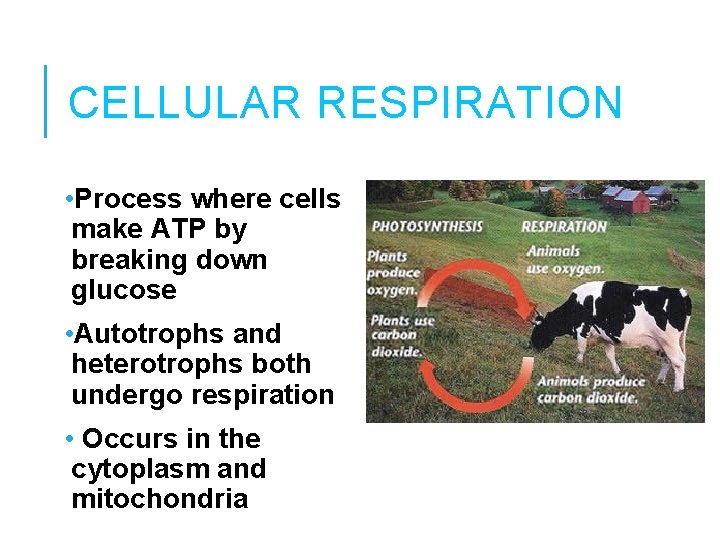
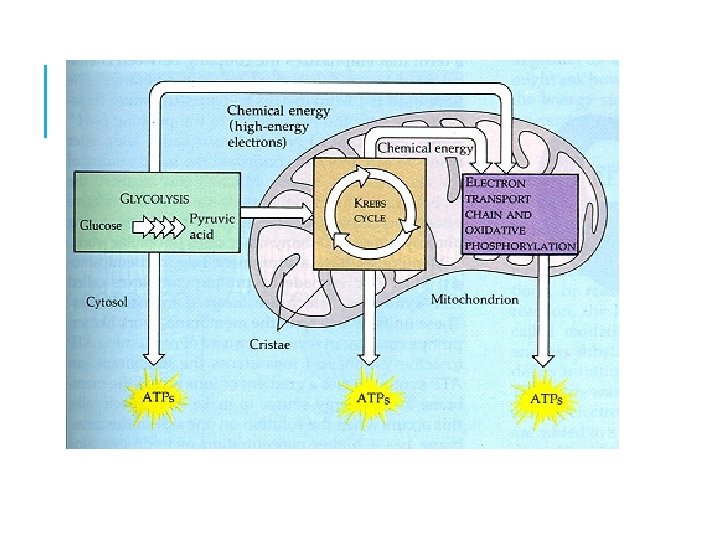
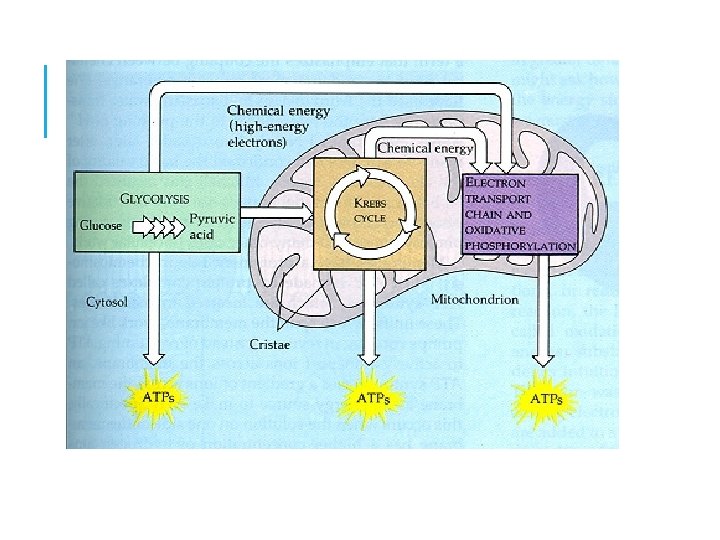
CELLULAR RESPIRATION • Process where cells make ATP by breaking down glucose • Autotrophs and heterotrophs both undergo respiration • Occurs in the cytoplasm and mitochondria
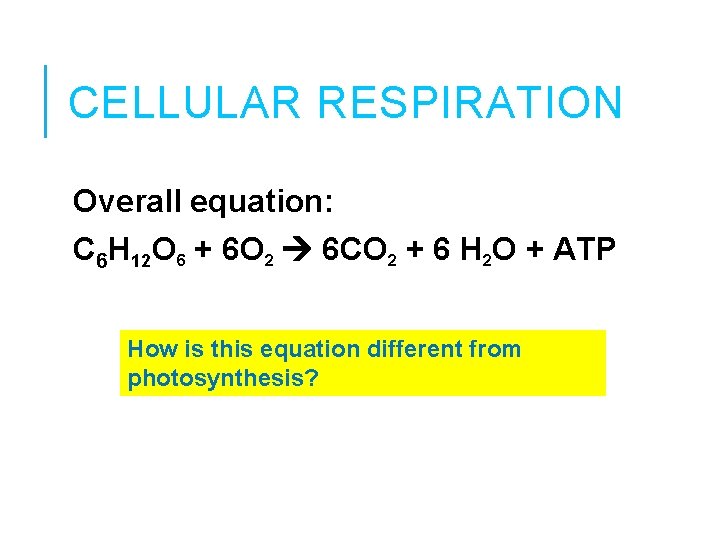
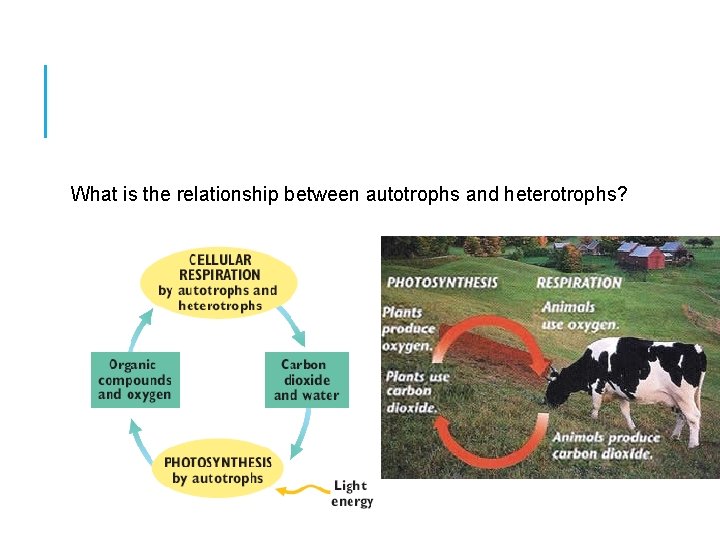
CELLULAR RESPIRATION Overall equation: C 6 H 12 O 6 + 6 O 2 6 CO 2 + 6 H 2 O + ATP How is this equation different from photosynthesis?
WHAT’S SO GREAT ABOUT ATP? Every time you move a muscle, think, breathe, replicate your DNA, every time your heart beats - you use ATP to do this work!
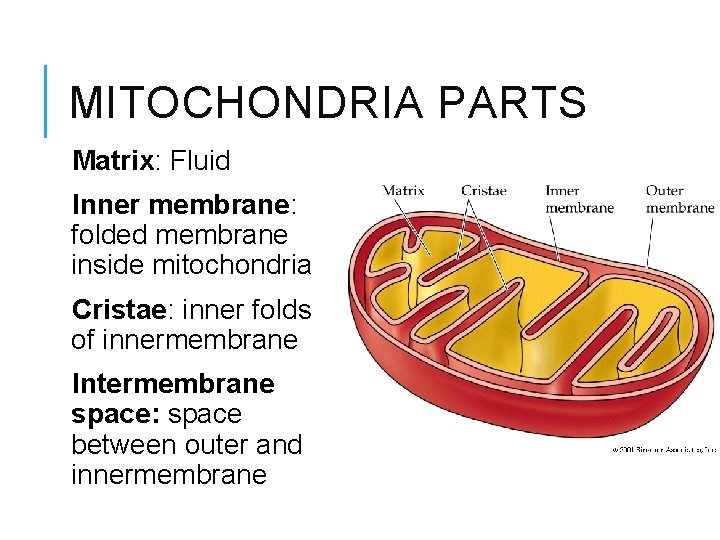
MITOCHONDRIA PARTS Matrix: Fluid Inner membrane: folded membrane inside mitochondria Cristae: inner folds of innermembrane Intermembrane space: space between outer and innermembrane
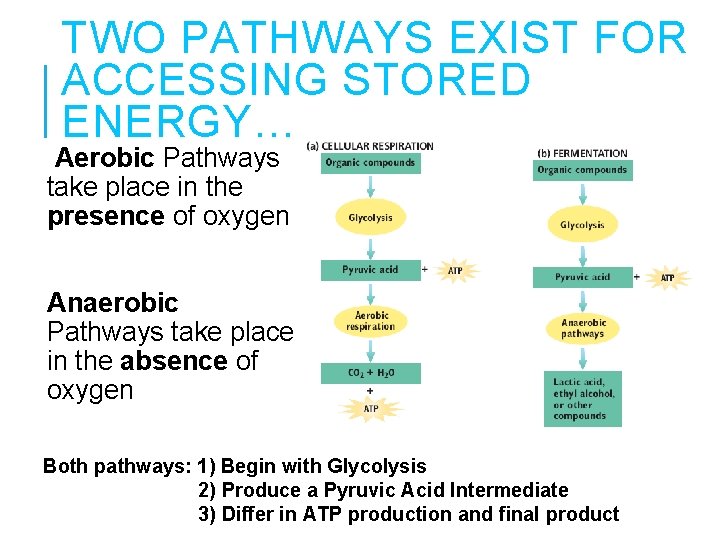
TWO PATHWAYS EXIST FOR ACCESSING STORED ENERGY… Aerobic Pathways take place in the presence of oxygen Anaerobic Pathways take place in the absence of oxygen Both pathways: 1) Begin with Glycolysis 2) Produce a Pyruvic Acid Intermediate 3) Differ in ATP production and final product
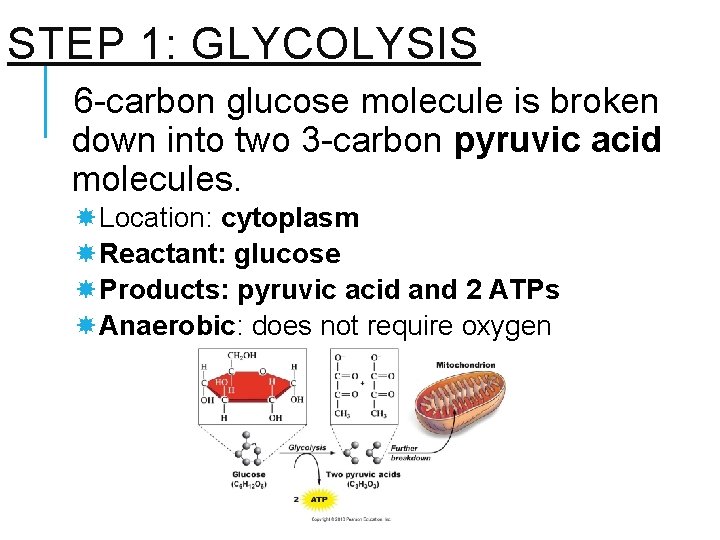
STEP 1: GLYCOLYSIS 6 -carbon glucose molecule is broken down into two 3 -carbon pyruvic acid molecules. Location: cytoplasm Reactant: glucose Products: pyruvic acid and 2 ATPs Anaerobic: does not require oxygen
If oxygen is present then Aerobic respiration occurs If oxygen is not available then cells continue to perform glycolysis to make 2 ATPs
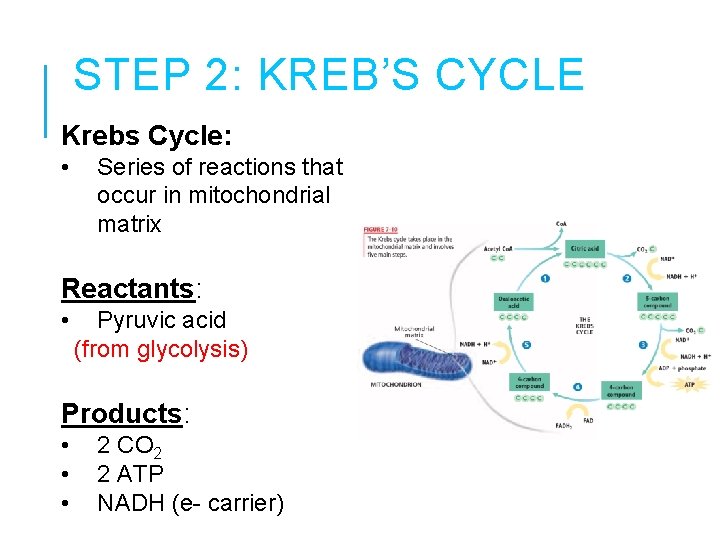
STEP 2: KREB’S CYCLE Krebs Cycle: • Series of reactions that occur in mitochondrial matrix Reactants: • Pyruvic acid (from glycolysis) Products: • • • 2 CO 2 2 ATP NADH (e- carrier)
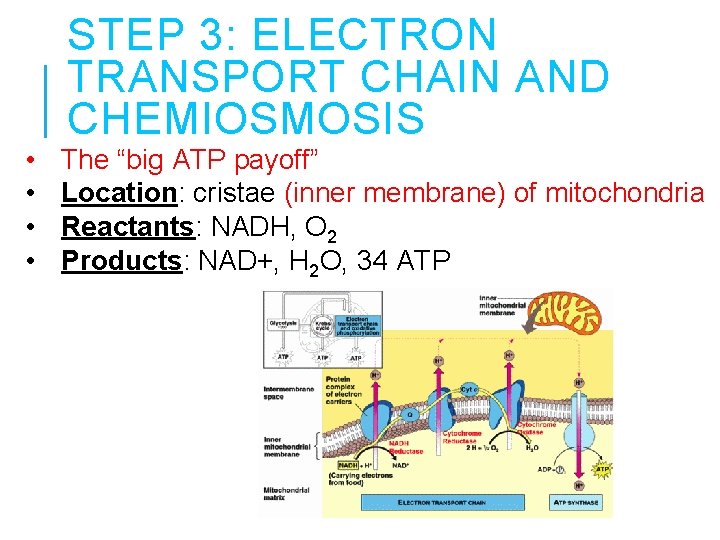
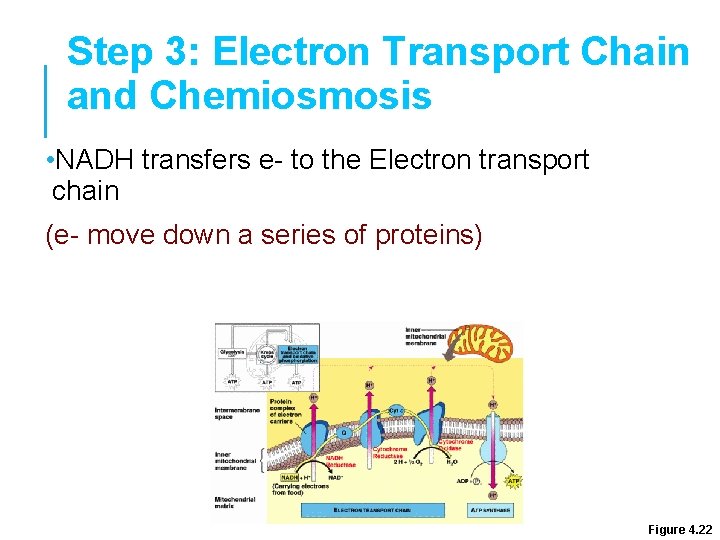
• • STEP 3: ELECTRON TRANSPORT CHAIN AND CHEMIOSMOSIS The “big ATP payoff” Location: cristae (inner membrane) of mitochondria Reactants: NADH, O 2 Products: NAD+, H 2 O, 34 ATP
Step 3: Electron Transport Chain and Chemiosmosis • NADH transfers e- to the Electron transport chain (e- move down a series of proteins) Figure 4. 22
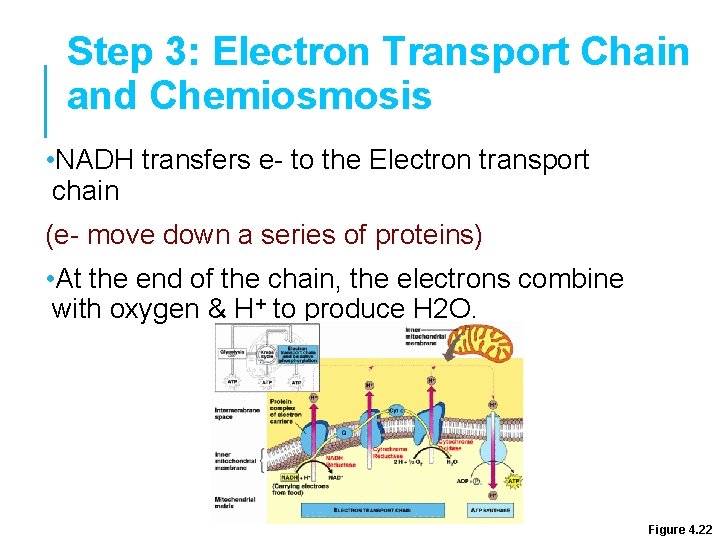
Step 3: Electron Transport Chain and Chemiosmosis • NADH transfers e- to the Electron transport chain (e- move down a series of proteins) • At the end of the chain, the electrons combine with oxygen & H+ to produce H 2 O. Figure 4. 22
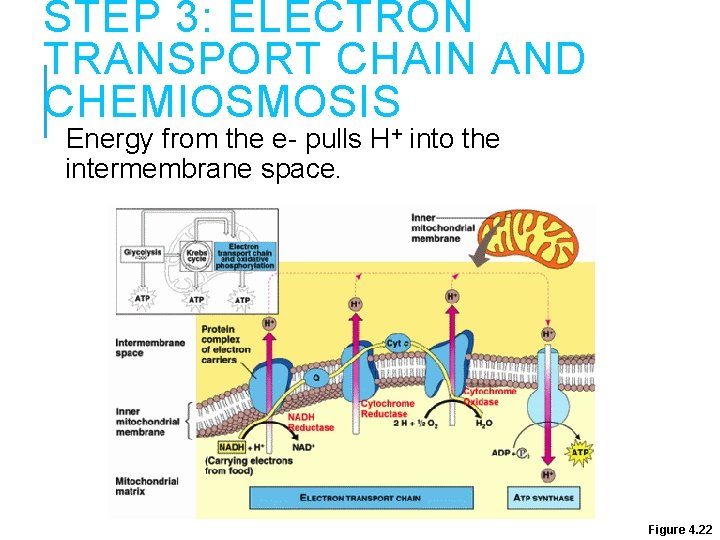
STEP 3: ELECTRON TRANSPORT CHAIN AND CHEMIOSMOSIS Energy from the e- pulls H+ into the intermembrane space. Figure 4. 22
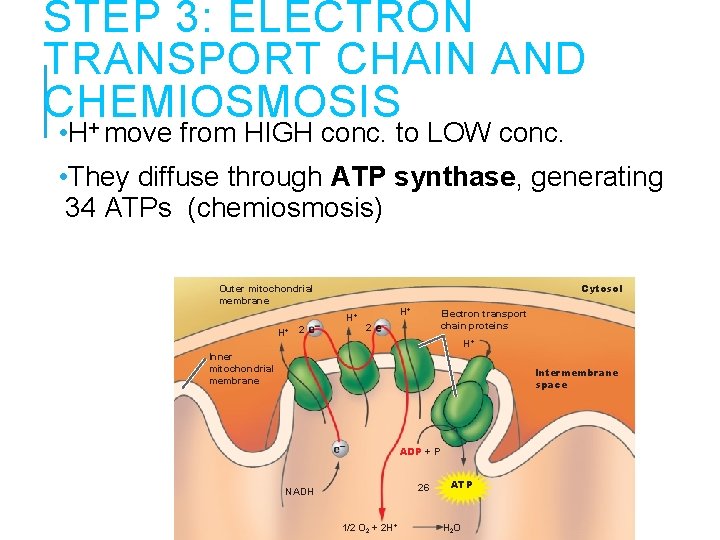
STEP 3: ELECTRON TRANSPORT CHAIN AND CHEMIOSMOSIS + • H move from HIGH conc. to LOW conc. • They diffuse through ATP synthase, generating 34 ATPs (chemiosmosis) Cytosol Outer mitochondrial membrane H+ H+ 2 H+ Electron transport chain proteins 2 H+ Inner mitochondrial membrane Intermembrane space ADP + P 26 NADH 1/2 O 2 + 2 H+ ATP H 2 O
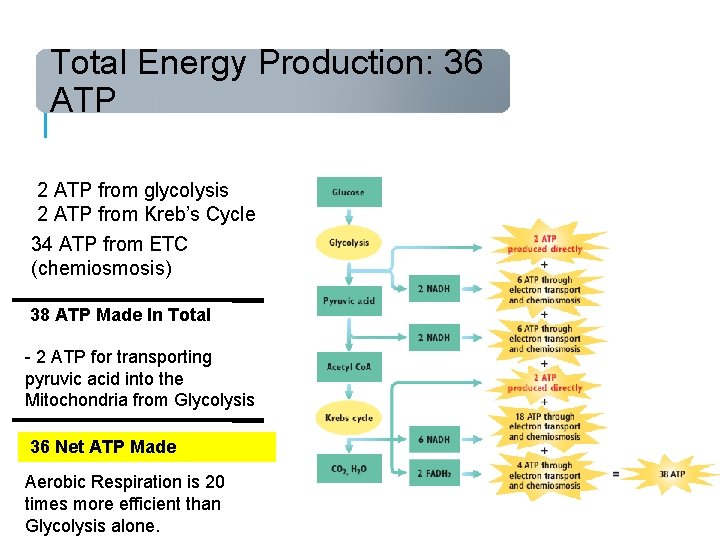
Total Energy Production: 36 ATP 2 ATP from glycolysis 2 ATP from Kreb’s Cycle 34 ATP from ETC (chemiosmosis) 38 ATP Made In Total - 2 ATP for transporting pyruvic acid into the Mitochondria from Glycolysis 36 Net ATP Made Aerobic Respiration is 20 times more efficient than Glycolysis alone.
ANAEROBIC VS. AEROBIC Anaerobic pathway (fermentation): Glycolysis 2 ATP
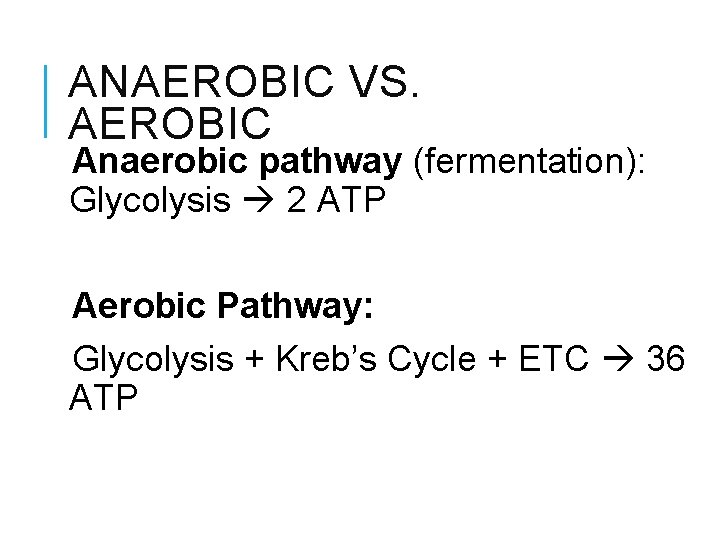
ANAEROBIC VS. AEROBIC Anaerobic pathway (fermentation): Glycolysis 2 ATP Aerobic Pathway: Glycolysis + Kreb’s Cycle + ETC 36 ATP
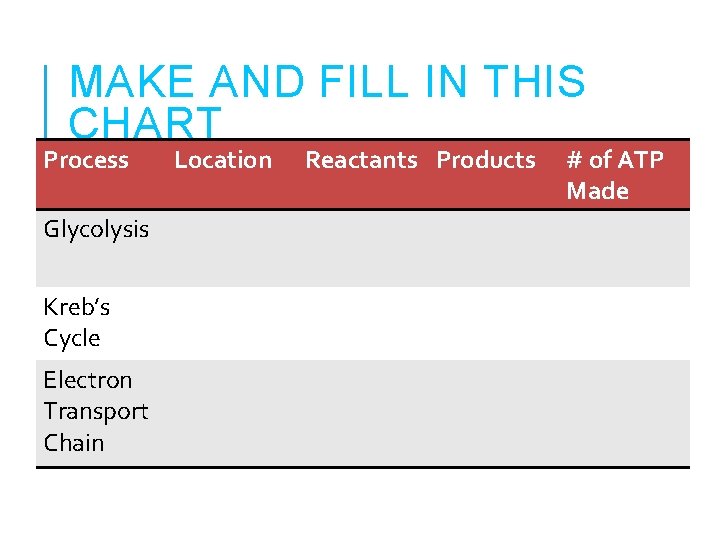
MAKE AND FILL IN THIS CHART Process Glycolysis Kreb’s Cycle Electron Transport Chain Location Reactants Products # of ATP Made
MOVIES: 342101, 342201 & 342301
Fact: Our bodies uses ATP at the rate of about 1 million molecules per cell per second. There are more than 100 trillion cells in the human body. That’s about 100, 000, 000 ATP molecules used in your body each second!
What is the relationship between autotrophs and heterotrophs?