
Chapter 7 CELLS Important scientists 1 2 3


- Slides: 13
Chapter 7 - CELLS Important scientists: 1. 2. 3. 4. 5. Hooke (1665) – saw dead cork cells, named cells Van Leeuwenhoek (1673 ) – first to see living cells Schleiden (1838) – all plants are made of cells Schwann (1839) - all animals are made of cells Virchow (1854) – cells come from other cells by reproduction
Cell Theory 1. All living things are made of cells. 2. Cells are the basic unit of structure and function. 3. Cells come from pre-existing cells by reproduction.
Limits to Cell Growth: • The surface area/volume ratio limits cell size • Smaller cells can get nutrients in and wastes out more efficiently • If the cell grows too large it must divide or die
Types of Cells Prokaryote – no nucleus or membrane bound organelles (bacteria) Eukaryote – has a nucleus and membrane bound organelles
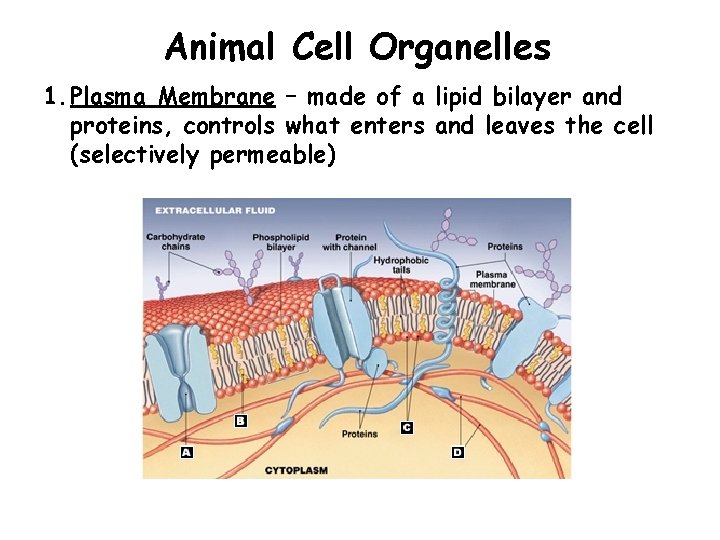
Animal Cell Organelles 1. Plasma Membrane – made of a lipid bilayer and proteins, controls what enters and leaves the cell (selectively permeable)
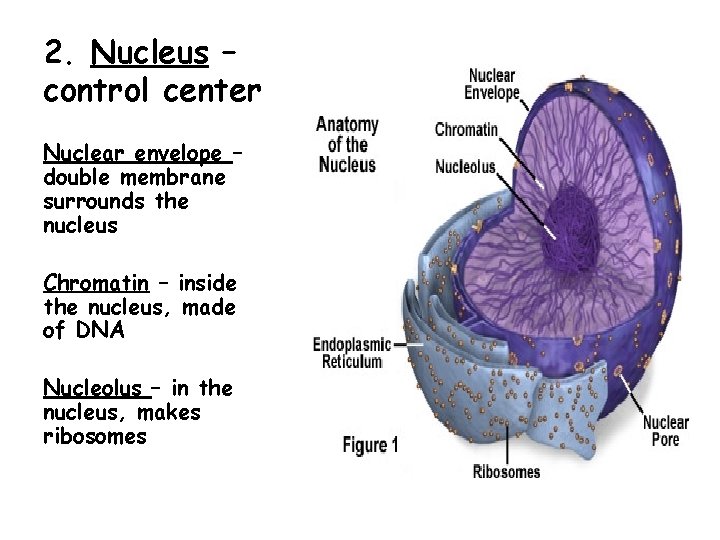
2. Nucleus – control center Nuclear envelope – double membrane surrounds the nucleus Chromatin – inside the nucleus, made of DNA Nucleolus – in the nucleus, makes ribosomes
3. Cytoplasm • Between the plasma membrane and the nucleus • Contains fluid and organelles
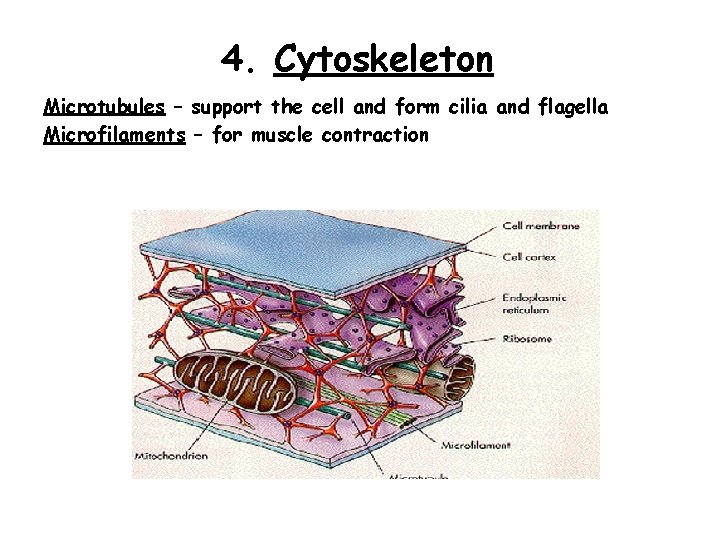
4. Cytoskeleton Microtubules – support the cell and form cilia and flagella Microfilaments – for muscle contraction
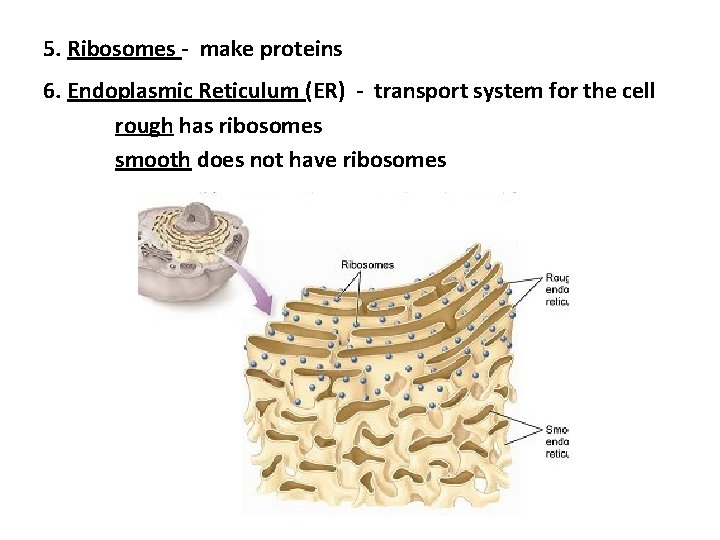
5. Ribosomes - make proteins 6. Endoplasmic Reticulum (ER) - transport system for the cell rough has ribosomes smooth does not have ribosomes
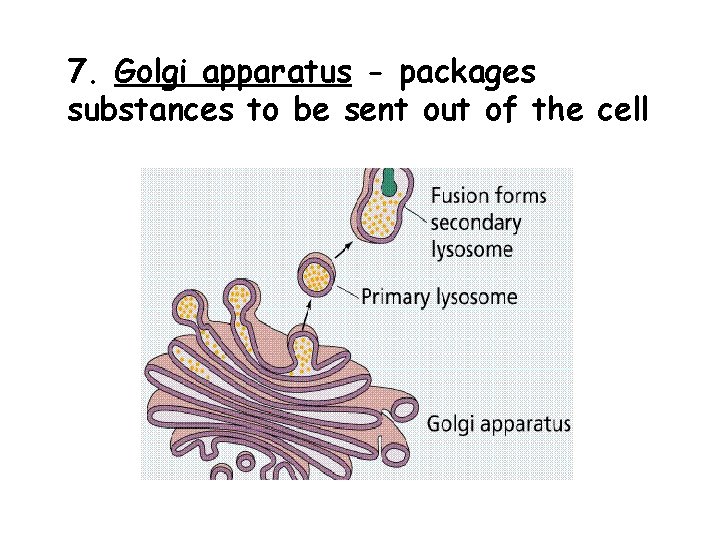
7. Golgi apparatus - packages substances to be sent out of the cell
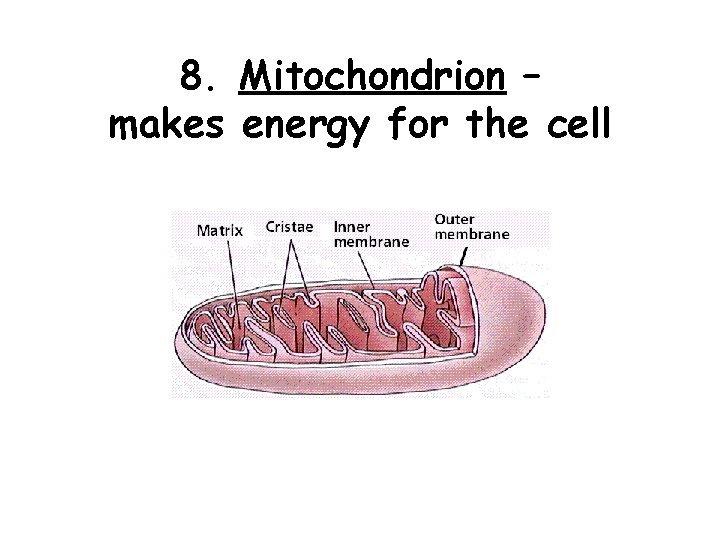
8. Mitochondrion – makes energy for the cell
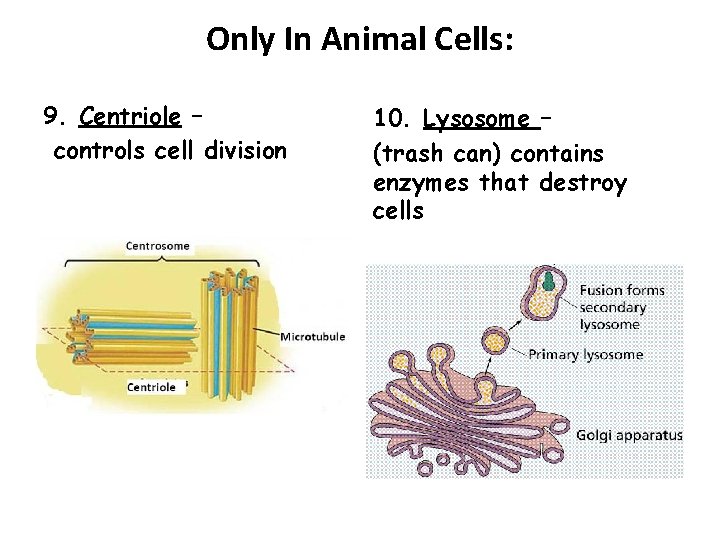
Only In Animal Cells: 9. Centriole – controls cell division 10. Lysosome – (trash can) contains enzymes that destroy cells
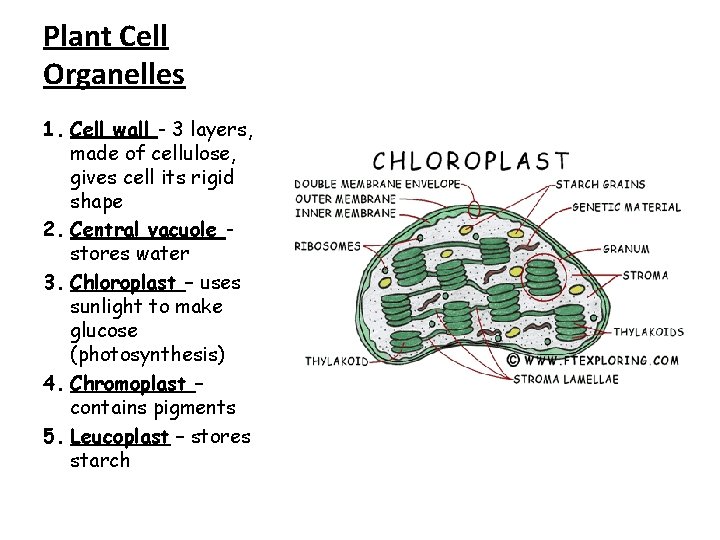
Plant Cell Organelles 1. Cell wall - 3 layers, made of cellulose, gives cell its rigid shape 2. Central vacuole stores water 3. Chloroplast – uses sunlight to make glucose (photosynthesis) 4. Chromoplast – contains pigments 5. Leucoplast – stores starch