
Chapter 7 Cell Structure Function Section 2 Cell
- Slides: 38
Chapter 7: Cell Structure & Function Section 2: Cell Structure
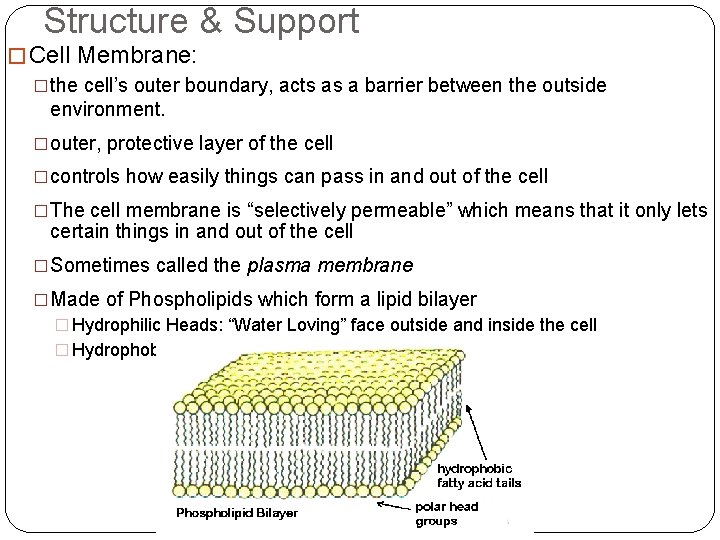
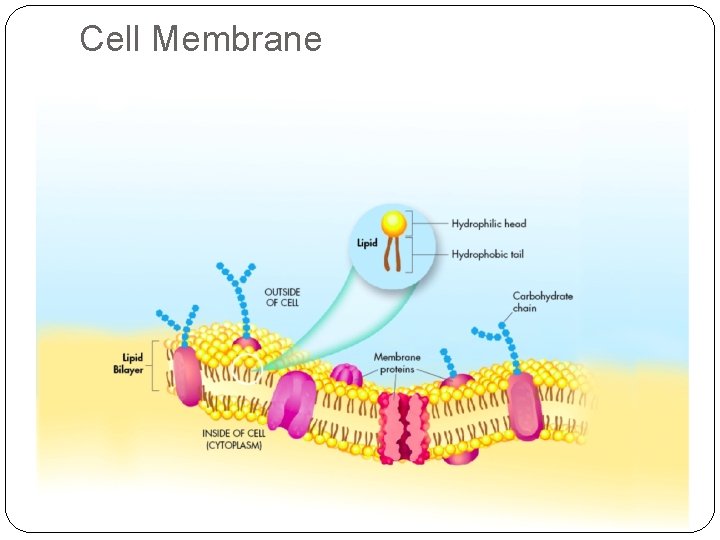
Structure & Support � Cell Membrane: �the cell’s outer boundary, acts as a barrier between the outside environment. �outer, protective layer of the cell �controls how easily things can pass in and out of the cell �The cell membrane is “selectively permeable” which means that it only lets certain things in and out of the cell �Sometimes called the plasma membrane �Made of Phospholipids which form a lipid bilayer � Hydrophilic Heads: “Water Loving” face outside and inside the cell � Hydrophobic Tails: “Water Fearing” inside of the bilayer
Cell Membrane
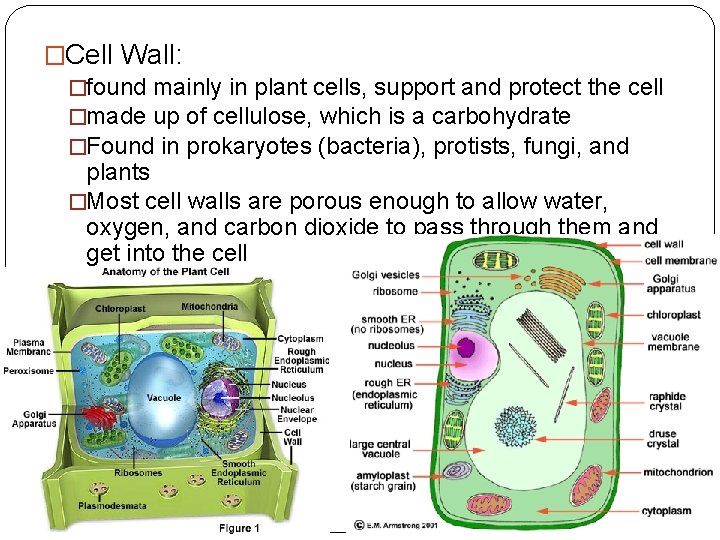
�Cell Wall: �found mainly in plant cells, support and protect the cell �made up of cellulose, which is a carbohydrate �Found in prokaryotes (bacteria), protists, fungi, and plants �Most cell walls are porous enough to allow water, oxygen, and carbon dioxide to pass through them and get into the cell
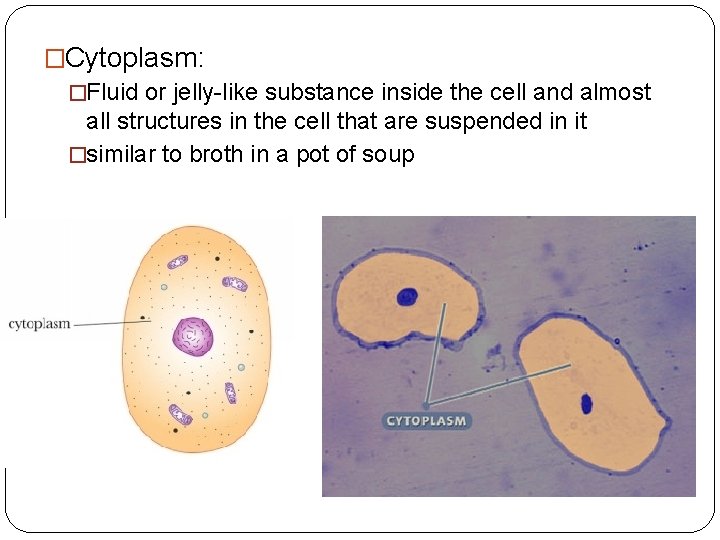
�Cytoplasm: �Fluid or jelly-like substance inside the cell and almost all structures in the cell that are suspended in it �similar to broth in a pot of soup
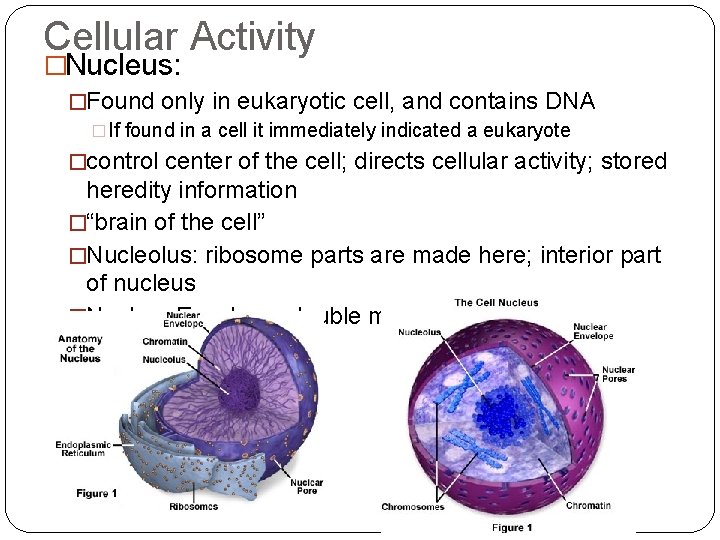
Cellular Activity �Nucleus: �Found only in eukaryotic cell, and contains DNA �If found in a cell it immediately indicated a eukaryote �control center of the cell; directs cellular activity; stored heredity information �“brain of the cell” �Nucleolus: ribosome parts are made here; interior part of nucleus �Nuclear Envelope: double membrane surrounding nucleus
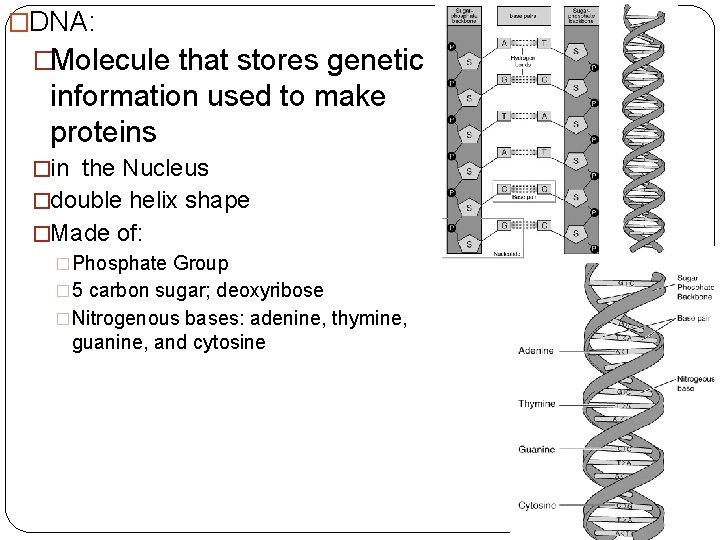
�DNA: �Molecule that stores genetic information used to make proteins �in the Nucleus �double helix shape �Made of: �Phosphate Group � 5 carbon sugar; deoxyribose �Nitrogenous bases: adenine, thymine, guanine, and cytosine
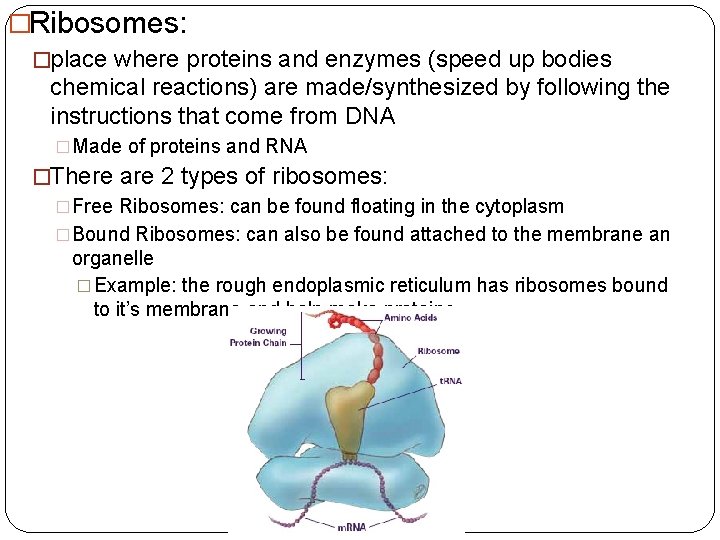
�Ribosomes: �place where proteins and enzymes (speed up bodies chemical reactions) are made/synthesized by following the instructions that come from DNA �Made of proteins and RNA �There are 2 types of ribosomes: �Free Ribosomes: can be found floating in the cytoplasm �Bound Ribosomes: can also be found attached to the membrane an organelle � Example: the rough endoplasmic reticulum has ribosomes bound to it’s membrane and help make proteins
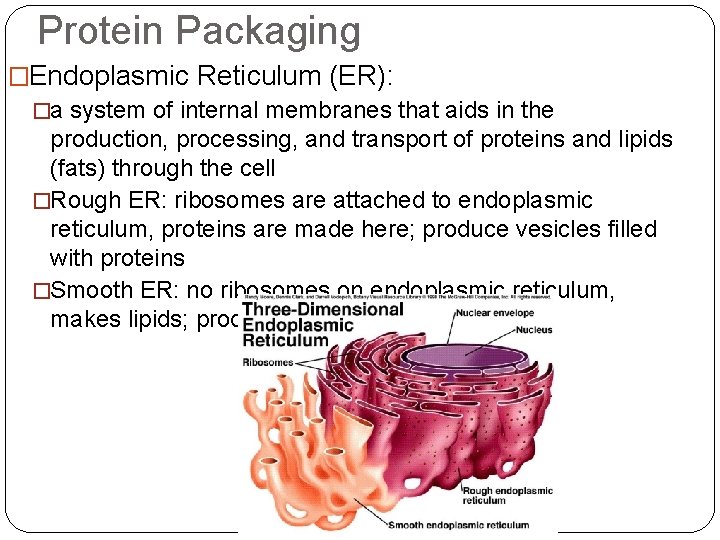
Protein Packaging �Endoplasmic Reticulum (ER): �a system of internal membranes that aids in the production, processing, and transport of proteins and lipids (fats) through the cell �Rough ER: ribosomes are attached to endoplasmic reticulum, proteins are made here; produce vesicles filled with proteins �Smooth ER: no ribosomes on endoplasmic reticulum, makes lipids; produce vesicles filled with lipids
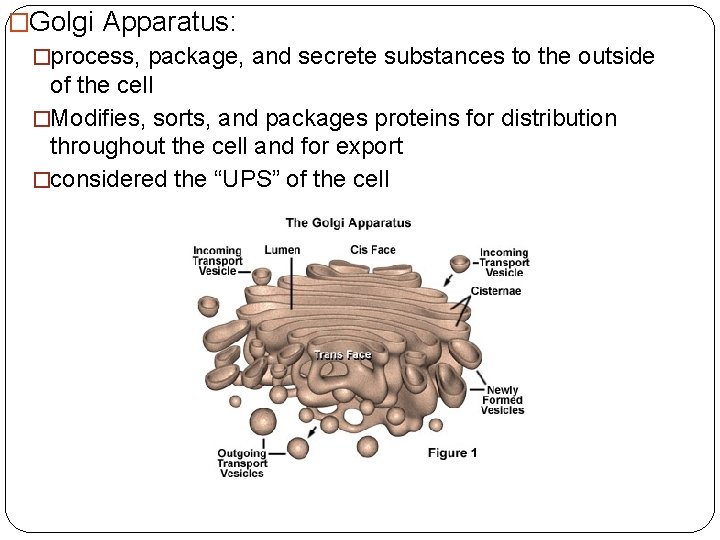
�Golgi Apparatus: �process, package, and secrete substances to the outside of the cell �Modifies, sorts, and packages proteins for distribution throughout the cell and for export �considered the “UPS” of the cell
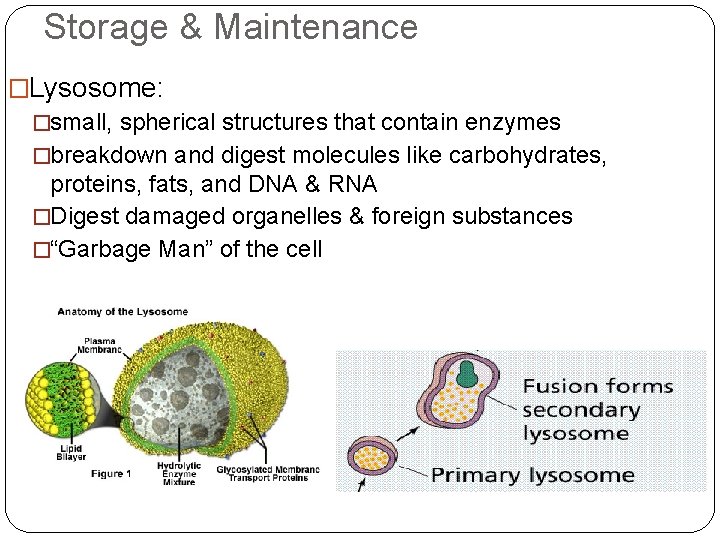
Storage & Maintenance �Lysosome: �small, spherical structures that contain enzymes �breakdown and digest molecules like carbohydrates, proteins, fats, and DNA & RNA �Digest damaged organelles & foreign substances �“Garbage Man” of the cell
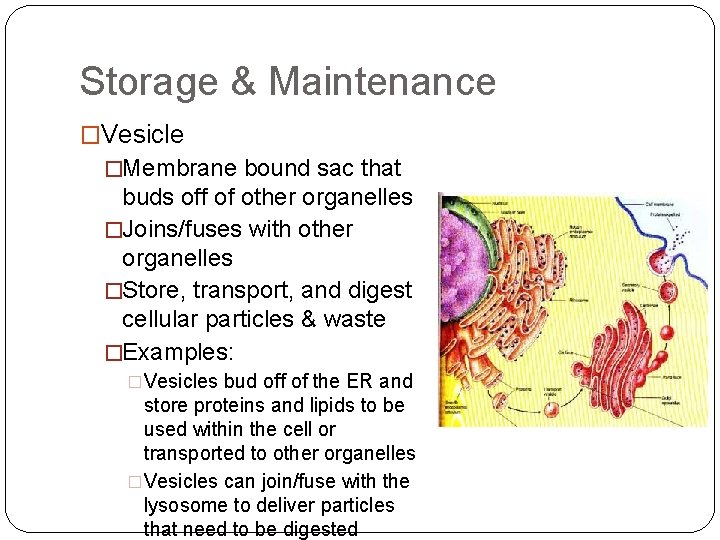
Storage & Maintenance �Vesicle �Membrane bound sac that buds off of other organelles �Joins/fuses with other organelles �Store, transport, and digest cellular particles & waste �Examples: �Vesicles bud off of the ER and store proteins and lipids to be used within the cell or transported to other organelles �Vesicles can join/fuse with the lysosome to deliver particles that need to be digested
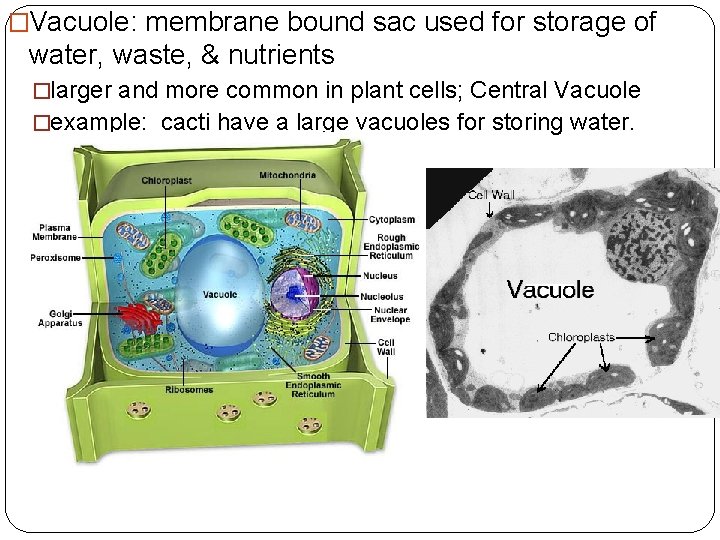
�Vacuole: membrane bound sac used for storage of water, waste, & nutrients �larger and more common in plant cells; Central Vacuole �example: cacti have a large vacuoles for storing water.
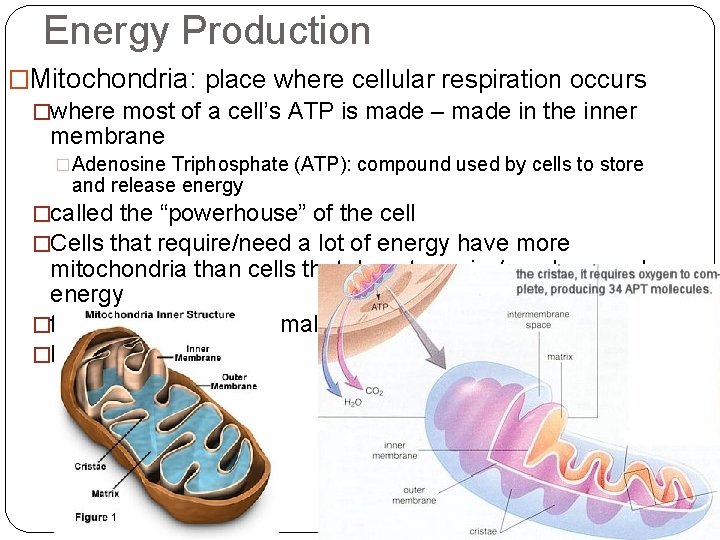
Energy Production �Mitochondria: place where cellular respiration occurs �where most of a cell’s ATP is made – made in the inner membrane �Adenosine Triphosphate (ATP): compound used by cells to store and release energy �called the “powerhouse” of the cell �Cells that require/need a lot of energy have more mitochondria than cells that do not require/need as much energy �found in plant and animal cells �has its own DNA
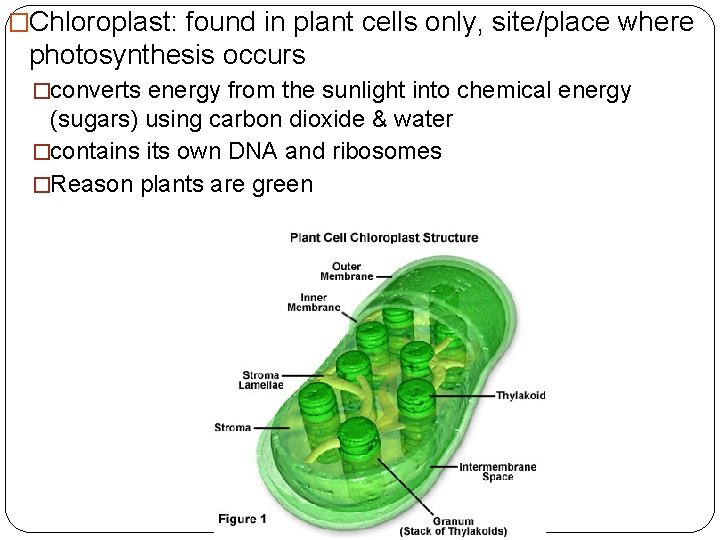
�Chloroplast: found in plant cells only, site/place where photosynthesis occurs �converts energy from the sunlight into chemical energy (sugars) using carbon dioxide & water �contains its own DNA and ribosomes �Reason plants are green
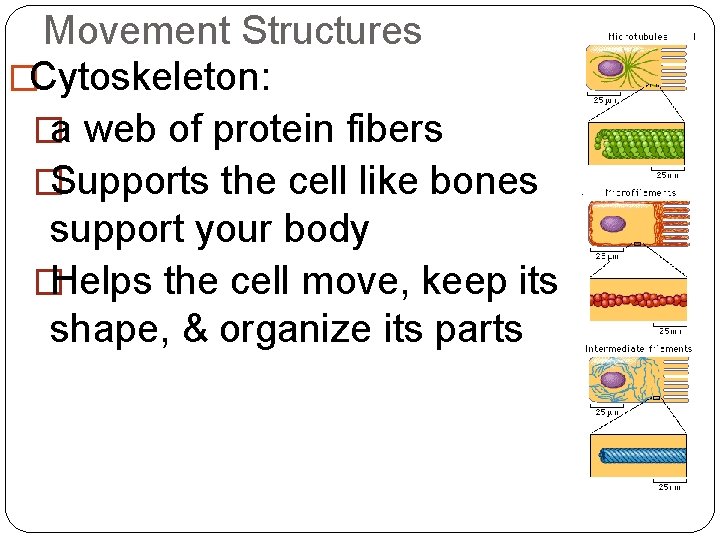
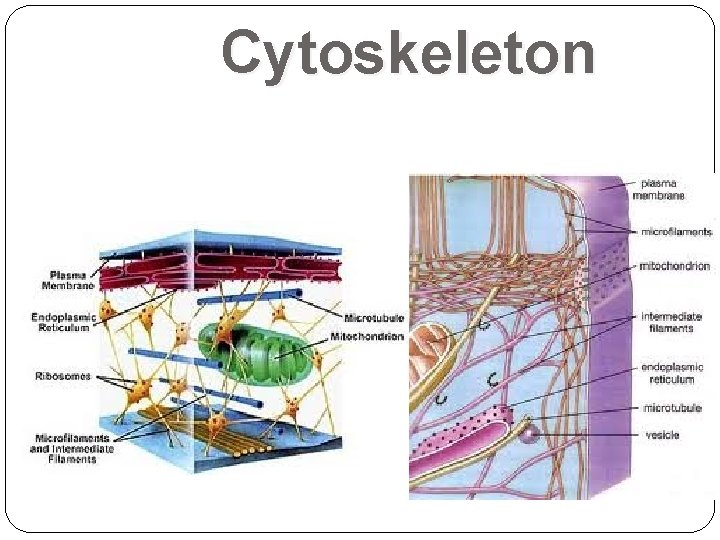
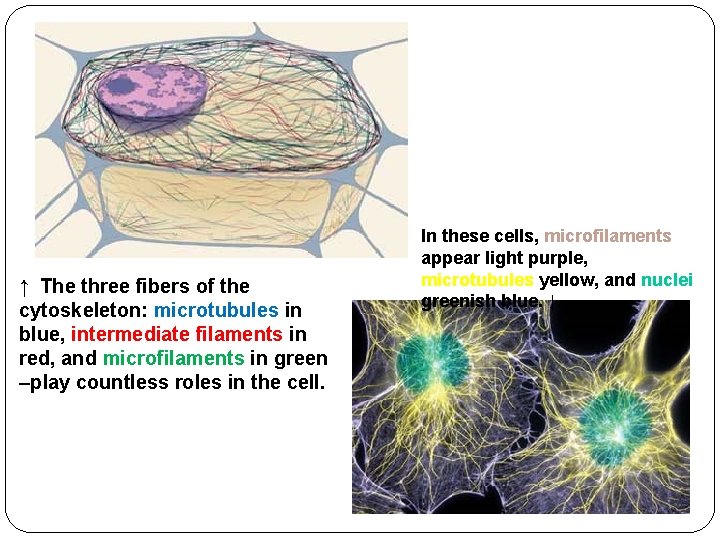
Movement Structures �Cytoskeleton: �a web of protein fibers �Supports the cell like bones support your body �Helps the cell move, keep its shape, & organize its parts
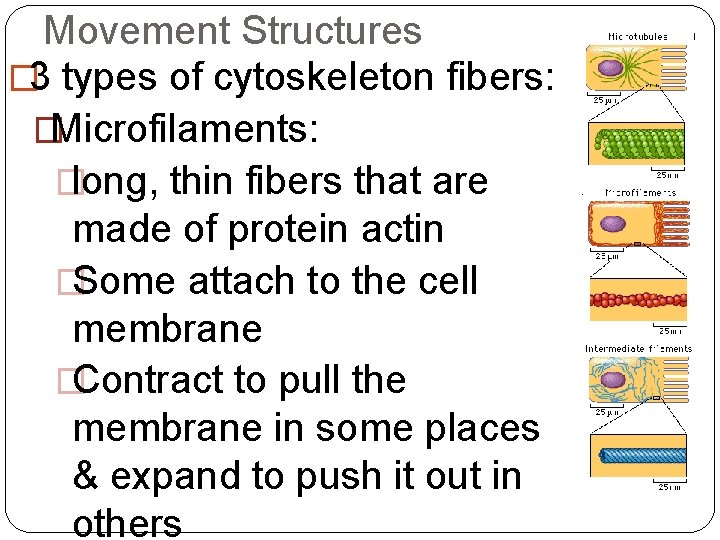
Movement Structures � 3 types of cytoskeleton fibers: �Microfilaments: �long, thin fibers that are made of protein actin �Some attach to the cell membrane �Contract to pull the membrane in some places & expand to push it out in others
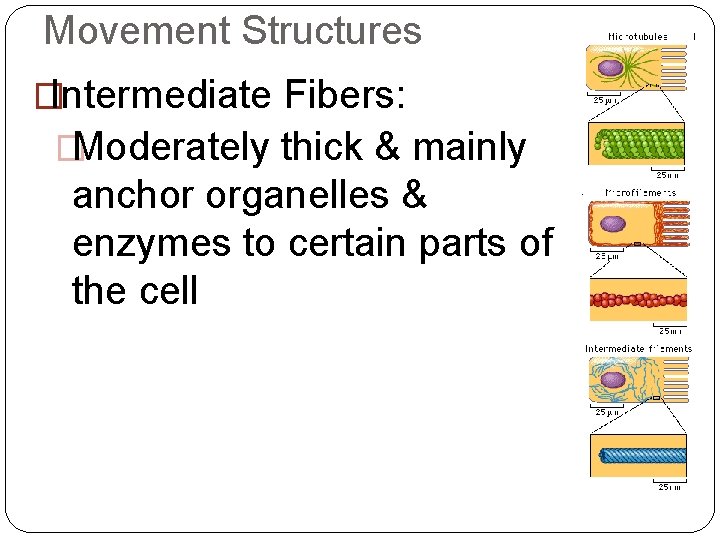
Movement Structures �Intermediate Fibers: �Moderately thick & mainly anchor organelles & enzymes to certain parts of the cell
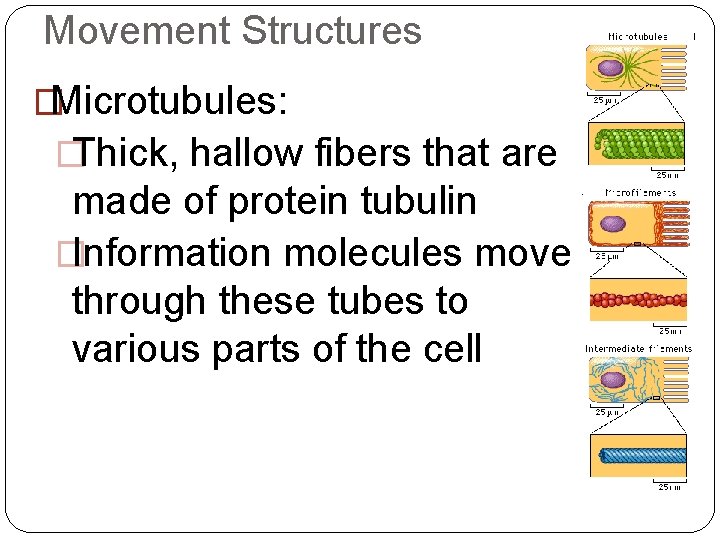
Movement Structures �Microtubules: �Thick, hallow fibers that are made of protein tubulin �Information molecules move through these tubes to various parts of the cell
Cytoskeleton
↑ The three fibers of the cytoskeleton: microtubules in blue, intermediate filaments in red, and microfilaments in green –play countless roles in the cell. In these cells, microfilaments appear light purple, microtubules yellow, and nuclei greenish blue. ↓
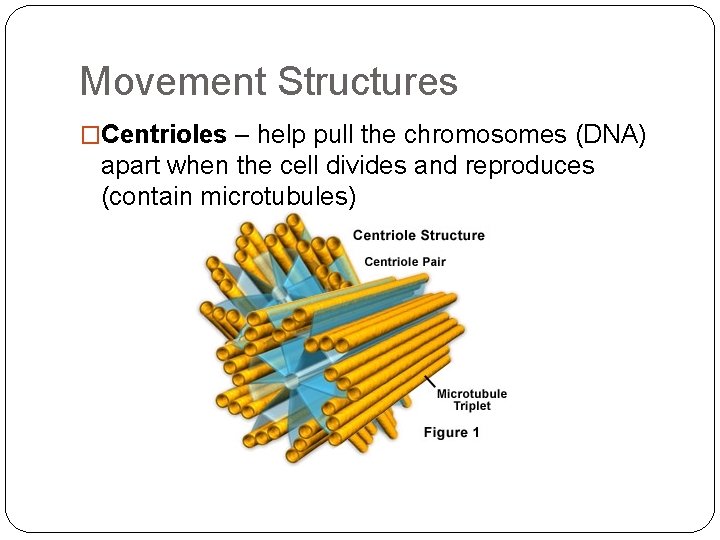
Movement Structures �Centrioles – help pull the chromosomes (DNA) apart when the cell divides and reproduces (contain microtubules)
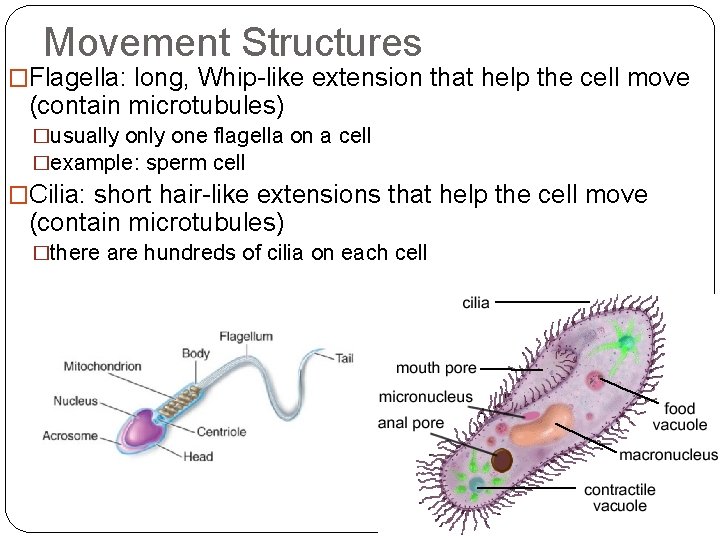
Movement Structures �Flagella: long, Whip-like extension that help the cell move (contain microtubules) �usually one flagella on a cell �example: sperm cell �Cilia: short hair-like extensions that help the cell move (contain microtubules) �there are hundreds of cilia on each cell
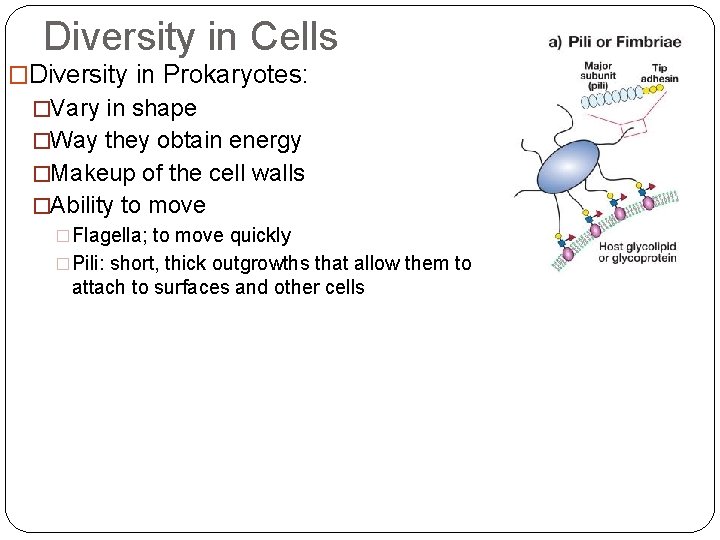
Diversity in Cells �Diversity in Prokaryotes: �Vary in shape �Way they obtain energy �Makeup of the cell walls �Ability to move �Flagella; to move quickly �Pili: short, thick outgrowths that allow them to attach to surfaces and other cells
�Diversity in Eukaryotes �Plants: �Chloroplasts �Large central vacuole �Cell wall that surrounds the cell membrane �Vary structure by function �Some organelles are more prominent in specialized cells �Varying internal makeup can allow cells to be specialized for specific functions �Example: muscle cells have lots of mitochondria bc muscles require a lot of energy
Prokaryote vs Eukaryote Prokaryote Eukaryote
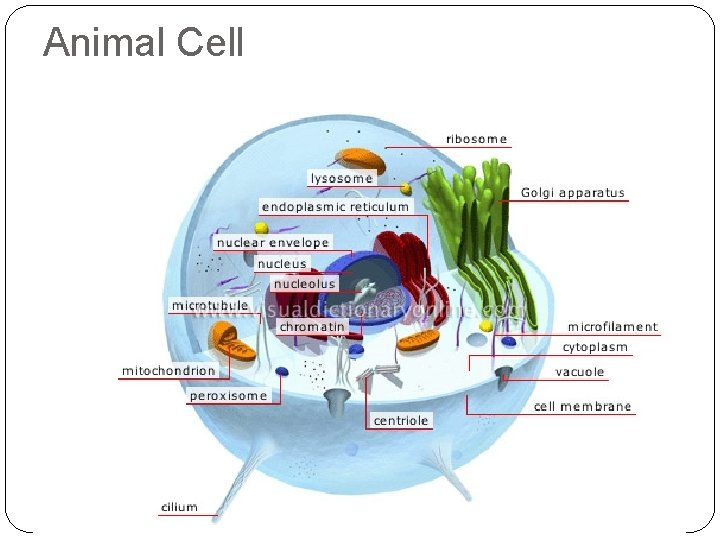
Animal Cell
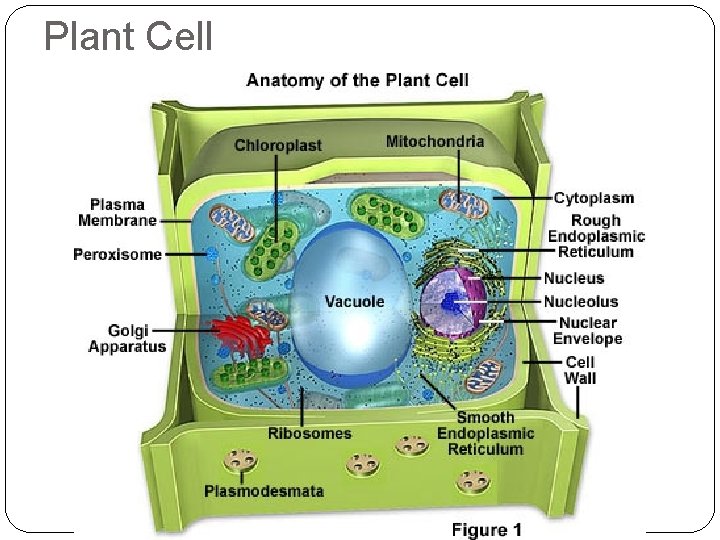
Plant Cell
Plant cell vs Animal cell Plant Animal
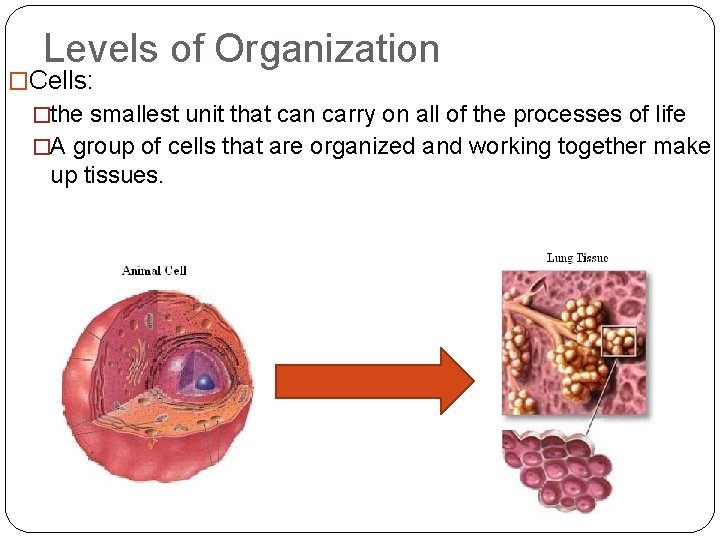
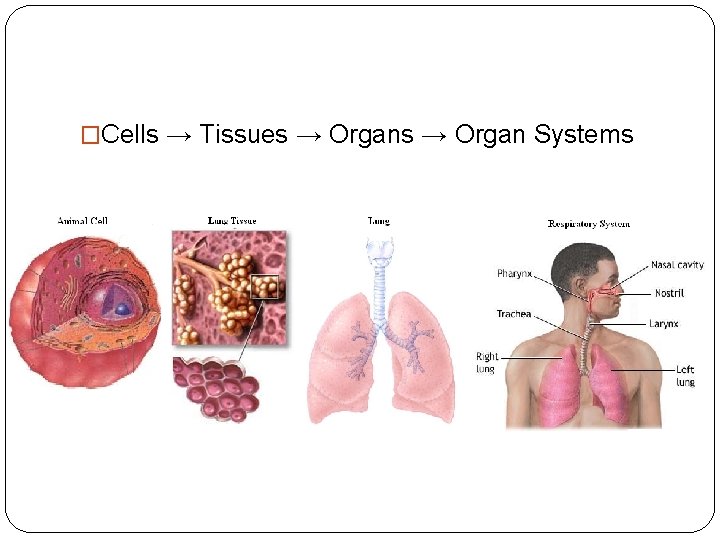
Levels of Organization �Cells: �the smallest unit that can carry on all of the processes of life �A group of cells that are organized and working together make up tissues.
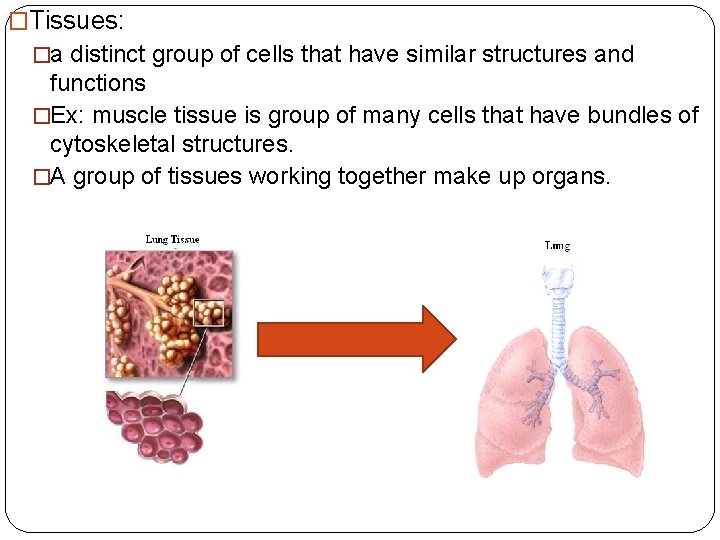
�Tissues: �a distinct group of cells that have similar structures and functions �Ex: muscle tissue is group of many cells that have bundles of cytoskeletal structures. �A group of tissues working together make up organs.
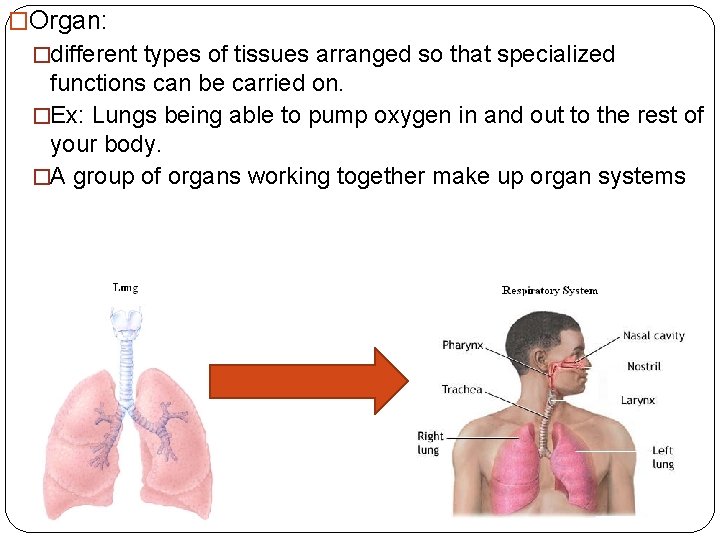
�Organ: �different types of tissues arranged so that specialized functions can be carried on. �Ex: Lungs being able to pump oxygen in and out to the rest of your body. �A group of organs working together make up organ systems
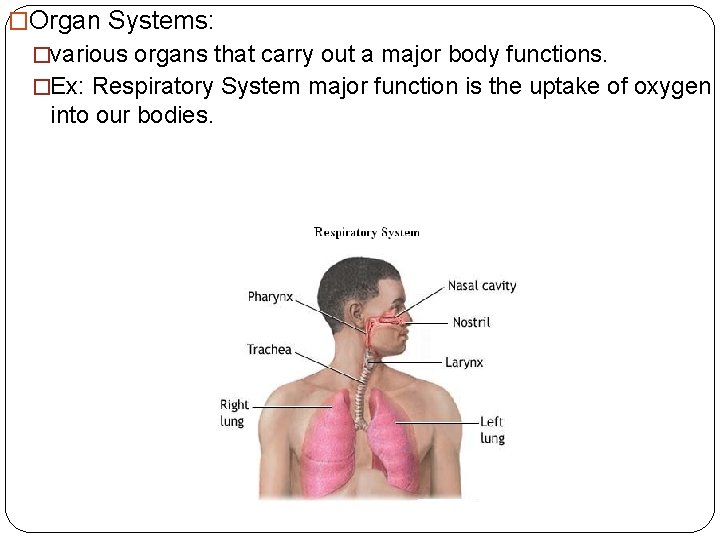
�Organ Systems: �various organs that carry out a major body functions. �Ex: Respiratory System major function is the uptake of oxygen into our bodies.
�Cells → Tissues → Organ Systems
Body Types �Sometimes, entire body of an organism is made up of a single cell �Cell must carry out all of the activities �Growing �Using energy �Responding to the environment �Reproducing �More than half of the biomass on earth is composed of unicellular organisms �Single cells cannot grow larger than a certain size
�Multicellular organisms are composed of many individual, permanently associated cells that coordinate their activities �Distinct types of cells have specialized function �Individual cells cannot survive alone and are dependent on the other cells of the organism
Cell Groups �Some unicellular thrive independently, but others live in groups �Colonial organisms: �Cells that live as a connected group but DO NOT depend on each other for survival �Example: cell walls of some bacteria adhere to one another after dividing, but can survive independently
Multicellularity �Only in Eukaryotes �Cells in a multicellular body perform highly specific functions �Some cells protect organisms from disease & predators �Some cells help with movement, feeding, & reproduction �Most multicellular organisms begin as a single cell �Example: a chicken starts as an egg; new cells form from cell division; cells grow & undergo differentiation(process of developing specialized forms & functions); specialized cells arrange into tissues, organs, & organ systems to make the entire chicken