
Chapter 7 CCloning Clones What are clones Genetically
- Slides: 11
Chapter 7 CCloning
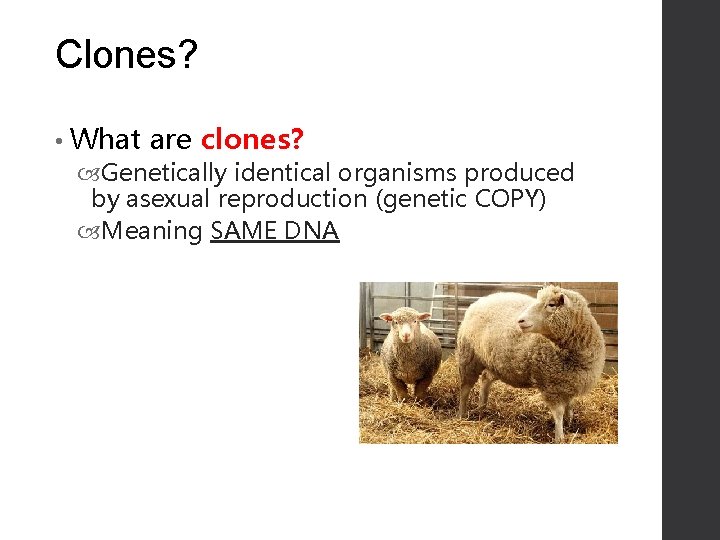
Clones? • What are clones? Genetically identical organisms produced by asexual reproduction (genetic COPY) Meaning SAME DNA
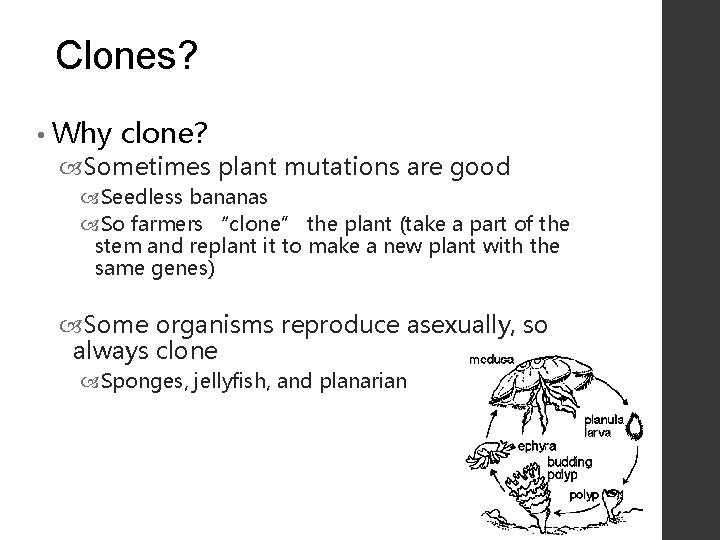
Clones? • Why clone? Sometimes plant mutations are good Seedless bananas So farmers “clone” the plant (take a part of the stem and replant it to make a new plant with the same genes) Some organisms reproduce asexually, so always clone Sponges, jellyfish, and planarian
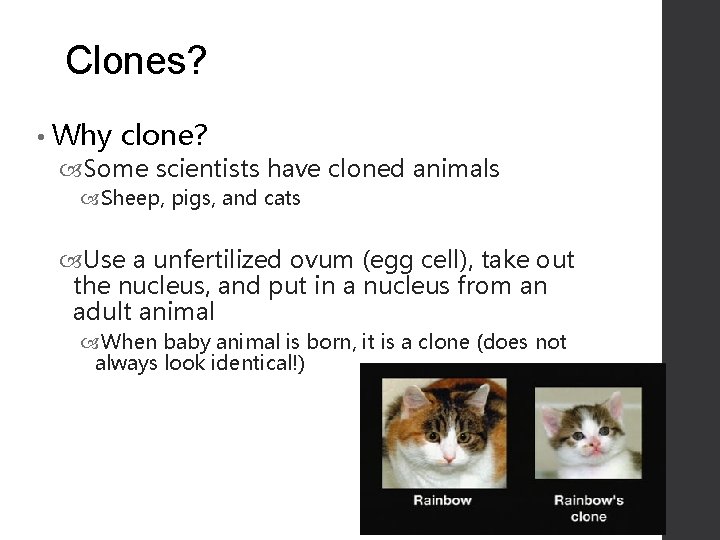
Clones? • Why clone? Some scientists have cloned animals Sheep, pigs, and cats Use a unfertilized ovum (egg cell), take out the nucleus, and put in a nucleus from an adult animal When baby animal is born, it is a clone (does not always look identical!)
Bible and Cloning • 2 types of human cloning: Reproductive cloning: making human clones for people who cannot have children Therapeutic cloning: making clones to make cells for sick people • Good or not good?
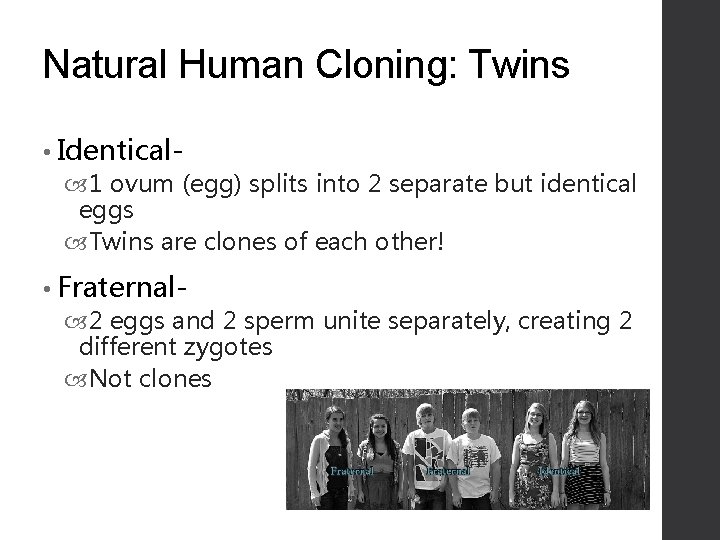
Natural Human Cloning: Twins • Identical 1 ovum (egg) splits into 2 separate but identical eggs Twins are clones of each other! • Fraternal 2 eggs and 2 sperm unite separately, creating 2 different zygotes Not clones
Chapter 7 DStem Cell Technology
What is Stem Cell Technology? • What are stem cells? Cells that divide almost indefinitely (for a long, long time) Can become many different types of cells Pluripotent vs. Multipotent • Can be used in research Helping people with diseases Can become any cell so could be used in treatment/therapy
What is Stem Cell Technology? • But where do they come from? Embryonic stem cells: come from embryos But to use them, human embryos must be killed Somatic stem cells: come from adults Already different types of cells, but can be made to change types From muscle to skin, from skin to liver….
Bible and Stem Cell Research • Which is better? Somatic? Embryonic? • Why?
Vocabulary • Clones • Stem Cells • Embryonic Stem Cells • Somatic Stem Cells