
Chapter 7 Cardiovascular Fitness Cardiovascular Fitness The bodys
Chapter 7 Cardiovascular Fitness
Cardiovascular Fitness • The body’s ability to continuously provide oxygen to muscles as work is performed over and extended period of time. • Your heart is a muscle.
Circulatory System • Blood and blood vessels – Heart – Arteries – Capillaries (Deliver oxygen and nutrients to the cells of your body) – Veins Left side of heart pumps blood to the body. Right side pumps blood to the lungs.
Respiratory System • Lungs and air passages
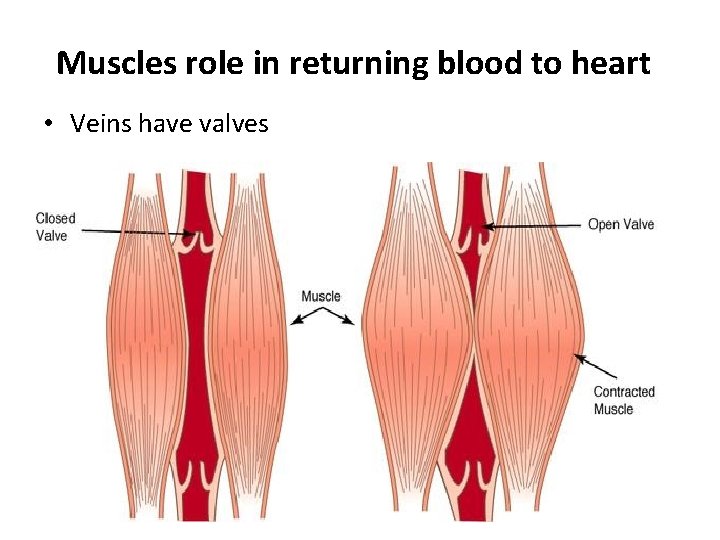
Muscles role in returning blood to heart • Veins have valves
Resting Heart Rate Take pulse just after waking in the morning in the same body position. The best place to take pulse-wrist or neck. Low resting heart rate usually indicates a good level of aerobic fitness. Marathon runner Fit individual Not so fit smoker Not so fit obese smoker 45 -60 bpm 60 -75 bpm 70 -85 bpm 80 -110 bpm 90 -120 bpm
Target Heart Rate This is where you want your exercise heart rate. 220 -Age=Maximal Attainable Heart Rate 60 -90% of that is the Target Heart Rate Zone
Recovery Heart Rate • Check pulse after exercise session. • Heart rate 5 min. after workout= 120 bpm • Heart rate 10 min. after workout=100 bpm • If heart rate is above this amount. Decrease intensity (run slower) • If heart rate is below this amount. Increase intensity (run faster)
Blood Pressure Systolic pressure-heart is contracting – This is the top number • Diastolic pressure-heart is relaxing – This is the bottom number Normal blood pressure 120/80 • High blood pressure is a risk factor for heart disease and stroke. Cardiovascular disease is responsible for over 40% of all deaths in adults.
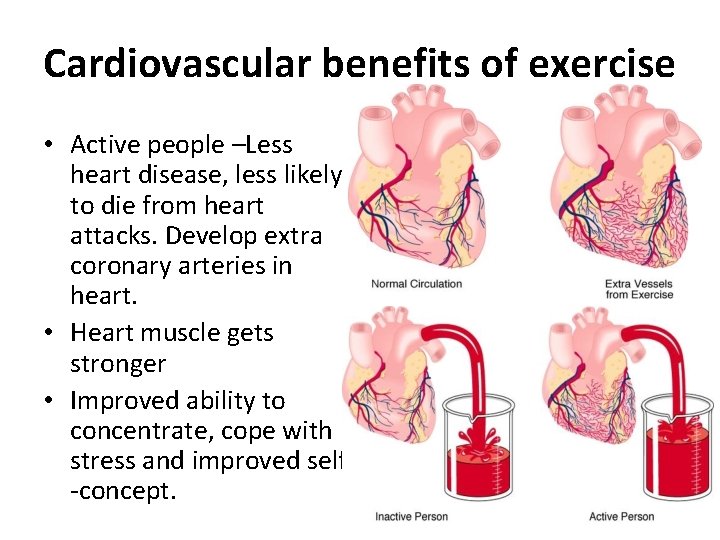
Cardiovascular benefits of exercise • Active people –Less heart disease, less likely to die from heart attacks. Develop extra coronary arteries in heart. • Heart muscle gets stronger • Improved ability to concentrate, cope with stress and improved self -concept.
To improve cardiovascular fitness you need to: • • • Use large body muscles. Exercise 20 min-60 min Use oxygen (aerobic exercise) Do at least 3 times/week Examples: jogging, swimming, jump rope, bicycling
- Slides: 11