
Chapter 7 Cardiac Emergencies and CPR Cardiovascular disease1
- Slides: 15
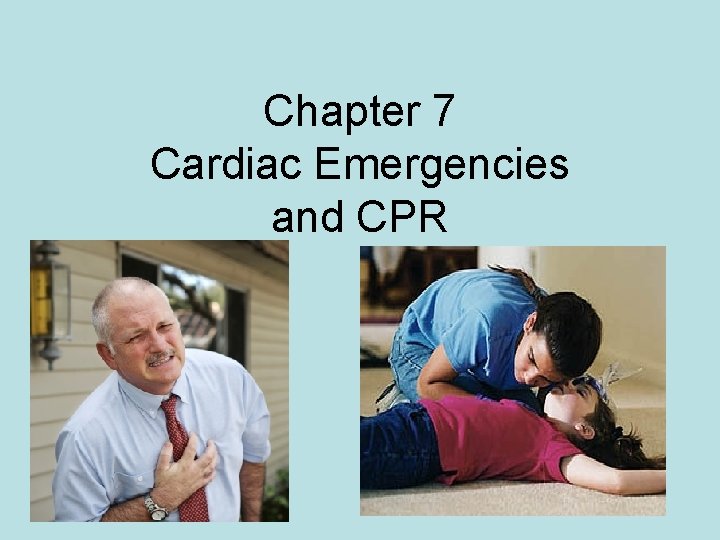
Chapter 7 Cardiac Emergencies and CPR
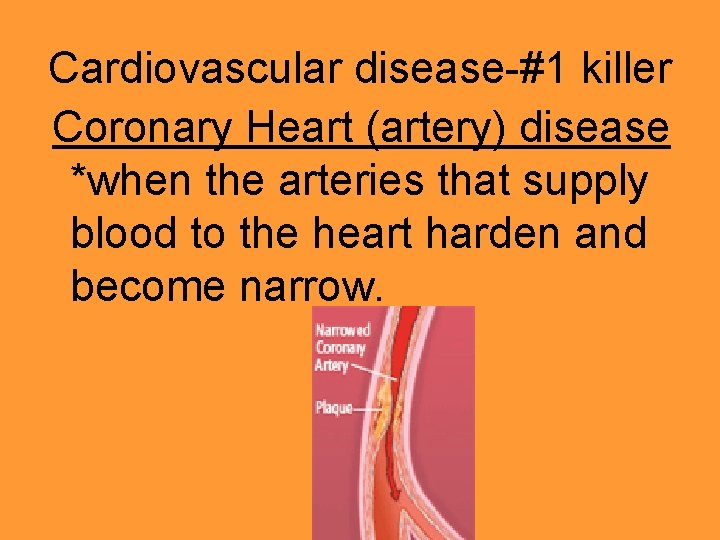
Cardiovascular disease-#1 killer Coronary Heart (artery) disease *when the arteries that supply blood to the heart harden and become narrow.
Signs and Symptoms of a heart attack. • • Chest pain-crushing sensation Pressure in chest Constant pain or discomfort Pain spread to shoulder, arm, neck, jaw, stomach or back Trouble breathing Pale, gray or ashen skin color Dizzy and lightheaded Nausea or vomiting
When to call 911 • Pain or discomfort lasts for more than 3 -5 minutes. • Pain comes and goes for 3 -5 minutes. • Shows symptoms of heart attack.
Care given • • • Call 911 -GET AED Have person rest Loosen tight clothing Monitor person Ask if they have heart disease, taking any medications or has this happened before. • Be calm and reassuring • Be prepared to perform CPR/use AED.
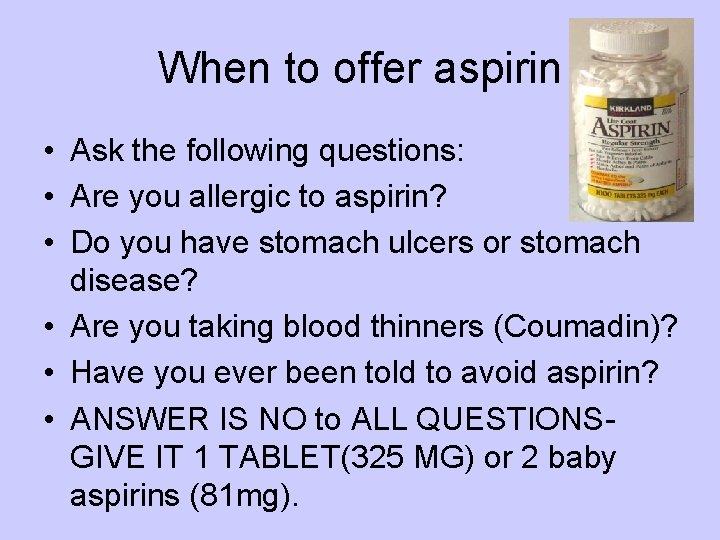
When to offer aspirin • Ask the following questions: • Are you allergic to aspirin? • Do you have stomach ulcers or stomach disease? • Are you taking blood thinners (Coumadin)? • Have you ever been told to avoid aspirin? • ANSWER IS NO to ALL QUESTIONSGIVE IT 1 TABLET(325 MG) or 2 baby aspirins (81 mg).
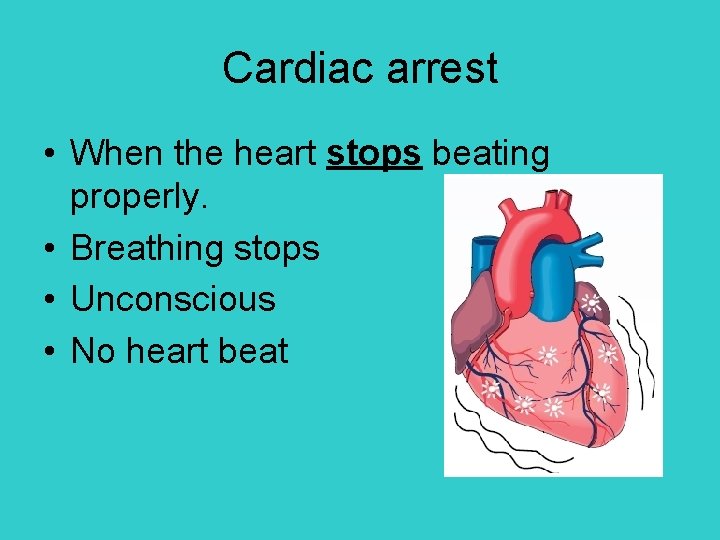
Cardiac arrest • When the heart stops beating properly. • Breathing stops • Unconscious • No heart beat
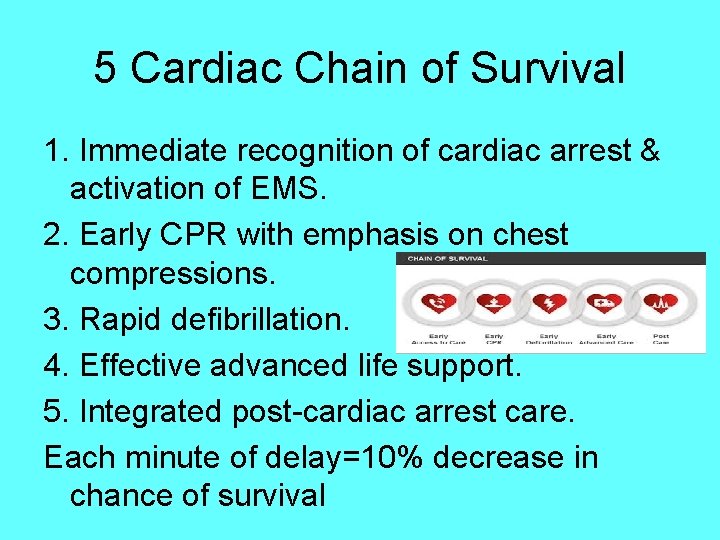
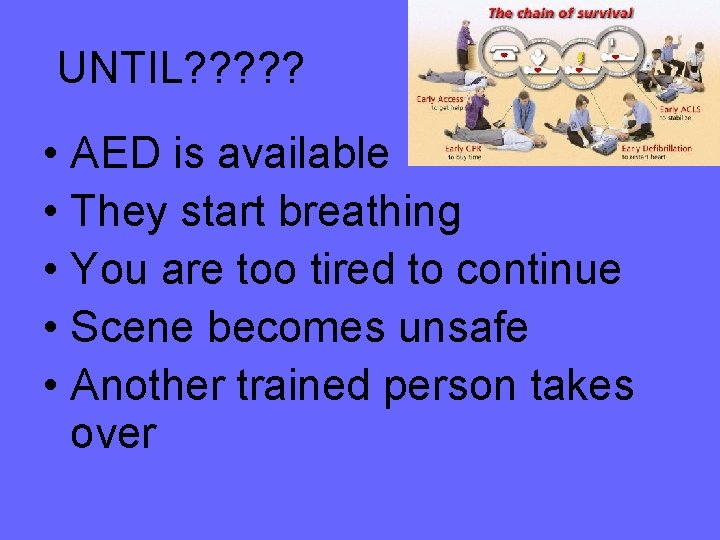
5 Cardiac Chain of Survival 1. Immediate recognition of cardiac arrest & activation of EMS. 2. Early CPR with emphasis on chest compressions. 3. Rapid defibrillation. 4. Effective advanced life support. 5. Integrated post-cardiac arrest care. Each minute of delay=10% decrease in chance of survival
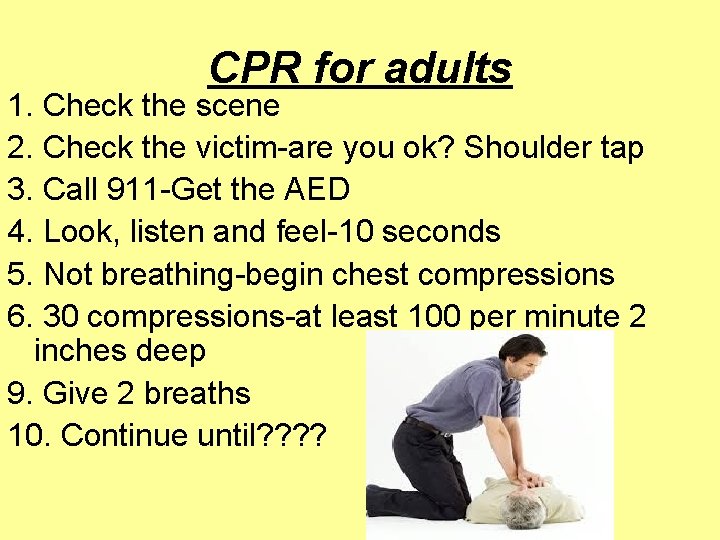
CPR for adults 1. Check the scene 2. Check the victim-are you ok? Shoulder tap 3. Call 911 -Get the AED 4. Look, listen and feel-10 seconds 5. Not breathing-begin chest compressions 6. 30 compressions-at least 100 per minute 2 inches deep 9. Give 2 breaths 10. Continue until? ?
UNTIL? ? ? • AED is available • They start breathing • You are too tired to continue • Scene becomes unsafe • Another trained person takes over
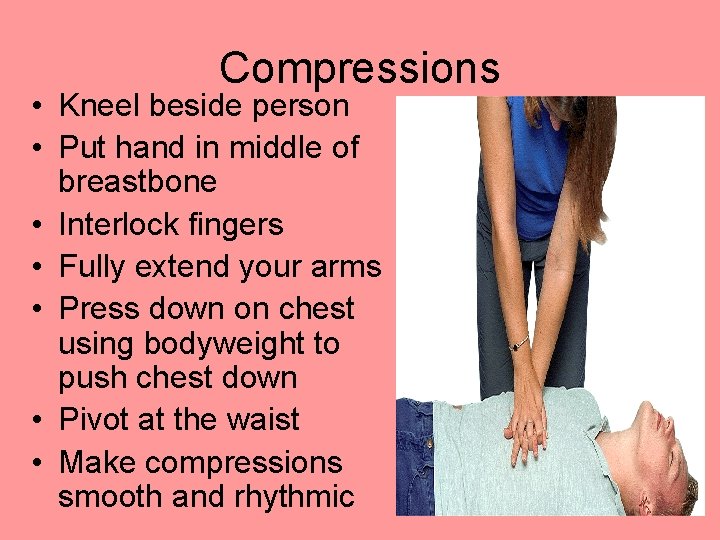
Compressions • Kneel beside person • Put hand in middle of breastbone • Interlock fingers • Fully extend your arms • Press down on chest using bodyweight to push chest down • Pivot at the waist • Make compressions smooth and rhythmic
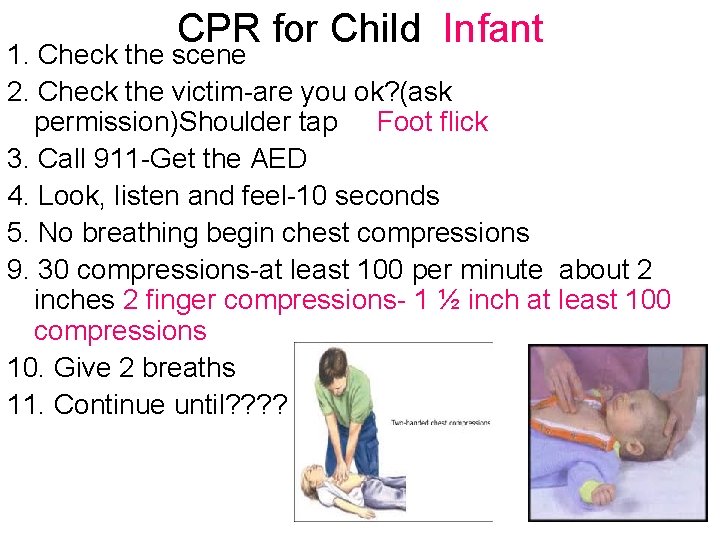
CPR for Child Infant 1. Check the scene 2. Check the victim-are you ok? (ask permission)Shoulder tap Foot flick 3. Call 911 -Get the AED 4. Look, listen and feel-10 seconds 5. No breathing begin chest compressions 9. 30 compressions-at least 100 per minute about 2 inches 2 finger compressions- 1 ½ inch at least 100 compressions 10. Give 2 breaths 11. Continue until? ?
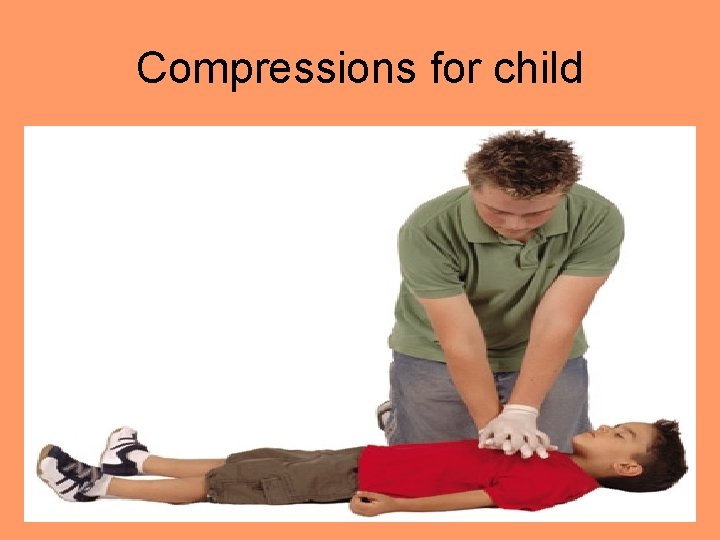
Compressions for child
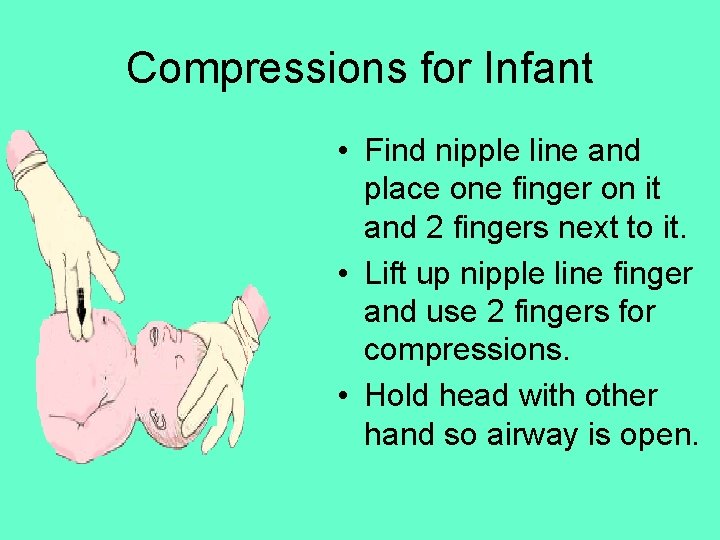
Compressions for Infant • Find nipple line and place one finger on it and 2 fingers next to it. • Lift up nipple line finger and use 2 fingers for compressions. • Hold head with other hand so airway is open.
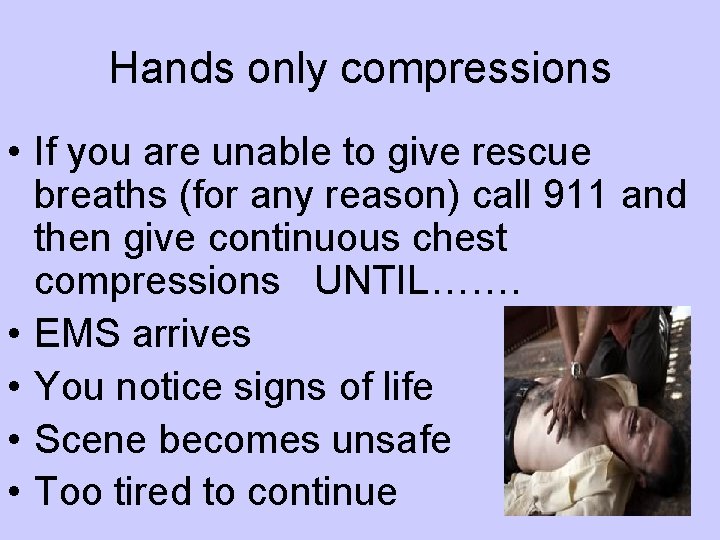
Hands only compressions • If you are unable to give rescue breaths (for any reason) call 911 and then give continuous chest compressions UNTIL……. • EMS arrives • You notice signs of life • Scene becomes unsafe • Too tired to continue