
Chapter 7 c Baseband Digital Communication Part 3
Chapter 7 c Baseband Digital Communication Part 3
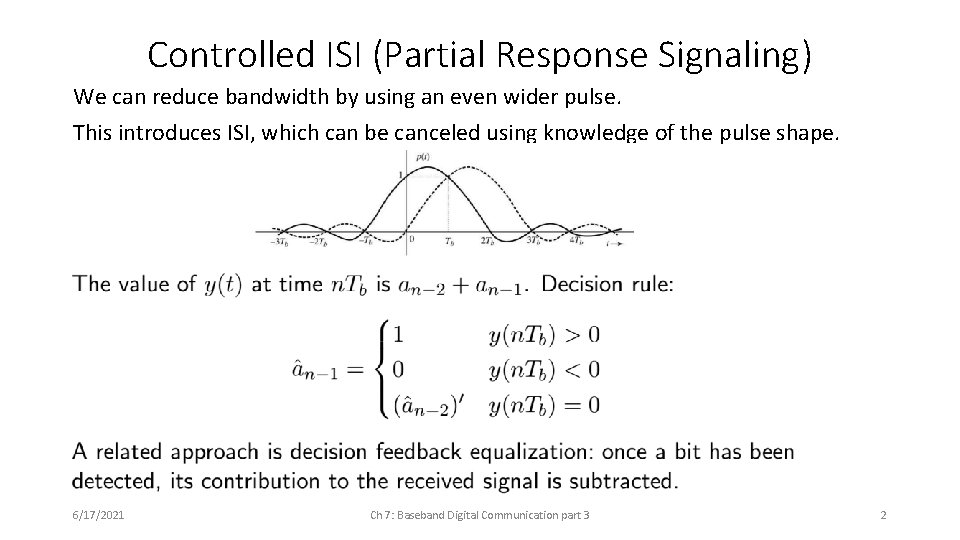
Controlled ISI (Partial Response Signaling) We can reduce bandwidth by using an even wider pulse. This introduces ISI, which can be canceled using knowledge of the pulse shape. 6/17/2021 Ch 7: Baseband Digital Communication part 3 2
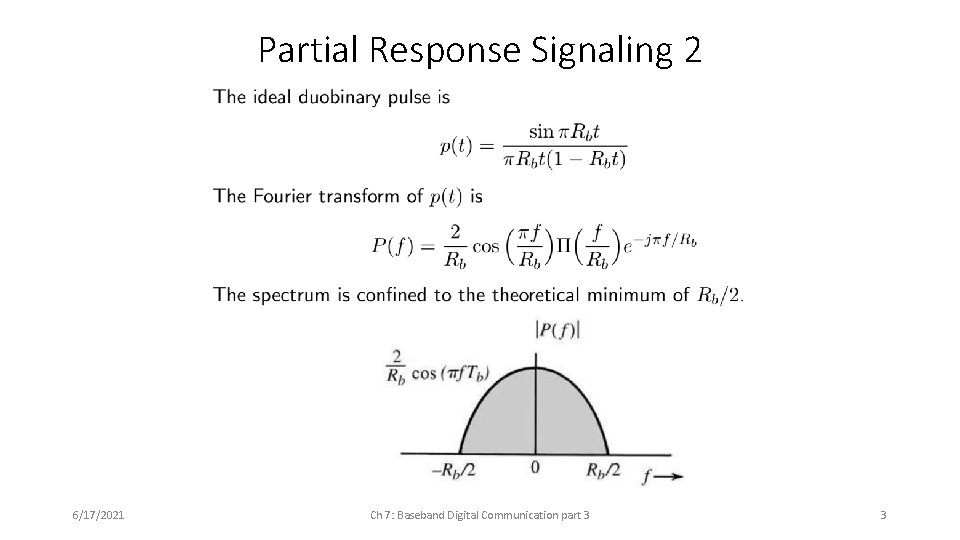
Partial Response Signaling 2 6/17/2021 Ch 7: Baseband Digital Communication part 3 3
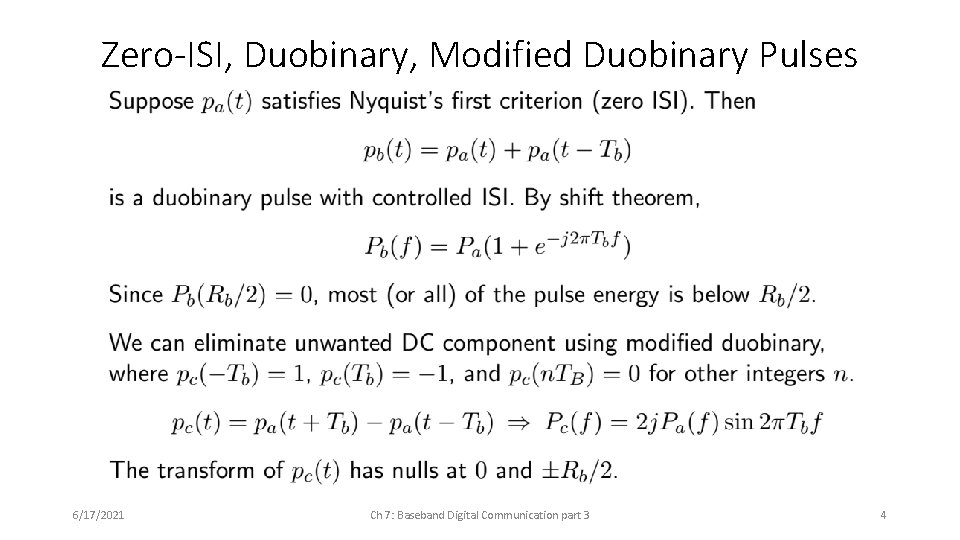
Zero-ISI, Duobinary, Modified Duobinary Pulses 6/17/2021 Ch 7: Baseband Digital Communication part 3 4
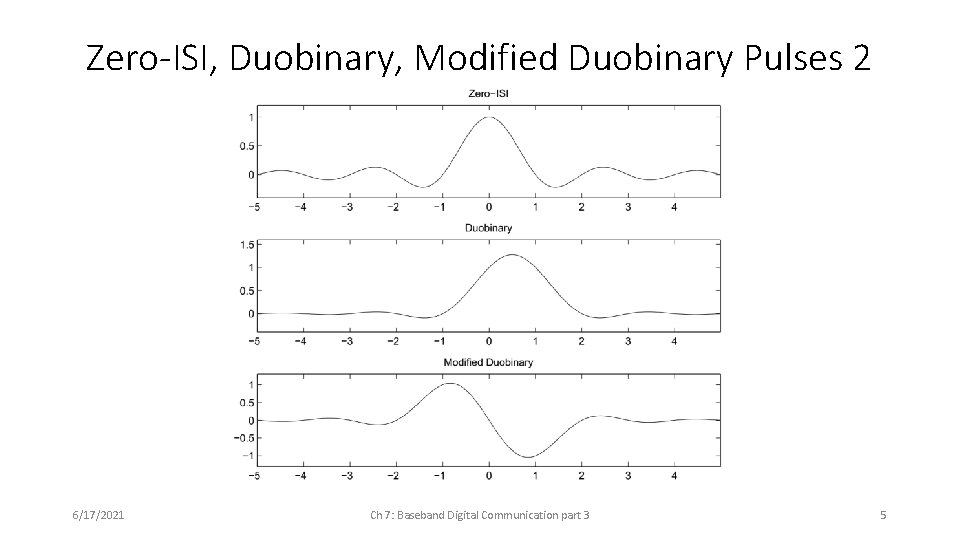
Zero-ISI, Duobinary, Modified Duobinary Pulses 2 6/17/2021 Ch 7: Baseband Digital Communication part 3 5
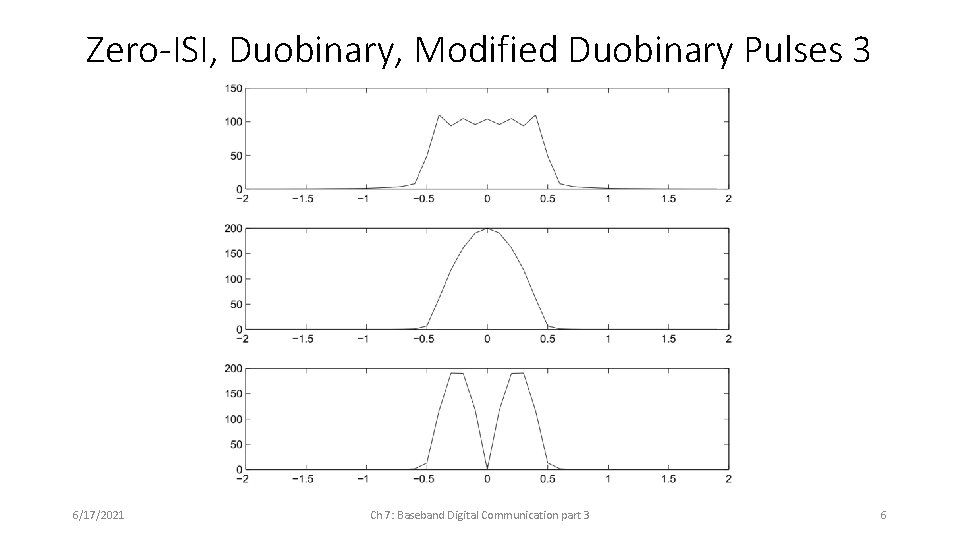
Zero-ISI, Duobinary, Modified Duobinary Pulses 3 6/17/2021 Ch 7: Baseband Digital Communication part 3 6
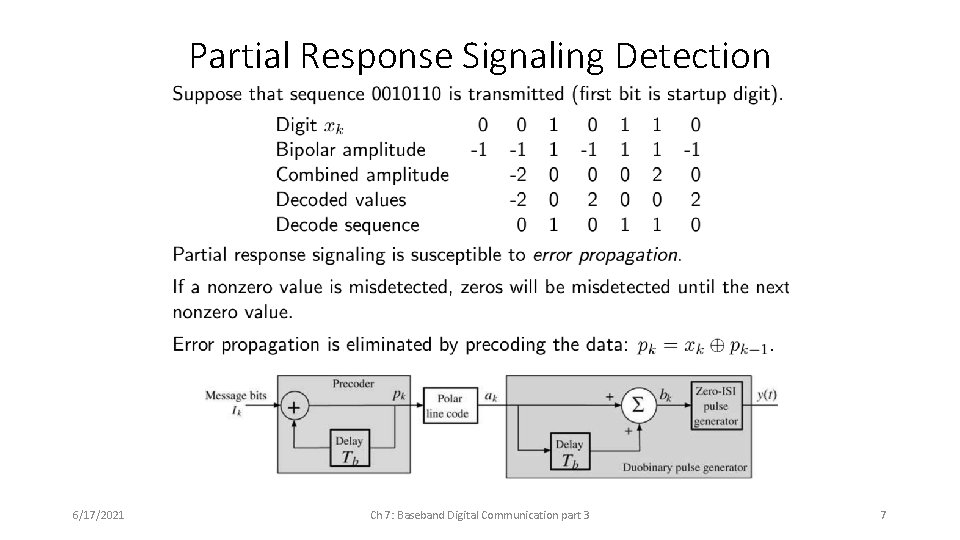
Partial Response Signaling Detection 6/17/2021 Ch 7: Baseband Digital Communication part 3 7
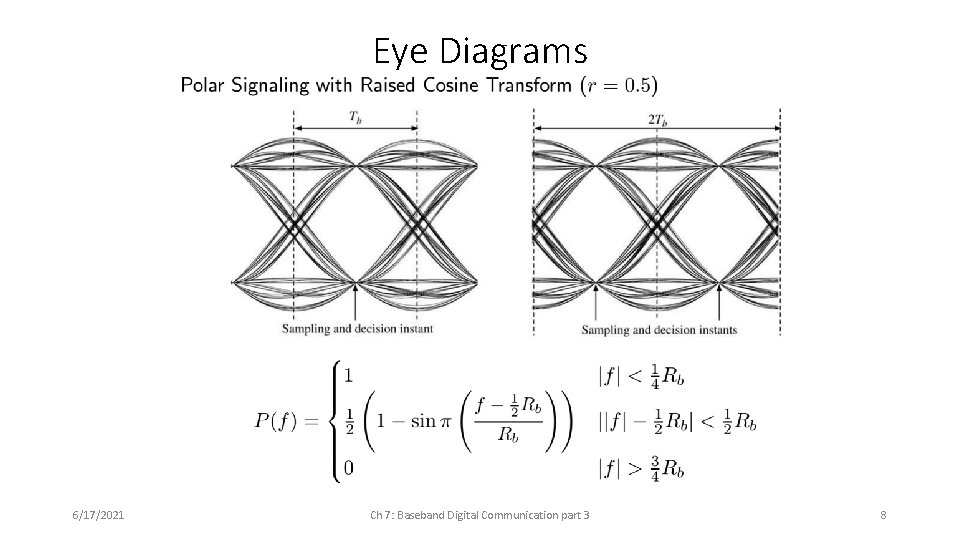
Eye Diagrams 6/17/2021 Ch 7: Baseband Digital Communication part 3 8
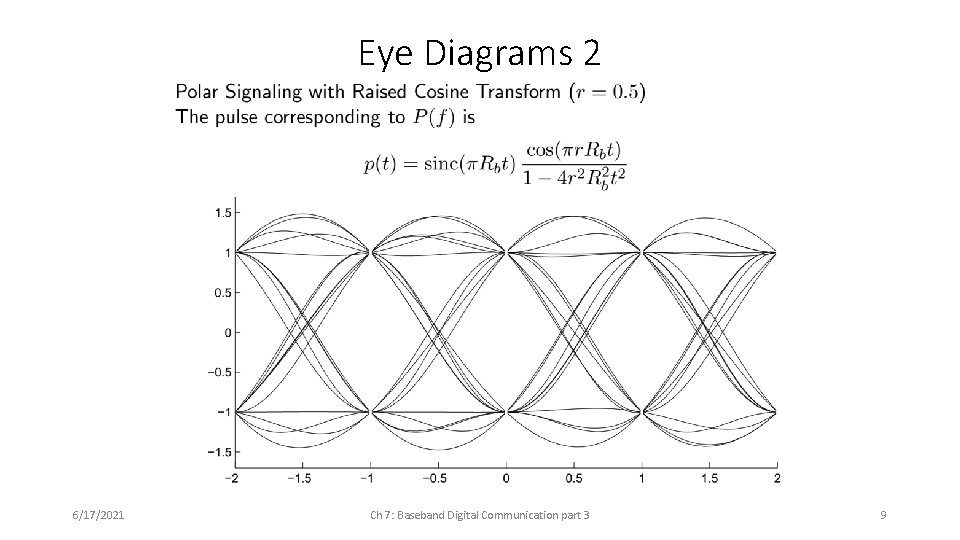
Eye Diagrams 2 6/17/2021 Ch 7: Baseband Digital Communication part 3 9
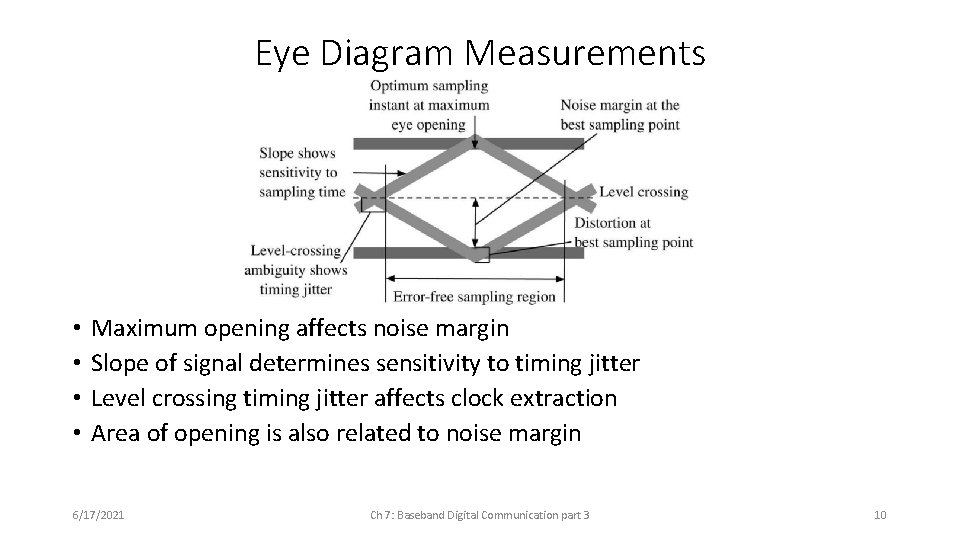
Eye Diagram Measurements • • Maximum opening affects noise margin Slope of signal determines sensitivity to timing jitter Level crossing timing jitter affects clock extraction Area of opening is also related to noise margin 6/17/2021 Ch 7: Baseband Digital Communication part 3 10
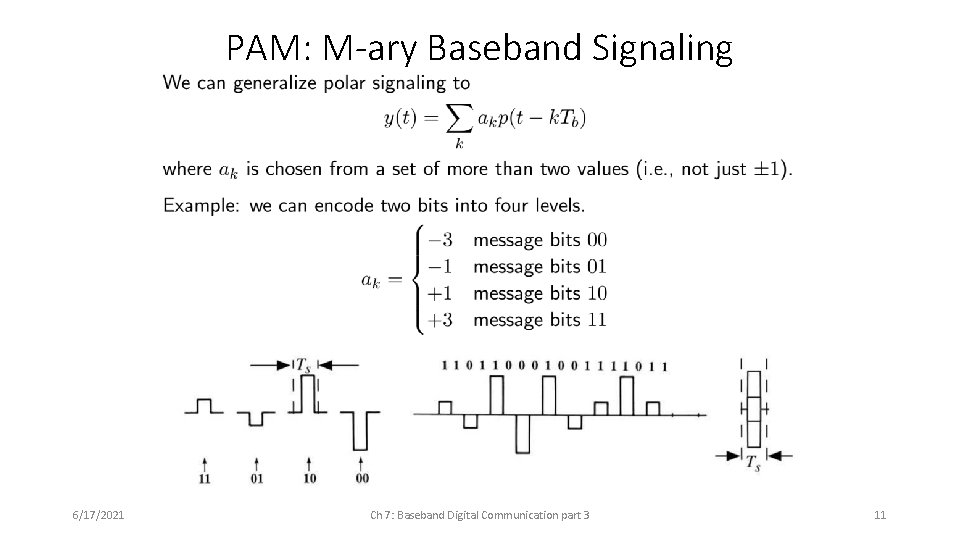
PAM: M-ary Baseband Signaling 6/17/2021 Ch 7: Baseband Digital Communication part 3 11
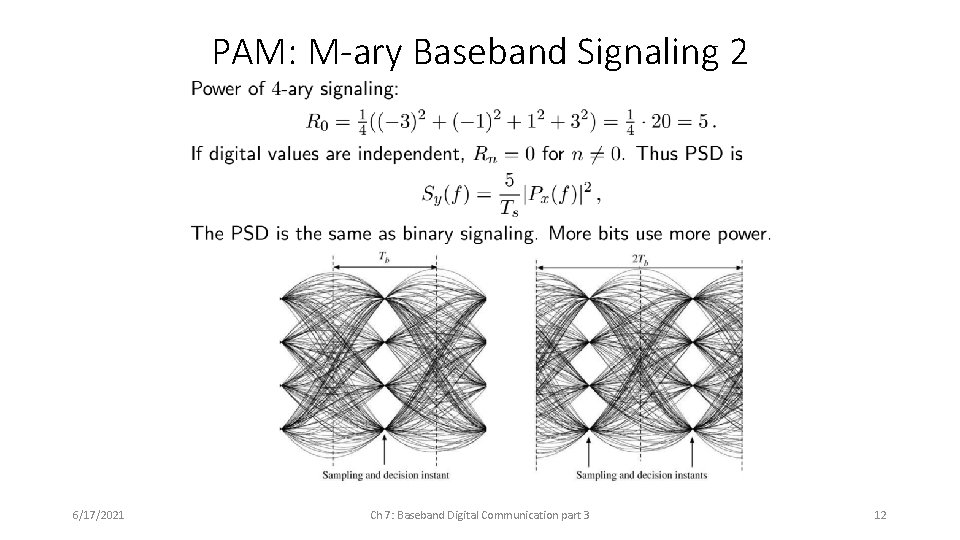
PAM: M-ary Baseband Signaling 2 6/17/2021 Ch 7: Baseband Digital Communication part 3 12
- Slides: 12