
Chapter 7 BRAIN ANATOMY Structural Overview of Major
Chapter 7 BRAIN ANATOMY Structural Overview of Major Brain Regions Pages 239 -252
Regions of the Brain Cerebral hemispheres (cerebrum) Diencephalon Brain stem Cerebellum Ventricles © 2015 Pearson Education, Inc.
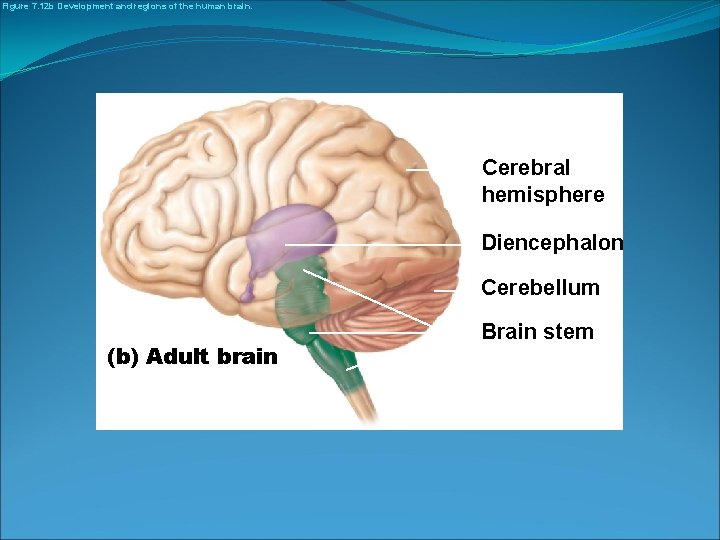
Figure 7. 12 b Development and regions of the human brain. Cerebral hemisphere Diencephalon Cerebellum (b) Adult brain Brain stem
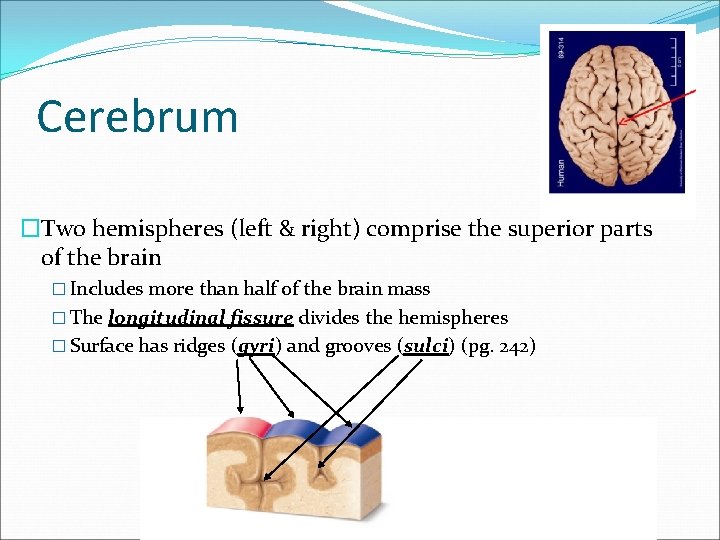
Cerebrum �Two hemispheres (left & right) comprise the superior parts of the brain � Includes more than half of the brain mass � The longitudinal fissure divides the hemispheres � Surface has ridges (gyri) and grooves (sulci) (pg. 242) © 2015 Pearson Education, Inc.
Parts of each hemisphere �Three layers of each cerebral hemisphere 1. GRAY: Cerebral Cortex (gray matter) 2. WHITE: Cerebral White matter 3. GRAY: Basal nuclei (deep pockets of gray matter)
Layers of the Cerebral Hemispheres Gray matter: outer layer in the cerebral cortex; composed mostly of neuron cell bodies (gray designates unmyelinated fibers) White matter: myelinated fiber tracts Carry impulses to/from cortex also known as commissures Corpus callosum (large fiber tract) connects hemispheres Basal nuclei (ganglia): nerve cell bodies that form islands of gray matter buried deep within the white matter © 2015 Pearson Education, Inc.
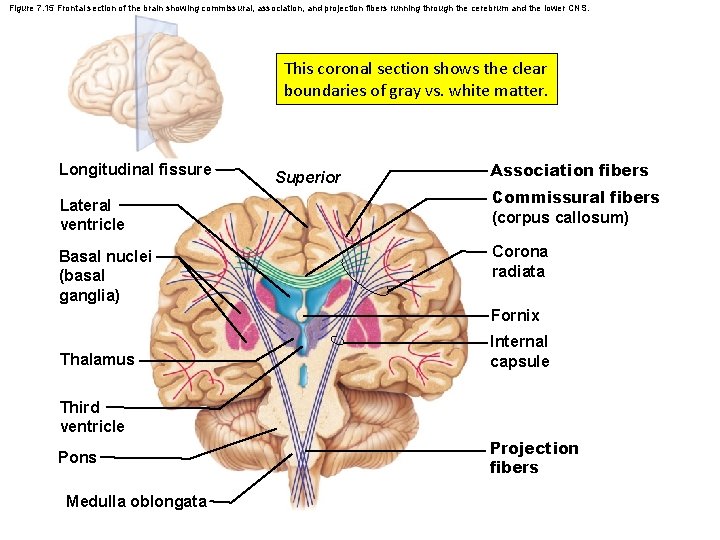
Figure 7. 15 Frontal section of the brain showing commissural, association, and projection fibers running through the cerebrum and the lower CNS. This coronal section shows the clear boundaries of gray vs. white matter. Longitudinal fissure Lateral ventricle Basal nuclei (basal ganglia) Superior Association fibers Commissural fibers (corpus callosum) Corona radiata Fornix Thalamus Internal capsule Third ventricle Pons Medulla oblongata Projection fibers
Lobes of each hemisphere Fissures (deep grooves) further divide the cerebral hemispheres into four lobes Each lobe coincides with its respective cranial bone Frontal lobe Parietal lobe Occipital lobe Temporal lobe © 2015 Pearson Education, Inc.
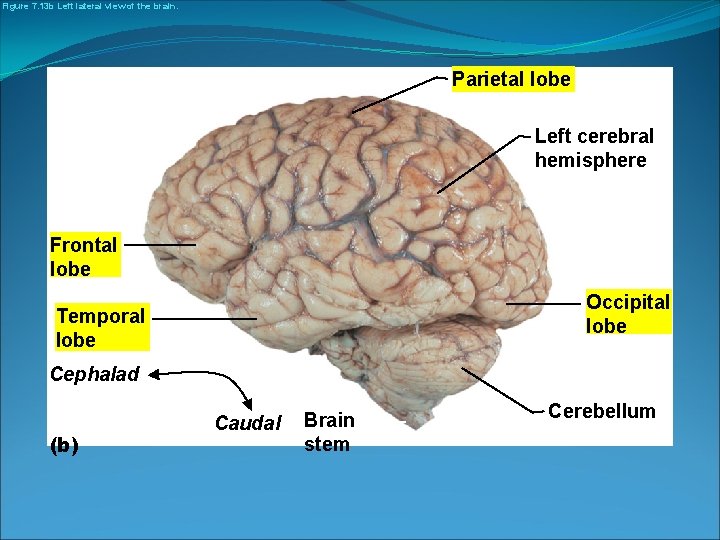
Figure 7. 13 b Left lateral view of the brain. Parietal lobe Left cerebral hemisphere Frontal lobe Occipital lobe Temporal lobe Cephalad (b) Caudal Brain stem Cerebellum
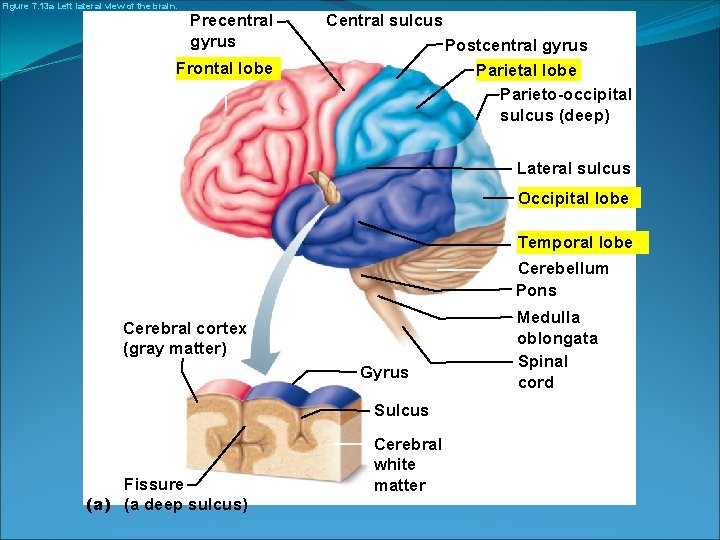
Figure 7. 13 a Left lateral view of the brain. Precentral gyrus Central sulcus Postcentral gyrus Parietal lobe Parieto-occipital sulcus (deep) Frontal lobe Lateral sulcus Occipital lobe Temporal lobe Cerebellum Pons Cerebral cortex (gray matter) Gyrus Sulcus Fissure (a) (a deep sulcus) Cerebral white matter Medulla oblongata Spinal cord
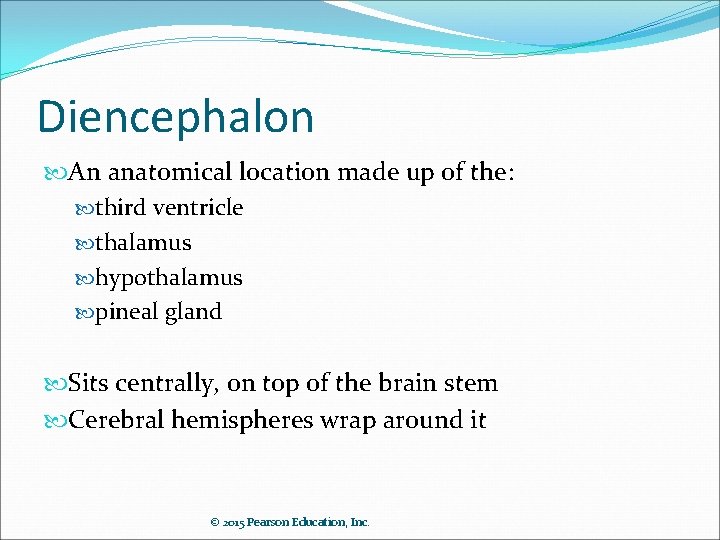
Diencephalon An anatomical location made up of the: third ventricle thalamus hypothalamus pineal gland Sits centrally, on top of the brain stem Cerebral hemispheres wrap around it © 2015 Pearson Education, Inc.
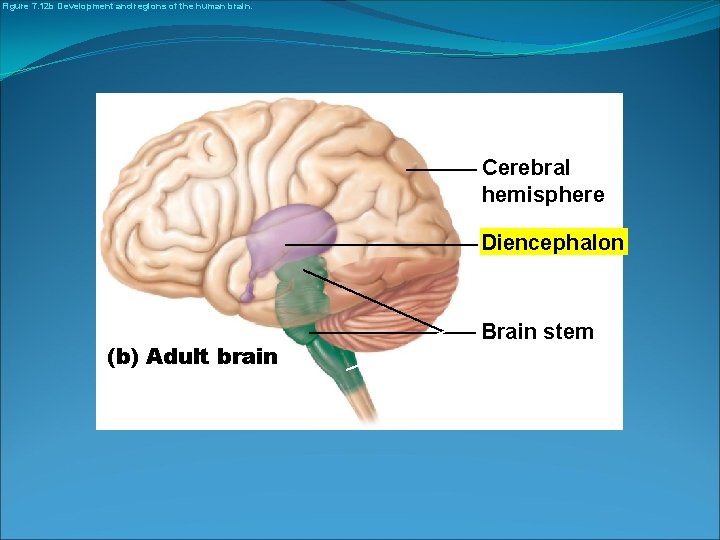
Figure 7. 12 b Development and regions of the human brain. Cerebral hemisphere Diencephalon (b) Adult brain Brain stem
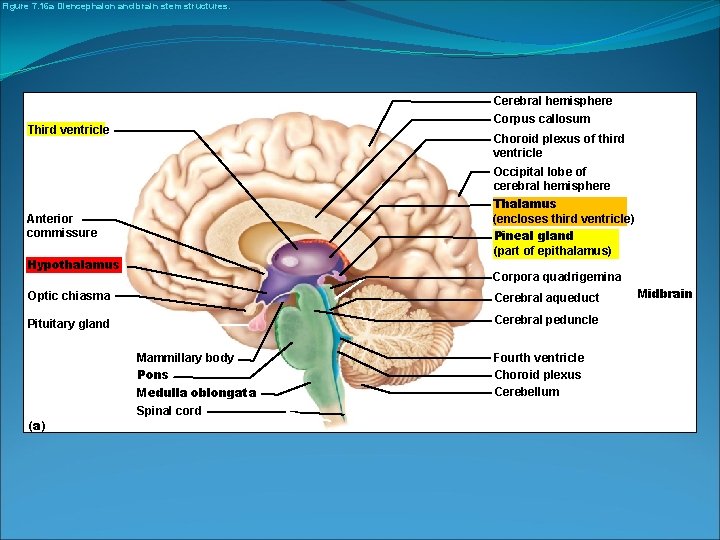
Figure 7. 16 a Diencephalon and brain stem structures. Cerebral hemisphere Corpus callosum Third ventricle Choroid plexus of third ventricle Occipital lobe of cerebral hemisphere Thalamus (encloses third ventricle) Pineal gland (part of epithalamus) Anterior commissure Hypothalamus Corpora quadrigemina Optic chiasma Cerebral aqueduct Pituitary gland Cerebral peduncle (a) Mammillary body Pons Medulla oblongata Spinal cord Fourth ventricle Choroid plexus Cerebellum Midbrain
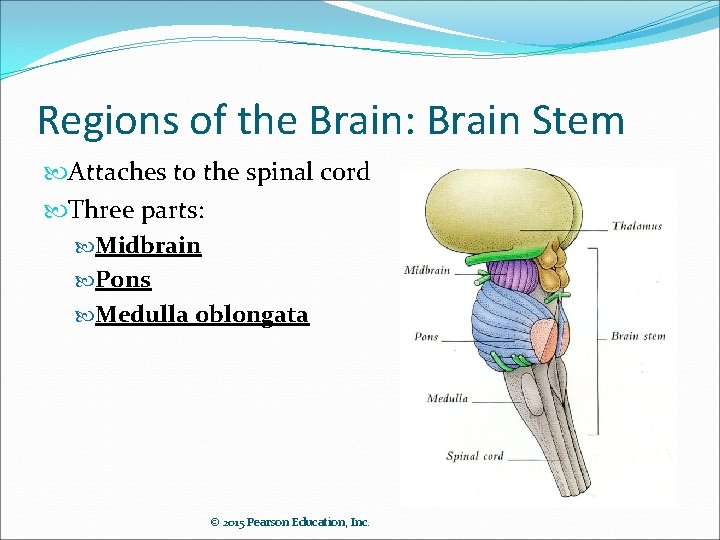
Regions of the Brain: Brain Stem Attaches to the spinal cord Three parts: Midbrain Pons Medulla oblongata © 2015 Pearson Education, Inc.
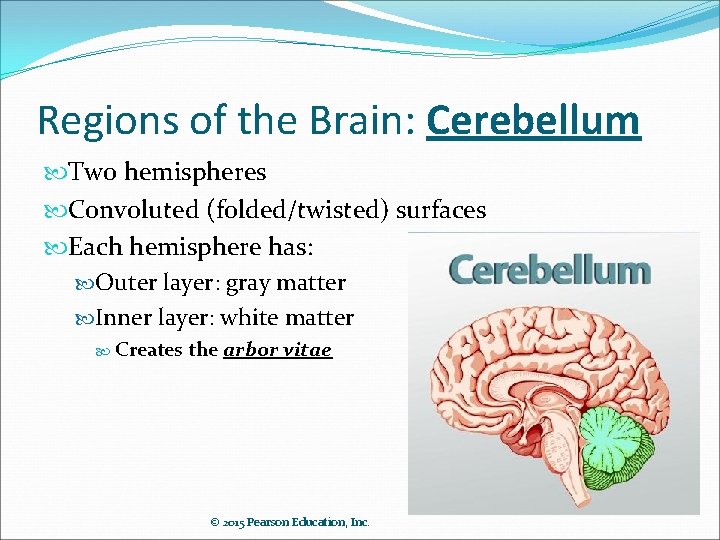
Regions of the Brain: Cerebellum Two hemispheres Convoluted (folded/twisted) surfaces Each hemisphere has: Outer layer: gray matter Inner layer: white matter Creates the arbor vitae © 2015 Pearson Education, Inc.
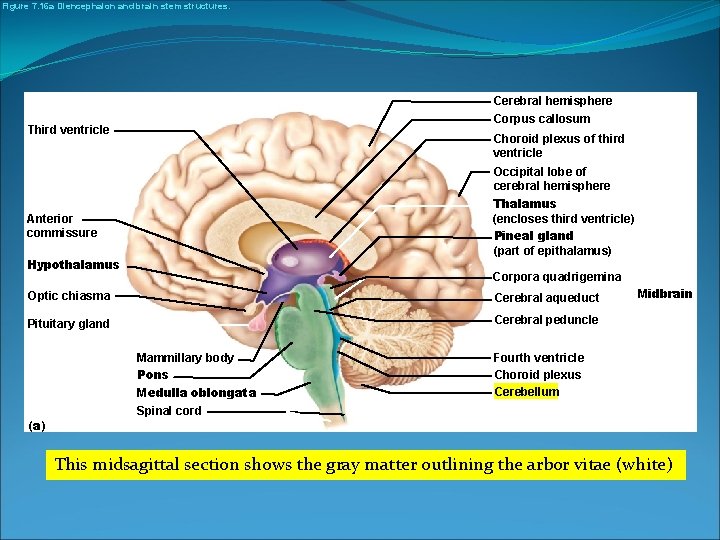
Figure 7. 16 a Diencephalon and brain stem structures. Cerebral hemisphere Corpus callosum Third ventricle Choroid plexus of third ventricle Occipital lobe of cerebral hemisphere Thalamus (encloses third ventricle) Pineal gland (part of epithalamus) Anterior commissure Hypothalamus Corpora quadrigemina Optic chiasma Cerebral aqueduct Pituitary gland Cerebral peduncle (a) Mammillary body Pons Medulla oblongata Spinal cord Midbrain Fourth ventricle Choroid plexus Cerebellum This midsagittal section shows the gray matter outlining the arbor vitae (white)
Ventricles and cerebrospinal fluid Four ventricles in the brain; central canal of spinal cord Ventricles create a system for distribution of cerebrospinal fluid (CSF) to bathe nervous tissue CSF: provides a cushion for the nervous tissue Is formed from blood by choroid plexuses, clusters of capillaries in each ventricle Is composed of proteins, sugars, few white blood cells, and NO red blood cells
- Slides: 17