
Chapter 7 Basics of Cardiorespiratory Endurance Lessons 1
Chapter 7: Basics of Cardiorespiratory Endurance Lessons: 1 -4
PEBPE Standards • PEBPE 2. d: The learner will be able to integrate health and skill related fitness components into their daily activities. • PEBPE 3. a: The learner will participate in fitness assessments and developmentally appropriate health-related fitness activities. • PEBPE 3. c: The learner will participate regularly in all fitness activities whi dressing safely/appropriately, and actively engage in all practice and exercise settings. • PEBPE 6. a: The learner will describe the role physical activity plays, in reduc the risk factor for disease, by maintaining appropriate health-related fitness components. • PEBPE 6. b: The learner will describe the life-long benefits of regular physical activity. • PEBPE 6. c: The learner will develop positive relationships with other students.

Key Vocabulary • • • Aerobic Activity Heart Blood Vessels Respiratory System Cardiorespiratory Endurance CVD Cardiac Death Stroke Peripheral Vascular Disease • Hypertension • Emphysema • Maximal Oxygen Consumption/VO 2 Max • • • Slow-Twitch Muscle Fibers Fast-Twitch Muscle Fibers Anaerobic Activity Anaerobic Fitness Interval Training
Essential Question • What are ways that I can improve my cardiorespiratory endurance on a daily basis?
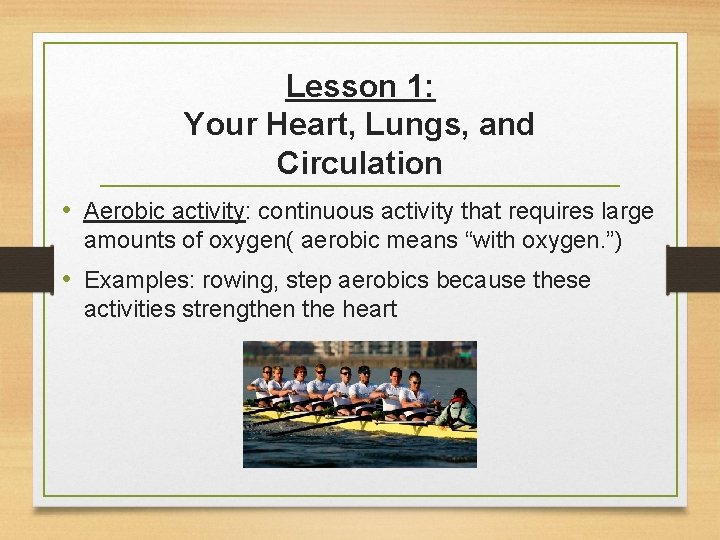
Lesson 1: Your Heart, Lungs, and Circulation • Aerobic activity: continuous activity that requires large amounts of oxygen( aerobic means “with oxygen. ”) • Examples: rowing, step aerobics because these activities strengthen the heart
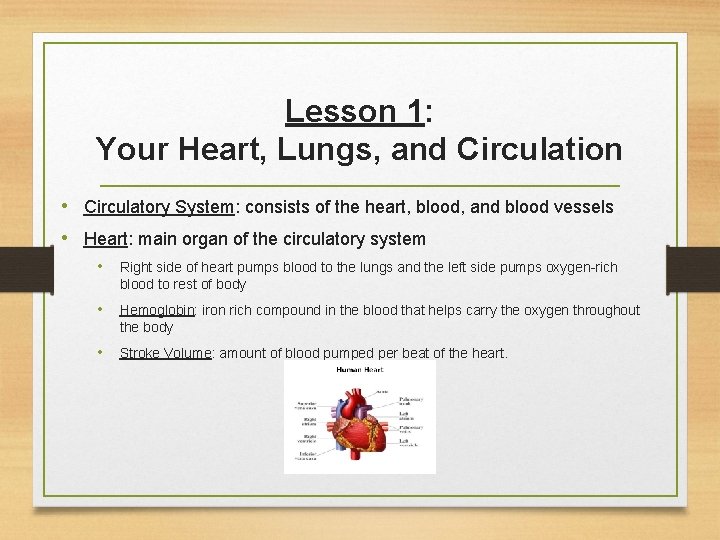
Lesson 1: Your Heart, Lungs, and Circulation • Circulatory System: consists of the heart, blood, and blood vessels • Heart: main organ of the circulatory system • Right side of heart pumps blood to the lungs and the left side pumps oxygen-rich blood to rest of body • Hemoglobin: iron rich compound in the blood that helps carry the oxygen throughout the body • Stroke Volume: amount of blood pumped per beat of the heart.
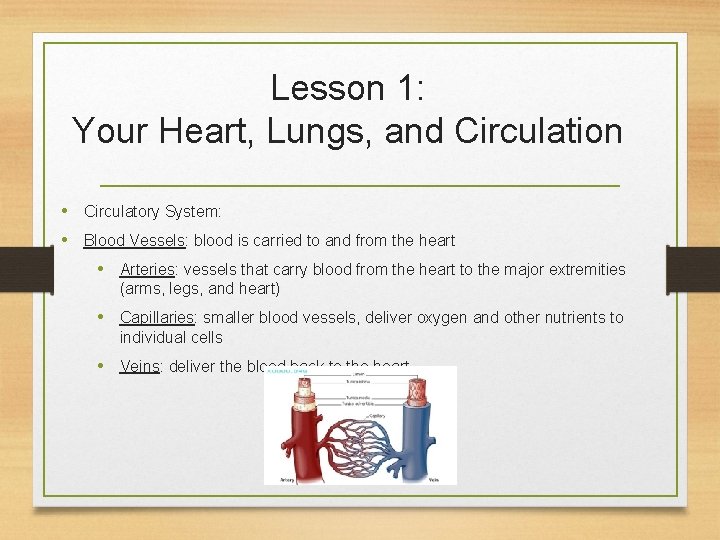
Lesson 1: Your Heart, Lungs, and Circulation • Circulatory System: • Blood Vessels: blood is carried to and from the heart • Arteries: vessels that carry blood from the heart to the major extremities (arms, legs, and heart) • Capillaries: smaller blood vessels, deliver oxygen and other nutrients to individual cells • Veins: deliver the blood back to the heart
Lesson 1: Your Heart, Lungs, and Circulation • Respiratory System: body system that exchanges gases between your body and the environment • Diaphragm: muscle found between the chest cavity and abdomen; when you inhale, the diaphragm contracts and moves downward (chest cavity enlarges, allowing air into the lungs) and when you exhale, the opposite motion occurs
Lesson 1: Your Heart, Lungs, and Circulation • Cardiorespiratory Endurance: ability of the body to work continuously for extended periods of time
Lesson 2: Problems and Care of Your Heart and Lungs • Lifestyle Diseases: diseases that are the result of certain lifestyle choices • Examples: drinking alcohol, smoking, poor eating habits, sedentary
Lesson 2: Problems and Care of Your Heart and Lungs • Cardiovascular Disease (CVD): medical disorder that affects the heart or blood vessels • CVD is the leading cause of death in the United States; taking 950, 000 lives a year • Atherosclerosis: condition in which a fatty deposit called plaque builds up inside arteries, restricting or cutting off blood flow
Lesson 2: Problems and Care of Your Heart and Lungs • Stroke: blood flow to a person’s brain is interrupted or cut off entirely by the blockage of an artery • Peripheral Vascular Disease: a CVD that occurs mainly in the legs, and less frequently in the arms • Hypertension: risk factor in heart attack, stroke, and heart failure • Emphysema: disease in which the small airways of the lungs lose their normal elasticity, making them less efficient in helping to move air in and out of the lungs
Lesson 2: Problems and Care of Your Heart and Lungs Changeable Risk Factors: • • Avoiding tobacco Maintaining a healthy weight Eating right Having regular medical checkups
Lesson 3: Influences on Cardiac-respiratory Endurance • Maximal Oxygen Consumption (VO 2 Max): largest amount of oxygen your body is able to process during strenuous aerobic exercise • VO 2 Max: measures the amount of oxygen in millimeters per kilogram of body weight per minute
Lesson 3: Influences on Cardiac-respiratory Endurance Factors Affecting Cardiorespiratory Endurance: • • • Age Heredity Gender Body Composition Level of Conditioning
Lesson 3: Influences on Cardiac-respiratory Endurance • Slow-twitch muscle fibers: muscle fibers that contract at a slow rate, allowing for greater muscle endurance • Fast-twitch muscle fiber: muscle fibers that contract rapidly, allowing for greater muscle strength
Lesson 4: Aerobic vs. Anaerobic Physical Activities • Anaerobic Activity: activity that requires high levels of energy and is done for only a few seconds or minutes at a high level of intensity • Anaerobic Fitness: higher levels of muscular strength, muscular endurance, and flexibility • Interval Training: programs in which high-intensity physical activities alternate with low-intensity recovery bouts for several minutes at a time
- Slides: 17