
Chapter 7 b Introduction to the Endocrine System
Chapter 7 b Introduction to the Endocrine System
![Simple Endocrine Reflex: Parathyroid Hormone Low plasma [Ca 2+] Negative feedback Parathyroid cell Parathyroid](http://slidetodoc.com/presentation_image_h2/de0aa5f320668ede66255981d586303c/image-2.jpg "Simple Endocrine Reflex: Parathyroid Hormone Low plasma [Ca 2+] Negative feedback Parathyroid cell Parathyroid")
Simple Endocrine Reflex: Parathyroid Hormone Low plasma [Ca 2+] Negative feedback Parathyroid cell Parathyroid hormone Bone and kidney Bone resorption Kidney reabsorption of calcium Production of calcitriol leads to intestinal absorption of Ca 2+ Plasma [Ca 2+] Figure 7 -10

Neurohormones: Major Groups • Adrenal medulla • Catecholamines • Hypothalamus • Anterior pituitary • Posterior pituitary
Endocrine Control • Three levels • Hypothalamic stimulation—from CNS • Pituitary stimulation—from hypothalamic trophic hormones • Releasing factors or Neurohormones • Endocrine gland stimulation—from pituitary trophic hormones • Stimulate other hormones
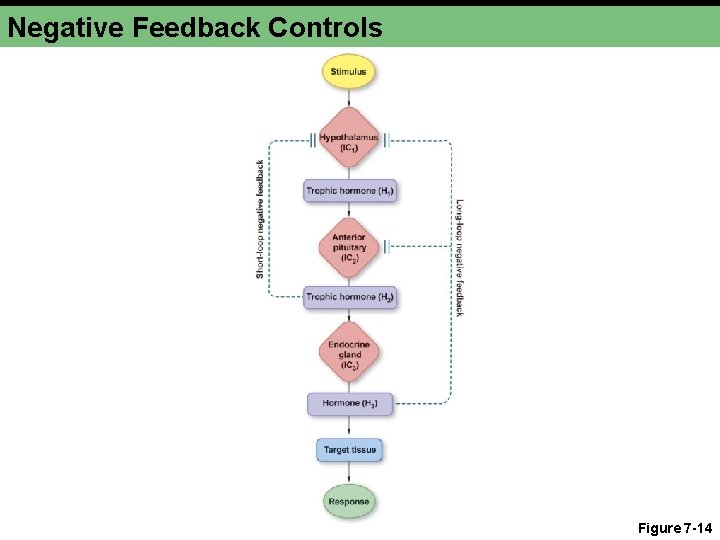
Negative Feedback Controls Figure 7 -14
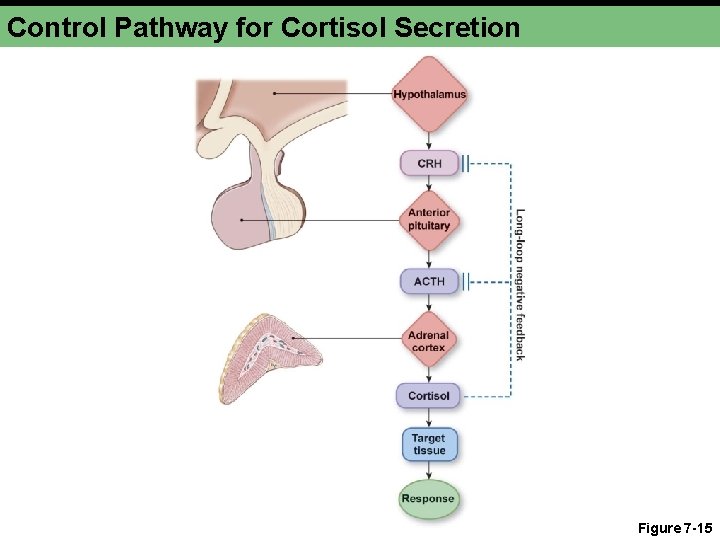
Control Pathway for Cortisol Secretion Figure 7 -15
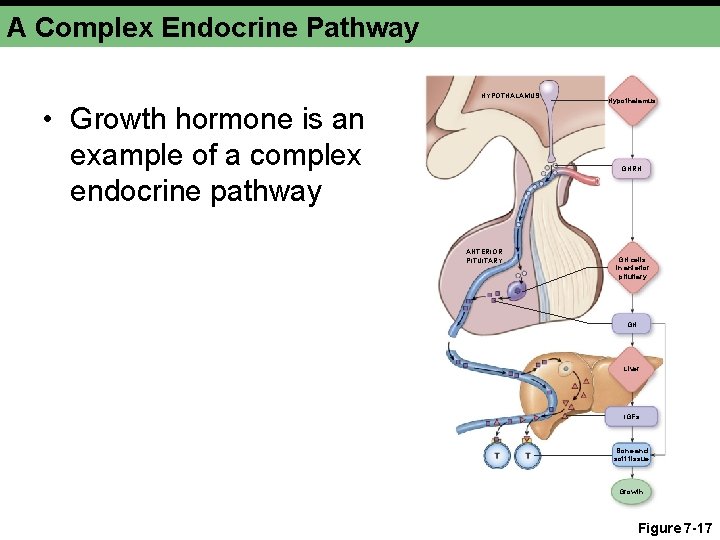
A Complex Endocrine Pathway HYPOTHALAMUS • Growth hormone is an example of a complex endocrine pathway Hypothalamus GHRH ANTERIOR PITUITARY GH cells in anterior pituitary GH Liver IGFs Bone and soft tissue Growth Figure 7 -17
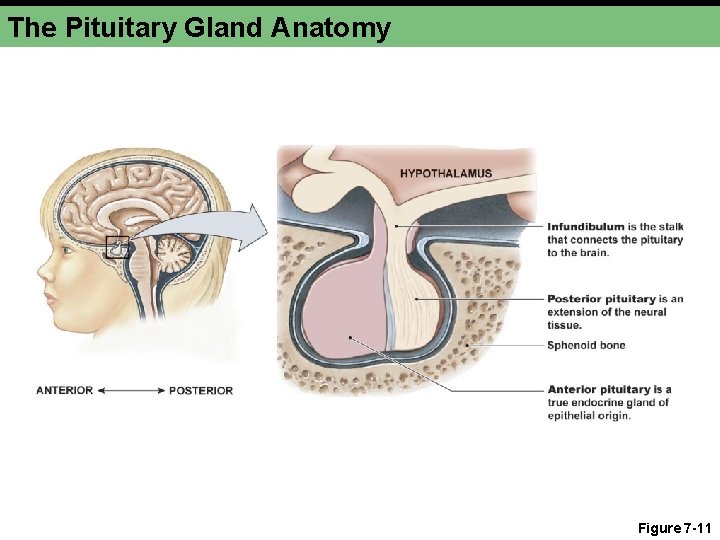
The Pituitary Gland Anatomy Figure 7 -11
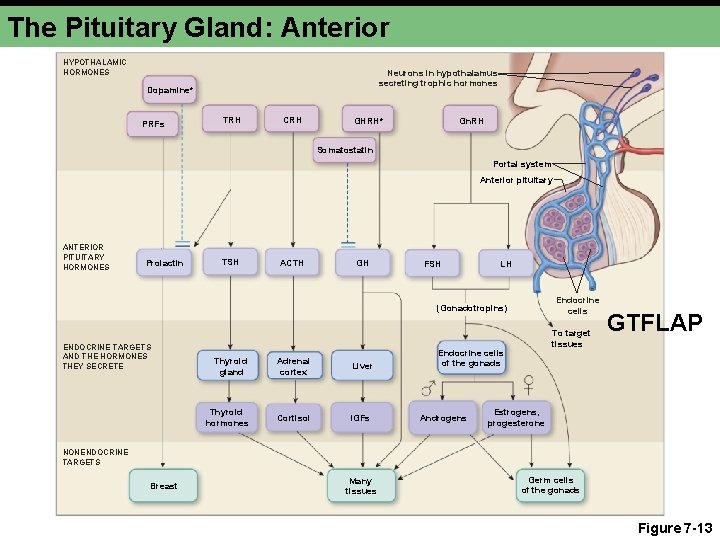
The Pituitary Gland: Anterior HYPOTHALAMIC HORMONES Neurons in hypothalamus secreting trophic hormones Dopamine* PRFs TRH CRH GHRH* Gn. RH Somatostatin Portal system Anterior pituitary ANTERIOR PITUITARY HORMONES Prolactin TSH ACTH GH FSH LH Endocrine cells (Gonadotropins) ENDOCRINE TARGETS AND THE HORMONES THEY SECRETE Thyroid gland Adrenal cortex Liver Thyroid hormones Cortisol IGFs To target tissues Endocrine cells of the gonads Androgens GTFLAP Estrogens, progesterone NONENDOCRINE TARGETS Breast Many tissues Germ cells of the gonads Figure 7 -13
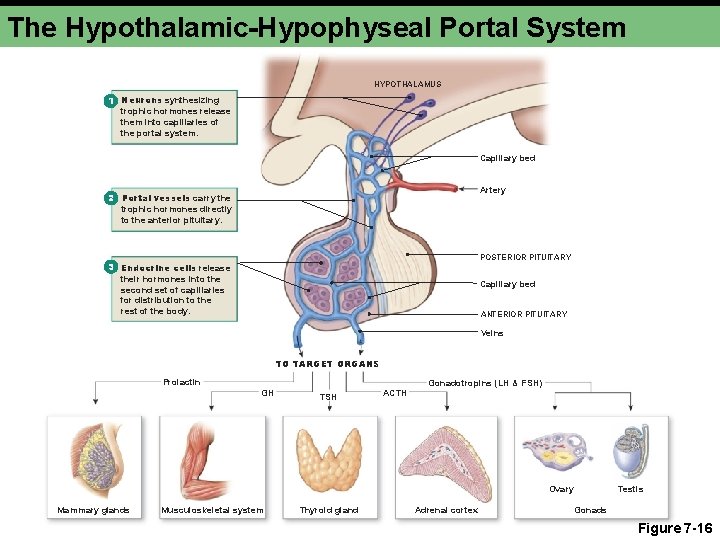
The Hypothalamic-Hypophyseal Portal System HYPOTHALAMUS 1 Neurons synthesizing trophic hormones release them into capillaries of the portal system. Capillary bed Artery 2 Portal vessels carry the trophic hormones directly to the anterior pituitary. POSTERIOR PITUITARY 3 Endocrine cells release their hormones into the second set of capillaries for distribution to the rest of the body. Capillary bed ANTERIOR PITUITARY Veins TO TARGET ORGANS Prolactin GH TSH ACTH Gonadotropins (LH & FSH) Ovary Mammary glands Musculoskeletal system Thyroid gland Adrenal cortex Testis Gonads Figure 7 -16
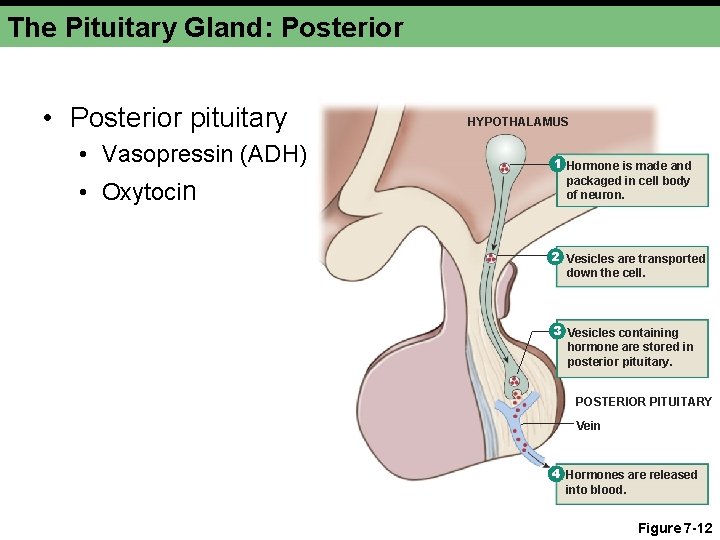
The Pituitary Gland: Posterior • Posterior pituitary • Vasopressin (ADH) • Oxytocin HYPOTHALAMUS 1 Hormone is made and packaged in cell body of neuron. 2 Vesicles are transported down the cell. 3 Vesicles containing hormone are stored in posterior pituitary. POSTERIOR PITUITARY Vein 4 Hormones are released into blood. Figure 7 -12
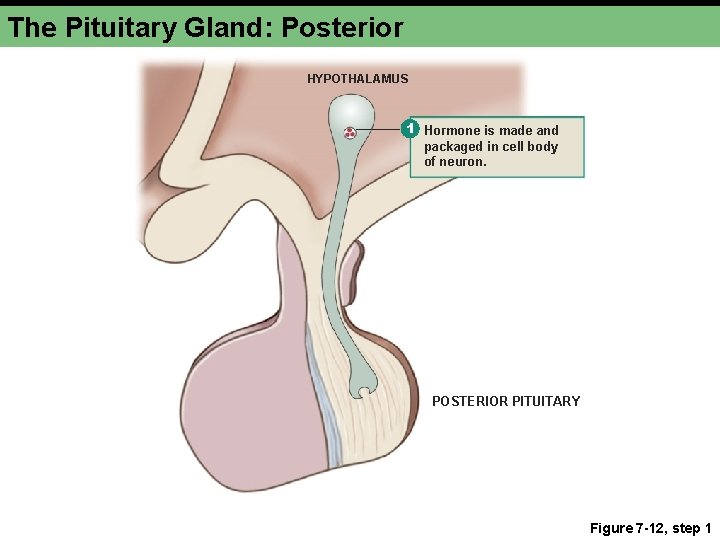
The Pituitary Gland: Posterior HYPOTHALAMUS 1 Hormone is made and packaged in cell body of neuron. POSTERIOR PITUITARY Figure 7 -12, step 1
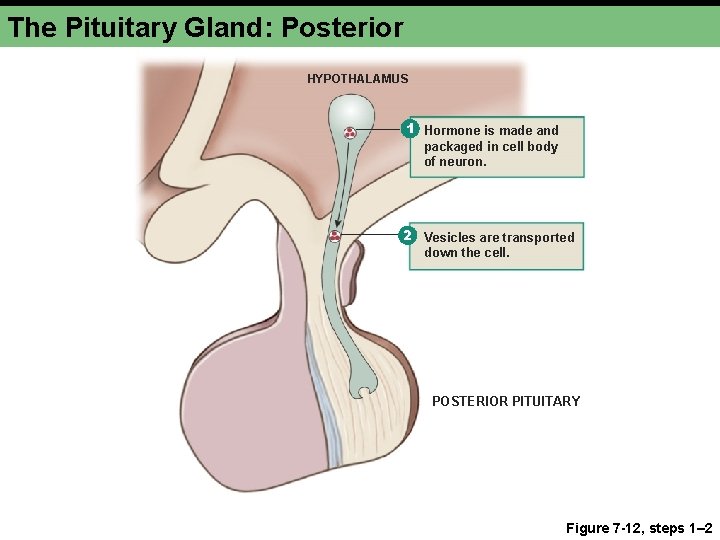
The Pituitary Gland: Posterior HYPOTHALAMUS 1 Hormone is made and packaged in cell body of neuron. 2 Vesicles are transported down the cell. POSTERIOR PITUITARY Figure 7 -12, steps 1– 2
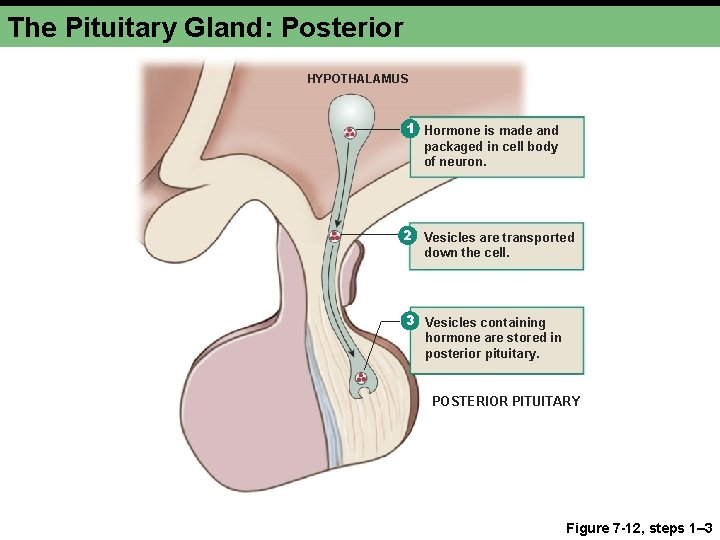
The Pituitary Gland: Posterior HYPOTHALAMUS 1 Hormone is made and packaged in cell body of neuron. 2 Vesicles are transported down the cell. 3 Vesicles containing hormone are stored in posterior pituitary. POSTERIOR PITUITARY Figure 7 -12, steps 1– 3
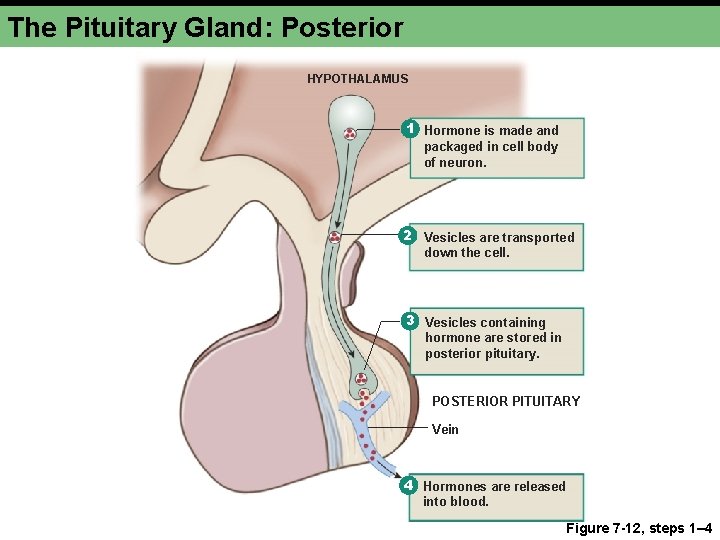
The Pituitary Gland: Posterior HYPOTHALAMUS 1 Hormone is made and packaged in cell body of neuron. 2 Vesicles are transported down the cell. 3 Vesicles containing hormone are stored in posterior pituitary. POSTERIOR PITUITARY Vein 4 Hormones are released into blood. Figure 7 -12, steps 1– 4
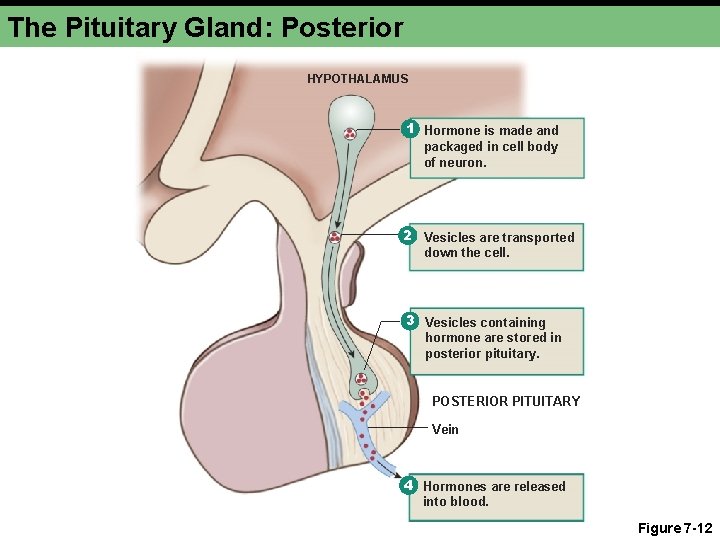
The Pituitary Gland: Posterior HYPOTHALAMUS 1 Hormone is made and packaged in cell body of neuron. 2 Vesicles are transported down the cell. 3 Vesicles containing hormone are stored in posterior pituitary. POSTERIOR PITUITARY Vein 4 Hormones are released into blood. Figure 7 -12
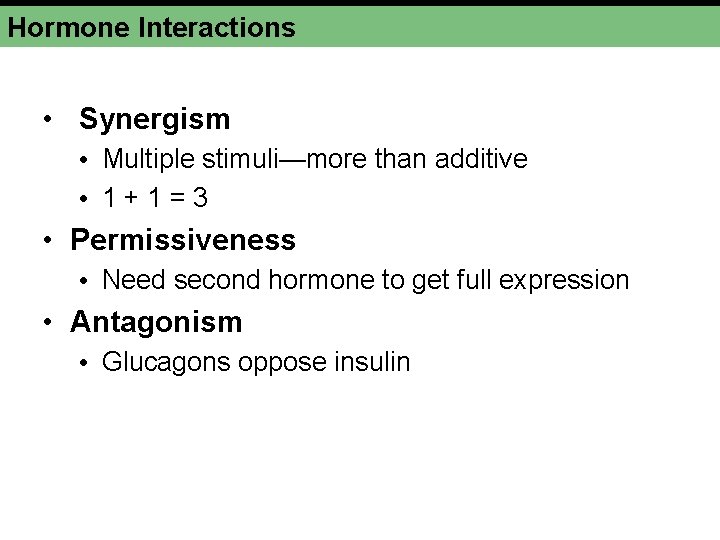
Hormone Interactions • Synergism • Multiple stimuli—more than additive • 1+1=3 • Permissiveness • Need second hormone to get full expression • Antagonism • Glucagons oppose insulin
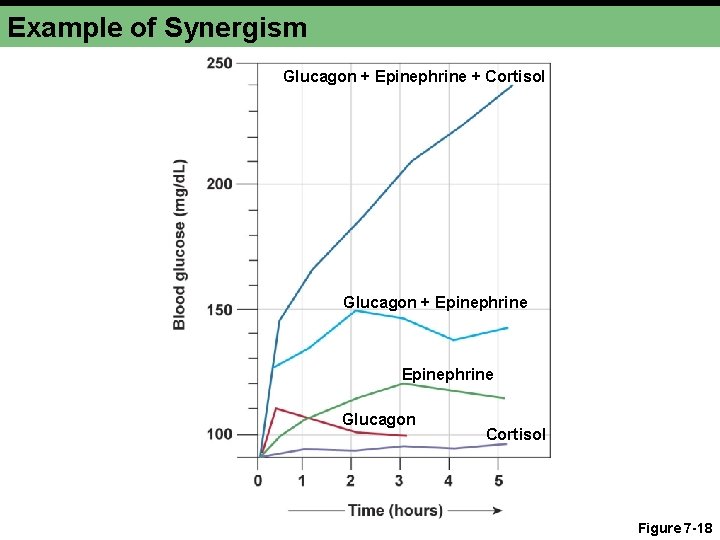
Example of Synergism Glucagon + Epinephrine + Cortisol Glucagon + Epinephrine Glucagon Cortisol Figure 7 -18
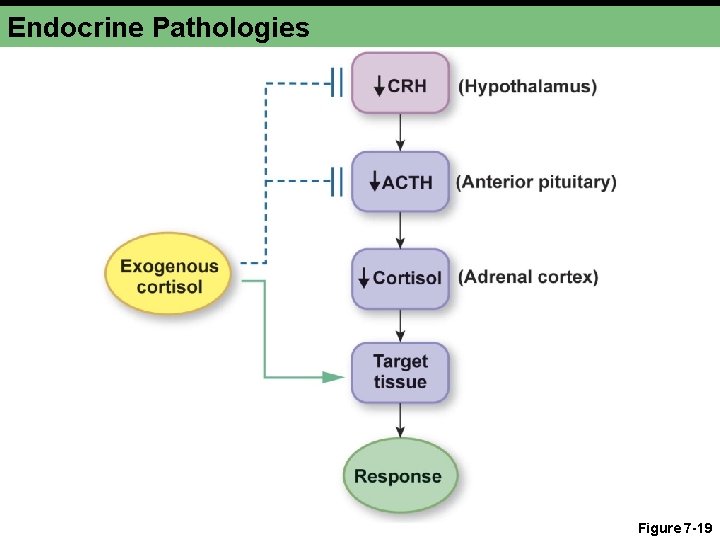
Endocrine Pathologies Figure 7 -19
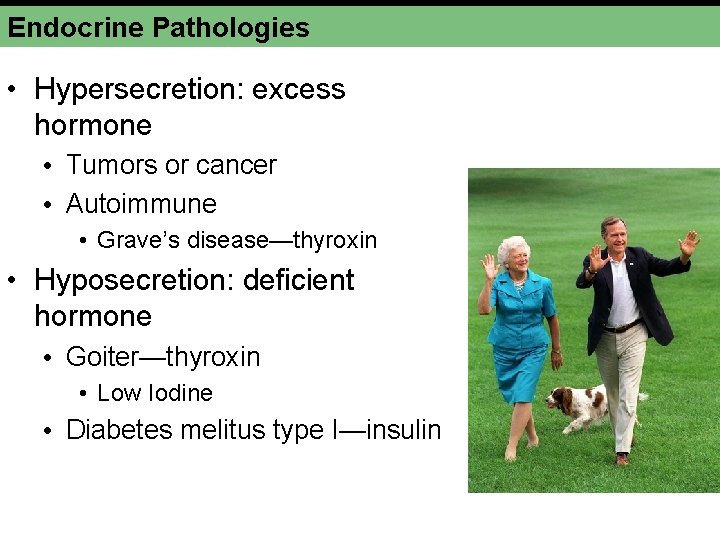
Endocrine Pathologies • Hypersecretion: excess hormone • Tumors or cancer • Autoimmune • Grave’s disease—thyroxin • Hyposecretion: deficient hormone • Goiter—thyroxin • Low Iodine • Diabetes melitus type I—insulin

Goiter
Pathologies: Abnormal Receptors • Downregulation • Hyperinsulinemia • Transduction abnormalities • Testicular feminization syndrome • Pseudohypothyroidism • Abnormalities of control mechanisms
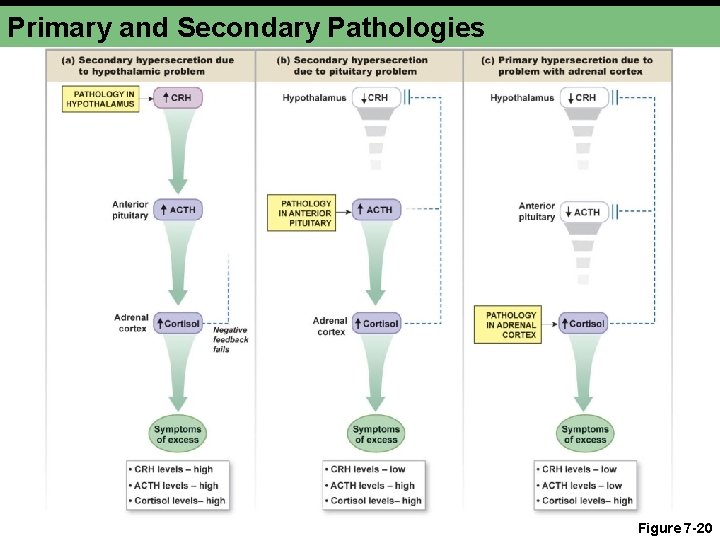
Primary and Secondary Pathologies Figure 7 -20
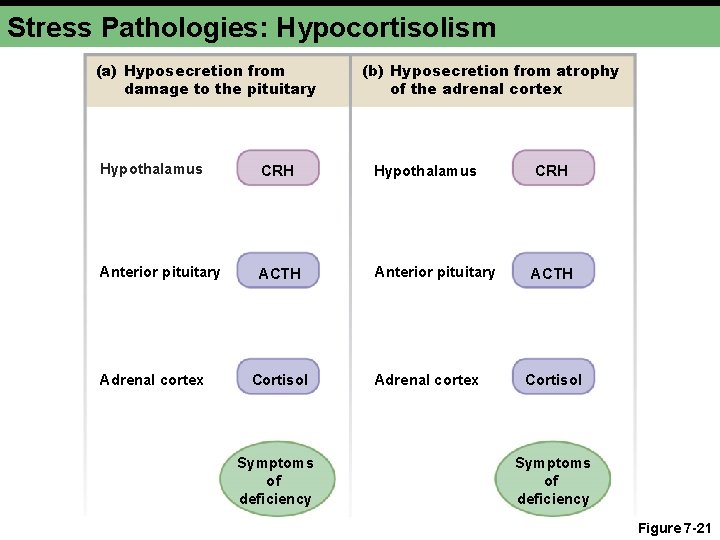
Stress Pathologies: Hypocortisolism (a) Hyposecretion from damage to the pituitary (b) Hyposecretion from atrophy of the adrenal cortex Hypothalamus CRH Anterior pituitary ACTH Adrenal cortex Cortisol Symptoms of deficiency Figure 7 -21
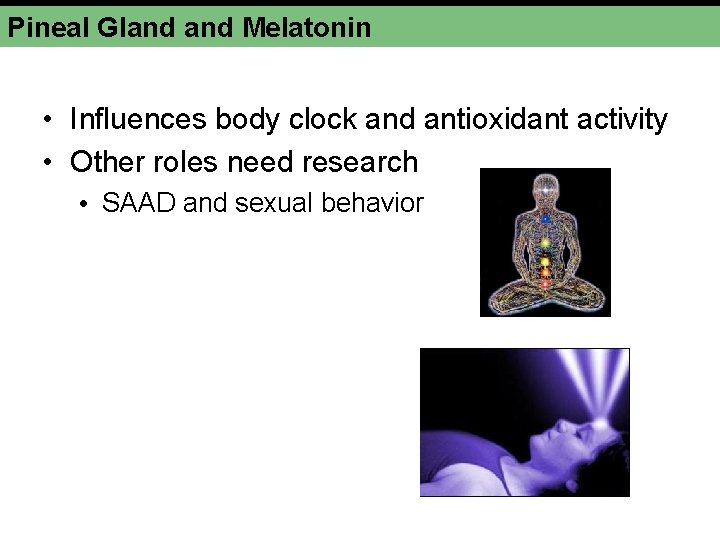
Pineal Gland Melatonin • Influences body clock and antioxidant activity • Other roles need research • SAAD and sexual behavior
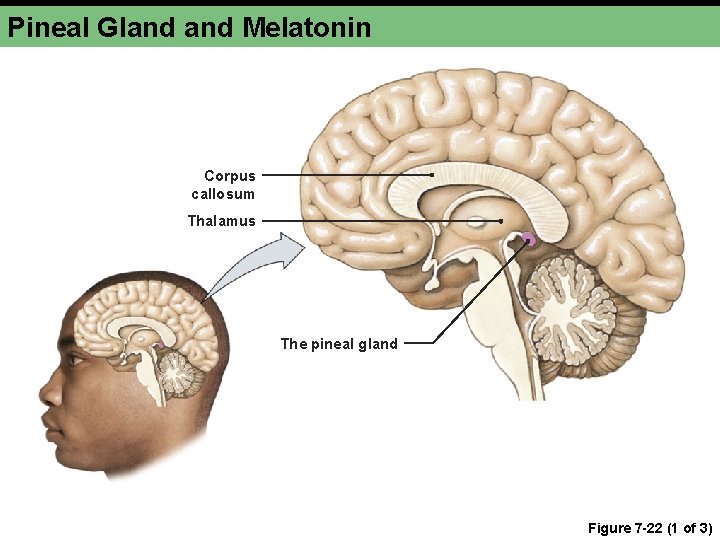
Pineal Gland Melatonin Corpus callosum Thalamus The pineal gland Figure 7 -22 (1 of 3)
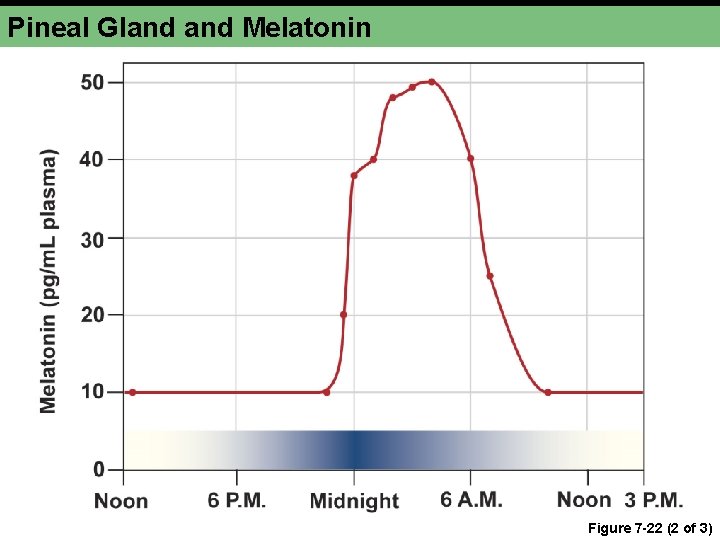
Pineal Gland Melatonin Figure 7 -22 (2 of 3)
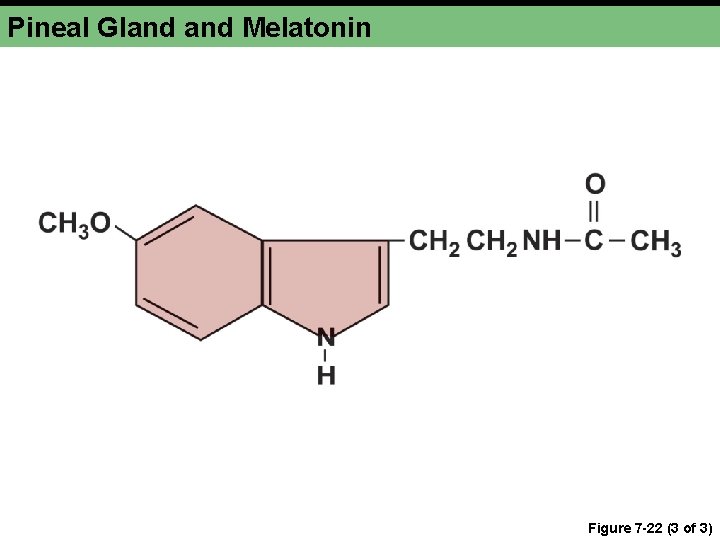
Pineal Gland Melatonin Figure 7 -22 (3 of 3)
Summary • Introduction to hormones • Classifications and features of hormones • Regulation controlled by the endocrine and nervous systems • Interactions of hormones with other hormones • Endocrine pathologies
- Slides: 29