
CHAPTER 7 2 Eukaryotic Cell Structure COMPARING THE
- Slides: 11
CHAPTER 7. 2 Eukaryotic Cell Structure
COMPARING THE CELL TO A FACTORY The cell can seem very complex but there is order to what goes on in the cell. Eukaryotic cells have organelles – little structures that act like specialized organs in a cell. A eukaryotic cell has 2 main parts the nucleus and the cytoplasm. The cytoplasm is the portion of the cell outside the nucleus. It is kind-of Jello-like material where all of the organelles are located.
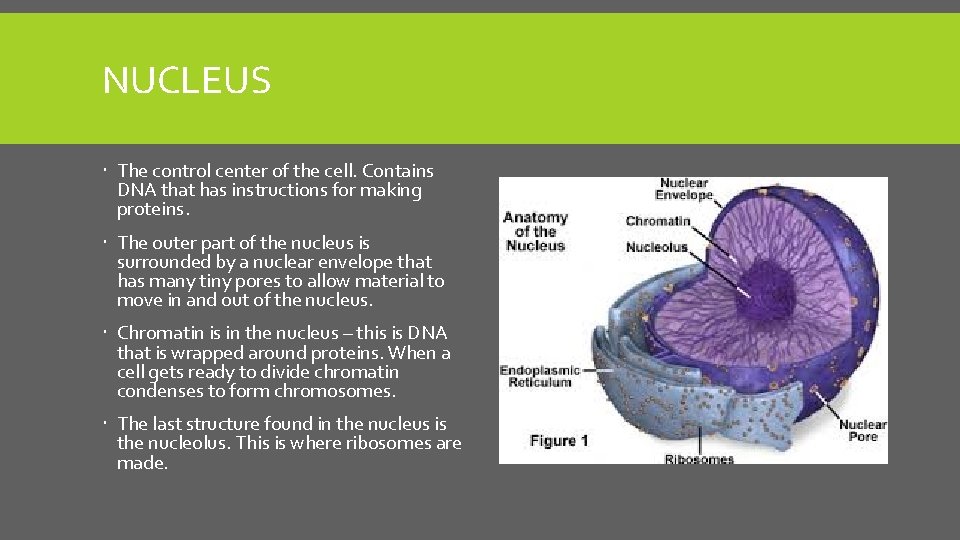
NUCLEUS The control center of the cell. Contains DNA that has instructions for making proteins. The outer part of the nucleus is surrounded by a nuclear envelope that has many tiny pores to allow material to move in and out of the nucleus. Chromatin is in the nucleus – this is DNA that is wrapped around proteins. When a cell gets ready to divide chromatin condenses to form chromosomes. The last structure found in the nucleus is the nucleolus. This is where ribosomes are made.
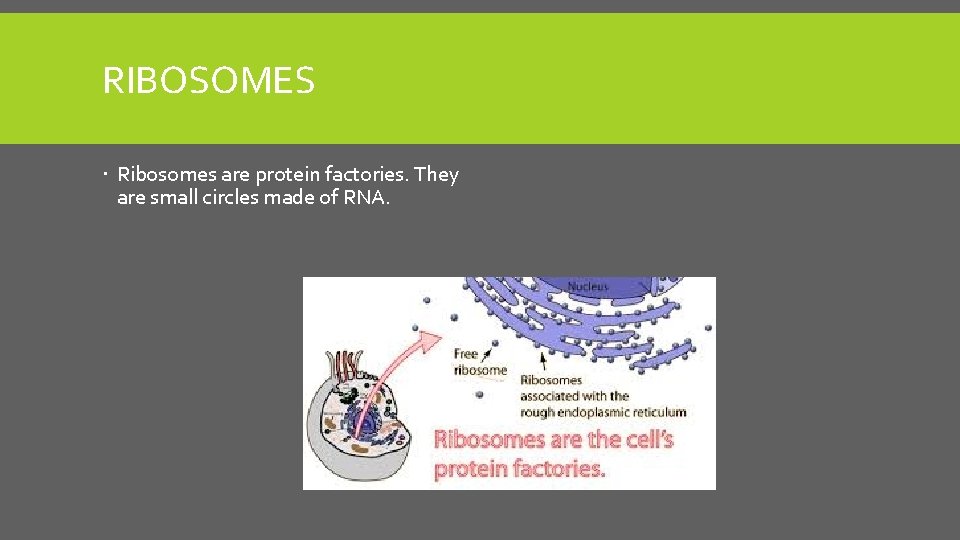
RIBOSOMES Ribosomes are protein factories. They are small circles made of RNA.
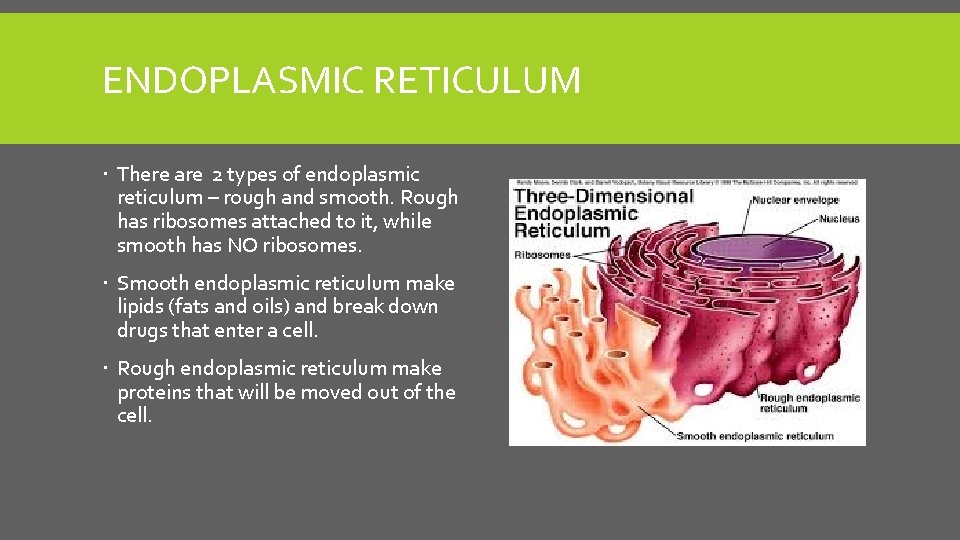
ENDOPLASMIC RETICULUM There are 2 types of endoplasmic reticulum – rough and smooth. Rough has ribosomes attached to it, while smooth has NO ribosomes. Smooth endoplasmic reticulum make lipids (fats and oils) and break down drugs that enter a cell. Rough endoplasmic reticulum make proteins that will be moved out of the cell.
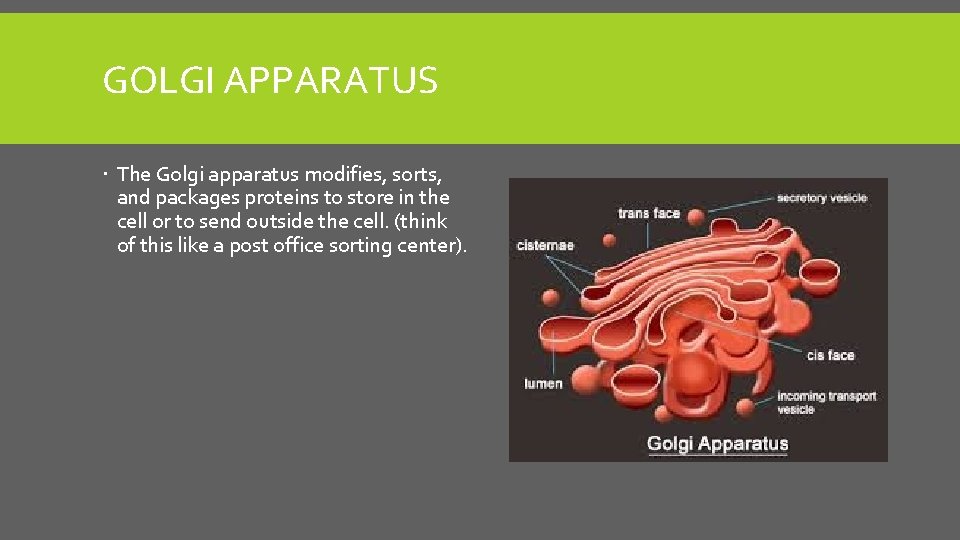
GOLGI APPARATUS The Golgi apparatus modifies, sorts, and packages proteins to store in the cell or to send outside the cell. (think of this like a post office sorting center).
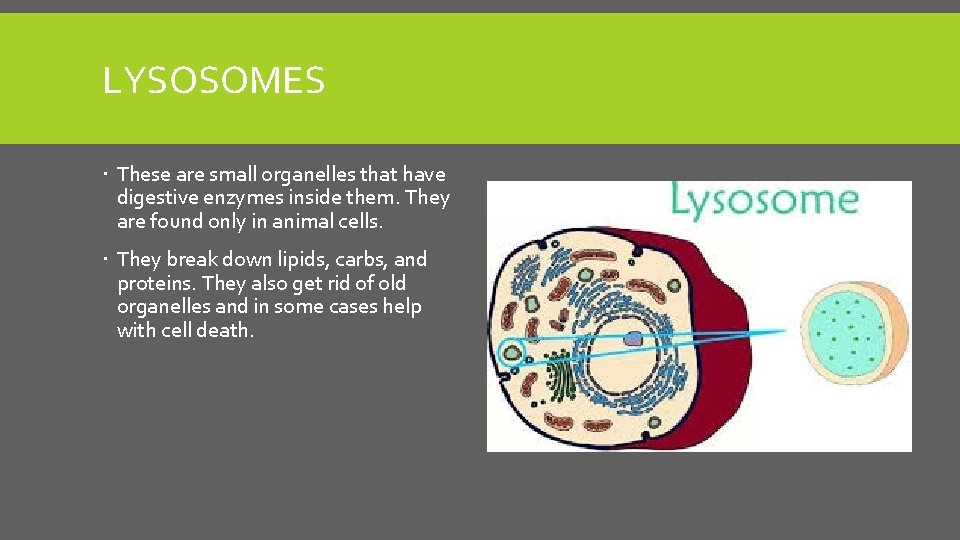
LYSOSOMES These are small organelles that have digestive enzymes inside them. They are found only in animal cells. They break down lipids, carbs, and proteins. They also get rid of old organelles and in some cases help with cell death.
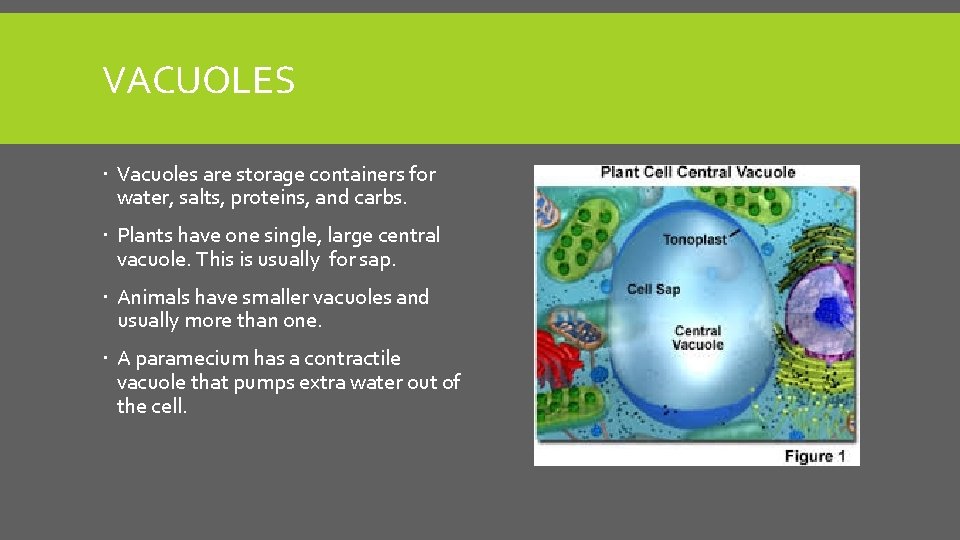
VACUOLES Vacuoles are storage containers for water, salts, proteins, and carbs. Plants have one single, large central vacuole. This is usually for sap. Animals have smaller vacuoles and usually more than one. A paramecium has a contractile vacuole that pumps extra water out of the cell.
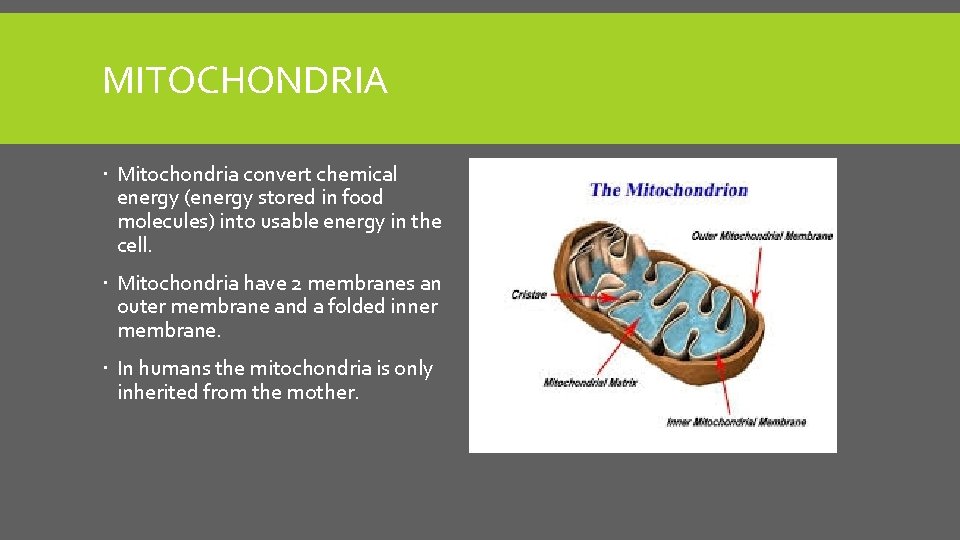
MITOCHONDRIA Mitochondria convert chemical energy (energy stored in food molecules) into usable energy in the cell. Mitochondria have 2 membranes an outer membrane and a folded inner membrane. In humans the mitochondria is only inherited from the mother.
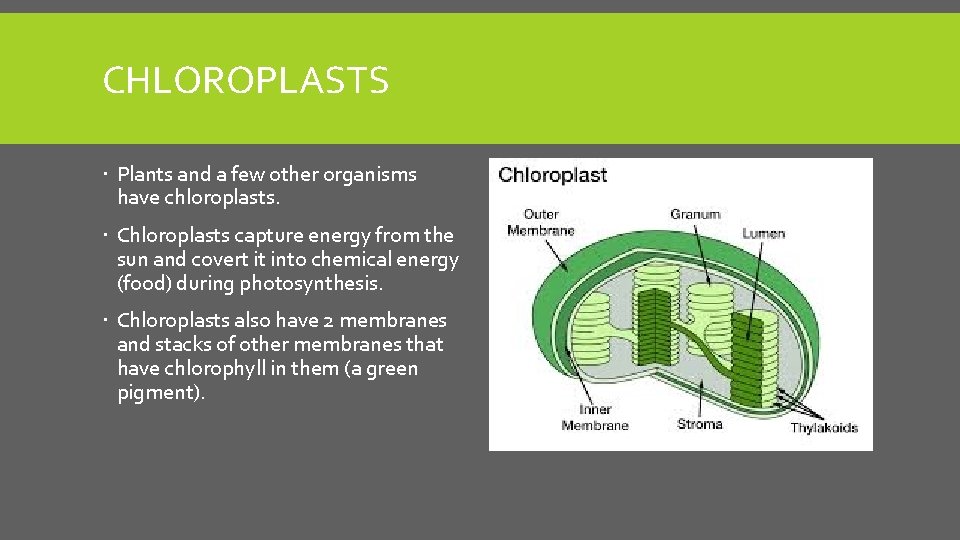
CHLOROPLASTS Plants and a few other organisms have chloroplasts. Chloroplasts capture energy from the sun and covert it into chemical energy (food) during photosynthesis. Chloroplasts also have 2 membranes and stacks of other membranes that have chlorophyll in them (a green pigment).
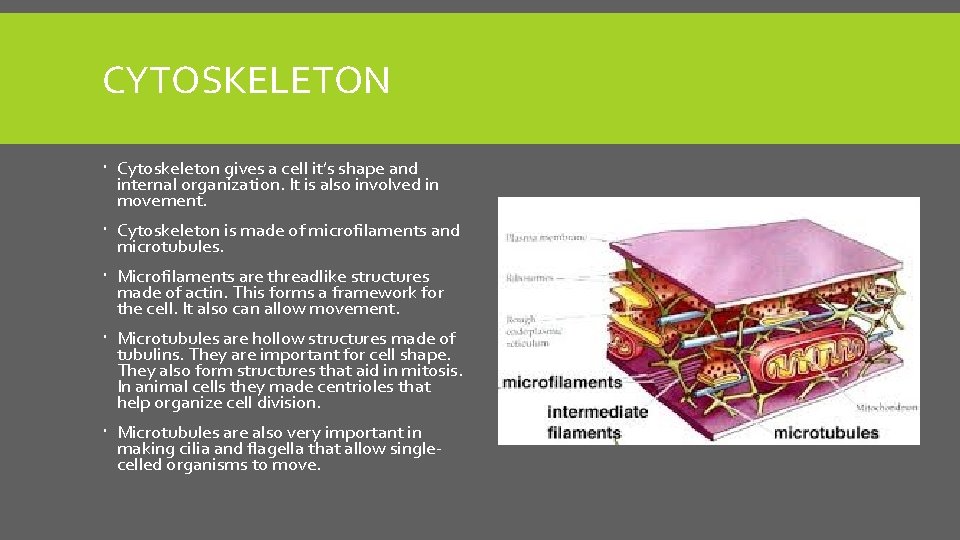
CYTOSKELETON Cytoskeleton gives a cell it’s shape and internal organization. It is also involved in movement. Cytoskeleton is made of microfilaments and microtubules. Microfilaments are threadlike structures made of actin. This forms a framework for the cell. It also can allow movement. Microtubules are hollow structures made of tubulins. They are important for cell shape. They also form structures that aid in mitosis. In animal cells they made centrioles that help organize cell division. Microtubules are also very important in making cilia and flagella that allow singlecelled organisms to move.