
Chapter 6 Working Capital and the Financing Decision
- Slides: 13
Chapter 6 Working Capital and the Financing Decision
Chapter 6 - Outline What is Working Capital Management? Term Structure of Interest Rates U. S. Government Securities Short-Term vs. Long-Term Financing Working Capital Financing Plans
Working Capital Management is controlling and managing the current assets of a firm Most time-consuming job of a financial manager Crucial to long-term success or failure of a business (short term decisions may determine if a firm gets to the long run).
Term Structure of Interest Rates The Term Structure of Interest Rates is also known as the Treasury Yield Curve Graph showing the relationship between S/T and L/T interest rates at different maturities Reported daily in The Wall Street Journal. Normal shape is an upward sloping curve, indicating that L/T interest rates are greater than S/T interest rates.
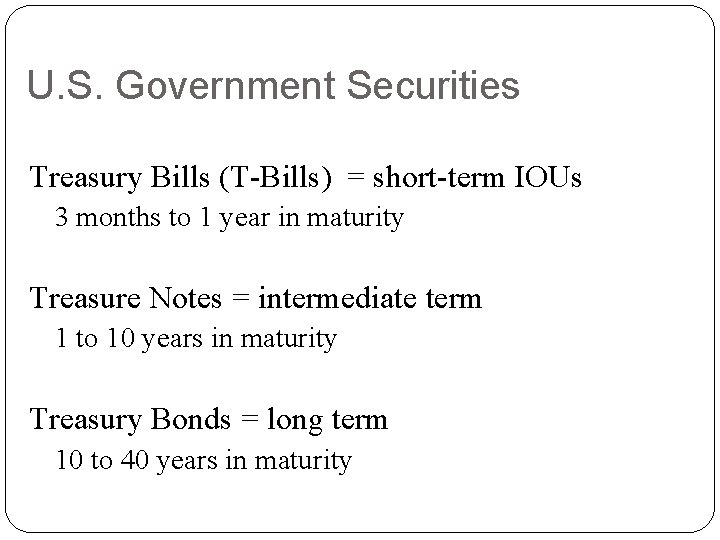
U. S. Government Securities Treasury Bills (T-Bills) = short-term IOUs 3 months to 1 year in maturity Treasure Notes = intermediate term 1 to 10 years in maturity Treasury Bonds = long term 10 to 40 years in maturity
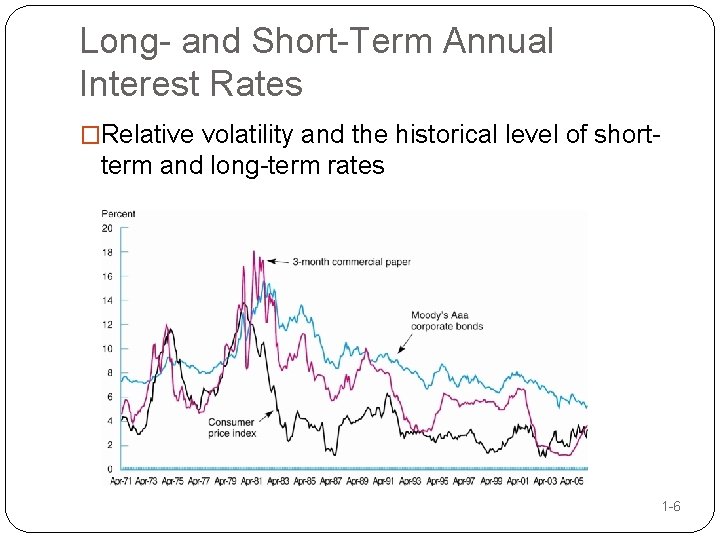
Long- and Short-Term Annual Interest Rates �Relative volatility and the historical level of short- term and long-term rates 1 -6
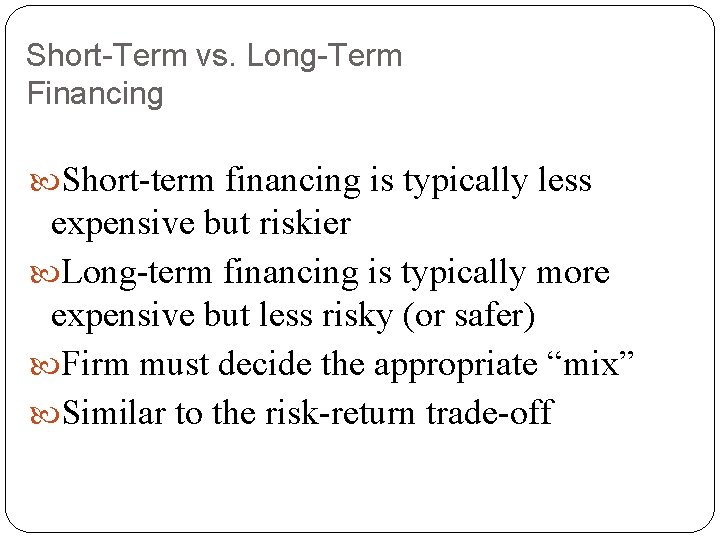
Short-Term vs. Long-Term Financing Short-term financing is typically less expensive but riskier Long-term financing is typically more expensive but less risky (or safer) Firm must decide the appropriate “mix” Similar to the risk-return trade-off
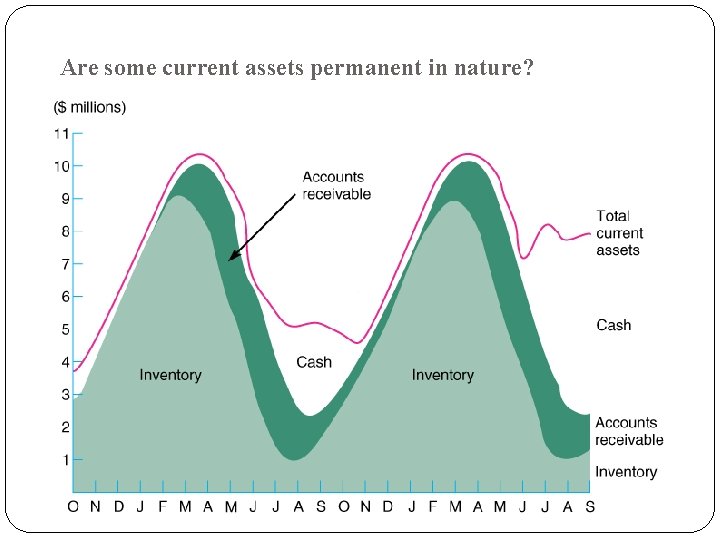
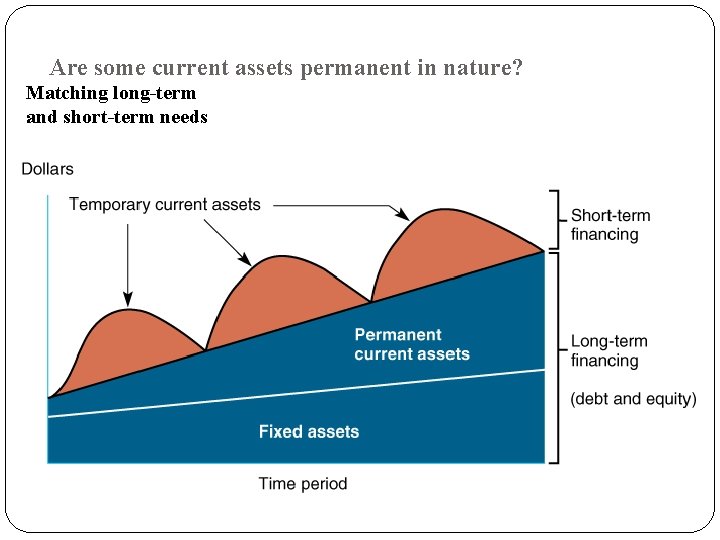
Are some current assets permanent in nature?
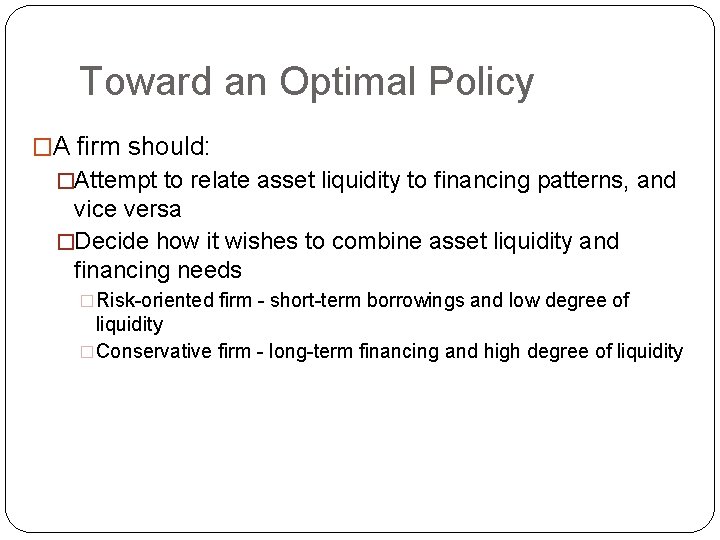
Toward an Optimal Policy �A firm should: �Attempt to relate asset liquidity to financing patterns, and vice versa �Decide how it wishes to combine asset liquidity and financing needs �Risk-oriented firm - short-term borrowings and low degree of liquidity �Conservative firm - long-term financing and high degree of liquidity
Are some current assets permanent in nature? Matching long-term and short-term needs
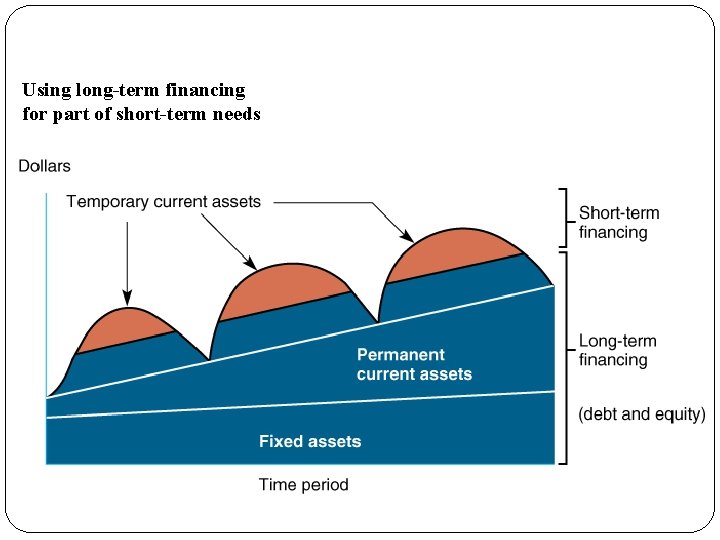
Using long-term financing for part of short-term needs
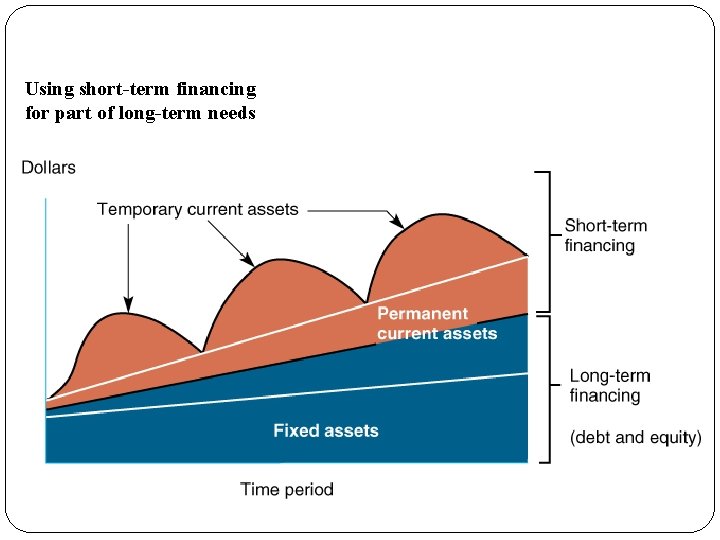
Using short-term financing for part of long-term needs
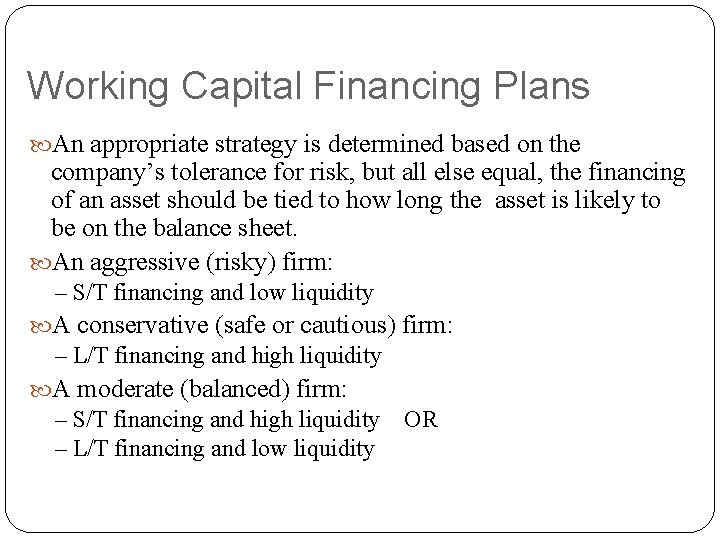
Working Capital Financing Plans An appropriate strategy is determined based on the company’s tolerance for risk, but all else equal, the financing of an asset should be tied to how long the asset is likely to be on the balance sheet. An aggressive (risky) firm: – S/T financing and low liquidity A conservative (safe or cautious) firm: – L/T financing and high liquidity A moderate (balanced) firm: – S/T financing and high liquidity – L/T financing and low liquidity OR