
CHAPTER 6 THE ROCK AND FOSSIL RECORD SECTION

- Slides: 18
CHAPTER 6: THE ROCK AND FOSSIL RECORD SECTION 2: RELATIVE DATING: WHICH CAME FIRST?
RELATIVE DATING • Geologists rely on rocks and fossils to determine the order in which events have happened during Earth’s history. • Determining whether an object or event is older or younger than other objects or events is called relative dating.
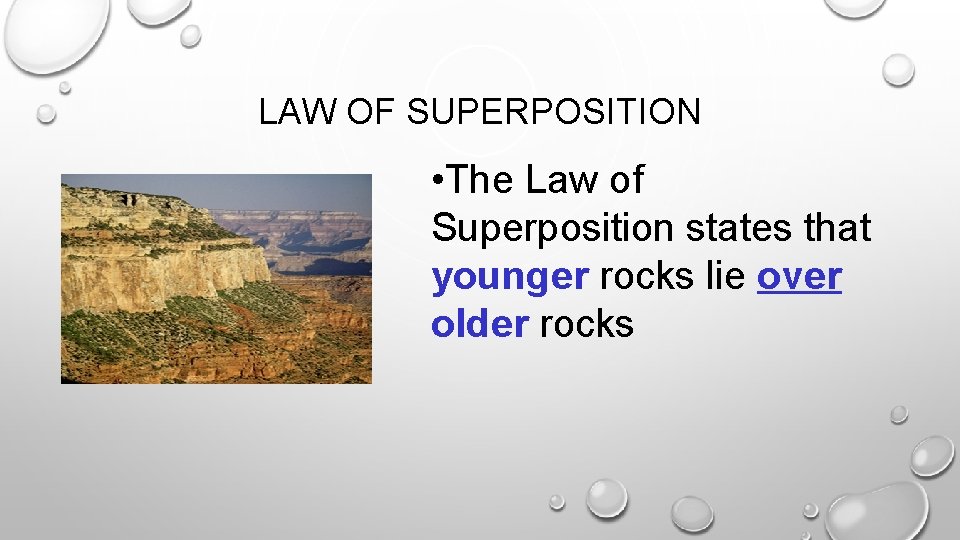
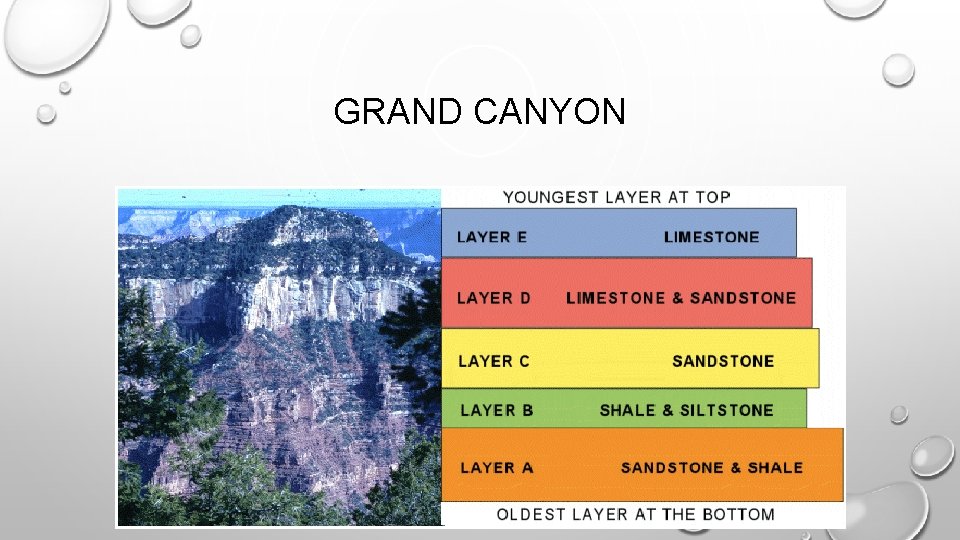
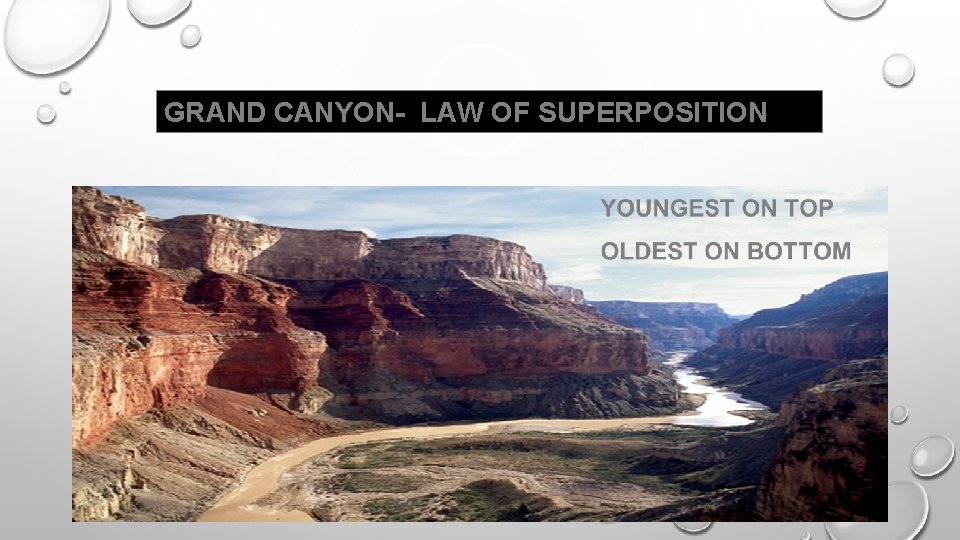
LAW OF SUPERPOSITION • The Law of Superposition states that younger rocks lie over older rocks
LAW OF SUPERPOSITION • In a series of sedimentary rocks the bottom layer is the oldest and the top layer is the youngest – Lower layers must be in place before younger rocks can be deposited on top of them – Exception: when something occurs to overturn layers
GRAND CANYON
GRAND CANYON- LAW OF SUPERPOSITION
GEOLOGIC COLUMN The geologic column is an ideal sequence of rock layers that contains all the known fossils and rock formations on Earth, arranged from oldest to youngest.
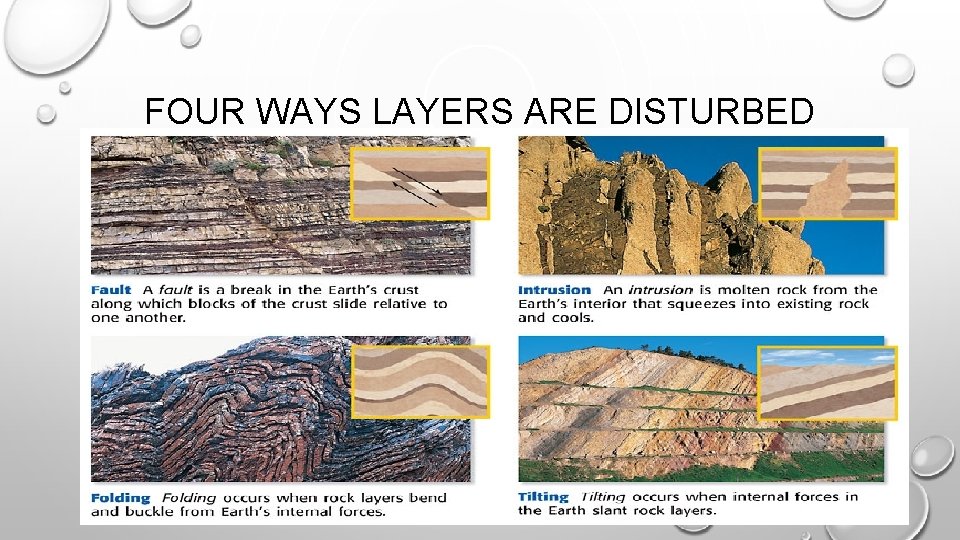
DISTURBED ROCK LAYERS • Geologists often find features that cut across existing layers of rock. • Geologists use the relationships between rock layers and the features that cut across them to assign relative ages to the features and the layers.
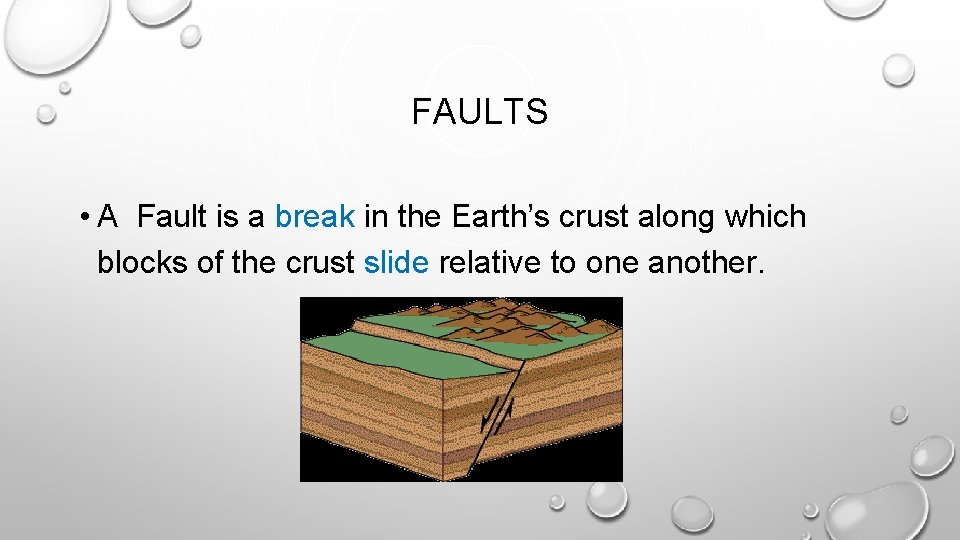
FAULTS • A Fault is a break in the Earth’s crust along which blocks of the crust slide relative to one another.
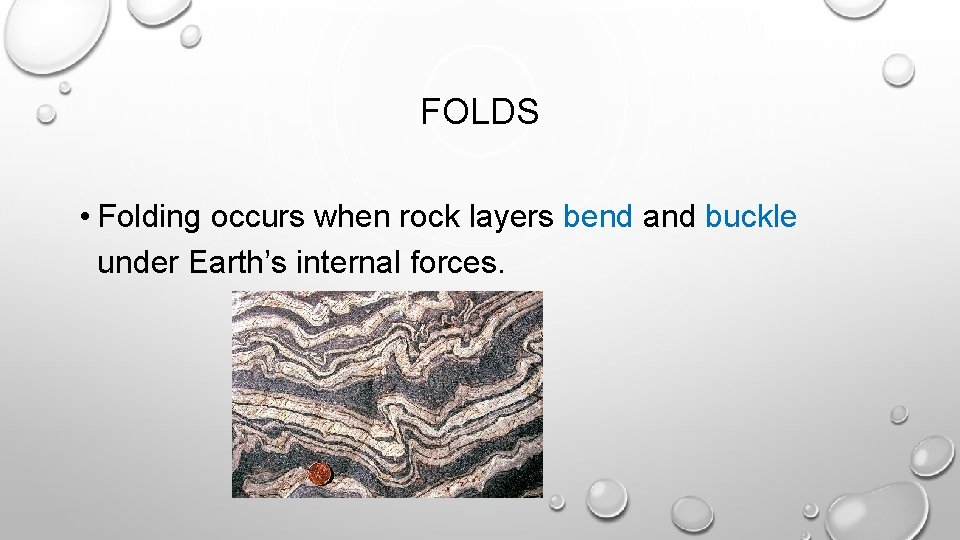
FOLDS • Folding occurs when rock layers bend and buckle under Earth’s internal forces.
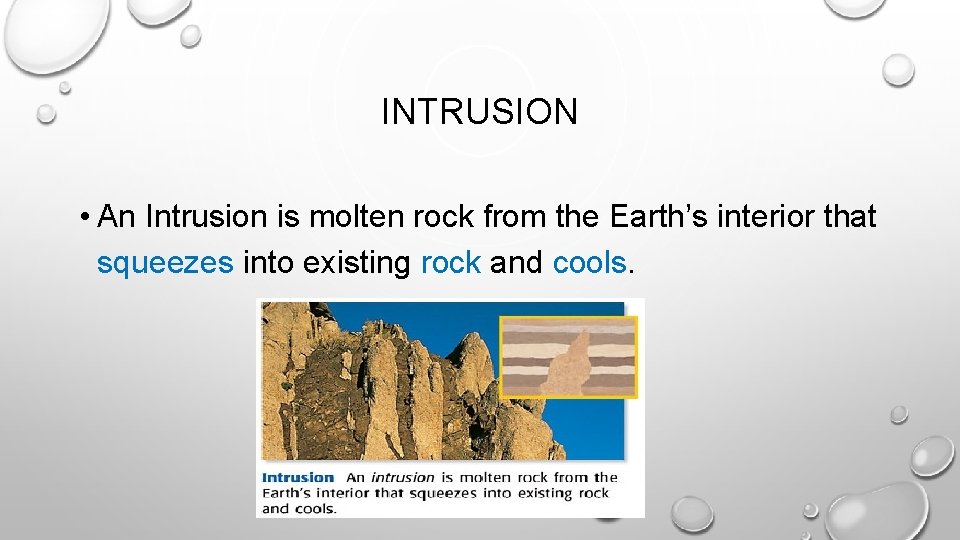
INTRUSION • An Intrusion is molten rock from the Earth’s interior that squeezes into existing rock and cools.
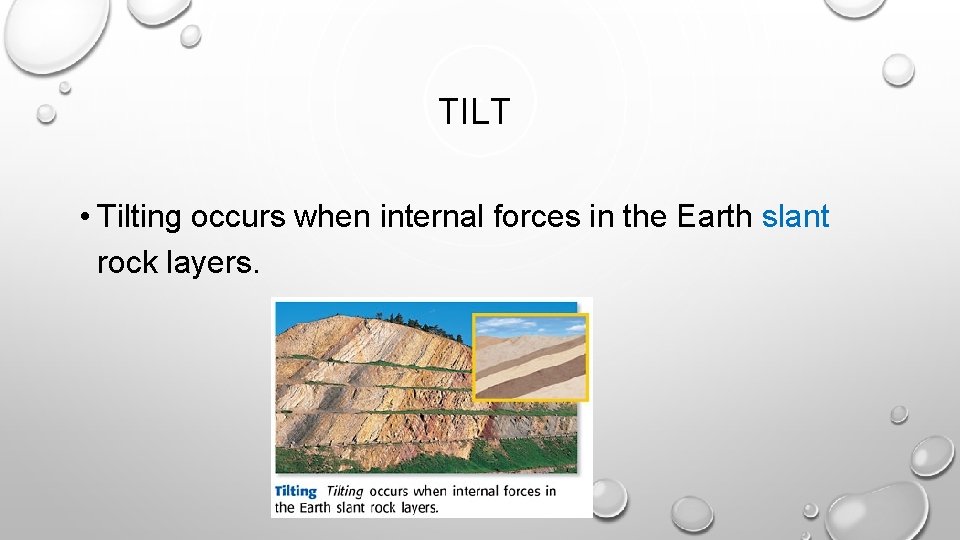
TILT • Tilting occurs when internal forces in the Earth slant rock layers.
FOUR WAYS LAYERS ARE DISTURBED
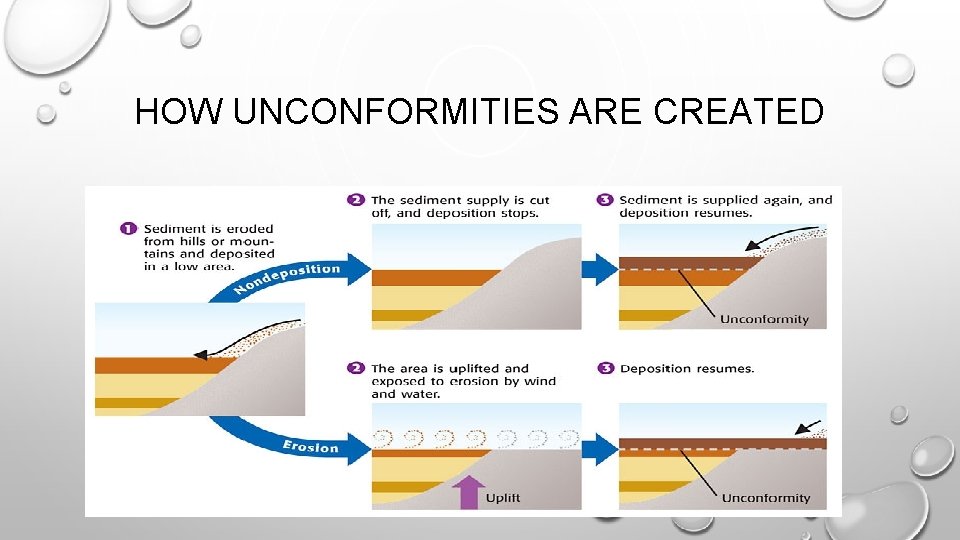
GAPS IN THE RECORD - UNCONFORMITIES • Missing rock layers create breaks in rock-layer sequences called unconformities. • An unconformity is a surface that represents a missing part of the geologic column. • Unconformities also represent missing time—time that was not recorded in layers of rock
HOW UNCONFORMITIES ARE CREATED
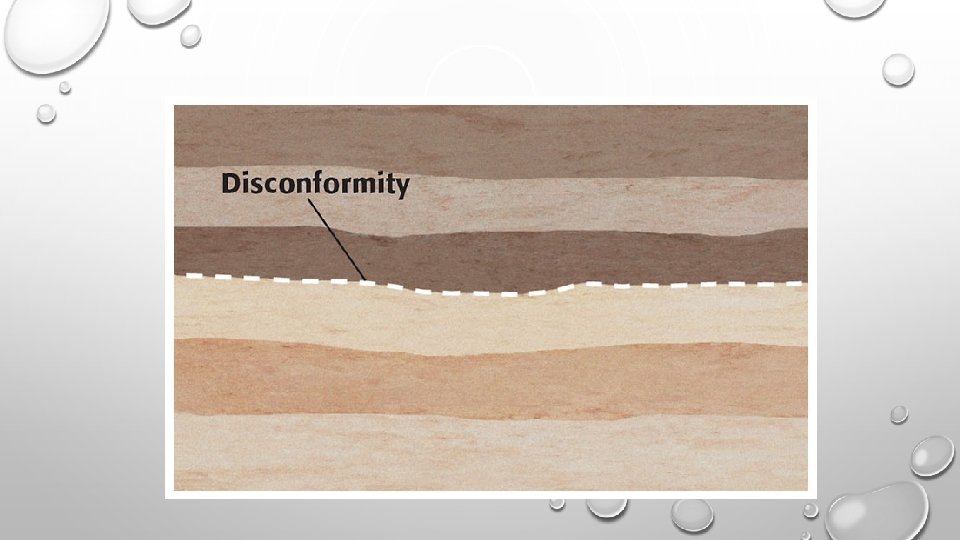
TYPES OF UNCONFORMITIES • The most common type of unconformity is a disconformity. • Disconformities are found where part of a sequence of parallel rock layers is missing.
HOW DISCONFORMITY CAN FORM • A sequence of rock layers is uplifted. Younger layers at the top of the sequence are removed by erosion, and the eroded material is deposited elsewhere. At some future time, deposition resumes, and sediment buries the old erosion surface.