
CHAPTER 6 THE RESPIRATORY SYSTEM KEY KNOWLEDGE v
- Slides: 13
CHAPTER 6 THE RESPIRATORY SYSTEM
KEY KNOWLEDGE v The structure and function of the respiratory system, including the structure and function of the lungs, mechanics of breathing and gaseous exchange at the alveoli/capillary and the capillary/muscle interfaces. v The interrelationship of the cardiovascular and respiratory systems tov transport oxygen around the body at rest and during exercise. © Victorian Curriculum & Assessment Authority
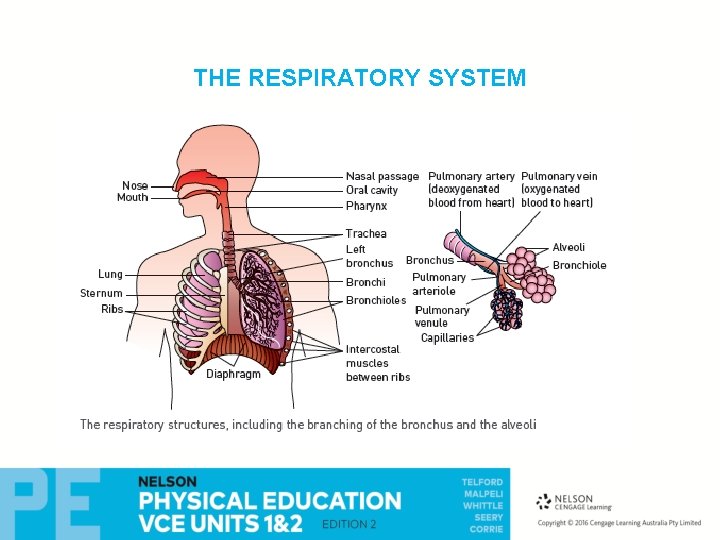
THE RESPIRATORY SYSTEM
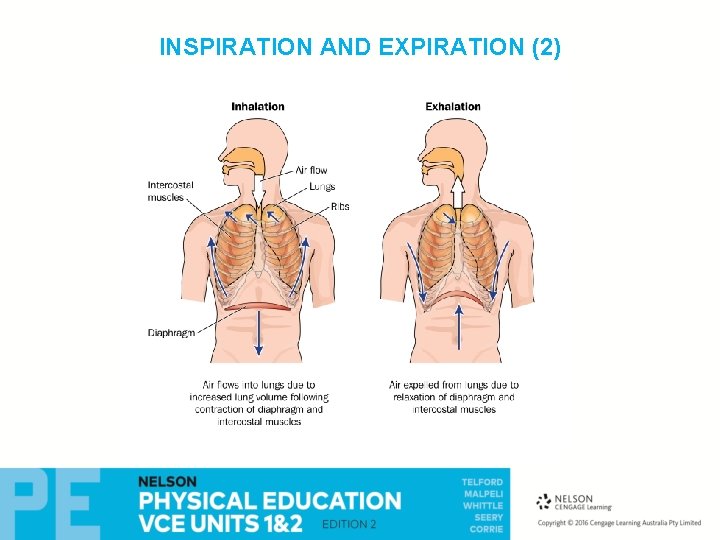
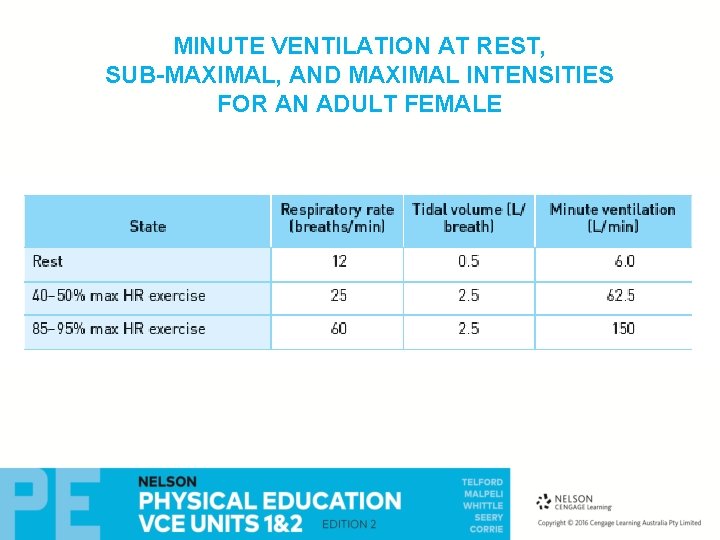
INSPIRATION AND EXPIRATION (1) We breathe in (inspiration) by contracting the intercostal muscles and the diaphragm - the ribs move upwards & outwards, and at the same time the diaphragm contracts downwards. This increases the lung space, causing the pressure within the lungs to decrease to less than that of air outside the body so air moves into the lungs quickly. Gases always move from areas of higher pressure to lower pressure. Expiration is passive and occurs in response to the intercostal and diaphragm muscles relaxing. When this happens, the ribs drop and the diaphragm adopts its relaxed dome-like shape in the thoracic cavity. The space inside the lungs decreases, while air pressure increases until it exceeds that of air outside the body and air is exhaled or expired. The amount of air inhaled and exhaled per breath is known as the tidal volume (TV). Minute ventilation (VE) = respiratory rate x tidal volume At rest, minute ventilation (VE) = 12 breaths/min x 0. 5 L/ breath = 6. 0 L/ min.
INSPIRATION AND EXPIRATION (2)
MINUTE VENTILATION AT REST, SUB-MAXIMAL, AND MAXIMAL INTENSITIES FOR AN ADULT FEMALE
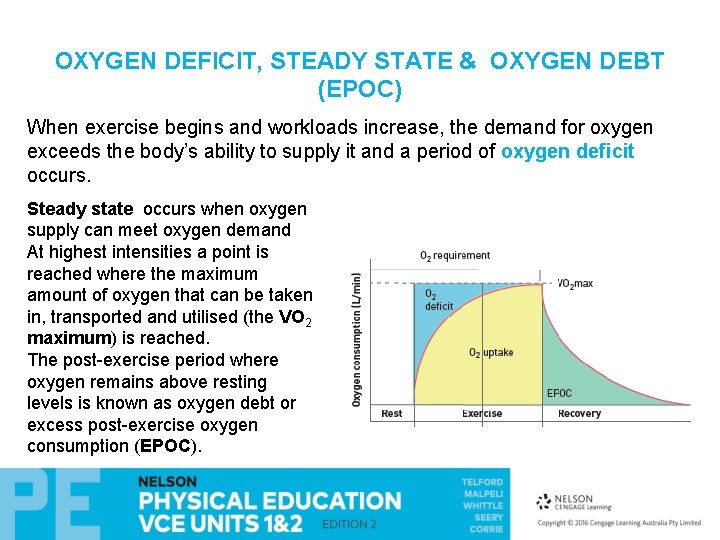
OXYGEN DEFICIT, STEADY STATE & OXYGEN DEBT (EPOC) When exercise begins and workloads increase, the demand for oxygen exceeds the body’s ability to supply it and a period of oxygen deficit occurs. Steady state occurs when oxygen supply can meet oxygen demand At highest intensities a point is reached where the maximum amount of oxygen that can be taken in, transported and utilised (the VO 2 maximum) is reached. The post-exercise period where oxygen remains above resting levels is known as oxygen debt or excess post-exercise oxygen consumption (EPOC).
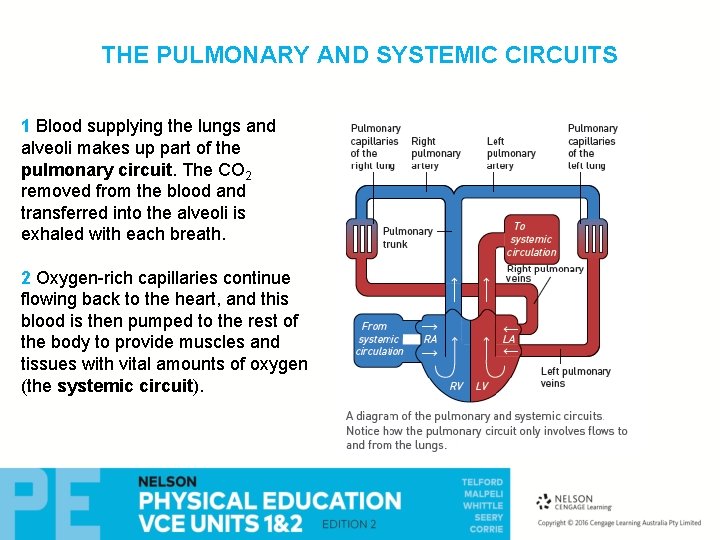
THE PULMONARY AND SYSTEMIC CIRCUITS 1 Blood supplying the lungs and alveoli makes up part of the pulmonary circuit. The CO 2 removed from the blood and transferred into the alveoli is exhaled with each breath. 2 Oxygen-rich capillaries continue flowing back to the heart, and this blood is then pumped to the rest of the body to provide muscles and tissues with vital amounts of oxygen (the systemic circuit).
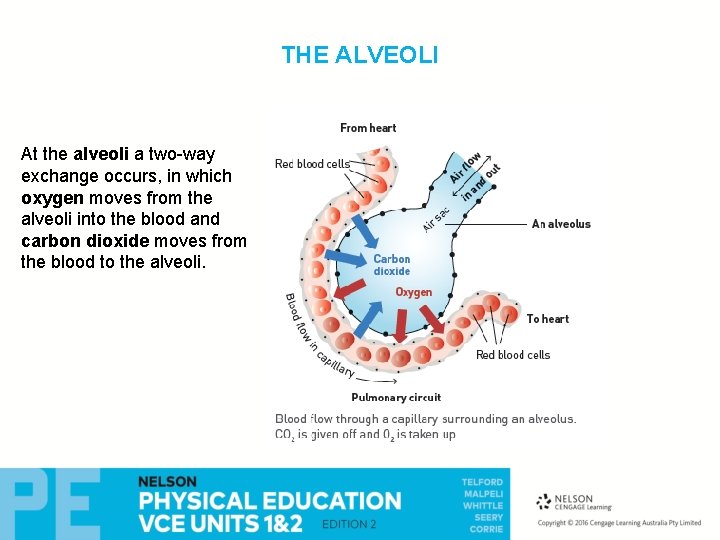
THE ALVEOLI At the alveoli a two-way exchange occurs, in which oxygen moves from the alveoli into the blood and carbon dioxide moves from the blood to the alveoli.
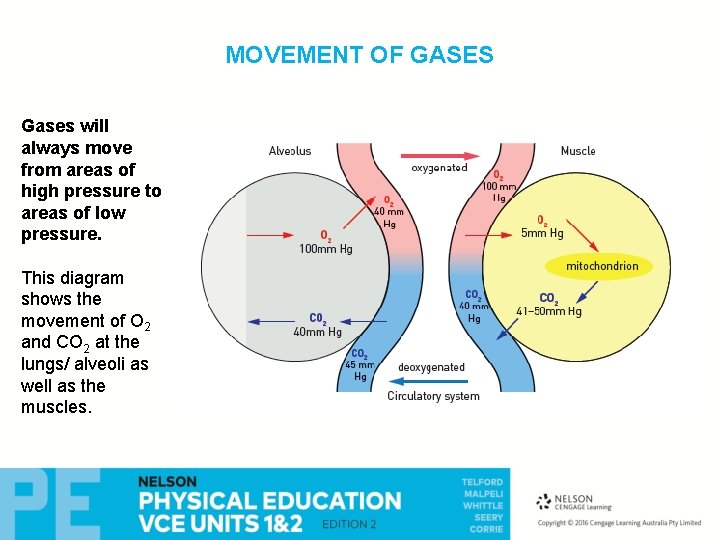
MOVEMENT OF GASES Gases will always move from areas of high pressure to areas of low pressure. This diagram shows the movement of O 2 and CO 2 at the lungs/ alveoli as well as the muscles.
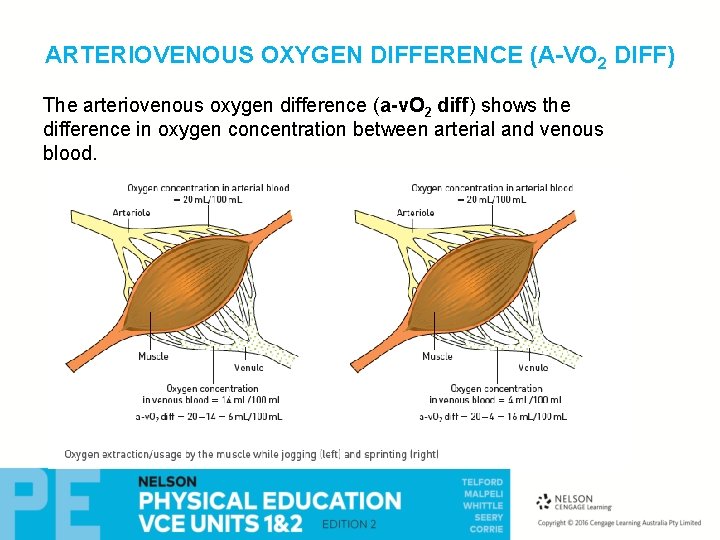
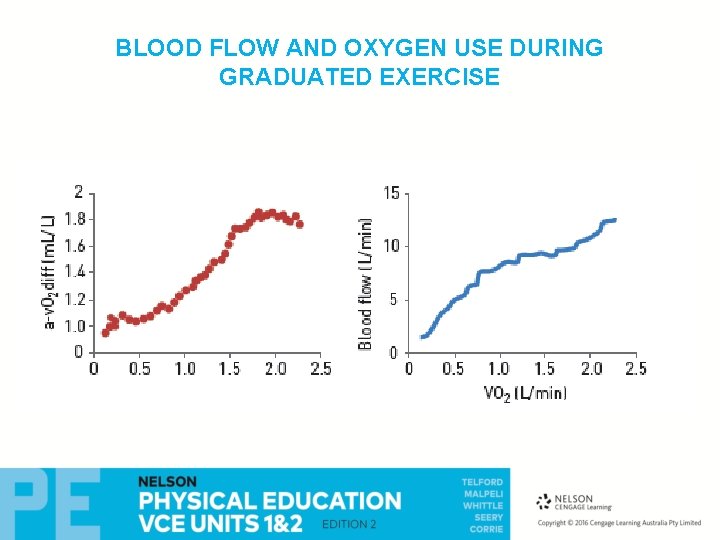
ARTERIOVENOUS OXYGEN DIFFERENCE (A-VO 2 DIFF) The arteriovenous oxygen difference (a-v. O 2 diff) shows the difference in oxygen concentration between arterial and venous blood.
BLOOD FLOW AND OXYGEN USE DURING GRADUATED EXERCISE