
Chapter 6 The Progressives Section Notes Video Progressivism

- Slides: 102
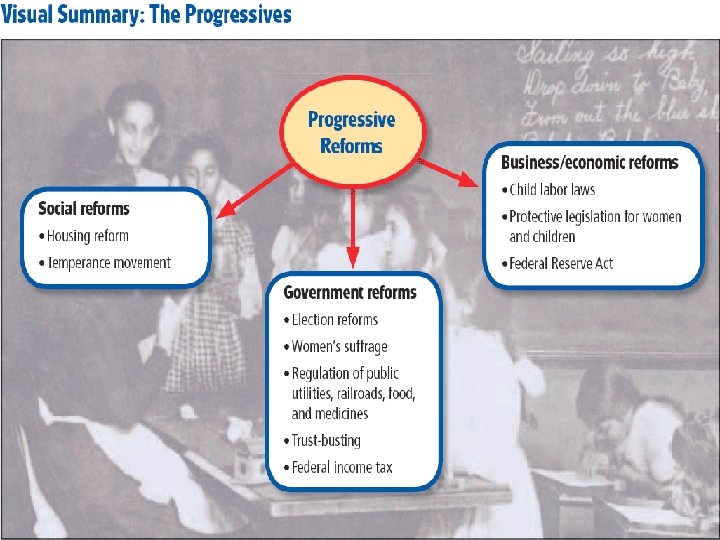
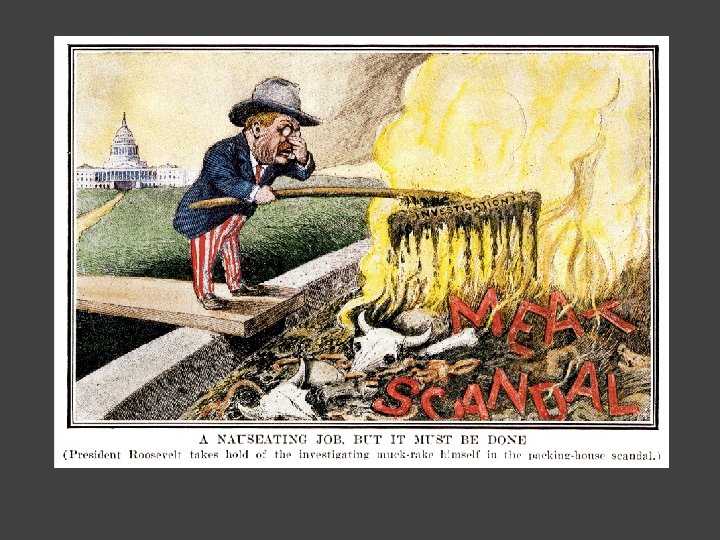
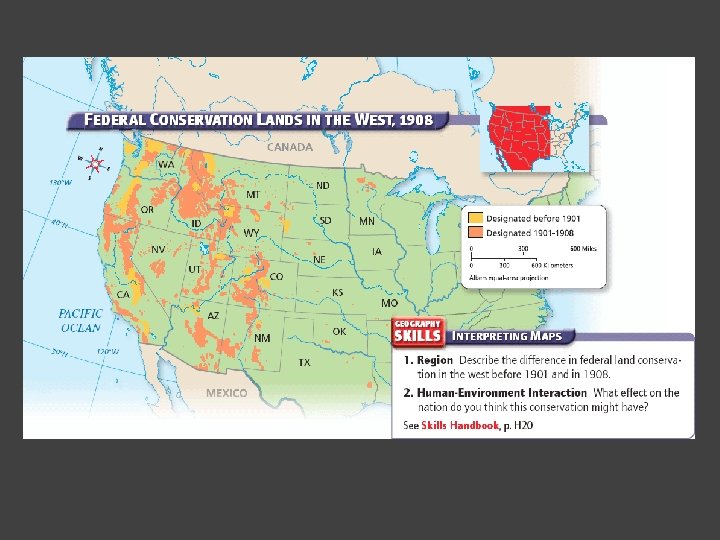
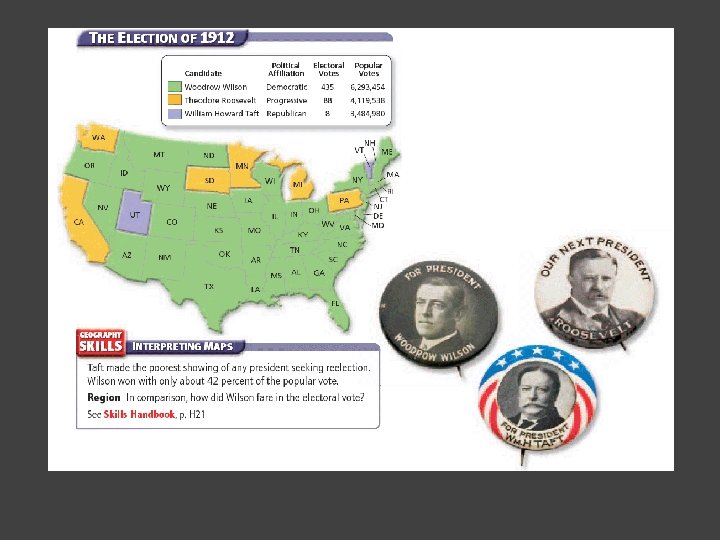
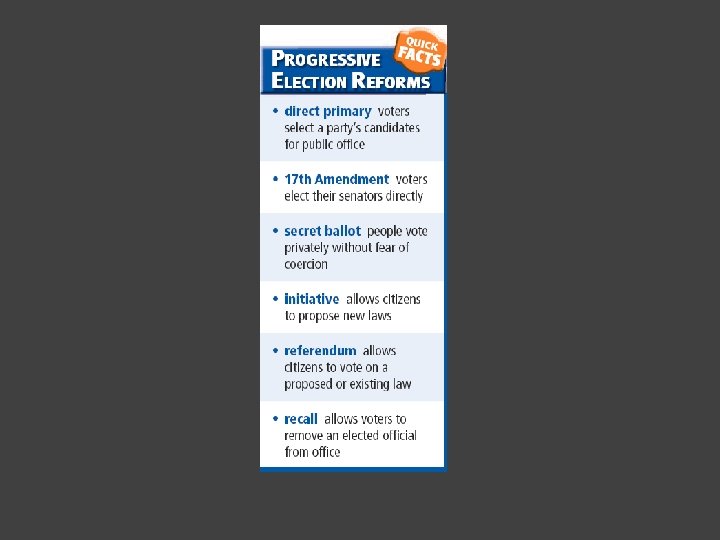
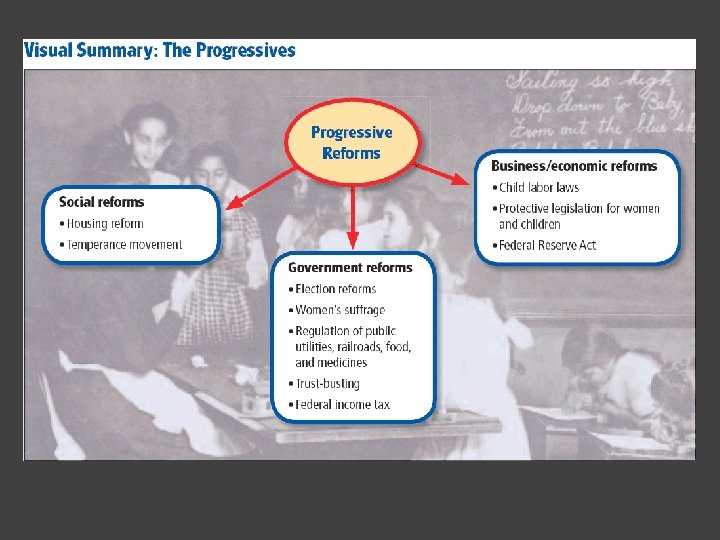
Chapter 6 – The Progressives Section Notes Video Progressivism Women and Public Life Theodore Roosevelt’s Square Deal Taft and Wilson The Progressives History Close-up The Triangle Shirtwaist Fire Quick Facts Progressive Election Reforms Visual Summary: The Progressives Maps Federal Conservation Lands in the West, 1908 The Election of 1912 Images New York Tenement Political Cartoon: Women’s Issues Political Cartoon: Roosevelt and Taft Political Cartoon: Roosevelt and the Meat Scandal
Ch. 6 the Progressives Section 1 Progressivism: Section 1 Goals: 1. What was the Progressive Era? 2. Describe the people who started the Progressive Era? Name 4 of these people and describe how each made America better. 3. Name 4 ways in which progressives improved working conditions? 4. In what way did the Progressives change the government? 5. List at least 4 things that the Progressives fought for, and why it’s important to know about these people?
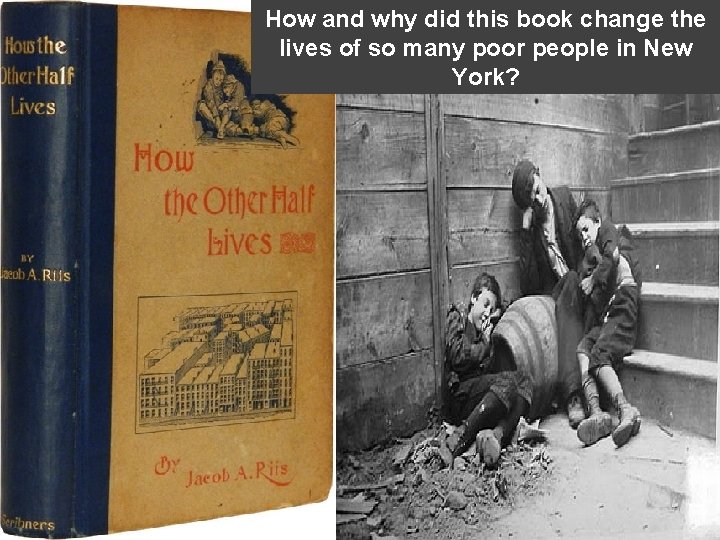
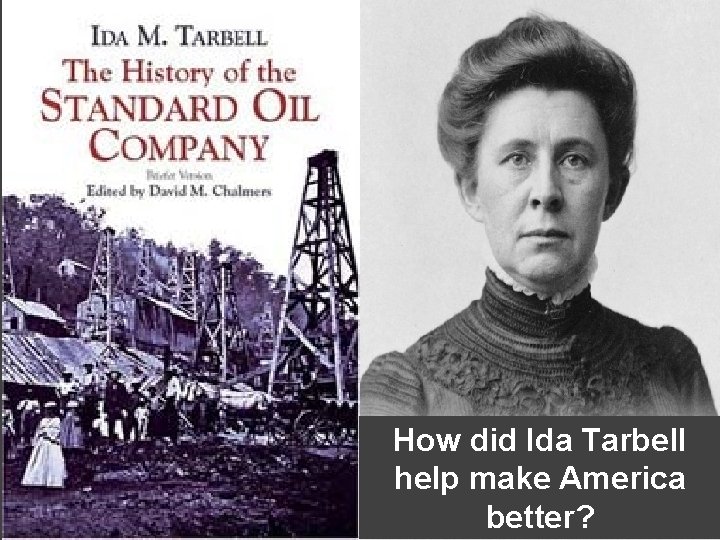
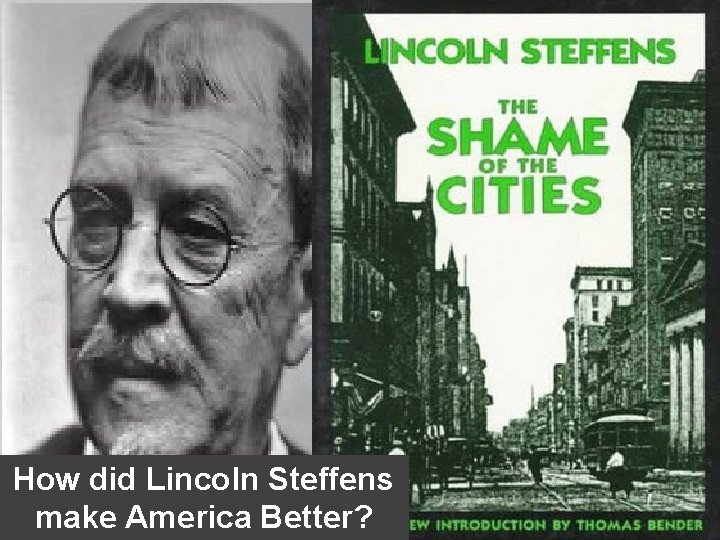
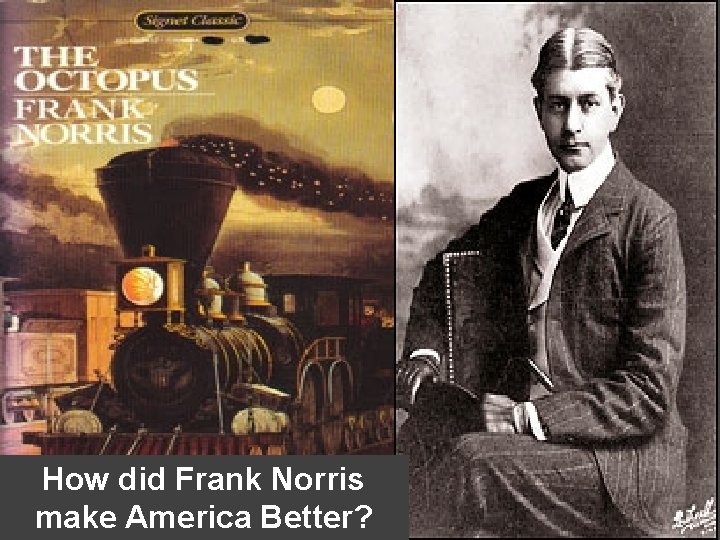
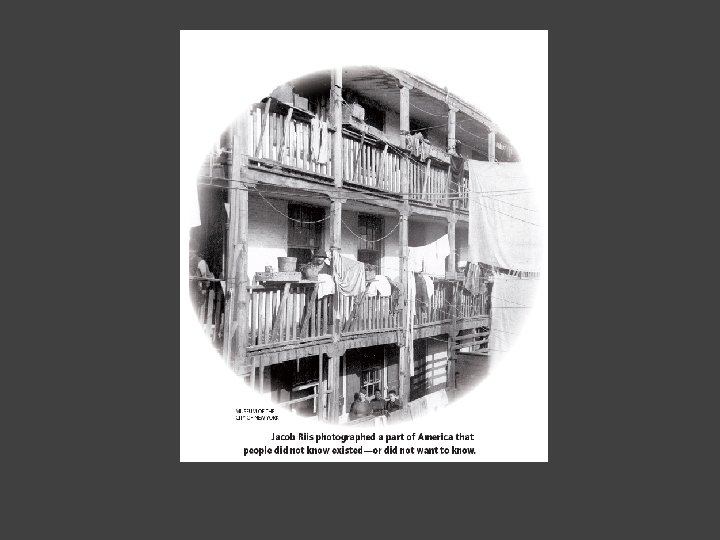
Progressivism and Its Champions the Muckrakers • Industrialization? helped many but also caused major problems? ? ? • Progressivism, or a wide-ranging reform? movement targeted these problems, the Progressive Era began in the late 1800 s. • Journalists called muckrakers (why Muckrakers? ) and urban photographers exposed people to the plight of the unfortunate in hopes of sparking reform/change. Famous Muckrakers/Investigative Journalists of the Progressive Era. Jacob Riis • Immigrant who took pictures of poor people in New York • Used his photographs to write a best-selling book How the Other Half Lives Ida Tarbell • Exposed the corrupt Standard Oil Company and its owner, John D. Rockefeller • The History of the Standard Oil Co. Lincoln Steffens • Shame of the Cities (1904) exposed corrupt city governments Frank Norris • Exposed railroad monopolies in a 1901 novel The Octopus
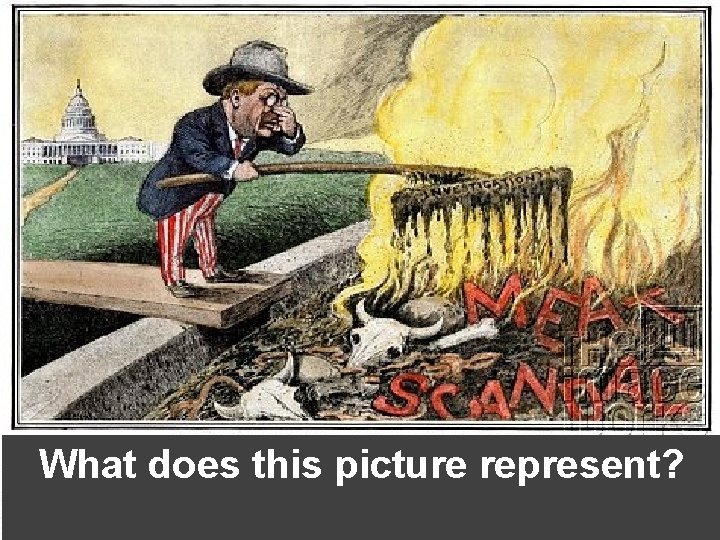
What does this picture represent?
How and why did this book change the lives of so many poor people in New York?
How did Ida Tarbell help make America better?
How did Lincoln Steffens make America Better?
How did Frank Norris make America Better?
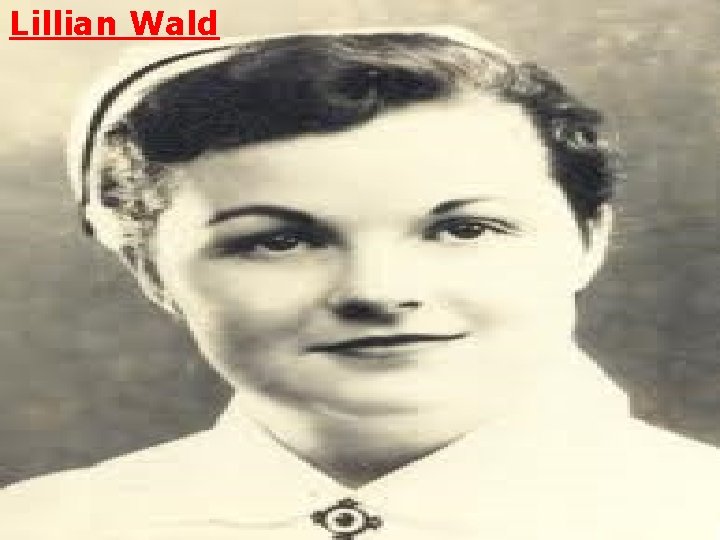
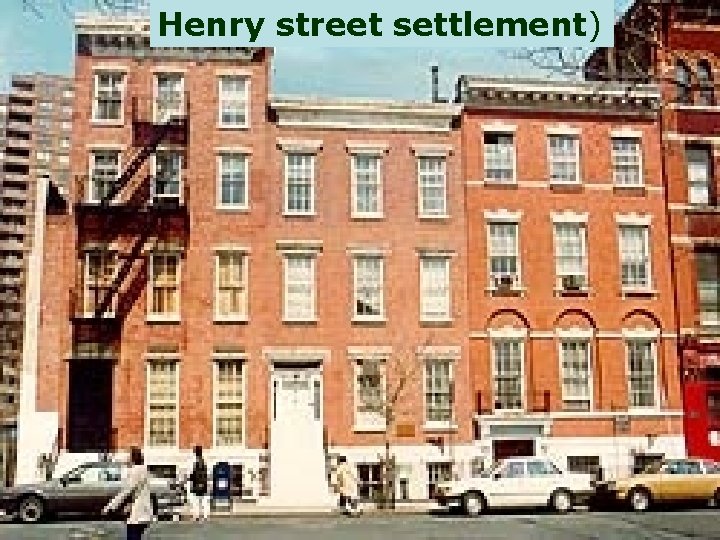
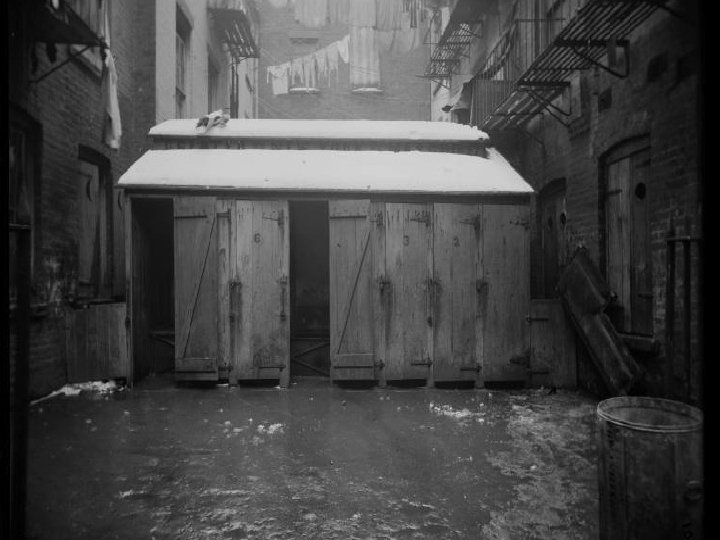
Reforming Society • Growing cities couldn’t provide people necessary services like garbage collection, safe housing, pluming, medical care, and police and fire protection. • Reformers, many of whom were women (why were so many women? ) like activist Lillian Wald, saw this as an opportunity to help people in need. (Home health care), Henry street settlement) • Progressives scored an early victory in New York State with the passage of the Tenement Act of 1901, which forced landlords to install lighting in public hallways (why? ) and to provide at least one toilet for every two families. • These simple steps helped impoverished New Yorkers, and within 15 years the death rate in New York dropped dramatically. • Reformers in other states used New York law as a model for their own proposals.
Lillian Wald
Henry street settlement)
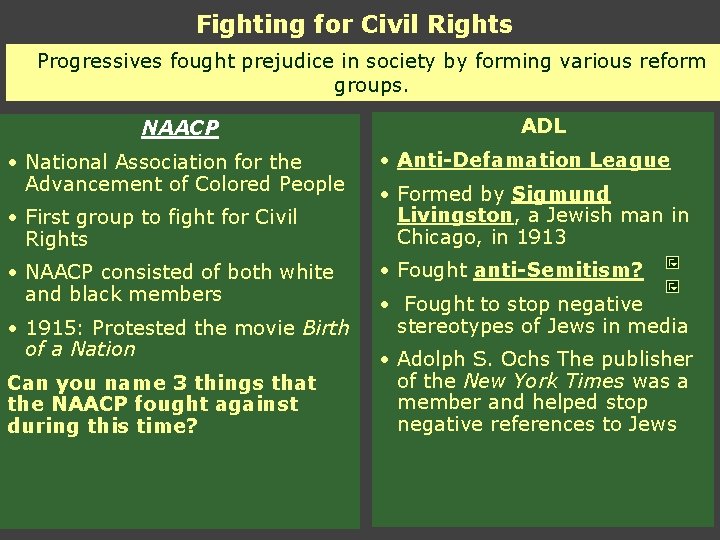
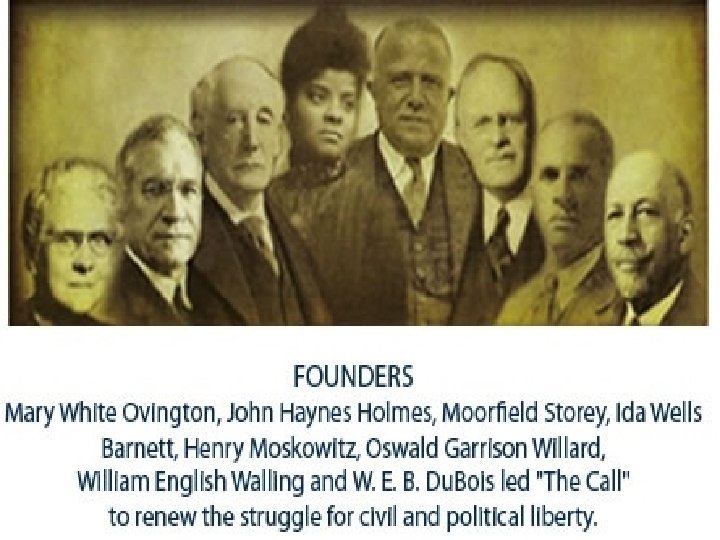
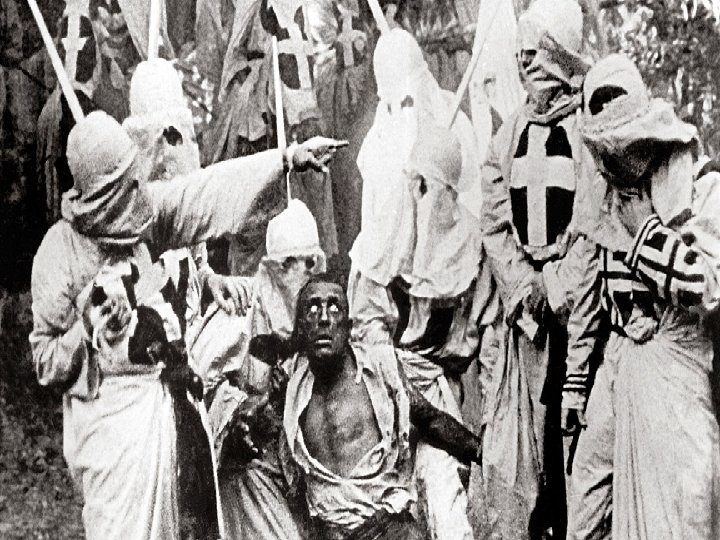
Fighting for Civil Rights Progressives fought prejudice in society by forming various reform groups. NAACP • National Association for the Advancement of Colored People • First group to fight for Civil Rights • NAACP consisted of both white and black members • 1915: Protested the movie Birth of a Nation Can you name 3 things that the NAACP fought against during this time? ADL • Anti-Defamation League • Formed by Sigmund Livingston, a Jewish man in Chicago, in 1913 • Fought anti-Semitism? • Fought to stop negative stereotypes of Jews in media • Adolph S. Ochs The publisher of the New York Times was a member and helped stop negative references to Jews
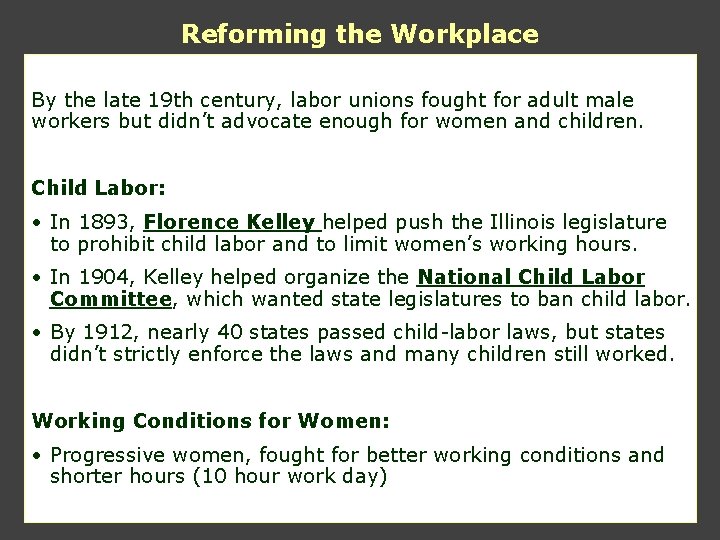
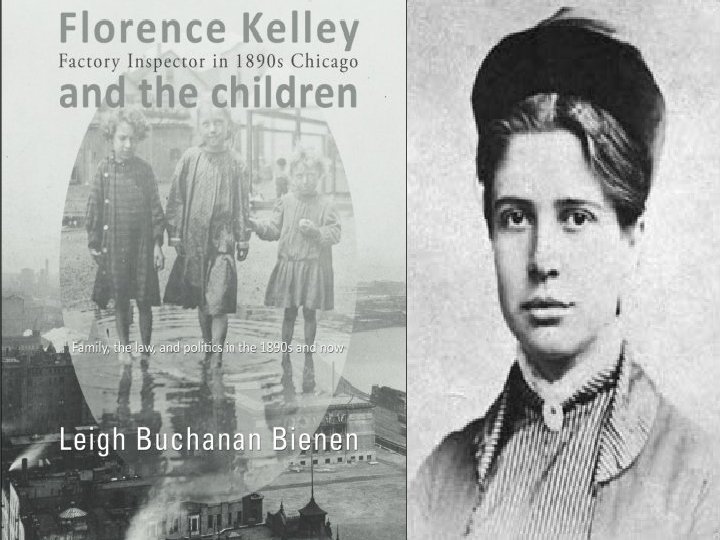
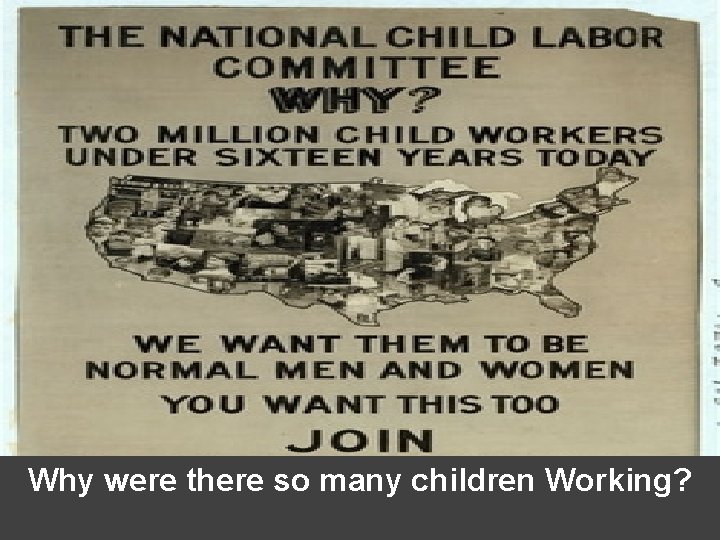
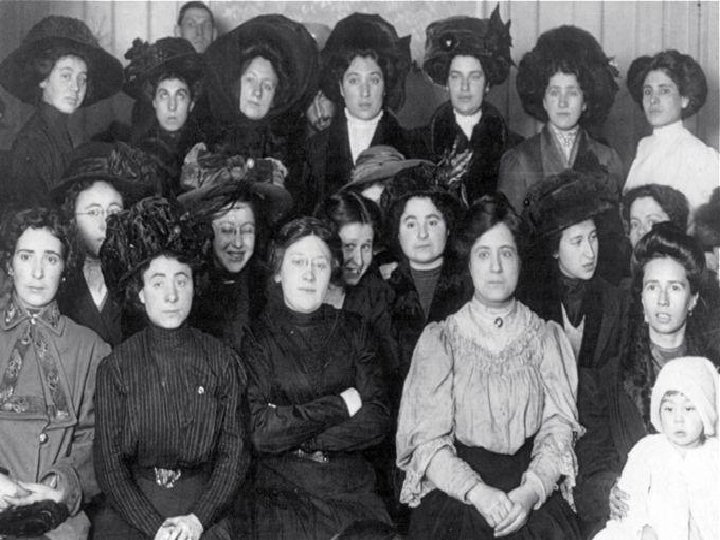
Reforming the Workplace By the late 19 th century, labor unions fought for adult male workers but didn’t advocate enough for women and children. Child Labor: • In 1893, Florence Kelley helped push the Illinois legislature to prohibit child labor and to limit women’s working hours. • In 1904, Kelley helped organize the National Child Labor Committee, which wanted state legislatures to ban child labor. • By 1912, nearly 40 states passed child-labor laws, but states didn’t strictly enforce the laws and many children still worked. Working Conditions for Women: • Progressive women, fought for better working conditions and shorter hours (10 hour work day)
Why were there so many children Working?
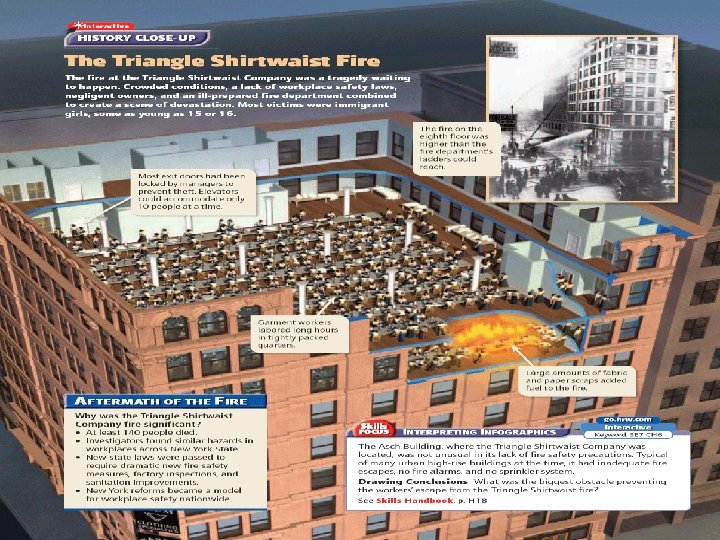
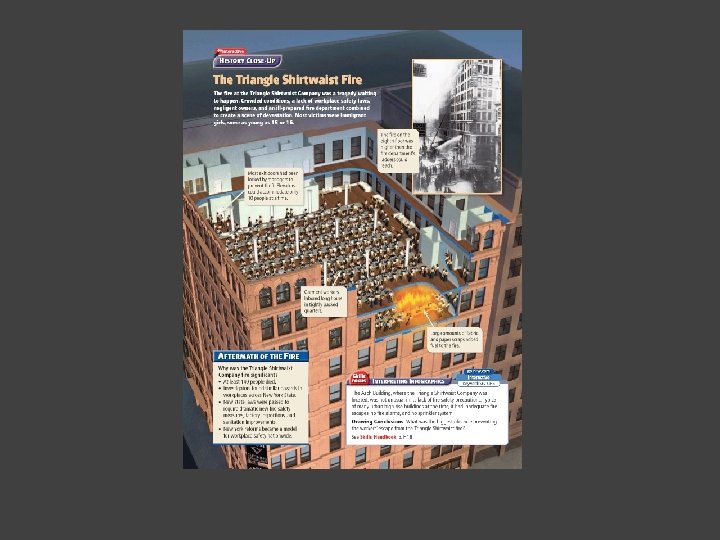
The Triangle Shirtwaist Company Fire • In 1911, the Triangle Shirtwaist Company, located in New York, caught fire. Of the 500 workers, 146 women died (mostly young) • The Company was located on the top 3 floors of a 10 story building • The Company manufactured women’s blouses. (very flammable) • The fire was started by a cigarette thrown into a trash can. • The women were trapped inside b/c the owner had locked the doors in order to prevent theft and to keep Union leaders out? • The fire escape collapsed as the women tried to escape. • The Fireman’s ladders were not tall enough to reach the women. • Hundreds of people watched from the streets as these women burned alive. https: //www. youtube. com/watch? v=4 ula. G 9 x 4 Gp. E What effect do you think the Triangle Shirtwaist Company Fire had on America?
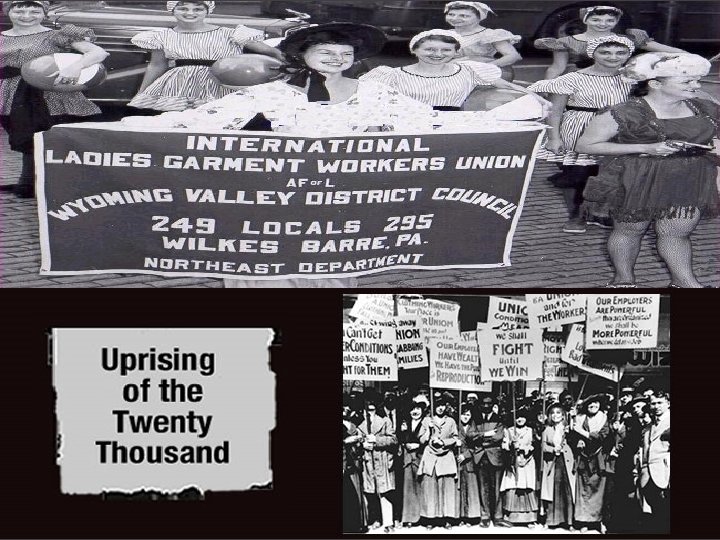
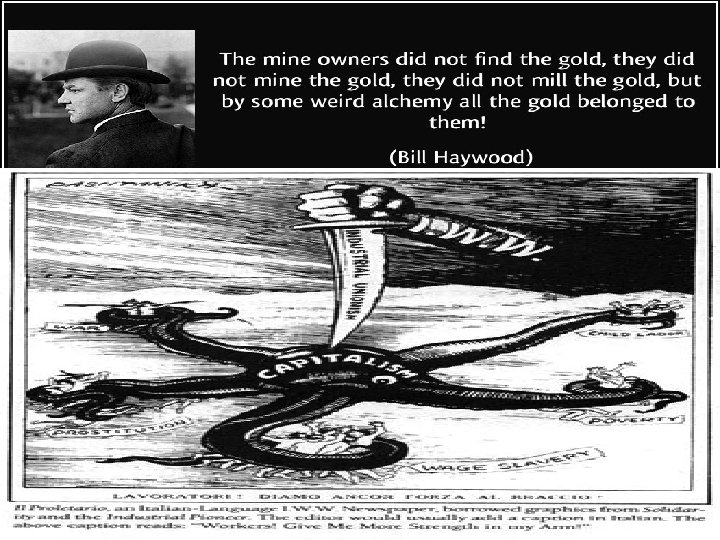
ILGWU The Unions • In 1900, the International Ladies’ Garment Workers Union organized unskilled workers. • In 1909, the ILGWU called a general strike known as the Uprising of 20, 000. • Strikers won a shorter workweek and higher wages and attracted thousands of women workers to the ILGWU union. IWW • In 1905, the Industrial Workers of the World formed to oppose capitalism (Why do you think they were against Capitalism? ), organizing unskilled workers that the American Federation of Labor ignored. • Under William “Big Bill” Haywood, the IWW, known as Wobblies, used traditional tactics like strikes and boycotts but also engaged in radical tactics like industrial sabotage. (they would destroy machinery. Why? ) • By 1912, the IWW led 23, 000 textile workers to strike in Massachusetts to protest pay cuts, which ended successfully after six weeks. • However, several IWW strikes were failures, and, fearing the IWW’s revolutionary goals, the government cracked down on the organization, causing dispute among its leaders and leading to its decline a few years later.
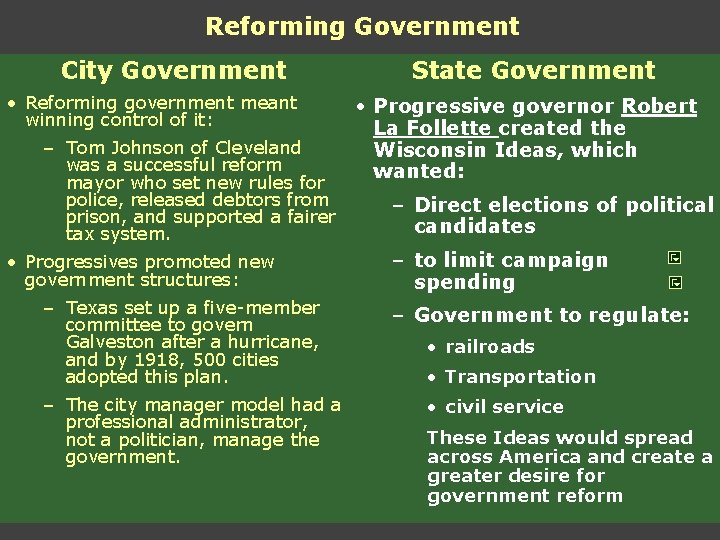
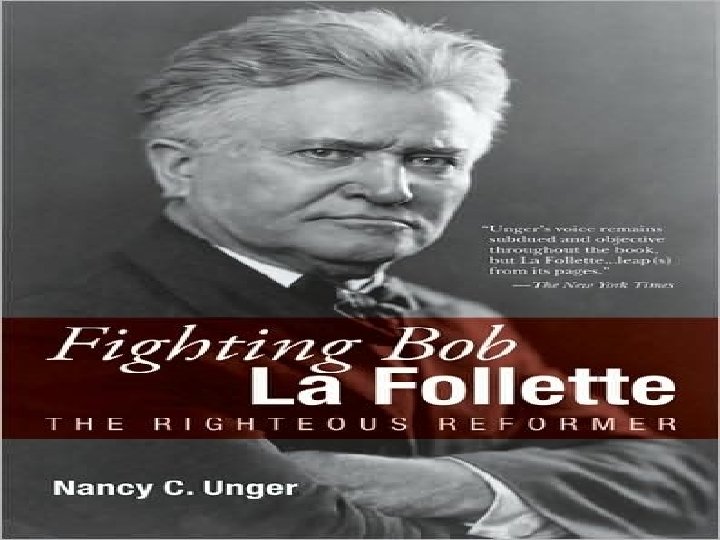
Reforming Government City Government • Reforming government meant winning control of it: – Tom Johnson of Cleveland was a successful reform mayor who set new rules for police, released debtors from prison, and supported a fairer tax system. • Progressives promoted new government structures: – Texas set up a five-member committee to govern Galveston after a hurricane, and by 1918, 500 cities adopted this plan. – The city manager model had a professional administrator, not a politician, manage the government. State Government • Progressive governor Robert La Follette created the Wisconsin Ideas, which wanted: – Direct elections of political candidates – to limit campaign spending – Government to regulate: • railroads • Transportation • civil service These Ideas would spread across America and create a greater desire for government reform
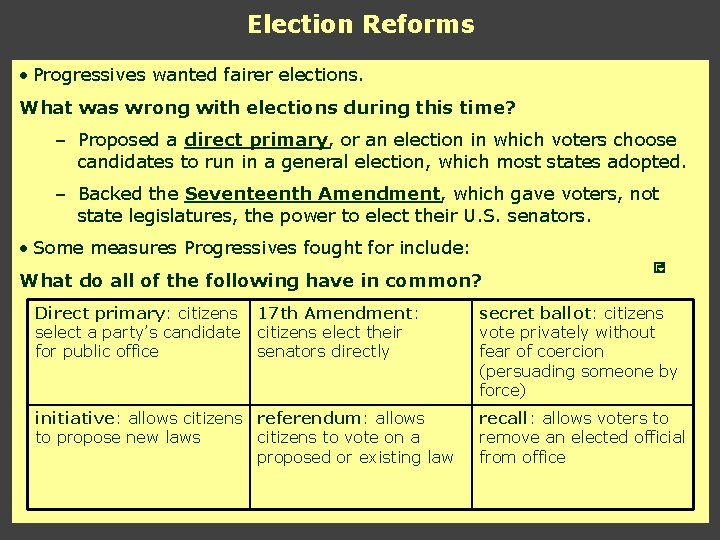
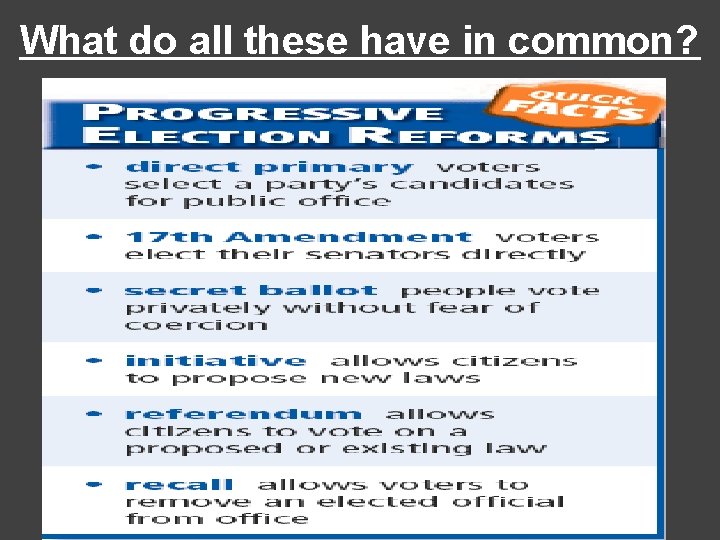
Election Reforms • Progressives wanted fairer elections. What was wrong with elections during this time? – Proposed a direct primary, or an election in which voters choose candidates to run in a general election, which most states adopted. – Backed the Seventeenth Amendment, which gave voters, not state legislatures, the power to elect their U. S. senators. • Some measures Progressives fought for include: What do all of the following have in common? Direct primary: citizens select a party’s candidate for public office 17 th Amendment: citizens elect their senators directly initiative: allows citizens referendum: allows to propose new laws citizens to vote on a proposed or existing law secret ballot: citizens vote privately without fear of coercion (persuading someone by force) recall: allows voters to remove an elected official from office
What do all these have in common?
What did the Progressives Fight For?
Ch. 6 The Progressive Era Section 2: Women and the Progressive Era: 1. What was prohibition, what was the name of the organization designed to fight for prohibition, and how did this movement affect women? 2. What were black female reformers fighting against during the Progressive era (name 4 things)? Name two of their most famous leaders. 3. What was the women’s suffrage movement? And who were two of its most influential leaders. 4. How did the Progressive Era change the lives of women in America? What was life like for women in the 1800 s and early 1900 s?
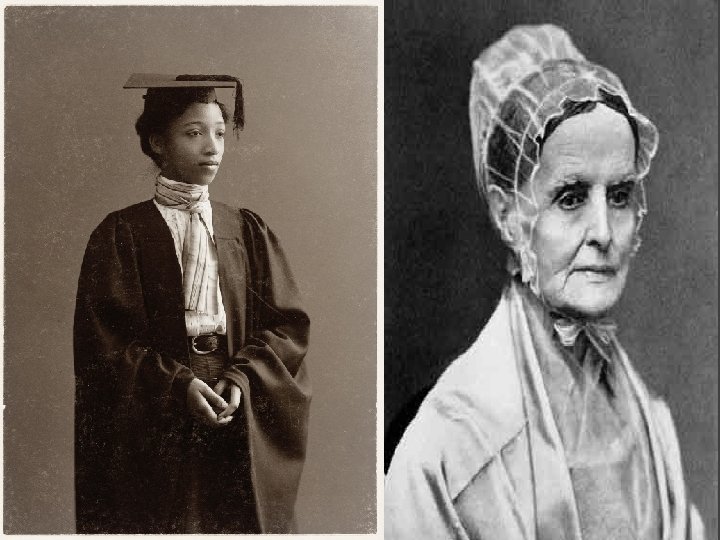
Opportunities for Women • By 1870 about 20 percent of all college students were women, and by 1900 that number increased to 33 percent. Women didn’t have many opportunities before the Progressive Era, but college was one. Why is this? • Most of the women who attended college at this time came from rich families. • A few African American women, such as Otelia Cromwell, attended college. Otelia Cromwell earned a Masters from Columbia University and a Ph. D. from Yale. (the first ever) Cromwell also wrote a famous biography about abolitionist and women’s rights activists Lucretia Mott. • However, many job opportunities were still denied to women. • Denied access to most jobs, many women poured their knowledge and skills into the reform movement, gaining valuable political experience as they fought for change.
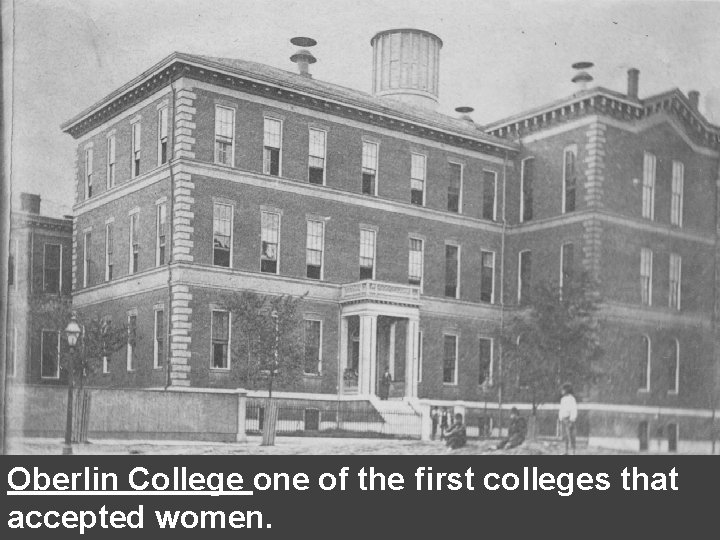
Oberlin College one of the first colleges that accepted women.
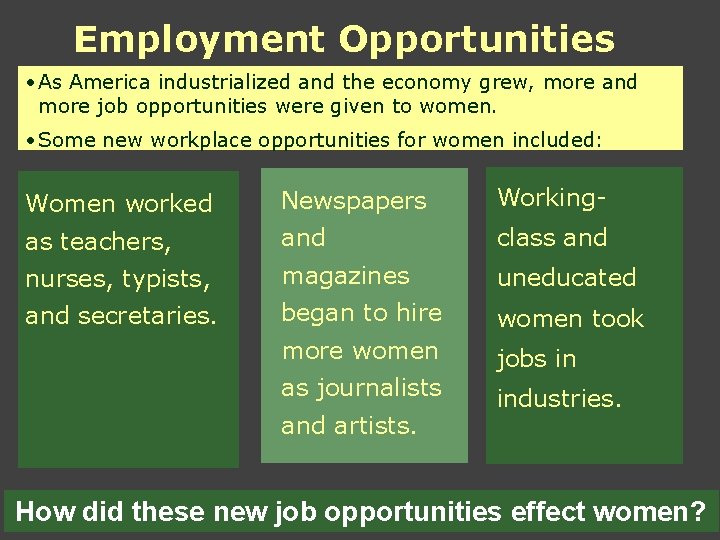
Employment Opportunities • As America industrialized and the economy grew, more and more job opportunities were given to women. • Some new workplace opportunities for women included: Women worked Newspapers Working- as teachers, and class and nurses, typists, magazines uneducated and secretaries. began to hire women took more women jobs in as journalists industries. and artists. How did these new job opportunities effect women?
Gaining Political Experience • During the Progressive Era, women became the backbone of many of the Progressive Era reform movements. Why? • What did women learn during the Progressive Era?
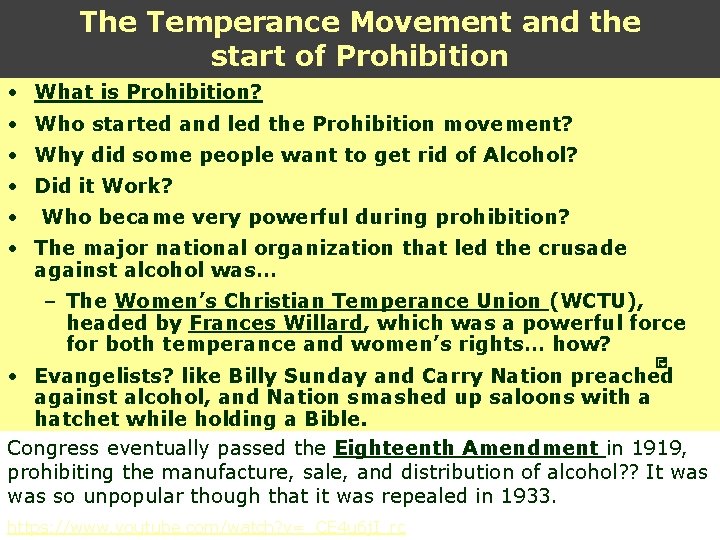
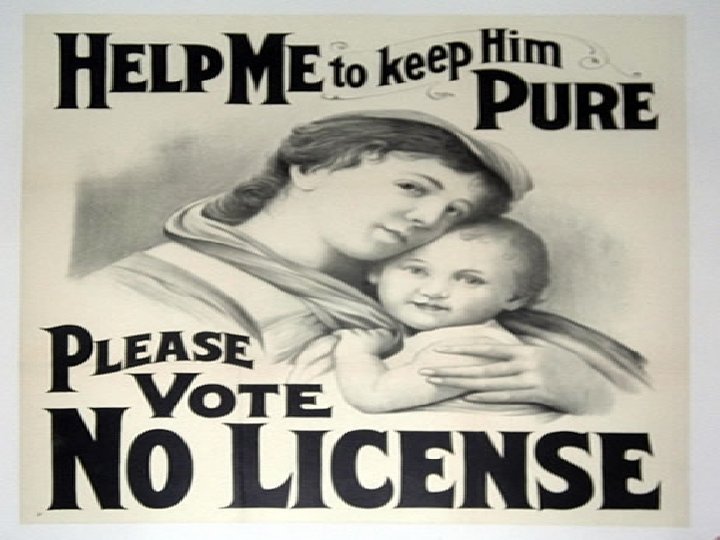
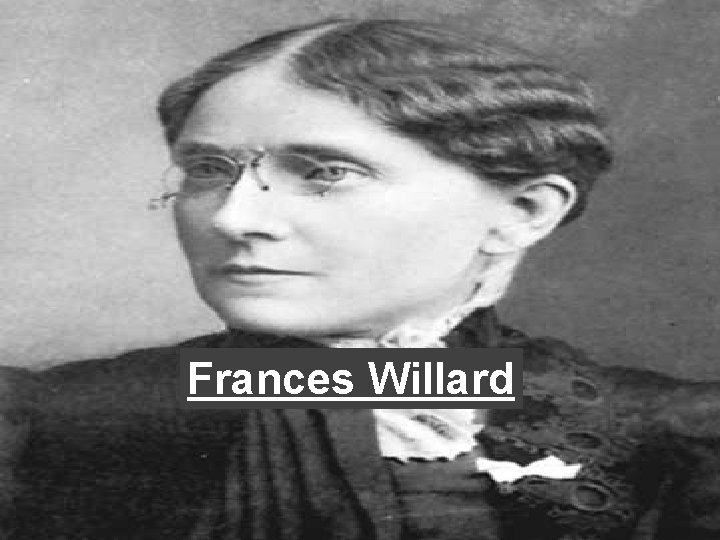
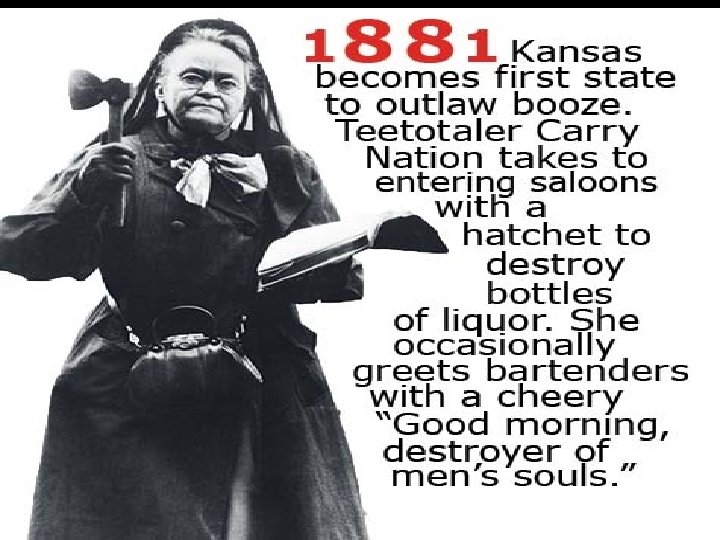
The Temperance Movement and the start of Prohibition • What is Prohibition? • Who started and led the Prohibition movement? • Why did some people want to get rid of Alcohol? • Did it Work? • Who became very powerful during prohibition? • The major national organization that led the crusade against alcohol was… – The Women’s Christian Temperance Union (WCTU), headed by Frances Willard, which was a powerful force for both temperance and women’s rights… how? • Evangelists? like Billy Sunday and Carry Nation preached against alcohol, and Nation smashed up saloons with a hatchet while holding a Bible. Congress eventually passed the Eighteenth Amendment in 1919, prohibiting the manufacture, sale, and distribution of alcohol? ? It was so unpopular though that it was repealed in 1933. https: //www. youtube. com/watch? v=_CE 4 u 6 j. I_rc
Frances Willard
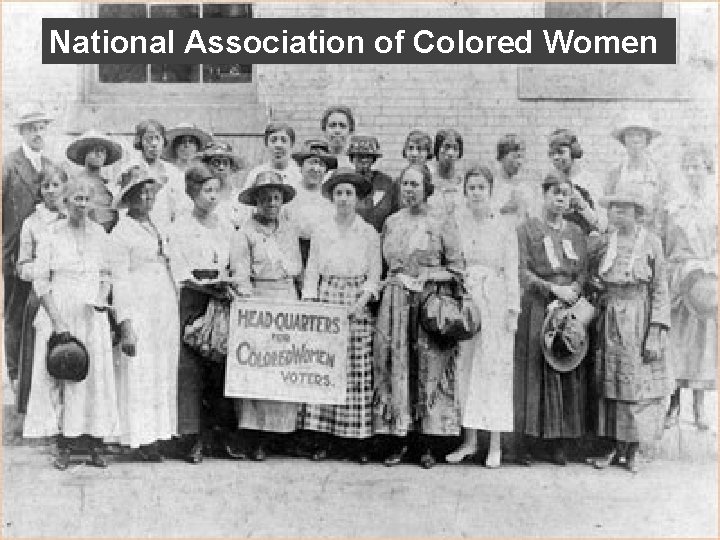
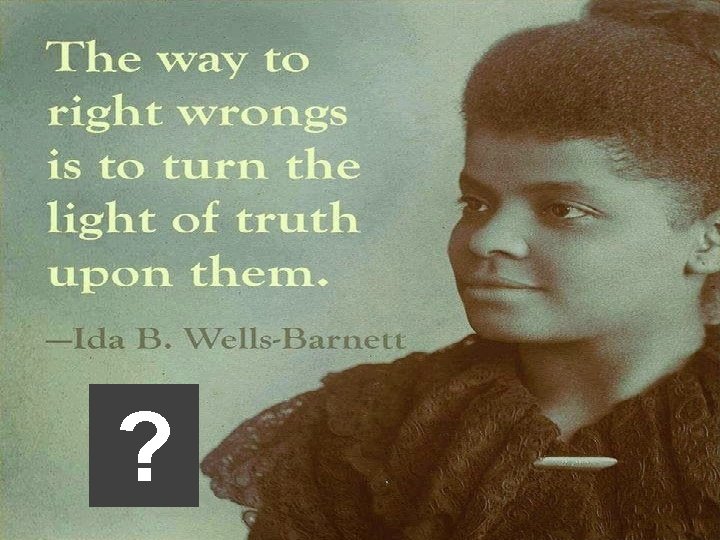
Civil Rights • During the Progressive Era, black women also fought for many reforms. What challenges did black female reformers face? • African American women formed their own reform group, the National Association of Colored Women (NACW), in 1896. By 1914 the organization had more than 100, 000 members. They fought against poverty, segregation, lynching, the Jim Crow laws, and eventually for temperance? and women’s suffrage? Some of the most prominent African American women of the time included: Ida B. Wells-Barnett (founding member of the NAACP also) Harriet Tubman, the famous Underground Railroad conductor https: //youtu. be/Bdno 2 YLm 4 Ms
National Association of Colored Women
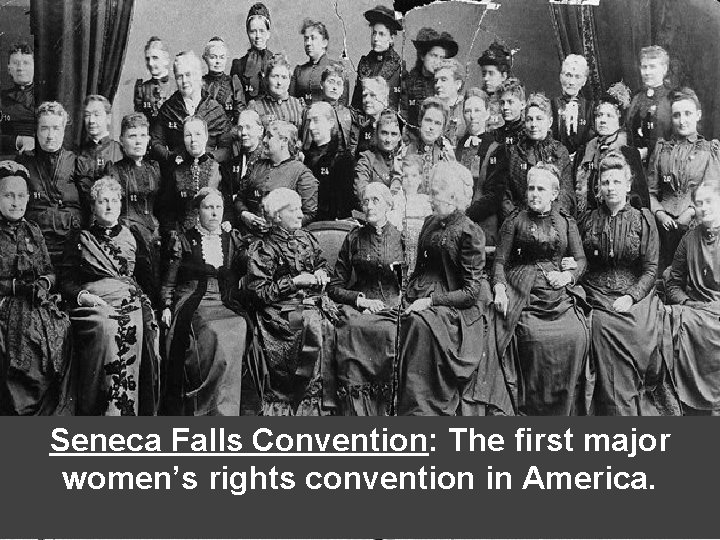
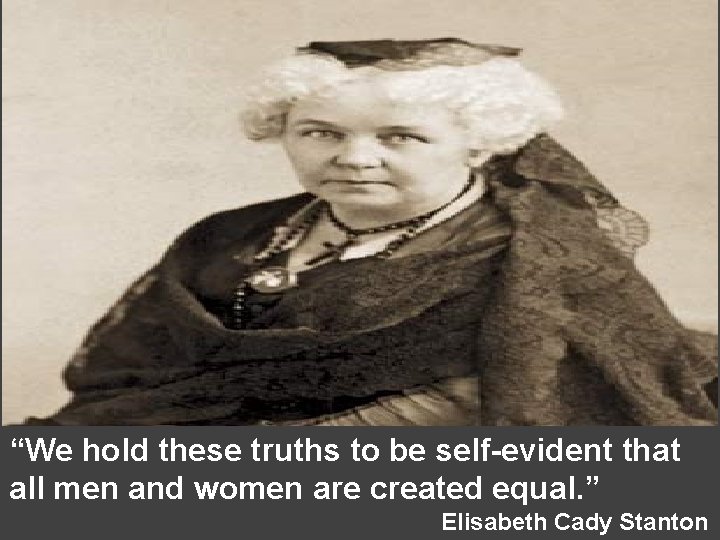
Rise of the Women’s Suffrage Movement • What is Women’s Suffrage? • Beginning with the Seneca Falls Convention (first ever women’s rights convention) in 1848, women began to speak out for their rights as citizens of America. • In 1870, Congress passed the 15 th Amendment? Women were pretty upset… Why? • After the passage of the 15 th Amendment, Women organized into suffragist groups: NWSA • National Woman Suffrage Association, founded by Elizabeth Cady Stanton and Susan B. Anthony. • Fought to get congress to pass an amendment that would allow women the right to vote • Also fought for labor reform and supported Victoria Woodhull, the first woman presidential candidate • Women began to see success in the West, as in 1869 the Wyoming Territory granted women the vote, followed by the Utah Territory a year later and five more western states not long after.
Seneca Falls Convention: The first major women’s rights convention in America.
“We hold these truths to be self-evident that all men and women are created equal. ” Elisabeth Cady Stanton
Susan B. Anthony Tests the Law • For almost 40 years, Susan B. Anthony fought for women’s rights in America. • In 1872 Susan B. Anthony voted in the presidential election. • Susan B. Anthony was later arrested for this vote. • Susan B. Anthony wanted to be arrested and put on trial. Why? • Before her trial, Anthony spoke passionately about women’s voting rights, and America payed attention. • However, during her trial, the judge did not allow her to speak and simply fined her $100. • Anthony never payed the $100, hoping to be arrested again. • In 1873 the Supreme Court ruled that even though women were citizens, that did not give them the right to vote. It would be up to state governments to allow women the right to vote. • What does this supreme court ruling mean for women’s suffrage? https: //youtu. be/o-su. Al. XQh. MI
Anti-Suffrage Arguments • Why didn’t men want women to vote? 1. Didn’t think women were “qualified” to vote? 2. Men feared that they would lose control over women if they gave them the right to vote. How could this happen? 3. If women got the right to vote what would happen to alcohol? 4. Feared that women would have more power to vote for business regulations. What would this mean for businesses?
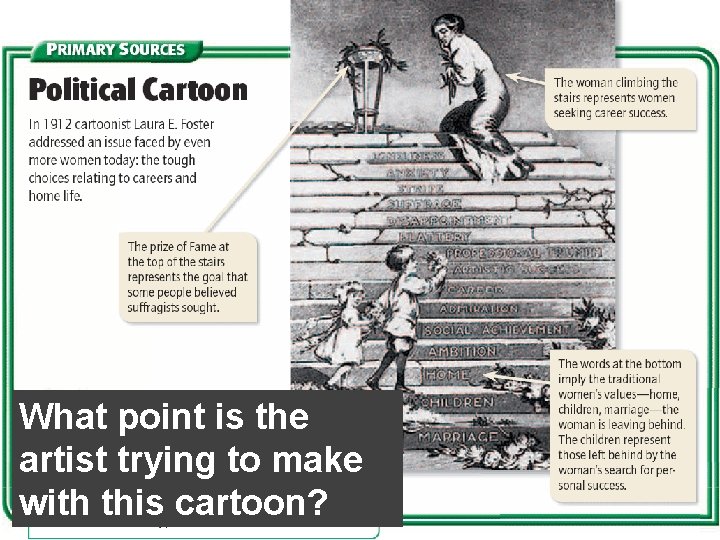
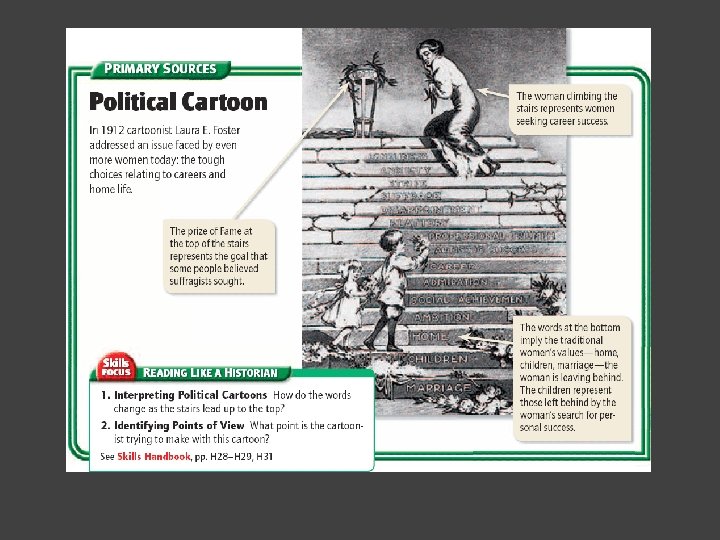
What point is the artist trying to make with this cartoon?
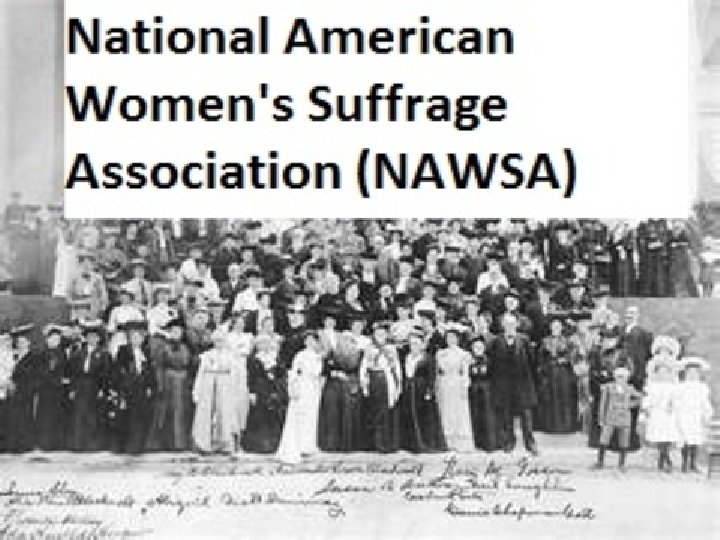
Two Suffrage Organizations Merge • In 1890 the National Woman Suffrage Association and the American Woman Suffrage Association merged to form the National American Woman Suffrage Association (NAWSA). • NAWSA was the most influential women’s rights organization ever. NAWSA was led by Elizabeth Cady Stanton, and Susan B. Anthony. • In 1906, Susan B. Anthony passed away, her final words were “Failure is impossible. ” • 72 years after the Seneca Falls Convention, women finally earned the right to vote, with the passage of the 19 th Amendment in 1920. • what event really helped women earn the right to vote? (lasted from 1917 – 1919) • Of the women who attended the Seneca Falls Convention only one actually got to vote… Charlotte Woodward.
How did the Progressive Era change the lives of women in America?
Ch. 6 The Progressive Era Section 3: Theodore Roosevelt’s Square Deal 1. What was Theodore Roosevelt’s view of the role of the president? 2. What 3 areas did Roosevelt’s Square Deal focus on? 3. How did TR make America’s economy better? 4. What did Theodore Roosevelt do to the food and drug industry, and what two laws did he pass? 5. What was Roosevelt’s philosophy about the environment and how did he carry out his philosophy? 6. In what ways did Theodore Roosevelt significantly change America? (Name 5)
https: //www. youtube. com/watch? v=s. Bpfih 7 w 4 B 8 1. Was TR a Republican or a Democrat? Neither 2. What was TR strongly against? Big Business 3. What did TR feel was his greatest contribution to World Civilization? The Panama Canal 4. Who did TR feel represented America? As president of the U. S. he represented its people 5. What was Roosevelt’s “Big Stick” and what did it tell the rest of the world? His Navy, if you mess with America this is what you get 6. What did Upton Sinclair’s book The Jungle reveal to America? The horrible conditions in the food industry 7. What did TR preserve in America? Nature 8. Why didn’t he run for a 3 rd term as president? He was a man of his word and he didn’t feel like any president should run for more than two terms
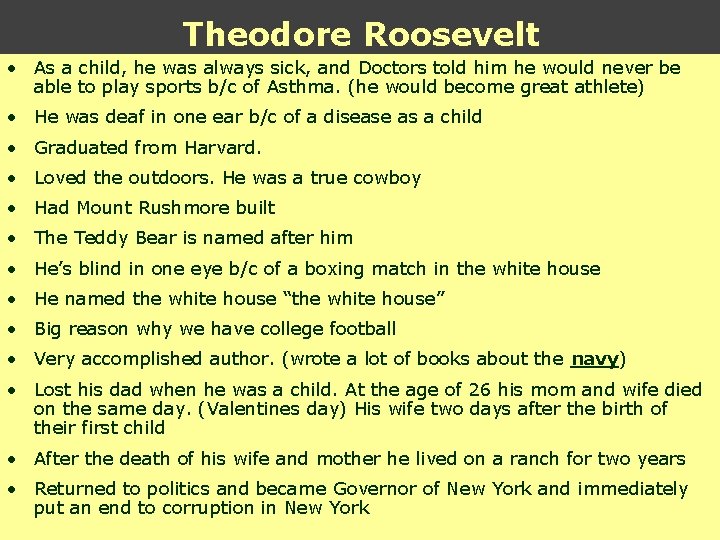
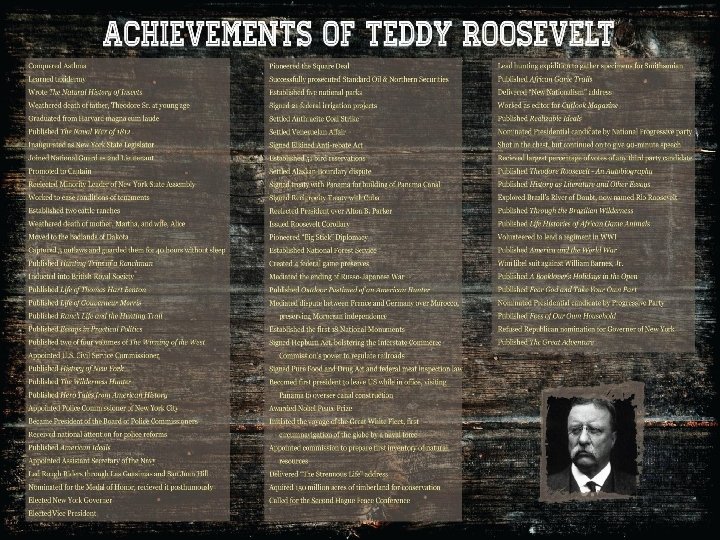
Theodore Roosevelt • As a child, he was always sick, and Doctors told him he would never be able to play sports b/c of Asthma. (he would become great athlete) • He was deaf in one ear b/c of a disease as a child • Graduated from Harvard. • Loved the outdoors. He was a true cowboy • Had Mount Rushmore built • The Teddy Bear is named after him • He’s blind in one eye b/c of a boxing match in the white house • He named the white house “the white house” • Big reason why we have college football • Very accomplished author. (wrote a lot of books about the navy) • Lost his dad when he was a child. At the age of 26 his mom and wife died on the same day. (Valentines day) His wife two days after the birth of their first child • After the death of his wife and mother he lived on a ranch for two years • Returned to politics and became Governor of New York and immediately put an end to corruption in New York
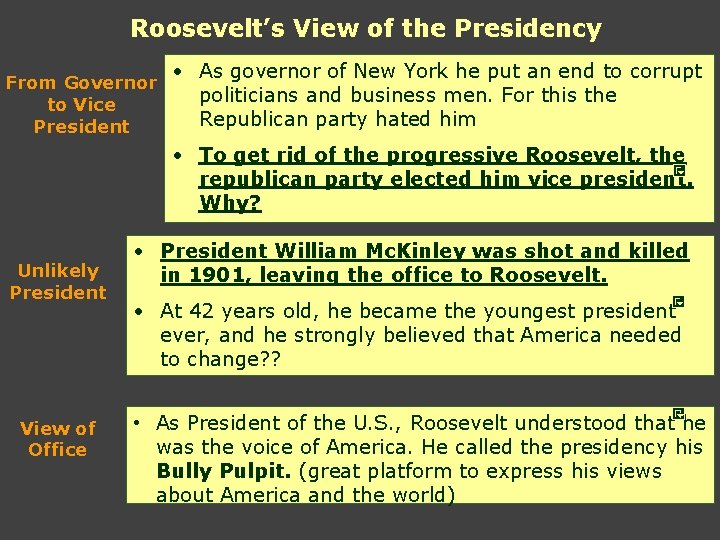
Roosevelt’s View of the Presidency From Governor to Vice President • As governor of New York he put an end to corrupt politicians and business men. For this the Republican party hated him • To get rid of the progressive Roosevelt, the republican party elected him vice president. Why? Unlikely President View of Office • President William Mc. Kinley was shot and killed in 1901, leaving the office to Roosevelt. • At 42 years old, he became the youngest president ever, and he strongly believed that America needed to change? ? • As President of the U. S. , Roosevelt understood that he was the voice of America. He called the presidency his Bully Pulpit. (great platform to express his views about America and the world)
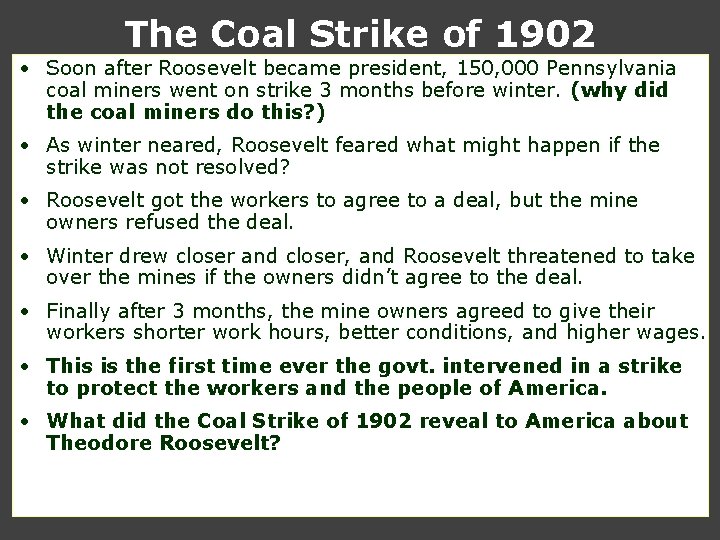
The Coal Strike of 1902 • Soon after Roosevelt became president, 150, 000 Pennsylvania coal miners went on strike 3 months before winter. (why did the coal miners do this? ) • As winter neared, Roosevelt feared what might happen if the strike was not resolved? • Roosevelt got the workers to agree to a deal, but the mine owners refused the deal. • Winter drew closer and closer, and Roosevelt threatened to take over the mines if the owners didn’t agree to the deal. • Finally after 3 months, the mine owners agreed to give their workers shorter work hours, better conditions, and higher wages. • This is the first time ever the govt. intervened in a strike to protect the workers and the people of America. • What did the Coal Strike of 1902 reveal to America about Theodore Roosevelt?
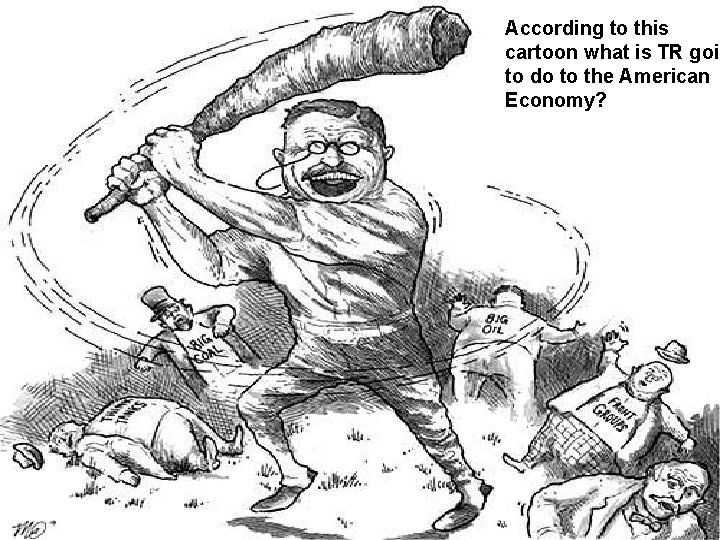
According to this cartoon what is TR goin to do to the American Economy?
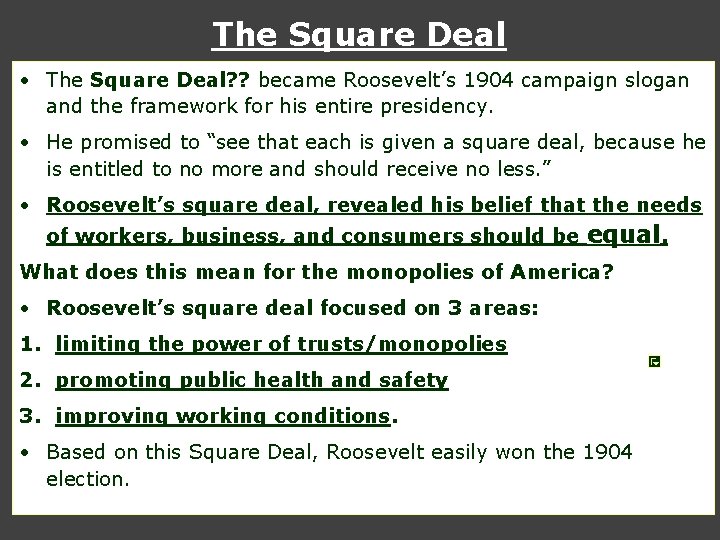
The Square Deal • The Square Deal? ? became Roosevelt’s 1904 campaign slogan and the framework for his entire presidency. • He promised to “see that each is given a square deal, because he is entitled to no more and should receive no less. ” • Roosevelt’s square deal, revealed his belief that the needs of workers, business, and consumers should be equal. What does this mean for the monopolies of America? • Roosevelt’s square deal focused on 3 areas: 1. limiting the power of trusts/monopolies 2. promoting public health and safety 3. improving working conditions. • Based on this Square Deal, Roosevelt easily won the 1904 election.
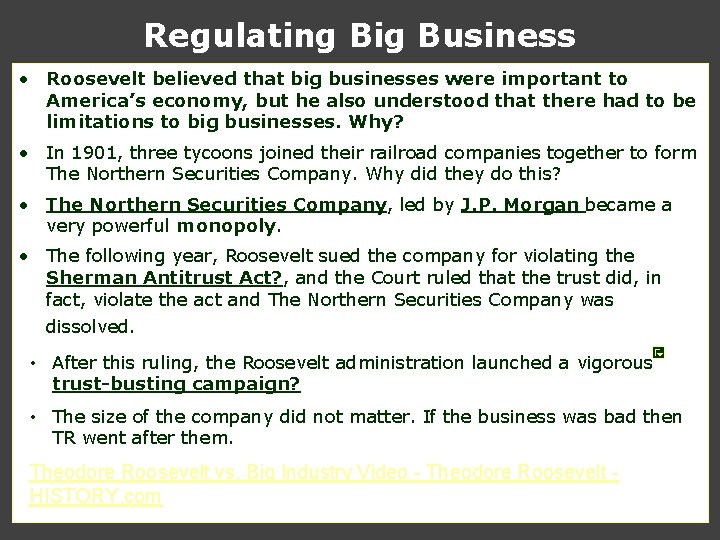
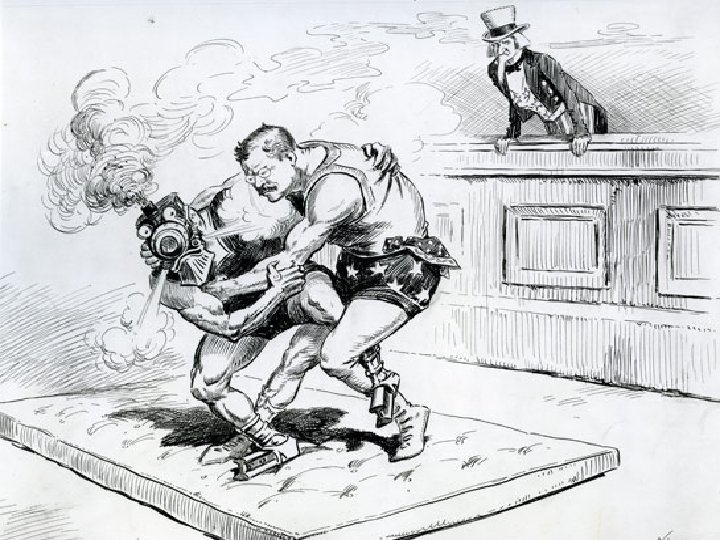
Regulating Big Business • Roosevelt believed that big businesses were important to America’s economy, but he also understood that there had to be limitations to big businesses. Why? • In 1901, three tycoons joined their railroad companies together to form The Northern Securities Company. Why did they do this? • The Northern Securities Company, led by J. P. Morgan became a very powerful monopoly. • The following year, Roosevelt sued the company for violating the Sherman Antitrust Act? , and the Court ruled that the trust did, in fact, violate the act and The Northern Securities Company was dissolved. • After this ruling, the Roosevelt administration launched a vigorous trust-busting campaign? • The size of the company did not matter. If the business was bad then TR went after them. Theodore Roosevelt vs. Big Industry Video - Theodore Roosevelt HISTORY. com
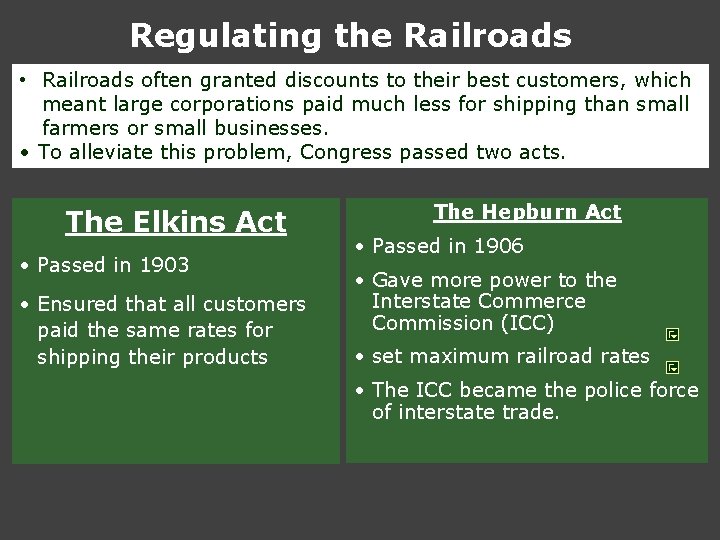
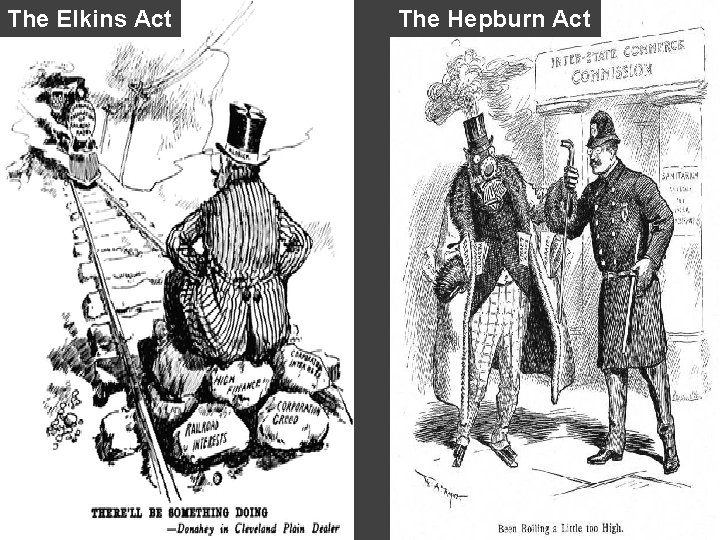
Regulating the Railroads • Railroads often granted discounts to their best customers, which meant large corporations paid much less for shipping than small farmers or small businesses. • To alleviate this problem, Congress passed two acts. The Elkins Act • Passed in 1903 • Ensured that all customers paid the same rates for shipping their products The Hepburn Act • Passed in 1906 • Gave more power to the Interstate Commerce Commission (ICC) • set maximum railroad rates • The ICC became the police force of interstate trade.
The Elkins Act The Hepburn Act
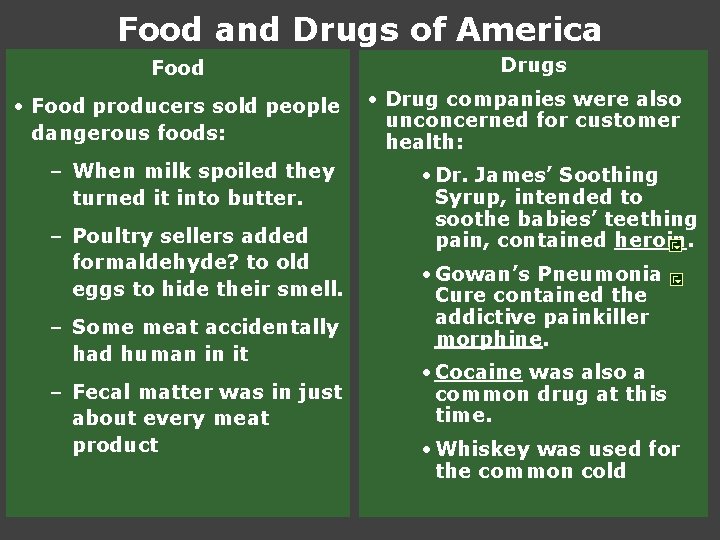
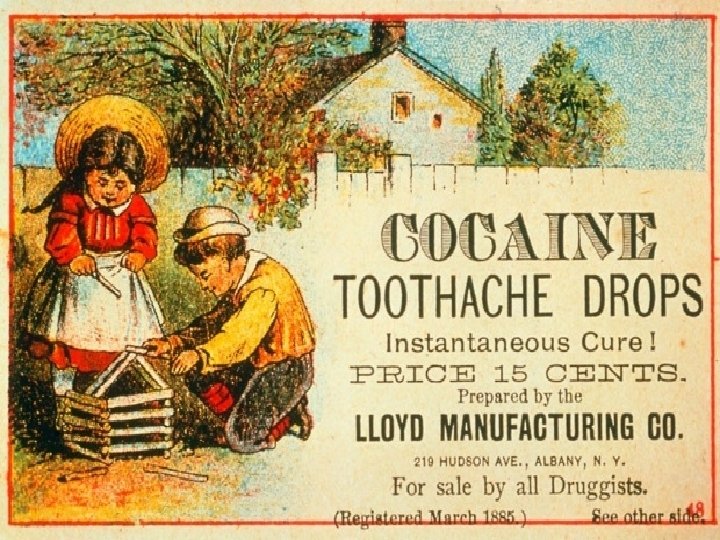
Food and Drugs of America Food • Food producers sold people dangerous foods: – When milk spoiled they turned it into butter. – Poultry sellers added formaldehyde? to old eggs to hide their smell. – Some meat accidentally had human in it – Fecal matter was in just about every meat product Drugs • Drug companies were also unconcerned for customer health: • Dr. James’ Soothing Syrup, intended to soothe babies’ teething pain, contained heroin. • Gowan’s Pneumonia Cure contained the addictive painkiller morphine. • Cocaine was also a common drug at this time. • Whiskey was used for the common cold
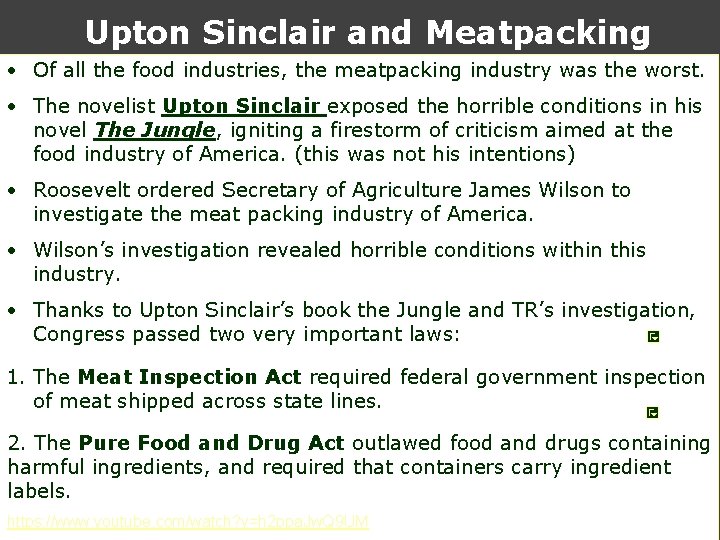
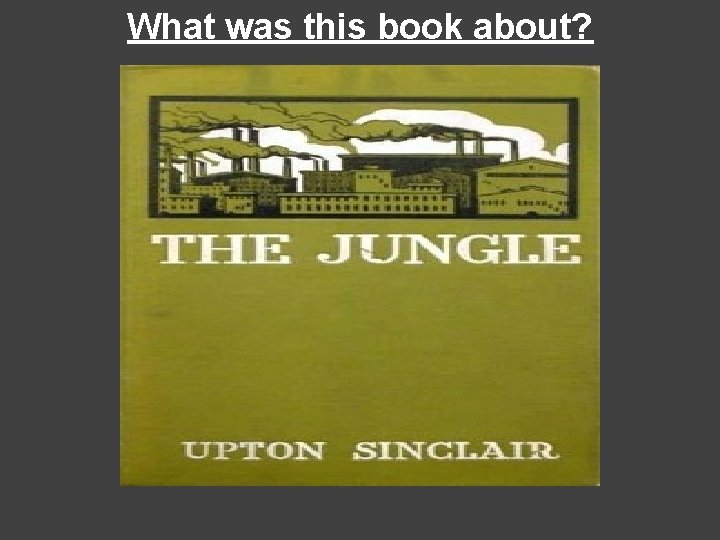
Upton Sinclair and Meatpacking • Of all the food industries, the meatpacking industry was the worst. • The novelist Upton Sinclair exposed the horrible conditions in his novel The Jungle, igniting a firestorm of criticism aimed at the food industry of America. (this was not his intentions) • Roosevelt ordered Secretary of Agriculture James Wilson to investigate the meat packing industry of America. • Wilson’s investigation revealed horrible conditions within this industry. • Thanks to Upton Sinclair’s book the Jungle and TR’s investigation, Congress passed two very important laws: 1. The Meat Inspection Act required federal government inspection of meat shipped across state lines. 2. The Pure Food and Drug Act outlawed food and drugs containing harmful ingredients, and required that containers carry ingredient labels. https: //www. youtube. com/watch? v=h 2 ppa. Jw. Q 9 UM
What was this book about?
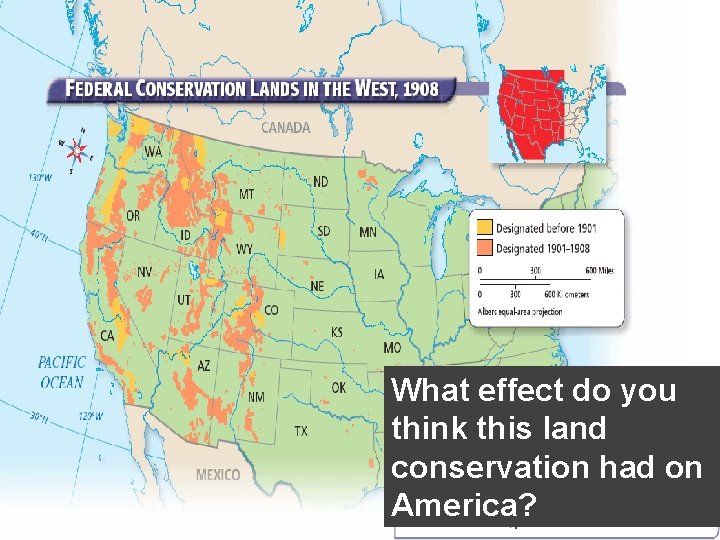
Environmental Conservation In the late 1800 s foresting, plowing, polluting, and overgrazing were destroying America’s natural resources. Roosevelt’s Thoughts • Strongly believed in protecting the environment • Roosevelt understood that natural resources were limited and that government should protect these limited resources • Roosevelt was a strong believer in conservation? Roosevelt’s Solution • Passed The Newlands Reclamation Act of 1902, created irrigation projects for 20 states. • Created the U. S. Forest Service led by Gifford Pinchot. • Created the National Park system • Antiquities Act – 18 national monuments (mount Rushmore)
What effect do you think this land conservation had on America?
In What ways did Theodore Roosevelt significantly change America?
Ch. 6 The Progressive Era Section 4: Presidents Taft and Wilson 1. Under Taft’s Presidency, why did the Republican Party become divided? 2. What were three goals of Woodrow Wilson’s New Freedom plan and what 4 acts did he pass to achieve these goals? 3. What did women do to finally earn the right to vote? https: //youtu. be/g. R 7 o. Hh-f. XUw
#27 William Howard Taft – You. Tube 1. Who was William Howard Taft’s best friend? What happened to this friendship and why? TR, it ended, TR was upset with how Taft as a president 2. Did Taft want to be President? No 3. As President what happened to Taft emotionally? Why? He fell apart depressed, who could not handle the ridicule and pressure of being the President of the U. S. 4. According to Roosevelt was Taft a good president? No 5. Who won the 1912 election? Woodrow Wilson 6. Who did more to regulate monopolies in America, Taft or Roosevelt? Taft
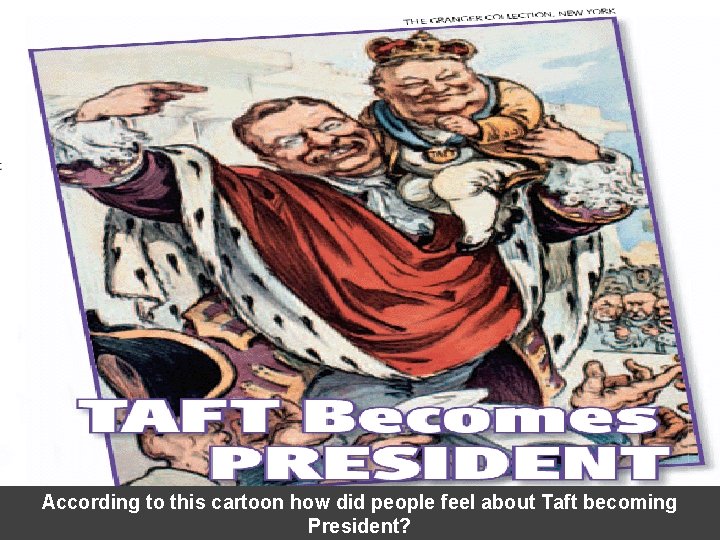
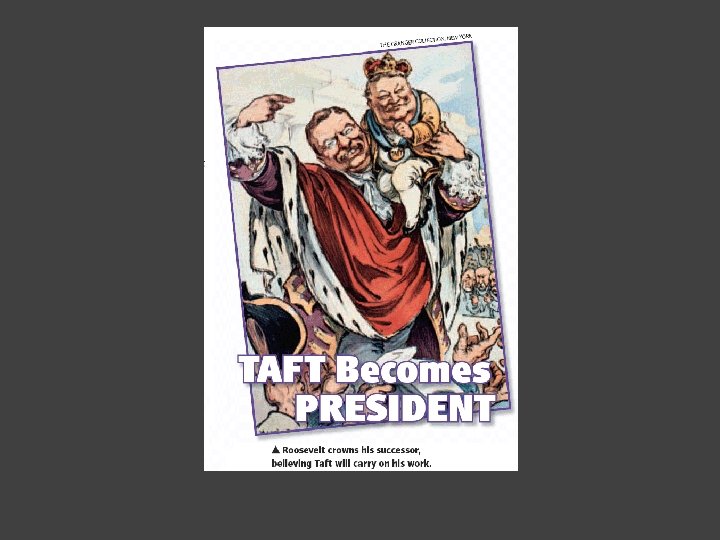
Progressivism under Taft • President Roosevelt didn’t run for a third term, instead he chose William Howard Taft to represent him in the next election. Why did TR choose Taft? • B/c everyone loved TR, William Howard Taft easily won the election of 1908. • Once president, Taft worked to secure Roosevelt’s reforms, instead of making more reform policies • Taft created Labor Department to enforce labor laws and increased the number of national forest reserves. • Taft’s administration also passed the Sixteenth Amendment • 16 th Amendment created Income Taxes!
According to this cartoon how did people feel about Taft becoming President?
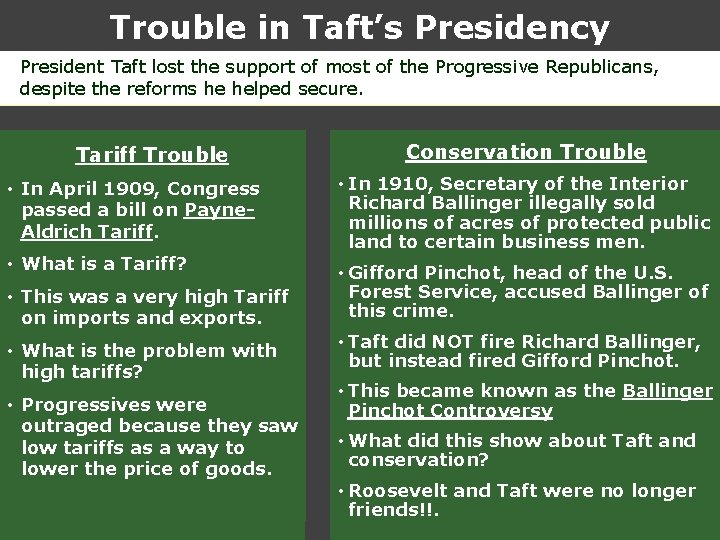
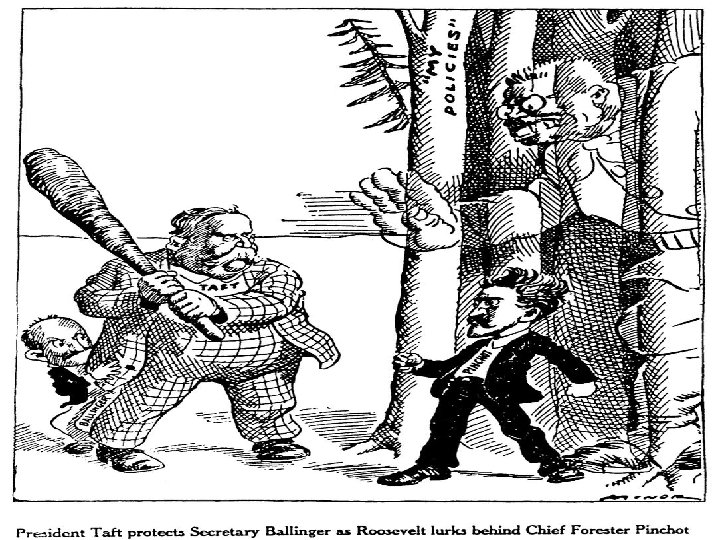
Trouble in Taft’s Presidency President Taft lost the support of most of the Progressive Republicans, despite the reforms he helped secure. Tariff Trouble Conservation Trouble • In April 1909, Congress passed a bill on Payne. Aldrich Tariff. • In 1910, Secretary of the Interior Richard Ballinger illegally sold millions of acres of protected public land to certain business men. • What is a Tariff? • Gifford Pinchot, head of the U. S. Forest Service, accused Ballinger of this crime. • This was a very high Tariff on imports and exports. • What is the problem with high tariffs? • Progressives were outraged because they saw low tariffs as a way to lower the price of goods. • Taft did NOT fire Richard Ballinger, but instead fired Gifford Pinchot. • This became known as the Ballinger Pinchot Controversy • What did this show about Taft and conservation? • Roosevelt and Taft were no longer friends!!.
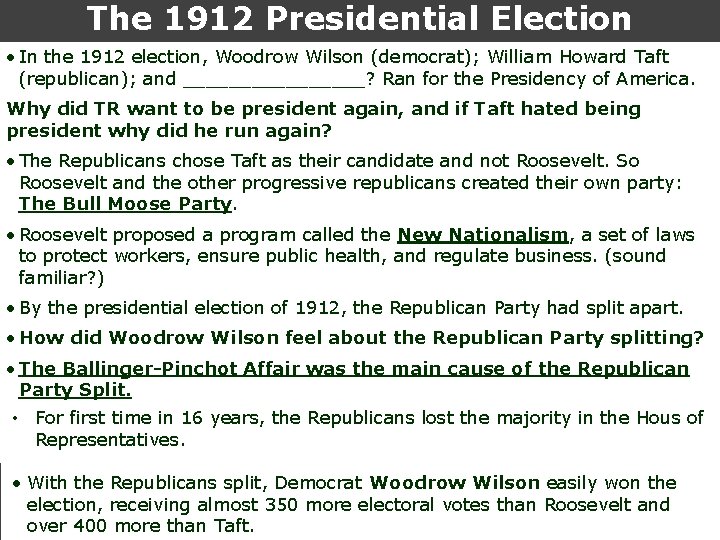
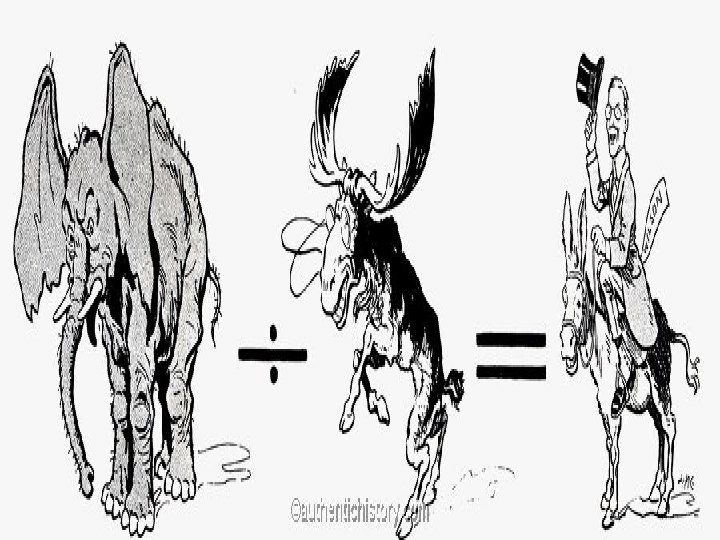
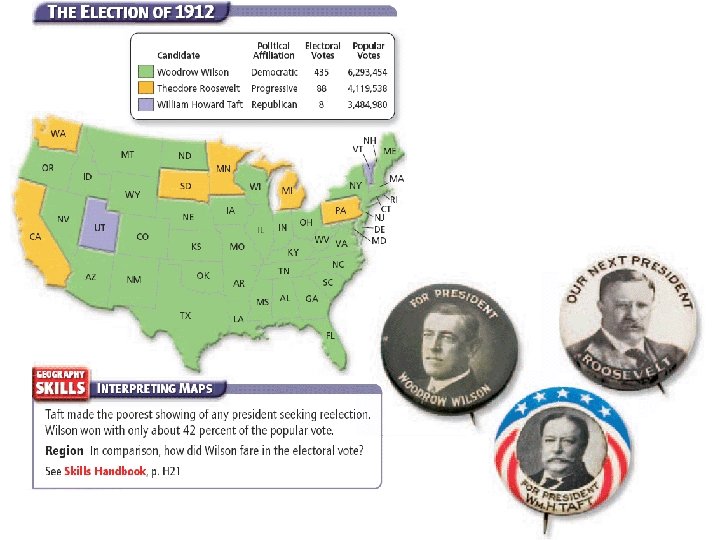
The 1912 Presidential Election • In the 1912 election, Woodrow Wilson (democrat); William Howard Taft (republican); and ________? Ran for the Presidency of America. Why did TR want to be president again, and if Taft hated being president why did he run again? • The Republicans chose Taft as their candidate and not Roosevelt. So Roosevelt and the other progressive republicans created their own party: The Bull Moose Party. • Roosevelt proposed a program called the New Nationalism, a set of laws to protect workers, ensure public health, and regulate business. (sound familiar? ) • By the presidential election of 1912, the Republican Party had split apart. • How did Woodrow Wilson feel about the Republican Party splitting? • The Ballinger-Pinchot Affair was the main cause of the Republican Party Split. • For first time in 16 years, the Republicans lost the majority in the Hous of Representatives. • With the Republicans split, Democrat Woodrow Wilson easily won the election, receiving almost 350 more electoral votes than Roosevelt and over 400 more than Taft.
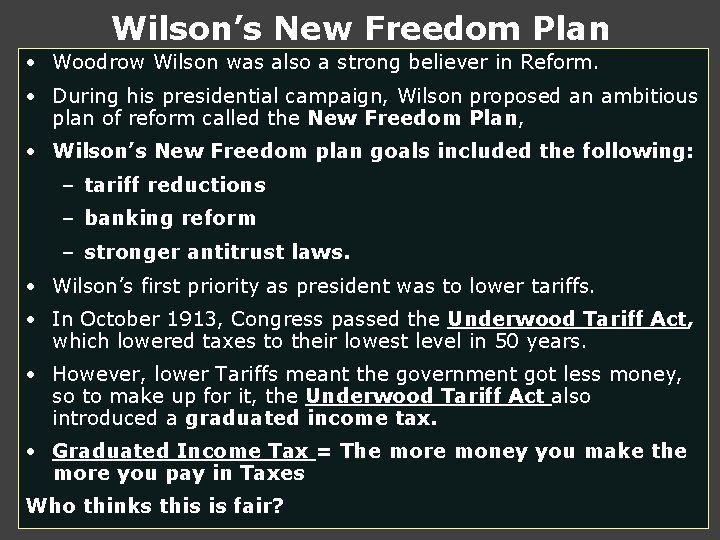
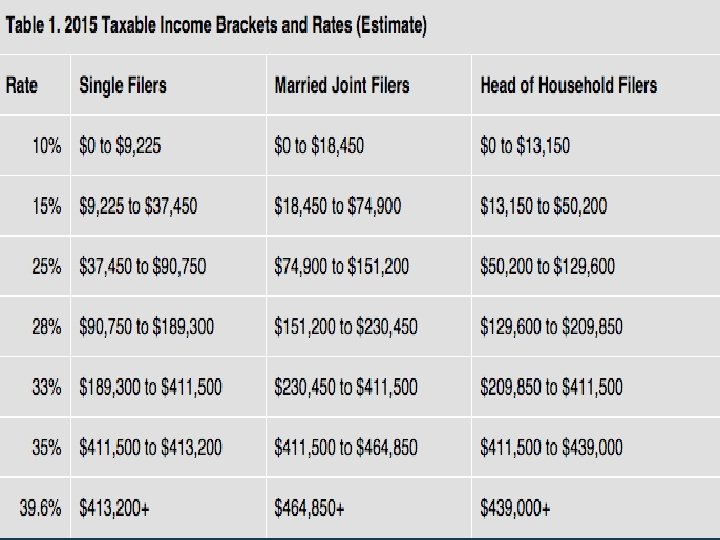
Wilson’s New Freedom Plan • Woodrow Wilson was also a strong believer in Reform. • During his presidential campaign, Wilson proposed an ambitious plan of reform called the New Freedom Plan, • Wilson’s New Freedom plan goals included the following: – tariff reductions – banking reform – stronger antitrust laws. • Wilson’s first priority as president was to lower tariffs. • In October 1913, Congress passed the Underwood Tariff Act, which lowered taxes to their lowest level in 50 years. • However, lower Tariffs meant the government got less money, so to make up for it, the Underwood Tariff Act also introduced a graduated income tax. • Graduated Income Tax = The more money you make the more you pay in Taxes Who thinks this is fair?
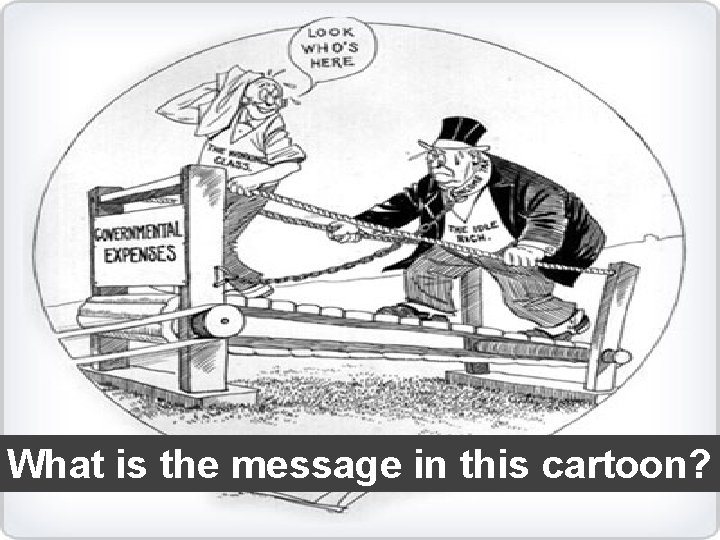
What is the message in this cartoon?
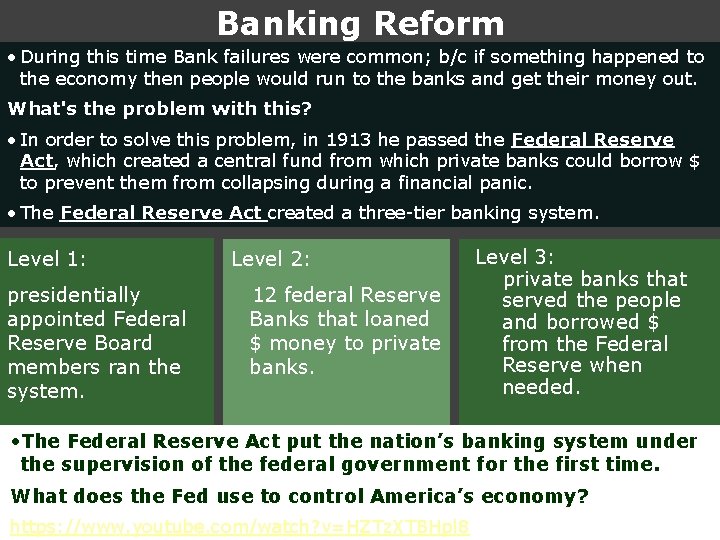
Banking Reform • During this time Bank failures were common; b/c if something happened to the economy then people would run to the banks and get their money out. What's the problem with this? • In order to solve this problem, in 1913 he passed the Federal Reserve Act, which created a central fund from which private banks could borrow $ to prevent them from collapsing during a financial panic. • The Federal Reserve Act created a three-tier banking system. Level 1: presidentially appointed Federal Reserve Board members ran the system. Level 2: 12 federal Reserve Banks that loaned $ money to private banks. Level 3: private banks that served the people and borrowed $ from the Federal Reserve when needed. • The Federal Reserve Act put the nation’s banking system under the supervision of the federal government for the first time. What does the Fed use to control America’s economy? https: //www. youtube. com/watch? v=HZTz. XTBHpl 8
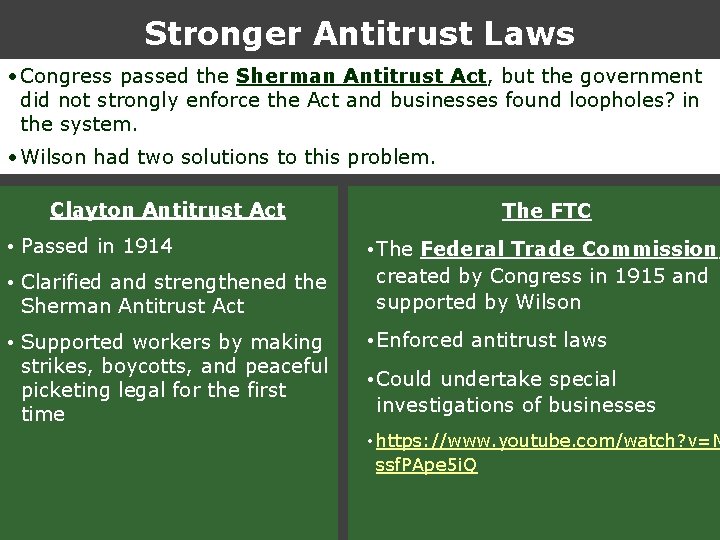
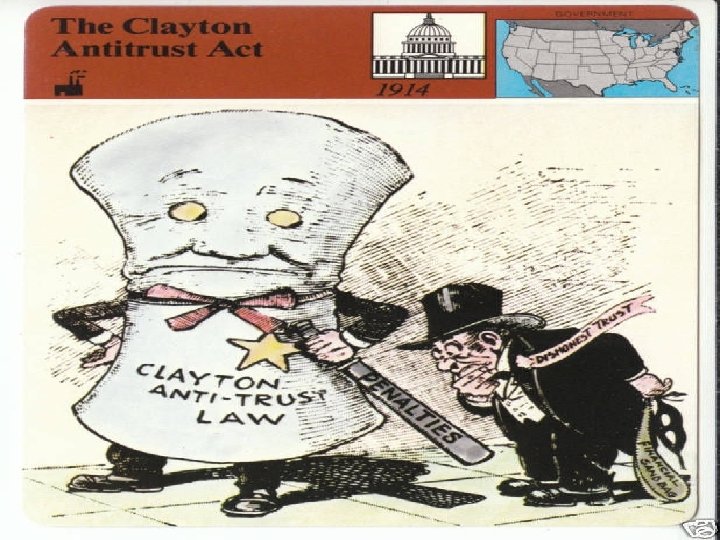
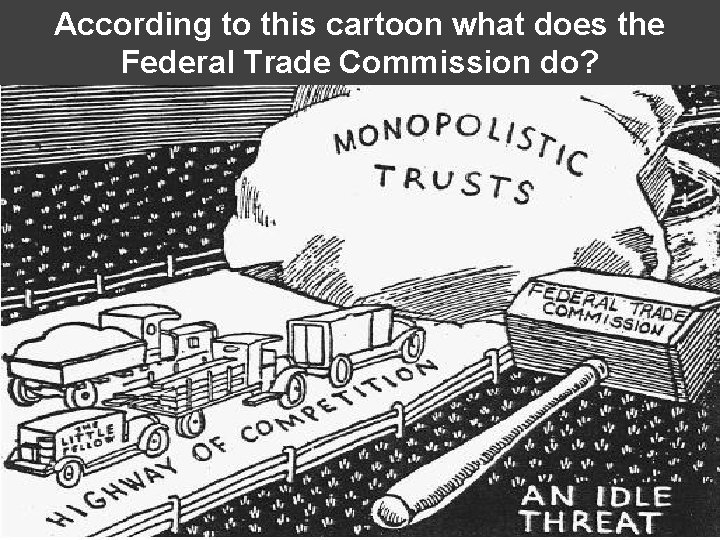
Stronger Antitrust Laws • Congress passed the Sherman Antitrust Act, but the government did not strongly enforce the Act and businesses found loopholes? in the system. • Wilson had two solutions to this problem. Clayton Antitrust Act • Passed in 1914 • Clarified and strengthened the Sherman Antitrust Act • Supported workers by making strikes, boycotts, and peaceful picketing legal for the first time The FTC • The Federal Trade Commission, created by Congress in 1915 and supported by Wilson • Enforced antitrust laws • Could undertake special investigations of businesses • https: //www. youtube. com/watch? v=N ssf. PApe 5 i. Q
According to this cartoon what does the Federal Trade Commission do?
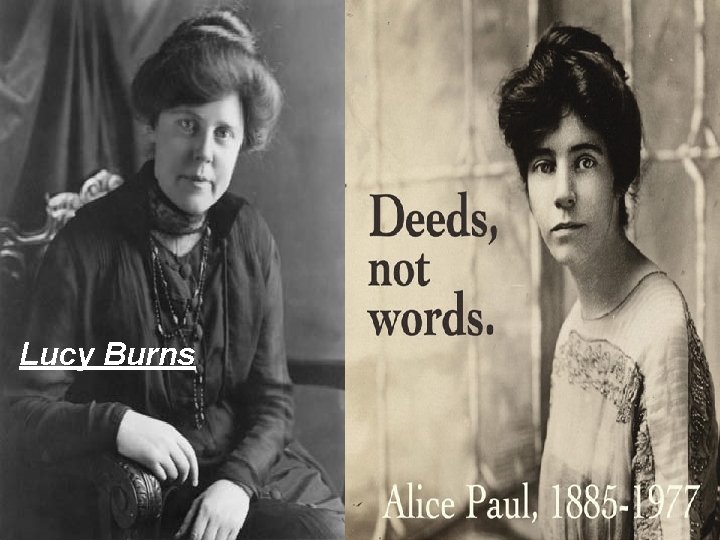
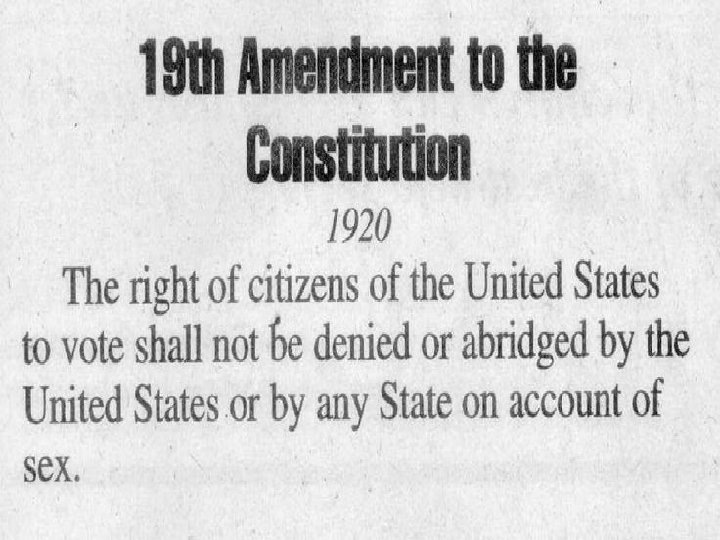
Women Earn the right to Vote • Beginning in the mid 1800 s women suffrage groups like NAWSA were going from state to state trying to convince that state to let women vote. • By 1901, only four states had given women the right to vote. • So Alice Paul and Lucy Burns broke from NAWSA and formed the National Woman’s Party in 1916. • Instead of going state to state trying to convince them to let women vote, the National Woman’s Party went after the federal government and tried to get them to pass an Amendment. • Alice Paul, Lucy Burns and the rest of the National Woman’s party protested outside the White House, went on hunger strikes, and even chained themselves to the White House fence. • During this time NAWSA and the National Woman’s party joined forces to get an Amendment passed (about 4 million women) • In 1917, America entered into WWI, and b/c of women’s efforts during WWI, women were able to persuade Congress to pass an Amendment that would allow women the right to vote. • The Struggle for women’s suffrage resulted in a final victory when congress passed the 19 th Amendment in 1920.
Lucy Burns
Click on the window to start video