
Chapter 6 The Police Organization Role and Function

- Slides: 29
Chapter 6 The Police: Organization, Role and Function
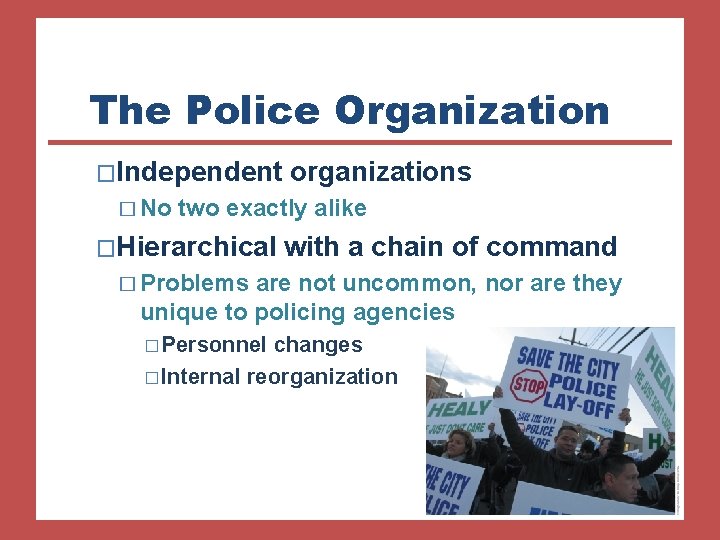
The Police Organization �Independent � No organizations two exactly alike �Hierarchical with a chain of command � Problems are not uncommon, nor are they unique to policing agencies � Personnel changes � Internal reorganization
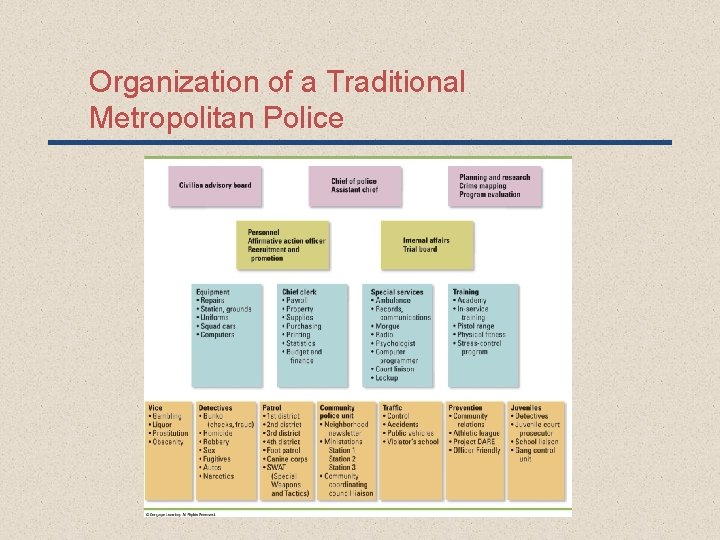
Organization of a Traditional Metropolitan Police
The Police Organization �The time-in-rank system � Requires that before moving up the administrative ladder, an officer must spend a certain amount of time in the next lowest rank � Prohibits departments from allowing officers to skip ranks � Sometimes prevents them from hiring an officer from another department and award him/her a higher rank
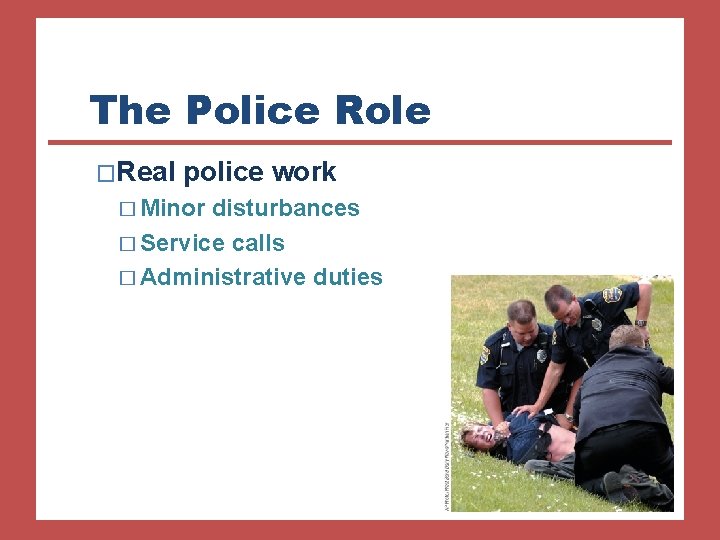
The Police Role �Real police work � Minor disturbances � Service calls � Administrative duties
The Patrol Function � Patrol officers are the most highly visible components of the entire criminal justice system � Patrol activities � Deter crime � Maintain public order � Respond quickly � Identify and apprehend law violators � Provide aid � Facilitate the movement of traffic and people � Create a feeling of security in the community
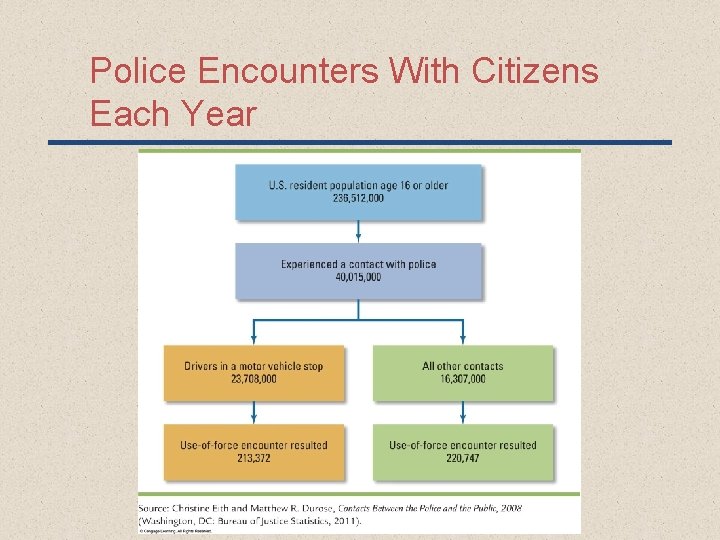
Police Encounters With Citizens Each Year
Improving Patrol �Proactive policing � An aggressive law enforcement style in which patrol officers take the initiative against crime instead of waiting for criminal acts to occur �Broken windows model � The role of police as maintainers of community order and safety �Rapid response � Improving police response time
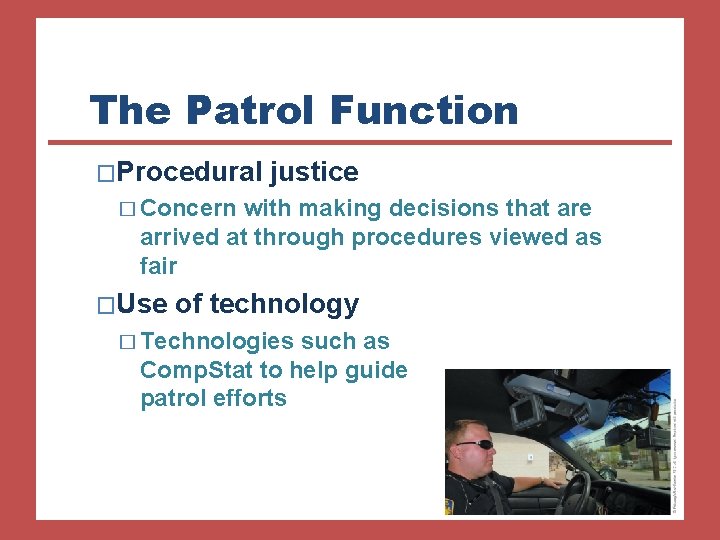
The Patrol Function �Procedural justice � Concern with making decisions that are arrived at through procedures viewed as fair �Use of technology � Technologies such as Comp. Stat to help guide patrol efforts
The Investigation Function �Investigative work is less visible than patrol work � Work closely with patrol officers to provide an immediate investigative response to crimes and incidents � Many police departments maintain separate units, squads, or divisions of detectives who investigate crimes ranging from vice to homicides
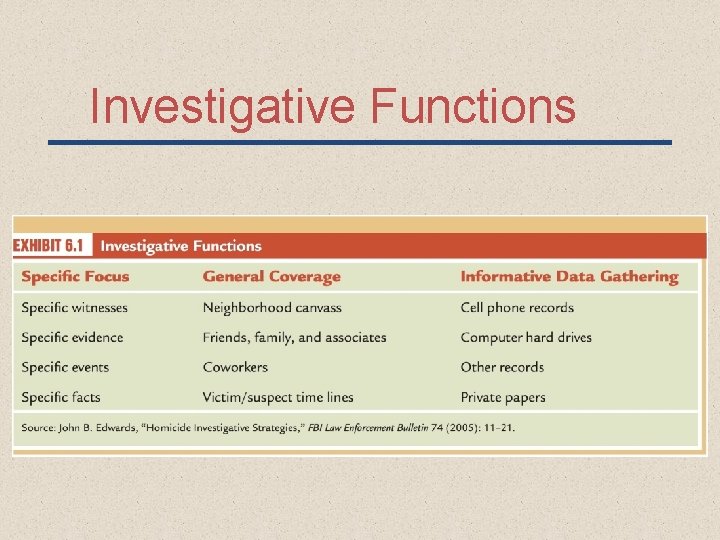
How Do Detectives Detect? �Specific focus � Interview witnesses, gather evidence, record events, and collect facts �General coverage � Canvass the neighborhood and make observations, conducts interviews with friends/family/associates, contacts others for information regarding victims/suspects, construct victim/suspect time lines to outline their whereabouts
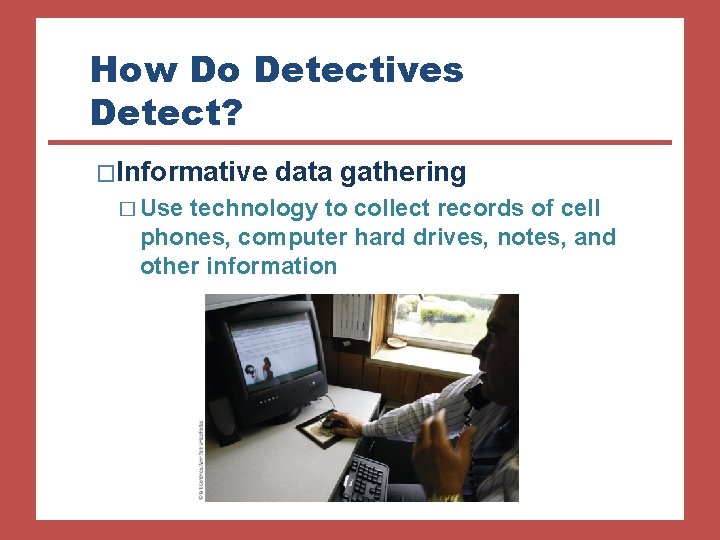
How Do Detectives Detect? �Informative � Use data gathering technology to collect records of cell phones, computer hard drives, notes, and other information
Investigative Functions
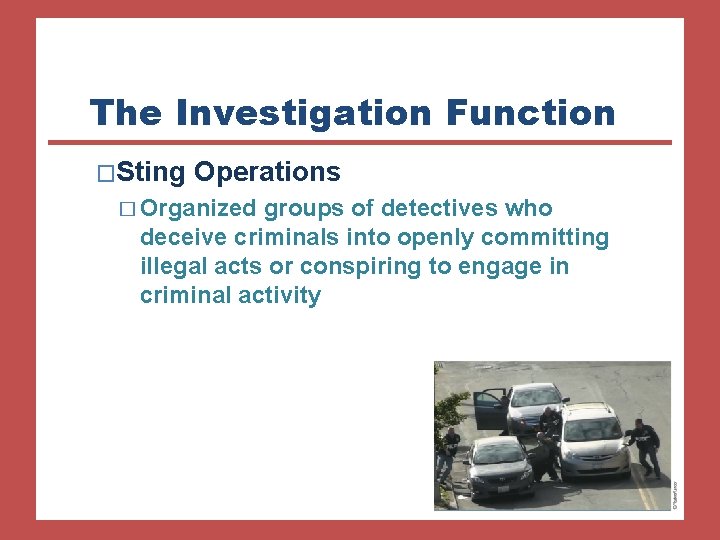
The Investigation Function �Sting Operations � Organized groups of detectives who deceive criminals into openly committing illegal acts or conspiring to engage in criminal activity
The Investigative Function �Undercover � Pose Work as criminals or as victims � Considered a necessary element of police work, although it can prove dangerous for the officer � May pose psychological problems for the officer
The Investigation Function �Evaluating Investigations � Creates considerable paperwork and is relatively inefficient in clearing cases �Improving � Patrol Investigations officers should have greater responsibility at the scene � Specialized units can bring expertise � Collection of physical evidence is important
Thinking Point • Watch a show that currently runs on television (can be a show in re-runs) that deals with policing or detective work. ü What type of impression of policing or detective work do you get from the television show? ü How does this correspond with what you learned in this chapter? ü How can you explain the differences?
Community Policing � Consists of a return to an earlier style of policing in which officers on the beat had an intimate contact with the people they served � Can be a specific program or a philosophy �Key components: � Community partnerships � Organizational transformation � Problem solving
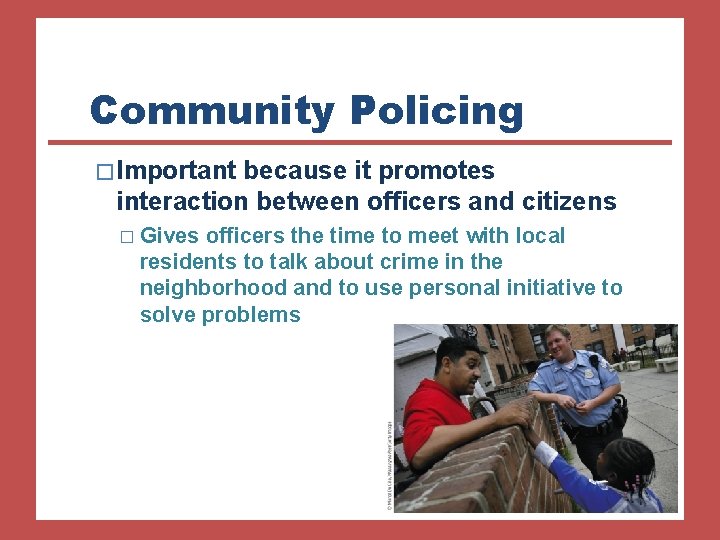
Community Policing � Important because it promotes interaction between officers and citizens � Gives officers the time to meet with local residents to talk about crime in the neighborhood and to use personal initiative to solve problems
The Challenges of Community Policing �Defining community �Defining roles �Changing supervisor attitudes �Reorienting police values �Revising training �Reorienting recruitment �Reaching out to every community
Thinking Point • Look at the website of your community police department for evidence of community policing programs, or contact your local police department to inquire. ü What types of community policing initiatives do you believe are present in your community? ü Have you seen any evidence of such initiatives?
Problem Oriented Policing �A style of police management that stresses proactive problem solving instead of reactive crime fighting � Requires police agencies to identify particular long-term community problems and to develop strategies to eliminate them � Supported by the fact that a great deal of urban crime is concentrated in a few hot spots
Criminal Acts, Criminal Places �Combating � Use auto theft of technology to reduce car thefts �Reducing violence � Operation � Formed Ceasefire to reduce youth homicide and youth firearms violence in Boston
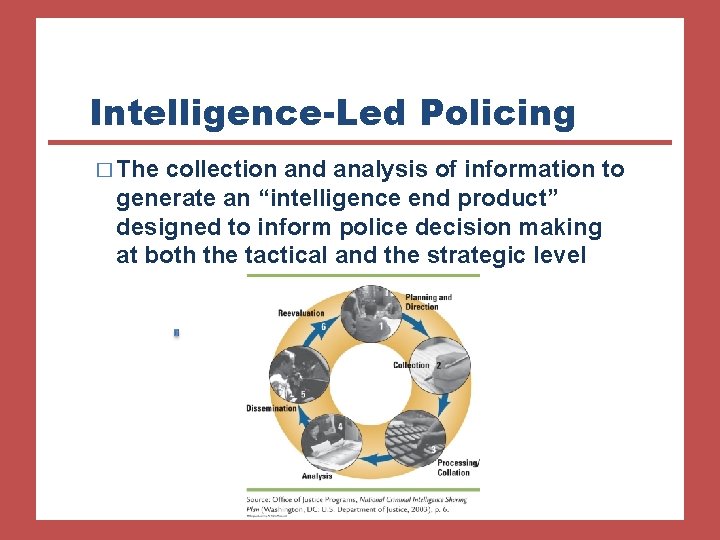
Intelligence-Led Policing � The collection and analysis of information to generate an “intelligence end product” designed to inform police decision making at both the tactical and the strategic level
Intelligence-Led Policing �Relies heavily on: � Confidential informants � Offender interviews � Careful analysis of crime reports and calls for service � Suspect surveillance � Community sources of information
Intelligence and the Intelligence Process �Tactical Intelligence � Gaining or developing information related to threats of terrorism or crime and using this information to apprehend offenders, harden targets, and use strategies that will eliminate or mitigate threat �Strategic Intelligence � Information about the changing nature of certain problems and threats for the purpose of developing response strategies and reallocating resources
Intelligence-Led Policing �Fusion Centers � Support for a range of law enforcement activities � Help for major incident operations and support for units charged with interdiction and criminal investigations � Provide the means for community input, often through “tip lines” � Assistance to law enforcement executives
Police Support Functions � Personnel Service � Internal Affairs Division � Administration and Control of Budgets � Maintenance and Dissemination of Information � Dispatch � Training � Citizen Police Interactions � Forensics � Planners
Improving Police Productivity �Consolidation �Multiple Tasking �Informal �Special Arrangements �Sharing �Pooling �Contracting �Service Districts �Civilian Employees Assignments �Differential Police Responses