
Chapter 6 The Periodic Table Periodic Law Section
Chapter 6 The Periodic Table & Periodic Law
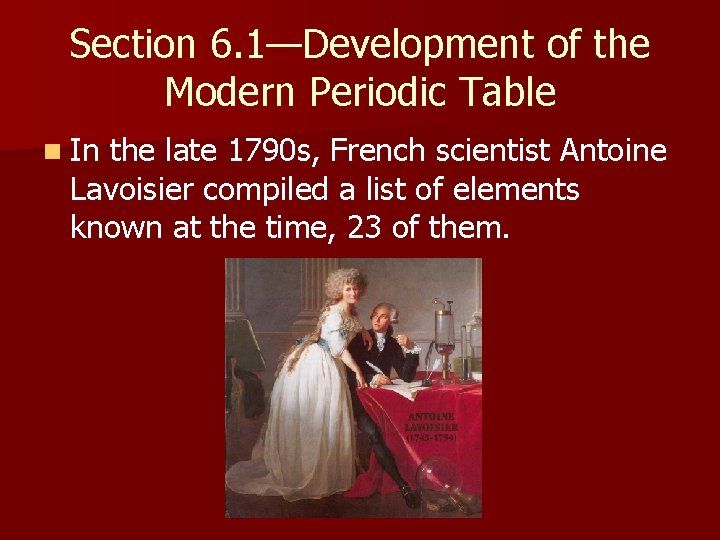
Section 6. 1—Development of the Modern Periodic Table n In the late 1790 s, French scientist Antoine Lavoisier compiled a list of elements known at the time, 23 of them.
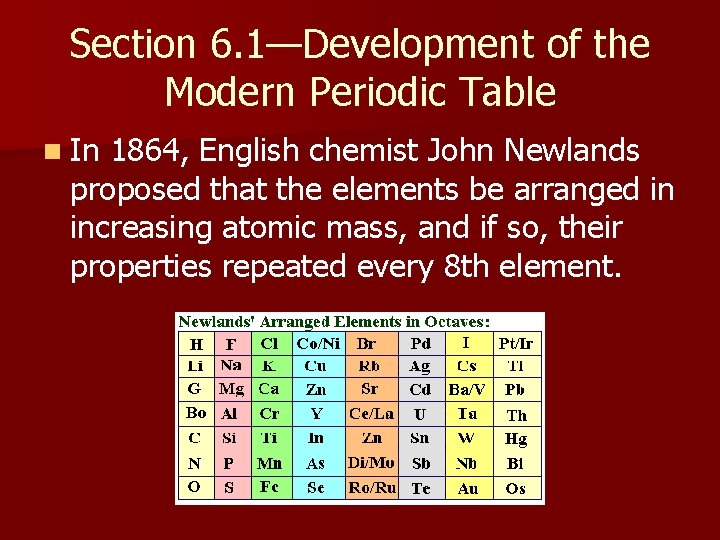
Section 6. 1—Development of the Modern Periodic Table n In 1864, English chemist John Newlands proposed that the elements be arranged in increasing atomic mass, and if so, their properties repeated every 8 th element.
Section 6. 1—Development of the Modern Periodic Table n He called this the law of octaves, which was later disproved because it did not work for all of the elements, n After a few years passed, it was shown that he was basically correct; the properties of the elements do repeat in a periodic way.
n In 1869, Russian chemist Dmitri Mendeleev arranged the elements by increasing atomic mass into columns with similar properties into the 1 st periodic table.
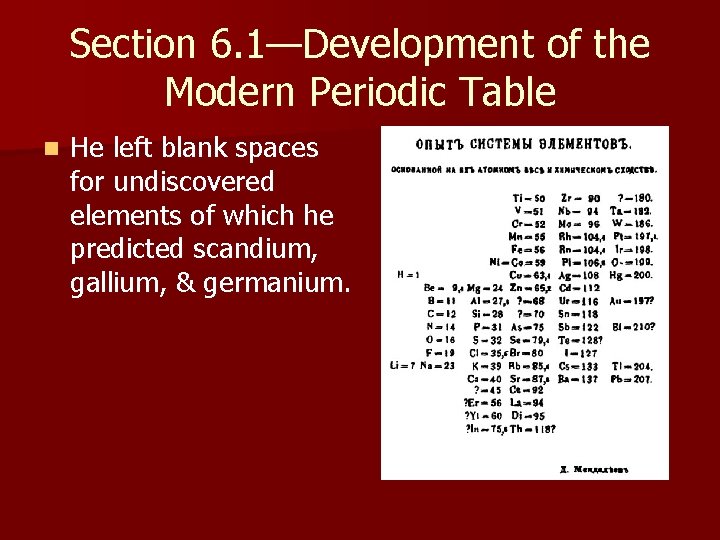
Section 6. 1—Development of the Modern Periodic Table n He left blank spaces for undiscovered elements of which he predicted scandium, gallium, & germanium.
Section 6. 1—Development of the Modern Periodic Table n In 1913, English chemist Henry Moseley noted that if you arrange the elements in order of the number of protons they contain instead of atomic masses, they result in a clear periodic pattern of properties.
Section 6. 1—Development of the Modern Periodic Table n The statement that there is a periodic repetition of chemical & physical properties of the elements when they are arranged by increasing atomic number is called the periodic law.
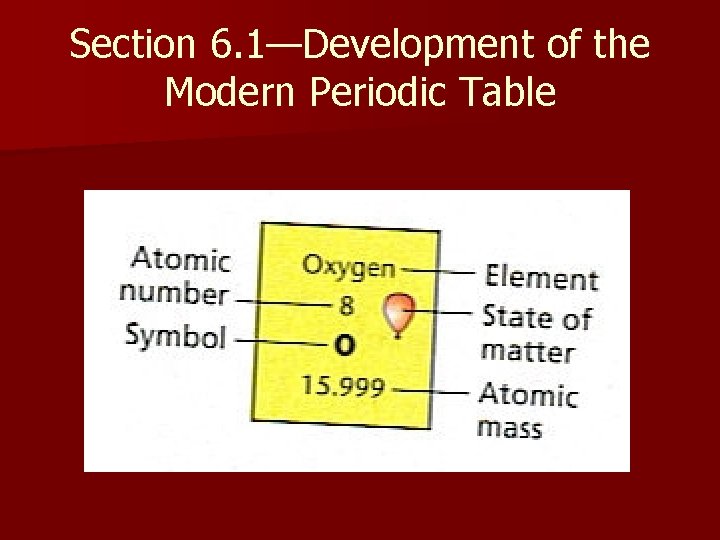
Section 6. 1—Development of the Modern Periodic Table
Section 6. 1—Development of the Modern Periodic Table n The boxes are arranged into a series of columns called groups, or families, and rows called periods.
n The representative elements (the A group) are often referred to as the main group because they possess a wide range of chemical & physical properties. n The transition elements are the elements in the B group.
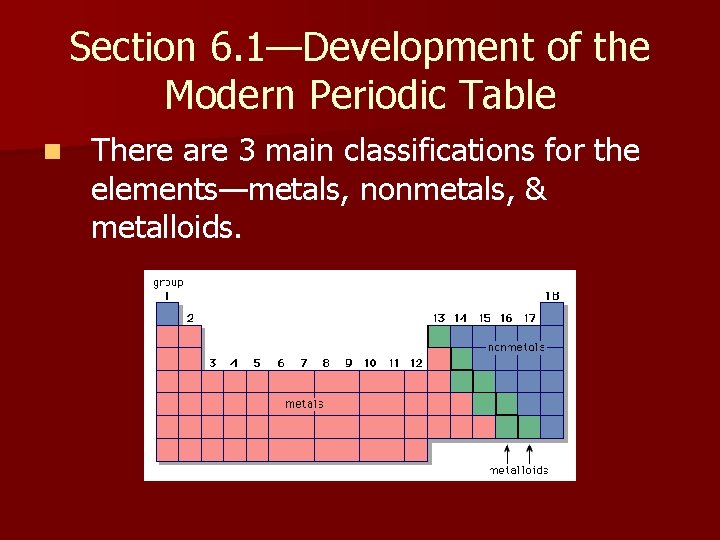
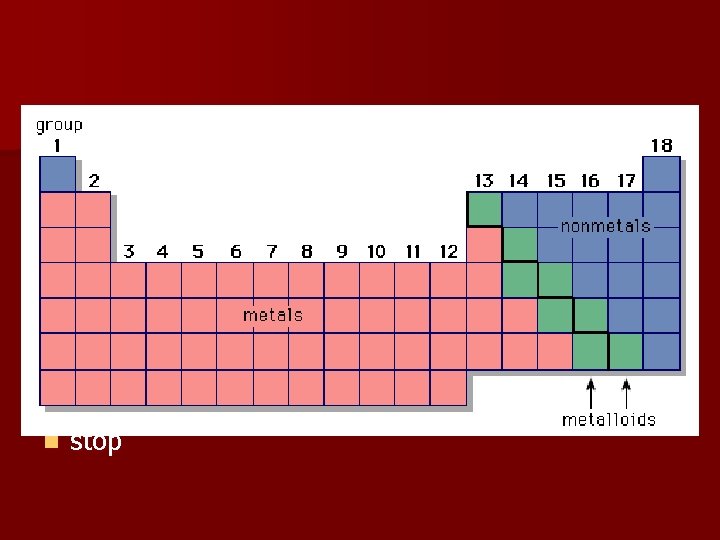
Section 6. 1—Development of the Modern Periodic Table n There are 3 main classifications for the elements—metals, nonmetals, & metalloids.
Section 6. 1—Development of the Modern Periodic Table n Metals—elements that are generally shiny when smooth & clean, solid at room temperature, & good conductors of heat & electricity. Most are ductile & malleable. n They also lose electrons
Section 6. 1—Development of the Modern Periodic Table – – – Metals located on left of stair-step line(except for hydrogen) The group 1 A elements are known as the alkali metals The group 2 A elements are known as the alkaline earth metals § Both are chemically reactive, with the alkali being more reactive
– The transition elements are divided into the transition metals & the inner transition metals – The inner transition metals are the lanthanide & actinide series that make up the bottom of the periodic chart.
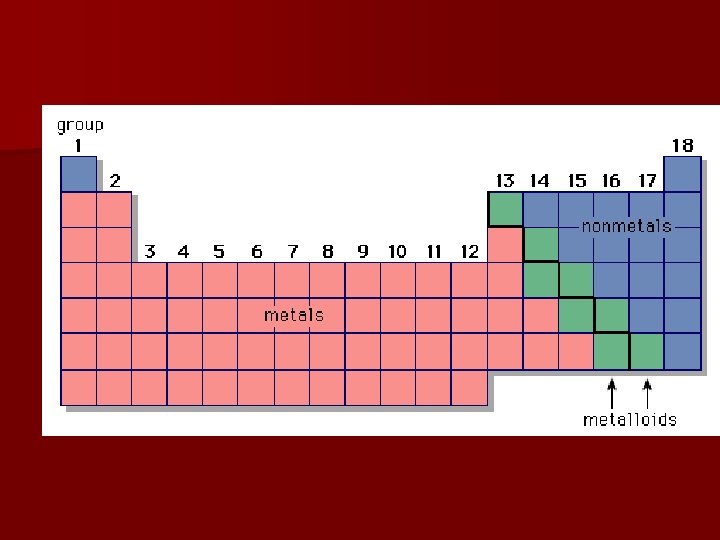
Section 6. 1—Development of the Modern Periodic Table n Nonmetals—are elements that are generally gases or brittle, dull-looking solids. They are poor conductors of heat & electricity. The nonmetals occupy the upper right side of the periodic table. – The only nonmetal that is liquid at room temp is bromine.
– The highly reactive 7 A group is known as the halogens. – The highly unreactive 8 A group are known as the noble gases. – Gain e-
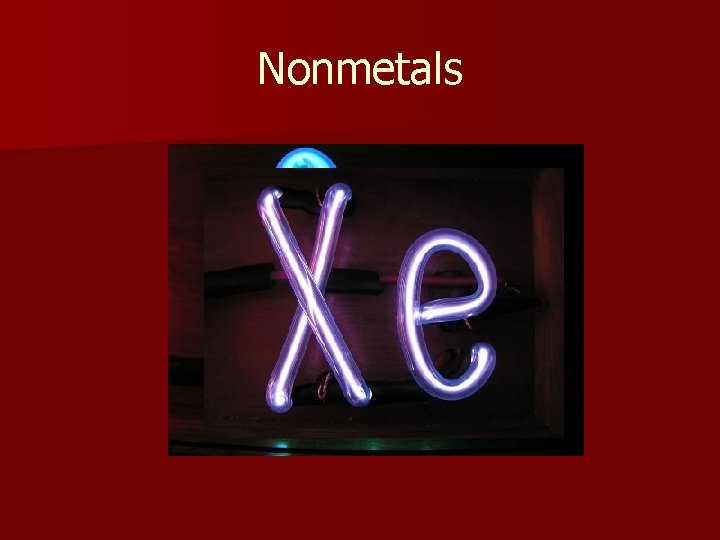
Nonmetals
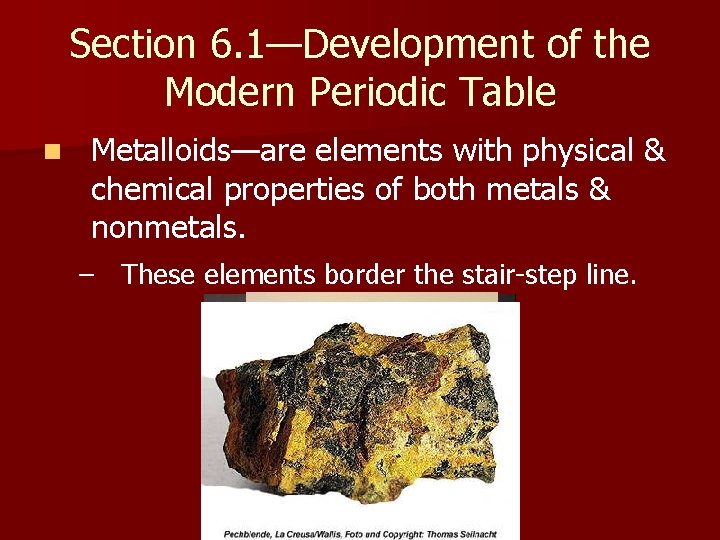
Section 6. 1—Development of the Modern Periodic Table n Metalloids—are elements with physical & chemical properties of both metals & nonmetals. – These elements border the stair-step line.
n stop
Section 6. 2—Classification of the Elements n The elements are organized by their electron configuration. n Atoms in the same group have similar chemical properties because they have the same number of valence electrons.
Section 6. 2—Classification of the Elements n Group 1 elements have a configuration of s 1. n Group 2 elements have a configuration of s 2.
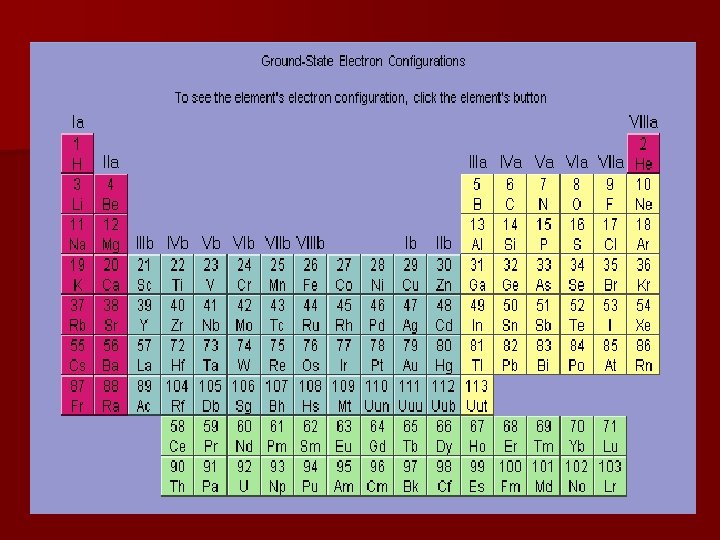
n The energy level of an element’s valence electrons indicates the period on the periodic table in which it is found.
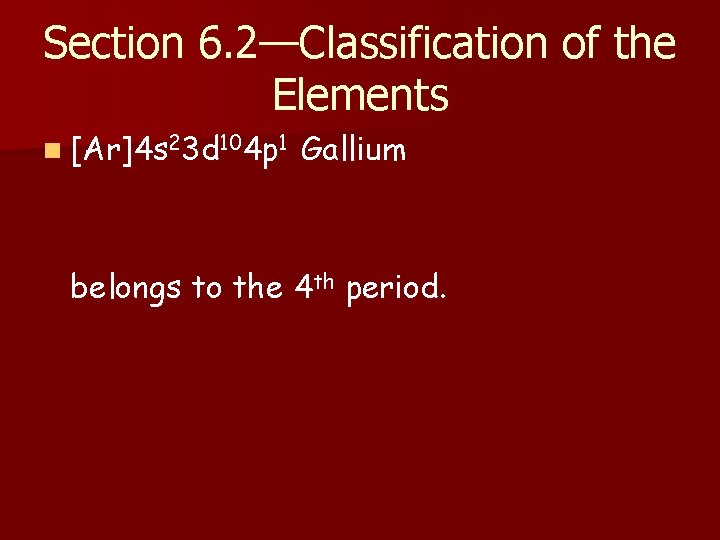
Section 6. 2—Classification of the Elements n [Ar]4 s 23 d 104 p 1 Gallium belongs to the 4 th period.
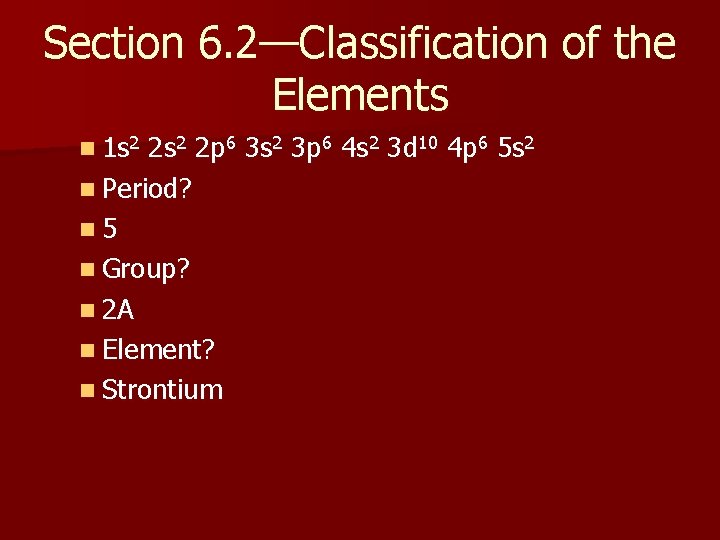
Section 6. 2—Classification of the Elements n 1 s 2 2 p 6 3 s 2 3 p 6 4 s 2 3 d 10 4 p 6 5 s 2 n Period? n 5 n Group? n 2 A n Element? n Strontium
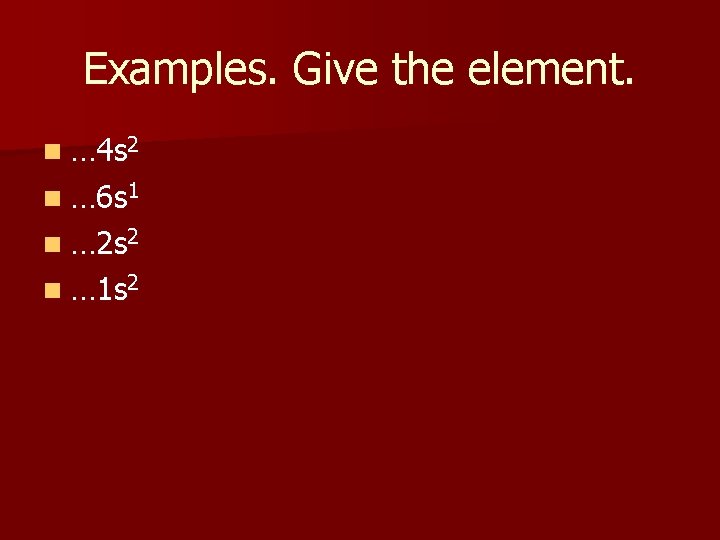
Examples. Give the element. n … 4 s 2 n … 6 s 1 n … 2 s 2 n … 1 s 2
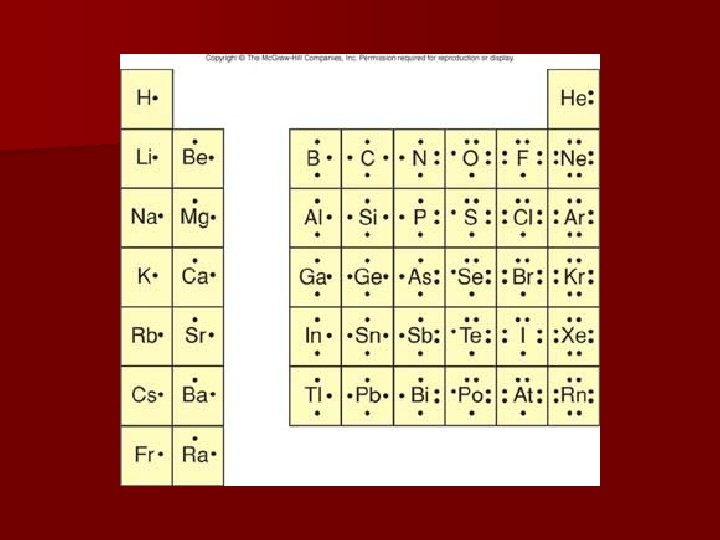
Section 6. 2—Classification of the Elements n n n n n Remember electron dot? ? ? Does not apply to the transition elements. Group 1 valence electrons = 1 Group 2 valence electrons = 2 Group 13 valence electrons = 3 Group 14 valence electrons = 4 Group 15 valence electrons = 5 Group 16 valence electrons = 6 Group 17 valence electrons = 7 Group 18 valence electrons = 8 (exception is He)
How many valence e-? n Silicon? n Calcium? n Bromine? n Krypton? n Potassium? n Helium?
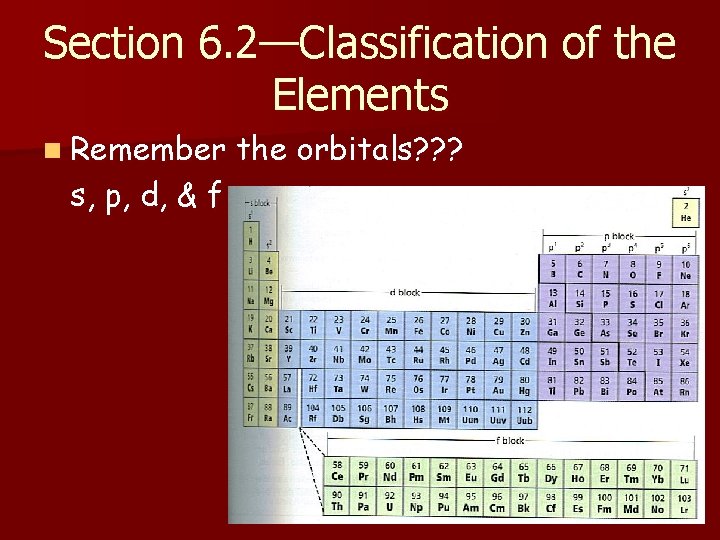
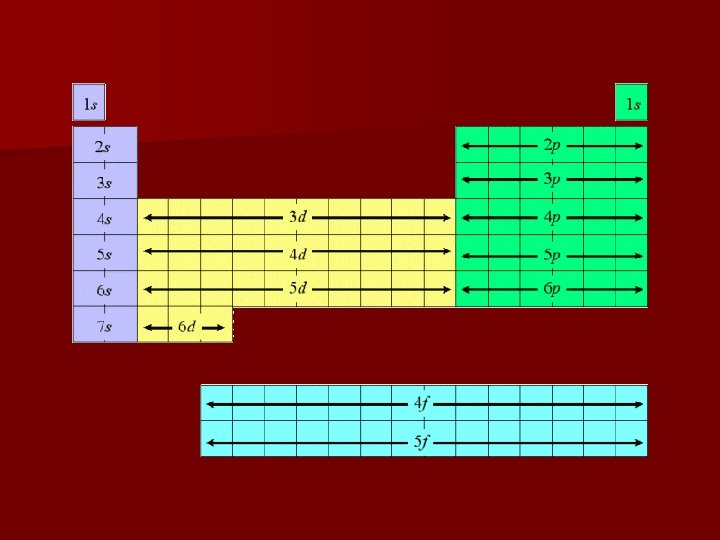
Section 6. 2—Classification of the Elements n Remember s, p, d, & f the orbitals? ? ?
Section 6. 2—Classification of the Elements n s-block elements Group 1 & 2 elements & helium. – Valence electrons only in “s” orbitals
n p-block elements Groups 13 -18 (except He) – valence electrons are filling or have filled the “p” orbitals – Group 18 noble gases s & p orbitals are completely filled & are very stable elements
Give the element n … 3 p 1 n … 4 p 6 n … 5 p 2 n … 6 p 2 n … 3 s 2 n … 3 d 10
Section 6. 2—Classification of the Elements n d-block elements Groups 3 -12, the transition metals – Period 4 is filling the 3 d orbital – Period 5 is filling the 4 d orbital – Period 6 is filling the 5 d orbital
n f-block elements inner transitional metals; lanthanide & actinide series – Period 6 is filling the 4 f orbital – Period 7 is filling the 5 f orbital
Give the element n … 3 d 2 n … 5 d 9 n … 4 d 10 n … 5 f 2 n … 4 f 1 n … 5 f 1
Section 6. 3—Periodic Trends n Trends describe predictable changes in properties of the elements as you move across a period or down a group.
n Atomic Radius (Atomic Size) – There is a general decrease in atomic radii as you move across a period. – There is an increase as you move down a group.
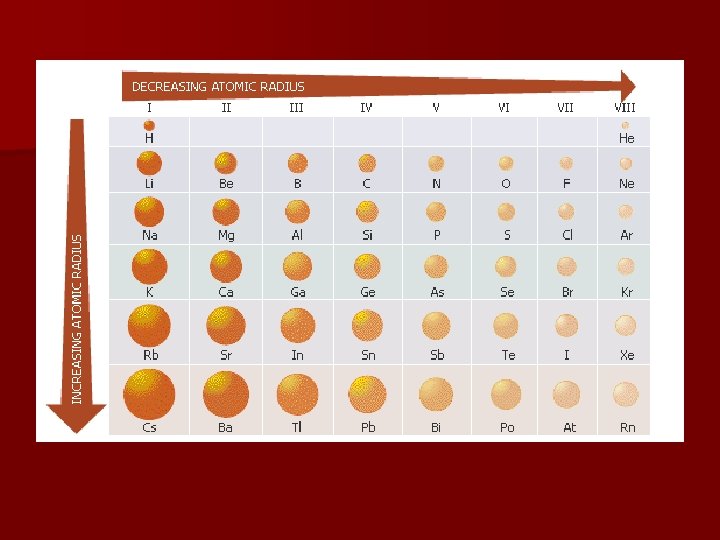
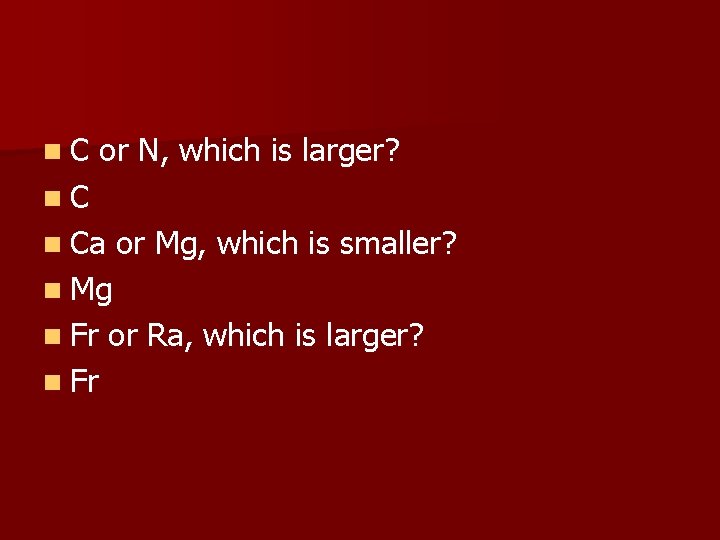
n. C or N, which is larger? n. C n Ca or Mg, which is smaller? n Mg n Fr or Ra, which is larger?
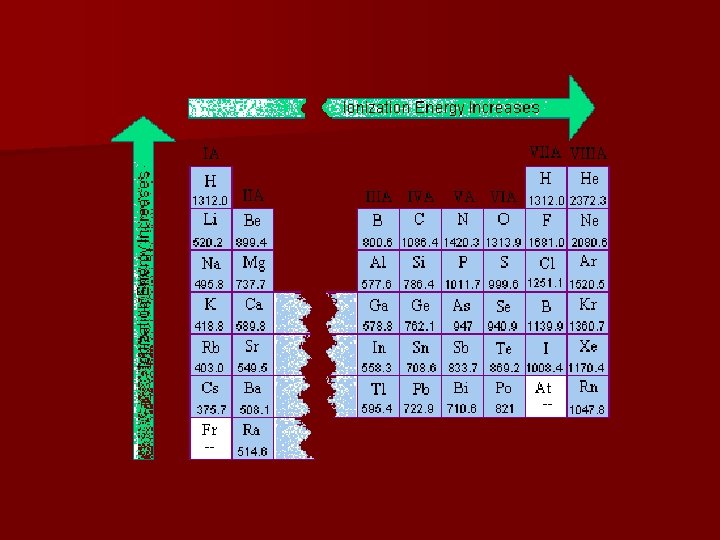
n Ionization energy is the amount of energy needed to remove an electron.
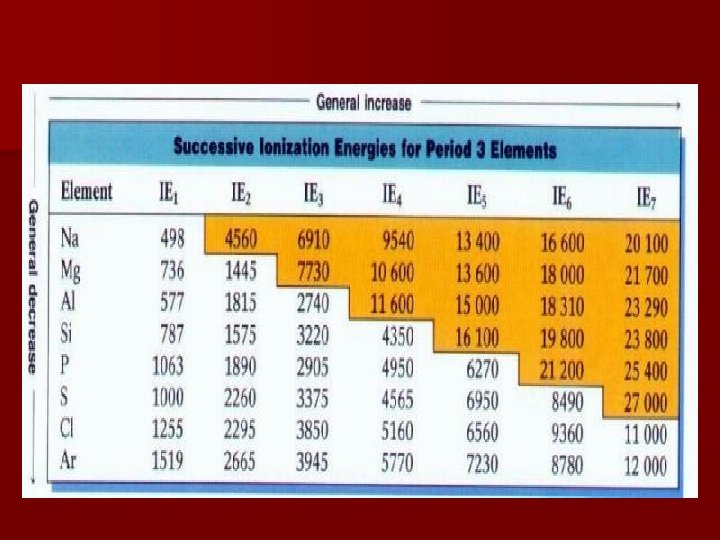
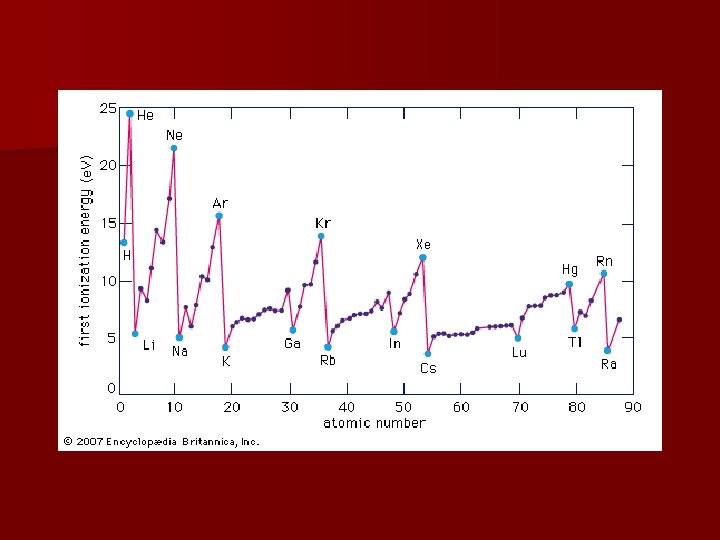
Section 6. 3—Periodic Trends – A high ionization energy indicates the atom has a strong hold on its electrons.
– As you go across a period, the ionization energy increases.
Section 6. 3—Periodic Trends n As you go down a group, the ionization energy decreases.
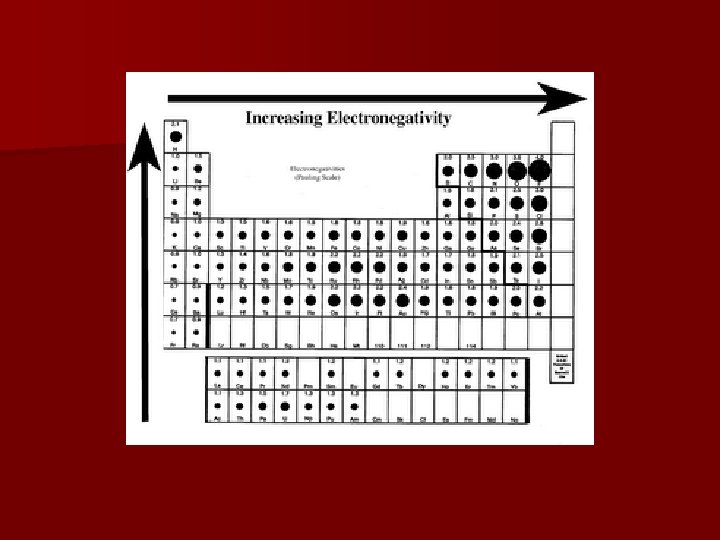
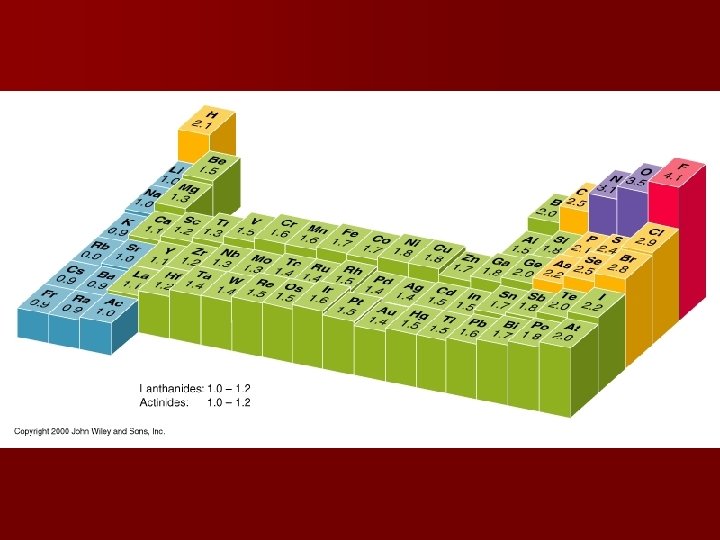
Section 6. 3—Periodic Trends n Electronegativity – Electronegativity indicates the ability of atoms to attract electrons in a chemical bond.
Section 6. 3—Periodic Trends – Electronegativity is based on a scale of 0 -4. F- most electronegative element. Fr- least electronegative element. – Electronegativity increases as you go across a period. – Electronegativity decreases as you go down a group.
Electronegativity questions n Which is more likely to get an electron between… – Phosphorus & Arsenic? – Magnesium & Silicon? – Chlorine & Argon?
- Slides: 55