
Chapter 6 The New Republic 1789 1816 Problems
Chapter 6 The New Republic 1789 -1816
Problems of the New National Government n n National Debt Respect Trade Restricted British Presence
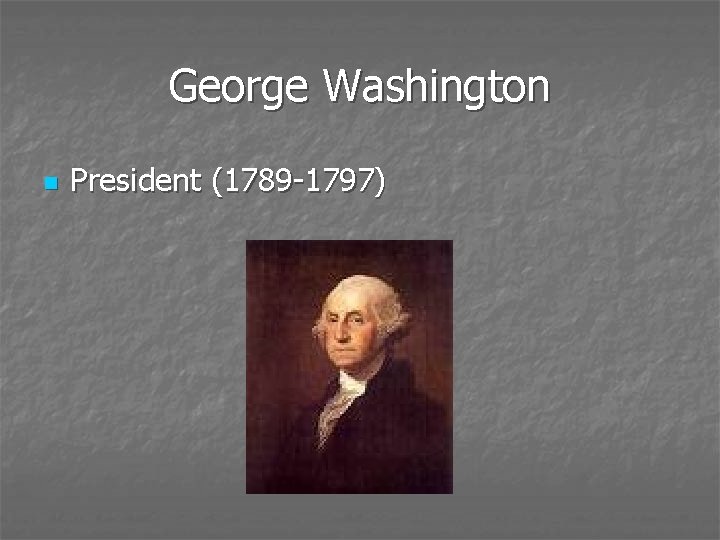
George Washington n President (1789 -1797)
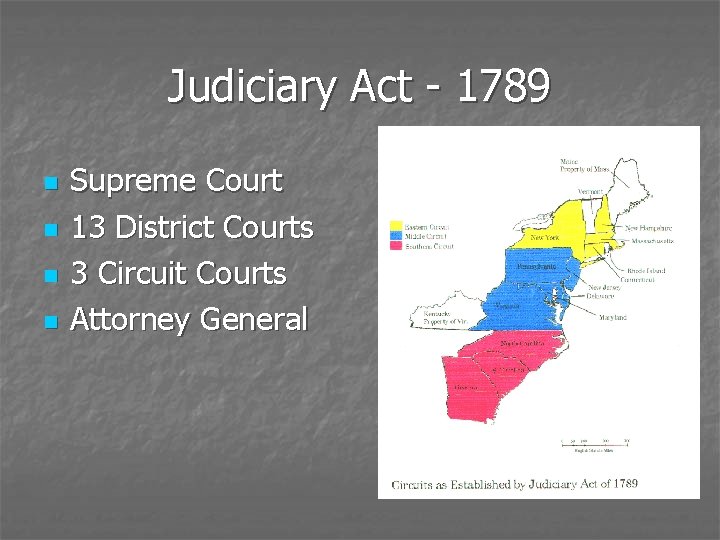
Judiciary Act - 1789 n n Supreme Court 13 District Courts 3 Circuit Courts Attorney General
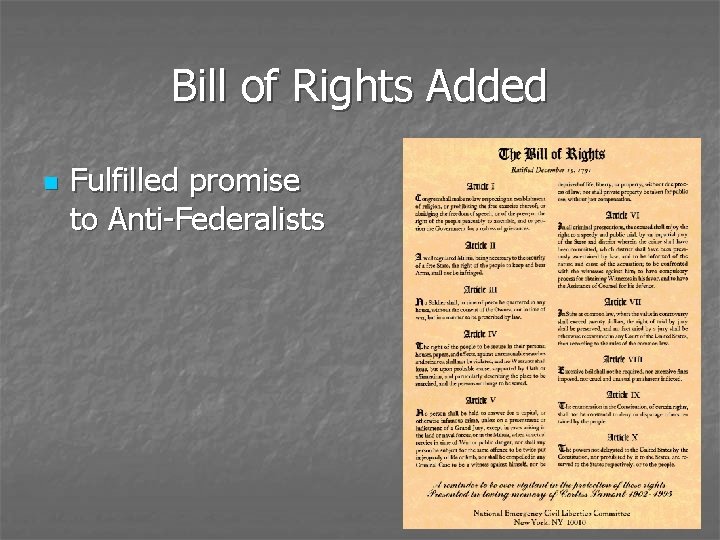
Bill of Rights Added n Fulfilled promise to Anti-Federalists
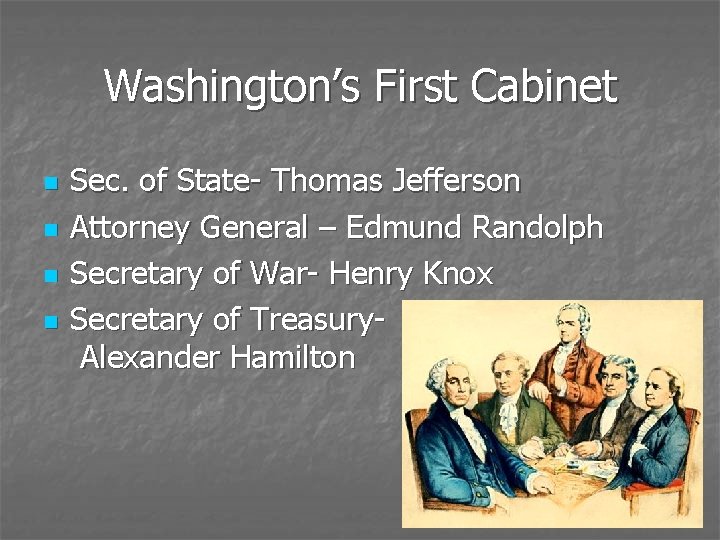
Washington’s First Cabinet n n Sec. of State- Thomas Jefferson Attorney General – Edmund Randolph Secretary of War- Henry Knox Secretary of Treasury. Alexander Hamilton
Yikes…New Government is Broke! n n n War debt Creditors want payment Trade limited
Hamilton’s Economic Plan n n Debt was asset? ? ? Sell national bonds Method to raise revenue Bank of the United States
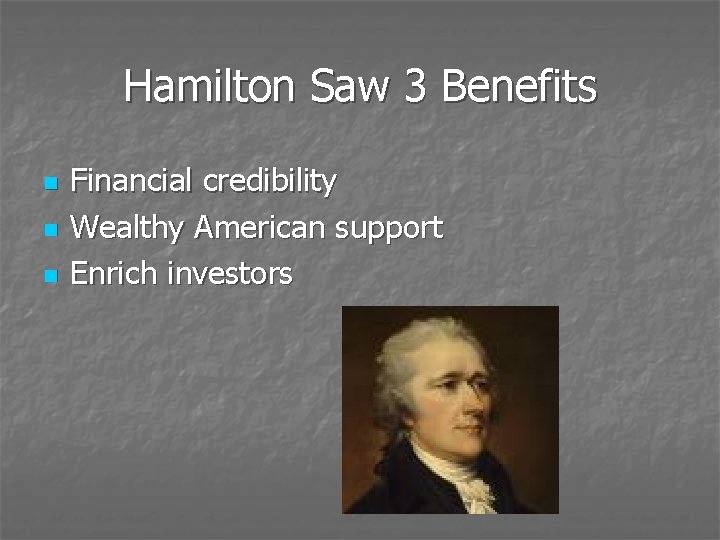
Hamilton Saw 3 Benefits n n n Financial credibility Wealthy American support Enrich investors
Opposition to Hamilton’s Plan n Southern States… Squabbling in the Cabinet Jefferson and Madison
Interpretation of the Constitution n Federalists n n Loose construction Anti-Federalists n Strict construction
To Generate Revenue n n Excise Tax Protective Tariff
The Whiskey Rebellion
Political Parties Formed n n Federalists… Hamilton and Adams Democratic-Republicans… Jefferson and Madison
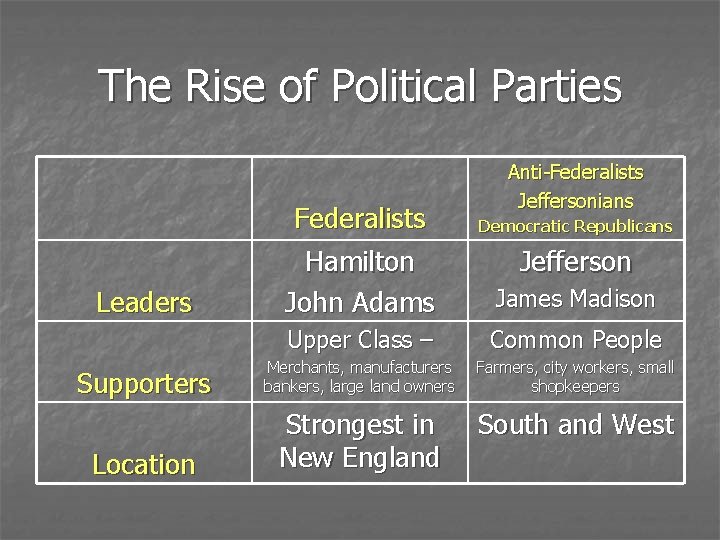
The Rise of Political Parties Federalists Anti-Federalists Jeffersonians Democratic Republicans Hamilton John Adams James Madison Upper Class – Common People Supporters Merchants, manufacturers bankers, large land owners Farmers, city workers, small shopkeepers South and West Location Strongest in New England Leaders Jefferson
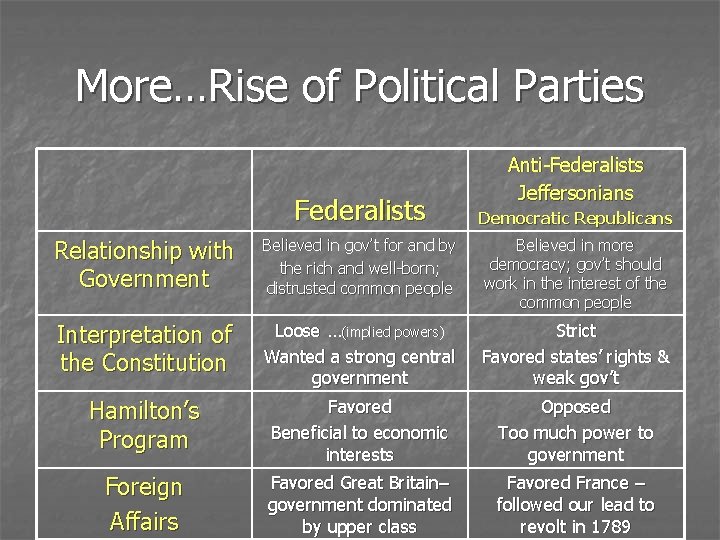
More…Rise of Political Parties Federalists Anti-Federalists Jeffersonians Democratic Republicans Relationship with Government Believed in gov’t for and by the rich and well-born; distrusted common people Believed in more democracy; gov’t should work in the interest of the common people Interpretation of the Constitution Loose …(implied powers) Wanted a strong central government Strict Favored states’ rights & weak gov’t Hamilton’s Program Favored Beneficial to economic interests Opposed Too much power to government Foreign Affairs Favored Great Britain– government dominated by upper class Favored France – followed our lead to revolt in 1789
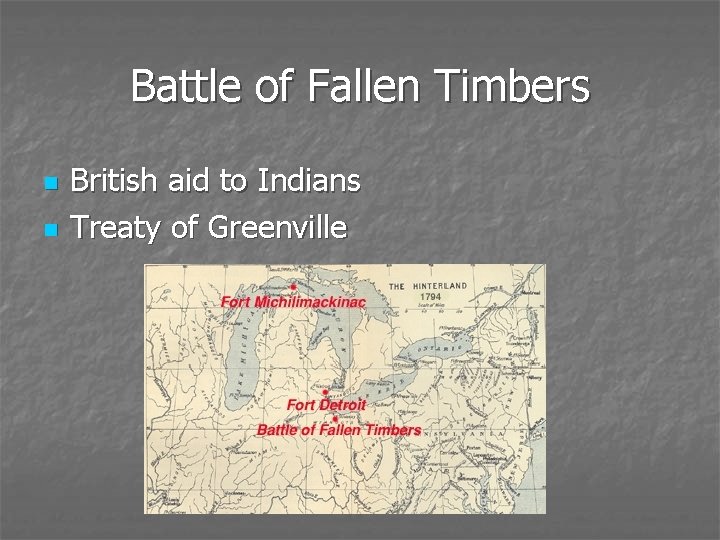
Battle of Fallen Timbers n n British aid to Indians Treaty of Greenville
War in Europe…Again! n n GB and France Americans uncertain of position
French Revolution 1789 n n Initial American support European influence on Federalists n On Anti-Federalists n n US too weak to fight
Washington’s Decision n n Declaration of Neutrality – 1793 Trouble in the Cabinet
War between France and GB n n n Violated “Freedom of the Seas” Impressment GB still in American Northwest
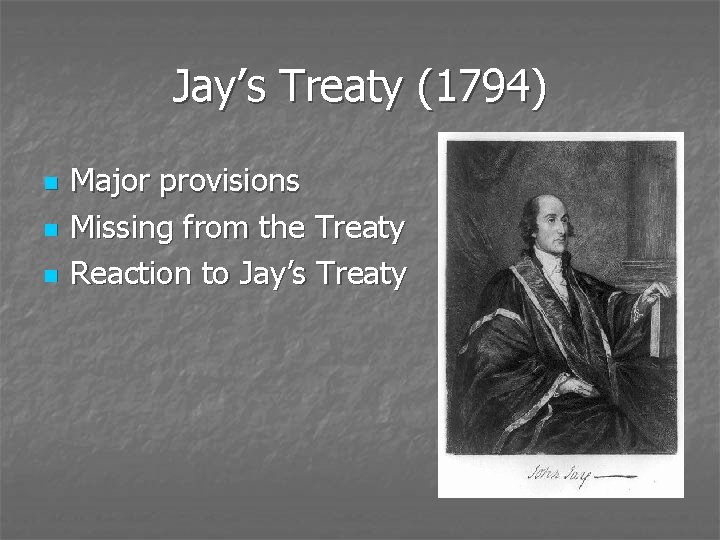
Jay’s Treaty (1794) n n n Major provisions Missing from the Treaty Reaction to Jay’s Treaty
Pinckney’s Treaty (1795) a. k. a…Treaty of San Lorenzo n n n Navigation of Mississippi Right of Deposit American triumph
Jay’s Treaty Pinckney’s Treaty… Treaty of San Lorenzo
Americans Moved West n n n Jay’s Treaty Pinckney’s Treaty Battle of Fallen Timbers
Washington’s Farewell Address n n 2 term precedent NO political parties NO entangling alliances Non-Involvement
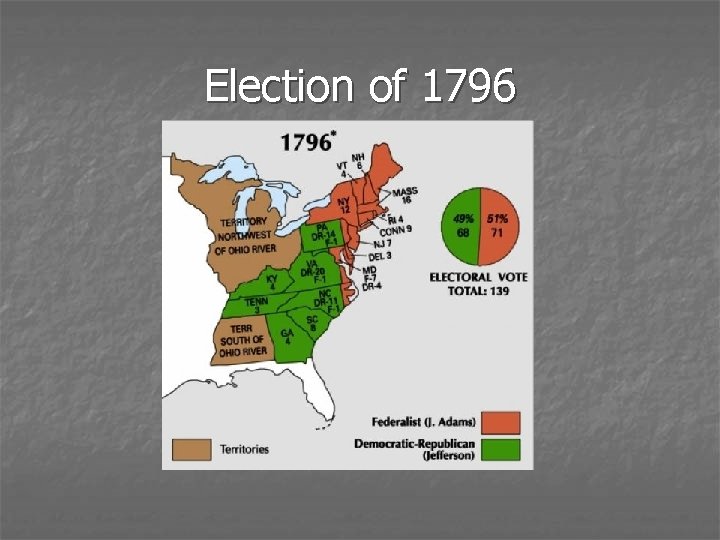
Election of 1796
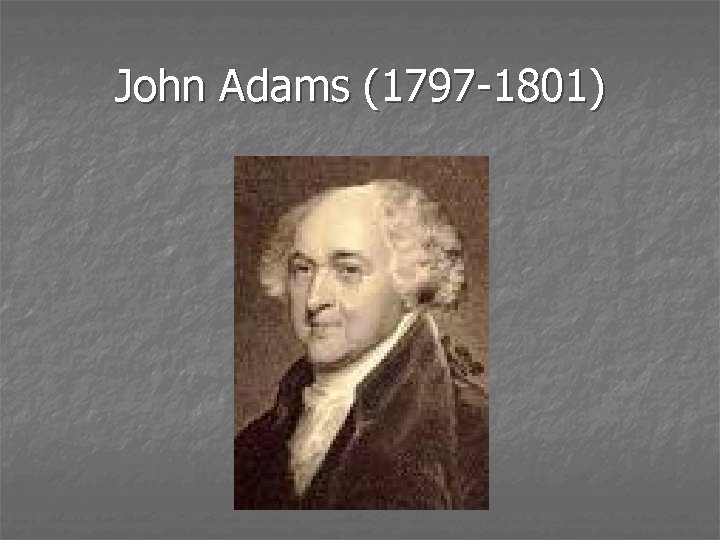
John Adams (1797 -1801)
The French are MAD! n n Proclamation of Neutrality Jay Treaty
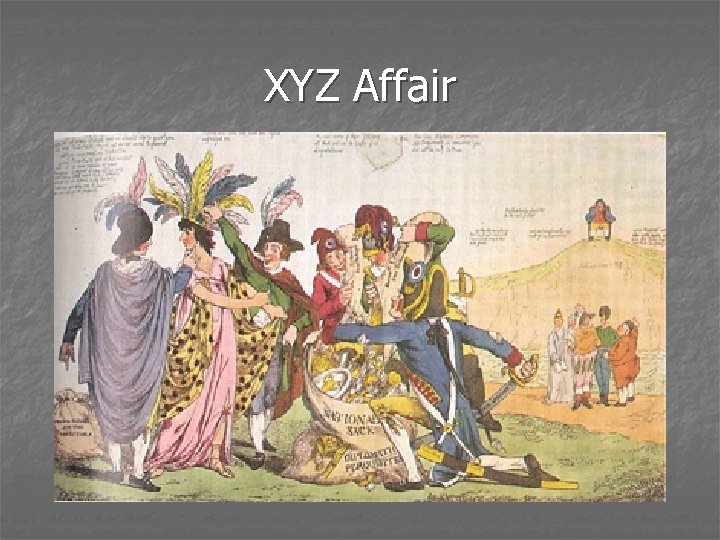
XYZ Affair
Naturalization Act n n Increased immigrant waiting period from 5 to 14 years What party did this hurt? ? ?
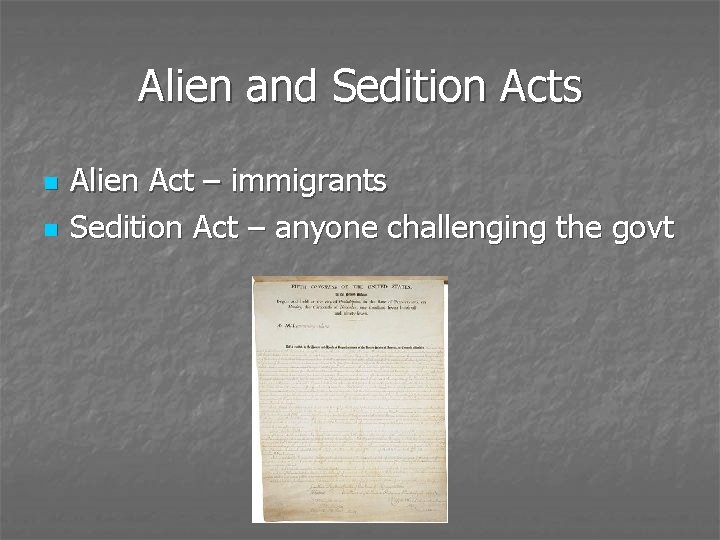
Alien and Sedition Acts n n Alien Act – immigrants Sedition Act – anyone challenging the govt
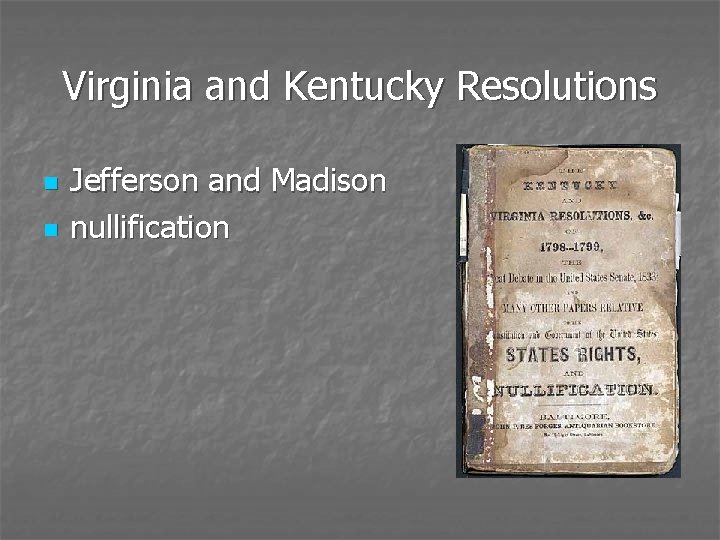
Virginia and Kentucky Resolutions n n Jefferson and Madison nullification

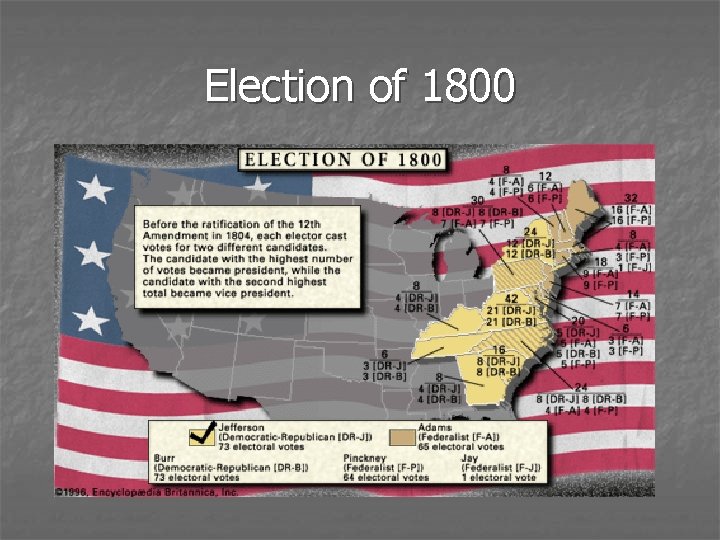
Election of 1800
Federalist Party Died Out n Summary of Federalist era
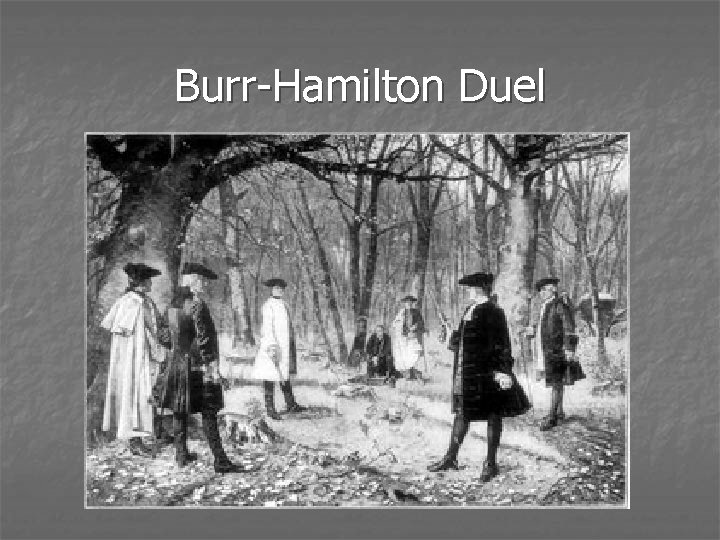
Burr-Hamilton Duel
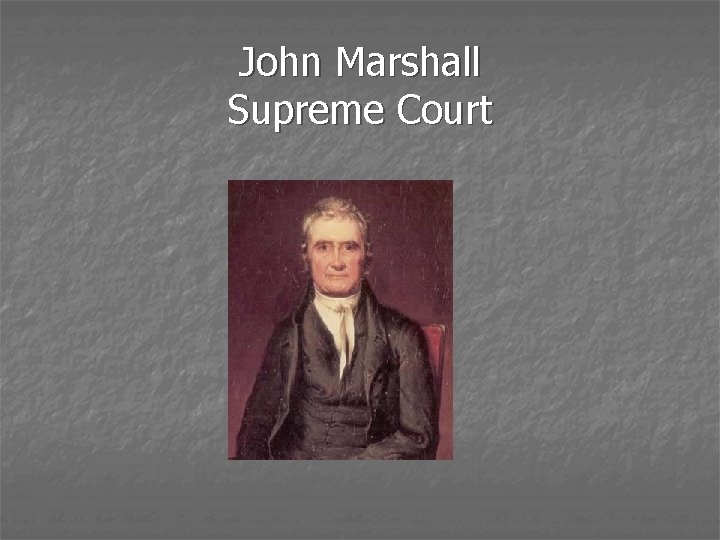
John Marshall Supreme Court
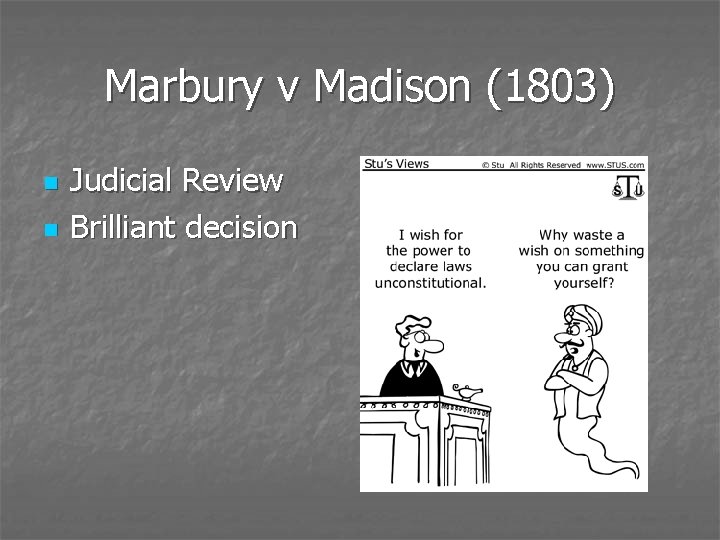
Marbury v Madison (1803) n n Judicial Review Brilliant decision
Marbury v Madison
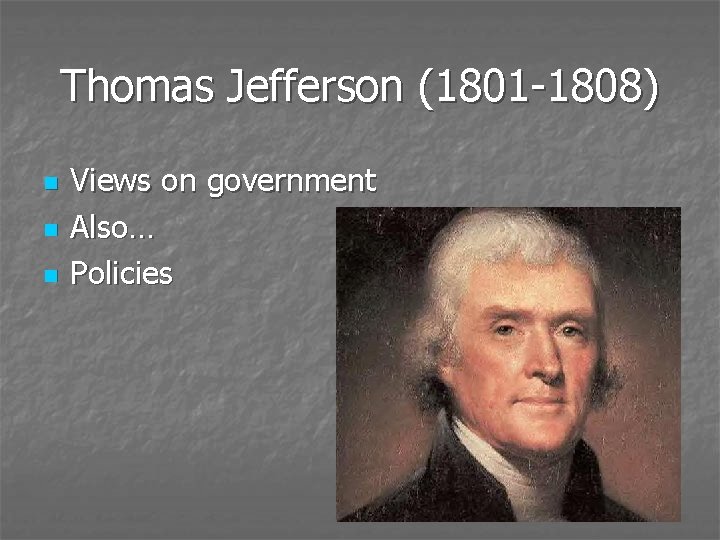
Thomas Jefferson (1801 -1808) n n n Views on government Also… Policies
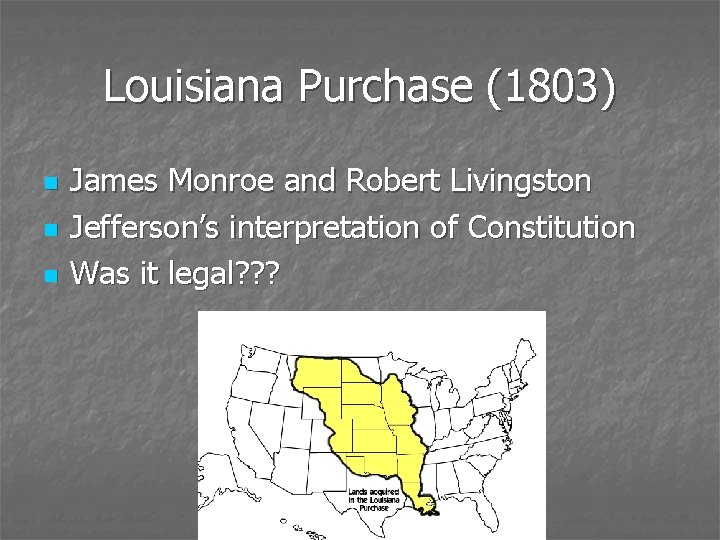
Louisiana Purchase (1803) n n n James Monroe and Robert Livingston Jefferson’s interpretation of Constitution Was it legal? ? ?
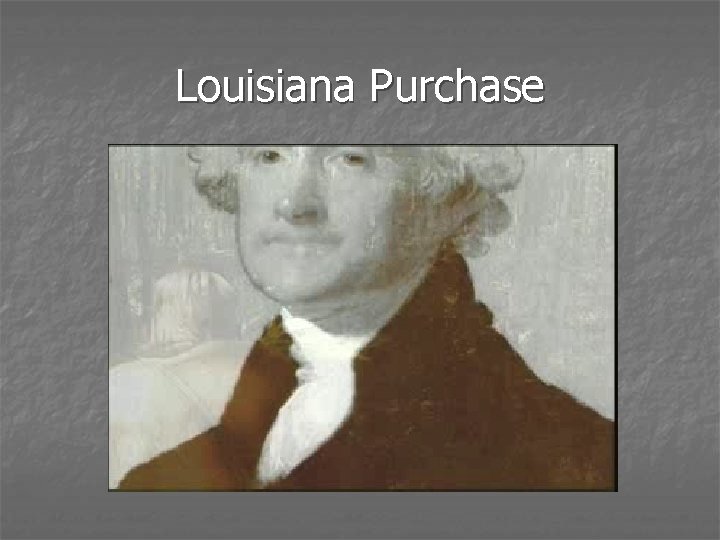
Louisiana Purchase
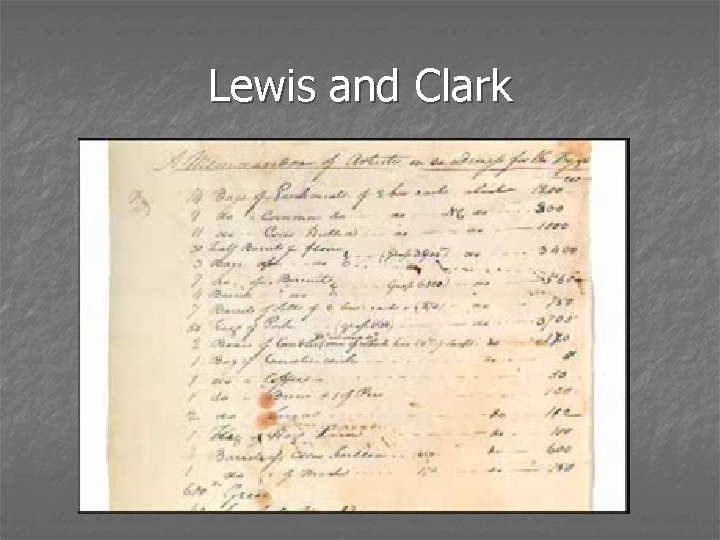
Lewis and Clark
War in Europe’s Effect on the US n n n Trade Impressments Chesapeake-Leopard Affair
Embargo Act and the Non-Intercourse Act n Embargo … n n didn’t hurt Europe much Non-Intercourse Act… n bidding for our support
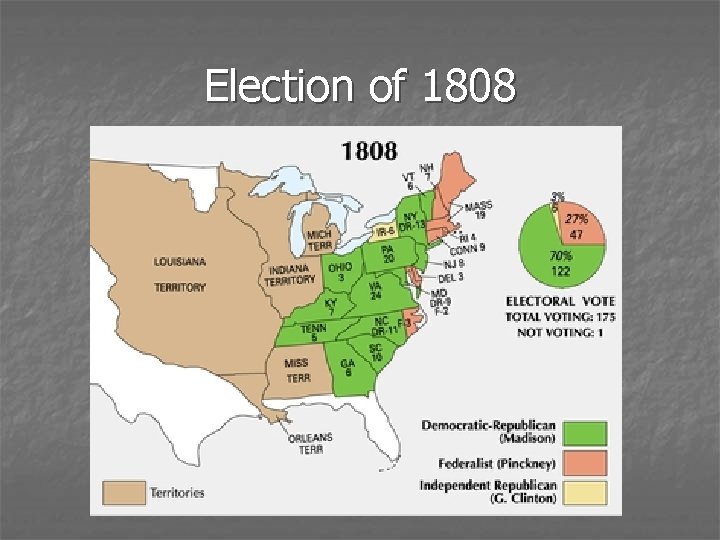
Election of 1808
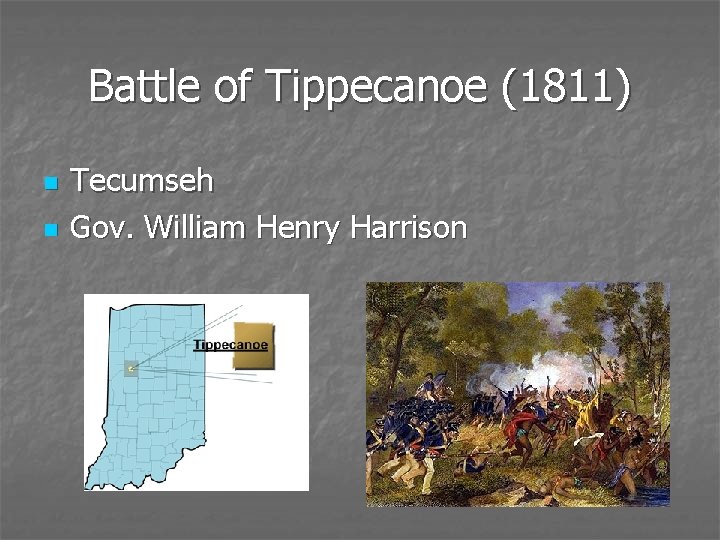
Battle of Tippecanoe (1811) n n Tecumseh Gov. William Henry Harrison
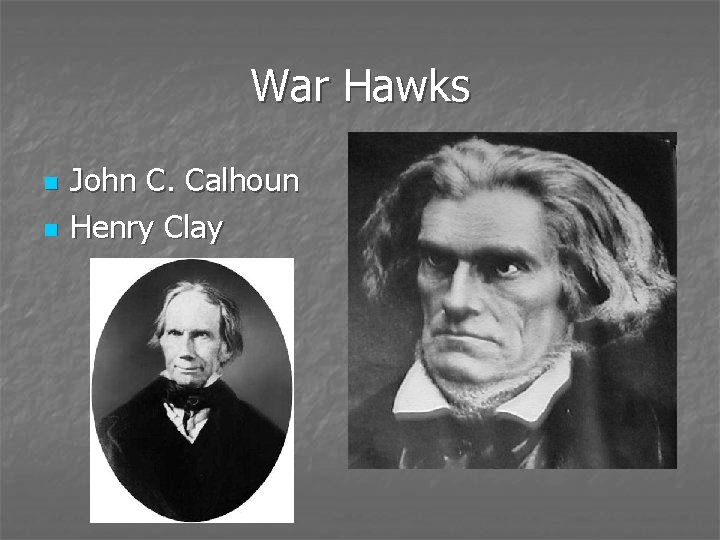
War Hawks n n John C. Calhoun Henry Clay
Causes of the War of 1812 n n n Interference with trade Impressment Support of Indian attacks
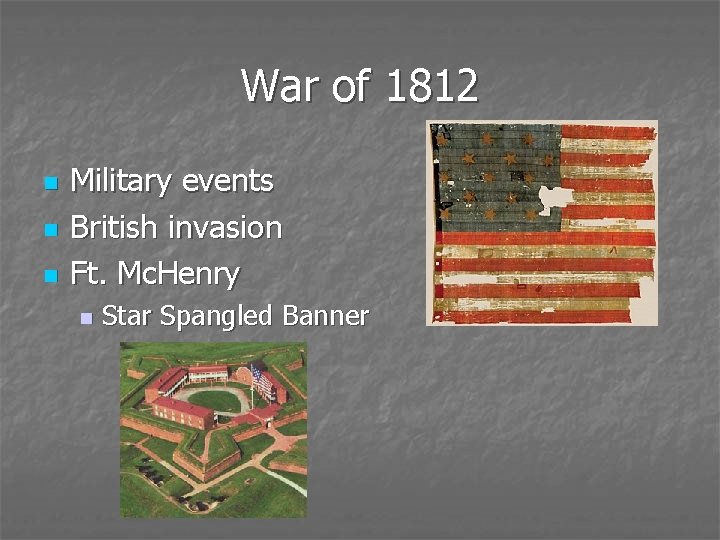
War of 1812 n n n Military events British invasion Ft. Mc. Henry n Star Spangled Banner
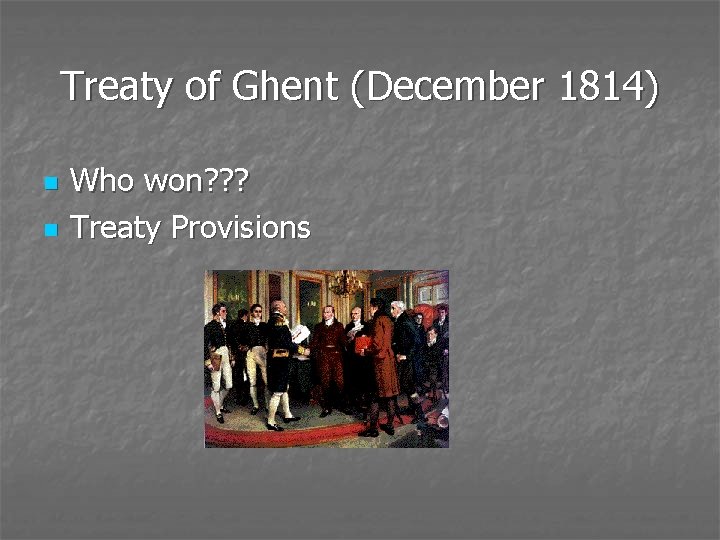
Treaty of Ghent (December 1814) n n Who won? ? ? Treaty Provisions
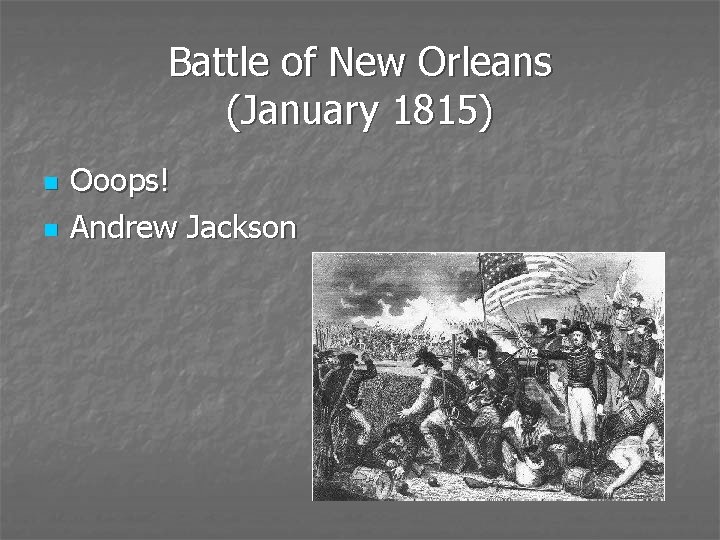
Battle of New Orleans (January 1815) n n Ooops! Andrew Jackson
Results of the War of 1812 n n n Nationalism Isolation Westward Expansion
n Hartford Convention (1814) n Adams-Onis Treaty (1819)
Chapter 7 Nationalism and Sectionalism 1812 -1855
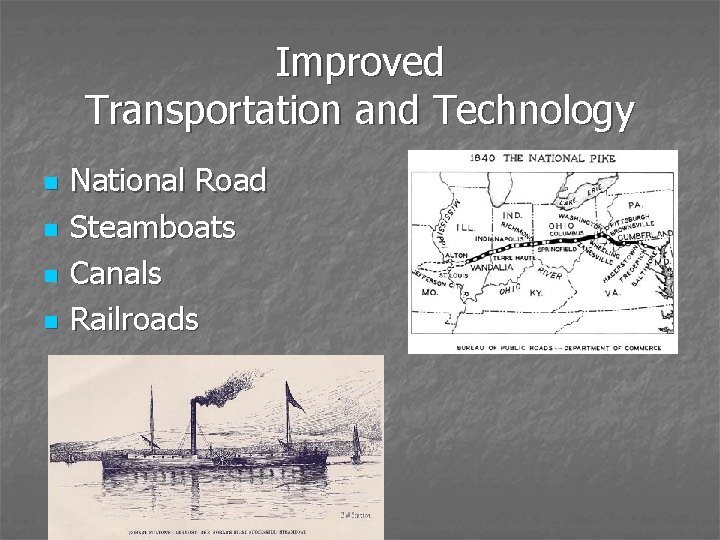
Improved Transportation and Technology n n National Road Steamboats Canals Railroads
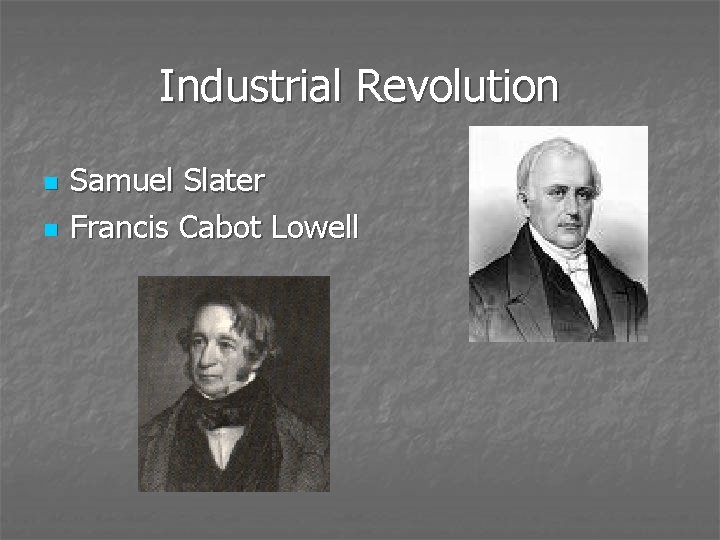
Industrial Revolution n n Samuel Slater Francis Cabot Lowell
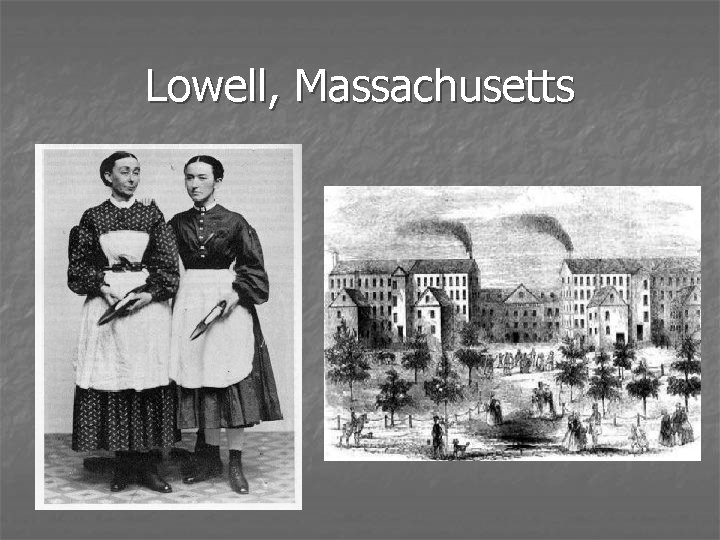
Lowell, Massachusetts
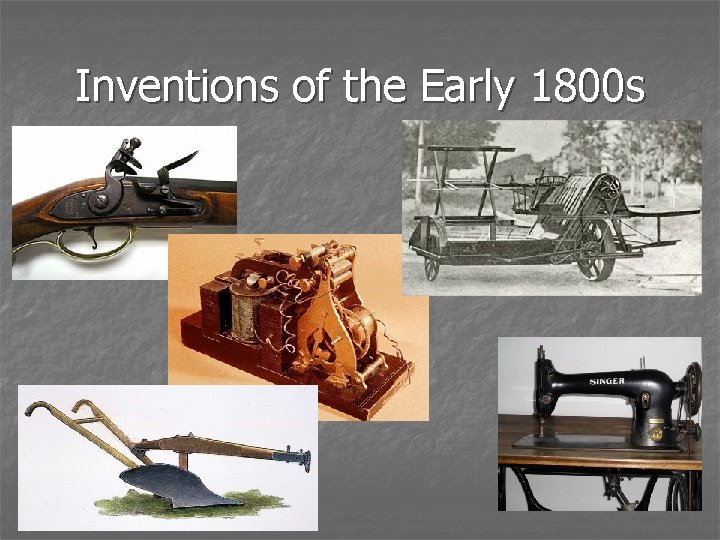
Inventions of the Early 1800 s
n n Why did industrialization spread? ? ? Why did manufacturing begin in the North? ? ?
Industry Reduced Skilled Jobs n n n Workers organized Middle class Emigration
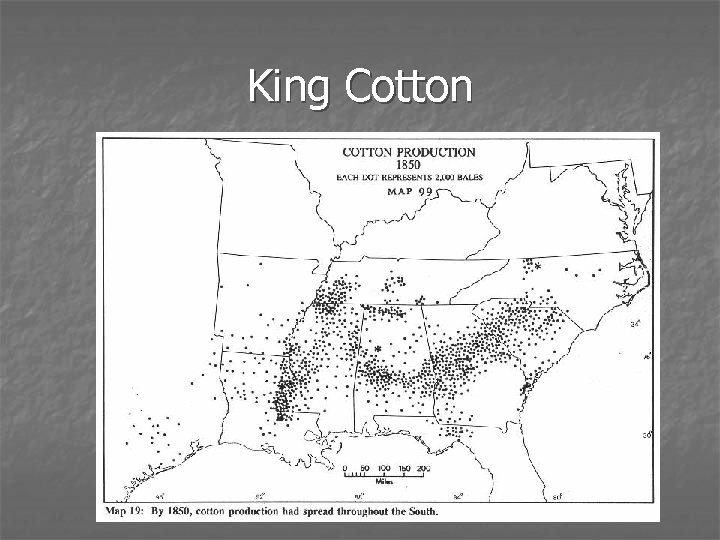
King Cotton
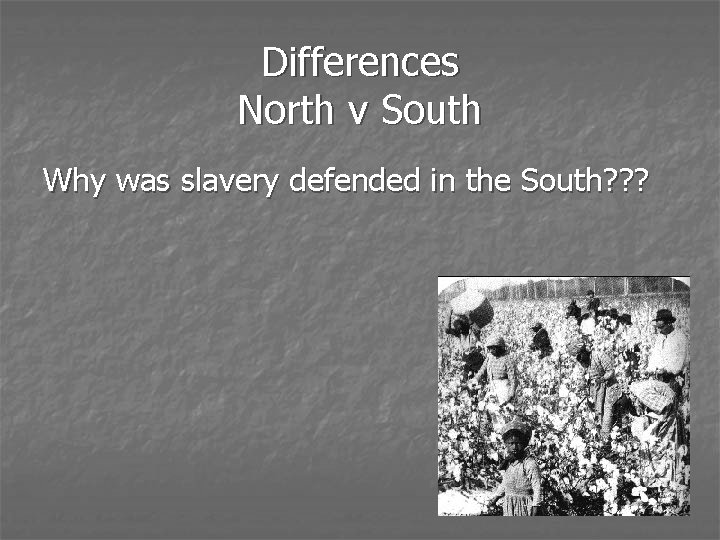
Differences North v South Why was slavery defended in the South? ? ?
Era of Good Feelings n n James Monroe – 2 nd term American System
Marshall’s Other Famous Cases n Marbury v Madison n Mc. Culloch v Maryland n Gibbons v Ogden
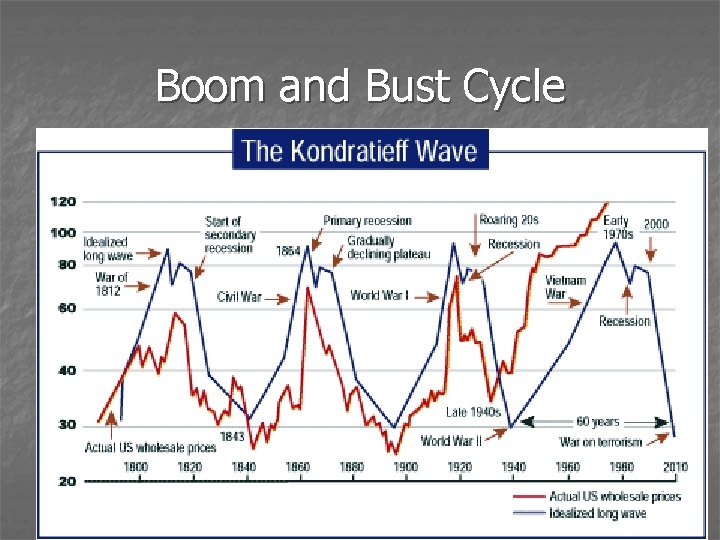
Boom and Bust Cycle
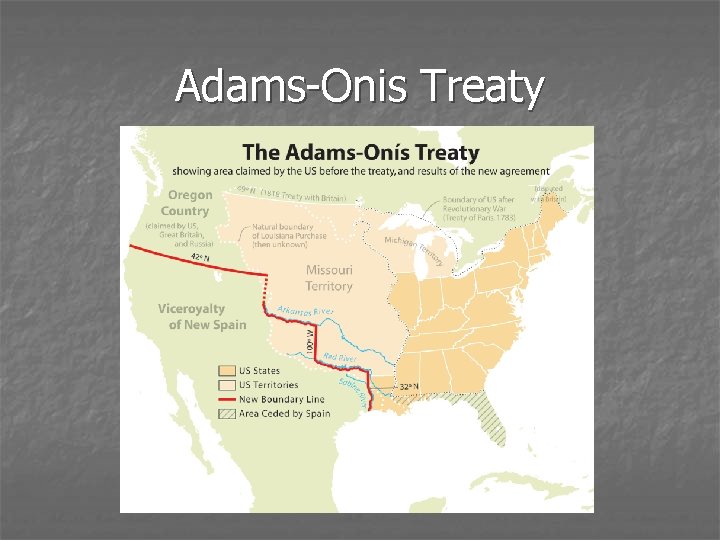
Adams-Onis Treaty
Monroe Doctrine
Missouri Compromise… Result of Regional Differences
Election of 1824
Election of 1828
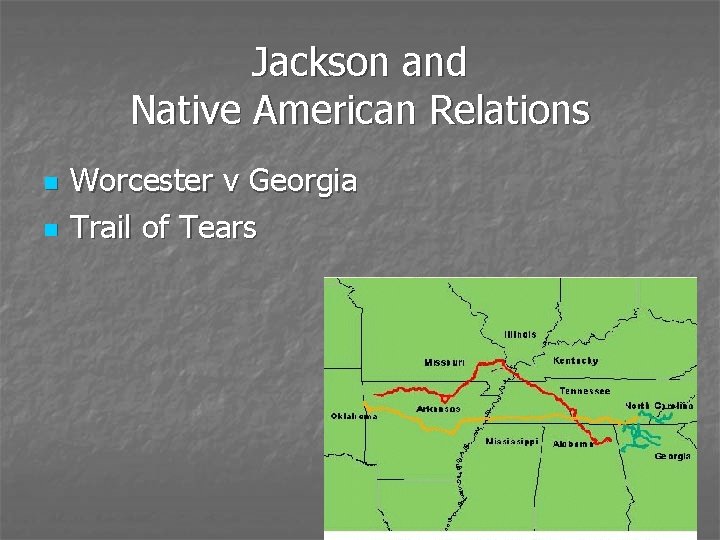
Jackson and Native American Relations n n Worcester v Georgia Trail of Tears
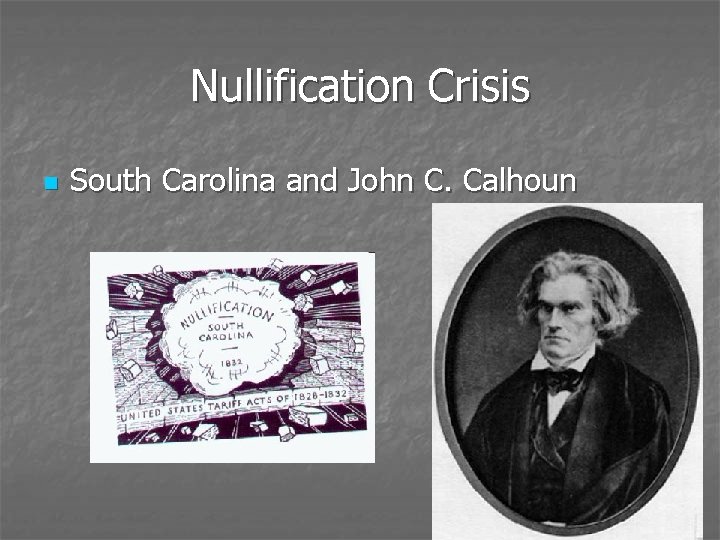
Nullification Crisis n South Carolina and John C. Calhoun
The Whig Party n n n Formed over Bank Controversy Henry Clay and Daniel Webster Whigs v Jacksonian Democrats

Election of 1832
n Martin Van Buren (1836) n William Henry Harrison (1840) n John Tyler (1840…after Harrison’s death)
- Slides: 78