
Chapter 6 The Flow of Food Purchasing Receiving

- Slides: 12
Chapter 6 The Flow of Food: Purchasing, Receiving, and Storage
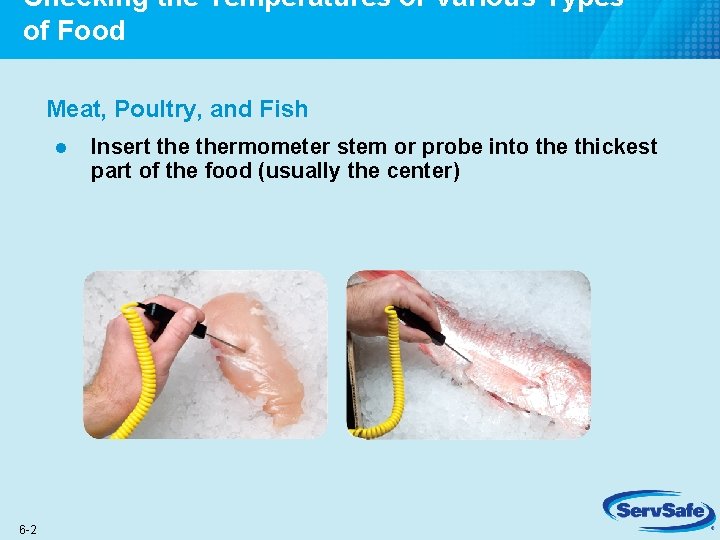
Checking the Temperatures of Various Types of Food Meat, Poultry, and Fish l 6 -2 Insert thermometer stem or probe into the thickest part of the food (usually the center)
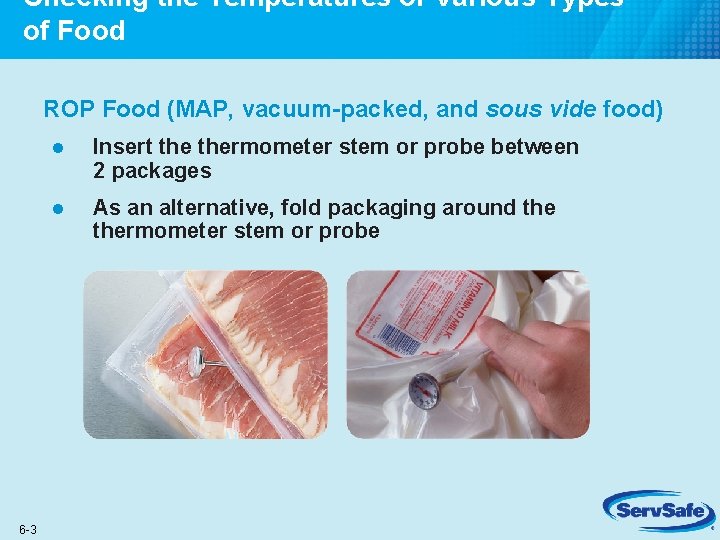
Checking the Temperatures of Various Types of Food ROP Food (MAP, vacuum-packed, and sous vide food) 6 -3 l Insert thermometer stem or probe between 2 packages l As an alternative, fold packaging around thermometer stem or probe
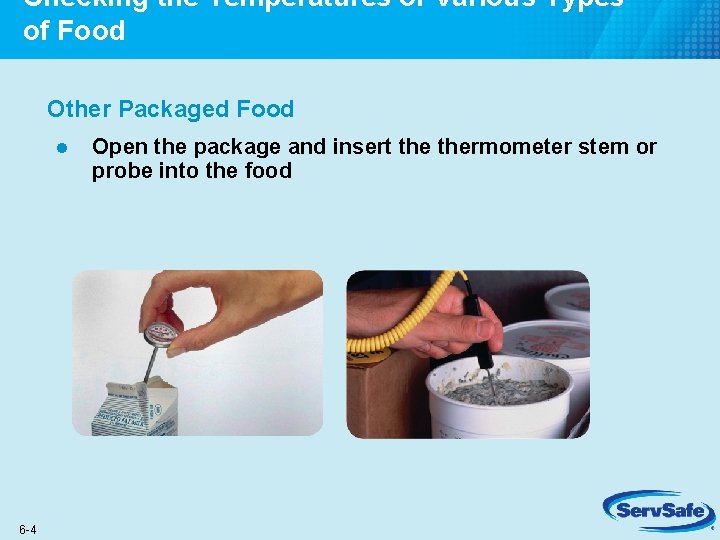
Checking the Temperatures of Various Types of Food Other Packaged Food l 6 -4 Open the package and insert thermometer stem or probe into the food
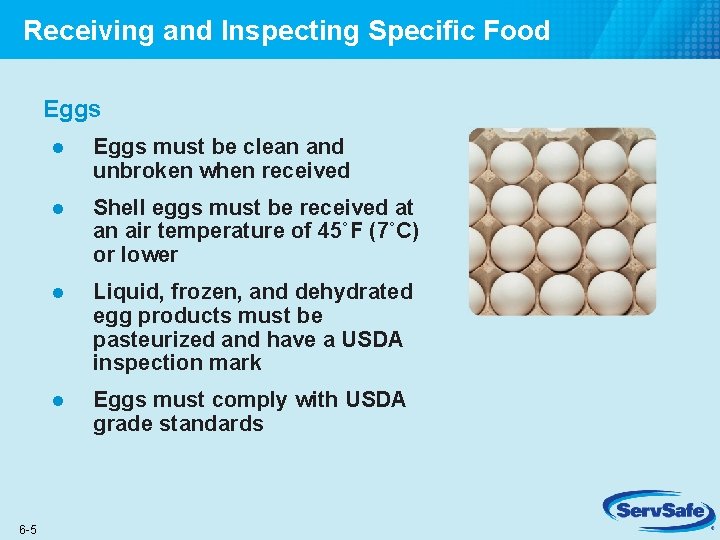
Receiving and Inspecting Specific Food Eggs 6 -5 l Eggs must be clean and unbroken when received l Shell eggs must be received at an air temperature of 45˚F (7˚C) or lower l Liquid, frozen, and dehydrated egg products must be pasteurized and have a USDA inspection mark l Eggs must comply with USDA grade standards
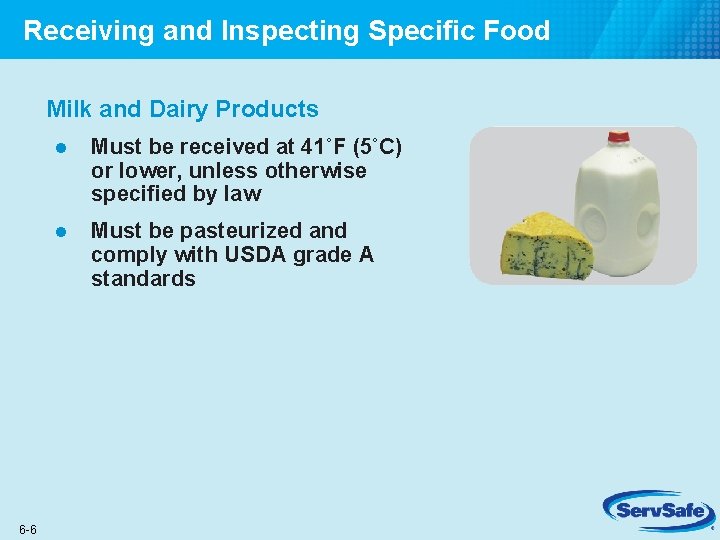
Receiving and Inspecting Specific Food Milk and Dairy Products 6 -6 l Must be received at 41˚F (5˚C) or lower, unless otherwise specified by law l Must be pasteurized and comply with USDA grade A standards
Receiving and Inspecting Specific Food Shellfish—Raw Shucked l 6 -7 Must be packaged in nonreturnable containers § Containers must be labeled with the packer’s name, address, and certification number § Containers smaller than one-half gallon (1. 9 L) must have a “best if used by” or “sell by” date § Containers bigger than one-half gallon (1. 9 L) must have the date the shellfish were shucked
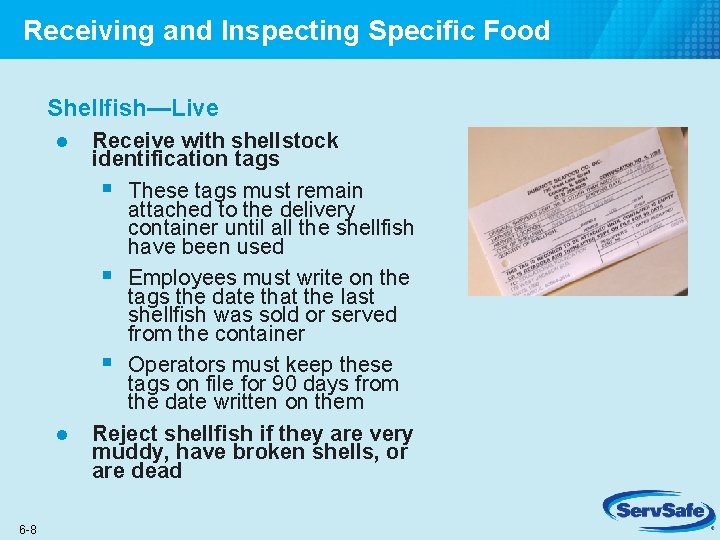
Receiving and Inspecting Specific Food Shellfish—Live l l 6 -8 Receive with shellstock identification tags § These tags must remain attached to the delivery container until all the shellfish have been used § Employees must write on the tags the date that the last shellfish was sold or served from the container § Operators must keep these tags on file for 90 days from the date written on them Reject shellfish if they are very muddy, have broken shells, or are dead
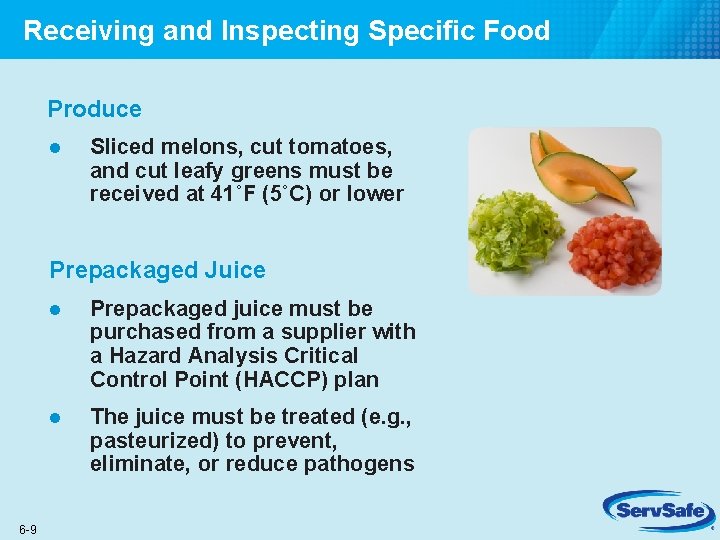
Receiving and Inspecting Specific Food Produce l Sliced melons, cut tomatoes, and cut leafy greens must be received at 41˚F (5˚C) or lower Prepackaged Juice 6 -9 l Prepackaged juice must be purchased from a supplier with a Hazard Analysis Critical Control Point (HACCP) plan l The juice must be treated (e. g. , pasteurized) to prevent, eliminate, or reduce pathogens
Chapter 6 Storage
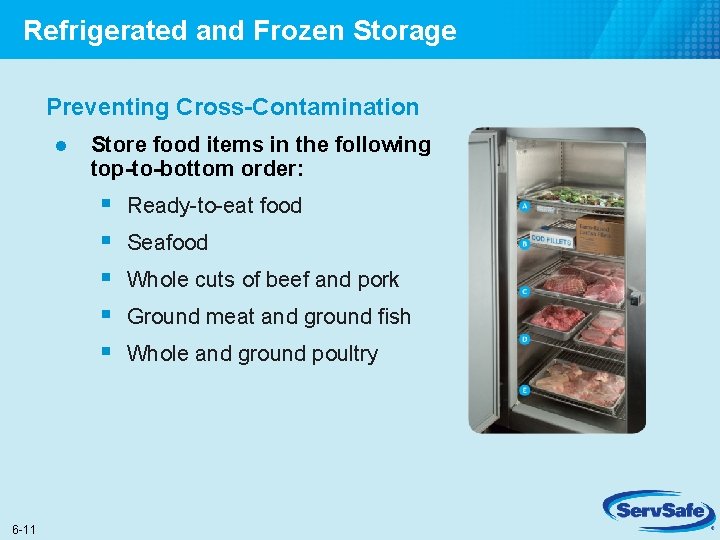
Refrigerated and Frozen Storage Preventing Cross-Contamination l Store food items in the following top-to-bottom order: § § § 6 -11 Ready-to-eat food Seafood Whole cuts of beef and pork Ground meat and ground fish Whole and ground poultry