
Chapter 6 The Expansion of Industry Technological Revolution
- Slides: 30
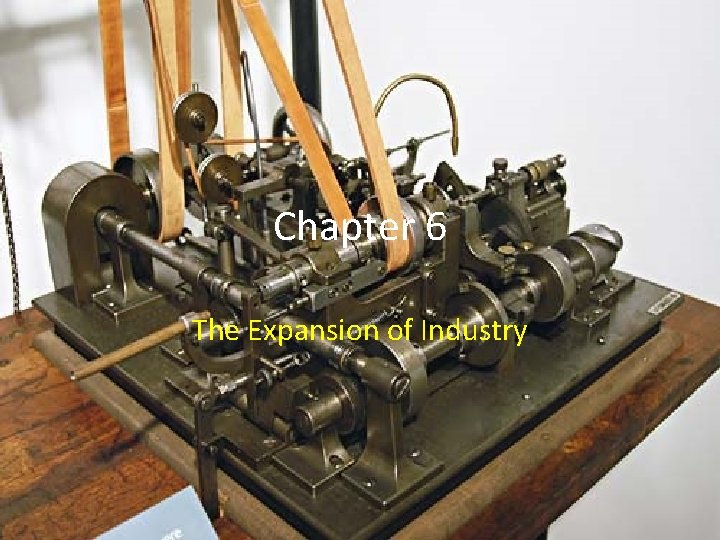
Chapter 6 The Expansion of Industry
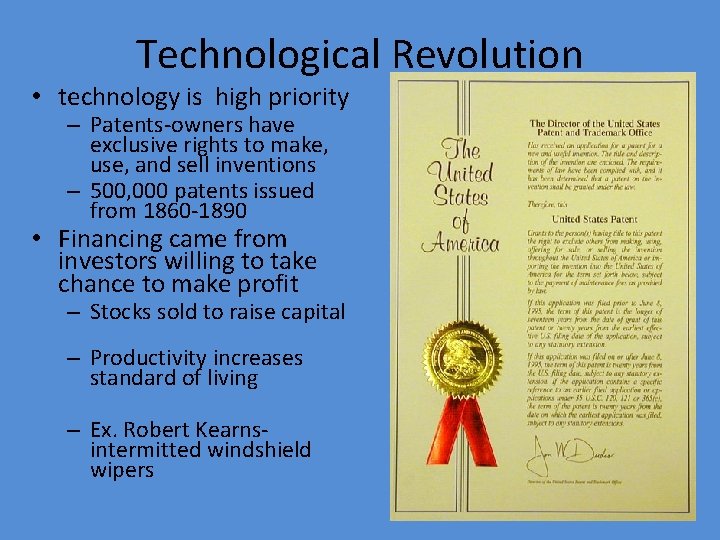
Technological Revolution • technology is high priority – Patents-owners have exclusive rights to make, use, and sell inventions – 500, 000 patents issued from 1860 -1890 • Financing came from investors willing to take chance to make profit – Stocks sold to raise capital – Productivity increases standard of living – Ex. Robert Kearnsintermitted windshield wipers
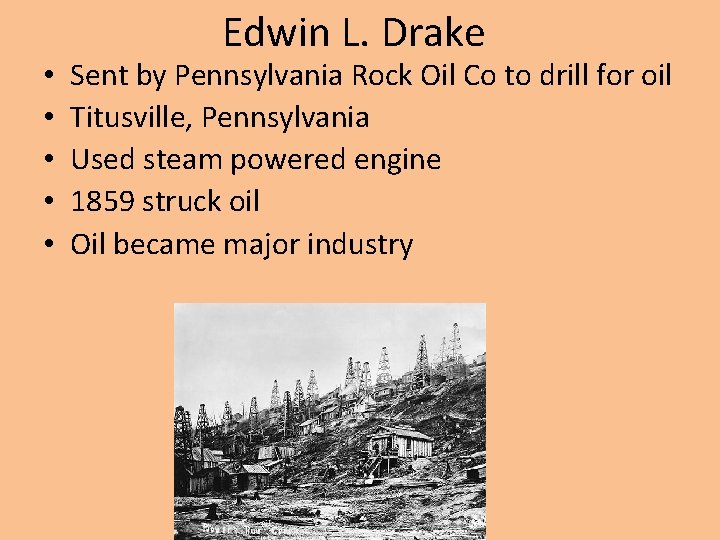
• • • Edwin L. Drake Sent by Pennsylvania Rock Oil Co to drill for oil Titusville, Pennsylvania Used steam powered engine 1859 struck oil Oil became major industry
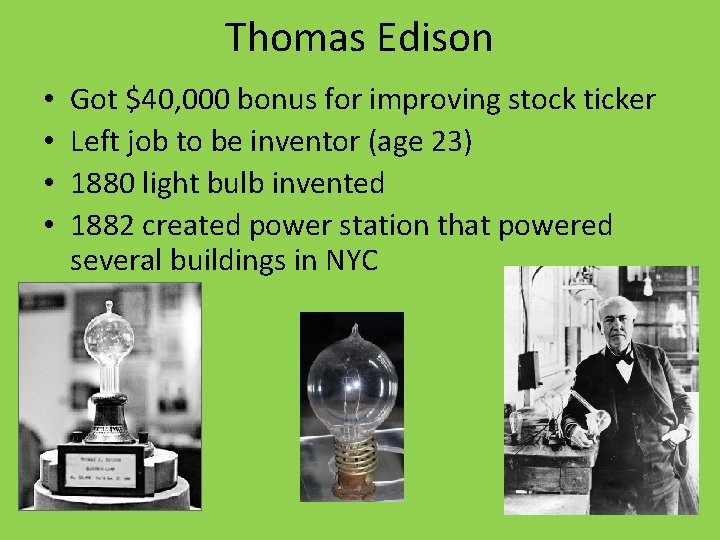
Thomas Edison • • Got $40, 000 bonus for improving stock ticker Left job to be inventor (age 23) 1880 light bulb invented 1882 created power station that powered several buildings in NYC
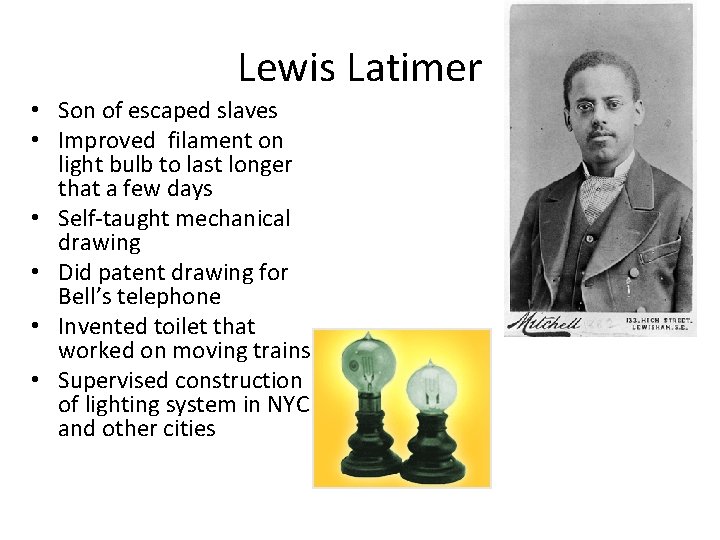
Lewis Latimer • Son of escaped slaves • Improved filament on light bulb to last longer that a few days • Self-taught mechanical drawing • Did patent drawing for Bell’s telephone • Invented toilet that worked on moving trains • Supervised construction of lighting system in NYC and other cities
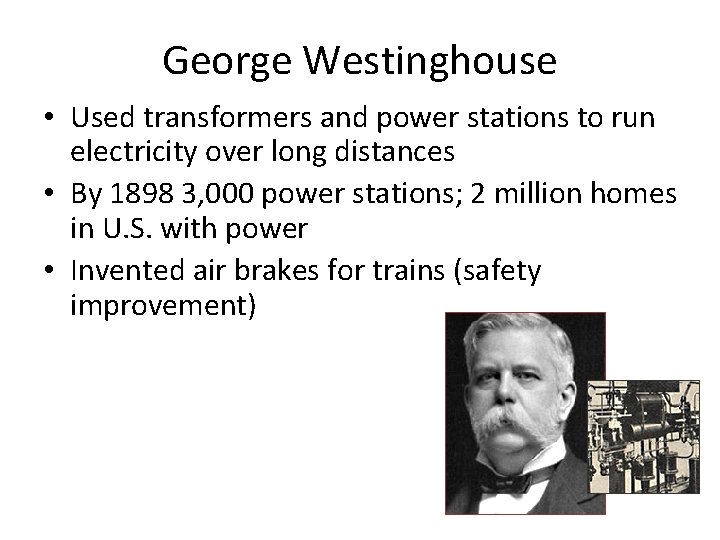
George Westinghouse • Used transformers and power stations to run electricity over long distances • By 1898 3, 000 power stations; 2 million homes in U. S. with power • Invented air brakes for trains (safety improvement)
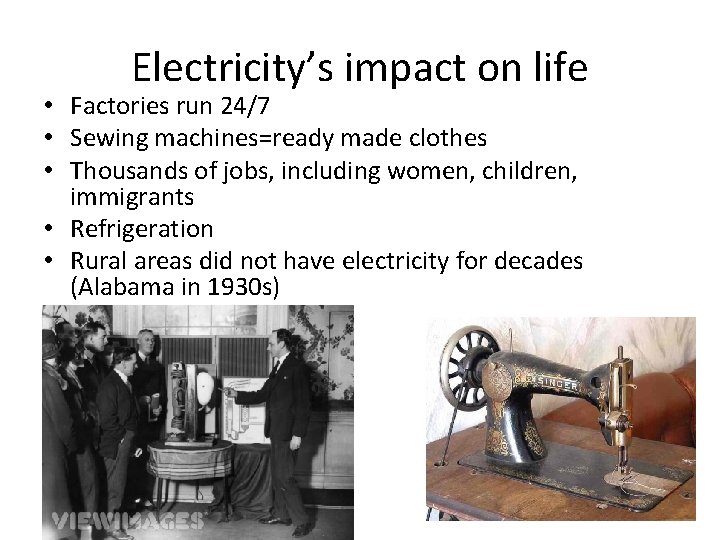
Electricity’s impact on life • Factories run 24/7 • Sewing machines=ready made clothes • Thousands of jobs, including women, children, immigrants • Refrigeration • Rural areas did not have electricity for decades (Alabama in 1930 s)
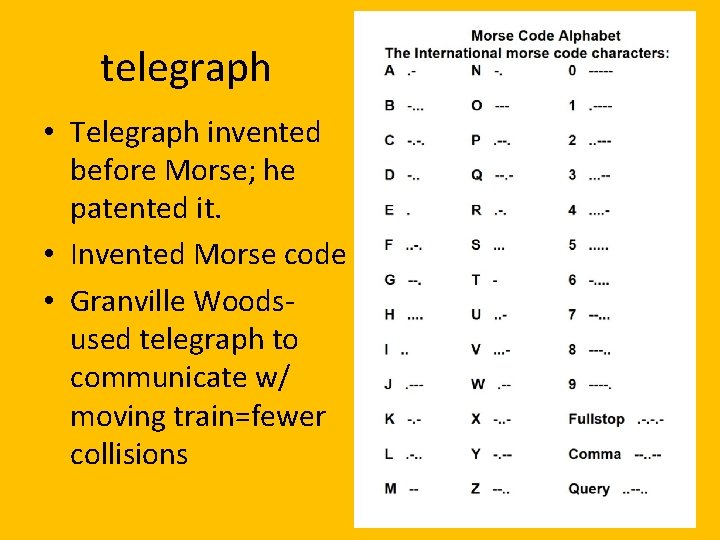
telegraph • Telegraph invented before Morse; he patented it. • Invented Morse code • Granville Woodsused telegraph to communicate w/ moving train=fewer collisions
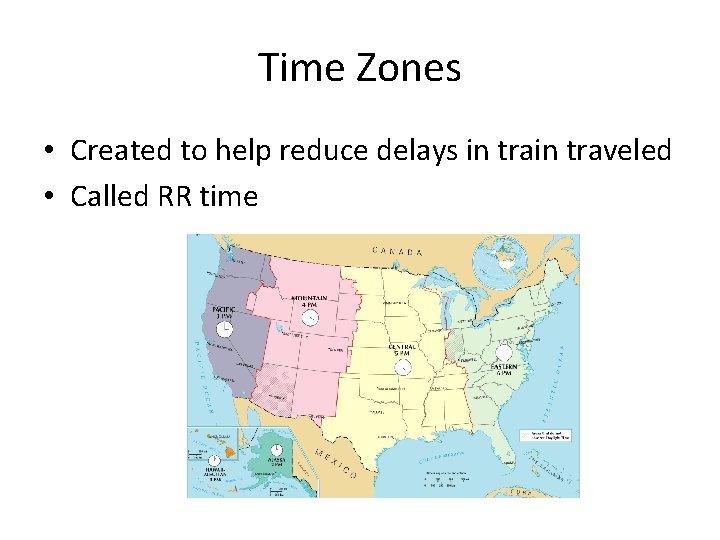
Time Zones • Created to help reduce delays in traveled • Called RR time
Railroads and industry • Faster and practical-higher speeds/move more goods • Lowered cost of production-received raw materials and transported finished products quicker • Created national markets Model for big business • Stimulation of other industries-ex. Iron rail for steel rails
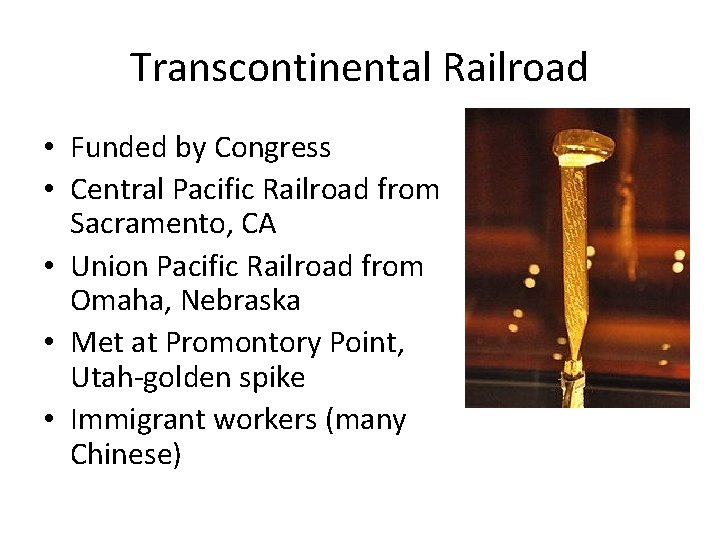
Transcontinental Railroad • Funded by Congress • Central Pacific Railroad from Sacramento, CA • Union Pacific Railroad from Omaha, Nebraska • Met at Promontory Point, Utah-golden spike • Immigrant workers (many Chinese)
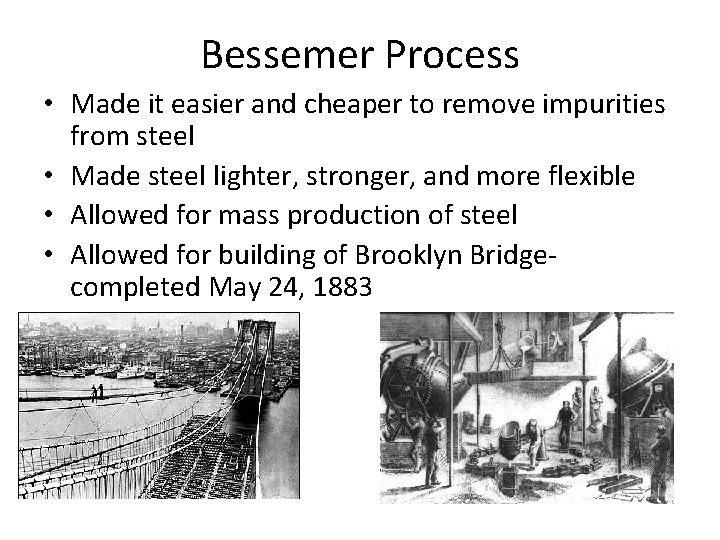
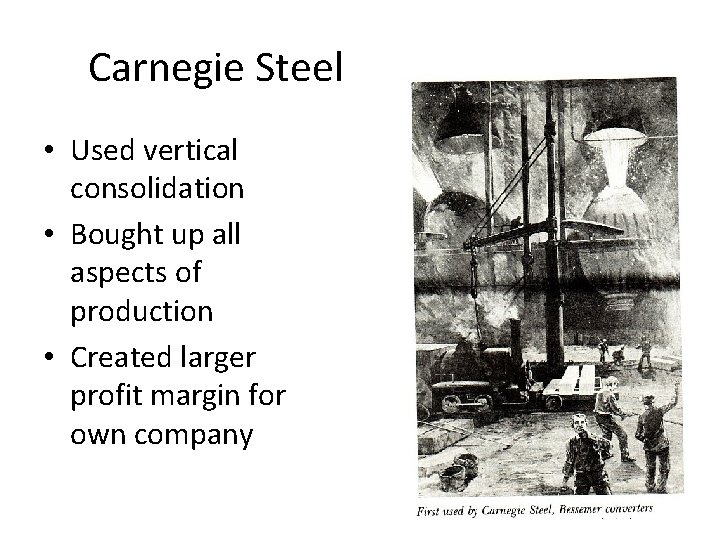
Bessemer Process • Made it easier and cheaper to remove impurities from steel • Made steel lighter, stronger, and more flexible • Allowed for mass production of steel • Allowed for building of Brooklyn Bridgecompleted May 24, 1883
Section 2 The Growth of Big Business
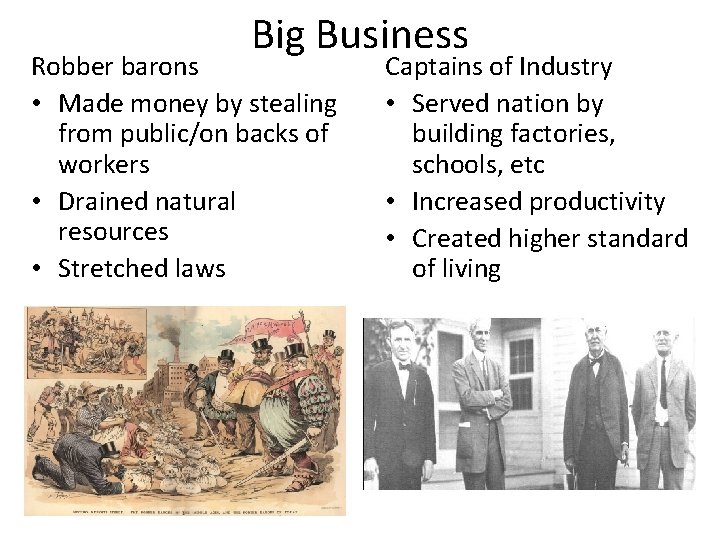
Big Business Robber barons • Made money by stealing from public/on backs of workers • Drained natural resources • Stretched laws Captains of Industry • Served nation by building factories, schools, etc • Increased productivity • Created higher standard of living
Andrew Carnegie’s Gospel of Wealth • Make as much money as you can and then give it away • 80% of his wealth went toward some form of education • Funded over 3000 free public libraries • Gave over $350 million away during lifetime
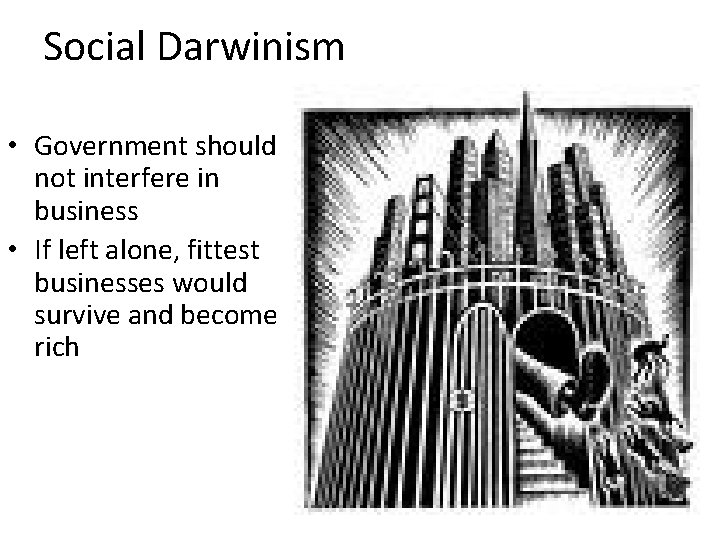
Social Darwinism • Government should not interfere in business • If left alone, fittest businesses would survive and become rich
Carnegie Steel • Used vertical consolidation • Bought up all aspects of production • Created larger profit margin for own company
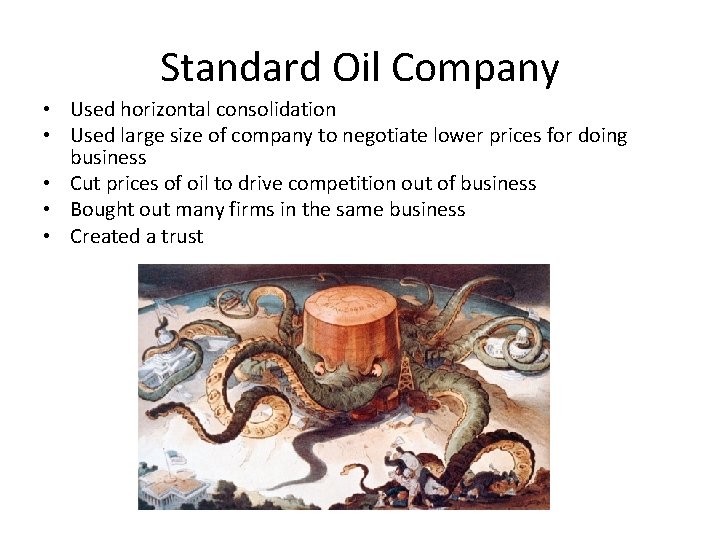
Standard Oil Company • Used horizontal consolidation • Used large size of company to negotiate lower prices for doing business • Cut prices of oil to drive competition out of business • Bought out many firms in the same business • Created a trust
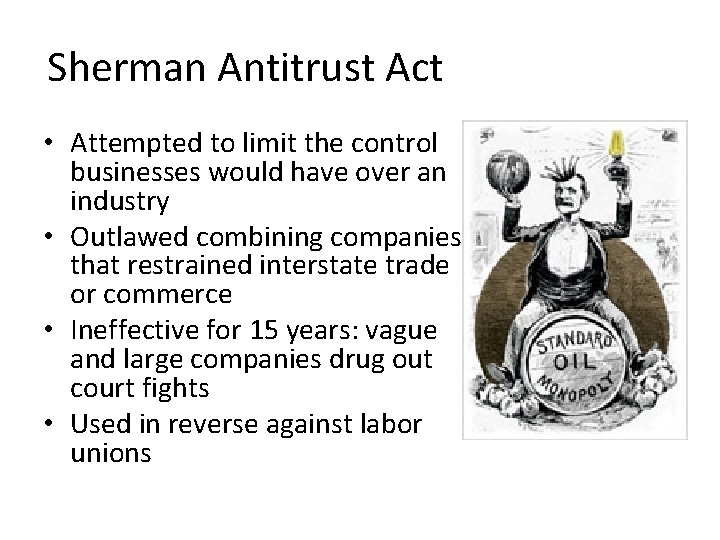
Sherman Antitrust Act • Attempted to limit the control businesses would have over an industry • Outlawed combining companies that restrained interstate trade or commerce • Ineffective for 15 years: vague and large companies drug out court fights • Used in reverse against labor unions
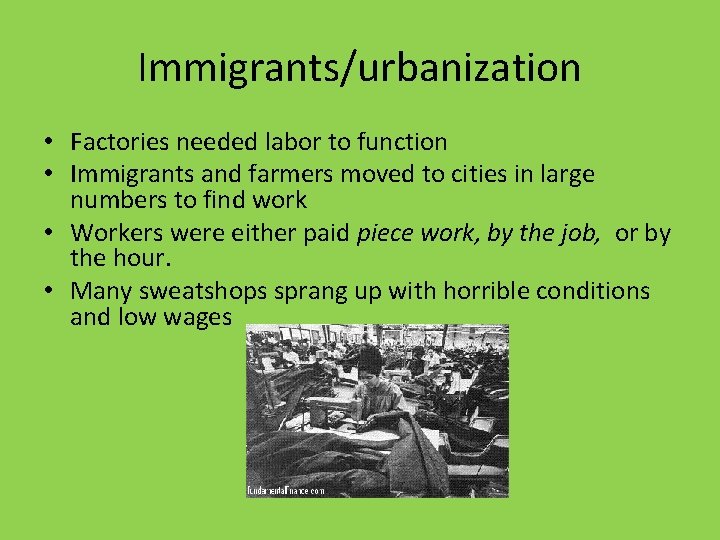
Immigrants/urbanization • Factories needed labor to function • Immigrants and farmers moved to cities in large numbers to find work • Workers were either paid piece work, by the job, or by the hour. • Many sweatshops sprang up with horrible conditions and low wages
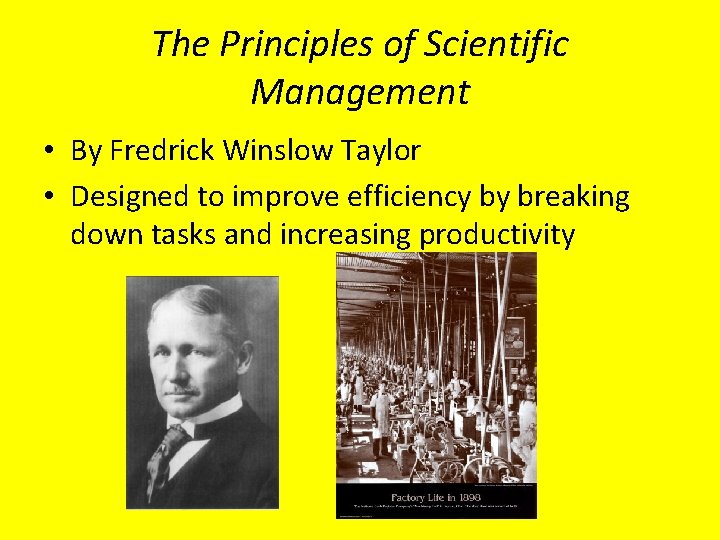
The Principles of Scientific Management • By Fredrick Winslow Taylor • Designed to improve efficiency by breaking down tasks and increasing productivity
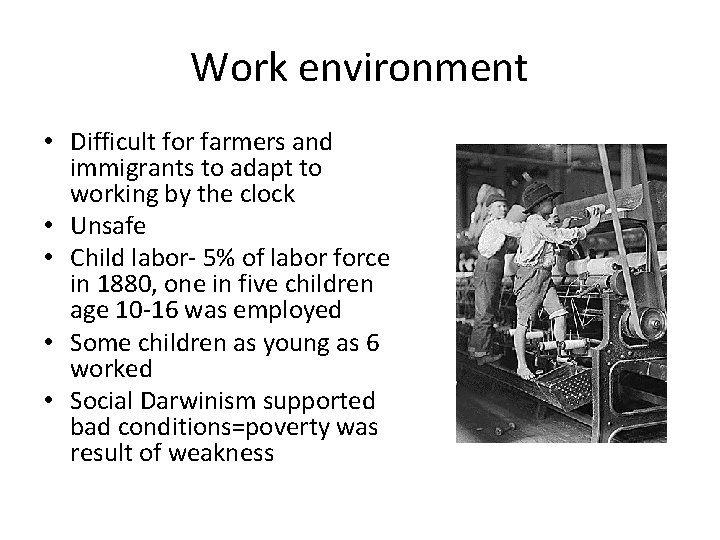
Work environment • Difficult for farmers and immigrants to adapt to working by the clock • Unsafe • Child labor- 5% of labor force in 1880, one in five children age 10 -16 was employed • Some children as young as 6 worked • Social Darwinism supported bad conditions=poverty was result of weakness
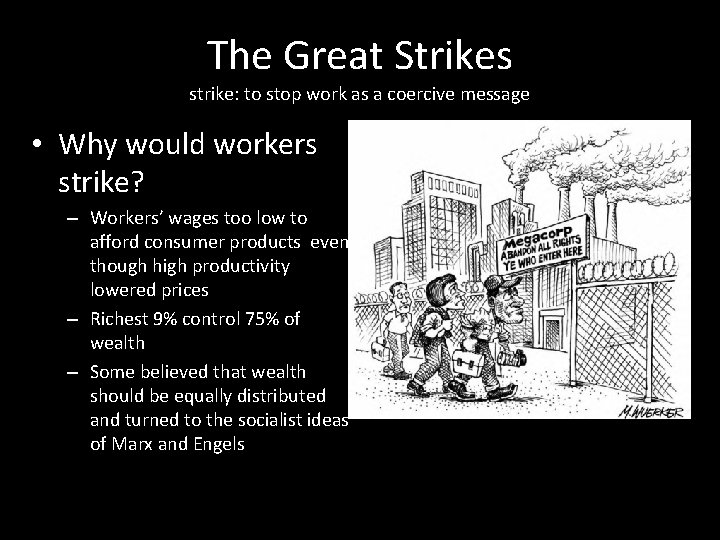
The Great Strikes strike: to stop work as a coercive message • Why would workers strike? – Workers’ wages too low to afford consumer products even though high productivity lowered prices – Richest 9% control 75% of wealth – Some believed that wealth should be equally distributed and turned to the socialist ideas of Marx and Engels
Labor Unions • Knights of Labor-recruited skilled and unskilled laborers, African -Americans, women; led by Terrance Powderly; wanted eight hour workday, end of child labor; membership declined by 1890 s due to violence • American Federation of Labor- led by Samuel Gompers; organized skilled laborers only; used collective bargaining; closed shop • Industrial Workers of the World (IWW) Wobblies- organized unskilled workers, full of Socialists, violent strikes
Employers Feared Labor Unions • If paid higher wages and other demands, costs would rise and profits would fall • Fired union members • Yellow dog contracts • Refused collective bargaining
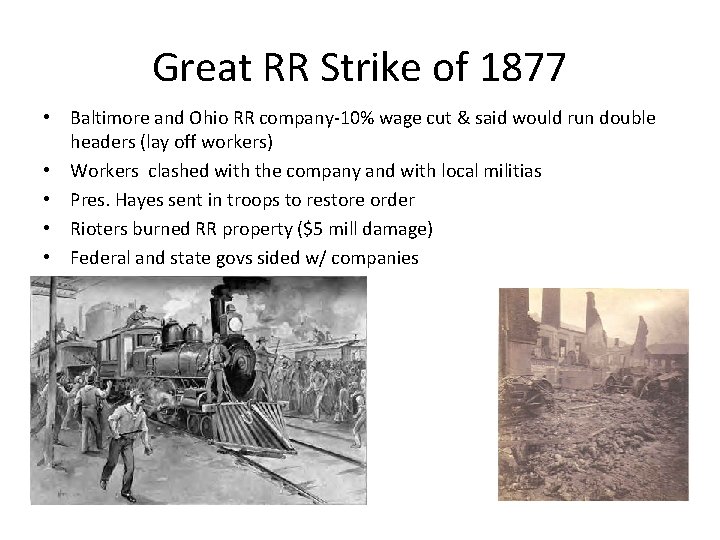
Great RR Strike of 1877 • Baltimore and Ohio RR company-10% wage cut & said would run double headers (lay off workers) • Workers clashed with the company and with local militias • Pres. Hayes sent in troops to restore order • Rioters burned RR property ($5 mill damage) • Federal and state govs sided w/ companies
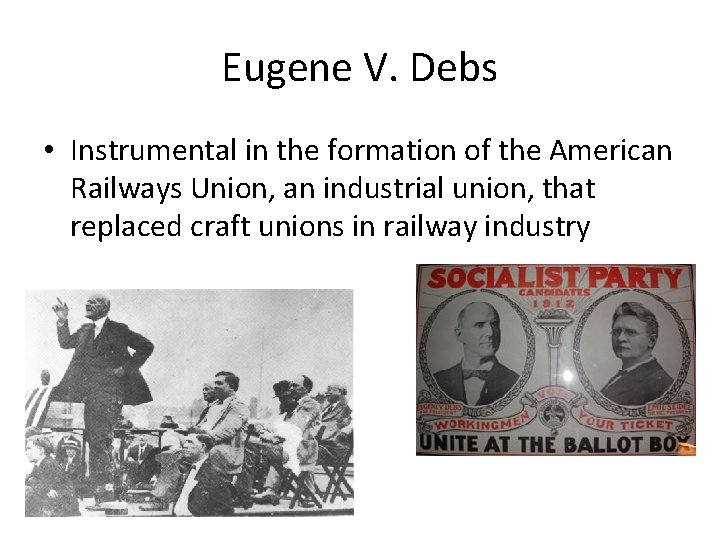
Eugene V. Debs • Instrumental in the formation of the American Railways Union, an industrial union, that replaced craft unions in railway industry
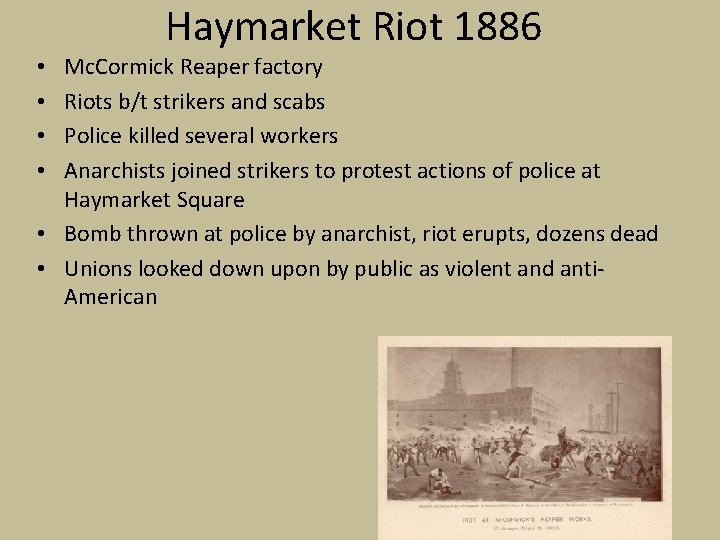
Haymarket Riot 1886 Mc. Cormick Reaper factory Riots b/t strikers and scabs Police killed several workers Anarchists joined strikers to protest actions of police at Haymarket Square • Bomb thrown at police by anarchist, riot erupts, dozens dead • Unions looked down upon by public as violent and anti. American • •
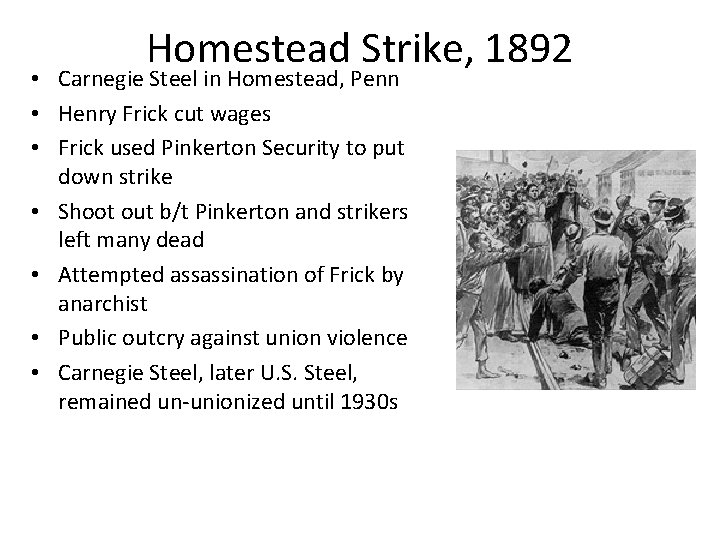
Homestead Strike, 1892 • Carnegie Steel in Homestead, Penn • Henry Frick cut wages • Frick used Pinkerton Security to put down strike • Shoot out b/t Pinkerton and strikers left many dead • Attempted assassination of Frick by anarchist • Public outcry against union violence • Carnegie Steel, later U. S. Steel, remained un-unionized until 1930 s
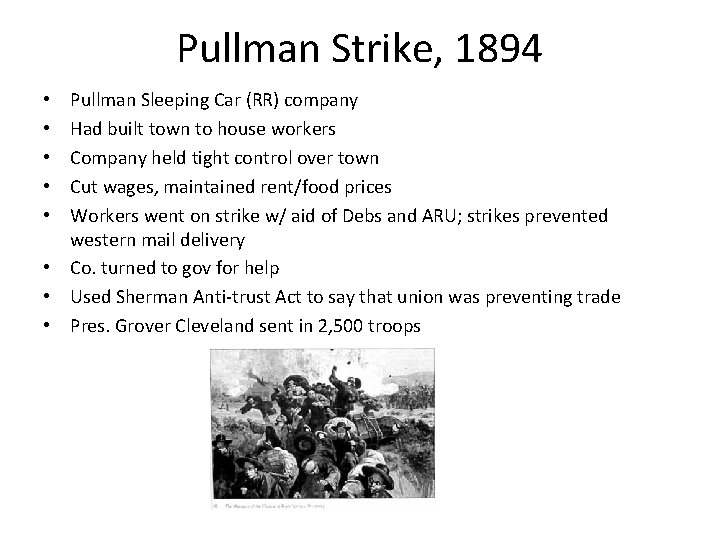
Pullman Strike, 1894 Pullman Sleeping Car (RR) company Had built town to house workers Company held tight control over town Cut wages, maintained rent/food prices Workers went on strike w/ aid of Debs and ARU; strikes prevented western mail delivery • Co. turned to gov for help • Used Sherman Anti-trust Act to say that union was preventing trade • Pres. Grover Cleveland sent in 2, 500 troops • • •