
CHAPTER 6 Strategy Formulation Situation Analysis Business Strategy
CHAPTER 6 Strategy Formulation: Situation Analysis & Business Strategy STRATEGIC MANAGEMENT & BUSINESS POLICY 11 TH EDITION THOMAS L. WHEELEN J. DAVID HUNGER 1
Situational Analysis Strategy formulation -–Strategic planning or long-range planning • Develops mission, objectives, strategies, policies --process of finding a strategic fit between external opportunities and internal strengths while working around external threats and internal weaknesses 2
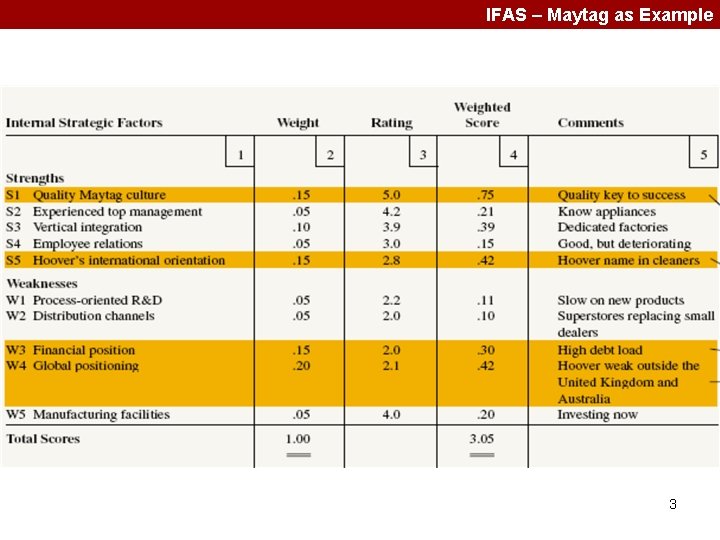
IFAS – Maytag as Example 3
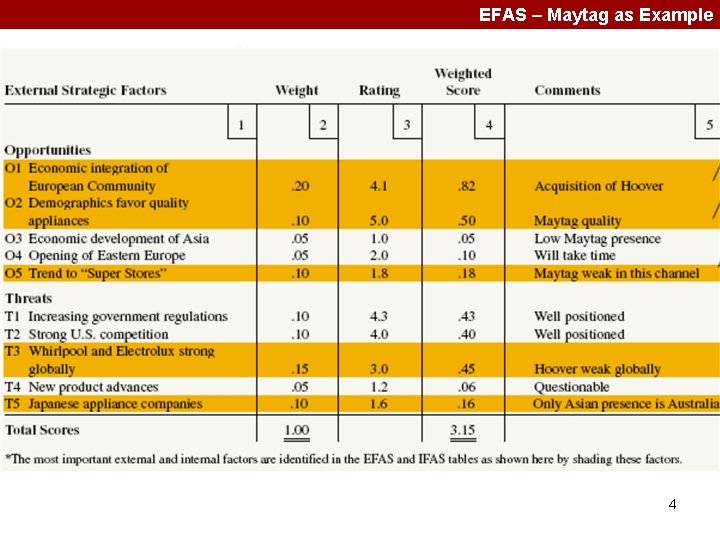
EFAS – Maytag as Example 4

SFAS Matrix 5
Situational Analysis Niche -–Need in the marketplace that is currently unsatisfied Corporate Goal -–Find propitious niche –Strategic window 6
Situational Analysis SWOT -–Internal • Strengths/Weaknesses –External • Opportunities/Threats 7
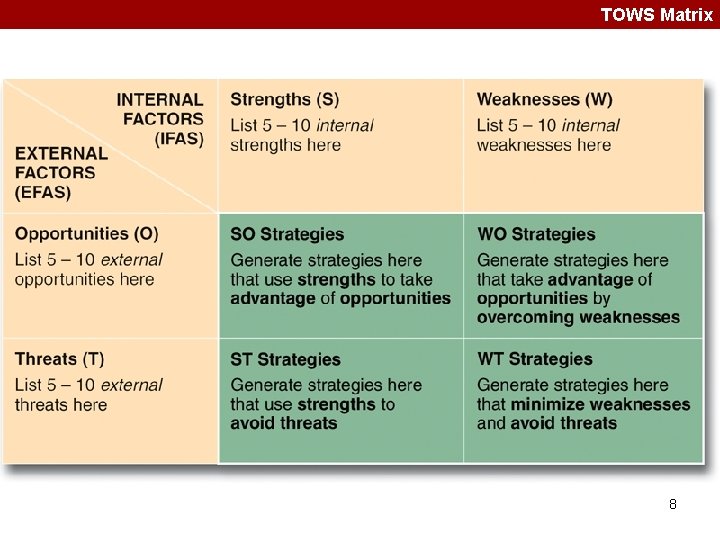
TOWS Matrix 8
Business Strategy Focuses on improving competitive position of company’s products or services within the specific industry or market segment 9
Porter’s Competitive Strategies Competitive Strategy -–Low cost –Differentiation –Direct competition –Focus on niche 10
Porter’s Competitive Strategies Generic Competitive Strategies -–Lower Cost strategy • Greater efficiencies than competitors –Differentiation strategy • Unique/superior value, quality, features, service 11
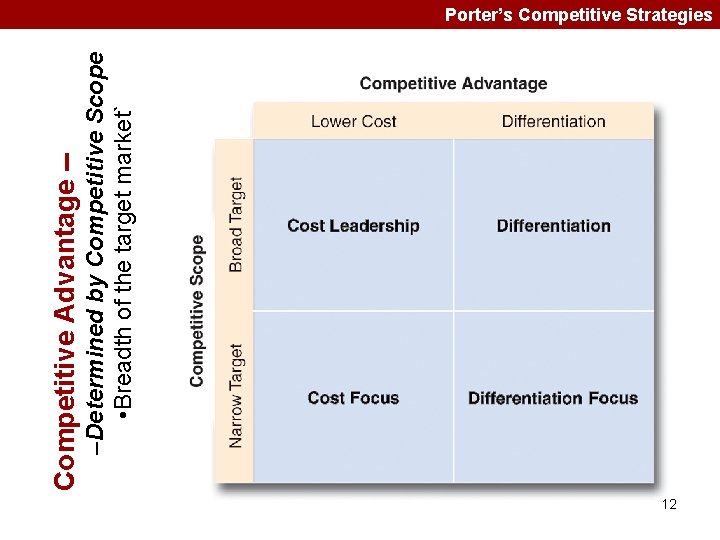
–Determined by Competitive Scope • Breadth of the target market` Competitive Advantage -- Porter’s Competitive Strategies 12
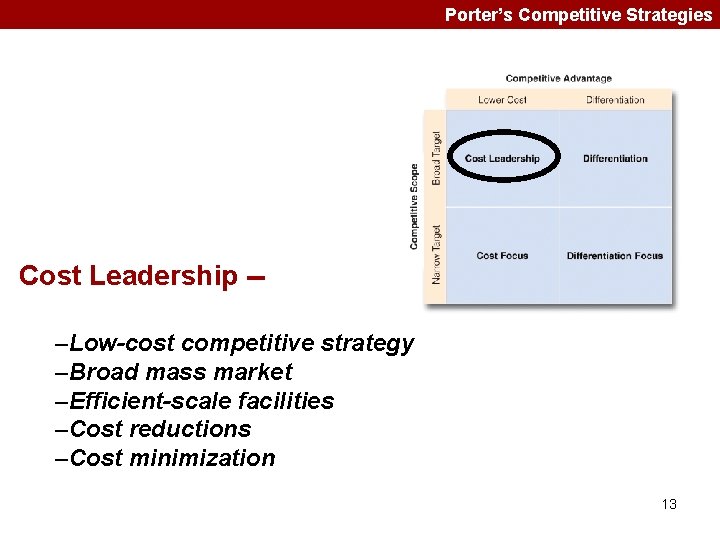
Porter’s Competitive Strategies Cost Leadership -–Low-cost competitive strategy –Broad mass market –Efficient-scale facilities –Cost reductions –Cost minimization 13
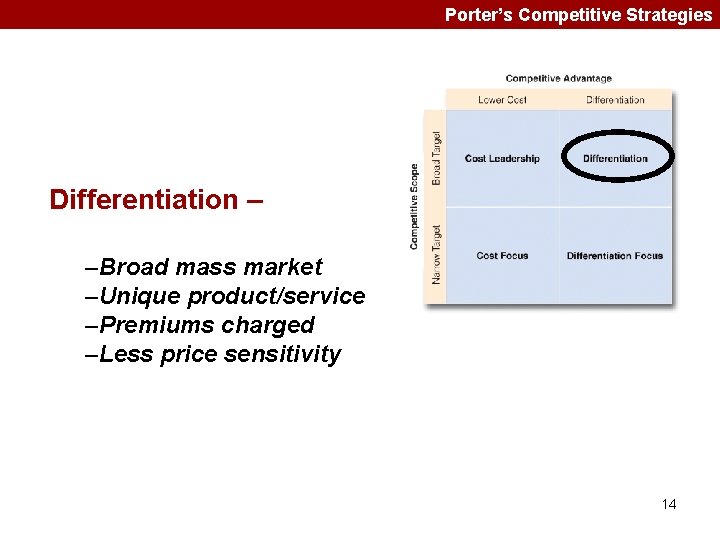
Porter’s Competitive Strategies Differentiation – –Broad mass market –Unique product/service –Premiums charged –Less price sensitivity 14
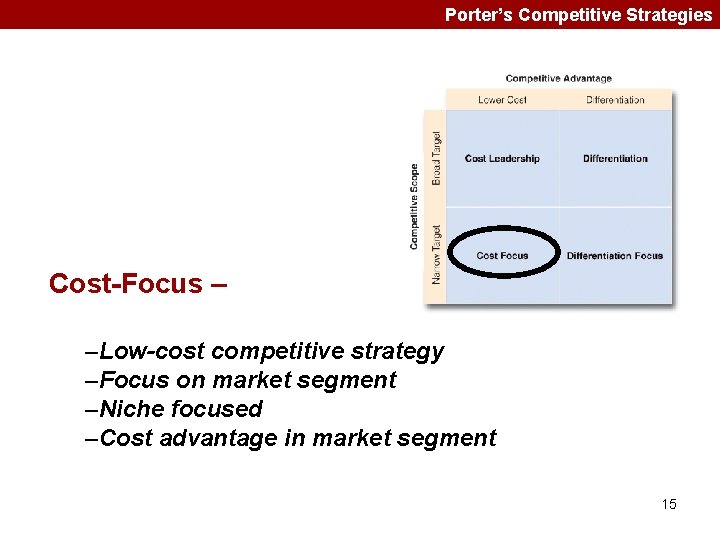
Porter’s Competitive Strategies Cost-Focus – –Low-cost competitive strategy –Focus on market segment –Niche focused –Cost advantage in market segment 15

Porter’s Competitive Strategies Differentiation Focus – –Specific group or geographic market focus –Differentiation in target market –Special needs of narrow target market 16
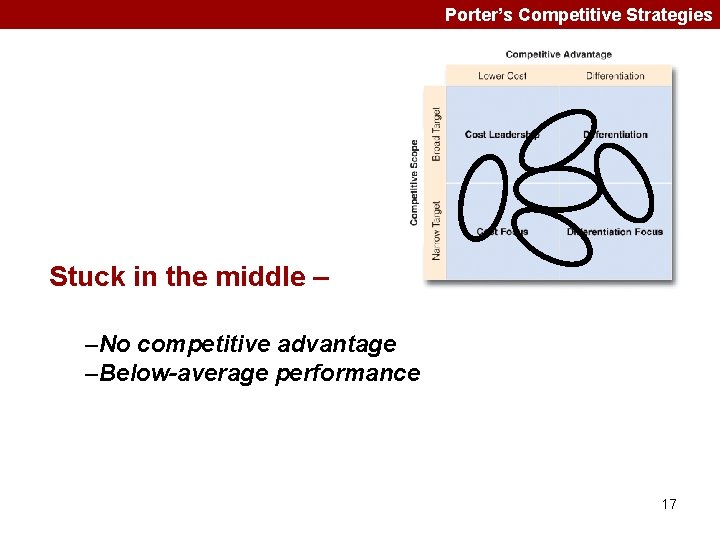
Porter’s Competitive Strategies Stuck in the middle – –No competitive advantage –Below-average performance 17
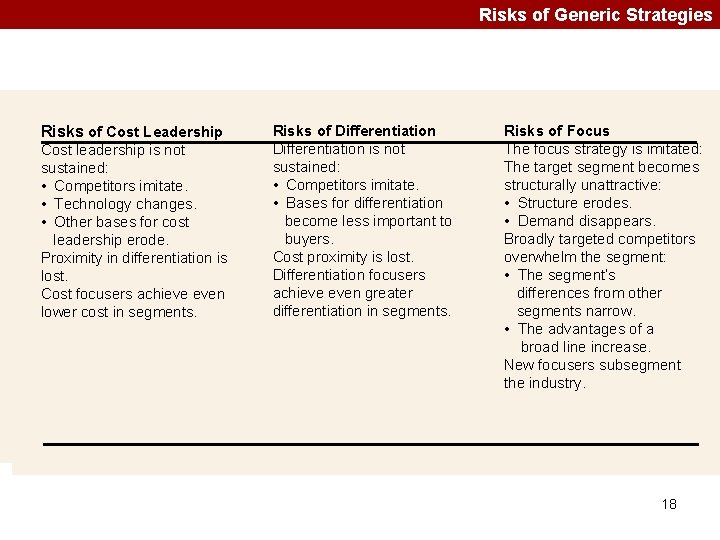
Risks of Generic Strategies Risks of Cost Leadership Risks of Costis. Leadership Cost leadership not Cost leadership is not sustained: • sustained: Competitors imitate. • Technology changes. • • Other bases for cost • leadership Other bases for erode. cost leadership erode. Proximity in differentiation is lost. focusers achieve even Costcost focusers achieve even lower in segments. lower cost in segments. Risks of Differentiation is not sustained: • sustained: Competitors imitate. • Bases for differentiation • become Bases less for differentiation important to become less important to buyers. Costbuyers. proximity is lost. Cost proximity is lost. Differentiation focusers achieve even greater achieve eveningreater differentiation segments. differentiation in segments. Risks of Focus Risks ofstrategy Focus is imitated: The focussegment strategybecomes is imitated: The targetunattractive: segment becomes structurally unattractive: • structurally Structure erodes. • • Demand disappears. Broadly targeted competitors overwhelm the segment: • overwhelm The segment’s • differences The segment’s from other differences from other segments narrow. • The advantages of a • broad The advantages of a line increase. line subsegment increase. Newbroad focusers New focusers subsegment the industry. 18
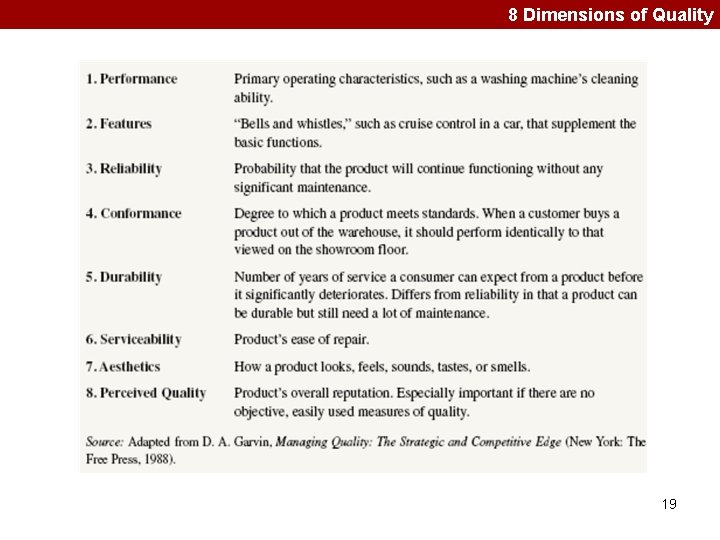
8 Dimensions of Quality 19
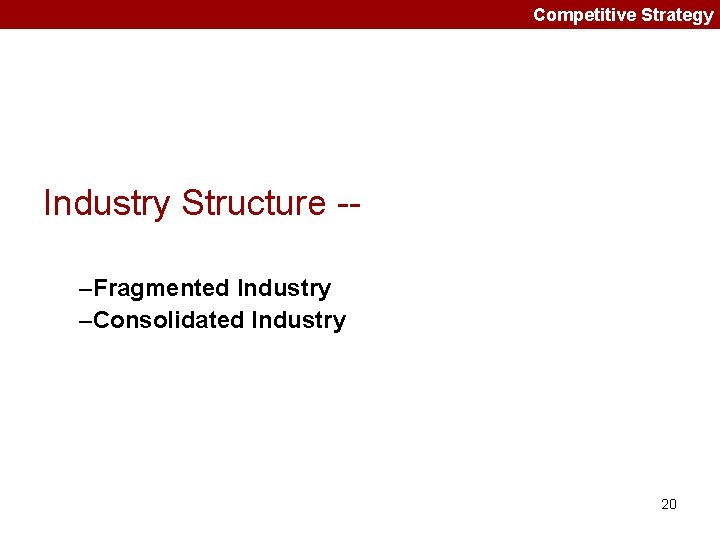
Competitive Strategy Industry Structure -–Fragmented Industry –Consolidated Industry 20
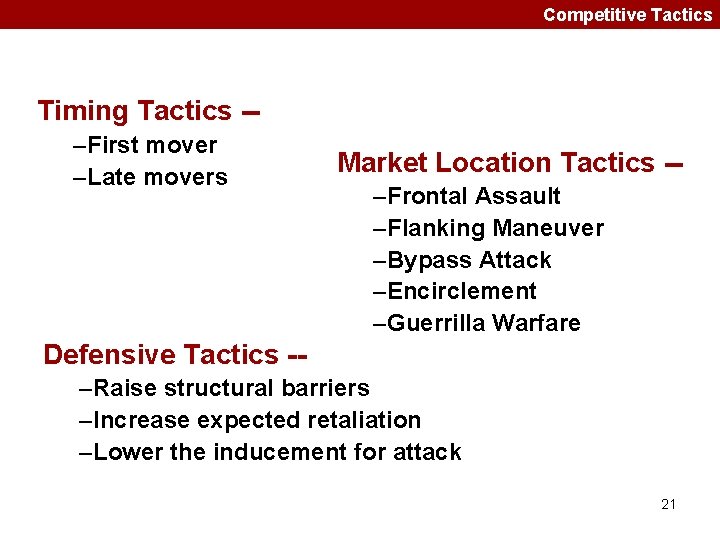
Competitive Tactics Timing Tactics -–First mover –Late movers Market Location Tactics -–Frontal Assault –Flanking Maneuver –Bypass Attack –Encirclement –Guerrilla Warfare Defensive Tactics -–Raise structural barriers –Increase expected retaliation –Lower the inducement for attack 21
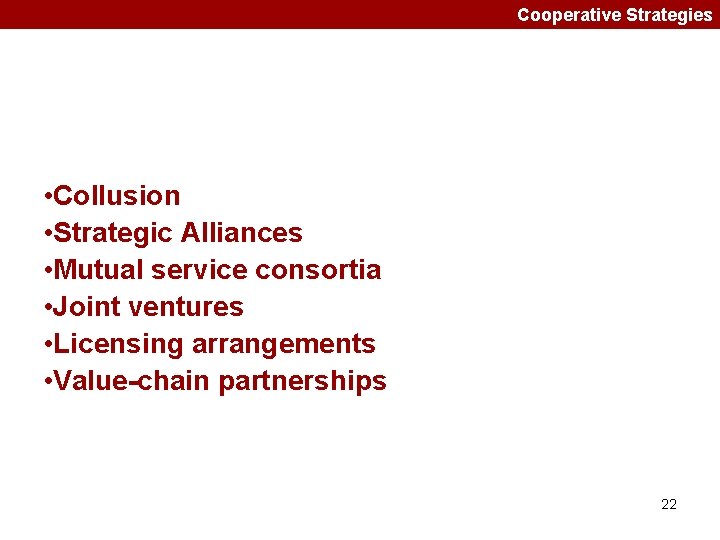
Cooperative Strategies • Collusion • Strategic Alliances • Mutual service consortia • Joint ventures • Licensing arrangements • Value-chain partnerships 22
- Slides: 22