
Chapter 6 Sexual Arousal and Response The Brain
Chapter 6 Sexual Arousal and Response
The Brain and Sexual Arousal • Cerebral cortex (mental events) – Reasoning, language, and imagination • Limbic system and sexual behavior • Hypothalamus • Neurotransmitters – Dopamine facilitates sexual arousal – Serotonin inhibits sexual arousal
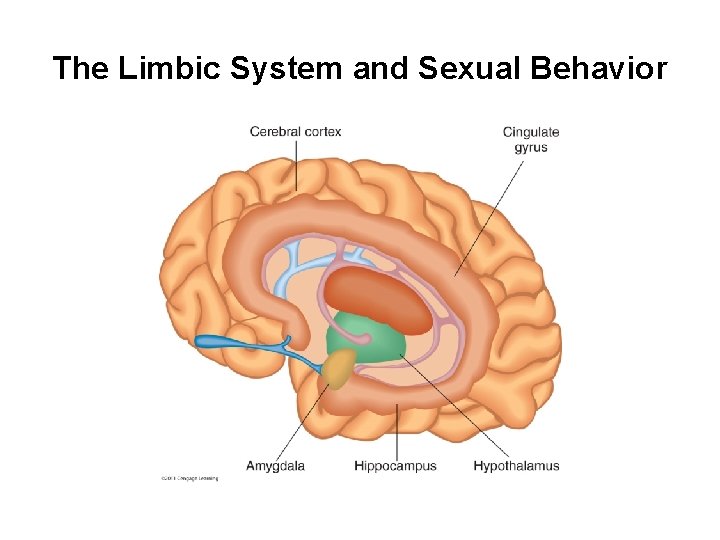
The Limbic System and Sexual Behavior
The Senses and Sexual Arousal • All sensory systems can contribute to arousal • Touch is the dominant “sexual sense” – Primary erogenous zones – Secondary erogenous zones • Vision usually next in dominance – Visual stimuli • Men self-report higher arousal than women • Women and men have similar physiological responses

Other Senses and Sexual Arousal • Smell may arouse or offend – Pheromones • Taste plays a minor role • Hearing plays a variable role
Aphrodisiacs • Substances believed to arouse sexual desire or increase capacity for sexual activity – Food – Drugs and alcohol – Yohimbine • No clear evidence of genuine aphrodisiac qualities – Role of expectations
Anaphrodisiacs • Inhibits sexual behavior – – Drugs (e. g. opiates, tranquilizers) Antihypertensives, antidepressants & antipsychotics Birth control pills Nicotine • Constricts blood flow • Possibly reduces circulating testosterone
The Role of Hormones in Sexual Behavior • Steroid hormones – Androgens (including testosterone) • Produced by testes, adrenal glands, and ovaries – Estrogens • Produced by ovaries and testes – Women and men produce both types • Neuropeptide hormones – Oxytocin
Sex Hormones in Male Sexual Behavior • Testosterone – – Linked to sexual desire and genital sensitivity Castration leads to reduced sexual desire Antiandrogen drugs Hypogonadism
Sex Hormones in Female Sexual Behavior • Estrogens – Overall link between estrogen and female sexual behavior is unclear – Estrogen Therapy (ET) • Testosterone – Role as major libido hormone in females
How Much Testosterone Is Necessary? • Two forms of testosterone (free and bound) – Free testosterone linked to libido – Although women have less free testosterone, their cells are more sensitive to it than men’s • Too much testosterone is linked to adverse effects • Testosterone levels decrease with age – Fairly rapid decrease for women at menopause; more gradual decline for men • Testosterone Replacement Therapy
Oxytocin and Sexual Behavior • Secreted during cuddling and physical intimacy – Increased skin sensitivity – High levels associated with orgasmic release for women and men – For women, stimulates contractions of uterine wall during orgasm
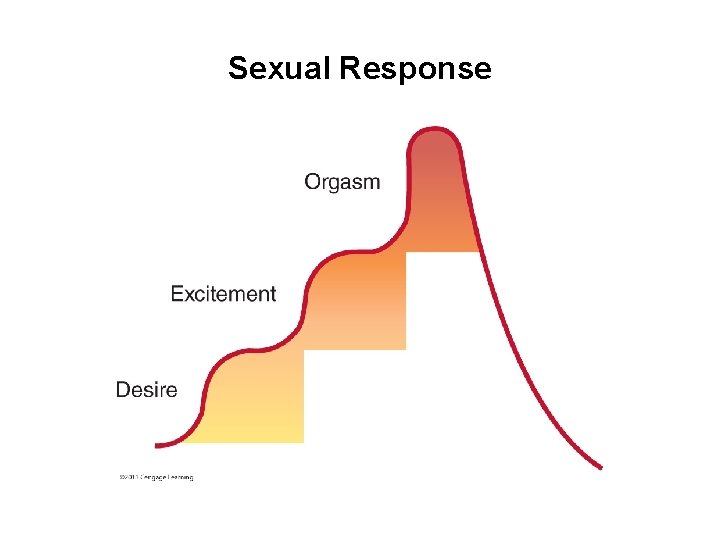
Sexual Response

Sexual Response • Master’s and Johnson’s Four Phases – – Excitement Plateau Orgasm Resolution
Sexual Response • Master’s and Johnson’s Four Phase Model – Phases of physiological responses – Two basic physiological processes • Vasocongestion • Myotonia
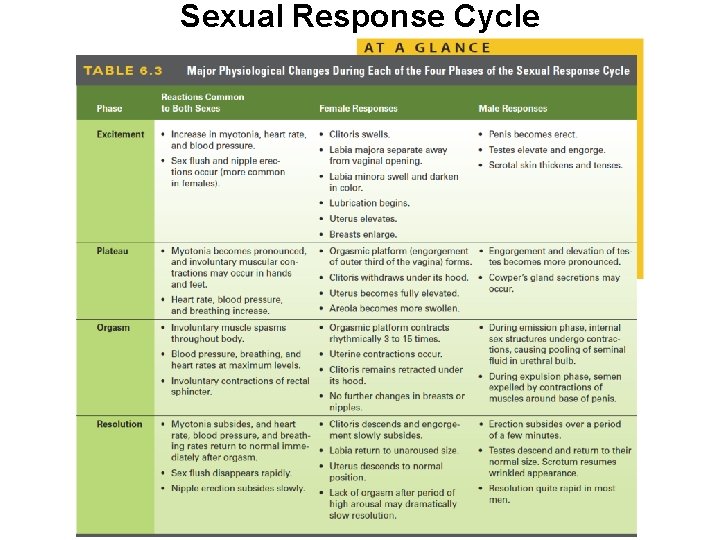
Sexual Response Cycle
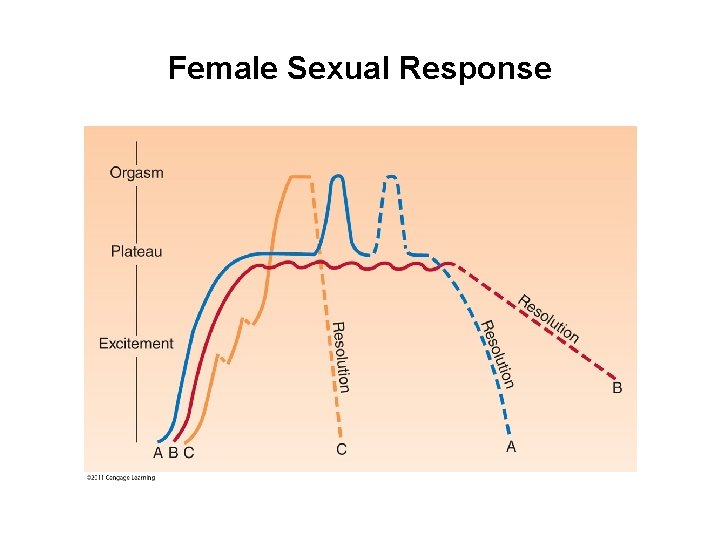
Female Sexual Response
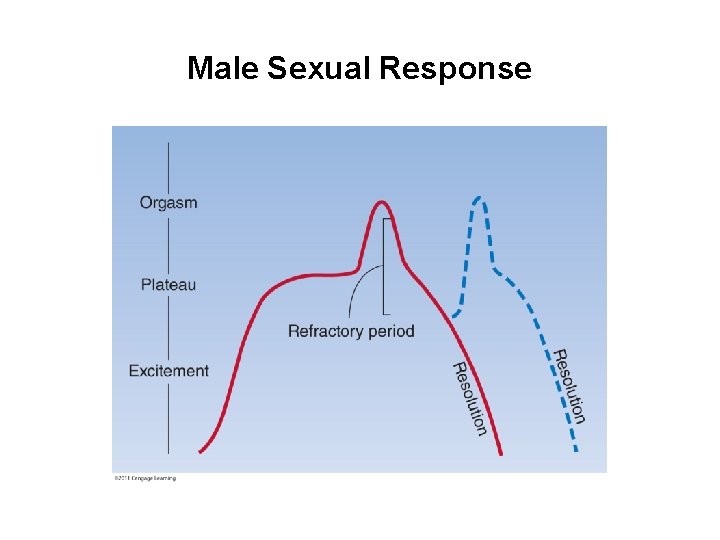
Male Sexual Response
Orgasm • Shortest phase of sexual response cycle – Men and women’s subjective descriptions of orgasm are similar – Most female orgasms result from stimulation of the clitoris – Grafenberg spot • Area on lower front wall of vagina • Sensitive to pressure • Sometimes results in “ejaculation”
Sex Differences in Sexual Response • Greater variability in female response • Male refractory period • Women can experience multiple orgasms
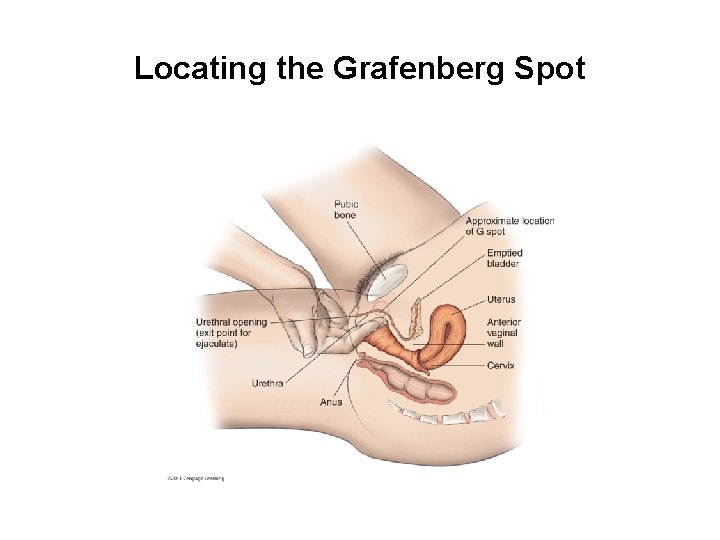
Locating the Grafenberg Spot
Aging & Sexual Response Cycle • Older women – Response cycle continues, but with decreased intensity – Excitement: • Vaginal lubrication begins more slowly, reduced amount – Plateau: • decreased vagina flexibility – Orgasm: • number of uterine contractions decrease – Resolution: • occurs more rapidly
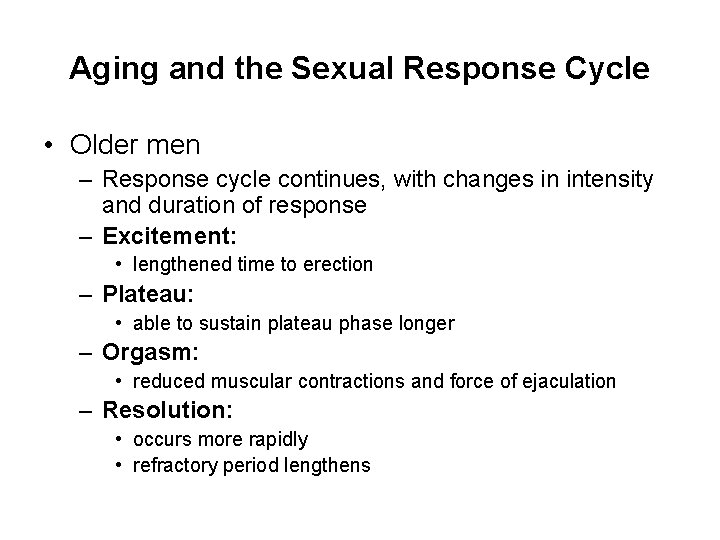
Aging and the Sexual Response Cycle • Older men – Response cycle continues, with changes in intensity and duration of response – Excitement: • lengthened time to erection – Plateau: • able to sustain plateau phase longer – Orgasm: • reduced muscular contractions and force of ejaculation – Resolution: • occurs more rapidly • refractory period lengthens
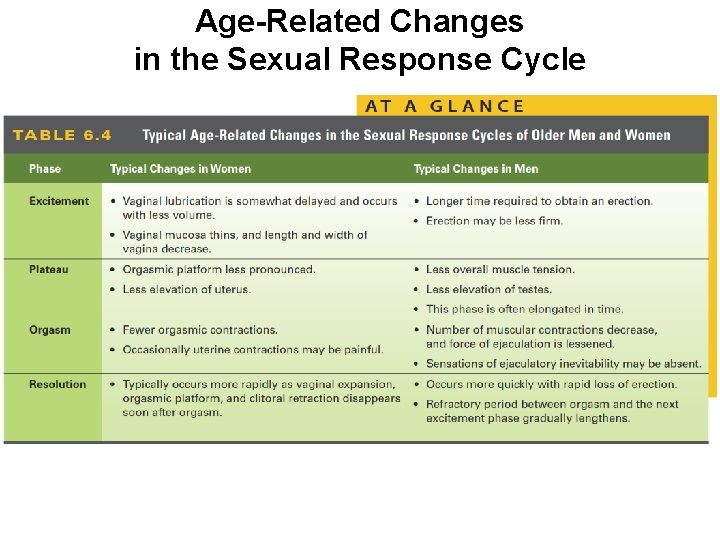
Age-Related Changes in the Sexual Response Cycle
- Slides: 24