
Chapter 6 Section 6 4 Goals Look at
- Slides: 15
Chapter 6 Section 6. 4 • Goals: • Look at vertical distribution of geostrophic wind. • Identify thermal advection, and backing and veering winds. • Look at an example map.
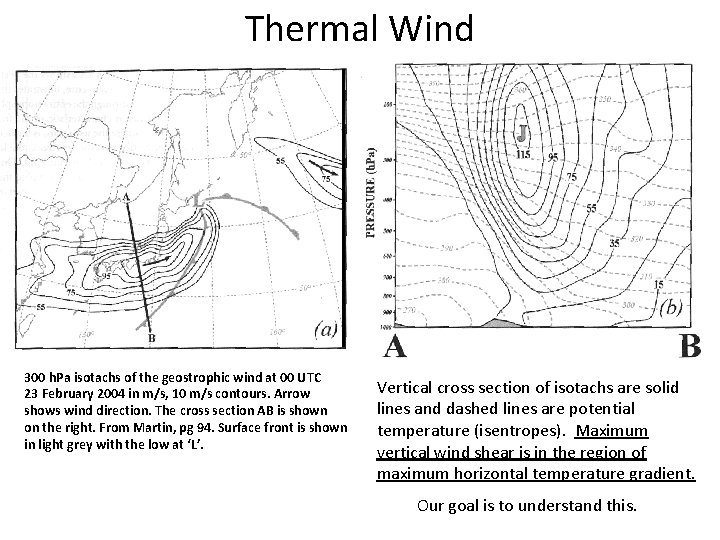
Thermal Wind 300 h. Pa isotachs of the geostrophic wind at 00 UTC 23 February 2004 in m/s, 10 m/s contours. Arrow shows wind direction. The cross section AB is shown on the right. From Martin, pg 94. Surface front is shown in light grey with the low at ‘L’. Vertical cross section of isotachs are solid lines and dashed lines are potential temperature (isentropes). Maximum vertical wind shear is in the region of maximum horizontal temperature gradient. Our goal is to understand this.
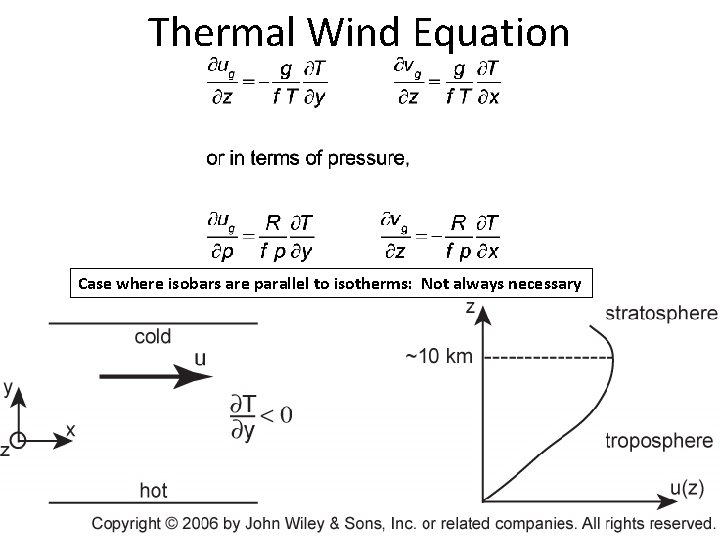
Thermal Wind Equation Case where isobars are parallel to isotherms: Not always necessary
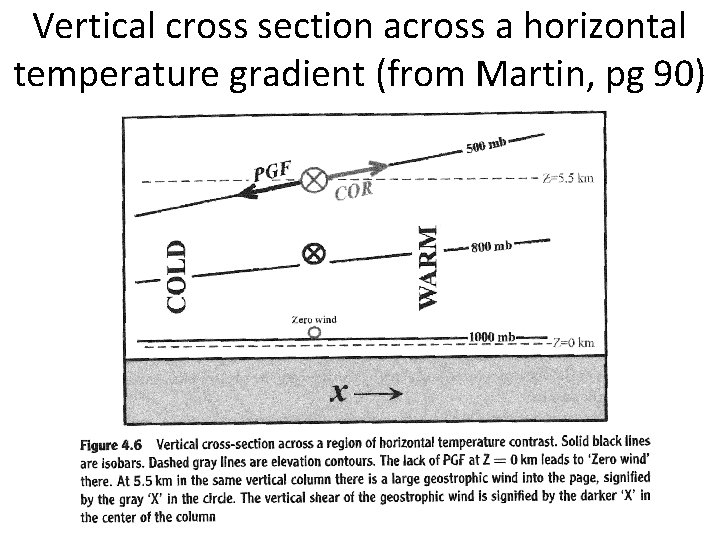
Vertical cross section across a horizontal temperature gradient (from Martin, pg 90)
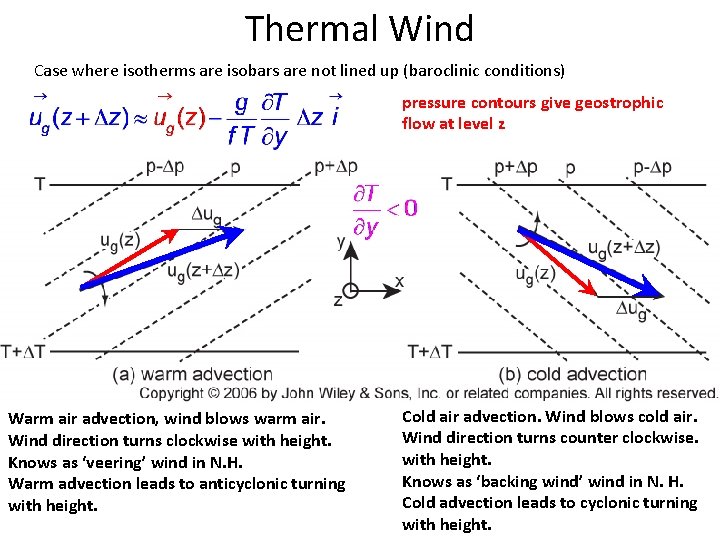
Thermal Wind Case where isotherms are isobars are not lined up (baroclinic conditions) pressure contours give geostrophic flow at level z Warm air advection, wind blows warm air. Wind direction turns clockwise with height. Knows as ‘veering’ wind in N. H. Warm advection leads to anticyclonic turning with height. Cold air advection. Wind blows cold air. Wind direction turns counter clockwise. with height. Knows as ‘backing wind’ wind in N. H. Cold advection leads to cyclonic turning with height.
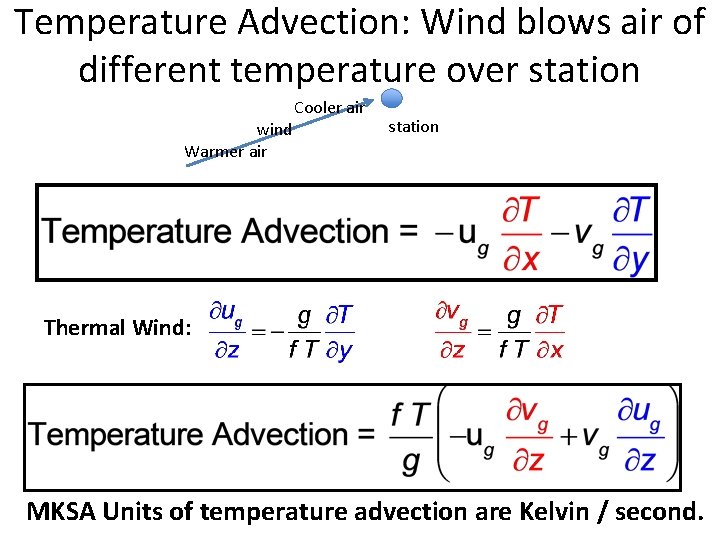
Temperature Advection: Wind blows air of different temperature over station wind Warmer air Cooler air station Thermal Wind: MKSA Units of temperature advection are Kelvin / second.
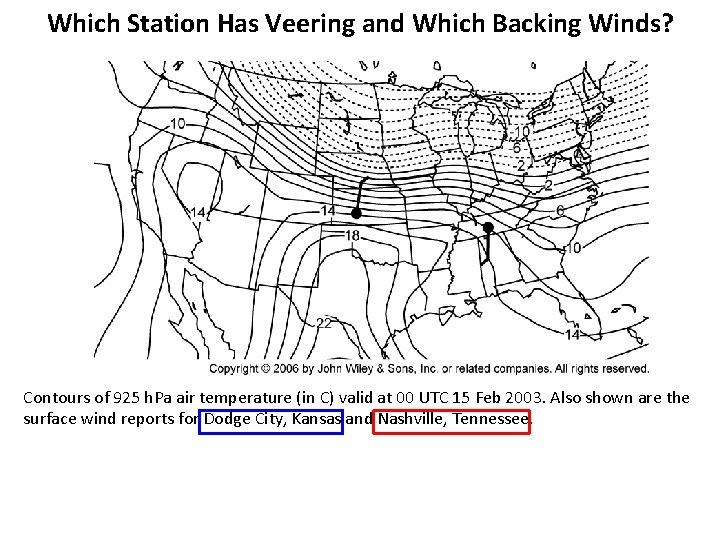
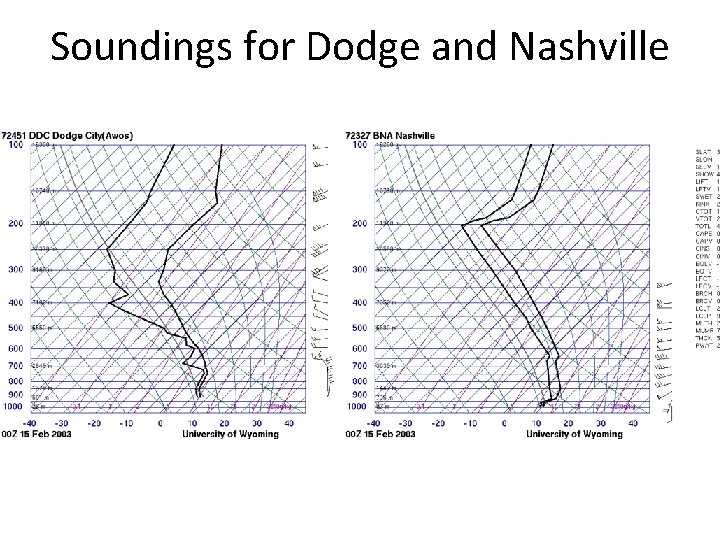
Which Station Has Veering and Which Backing Winds? Contours of 925 h. Pa air temperature (in C) valid at 00 UTC 15 Feb 2003. Also shown are the surface wind reports for Dodge City, Kansas and Nashville, Tennessee.
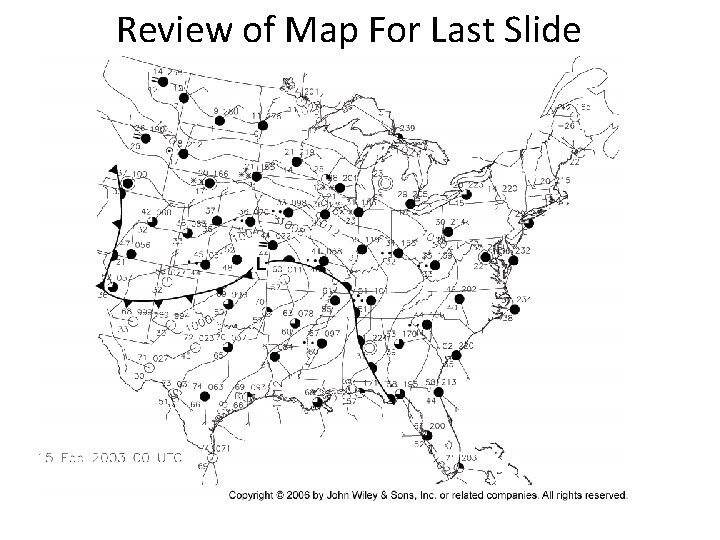
Review of Map For Last Slide
Soundings for Dodge and Nashville
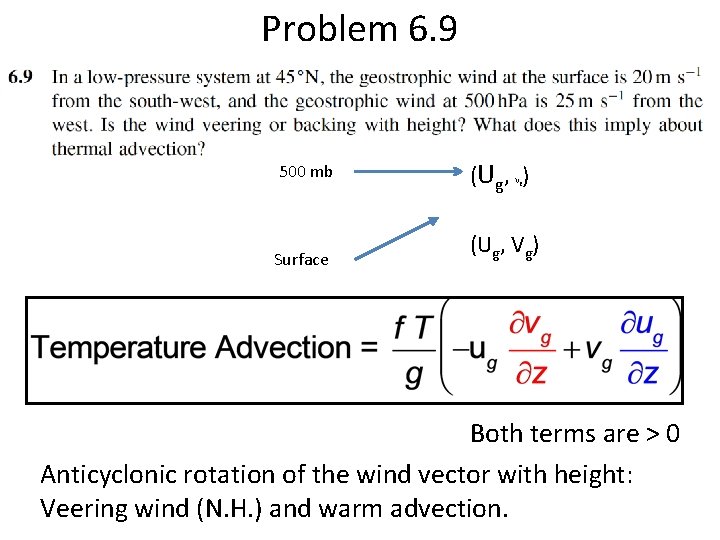
Problem 6. 9 500 mb Surface (U g , ) Vg (Ug, Vg) Both terms are > 0 Anticyclonic rotation of the wind vector with height: Veering wind (N. H. ) and warm advection.
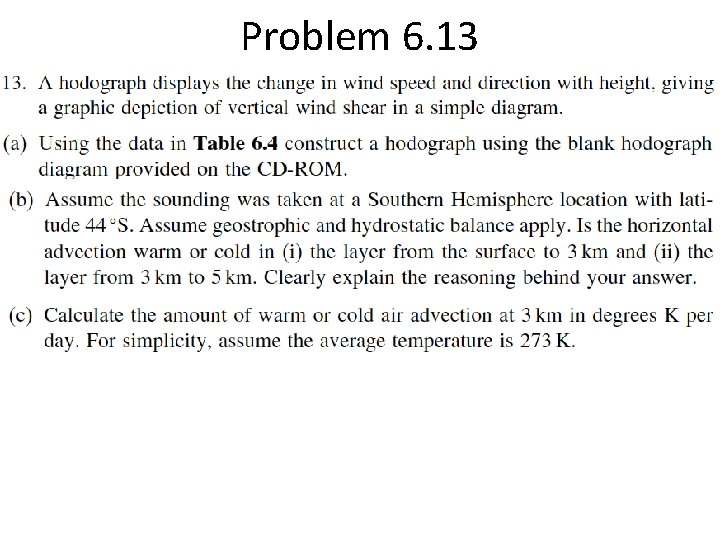
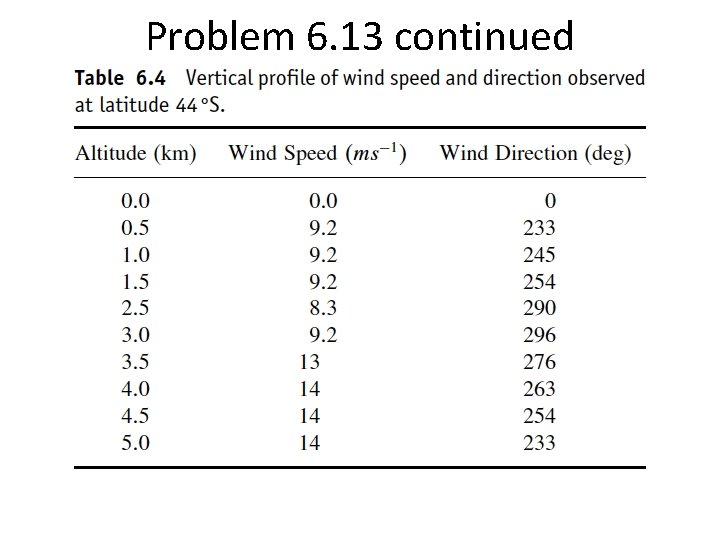
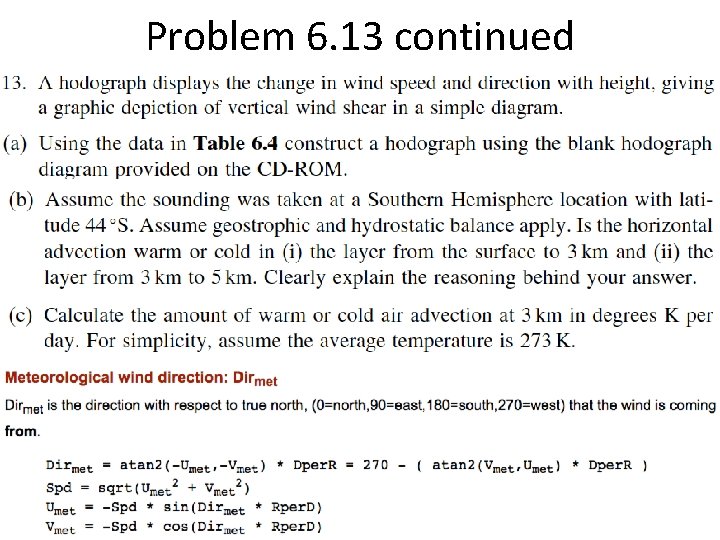
Problem 6. 13
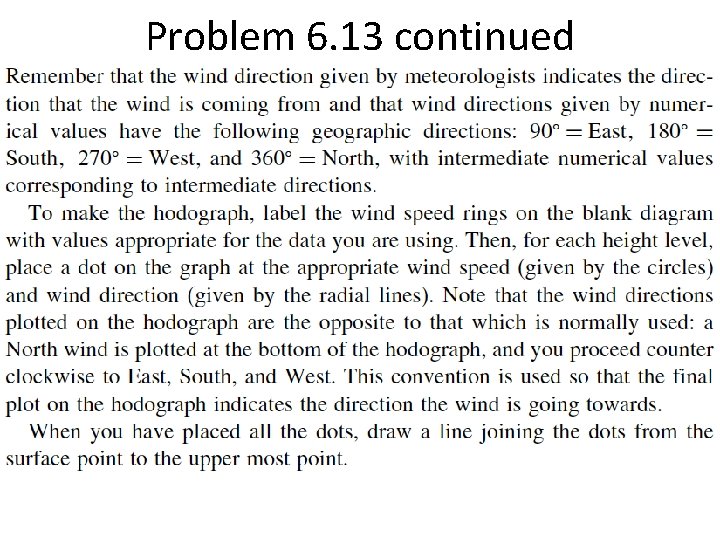
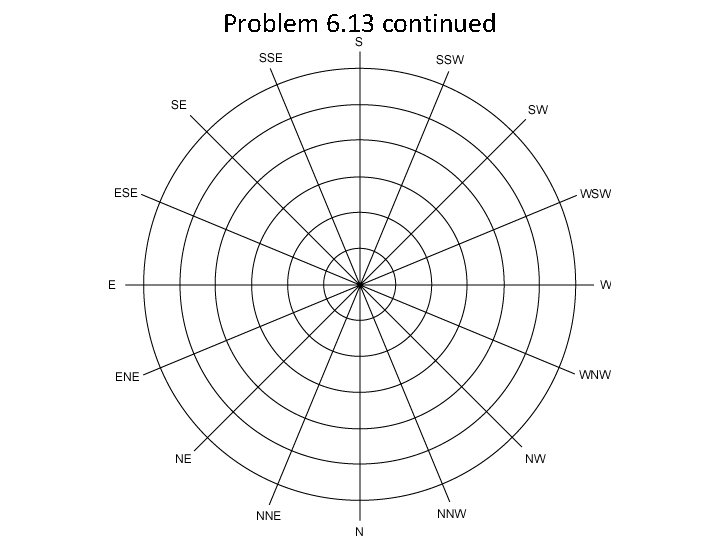
Problem 6. 13 continued
Problem 6. 13 continued
Problem 6. 13 continued
Problem 6. 13 continued