
Chapter 6 Section 3 Mixtures Acids Bases p
Chapter 6 Section 3 Mixtures, Acids & Bases, p. H and Buffers
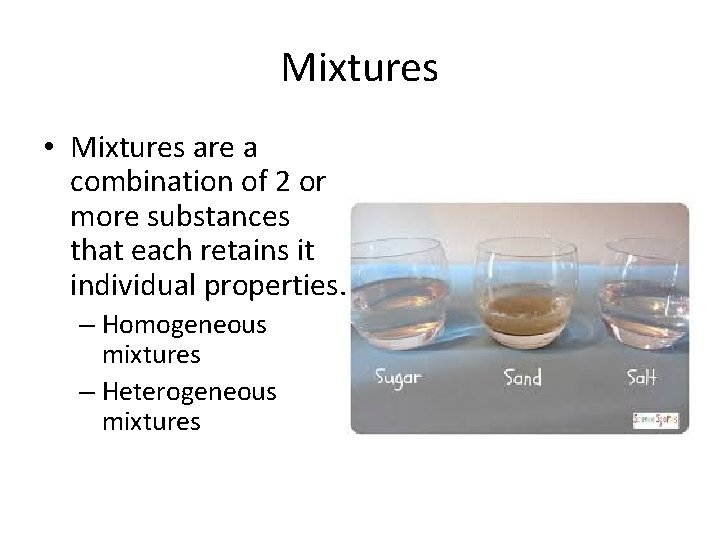
Mixtures • Mixtures are a combination of 2 or more substances that each retains it individual properties. – Homogeneous mixtures – Heterogeneous mixtures
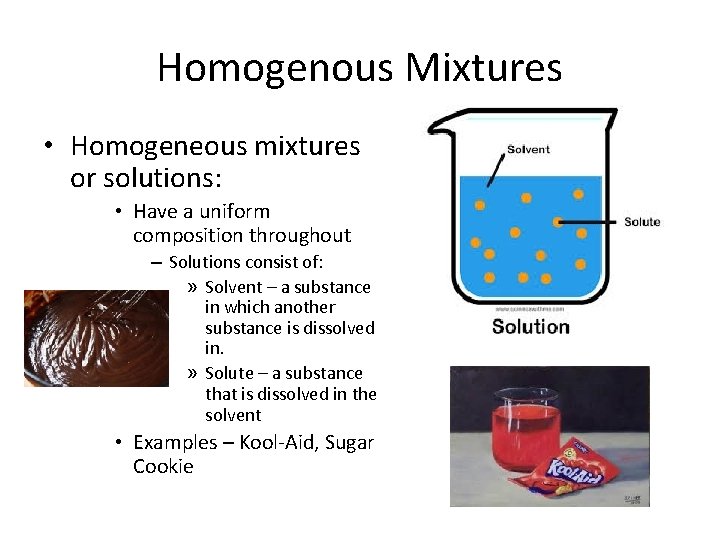
Homogenous Mixtures • Homogeneous mixtures or solutions: • Have a uniform composition throughout – Solutions consist of: » Solvent – a substance in which another substance is dissolved in. » Solute – a substance that is dissolved in the solvent • Examples – Kool-Aid, Sugar Cookie
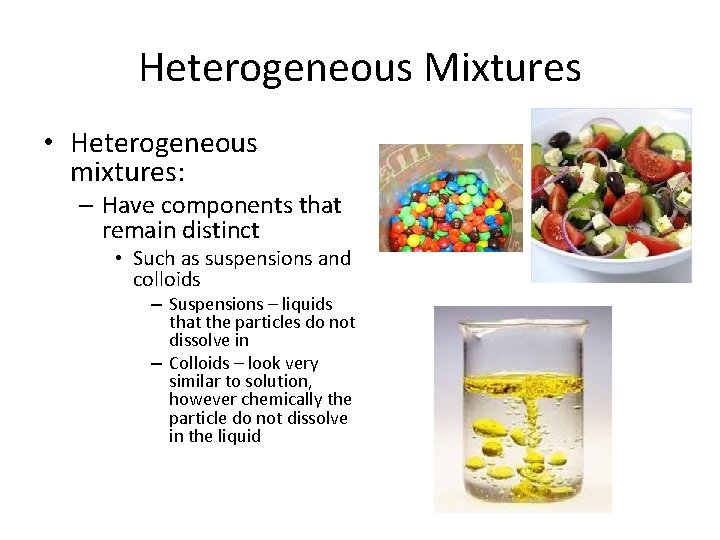
Heterogeneous Mixtures • Heterogeneous mixtures: – Have components that remain distinct • Such as suspensions and colloids – Suspensions – liquids that the particles do not dissolve in – Colloids – look very similar to solution, however chemically the particle do not dissolve in the liquid

Acids & Bases • Substances that release hydrogen ions (H+) when dissolved in water are called acids. • Substances that release hydroxide ions (OH-) when dissolved in water are called bases.
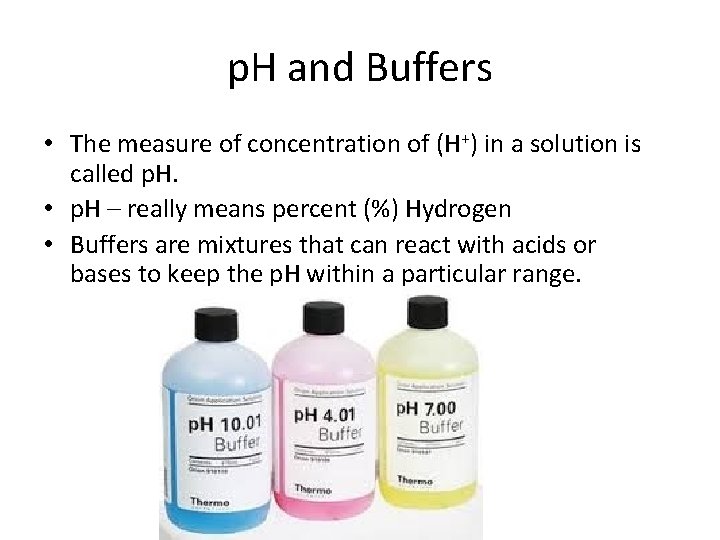
p. H and Buffers • The measure of concentration of (H+) in a solution is called p. H. • p. H – really means percent (%) Hydrogen • Buffers are mixtures that can react with acids or bases to keep the p. H within a particular range.
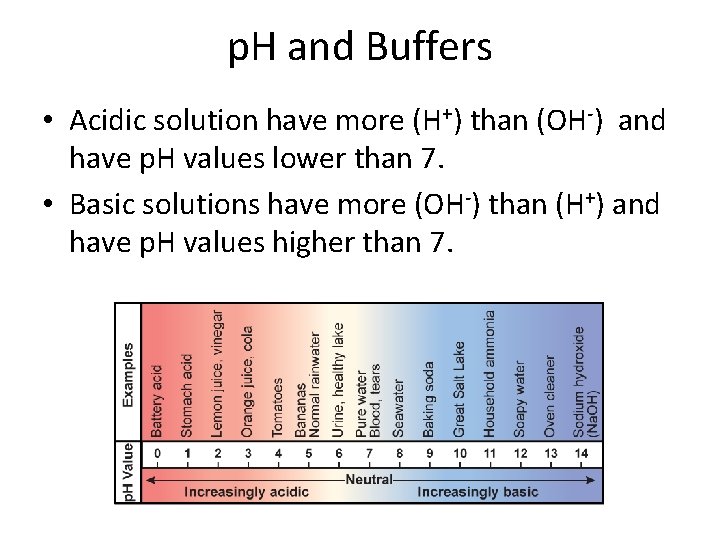
p. H and Buffers • Acidic solution have more (H+) than (OH-) and have p. H values lower than 7. • Basic solutions have more (OH-) than (H+) and have p. H values higher than 7.
- Slides: 7