
Chapter 6 Section 1 The Cardiovascular System Objectives
Chapter 6 Section 1 The Cardiovascular System Objectives • List four main parts of the cardiovascular system, and describe their functions. • Describe the two types of circulation of blood in the body. • List four cardiovascular problems. Chapter menu Resources Copyright © by Holt, Rinehart and Winston. All rights reserved.
Chapter 6 Section 1 The Cardiovascular System Your Cardiovascular System • Cardiovascular system - consists of the heart which pumps the blood and the three types of blood vessels that carry blood throughout your body arteries, capillaries, and veins. • Blood transports oxygen and nutrients to all the cells in the body. It also transports waste products away from the cells Chapter menu Resources Copyright © by Holt, Rinehart and Winston. All rights reserved.
Chapter 6 Section 1 The Cardiovascular System Blood Vessels • Arteries are blood vessels that carry blood away from the heart and to the body’s organs. Important arteries are the carotid artery (neck) and the femoral artery (leg. ) • Capillaries are tiny blood vessels that allow the exchange between body cells and blood. • Veins are blood vessels that carry blood back to the heart. Important veins are the jugular vein (neck) and the femoral vein (leg. ) Chapter menu Resources Copyright © by Holt, Rinehart and Winston. All rights reserved.
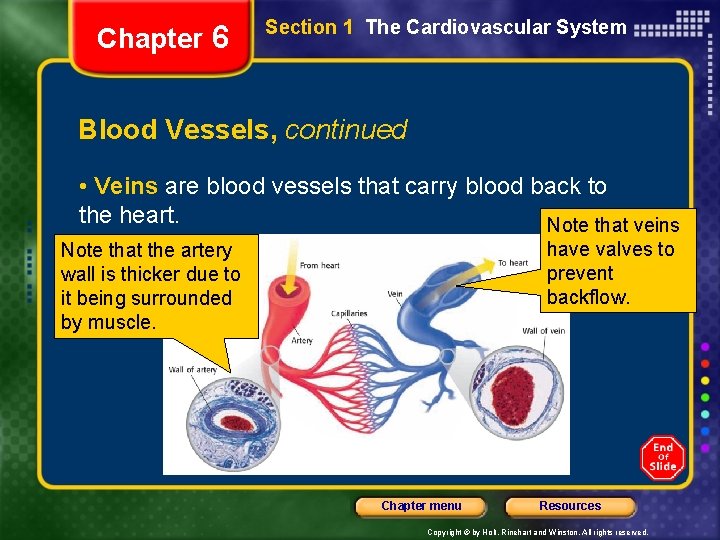
Chapter 6 Section 1 The Cardiovascular System Blood Vessels, continued • Veins are blood vessels that carry blood back to the heart. Note that veins have valves to prevent backflow. Note that the artery wall is thicker due to it being surrounded by muscle. Chapter menu Resources Copyright © by Holt, Rinehart and Winston. All rights reserved.
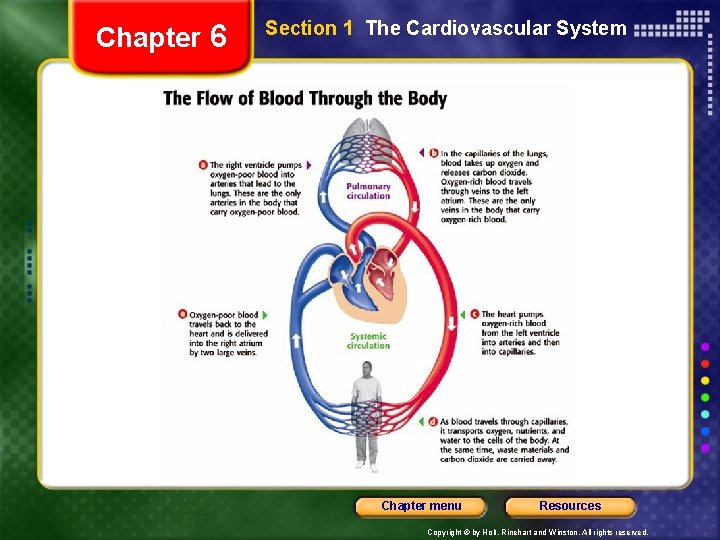
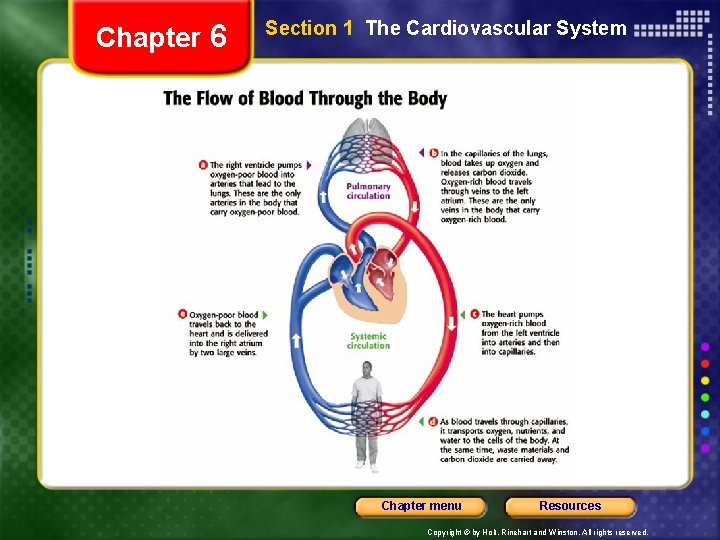
Chapter 6 Section 1 The Cardiovascular System Two Types of Circulation – Pulmonary and Systemic • Pulmonary circulation is the flow of blood from the heart to the lungs and back to the heart through the pulmonary arteries, capillaries, and veins. Chapter menu Resources Copyright © by Holt, Rinehart and Winston. All rights reserved.
Chapter 6 Section 1 The Cardiovascular System Chapter menu Resources Copyright © by Holt, Rinehart and Winston. All rights reserved.
Chapter 6 Section 1 The Cardiovascular System Pulmonary Circulation • The pulmonary artery carries blood from the heart to the lungs. The pulmonary vein carries blood from the lungs back to the heart. • Blood becomes oxygenated – CO 2 is given up and oxygen is absorbed into the blood at the alveoli. The thin membranes of the alveoli and the capillaries allow the gasses to move between the lungs and the vessels. • After pulmonary circulation, blood is pumped to all parts of the body through systemic circulation • Valves prevent backflow. Chapter menu Resources Copyright © by Holt, Rinehart and Winston. All rights reserved.
Chapter 6 Section 1 The Cardiovascular System Two Types of Circulation – Pulmonary and Systemic • Systemic circulation is the flow of blood from the heart to all parts of the body and back to the heart. Chapter menu Resources Copyright © by Holt, Rinehart and Winston. All rights reserved.
Chapter 6 Section 1 The Cardiovascular System Chapter menu Resources Copyright © by Holt, Rinehart and Winston. All rights reserved.
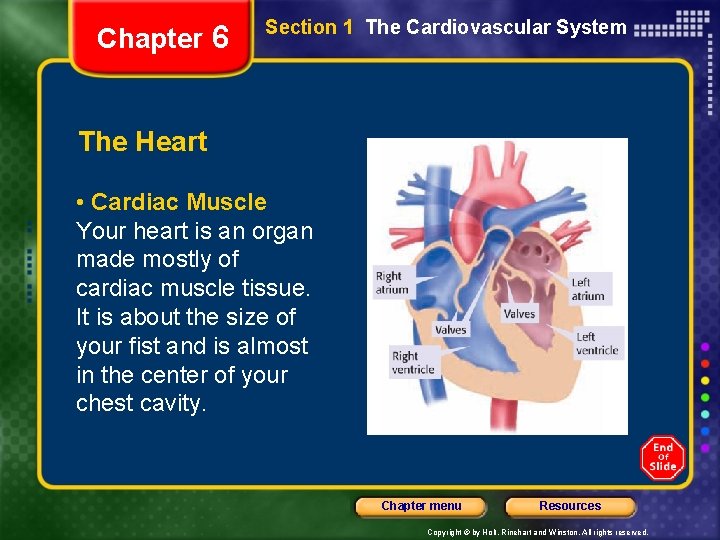
Chapter 6 Section 1 The Cardiovascular System The Heart • Cardiac Muscle Your heart is an organ made mostly of cardiac muscle tissue. It is about the size of your fist and is almost in the center of your chest cavity. Chapter menu Resources Copyright © by Holt, Rinehart and Winston. All rights reserved.
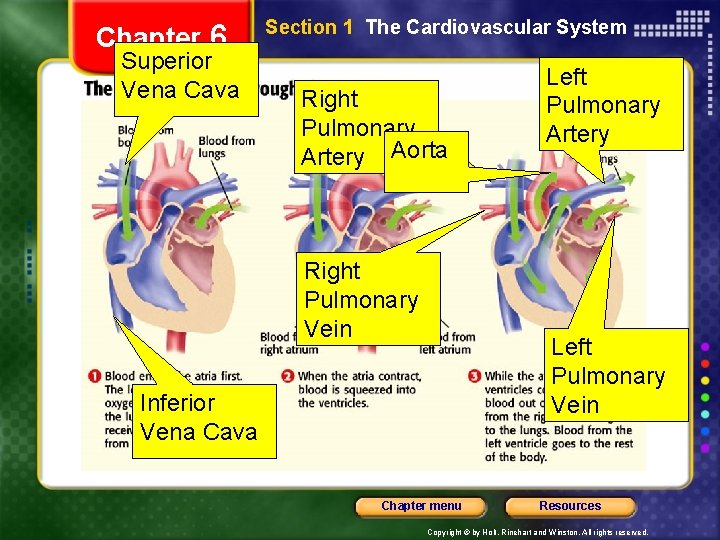
Chapter 6 Superior Vena Cava Section 1 The Cardiovascular System Right Pulmonary Artery Aorta Right Pulmonary Vein Left Pulmonary Artery Left Pulmonary Vein Inferior Vena Cava Chapter menu Resources Copyright © by Holt, Rinehart and Winston. All rights reserved.
Chapter 6 Section 1 The Cardiovascular System A Heartbeat is NOT the same as a Pulse • A heartbeat is the sound of the heart valves closing. The “lub” sound is the atrial valves closing. The “dub” sound is the ventricle valves closing. • A pulse is the number of times the heart beats in a period of time – usually 1 minute. • Both atria beat at the same time, then both ventricles beat at the same time. Chapter menu Resources Copyright © by Holt, Rinehart and Winston. All rights reserved.
Chapter 6 Section 1 The Cardiovascular System Two other Circulations • Renal circulation is blood flow through the kidneys. • Portal circulation is the flow of blood from the intestines to the liver. Chapter menu Resources Copyright © by Holt, Rinehart and Winston. All rights reserved.
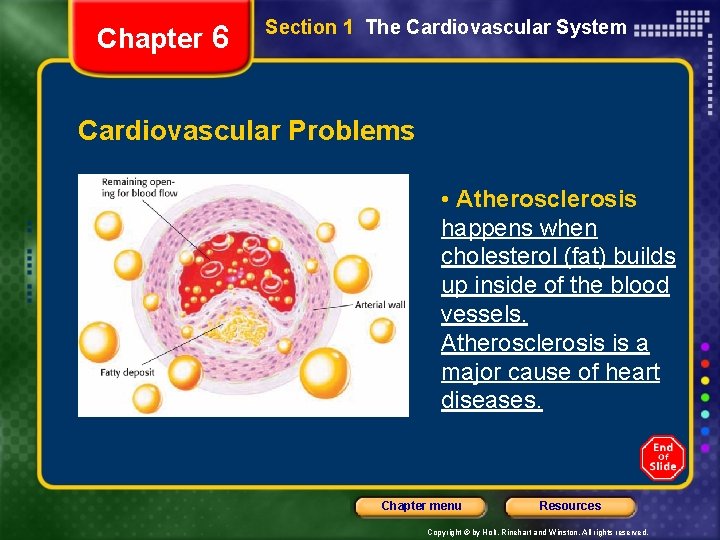
Chapter 6 Section 1 The Cardiovascular System Cardiovascular Problems • Atherosclerosis happens when cholesterol (fat) builds up inside of the blood vessels. Atherosclerosis is a major cause of heart diseases. Chapter menu Resources Copyright © by Holt, Rinehart and Winston. All rights reserved.
Chapter 6 Section 1 The Cardiovascular System Cardiovascular Problems, continued • High Blood Pressure Hypertension is abnormally high blood pressure. The higher the blood pressure, the greater the risk of a heart attack, heart failure, kidney disease, and stroke. • Heart Attacks and Heart Failure A heart attack happens when heart muscle cells die and part of the heart muscle is damaged. Heart failure happens when the heart cannot pump enough blood to meet the body’s needs. Chapter menu Resources Copyright © by Holt, Rinehart and Winston. All rights reserved.
- Slides: 15